Best Things to Do in Singapore: 12 Top Picks (2026)
Disclosure: Some links in this guide are affiliate links. If you book or buy through them, we may earn a small commission at no extra cost to you — it helps keep our guides free.
- Gardens by the Bay outdoor gardens and the Supertree Grove light show are free; the all-in ticket covering both conservatories, the OCBC Skyway, and the Supertree Observatory starts from about S$50.81 (roughly US$38).
- Marina Bay Sands SkyPark Observation Deck sits 200 metres up on the 57th floor, with adult tickets around S$23–26 (about US$17–19).
- Universal Studios Singapore one-day adult tickets start from S$83 off-peak and S$86 on peak dates (Resorts World Sentosa, 2026).
- Hawker food is the best value in the city: most dishes cost S$3–8, and Tian Tian Hainanese Chicken Rice at Maxwell runs about S$6.
- February is the driest month, averaging around 105 mm of rain over 9–10 rain days, with daytime highs of 31–33°C and humidity in the low 80s percent.
At a glance
| Attraction | Entry | Hours | Time needed |
|---|---|---|---|
| Gardens by the Bay outdoor gardens | Free | Light show usually 7:45pm and 8:45pm | |
| Gardens by the Bay conservatories | S$12 Flower Dome / S$26 Cloud Forest | 09:00–21:00 | three to four hours |
| Marina Bay Sands SkyPark | S$23–26 | 10:00–16:30 and 17:00–21:00 | |
| Night Safari | roughly S$56 (online from S$48) | Evening | |
| Jewel Rain Vortex light show | Free | On the hour and half-hour through the evening |
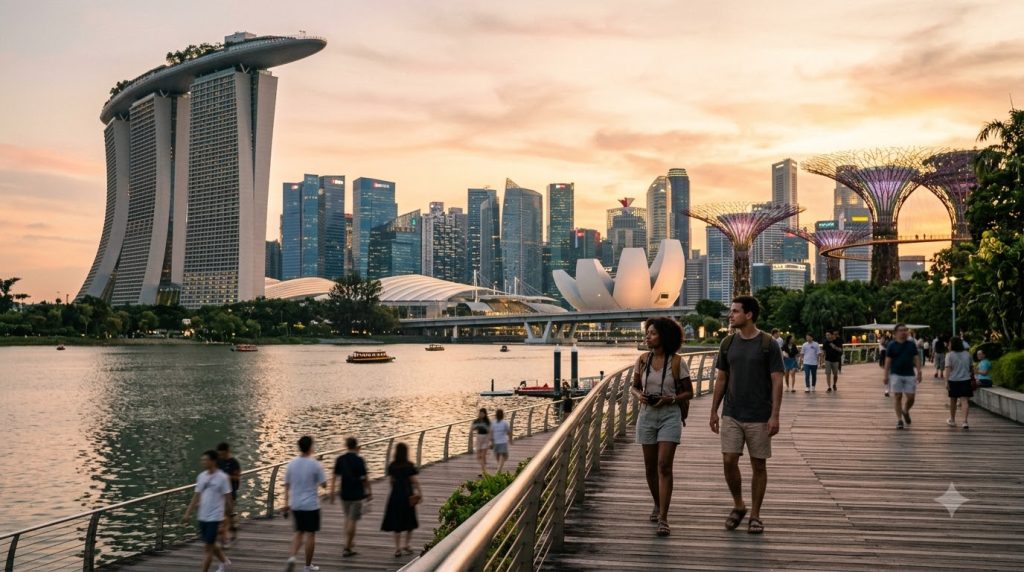
The best things to do in Singapore in 2026 sit within a short train ride of each other: the illuminated Supertrees and glass conservatories at Gardens by the Bay, the 200-metre SkyPark atop Marina Bay Sands, the theme-park thrills of Sentosa, and hawker centres where a Michelin-recognised plate of chicken rice still costs about S$6.
The city has built a huge amount to keep travellers busy.
This guide covers the attractions we think earn a spot on a three-to-four-day itinerary, with 2026 prices, opening hours, and the practical timing details that decide whether a day works or falls apart.
For trip planning basics such as visas, transport passes, and neighbourhoods, pair this with our complete Singapore travel guide. If you are choosing between two hubs for a wider trip, our Kuala Lumpur vs Singapore breakdown weighs cost, food, and things to do side by side.
The biggest lesson here is to front-load the outdoor sights before 11am. By midday the humidity turns Marina Bay into a sauna, so use the afternoons for the air-conditioned conservatories, museums, and Jewel Changi, then come back out after 6pm for the light shows. That rhythm lets you cover far more without wilting.
What are the best things to do in Singapore?
The best things to do in Singapore combine the futuristic waterfront around Marina Bay with the food, temples, and street life of the older ethnic quarters. Most first-time visitors can hit the highlights in three full days if they cluster attractions by area rather than criss-crossing the island.
Here is the shortlist we recommend, ordered roughly by how often travellers rate them a highlight:
- Gardens by the Bay: Supertree Grove, Cloud Forest, and Flower Dome.
- Marina Bay Sands SkyPark Observation Deck for the skyline view.
- Sentosa Island and Universal Studios Singapore.
- Hawker centres: Maxwell, Lau Pa Sat, and Chinatown Complex.
- Singapore Zoo and the Night Safari at Mandai.
- Chinatown and Little India for temples, markets, and food.
- Jewel Changi Airport and its 40-metre Rain Vortex.
- The Merlion Park, Helix Bridge, and a Marina Bay evening walk.
Gardens by the Bay and the Supertrees
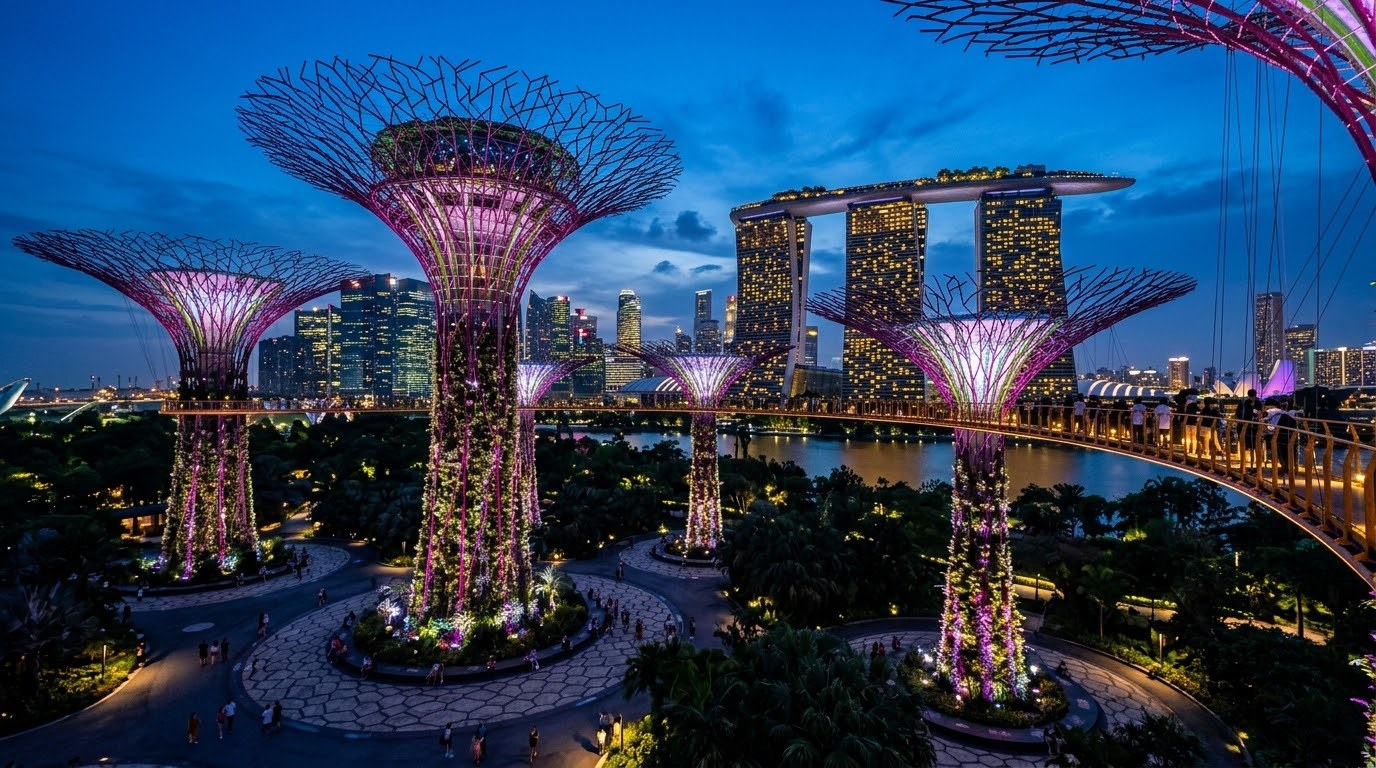
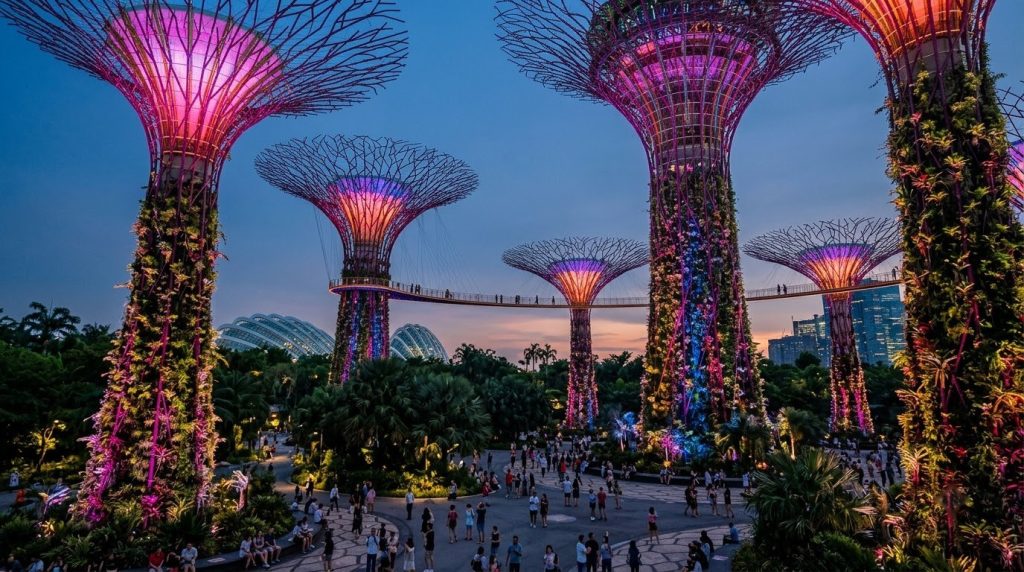
Gardens by the Bay is the attraction we would keep if forced to cut everything else. The outdoor Supertree Grove and the surrounding waterfront gardens are free to walk, and the Garden Rhapsody light-and-sound show runs nightly, usually at 7:45pm and 8:45pm, across the towering artificial trees.
Arrive around 7pm to grab a spot on the lawn beneath the tallest Supertree for the cheapest wow moment in the city.
The paid attractions are the two cooled conservatories and the raised walkways. The Cloud Forest wraps a 35-metre indoor mountain in mist and hosts one of the world’s tallest indoor waterfalls; the Flower Dome holds a rotating display of blooms from Mediterranean and semi-arid regions. Both open daily 09:00–21:00, with last admission around 20:00–20:30.
| Gardens by the Bay ticket | Price (SGD) | Approx. USD | Notes |
|---|---|---|---|
| Outdoor gardens + Supertree Grove | Free | Free | Includes the nightly light show |
| Flower Dome (resident adult) | S$12 | ~US$9 | Daily 09:00–21:00 |
| Cloud Forest (resident adult) | S$26 | ~US$19 | Indoor waterfall + misty mountain |
| Flower Dome + Cloud Forest combo, from | S$26.25 | ~US$19 | Two-conservatory pass |
| All-in combo (2 domes + Skyway + Observatory + Rhapsody), from | S$50.81 | ~US$38 | Best value if you want everything |
Source: Gardens by the Bay official entrance-fee pages, 2026. Prices vary for non-resident tourists and by booking channel.
If you only pick one indoor space, we would choose the Cloud Forest over the Flower Dome for the waterfall and the cooler air. Give the whole complex three to four hours, and wear shoes you can walk the OCBC Skyway in.
Marina Bay Sands SkyPark: is the view worth it?
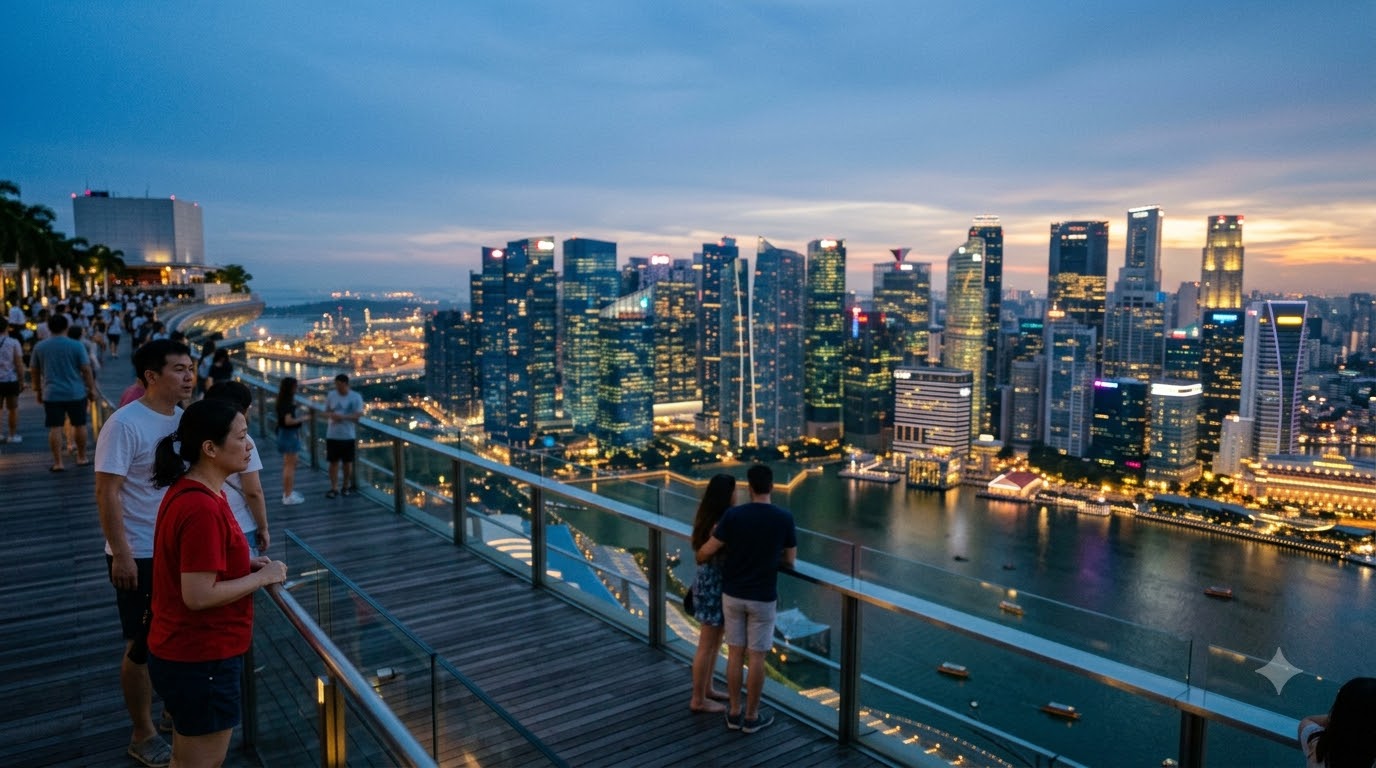
The SkyPark Observation Deck is worth it for first-timers who want the postcard skyline, less so if you plan to eat or drink at a rooftop bar with a similar view. The deck sits 200 metres up on the 57th floor of Marina Bay Sands, one of the largest cantilevered platforms in the world, and adult tickets run about S$23–26 (roughly US$17–19).
Timing matters more than the ticket here. Go up about 40 minutes before sunset, watch the light change over the Gardens and the container ships in the strait, then stay for the skyline to switch on. A few things worth knowing:
- The deck splits into a daytime session (roughly 10:00–16:30) and an evening session (about 17:00–21:00); the evening slot is the one people queue for.
- If you buy a drink at a bar on the same tower, you can often skip the observation-deck ticket and still get a high view over the bay.
- The free alternative is the waterfront promenade below, where the Spectra light-and-water show plays nightly on the bay.
For a broader look at how Singapore stacks up against its nearest big-city rival across skyline, food, and cost, see our Kuala Lumpur vs Singapore comparison.
Sentosa Island and Universal Studios Singapore
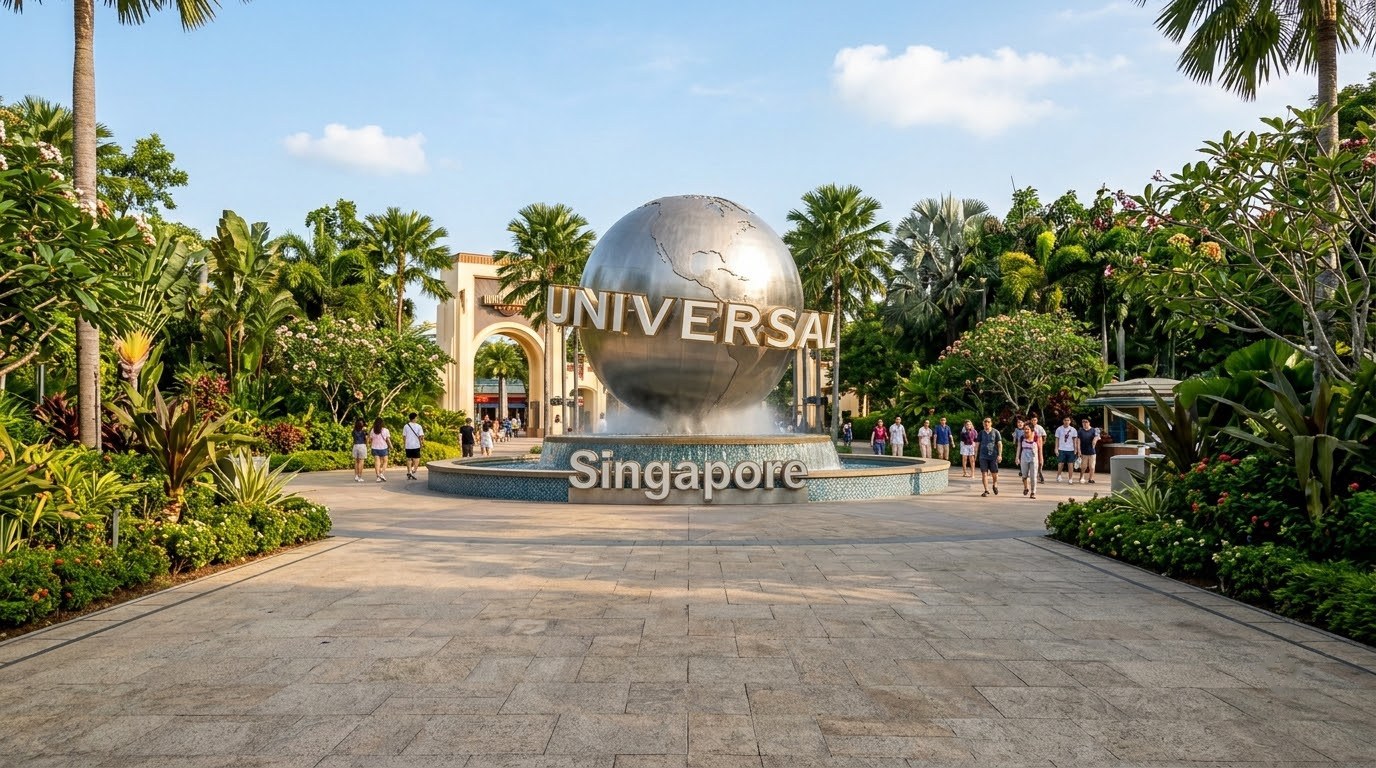
Sentosa is where families and thrill-seekers spend a full day, anchored by Universal Studios Singapore at Resorts World Sentosa. One-day adult admission starts from S$83 off-peak and S$86 on peak dates, with child tickets (ages 4–12) from S$62 (Resorts World Sentosa, 2026). Booking online is cheaper than the gate and lets you skip the ticket queue.
Universal is not the only reason to cross to Sentosa. The island packs beaches, a luge, an aquarium, and cable cars into a compact area you reach by the Sentosa Express monorail, a short walk, or the cable car from HarbourFront. Do Universal in the morning when ride queues are shortest, then cool off at Palawan Beach in the afternoon.
Practical notes for a Sentosa day:
- Ride the biggest coasters first thing; queues at Battlestar Galactica and the newer attractions balloon after 11am.
- The Sentosa Express monorail from VivoCity is the simplest way in, and a beach shuttle loops the island once you are there.
- Bring swimwear: the free public beaches are a genuine break from the theme-park pace.
Find your Singapore hotel on the map
Live prices from Booking & Airbnb — tap a pin to compare stays around Marina Bay and Bugis and beyond.
Where can you eat cheaply? Singapore’s hawker centres
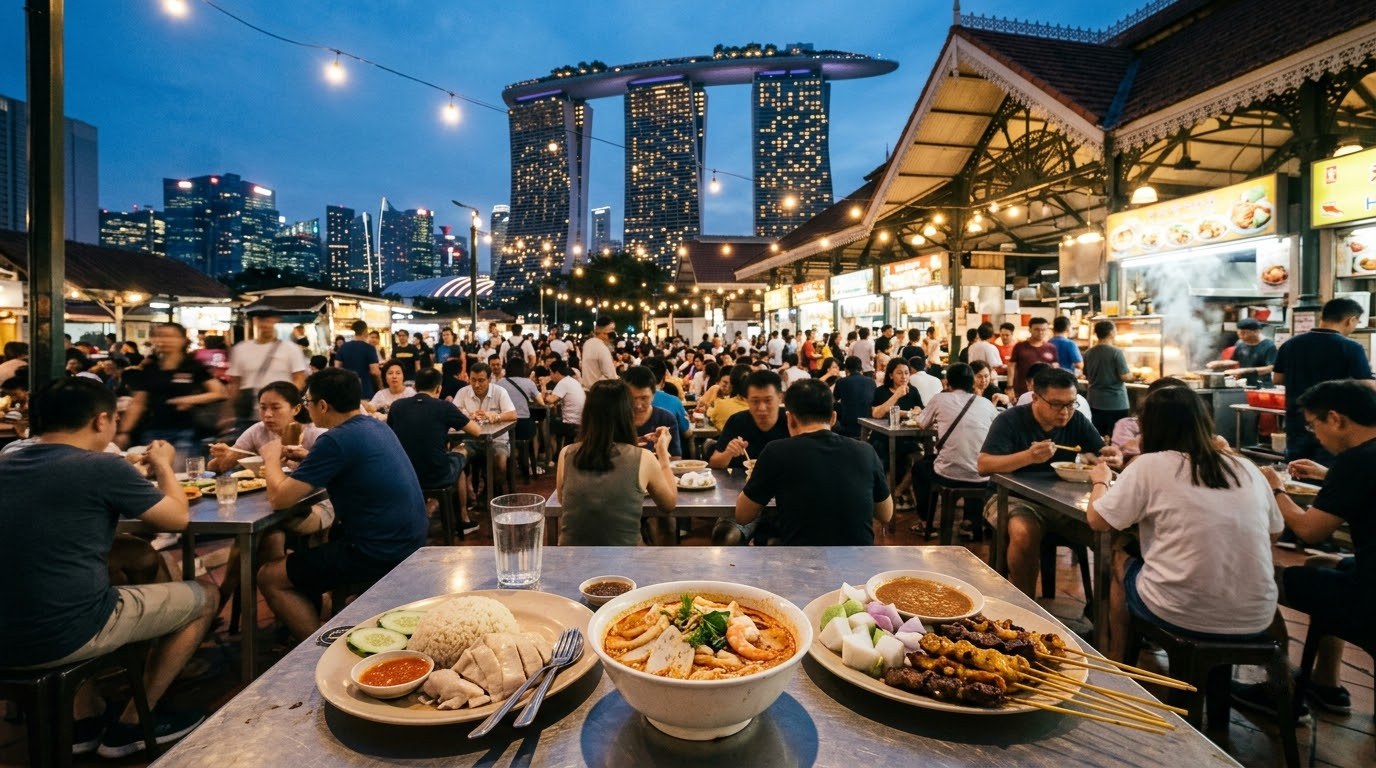
Hawker centres are the best-value experience in Singapore and, for us, the most memorable. These open-air food halls gather dozens of specialist stalls under one roof, and most single dishes cost just S$3–8 (about US$2.25–6). Two of them, the original Chinatown Complex stalls, have even held Michelin stars, and plenty more carry the Bib Gourmand badge.
Maxwell Food Centre in Chinatown is the easiest introduction, with more than 100 stalls. Expect a queue of around 20 minutes at Tian Tian Hainanese Chicken Rice (stall #01-10/11), a Bib Gourmand plate that costs around S$6. Lau Pa Sat, a restored Victorian market hall in the financial district, turns its adjacent street into a satay grill each evening after the offices empty.
| Hawker dish | Typical price (SGD) | Approx. USD | Where to try it |
|---|---|---|---|
| Hainanese chicken rice | S$5–7 | ~US$4–5 | Tian Tian, Maxwell Food Centre |
| Char kway teow (fried noodles) | S$5–8 | ~US$4–6 | Chinatown Complex |
| Satay skewers (per 10) | S$8–12 | ~US$6–9 | Lau Pa Sat satay street |
| Hokkien prawn mee | S$6–9 | ~US$4.50–7 | Various centres |
| Kaya toast + kopi set | S$4–6 | ~US$3–4.50 | Any kopitiam |
Source: Singapore hawker-centre pricing surveys, 2026. Most centres accept cashless payment; some older stalls remain cash-only.
A few habits make hawker meals easier:
– “Chope” your table by leaving a packet of tissues on it before you order; it is the local reservation system.
– Carry a little cash, since a handful of legacy stalls still do not take cards.
– Go slightly off the noon and 7pm rush to skip the longest lines.
Stroll the Singapore Botanic Gardens
The Singapore Botanic Gardens is the easiest way to add greenery without adding cost. Entry to the gardens is free, and the official site lists opening hours of 5 am to midnight daily, which makes it workable for a sunrise jog or a cool evening walk.
The gardens were inscribed as a UNESCO World Heritage Site in 2015, according to the Singapore Botanic Gardens site. That recognition covers the historic tropical garden itself, so the lawns, lakes, and old trees are the attraction, not a single ticketed exhibit.
How to use it in a heat-aware plan
- Visit early, before the humidity rises, and treat it as a morning anchor similar to the Supertree walk.
- Carry water and a hat, because shade is plentiful but breezes are not.
- Pair it with a late breakfast at a nearby kopitiam or cafe, then head back downtown by MRT for the afternoon.
- Check the garden’s website for the cost of any separate, ticketed sections such as the orchid garden, since fees are not listed with the free-entry notice.
Because it opens so early and closes so late, the gardens flex around almost any itinerary, including a layover or a jet-lagged first morning.
Singapore Zoo and the Night Safari
The Mandai wildlife parks are worth the trip out of the centre, especially the Night Safari, which was the world’s first nocturnal zoo. Adult admission to the Night Safari is roughly S$56, with online tickets from about S$48 (Mandai Wildlife Reserve, 2026), while the daytime Singapore Zoo runs around S$50 for adults. Both use open, moated enclosures rather than bars, so animals feel closer than in a traditional zoo.
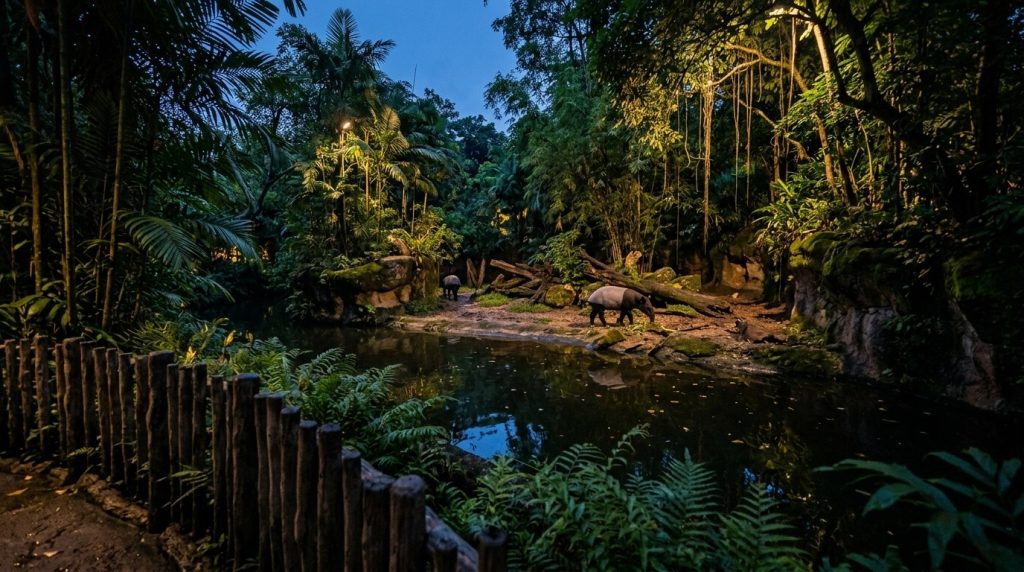
The Night Safari opens in the evening and centres on a tram ride through seven geographic zones, plus walking trails past big cats and Asian elephants. Taking the last tram of the night leaves the walking trails much quieter afterward. Getting there takes about 45–60 minutes by public transport from the city, so budget for the travel time.
- Book the Night Safari tram slot in advance; the earlier evening trams sell out first.
- Pair the Zoo and River Wonders in daylight, then stay on for the Night Safari after dark to save a second trip.
- Bring insect repellent and light long sleeves for the trails.
Spend a Rainy Afternoon at National Gallery Singapore
When a tropical downpour hits, an air-conditioned museum beats waiting under an awning. National Gallery Singapore holds large collections of Southeast Asian art in the historic City Hall and former Supreme Court buildings, and it sits within walking distance of the Marina Bay waterfront.
The gallery’s own site lists daily opening from 10 am to 7 pm, with last admission at 6:30 pm. For non-residents, general admission is SGD 20, a special exhibition ticket is SGD 25, and an all-access ticket for every exhibition and tour is SGD 30. Concession discounts of SGD 5 apply to children aged 7 to 12, seniors aged 60 and over, and overseas students and teachers. Prices may change, so confirm before you go.
Ways to save
- Children aged 6 and under enter free.
- The Keppel Centre for Art Education and the Ng Teng Fong Roof Garden Gallery need no ticket.
- Guided tours are free with an admission ticket, depending on schedule and availability.
- One gallery wing, the UOB Southeast Asia Gallery, is temporarily closed and scheduled to reopen in late 2027, so check which galleries are open before you plan around a specific collection.
Plan two to three hours, then walk to the Marina Bay waterfront once the rain stops.
Chinatown, Little India, and Kampong Glam
Singapore’s ethnic quarters are free to wander and hold the temples, markets, and street food that give the city its texture. In Chinatown, start at the Buddha Tooth Relic Temple, a five-storey Tang-style temple that is free to enter, then browse the Pagoda Street market stalls. A short walk away sits the Sri Mariamman Temple, the city’s oldest Hindu temple, dating to 1827.
Little India, a few MRT stops north, is the most sensory neighbourhood in Singapore. The Sri Veeramakaliamman Temple, the 24-hour Mustafa Centre, and the rainbow-coloured Tan Teng Niah house are the anchors, and the curry and dosa here are as good as the more famous chicken rice. Kampong Glam, centred on the golden-domed Sultan Mosque and boutique-lined Haji Lane, rounds out the trio.
- Buddha Tooth Relic Temple: free entry, modest dress required, typically open early morning to evening.
- Sri Mariamman Temple: free, founded 1827, Singapore’s oldest Hindu temple.
- Haji Lane in Kampong Glam: best for independent shops and street murals, liveliest in late afternoon.
Walk Henderson Waves and the Southern Ridges
For a skyline view without a ticket, head to the Southern Ridges, a chain of parks and elevated walkways in the south of the island. Its best-known landmark is Henderson Waves, which NParks describes as the tallest pedestrian bridge in Singapore, a 274 m wave-shaped span.
The bridge was built to improve connectivity between the nature areas along the ridges. NParks states the structure is lit by LED lights from 7 pm to 2 am daily. Lighting schedules can change, so treat the exact times as approximate.
Making it work
- Go in the morning for cooler temperatures and quieter paths, or in the evening to see the bridge lit.
- Join the wider ridges trail from the HarbourFront MRT area if you want a longer walk.
- Bring insect repellent and a refillable bottle. The forested stretches are humid even in the evening.
- Wear shoes with grip, since the trails include stairs and slopes.
This is the best free alternative to the SkyPark for travelers who want an elevated view and a breeze, and it pairs naturally with a Sentosa day.
Jewel Changi Airport and the Rain Vortex
Jewel Changi Airport turns a layover, or a deliberate half-day, into an attraction in its own right. Its centrepiece is the Rain Vortex, the world’s tallest indoor waterfall at 40 metres, ringed by a five-storey indoor forest. Viewing the waterfall and the free nightly light-and-sound show costs nothing; the show typically runs on the hour and half-hour through the evening.
The ticketed part is Canopy Park on the top level, with a hedge maze, mirror maze, bouncing nets, and the Cloud9 Piazza, starting from about S$16 per adult. Jewel works well as a final stop before a late flight: the food hall and the Rain Vortex view from the Shiseido Forest Valley trail are worth the time.
Because it is attached to the terminals by the Changi Airport MRT and the Skytrain, you can visit even if you are not flying.
- Rain Vortex + Shiseido Forest Valley: free to walk, light show nightly.
- Canopy Park attractions: from about S$16 adult, with bundle tickets for the mazes and nets.
- Reachable by MRT to Changi Airport, so it works as a non-flying day trip too.
Getting Around Singapore: MRT, Taxis, and the Tourist Pass
Singapore is easy to cover by MRT, and the airport connects directly. The MRT from Changi takes about 45 minutes, with an adult fare to City Hall of SGD 2.30 (about USD 1.70).
A taxi or rideshare from the airport costs roughly SGD 20 to 30 (USD 15 to 22), including an airport surcharge of SGD 5, or SGD 3 off-peak. A 50% surcharge applies from 1 AM to 6 AM. USD figures here use the roughly 0.75 rate implied elsewhere in this guide.
Is the Tourist Pass worth buying?
The Singapore Tourist Pass gives unlimited rides on the MRT, LRT, and basic bus services. Reseller and guide pages list it at about SGD 17 for one day, SGD 29 for three days, and SGD 45 for five days. It does not cover premium services such as the Sentosa Express or express buses, and children under 7 travel free anyway.
Guides disagree on value. One says it pays off only at around seven rides a day, while another says it helps when you move between many areas in a single day. Price your own itinerary against pay-as-you-go fares before you buy, and check the official operator site for current rates.
Practical habits
- Use contactless or a stored-value card for single trips, and keep the pass for heavy MRT days.
- Plan the Sentosa and Mandai days around separate transport, since those are not fully covered by the pass.
- Taxis and rideshares are best for late nights and the Night Safari return.
Singapore Flyer: Is the Giant Wheel Worth It?
The Singapore Flyer is a giant observation wheel next to Marina Bay that gives a slow, air-conditioned loop over the skyline. It competes with the SkyPark for the same view, so choose one unless you want to see the bay from two angles.
Price and timing
Sources disagree on the price. Guides list the standard adult flight at about SGD 40 (USD 30), with children aged 3 to 12 around SGD 25 (USD 19), but figures from SGD 33 to SGD 46 also appear for adults.
Promotional bundles exist at times, so check the official ticket page before booking. A reported maintenance closure ran from March 4 to April 12, 2026, which should no longer apply.
When to ride
Evening gives the Marina Bay lights, but the view is more complete at golden hour. The wheel works well as a rest from the heat, since the capsule is air-conditioned and the loop is slow.
If your budget is tight, skip it. The free waterfront promenade shares most of the same view.
Local Rules and Etiquette Worth Knowing
Singapore is clean, orderly, and strict about a few rules that surprise visitors. None of them are hard to follow, but fines can be steep, so know them before arrival.
- Vaping: Vapes are banned. Do not pack e-cigarettes or pods, and check Singapore Customs and Health Promotion Board guidance for current penalties.
- Chewing gum: The import and sale of chewing gum is restricted, with exceptions for certain medical and dental gum. Leave regular gum at home.
- Littering: Fines are heavy, so bin everything, including tissues and wrappers.
- Smoking: Allowed only in designated areas, which are marked at hawker centres and public places.
- Temples and mosques: Cover shoulders and knees, and remove shoes where signs or racks indicate.
Rules around penalties are updated from time to time, and blog figures disagree, so rely on official government sites for exact amounts.
Everyday etiquette
- Stand to the side on MRT escalators and let others pass on the left or right as signs direct.
- Offer seats on trains to those who need them, and avoid eating or drinking inside MRT stations or carriages.
- Queue at hawker stalls and taxi ranks, and clear trays where return stations are provided.
- Tipping is not expected at hawker centres, and restaurants often add a service charge.
Quick Day Trips Beyond the Island
Singapore sits close to Malaysia and Indonesia, so a border or ferry day can be an easy add-on. Costs below come from a travel wiki and may have changed. All are in Singapore dollars with a rough USD figure.
- Shuttle Tebrau train to Johor Bahru: SGD 5 one way (about USD 3.75). Tickets go on sale 6 months ahead and often sell out.
- Public bus to Johor Bahru: About SGD 2 to 5 (USD 1.50 to 3.75).
- Ferry to Batam: About SGD 19 to 25 one way (USD 14 to 19). A fast ferry is listed at SGD 32 one way or SGD 48 return.
Rules to check before you cross
Passports must be valid for at least 6 months from arrival. Duty-free allowances for alcohol are limited, and travelers from Malaysia get none. Importing non-medical chewing gum is illegal, though officers usually ignore a few sticks for personal use.
Cross-border days add time at immigration, so leave early and avoid a late Night Safari the same evening.
Heat, Haze, and Emergency Basics
Temperature barely changes through the year. Average highs run about 31 degrees C in December and January and about 32.5 degrees C for the rest of the year, with nights around 24.5 to 25.5 degrees C. Plan outdoor sights for early or late hours and use the air-conditioned attractions at midday.
Haze season
Haze from Sumatran forest fires can occur between May and October, and it is unpredictable. Check air-quality readings before outdoor days, and keep an indoor backup such as the National Gallery or Jewel.
Emergency numbers
- Fire and ambulance: 995.
- Police: 999.
Drug laws are severe, and a mandatory death penalty applies for trafficking. Do not carry anyone else’s bag across any border.
Pulau Ubin: Cycling Singapore’s Last Kampung Island
Pulau Ubin offers a slower, greener contrast to the city and takes about half a day. The National Parks Board says visits start with a bumboat from Changi Point Ferry Terminal, next to Changi Village.
Bumboats run from as early as 6 AM to 7 PM, and the crossing to the main jetty takes about 15 minutes. Buses 2, 29, 59, and 109 serve Changi Village Bus Terminal.
Fares and bike rental
The Board does not publish a fixed fare and tells visitors to confirm with the operator. A February 2026 guide gives SGD 4 for adults (about USD 3) and SGD 2.50 for children and seniors, paid in cash.
Another report covered a dispute over a fare of SGD 5 in September 2025, so carry small notes. Boats usually wait for about 12 passengers before leaving.
Bikes typically add around SGD 2 each on the boat. Private rental shops near the jetty are reported to charge about SGD 8 to 20 per day depending on the bike (about USD 6 to 15), with opening hours around 8 AM to 6 PM. Compare prices because the shops sit close together.
Planning tips
Go early, since there is little shade and no city-style services. Bring water, cash, and sun protection, and confirm the return boat time.
Haw Par Villa: A Free Park With a Paid Museum
Haw Par Villa is an unusual mythological sculpture park. Admission to the outdoor park is free, and the paid section is Hell’s Museum, which one guide lists at SGD 18 for adults (about USD 13.50) and SGD 10 for children aged 7 to 12.
Check the current status
The official site says Hell’s Museum runs 10 AM to 6 PM daily with last entry at 5 PM. The park began essential maintenance and repair works from December 8, 2025, with partial closure until further notice, while the museum stayed open. Older third-party listings give different park hours, so confirm on the official site before you travel.
It fits easily into a rainy-day or MRT-based afternoon, and it costs little compared with the larger attractions.
When is the best time to visit Singapore?
The best time to visit Singapore is February to April, the driest stretch of the year, though the city is a year-round destination because it sits just north of the equator with steady warmth. February is statistically the driest month, averaging around 105 mm of rain over 9–10 rain days, with daytime highs of 31–33°C and humidity in the low 80s percent.
There is no true cool season, so pack for heat and sudden downpours whenever you go. The two monsoons, the Northeast (December to early March) and Southeast (June to September), bring heavier showers, but rain usually arrives as short, intense bursts rather than all-day washouts.
| Period | Rainfall | What to expect |
|---|---|---|
| February–April | Driest, ~105 mm in Feb | Best conditions; Feb overlaps Chinese New Year |
| May–July | Warm, moderate rain | Great Singapore Sale, festival season |
| August–October | Warm, occasional haze | National Day, Formula 1 night race |
| November–January | Wettest, NE monsoon | Frequent afternoon showers, festive lights |
Source: Singapore climate averages, 2026. Temperatures stay near 31–33°C by day across all months.
If your dates fall in February, factor in Chinese New Year, when Chinatown transforms with lantern displays but some smaller stalls close for the holiday.
A Three-Day Singapore Sightseeing Plan With Entry Costs
Grouping sights by area saves transit time and avoids the midday heat. This plan reuses the prices listed earlier in the guide and adds the Tourist Pass numbers above. Use it as a template and swap days for the forecast.
| Day | Plan | Entry costs from this guide |
|---|---|---|
| Day 1 | Botanic Gardens at dawn, hawker lunch, Marina Bay SkyPark at sunset, Supertree show | SkyPark about SGD 23 to 26 (USD 17 to 19); Supertree show free |
| Day 2 | Chinatown and Little India walk, rainy-day museum option, Night Safari | Night Safari about SGD 48 to 56 (USD 36 to 42) |
| Day 3 | Sentosa and Universal Studios Singapore, Palawan Beach | Universal from SGD 83 (USD 62) |
Where the budget moves
Sentosa is the single biggest ticket, and the Gardens all-in combo adds more if you want both conservatories. Hawker meals at SGD 3 to 8 keep the food side cheap.
If you want a free day, swap Universal for the Henderson Waves walk and a hawker crawl. The entry costs drop to nothing.
Frequently Asked Questions
How many days do you need in Singapore?
Three full days cover the headline attractions: one for Marina Bay and Gardens by the Bay, one for Sentosa and Universal Studios, and one for Chinatown, Little India, and the Mandai wildlife parks. Add a fourth day if you want museums, a slower pace, or a proper meal-by-meal hawker crawl.
Is Singapore expensive to visit?
Attractions and alcohol are pricey, but food and transport are not. Hawker meals cost S$3–8, and the MRT makes a car unnecessary. Our biggest daily costs were paid attractions such as Universal Studios (from S$83) and the conservatories, so free sights like the Supertree light show and the ethnic quarters help balance the budget.
What is the best free thing to do in Singapore?
The nightly Garden Rhapsody light show beneath the Supertrees at Gardens by the Bay is the standout free experience, followed by the Spectra water show on Marina Bay and the Rain Vortex light show at Jewel Changi. All three are genuinely worth planning an evening around.
Do you need to book Singapore attractions in advance?
For Universal Studios, the Night Safari tram, and the Marina Bay Sands SkyPark evening session, online booking is cheaper and lets you skip the ticket queue. Free sights and hawker centres need no booking; just arrive off-peak to avoid the longest lines.
How do you get around Singapore?
The MRT metro is fast, cheap, and air-conditioned, and it reaches almost every attraction in this guide, including Changi Airport. Tap in with a contactless card or an EZ-Link card. For the Mandai parks and a few outlying spots, a short bus ride or ride-hail fills the gap.
Final Thoughts
Singapore rewards travellers who plan by geography and by time of day rather than by ticking off a list. Cluster the waterfront sights, save the air-conditioned spaces for the hottest hours, and come back out for the free light shows after dark, and even three days feels generous.
When you are ready to map the logistics, our Singapore travel guide covers transport passes, neighbourhoods, and where to base yourself, and the Kuala Lumpur vs Singapore comparison helps if you are weighing a wider Southeast Asia loop.