New York City vs Los Angeles 2026: Which Is Better?
Disclosure: Some links in this guide are affiliate links. If you book or buy through them, we may earn a small commission at no extra cost to you — it helps keep our guides free.
You want maximum density, walkability and no need for a car.
See hotels in New York City →You want outdoor space, car culture, beach time and a relaxed pace.
See hotels in Los Angeles →- NYC is consistently ranked the most visited US city, drawing 62.2 million visitors in 2024 (NYC Tourism, 2025)
- LA averages 300 sunny days per year vs NYC’s 224 (NOAA, 2025)
- A mid-range hotel in NYC averages $289/night in 2026 vs $189/night in LA (Booking.com data, 2026)
- LA public transit covers far less ground — 70% of Angelenos drive daily (LA Metro, 2025)
- NYC has 26,000+ restaurants; LA has approximately 18,000 (Yelp Business Data, 2025)
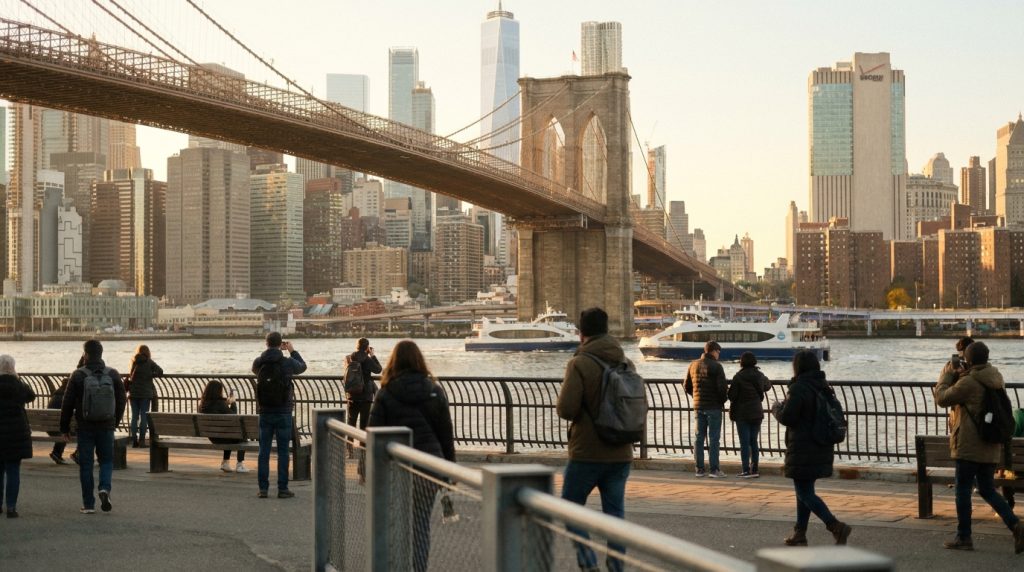
If you’re trying to decide between New York City and Los Angeles for your next trip, you’re not alone — these two cities attract over 100 million visitors combined every year. This guide breaks down everything from daily costs to transport, food, and nightlife so you can choose the city that actually fits how you travel.
Quick answer: Comparing New York City and Los Angeles? Open live hotel prices in each to weigh cost against location:
Cost of Travel: NYC vs LA in 2026
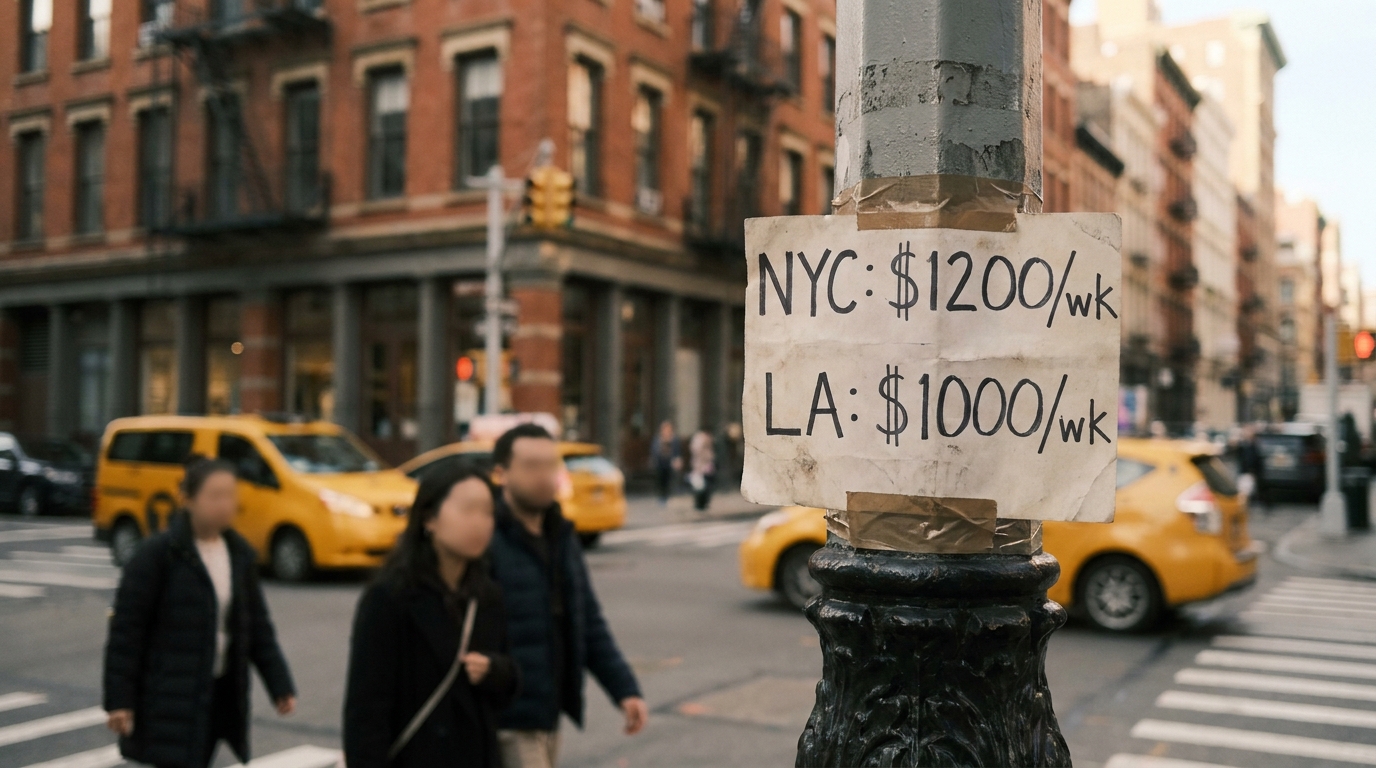
New York City is noticeably more expensive than Los Angeles across almost every category, but LA’s car dependency adds costs many travelers underestimate. A mid-range hotel in Midtown Manhattan runs $270–$320/night in 2026, while comparable hotels in West Hollywood or Santa Monica range from $175–$220/night on Check live hotel prices.
Budget accommodation is scarce in both cities — a decent hostel dorm in NYC costs $55–$80/night compared to $40–$60 in LA.
Daily expenses in NYC stack up fast. A sit-down lunch in Manhattan averages $22–$30 per person, subway rides cost $2.90 each, and a pint of beer in a bar runs $9–$14. In LA, lunch near Venice Beach or Silver Lake averages $18–$24, but you’ll spend $20–$35/day on parking alone if you’re driving — which you almost certainly will be.
Renting a car from Discover Cars in LA runs $45–$75/day for a compact, while NYC visitors rarely need one at all.
| Expense | New York City (2026) | Los Angeles (2026) |
|---|---|---|
| Mid-range hotel/night | $289 | $189 |
| Budget hostel/night | $65 | $50 |
| Sit-down lunch | $25 | $21 |
| Public transit ride | $2.90 | $1.75 |
| Daily car rental | $55 (rarely needed) | $60 (often essential) |
| Pint of beer | $11 | $8 |
Weather and Best Time to Visit
Los Angeles wins on weather — full stop. With roughly 300 sunny days per year, mild winters (55–68°F / 13–20°C), and dry summers, LA is genuinely one of the most reliably pleasant climates of any major city in the world.
The only real concern is June Gloom, a marine layer that keeps skies overcast along the coast most mornings through early July. Wildfires, particularly in late summer and autumn, can also affect air quality in and around the city.
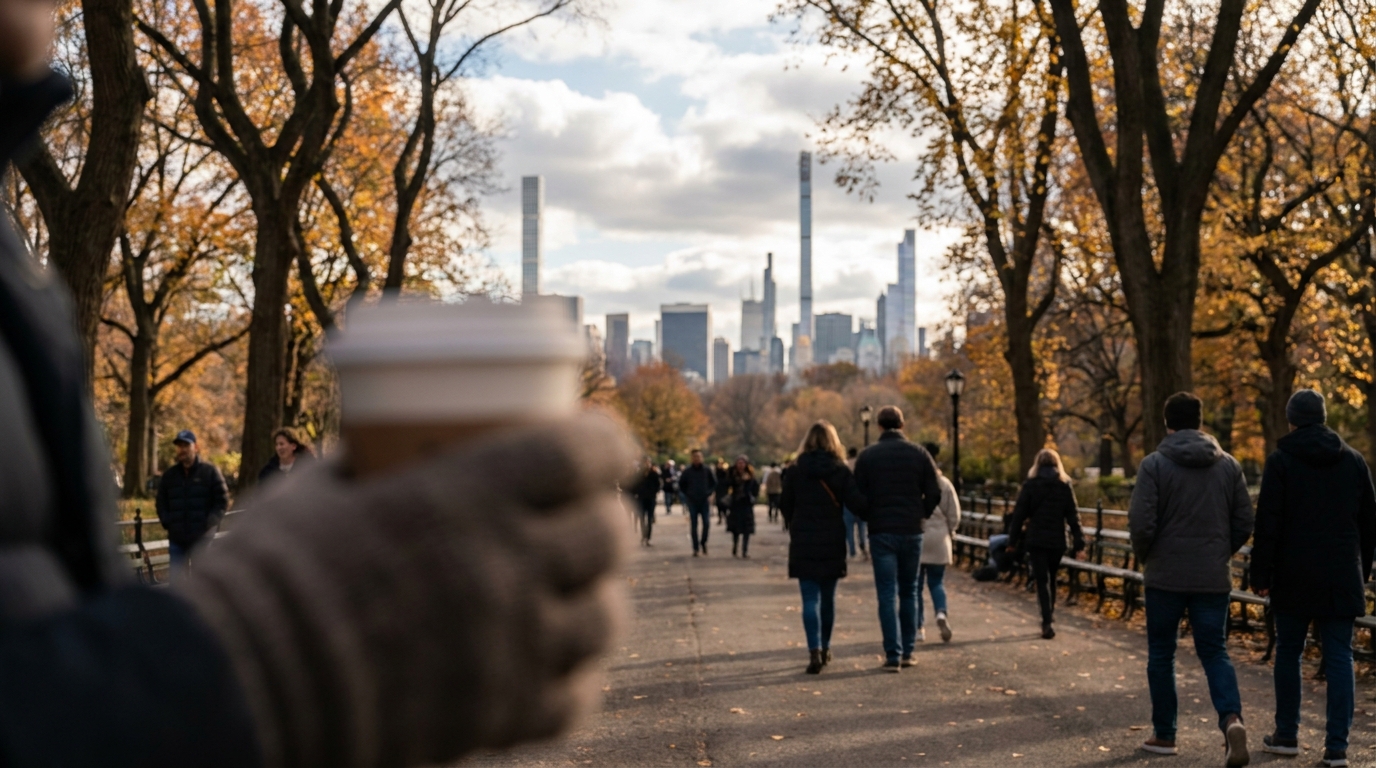
New York City has four distinct seasons, which is a real draw for many travelers. Spring (April–May) and fall (September–October) are widely considered the best times to visit — temperatures sit between 55–72°F (13–22°C) and the city looks spectacular. Summers are hot and humid, often pushing above 90°F (32°C) in July and August.
Winters are cold, with average lows around 27°F (-3°C) in January, though snowfall adds a certain atmosphere that’s hard to replicate. If weather predictability matters to you, LA wins clearly. If you want seasonal contrast, NYC delivers.
See our guide to best time to visit new york city for a month-by-month breakdown.
Food Scene: Two Completely Different Cultures

Both cities are world-class food destinations, but they offer genuinely different experiences. New York’s food culture is dense, competitive, and rooted in immigrant communities — you can walk three blocks and eat Bangladeshi, Ukrainian, and Puerto Rican food in the same hour. With 26,000+ restaurants, the sheer volume means even mediocre-looking spots are often quietly excellent.
A classic NYC slice still runs $3.50–$4.50 in 2026, and the bagel-versus-LA-bagel debate remains definitively settled in New York’s favor.
Los Angeles built its food identity around tacos, Korean BBQ, and Californian cuisine that privileges local produce and health-conscious cooking. The taco truck scene alone is a legitimate reason to visit — $2–$3 tacos from trucks in East LA or the Valley rival anything you’d pay $18 for at a sit-down spot.
LA’s Korean food corridor along Koreatown’s 6th Street is one of the best concentrations of Korean cuisine outside Seoul. The city also leads on vegan and plant-based dining in a way NYC simply doesn’t match. We’d call it a genuine tie — it depends entirely on what you’re hungry for.
Getting Around: Transport and Walkability
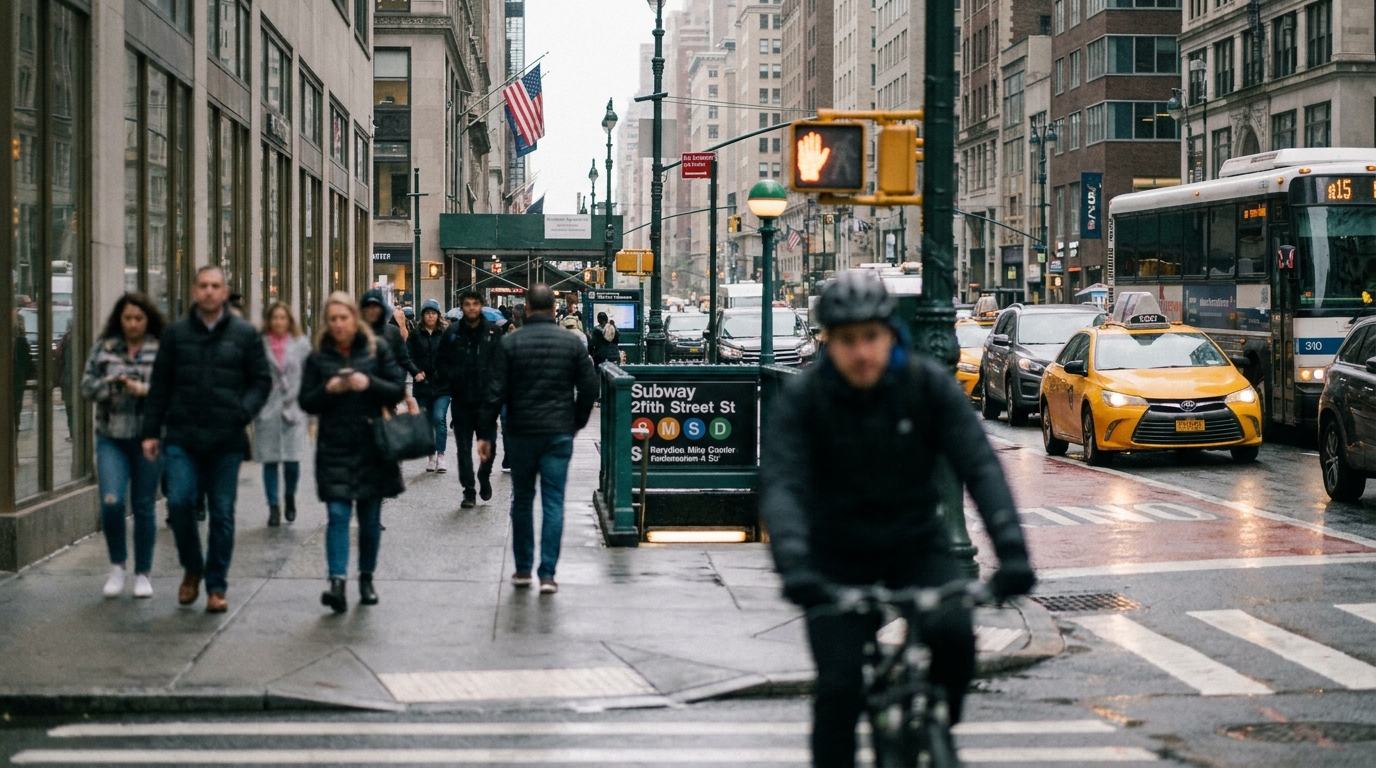
New York City’s transport advantage over Los Angeles is dramatic and worth factoring heavily into any trip decision. NYC’s subway runs 24 hours, covers all five boroughs, and gets you from JFK Airport to Midtown Manhattan in 50 minutes for $2.90 via the AirTrain connection. Walk Score rates NYC’s Manhattan neighborhood at 99/100 — essentially every errand is walkable.
You genuinely don’t need to rent a car at any point in a typical NYC trip, which saves both money and frustration.
Los Angeles has invested significantly in its Metro system — the Purple Line extension to Westwood opened in 2025, and the LAX Connector tram linking LAX to the Metro Green Line launched in late 2023. But coverage remains limited. Getting from Santa Monica to Pasadena by transit takes 90+ minutes; the same trip by car takes 30–40 minutes outside rush hour.
If you’re staying in one neighborhood (say, Silver Lake or West Hollywood), you can manage without a car for a day or two.
For anything resembling full LA exploration — beaches, Malibu, the Valley, Griffith Park — you’ll want wheels. Book a car through Discover Cars to compare rates from multiple rental agencies at LAX. Also consider an Airalo eSIM if you’re arriving from abroad — reliable data matters when navigating either city.
Iconic Experiences and Things to Do
New York City packs its attractions into a tight geography that rewards walkers. Central Park (843 acres), the Metropolitan Museum of Art (free suggested donation, $30 recommended), the High Line, Brooklyn Bridge, and Times Square are all accessible without a car.
GetYourGuide NYC tours like the One World Observatory summit experience ($46/adult in 2026) and Empire State Building tickets ($44/adult) can be booked in advance to skip lines. Broadway shows remain a signature NYC experience — expect $89–$250 for decent seats, or use the TKTS booth in Times Square for same-day discounts of up to 50%.
Los Angeles spreads its experiences across 500+ square miles. The Getty Center (free admission, $20 parking), Griffith Observatory (free), Venice Beach Boardwalk, and the Hollywood Walk of Fame are all low or no cost. Viator and GetYourGuide both list excellent Universal Studios Hollywood day passes starting at $109 in 2026, and Warner Bros.
Studio Tour tickets start at $75. LA also punches hard on day trips — Malibu, Santa Barbara (90 min north), and Joshua Tree National Park (2.5 hours east) are all feasible from a central LA base.
NYC’s day trip options are solid but different: the Catskills, Hudson Valley wine country, and the Jersey Shore are all under 2 hours by car or train. Check best day trips from new york city for options.
| Experience | NYC Price (2026) | LA Price (2026) |
|---|---|---|
| Top observation deck | $44–$46 | Free (Griffith Observatory) |
| Major theme park | N/A | $109+ (Universal Studios) |
| World-class art museum | $30 suggested (Met) | Free (Getty Center) |
| Guided food tour | $49–$75 | $45–$70 |
| Stadium/live sports | $60–$300 (Yankees/Knicks) | $55–$280 (Dodgers/Lakers) |
Find your Los Angeles hotel on the map
Live prices from Booking & Airbnb — tap a pin to compare stays around Santa Monica and Hollywood and beyond.
Nightlife, Arts, and Entertainment
New York City’s nightlife scene operates on a different clock than almost anywhere else in the US.
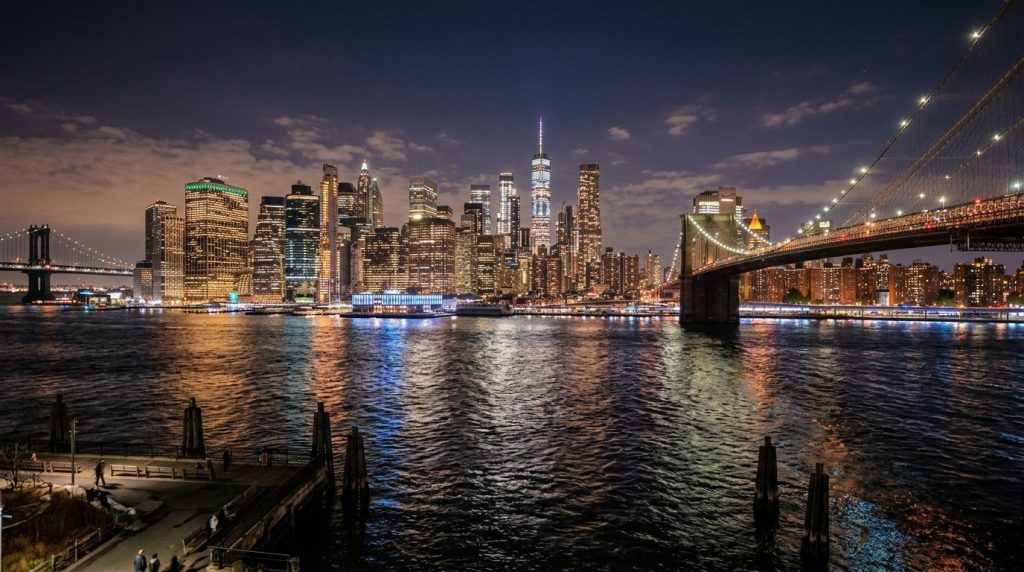
Bars in Manhattan stay open until 4am, the club scene in Brooklyn’s Bushwick and Williamsburg neighborhoods runs strong past sunrise, and the density of live music venues — from jazz rooms in the West Village to indie stages in the Lower East Side — is unmatched.
Broadway and Off-Broadway theater, Carnegie Hall, Lincoln Center, and dozens of smaller performance spaces give NYC a cultural weight that few cities globally can rival. Comedy clubs including the Comedy Cellar in Greenwich Village remain globally sought after — expect $25–$35 cover plus a two-drink minimum.
Los Angeles has a different relationship with nightlife — it’s more dispersed, more celebrity-adjacent, and increasingly driven by the music industry’s presence in the city. The Troubadour, The Wiltern, and Hollywood Bowl (outdoor concerts April–November) are genuine institutions.
LA also has a stronger rooftop bar culture than NYC, with spots in West Hollywood and Downtown offering views that have no equivalent in Manhattan’s canyon streets. Last call is 2am statewide in California — two hours earlier than New York. If late-night energy matters to your trip, NYC wins this category.
If you prefer a cooler, more industry-insider vibe, LA delivers. See new york city nightlife guide for neighborhood-by-neighborhood bar recommendations.
Which City Should You Choose?
Your decision ultimately comes down to what kind of traveler you are. New York City is right for you if you want maximum density — the ability to walk out your hotel door and immediately be inside one of the world’s most concentrated environments of culture, food, and energy.
It’s the better choice for first-time US visitors, for anyone without a car, and for travelers who want to feel like they’re at the center of something. The cost premium is real but justified for a lot of people.
Los Angeles makes more sense if you’re drawn to outdoor space, car culture, beach time, and a more relaxed pace. It’s significantly cheaper for accommodation, the weather is more predictable, and the food — especially tacos, Korean, and farm-to-table Californian — is worth traveling for on its own.
Families often find LA easier to navigate because parking and space are less constrictive. Our read: for a 5-day city break, NYC delivers more per square mile. For a 10-day trip with beach time, day trips, and variety, LA has the edge.
For bookings in either city, we recommend checking Check live hotel prices for hotels, GetYourGuide or Viator for activities, and Discover Cars if you’re heading to LA and need a rental. See our full new york city travel guide and los angeles travel guide for deeper destination breakdowns.
Frequently Asked Questions
Is New York City more expensive than Los Angeles?
Yes, significantly so for accommodation and dining. NYC hotels average $289/night vs LA’s $189/night in 2026. However, LA’s near-mandatory car rental costs ($60/day plus $20–$35/day parking) close the gap considerably. Budget roughly 20–30% more for a comparable NYC trip.
Which city has better weather for tourists?
Los Angeles wins on weather reliability with roughly 300 sunny days per year and mild temperatures year-round. NYC has more seasonal variety — spring and fall are genuinely beautiful — but summers are humid and winters are cold. If consistent sunshine is your priority, LA is the clear choice.
Do I need a car in New York City?
No. NYC’s 24-hour subway system, extensive bus network, and high walkability mean most visitors never need a car. In fact, renting one creates more problems than it solves — parking costs $40–$70/day in Manhattan, and traffic is genuinely brutal.
How many days do you need in each city?
We recommend a minimum of 5 days for NYC to cover Manhattan and at least one outer borough. LA needs 6–7 days minimum given the distances — plan for a full day at the beach, a day in Hollywood, and at least one day for a destination like Malibu or Griffith Park.
Which city is better for families with kids?
Both are excellent for families but in different ways. NYC wins for museum access — the American Museum of Natural History, the Intrepid, and the Children’s Museum of Manhattan are all world-class. LA offers more space, beach days, Universal Studios, and the La Brea Tar Pits, which kids consistently love.
Which city has better food?
It depends what you’re after. NYC leads on pizza, bagels, deli food, and sheer restaurant density. LA leads on tacos, Korean BBQ, vegan dining, and farm-fresh Californian cuisine. Both cities are genuinely top-tier food destinations — most frequent visitors refuse to pick a winner.
Is Los Angeles safe for tourists?
Like NYC, safety varies significantly by neighborhood. In LA, tourist-heavy areas like Santa Monica, West Hollywood, Beverly Hills, and the Hollywood Walk of Fame are generally safe with standard urban precautions. Downtown LA has seen elevated property crime in recent years — be aware of your surroundings. NYC’s major tourist zones (Midtown, Central Park, Brooklyn Heights) are similarly safe with normal vigilance.
The Verdict
New York City and Los Angeles are both world-class destinations that reward travelers with different things. NYC is denser, more walkable, more expensive, and culturally relentless in the best possible way. LA is sunnier, cheaper for accommodation, car-dependent, and rewards travelers who want space, beaches, and a pace that doesn’t feel like you’re running a race.
If you’re planning your trip, start by locking in accommodation early — both cities fill up fast, especially in summer. Heading to LA? Get your Discover Cars rental sorted before you fly — rates are lower when booked in advance. Whichever city you choose, you’re in for a genuinely great trip.