Mexico City vs Cancun: Which One Should You Book? (2026)
Disclosure: Some links in this guide are affiliate links. If you book or buy through them, we may earn a small commission at no extra cost to you — it helps keep our guides free.
You want pre-Hispanic ruins, serious food, cheap transit and lower hotel costs.
See hotels in Mexico City →You want the Caribbean: white sand, snorkeling and a resort pool.
See hotels in Cancun →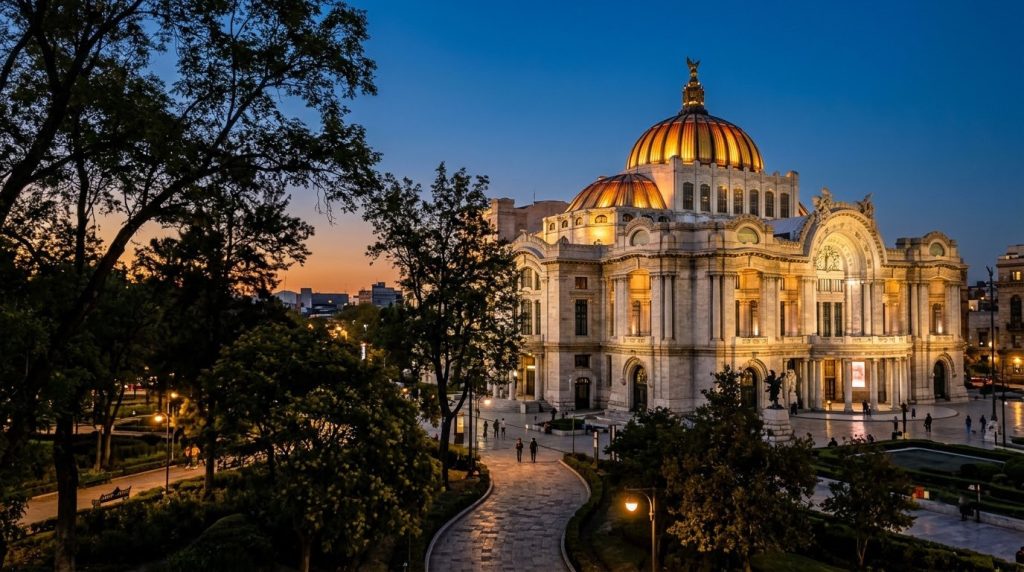
Mexico City wins for most first trips because a mid-range shared room averages about USD 41 per person per night there versus USD 96 in Cancun, and you get pre-Hispanic ruins, serious food and cheap transit on top. Cancun wins only when the point of the trip is the Caribbean: white sand, snorkeling and a resort pool.
If you can spare 7 to 10 days, do both. The cities are a short nonstop flight apart.
| Factor | Mexico City | Cancun |
|---|---|---|
| Best for | Food, museums, history, day trips | Beaches, resorts, snorkeling |
| Mid-range room (per person, shared) | USD 41 (MXN 703) | USD 96 (MXN 1,630) |
| Mid-range food per day | USD 47 (MXN 792) | USD 49 (MXN 825) |
| Local transport | Metro, MXN 5 a ride | Hotel Zone bus, MXN 12 a ride |
| Best months | November to April | November to March |
| Biggest downside | 2,240 m altitude, summer rain | Sargassum April to October, hurricane season |
| Time zone | UTC-6, no daylight saving | UTC-5, no daylight saving |
| US advisory | Mexico: Level 2 | Mexico: Level 2 |
Cost: where your money actually goes
The room is where the two cities split. BudgetYourTrip’s traveler-reported figures put a mid-range room at USD 41 (MXN 703) per person in Mexico City against USD 96 (MXN 1,630) in Cancun, based on two people sharing. Budget rooms show the same gap: USD 16 versus USD 37.
Food is close to identical at the mid-range level, about USD 47 to 49 a day, and entertainment runs USD 15 a day in Mexico City against USD 35 in Cancun. All figures are converted at USD 1 = MXN 17.
One caveat: the same site’s overall mid-range daily totals come out higher for Mexico City (USD 230 versus USD 166), so the savings vanish if tasting menus and private tours pile up.
The Mexico City Metro is a flat MXN 5 per trip. Cancun’s Hotel Zone buses cost MXN 12 and run 24 hours along the 25 km Boulevard Kukulcan, but sightseeing beyond the strip means tours or a rental car.
What you do all day in each city
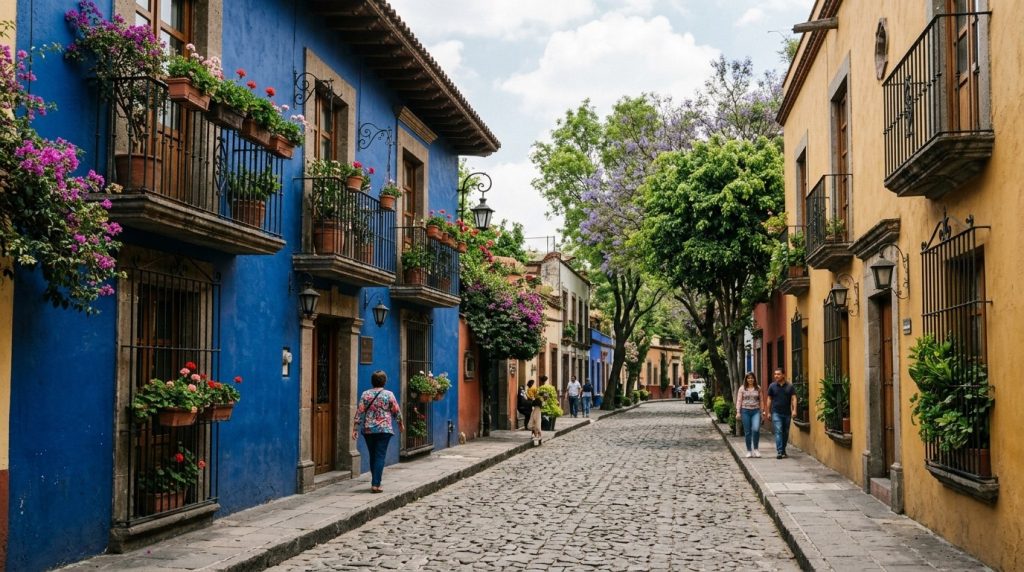
Mexico City is a do-something city. Mornings go to the Zocalo and Chapultepec, afternoons to markets and long lunches, nights to tacos al pastor in Roma. Our list of the best things to do in Mexico City covers the essentials for a first week.
The pyramids of Teotihuacan sit about 48 km northeast of the city. Entry for foreigners is MXN 210 (USD 12), and a public bus from Terminal del Norte takes 1 to 1.5 hours each way. That’s one of several easy day trips from Mexico City.
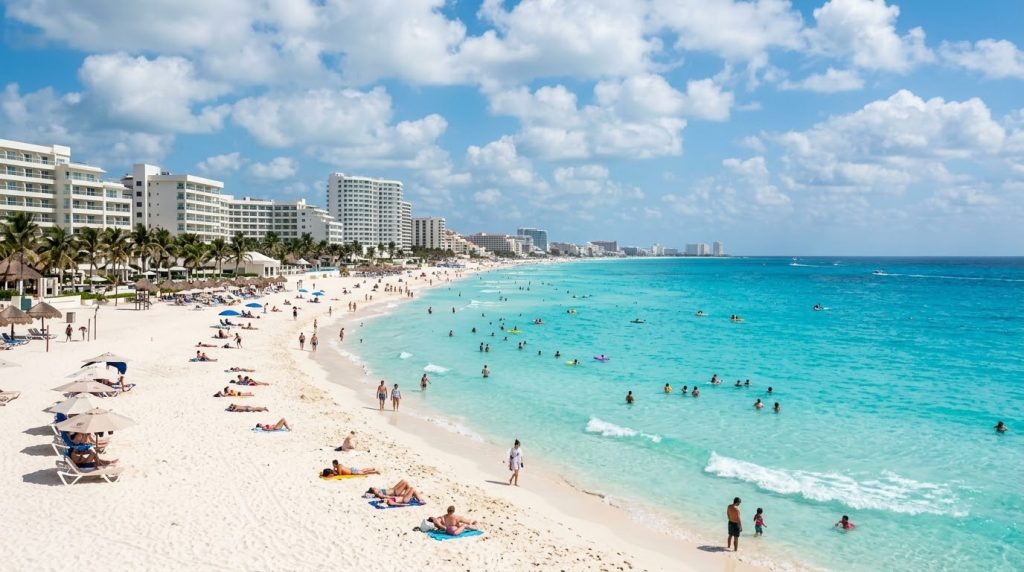
Cancun is a do-nothing city, and that’s the appeal. You swim, snorkel, eat and repeat, then break it up with a ferry to Isla Mujeres or a day at a cenote. For the full menu, see our guide to the best things to do in Cancun. The big ruin is Chichen Itza, 197 km away, about 2.5 hours each way on toll highway 180D.
Weather and timing: when each one is at its best
Mexico City’s dry season runs November to April, with daytime highs around 70 to 82°F and March and April the warmest and sunniest. From June to September, showers arrive almost daily, usually in the afternoon, and rarely last long. Our breakdown of the best time to visit Mexico City goes month by month.
Cancun has two seasonal problems. The Atlantic hurricane season runs June 1 to November 30, and NOAA’s 2026 outlook called for a below-normal year. Sargassum seaweed typically washes in from April to October and is heaviest June to August.
The University of South Florida flagged 2026 as a potential record year. Isla Mujeres and Cancun’s north-facing beaches usually suffer least. For clear water, aim for November through March, as our best time to visit Cancun guide explains.
Safety: same country rating, different risks
The US State Department rates Mexico at Level 2, “Exercise Increased Caution,” and assesses each state separately. Quintana Roo, home to Cancun, carries the same increased-caution language, citing crime. In practice, most visitors to either city deal with petty theft and taxi overcharging, not violence.
Use Uber or DiDi in Mexico City. In Cancun, keep to the Hotel Zone and well-reviewed downtown restaurants after dark. Never buy drugs in either city.
Mexico City has one extra risk: altitude. At 2,240 m, it sits higher than Denver. The city’s tourism office says many visitors feel nothing, but some get headaches, fatigue or shortness of breath for the first day or two. Drink water and go easy on alcohol the first night.
Verdict by traveler type
– First-timers to Mexico: Mexico City. You’ll see more of the real country in 4 days than in 2 weeks at a resort. – Couples: Cancun for a honeymoon or a pure rest trip. Mexico City for couples who’d rather eat their way through a city than lie by a pool. – Families with young kids: Cancun.
Calm, shallow water on the north beaches, resort kids’ clubs and no altitude adjustment make it easier with toddlers. – Budget travelers: Mexico City. Rooms cost less than half as much, the Metro is MXN 5, and street food is everywhere. – Groups and spring breakers: Cancun. The nightlife strip and all-inclusive setups are built for it.
Doing both in one trip
Nonstop flights between the two cities take about 2 hours 15 minutes, with Volaris, Viva and Aeromexico all flying the route. Remember that Cancun runs one hour ahead of Mexico City year-round. A good split is 4 to 5 days in the capital first, then 3 or 4 beach days to recover.
Our 5-day Mexico City itinerary fits that first leg. Fly open-jaw, into one city and home from the other, so you don’t backtrack.
Where to stay
Roma Norte and Condesa (Mexico City): Leafy, walkable streets with the city’s best restaurant density. Ideal for couples and first-timers.
Polanco (Mexico City): The upscale, quieter choice, a short ride from Chapultepec. Suits families.
Hotel Zone (Cancun): Stay here for the beach. The north end has calmer water; the southern stretch has bigger waves and bigger resorts.
Find your Mexico City hotel on the map
Live prices from Booking, Airbnb and more — move the map or change dates to compare stays across Mexico City.
Frequently Asked Questions
Is Mexico City cheaper than Cancun?
For accommodation, yes. Traveler-reported data shows a mid-range room at about USD 41 per person in Mexico City versus USD 96 in Cancun, and the Metro costs MXN 5 a ride. Food costs are similar. Overall spending can still run high in Mexico City if you book tasting menus and private tours, so track the extras.
Is Mexico City or Cancun safer for tourists?
Both sit under Mexico’s countrywide Level 2 “Exercise Increased Caution” advisory from the US State Department. Cancun’s Hotel Zone feels more insulated, while Mexico City is safe in Roma, Condesa, Polanco and the Centro by day. In both, the common problems are pickpocketing and taxi scams. Use app-based rides and skip anything drug-related.
How many days do I need in Mexico City and Cancun?
Give Mexico City 4 to 5 days. That covers the Centro, Chapultepec, Coyoacan, Xochimilco and a Teotihuacan day trip. Cancun needs 3 to 4 days for beach time plus one excursion, such as Isla Mujeres or Chichen Itza. Seven to nine days total works well with a 2-hour-15-minute flight in between.
When should I avoid Cancun?
Think twice from June through October. That window overlaps both the Atlantic hurricane season (June 1 to November 30) and peak sargassum, which is heaviest June to August. November through March brings the clearest water and drier weather, though prices rise around Christmas and spring break.
Does altitude in Mexico City really affect visitors?
Sometimes. At 2,240 m (7,349 ft), Mexico City is higher than Denver. The city’s tourism office notes many visitors have no symptoms, but some feel headaches, fatigue or breathlessness for a day or two. Drink extra water, limit alcohol the first night and plan an easy first day.
Planning the whole trip? Start with our Cancun travel guide for the overview, then use this page for the details.
Planning the whole trip? Start with our Mexico City travel guide for the overview, then use this page for the details.