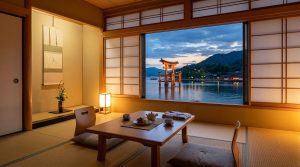
Is Hiroshima Worth Visiting? (2026)
Disclosure: Some links in this guide are affiliate links. If you book or buy through them, we may earn a small commission at no extra cost to you — it helps keep our guides free.
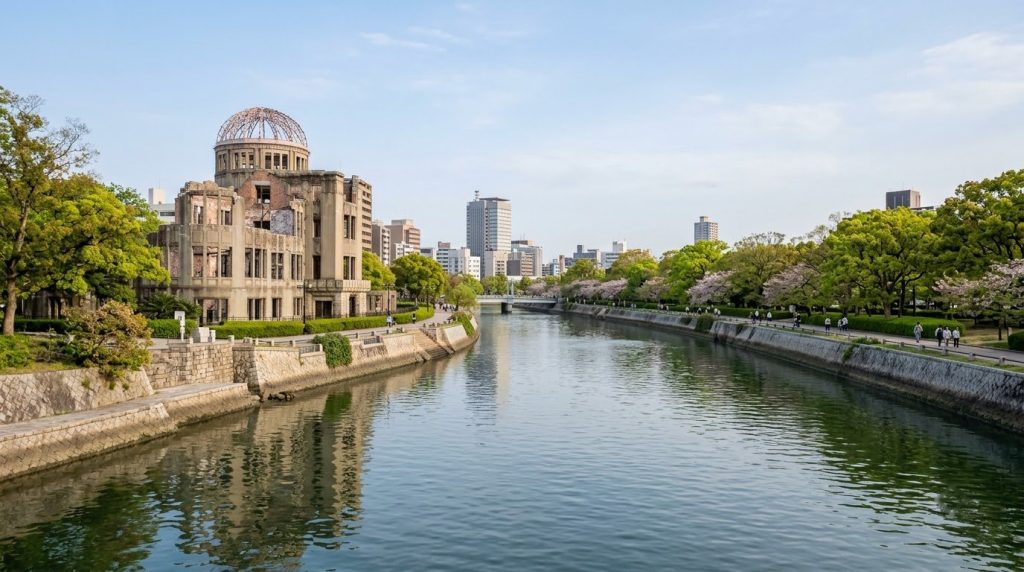
Hiroshima is worth visiting for the USD 1.30 (JPY 200) entry fee to the Peace Memorial Museum alone, and the four-hour bullet train ride from Tokyo buys a day that also reaches the floating torii gate of Miyajima.
It stops being worth the detour on a short first Japan trip of five to seven days, when a day spent reaching Hiroshima usually means cutting a day out of Kyoto instead of adding to it.
| Traveller type | Worth it? | Nights to give it | Why |
|---|---|---|---|
| First Japan trip, 10+ days | Yes | 1 night | Time for the Peace Memorial and a full Miyajima day without rushing |
| History-focused traveler | Yes | 1-2 nights | The Peace Memorial Park and Museum are the actual reason to go |
| Food traveler | Yes | 1 night | Hiroshima-style okonomiyaki is worth planning a meal around |
| Short first Japan trip, 5-7 days | No | 0 nights | The Tokyo-Kyoto loop already fills the calendar |
| Business trip, one free afternoon | No | 0 nights | Not enough hours to reach both the Peace Memorial and Miyajima |
| Traveler already based in Kyoto | Yes, as a day trip | 0 nights | Under two hours each way makes an overnight unnecessary |
The case for Hiroshima rests on two things that have nothing to do with each other: a museum that changes how a visitor thinks about the 20th century, and an island shrine that is simply one of the most photographed sights in Japan. Both are explained below, along with the travel cost of reaching either one.
The Peace Memorial, and why it lands the way it does
The Peace Memorial Park and Museum are the reason most people put Hiroshima on a Japan itinerary, and they earn that reason. Adult admission to the museum is USD 1.30 (JPY 200) at today’s rate of roughly JPY 154 to the USD, which is close to free for what it covers.
The visitor route runs through the East Building first, where introductory exhibits set the historical context, then into the Main Building, where personal belongings, photographs, and testimonies left by victims carry the exhibit rather than any text panel.
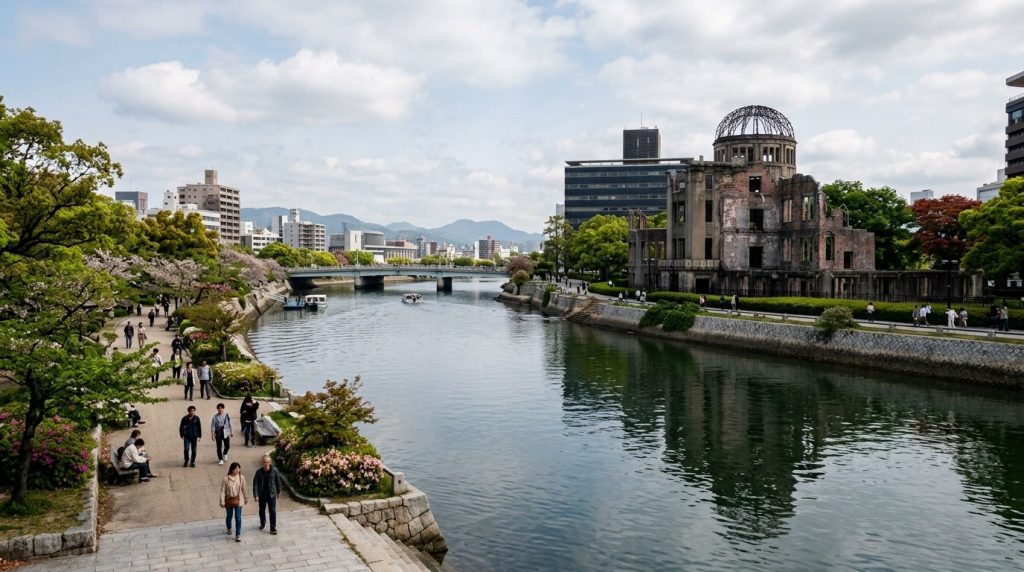
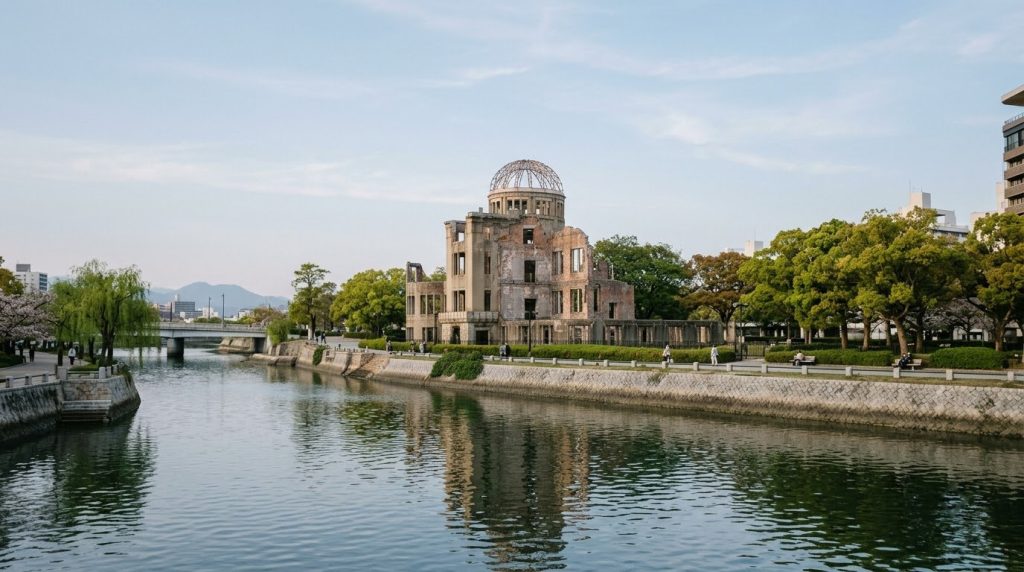
The museum does not dramatize the events of August 6, 1945; it lays out what happened and lets a visitor draw their own conclusions. The A-Bomb Dome sits a short walk across the river, and the Children’s Peace Monument is close enough to the museum entrance to see on the same walk.
Most visitors leave the park quiet rather than shaken, which is a different reaction than a history lecture produces and a more useful one for a travel day. Budget half a day for the museum and park together, including the walk to the dome, and go earlier in the day if arriving alongside school groups is a concern.
Miyajima, the other half of the case
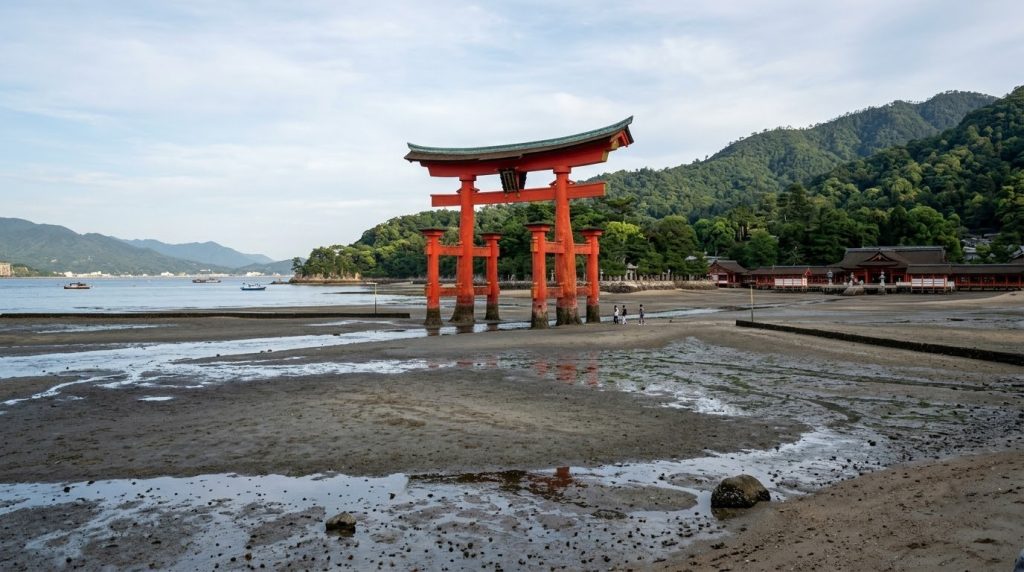
Miyajima is the second half of why Hiroshima works as a destination, and for many travelers it becomes the better half. The island sits a 10-minute ferry ride from Miyajimaguchi Station, itself about 28 minutes from Hiroshima Station by JR train.
Since 2023 the ferry has carried a JPY 100 visitor tax on top of the JPY 200 fare, so a round trip runs about USD 3.90 (JPY 600) at today’s rate. Itsukushima Shrine’s vermilion torii gate only appears to float at high tide, so checking the tide table matters more than checking the ferry timetable.
Deer wander the waterfront promenade, the shopping street sells grilled oysters and momiji manju, and the whole island is walkable in an afternoon. Add the ropeway up Mount Misen if the day allows one more hour, since the summit view over the Seto Inland Sea is the best payoff on the island for the least walking.
Anyone trying to combine the museum and Miyajima in one day should work backward from the last ferry, not forward from the first train, since missing the last crossing means an unplanned night on the island.
Getting there, honestly
Getting to Hiroshima costs real time, and that travel cost is the actual question behind whether Hiroshima is worth visiting. From Tokyo, the fastest Nozomi bullet train takes about four hours, and the trip can stretch closer to five hours on Hikari or Sakura services that require a transfer at Shin-Osaka Station.
From Kyoto the trip is shorter, under two hours on the fastest Nozomi and closer to two hours twenty minutes on slower services.
That gap is why anyone already weighing Tokyo vs Kyoto for a home base tends to treat Hiroshima as an extension of the Kyoto leg, not the Tokyo one, and why most itineraries tack it onto the end of a Kansai-based trip rather than a Kanto-based one.
Both routes run on reserved and unreserved cars, and reserving a seat ahead of a trip during cherry blossom season or a national holiday is worth the extra step, since standing for two to four hours defeats the point of a bullet train.
Best time to visit Hiroshima
Hiroshima runs a wider temperature range than its mild image suggests. August is the hottest month, with average highs near 34 degrees Celsius and days that regularly push past 35, so a midsummer visit means short stretches outdoors between air-conditioned stops.
January is the coldest month, with average lows around 2 degrees Celsius and occasional snowfall, cold enough that the Peace Memorial Park walk calls for a proper coat rather than a light jacket.
The rainy season arrives in June and typically breaks by mid-July, after which summer heat sets in fully, so late June and early July combine humidity with a real chance of rain washing out an outdoor itinerary.
Spring and autumn are the two windows that make the day worth building around rather than enduring. Cherry blossoms around the Peace Memorial Park and the riverside typically open in early April, and the mild temperatures either side of the bloom make March through May comfortable for the walk between the museum, the A-Bomb Dome and the ferry terminal.
October stays close to the comfort of May, and November’s average highs drop below 20 degrees Celsius while still staying dry more often than not, which makes autumn the other reliable stretch for combining the museum visit with a full Miyajima afternoon without battling heat or rain.
| Season | Months | What to expect |
|---|---|---|
| Spring | March to May | Mild, cherry blossoms from early April, comfortable for walking |
| Summer | June to August | Rainy season into July, then heat with highs near 34C in August |
| Autumn | September to November | Dry and mild, November highs drop below 20C |
| Winter | December to February | Cold, average lows near 2C in January, occasional snow |
For a one-day Hiroshima trip layered onto a Kansai itinerary, spring and autumn remove weather from the list of things that can go wrong on a day that already has a tight ferry schedule to work around.
What Hiroshima is not
Hiroshima is not a city built around historic architecture, since most of it was rebuilt after 1945 and now looks like any modern mid-size Japanese city. It is pleasant to walk through, with wide streetcar-lined avenues and a lively downtown around Hondori, but nothing in the city center outside the Peace Memorial Park asks for more than a glance.
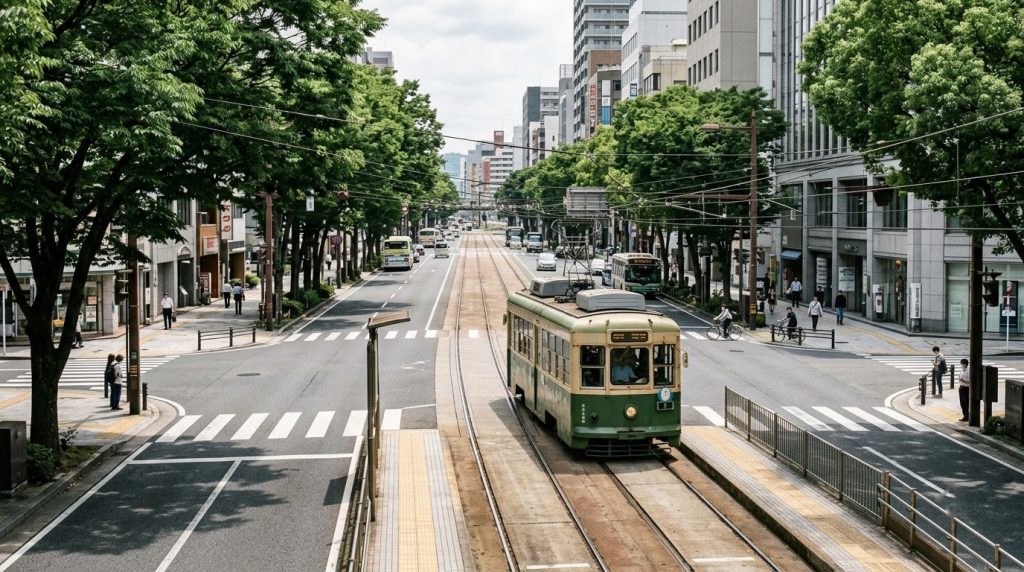
The reconstructed Hiroshima Castle and the Shukkeien Garden are both real, both easy to reach, and both entirely optional; skip them without regret if the day is already full with the museum and Miyajima. It is also not a multi-day destination on its own; one full day covers the museum, the park, and a Miyajima side trip without rushing.
Treat it as one strong day layered onto a Kansai itinerary, not as a base for exploring the wider Chugoku region.
Other day trips from Hiroshima, beyond Miyajima
Miyajima is not the only realistic day trip sitting off a Hiroshima base, and travelers staying more than one night have two solid alternatives.
Onomichi, about 80 kilometers east of Hiroshima, is reachable by JR San’yo Line train in roughly 65 to 90 minutes depending on the service, for a one-way fare of about USD 9.90 (JPY 1,520), or free with a Japan Rail Pass.
The town is built on a hillside overlooking the Seto Inland Sea, and its best-known walk links 25 temples along a 2.5-kilometer trail, a two-to-three hour outing that includes a ropeway up to Senkoji Temple for about USD 1.80 (JPY 280).
Onomichi is also the starting point for the Shimanami Kaido, a roughly 70-kilometer cycling route across six islands to Shikoku; a full day trip to Ikuchijima Island and back covers about 50 kilometers round trip, manageable for a moderately fit cyclist, and standard bicycle rental runs about USD 6.50 to USD 13 a day (JPY 1,000 to JPY 2,000), more for an e-bike.
Iwakuni is the shorter option, about 35 to 45 minutes from Hiroshima by train for roughly USD 3.30 (JPY 510) one way, built around the wooden Kintai Bridge and a hillside castle, and it fits into a half day rather than needing a full one.
Both towns work better as an extra night’s addition than as a rushed add-on to the Peace Memorial and Miyajima day, since stacking three destinations into one day leaves no time to enjoy any of them properly.
Anyone with only one full day in Hiroshima should stick to the Peace Memorial and Miyajima combination covered above and save Onomichi or Iwakuni for a return trip or an extra night.
Hiroshima’s food scene, beyond the museum day
Hiroshima-style okonomiyaki is the dish most worth planning a meal around, and it is a genuinely different dish from the Osaka version most travelers already know.
Where Osaka mixes the batter and fillings together before cooking, the Hiroshima style layers them: a thin crepe-like batter, a tall pile of cabbage and other vegetables, a layer of pork, a portion of yakisoba noodles, and an egg, all built up and cooked separately on the griddle rather than mixed in a bowl.
A plate typically runs JPY 900 to JPY 1,500, which converts to roughly USD 5.80 to USD 9.75 at today’s rate of about JPY 154 to the USD. Okonomimura, a three-story building downtown packed with individual okonomiyaki counters, is the easiest way to try several versions without committing to one restaurant, since each counter seats diners right at the grill.
Oysters are Hiroshima Prefecture’s other signature food, and the region supplies a large share of Japan’s farmed oysters. They are available in some form year-round, but the harvest and peak eating season runs roughly from October through May, with the colder winter months generally considered the best stretch for flavor and size.
Oyster huts and specialty restaurants serve them grilled, raw, in a gratin, or deep-fried, and a short walk from the Peace Memorial Park turns up several options without needing to travel toward Miyajima first.
Two other dishes round out a food-focused day: anago, or conger eel, served over rice as anagomeshi or as sushi, and sake from the Saijo brewing district east of the city, which supplies izakayas and dedicated sake bars across central Hiroshima.
Neither requires a special trip; both show up on menus within easy walking distance of the Peace Memorial Park and the Hondori shopping street, so a food-focused afternoon can run alongside the museum visit rather than competing with it for time.
Who should skip Hiroshima
Travelers on a short first trip to Japan, five to seven days total, should skip Hiroshima and give that day to Kyoto instead. A trip that short is usually built around a 3-day Kyoto itinerary plus Tokyo, and adding an eight-hour round trip to Hiroshima means cutting something else that took equal planning to include.
Travelers who already have a Kyoto base, by contrast, can treat Hiroshima as one of several realistic day trips from Kyoto rather than a reason to book a hotel night.
Anyone whose itinerary has no slack for an eight-hour round trip, or whose interest in modern history is genuinely low, gets more value spending that day in Nara or Osaka instead.
Families traveling with young children are worth a separate note: the museum’s content is not graphic for shock value, but it is heavy, and a parent who knows a seven-year-old will not sit with that material is better off letting Miyajima stand alone as a day trip and skipping the museum rather than forcing the visit.
What a day in Hiroshima costs
A single day in Hiroshima that covers the Peace Memorial Museum and a Miyajima side trip adds up to a modest total once the big-ticket items are accounted for. Museum admission is USD 1.30 (JPY 200). The Miyajima round trip, including the visitor tax introduced in 2023, runs about USD 3.90 (JPY 600).
Getting around central Hiroshima by streetcar costs USD 1.56 (JPY 240) per ride, or a one-day unlimited pass covers the same network for about USD 3.90 (JPY 600), which pays for itself after three rides. Lunch at an okonomiyaki counter adds roughly USD 5.80 to USD 9.75 (JPY 900 to JPY 1,500).
Added together, museum admission, the Miyajima ferry, a streetcar day pass and a sit-down lunch come to roughly USD 15 to USD 20 per person, excluding the bullet train fare to reach Hiroshima and any hotel night.
That figure holds steady whether the day is a one-night stay or a day trip from a Kyoto base, since the on-the-ground costs in Hiroshima itself do not change; only the train fare in and out of the city does.
Travelers watching a tight daily budget on a longer Japan trip can treat this as one of the cheaper full days on the itinerary, since neither the museum nor the island charges anything close to what a half-day activity costs in Tokyo or Kyoto.
Where to stay if you decide to go
Staying overnight suits the history-focused and food-focused travelers from the table above, since it removes the pressure of a same-day round trip to Miyajima. Hiroshima’s hotel scene is compact and clusters near Hiroshima Station and the Peace Memorial Park, covered in more detail in the best hotels in Hiroshima.
Find your Hiroshima hotel on the map
Live prices from Booking, Airbnb and more — move the map or change dates to compare stays across Hiroshima.