25 Best Things to Do in Hoi An 2026 (With Prices)
Disclosure: Some links in this guide are affiliate links. If you book or buy through them, we may earn a small commission at no extra cost to you — it helps keep our guides free.
- GetYourGuide lists Hoi An cooking classes from USD 18–35 per person, making it one of the cheapest culinary destinations in Asia.
- An Bang and Cua Dai beaches sit within 5 km of the Ancient Town — reachable by bicycle for free.
- eSIM data via Airalo starts at USD 4.50 for 1 GB, saving travelers up to 80% versus roaming fees.
At a glance
| Attraction | Entry | Hours | Time needed |
|---|---|---|---|
| Ancient Town | 120,000 VND | at least two hours | |
| Lantern-making workshop | 80,000–120,000 VND | 60–90 minutes | |
| Bicycle through rice paddies | 50,000–80,000 VND/day | 2–3 hours | |
| Sunset boat cruise on the Thu Bon River | 100,000–150,000 VND | Around 5 PM | One-hour |
| Cham Islands snorkeling | USD 30–45 | Full-day | |
| Kayaking on the Thu Bon River | from USD 22 | Half-day |
Where you sleep decides your mornings
Hoi An is one of Southeast Asia’s most rewarding destinations — a UNESCO World Heritage town where 15th-century merchant houses share a street with tailor shops, cooking schools, and one of Vietnam’s best beaches. We’ve put together every activity worth your time, complete with 2026 prices so you can plan without surprises. Travelers heading this way often look for this Hoi An travel guide before mapping out transport, neighborhoods, and a rough daily schedule.
Is Hoi An Ancient Town Worth the Entry Fee?
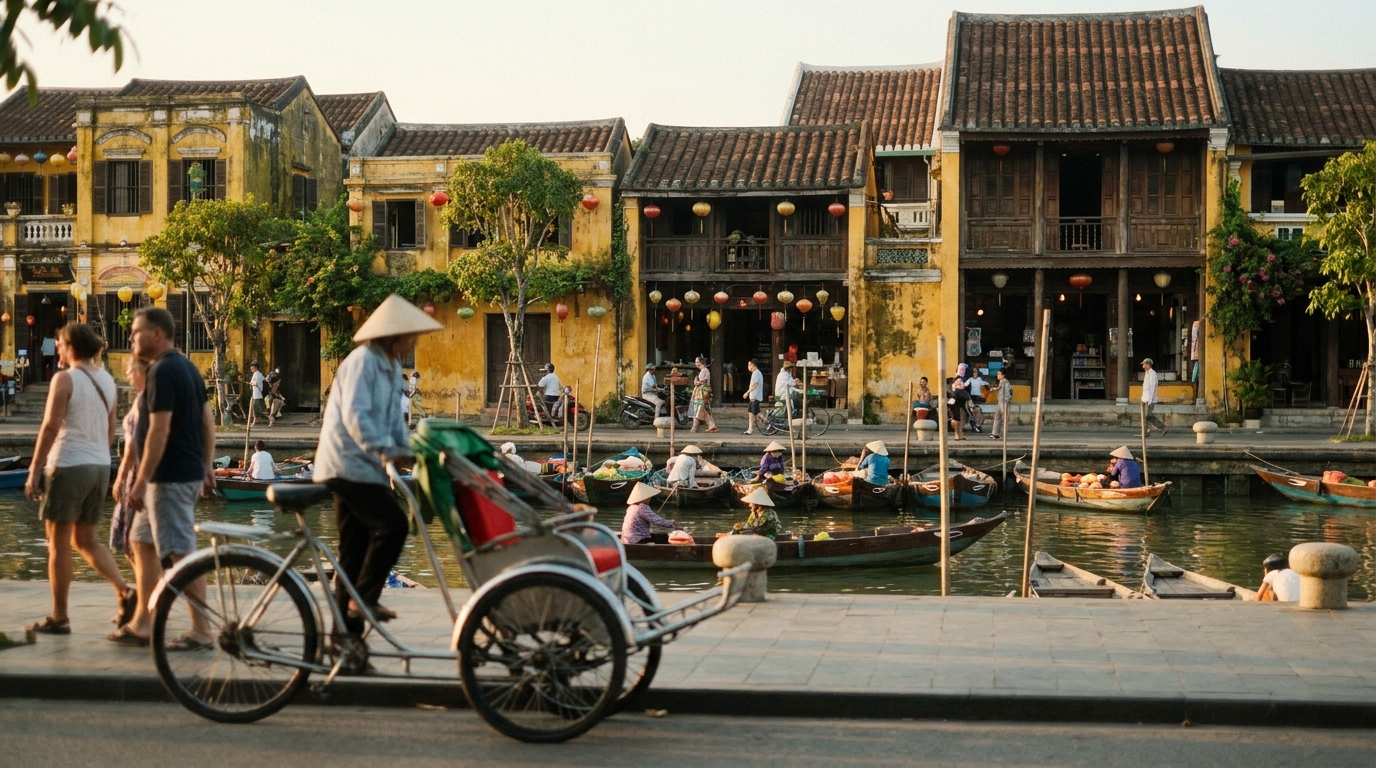
Yes, and it’s one of Southeast Asia’s best-value heritage sites. The 2026 combined Ancient Town ticket costs 120,000 VND (roughly USD 5) and covers entry to five heritage attractions from a rotating menu of 22 sites — including the Japanese Covered Bridge, assembly halls, and historic merchant houses.
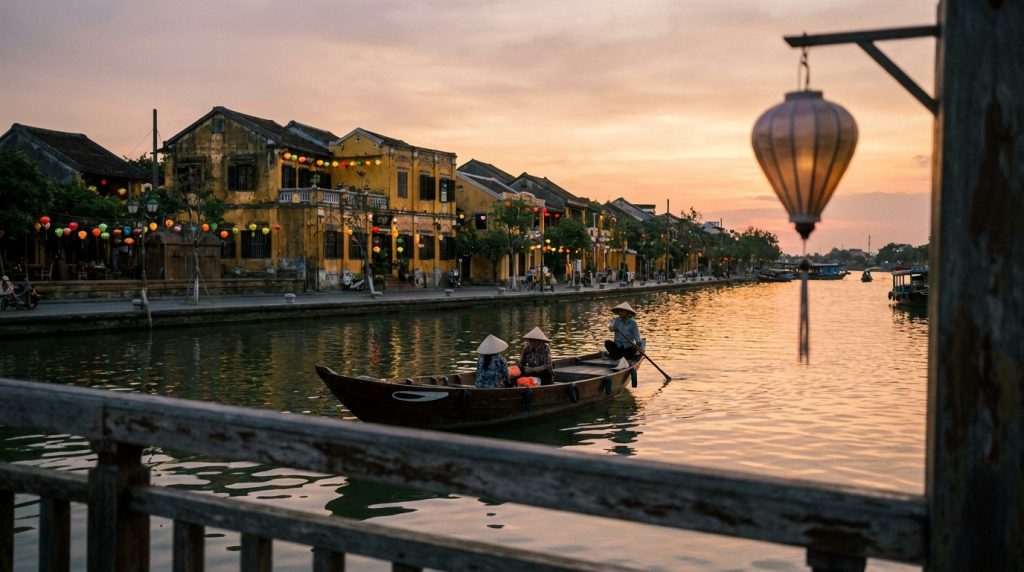
The town’s amber glow at night, when hundreds of silk lanterns reflect off the Thu Bon River, makes even a short evening stroll feel cinematic.
full guide to Hoi An Ancient Town entry tickets and what’s included
What to do: Buy the ticket at any official booth at the entrance gates. Afternoon visits (3–5 PM) catch the best light, while evenings (after 6 PM) are peak lantern hours. Plan at least two hours on your first visit.
Price: 120,000 VND (~USD 5) per person; children under 7 enter free.
What Are the Top Cultural Experiences in Hoi An?
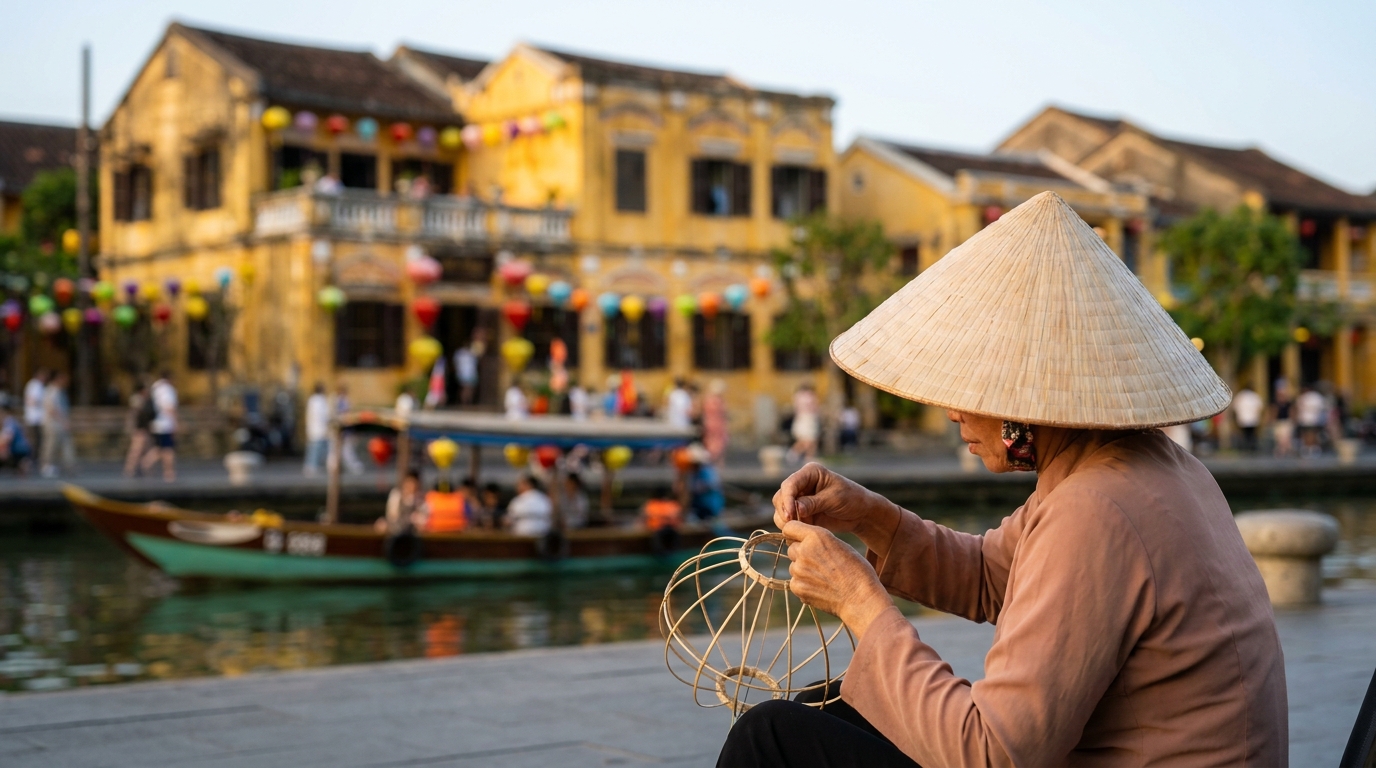
Hoi An’s cultural calendar runs year-round, but certain activities separate genuine engagement from tourist box-ticking. Travelers torn between the two destinations can weigh the trade-offs in our Hoi An vs Da Nang comparison.
1. Lantern-making workshop — Learn to bend bamboo frames and stretch silk at a family workshop on Nguyen Nhat Anh Street. Sessions run 60–90 minutes; you take the lantern home. Price: 80,000–120,000 VND (USD 3–5).
2. Vietnamese cooking class — Hoi An is arguably Vietnam’s best city for learning to cook. Classes typically start at a local market, move to a riverside kitchen, and cover 4–6 dishes including white rose dumplings and cao lau noodles.
3. Traditional ao dai dress rental — Dozens of shops near the Ancient Town rent silk ao dai outfits for USD 3–6 per hour, including a professional photoshoot setup.
4. Japanese Covered Bridge — Built in the 1590s, this is Hoi An’s most-photographed structure. It’s included in the combined Ancient Town ticket. Entry: 120,000 VND combined ticket.
5. Phuc Kien Assembly Hall — A stunning Fujian Chinese community hall built in 1690, packed with intricate woodcarving and incense smoke. Covered by the combined ticket.
How Do You Get to An Bang and Cua Dai Beach From the Ancient Town?
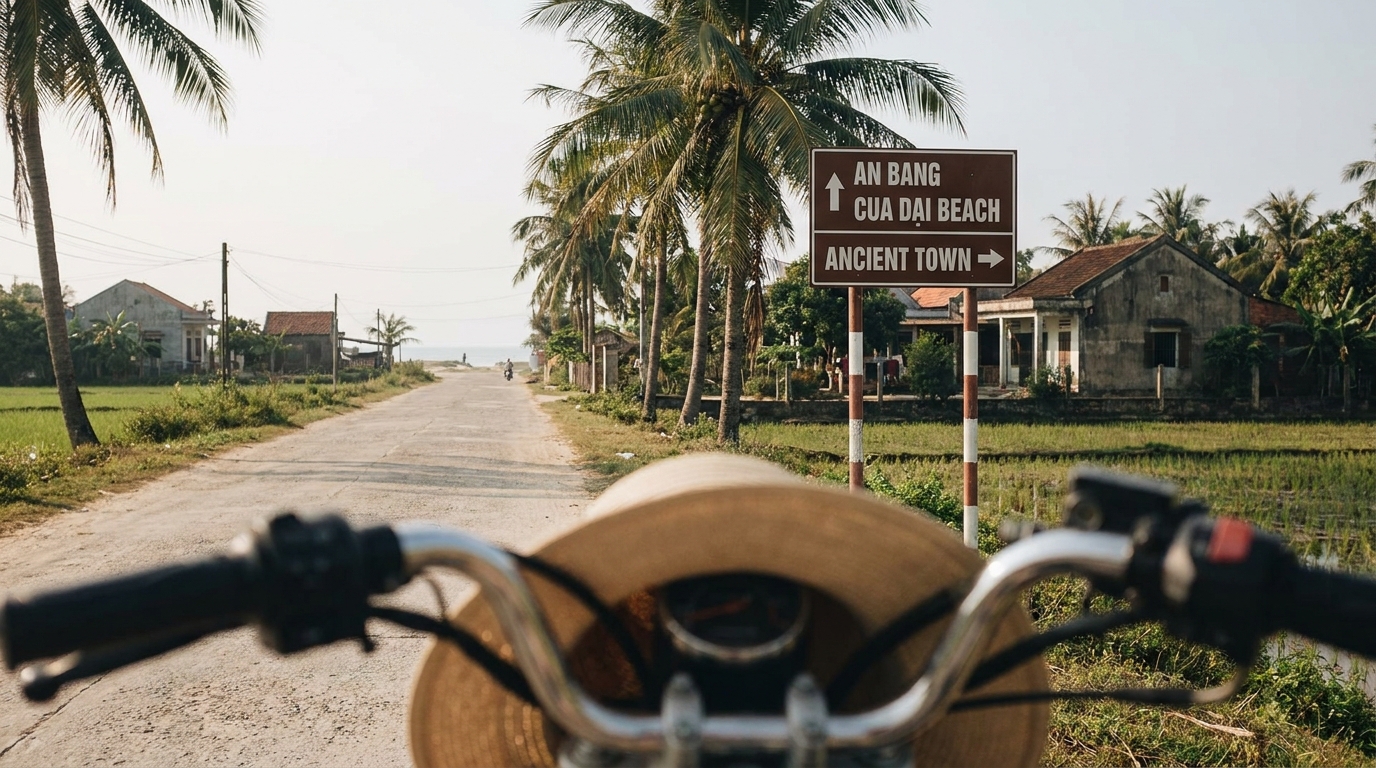
Both beaches are an easy ride from the Ancient Town. An Bang Beach sits 3 km northeast; Cua Dai Beach is 4.5 km east. Bicycle rental in Hoi An costs 50,000–80,000 VND (USD 2–3.50) per day, making either beach reachable without spending on transport. In 2025, Booking.com listed An Bang as one of Vietnam’s top-rated beach areas for boutique guesthouses, with average nightly rates of USD 35–80 for beachfront rooms.
An Bang vs Cua Dai Beach
6. An Bang Beach — Quieter, more local-feeling, with beach clubs offering free loungers if you buy a drink. Great for sunset.
7. Cua Dai Beach — Broader stretch of sand, more facilities, but can be busier in peak season (December–March). A few beach bars rent surfboards for USD 8–12 per hour.
Tip: Avoid Cua Dai during the rainy season (September–November) when erosion narrows the beach significantly.
What Are the Best Day Trips From Hoi An?

Hoi An’s location in Quang Nam Province puts three outstanding day trips within easy reach.
8. My Son Sanctuary — A 4th–13th century Cham Hindu temple complex set in a jungle valley, 40 km from Hoi An. A UNESCO World Heritage Site in its own right.
9. Marble Mountains (Da Nang) — Five marble-and-limestone hills riddled with Buddhist sanctuaries and caves, 27 km north. Entry: 40,000 VND (USD 1.60). Combine with a Da Nang city day for maximum value.
10. Tra Que Vegetable Village — A 30-minute bicycle ride north of Hoi An, this farming hamlet lets you work the fields alongside local farmers for a morning, then cook what you harvested. Tours cost USD 12–18 per person.
11. Phong Nha Caves — For a longer overnight, the UNESCO-listed Phong Nha cave system is a 4-hour drive north. Best booked as a 2-day trip.
What Do Day-Trip Sites Cost and When Do They Open?
Entry fees and hours are easy to get wrong when you are stacking two sites in one day. The figures below come from a Da Nang tourism price table for 2026 and exclude transport, guides, and extras. Prices can change with promotions or city events, so check the gate or ticket office on the day.
| Site | Hours | Entry for international visitors |
|---|---|---|
| My Son Sanctuary | 6 AM to 6 PM | 150,000 VND (about USD 6) |
| Marble Mountains (Thuy Son Peak) | 7 AM to 5 PM | 40,000 VND (about USD 1.60) |
| Cu Lao Cham reserve (Cham Islands) | 7 AM to 4 PM | 70,000 VND sightseeing plus 20,000 VND island sanitation fee (about USD 3.60 total) |
| Ancient Town heritage ticket | 8 AM to 5 PM | 120,000 VND (about USD 5) |
USD figures are rounded at roughly 25,000 VND per dollar.
How to use the opening hours
My Son is the earliest opener, and the site is hot and shadeless by late morning, so the 6 AM start is worth using. Marble Mountains close at 5 PM, which makes it a better first stop of a combined Da Nang day than a last one.
The Cham Islands fee is usually folded into a boat tour price, so ask whether your operator already includes it before you pay twice.
Which Hoi An Activities Are Best for Foodies?
Hoi An is one of Vietnam’s most celebrated food cities. CNN Travel ranked it among Asia’s top 10 street food destinations in 2025, and the city’s three signature dishes — cao lau noodles, white rose dumplings, and banh mi — are all made with local ingredients unavailable elsewhere in Vietnam.
12. Phuong Banh Mi — Widely regarded as the best banh mi in the world (Anthony Bourdain featured it). A sandwich costs 35,000–45,000 VND (USD 1.50–2). Arrive before noon; they sell out.
13. Morning market food tour — Guided 2-hour walk through Hoi An Central Market with tastings.
14. White rose dumpling at Ba Buoi — Only one family still makes the original white rose (banh bao vac). A plate of 10 costs 45,000 VND (USD 2). Address: 533 Hai Ba Trung Street.
15. Cao lau noodle tasting — Cao lau noodles are made using water from one ancient well in Hoi An; the dish can’t be authentically replicated elsewhere. Find it at local stalls for 40,000–60,000 VND (USD 1.60–2.50).
Hoi An food guide
What Outdoor and Water Activities Can You Do in Hoi An?
Beyond beaches, Hoi An’s river delta and countryside offer a range of active options.
16. Basket boat tour on Bay Mau coconut forest — Round wicker basket boats piloted by locals through a dense water coconut forest, 10 km from town. Tours last 45–60 minutes and include a short boat dance performance.
17. Bicycle through rice paddies — Rent a bicycle (50,000–80,000 VND/day) and follow the trail west along the Thu Bon River. The 15 km loop through Kim Bong village takes 2–3 hours with stops.
18. Kayaking on the Thu Bon River — Half-day kayak tours depart from the Ancient Town waterfront. Available on GetYourGuide from USD 22 per person.
19. Snorkeling at Cham Islands — The Cu Lao Cham Marine Park, 15 km offshore, protects some of Central Vietnam’s best coral reefs. Full-day boat tours including two snorkel sites and lunch cost USD 30–45 per person.
20. Stand-up paddleboarding (An Bang Beach) — Several An Bang beach clubs rent SUP boards for USD 8–12 per hour. Best in the early morning when the surf is calm.
Which Craft and Farming Villages Charge Entry?
The countryside around Hoi An has several working villages that show up on bike routes and half-day tours. Most charge a small entry fee, and a few ask for more once you add a class or a meal. The 2026 Da Nang tourism price table lists the entry fees below.
- Kim Bong Carpentry Village: 35,000 VND (about USD 1.40), open 8 AM to 5:30 PM. Woodworkers here carve furniture and temple fittings, and it sits on the cycling loop west of town.
- Thanh Ha Pottery Village: 35,000 VND (about USD 1.40), open 8 AM to 5:30 PM. Visitors can watch potters at the wheel and try shaping clay.
- Tra Que Vegetable Village: 35,000 VND (about USD 1.40), open 8 AM to 6 PM. This is the farming hamlet known for herb beds and farm-to-table classes.
- Cam Thanh Coconut Forest: 30,000 VND (about USD 1.20), open 8 AM to 6 PM. The basket boat ride is priced separately from entry.
How to combine villages without wasting a day
Carpentry and pottery are close enough to pair in one morning on a bicycle. Tra Que fits better with a cooking class because many classes start with a visit to the herb gardens.
Budget extra for the activity itself. The entry fee gets you through the gate, but a hands-on pottery session, a farming experience, or a basket boat ride is charged on top.
Go before 10 AM if you can. Tour buses tend to arrive late in the morning, and the workshops are more relaxed before then.
How Should You Plan Shopping and Tailoring in Hoi An?
Hoi An is one of the only places in the world where you can have custom clothing made in 24–48 hours at prices that undercut Western off-the-rack retail. The city has over 400 registered tailor shops, and quality ranges wildly.
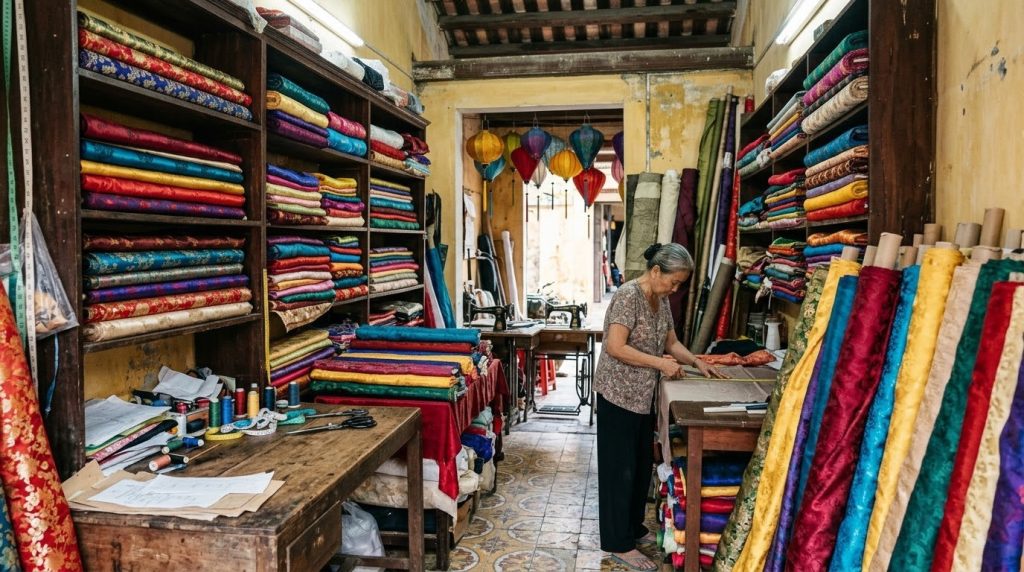
21. Custom tailoring — Budget USD 40–120 for a tailored suit or dress, depending on fabric. Allow at least 48 hours and one fitting session. Recommended: Yaly Couture, A Dong Silk, Bebe Tailor.
22. Lantern shopping at the Night Market — Every evening, the pedestrianized An Hoi Night Market fills with lantern vendors, souvenir stalls, and street food. Silk lanterns cost 30,000–80,000 VND (USD 1.20–3.20) each.
23. Handmade paper products and ceramics — Thanh Ha Pottery Village, 3 km west, is where Hoi An’s traditional ceramics are made. Watch craftspeople work and buy direct from studios at 30–60% below in-town prices.
Hoi An shopping guide
Are Hoi An Memories and the Lune Show Worth the Ticket?
Two large staged shows compete for your evening, and both cost far more than anything else in town. Neither replaces a walk along the lantern-lit river, but they suit travelers who want a structured night out, especially families.
Hoi An Memories Island
This is a theme park with a large outdoor show about the town’s history. The park is open from 4 PM to 9 PM and closed on Tuesdays, according to the Da Nang tourism table.
Show tickets come in three tiers: 600,000 VND (Eco, about USD 24), 750,000 VND (High, about USD 30), and 1,200,000 VND (VIP, about USD 48). The same table lists a separate park entry fee of 100,000 VND, while resellers often describe park entry as included in the show ticket, so confirm what your ticket covers.
The show is a long evening. Plan to arrive in the afternoon, eat before or after, and keep a rain plan in the wet months.
Lune Performing Arts Center
Lune presents an acrobatic and circus-style performance at 6 PM. It is closed on Mondays and Fridays. Tickets are listed at 700,000 VND (about USD 28), 1,150,000 VND (about USD 46), and 1,600,000 VND (about USD 64), depending on seat tier.
Who should skip them
If your budget is tight, the free options are the better value: the riverside promenade, the Night Market, and the monthly full moon lantern evenings already covered above. Book a show only if you have at least three nights, so the cost does not crowd out food and day trips.
What’s the Best Way to Experience Hoi An at Night?
Hoi An’s night atmosphere is its most distinctive feature. On the 14th day of each lunar month, the town holds its Full Moon Lantern Festival: electric lights are switched off, hundreds of silk lanterns are floated on the river, and traditional music performances fill the streets. In 2025, the Hoi An Tourism Department recorded peak single-night visitor counts exceeding 18,000 during Full Moon Festival evenings.
24. Full Moon Lantern Festival — Held monthly (dates shift; check the lunar calendar). Participating in a lantern float ceremony costs 10,000–20,000 VND per paper lantern. This is the single most memorable evening experience Hoi An offers.
25. Sunset boat cruise on the Thu Bon River — One-hour cruises depart from the Ancient Town waterfront at around 5 PM. Prices: 100,000–150,000 VND (USD 4–6) per person for a shared wooden boat; private boats run USD 20–35.
Hoi An Full Moon Festival guide
Find your Hoi An hotel on the map
Live prices from Booking & Airbnb — tap a pin to compare stays around the Ancient Town and An Bang Beach and beyond.
How Do You Get Around Hoi An’s Ancient Town?
The Old Quarter is built for walkers and cyclists. Vietnamese press reports describe restrictions on motorbikes and other engine vehicles in the walking zones for part of each day, plus limits on taxis and buses on certain streets. Treat the details below as a guide and confirm them locally, since the city adjusts hours by season.
- Morning walking zone: roughly 9 AM to 11 AM.
- Evening walking zone: roughly 3 PM to 9:30 PM in the rainy season and to 10 PM in summer.
- Taxi and bus limits: roughly 11 AM to 1:30 PM and 4 PM to 9 PM on some streets.
- Pedestrian areas: include Tran Phu, the stretch of Nguyen Hue in front of the market, and Hoai River Square.
Electric public transport is allowed, including electric bus routes. Bicycles and pedestrians are the intended users of the Old Quarter. If you rent a motorbike, you need a valid license, and police checks appear more often on the road to Da Nang than inside town.
For most visitors, the simplest plan is a bicycle for trips to the rice fields and An Bang, and your feet for the Ancient Town itself. Book a Grab ride for the return to Da Nang or for late nights when the roads have reopened to traffic.
What Is the Weather in Hoi An Month by Month?
Hoi An has a dry stretch from roughly February to August and a wet stretch from September into January, with October and November carrying most of the rain and the flood risk.
The figures below are monthly averages from a climate table for Hoi An, so a given year can differ. Another source notes that some climate data for this area comes from the Da Nang station, so treat the numbers as a guide.
| Month | Average high | Average low | Rainfall |
|---|---|---|---|
| January | 77°F | 66°F | about 91 mm |
| February | 79°F | 68°F | about 33 mm |
| March | 82°F | 70°F | about 31 mm |
| April | 86°F | 73°F | about 33 mm |
| May | 90°F | 77°F | about 56 mm |
| June to August | 91°F | 77 to 79°F | about 89 to 104 mm per month |
| September | 88°F | 75°F | about 297 mm |
| October | 84°F | 73°F | about 526 mm |
| November | 81°F | 72°F | about 363 mm |
| December | 79°F | 68°F | about 206 mm |
What the numbers mean for planning
February and March combine mild temperatures with the lowest rainfall, which is why they are the usual recommendation. Beach conditions are best from roughly late April to early September, though June through August is hot and humid, so sightseeing works best early or late in the day.
October stands out: it is the wettest month by a wide margin and also the peak of typhoon risk. If you can only travel in the wet season, December is a better bet than October or November.
What Happens During Hoi An’s Flood Season?
Hoi An sits barely a meter above the normal water level of the Thu Bon River. Heavy rain upstream, often combined with high tide, can push water into the Old Quarter during the wet months, which are mainly October and November. The riverside strip along Bach Dang and Nguyen Thai Hoc floods first.
In a bad year, water can reach 1 to 1.5 meters and close shops, restaurants, and ground-floor guesthouses. Floods usually peak within 24 to 48 hours and recede over the next one to three days, although typhoon-driven floods can last a week or more. December floods tend to be shorter.
How to plan around it
- Book flexible or date-changeable rates for October and November.
- Choose an upper-floor room if you stay near the river.
- Carry cash, since ATMs can run dry during power cuts.
- Buy travel insurance that explicitly covers natural disasters and trip interruption, because standard policies often exclude flooding.
- Do not wade through moving water or ride a motorbike through flooded streets.
Elevated cafes and upper-floor shops often keep operating, and locals move by boat. If you are already in town, move to higher ground in Hoi An and wait it out rather than rushing to rebook. Build two or three buffer days if you are linking Hue, Da Nang, and Hoi An, and keep Da Nang as a backup base, since it is usually drier when the coast floods.
Which Holidays and Festivals Change a Hoi An Trip?
A few dates affect crowds, prices, and opening hours more than the weather does. Check them when you pick travel dates for 2026.
- Tet (Lunar New Year): Usually late January or early February. Many businesses close, though Hoi An stays more open than smaller towns. Expect decorations and fireworks in the town center on New Year’s Eve.
- Reunification Day holiday: A four- to five-day national holiday around the end of April and early May. Domestic travel is heavy, so expect crowds and higher hotel prices.
- Mid-Autumn Festival: September or early October, depending on the lunar calendar. Look for lanterns, mooncakes, drum performances, and lion dances.
- Monthly full moon lantern night: Electric lights go off and lanterns float on the river. Book rooms ahead for these dates.
- Da Nang International Fireworks Festival: Held in June and July in Da Nang, about 30 minutes away, not in Hoi An itself.
- Christmas and New Year: Celebrated in tourist areas with decorations and special dinners. Hoi An has no official fireworks, and December winds have caused past Da Nang fireworks cancellations.
How to plan around them
Pick dates that avoid national holidays if your goal is quiet streets and lower room rates. If you want the atmosphere instead, accept the crowds and book rooms and tailor orders early.
Tet is the one period to treat carefully. Even if Hoi An stays more open than smaller towns, shops and restaurants run reduced hours, so confirm any class, tour, or tailor appointment in advance.
Practical Tips: Getting There and Staying Connected
Da Nang International Airport is the closest gateway, 30 km north of Hoi An. Taxis cost USD 12–18; ride-hailing apps (Grab) run USD 9–14. There’s no direct train to Hoi An, but Da Nang train station connects the town to the national rail network — check train prices via Omio.
For connectivity, we recommend picking up an Airalo eSIM before you land. As of 2026, an Airalo Vietnam eSIM provides 1 GB for USD 4.50 or 5 GB for USD 9 — no SIM swap needed, and it activates before you leave home.
For accommodation, Check live hotel prices lists 400+ properties in and around Hoi An, from USD 12/night guesthouses inside the Ancient Town to USD 200+/night resort villas near An Bang Beach. The best-value zone for most travelers is the stretch between the Ancient Town and An Bang Beach.
where to stay in Hoi An
What Does a Three-Day Sightseeing Ticket Budget Look Like?
The big surprise in Hoi An is not the cost of any single entry fee. It is how quickly shows, boat rides, and day-trip tickets add up. This sample uses the 2026 fees listed above and leaves out food, transport, and tours.
| Day | Plan | Entry costs |
|---|---|---|
| Day 1 | Ancient Town heritage sites, evening on the river | 120,000 VND (about USD 5) |
| Day 2 | Early My Son visit, afternoon at the beach | 150,000 VND (about USD 6) |
| Day 3 | Cham Islands boat day | 90,000 VND (about USD 3.60) for sightseeing and sanitation fees |
That comes to about 360,000 VND (roughly USD 14.60) in entry fees for three full days. Boat tickets, snorkeling gear, and lunch are separate.
Where the budget stretches
Adding Hoi An Memories at the Eco tier brings the total to about 960,000 VND (roughly USD 38), and the VIP tier pushes it past 1.5 million VND. That single evening show can cost more than all other entry fees combined.
The cheapest upgrades are a village or two at 30,000 to 35,000 VND each. They fill half a day for about USD 1.40.
What Mistakes Should You Avoid in Hoi An?
Most problems in Hoi An come from timing and expectations, not from the town itself. A few habits prevent them.
- Arriving without checking the lunar calendar. Motorbikes are kept out of the Old Town on the 14th and 15th of each lunar month, and the Full Moon Lantern Festival crowds streets in the evening. Plan to walk.
- Losing the Ancient Town ticket. The ticket coupons are torn off when you enter specific heritage sites, so keep the ticket with you throughout the day.
- Visiting heritage sites at noon. Heat and tour groups peak midday. Go in the morning or after 3 PM.
- Leaving a tailor order to the last day. Custom clothing needs a fitting and adjustments, so order early in the trip.
- Booking only riverside rooms in the wet season. Ground-floor riverside guesthouses close first when water rises.
- Planning a motorbike day without a license. You need a valid license, and insurance claims can fail without one.
Frequently Asked Questions
How many days do you need in Hoi An?
Three days is the sweet spot for most travelers. Day one covers the Ancient Town and a cooking class; day two handles a beach day at An Bang and the Night Market; day three works well for a My Son Sanctuary day trip or a Cham Islands snorkeling tour. Budget travelers can cover the highlights in two days.
When is the best time to visit Hoi An?
February through April offers the driest, coolest weather, with average highs of 25–28°C (77–82°F). The rainy season runs September–November, when flooding can affect the Ancient Town. December and January are busy but pleasant. Vietnam Tourism Board (2025) data shows February is the peak booking month. Before finalizing plans, it helps to check this best time to visit Hoi An before locking in dates around weather and crowd levels.
Is Hoi An safe for solo travelers?
Yes. Hoi An consistently ranks among Vietnam’s safest cities for solo travelers. Petty theft is the primary concern — keep bags zipped in crowded market areas. The Ancient Town’s pedestrian-only evenings make solo walking feel secure. Solo female travelers report very high comfort levels in community forums like TripAdvisor (2025).
How much does it cost per day in Hoi An?
Budget travelers spend USD 30–45 per day (guesthouse, street food, bicycle rental, one paid activity). Mid-range travelers average USD 70–120 per day (boutique hotel, restaurant meals, guided tours). Comfort travelers spending USD 150–250 per day can access the best beach resorts and private boat tours.
Can you visit Hoi An as a day trip from Da Nang?
Yes, and it’s one of the most popular day trips in Central Vietnam. The 30-km journey takes 45 minutes by taxi (USD 12–18) or 60 minutes by Grab.
Do you need the Ancient Town ticket for everything?
No. The ticket covers entry to five specific heritage sites chosen from the ticketed list. You don’t need it to walk the streets, shop, eat, or visit the Night Market. You do need it to enter the Japanese Covered Bridge interior, the assembly halls, and the traditional merchant houses. It’s worth buying even if you’re only curious about one or two sites.
Is Hoi An accessible for travelers with mobility challenges?
The Ancient Town’s cobblestone streets and narrow doorways present challenges for wheelchair users and travelers with limited mobility. The riverside promenade and most beach areas are more accessible. Cooking classes and several boat tours accommodate mobility needs with advance notice — check with operators when booking on GetYourGuide.
Conclusion
Hoi An delivers more variety per square kilometer than almost anywhere else in Southeast Asia. You’ve got UNESCO heritage, cooking classes under USD 25, custom tailoring in 48 hours, a beach five minutes by bike, and a monthly lantern festival that doesn’t cost a cent to watch from the riverbank. The 25 activities above cover every budget and interest level.
Start with the Ancient Town ticket (USD 5), book a cooking class through GetYourGuide, grab a Vietnam eSIM from Airalo before you fly, and lock in your accommodation early on Check live hotel prices — Hoi An’s best guesthouses sell out weeks ahead during peak season and Full Moon Festival dates.
complete Hoi An travel guide
We’d love to hear which activity makes your list — drop your experience in the comments below.
Sources:
- Vietnam National Administration of Tourism, Visitor Statistics Report, retrieved 2026-04-10, https://tourism.gov.vn
- Vietnam Tourism Board, Visitor Experience Survey 2025, retrieved 2026-01-15, https://vietnamtourism.gov.vn
- CNN Travel, Asia’s Top Street Food Cities 2025, retrieved 2026-01-05, https://edition.cnn.com/travel
- Vietnam Adventure Tourism Association, Annual Growth Report 2025, retrieved 2026-03-01, https://vata.org.vn
- Hoi An Tourism Department, Full Moon Festival Attendance Data 2025, retrieved 2026-04-01, https://hoianworldheritage.org.vn
- The Savvy Backpacker, Hoi An Tailor Survey 2025, retrieved 2026-02-10, https://thesavvybackpacker.com
- Airalo, Vietnam eSIM Pricing, retrieved 2026-06-01, https://www.airalo.com/vietnam-esim