
Disclosure: Some links in this guide are affiliate links. If you book or buy through them, we may earn a small commission at no extra cost to you — it helps keep our guides free.
Cape Town Travel Budget 2026: Daily Costs & Saving Tips
Cape Town is one of the world’s best-value long-haul destinations in 2026 — the South African rand keeps prices low for visitors carrying dollars, pounds, or euros. We’ve broken down every real cost so you can plan a realistic budget before you book.
Key Takeaways
– Budget travelers average $45-60 USD per day; mid-range travelers spend $120-160/day (TravelSpend data, 2025)
– The ZAR/USD exchange rate sits near 18.5:1 as of early 2026, making Cape Town roughly 40% cheaper than comparable European cities
– Accommodation ranges from $12 (hostel dorm) to $280+ (boutique hotel) per night
– A 10-day Cape Town trip costs approximately $600-700 (budget) or $1,400-1,800 (mid-range) excluding flights
– South Africa Airalo eSIM data plans start at $4.50 for 1 GB, eliminating roaming shock (Airalo, 2026)
What Is the Average Daily Cost in Cape Town?
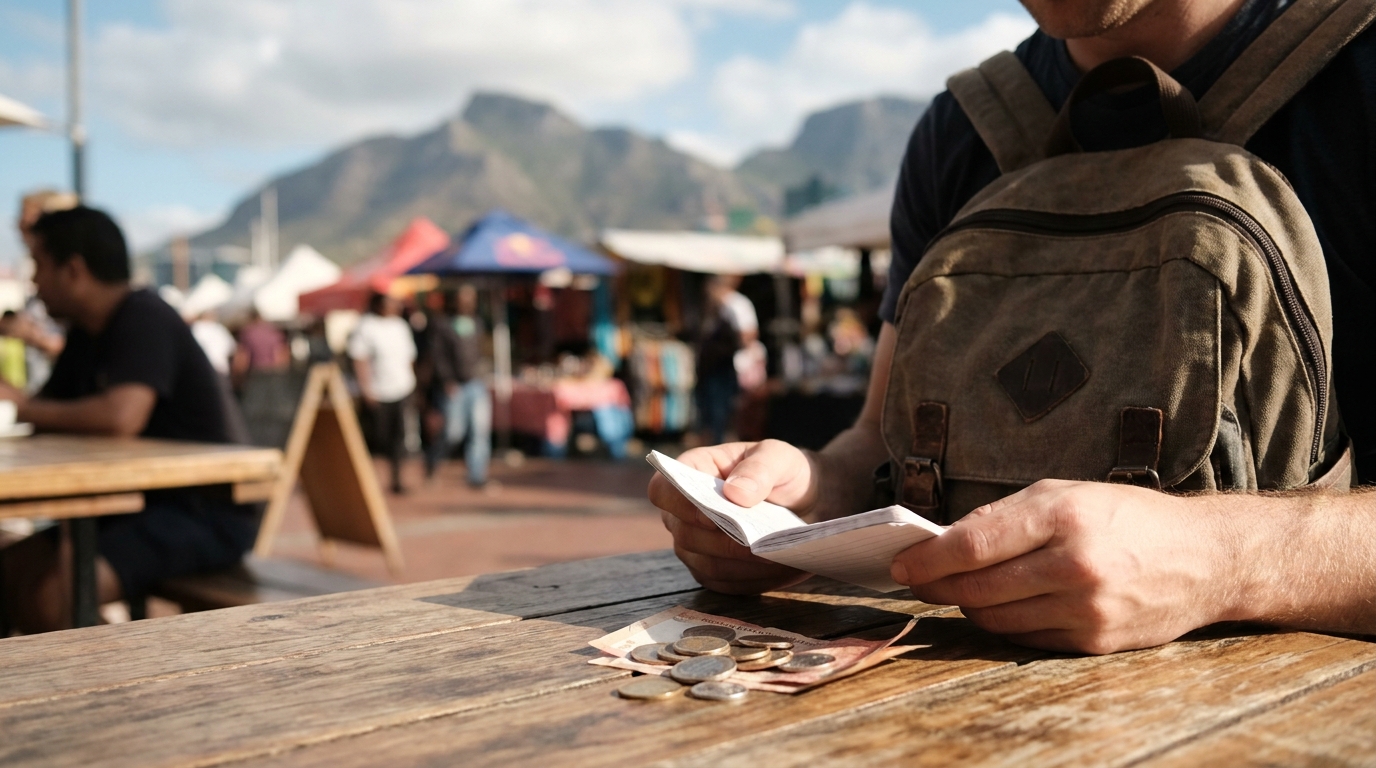
Cape Town’s daily cost depends heavily on how you eat, sleep, and move around. Budget travelers who stay in hostels, use minibus taxis, and self-cater can get by on $45-60 per day. Travelers who want en-suite rooms, restaurant dinners, and Uber rides comfortably land in the $120-160 range. We’ll break each category down so you can mix and match to hit your own number.
The rand exchange rate is the single biggest factor shaping your budget. At 18.5 ZAR to the dollar (June 2026), a restaurant main course that costs R180 works out to under $10. Even mid-range Cape Town experiences feel affordable by North American or European standards. That said, tourist-facing prices at V&A Waterfront venues have crept up, so knowing where locals spend makes a real difference.
| Budget Level | Daily Cost (USD) | Daily Cost (ZAR) | Accommodation Type |
|---|---|---|---|
| Shoestring | $28-44 | R520-815 | Hostel dorm |
| Budget | $45-70 | R835-1,300 | Budget private room / guesthouse |
| Mid-Range | $120-160 | R2,200-2,960 | 3-star hotel / Airbnb |
| Comfort | $200-280 | R3,700-5,180 | Boutique hotel, Sea Point or CBD |
| Luxury | $350+ | R6,475+ | 5-star, Camps Bay or V&A |
Find your Cape Town hotel on the map
Live prices from Booking & Airbnb — tap a pin to compare stays around the V&A Waterfront and beyond.
Cape Town Accommodation Costs 2026
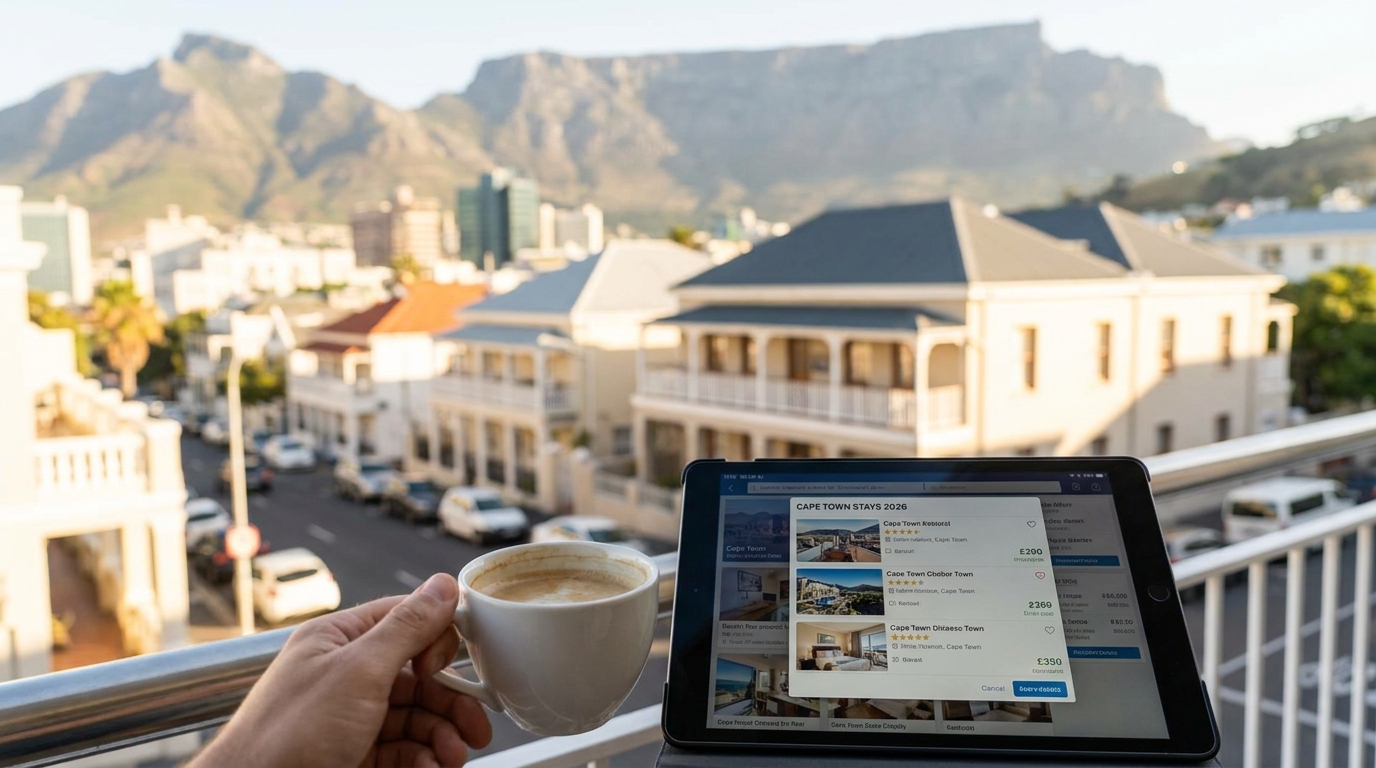
Accommodation is usually your biggest daily expense, and Cape Town’s range is genuinely wide. Hostel dorm beds in Long Street and De Waterkant run R220-380/night ($12-21), with private rooms in the same hostels at R680-920 ($37-50). Guesthouses in Observatory or Green Point come in at R950-1,400/night ($51-76) and typically include breakfast.
Mid-range hotels and well-located Airbnbs in the City Bowl or Sea Point cost R2,000-3,200/night ($108-173). Our live hotel map regularly lists flash deals that knock 15-25% off these rates — we recommend searching 60+ days ahead and filtering by free cancellation so you can reprice if a better deal appears. Camps Bay boutique hotels start at R4,500/night ($243) and climb steeply from there.
| Accommodation Type | Price per Night (ZAR) | Price per Night (USD) |
|---|---|---|
| Hostel dorm (Long Street area) | R220-380 | $12-21 |
| Budget private room / guesthouse | R680-1,400 | $37-76 |
| 3-star hotel / mid Airbnb | R2,000-3,200 | $108-173 |
| 4-star hotel (Sea Point, CBD) | R3,200-4,800 | $173-260 |
| 5-star / Camps Bay boutique | R4,500-9,500+ | $243-514+ |
Food and Drink Costs in Cape Town
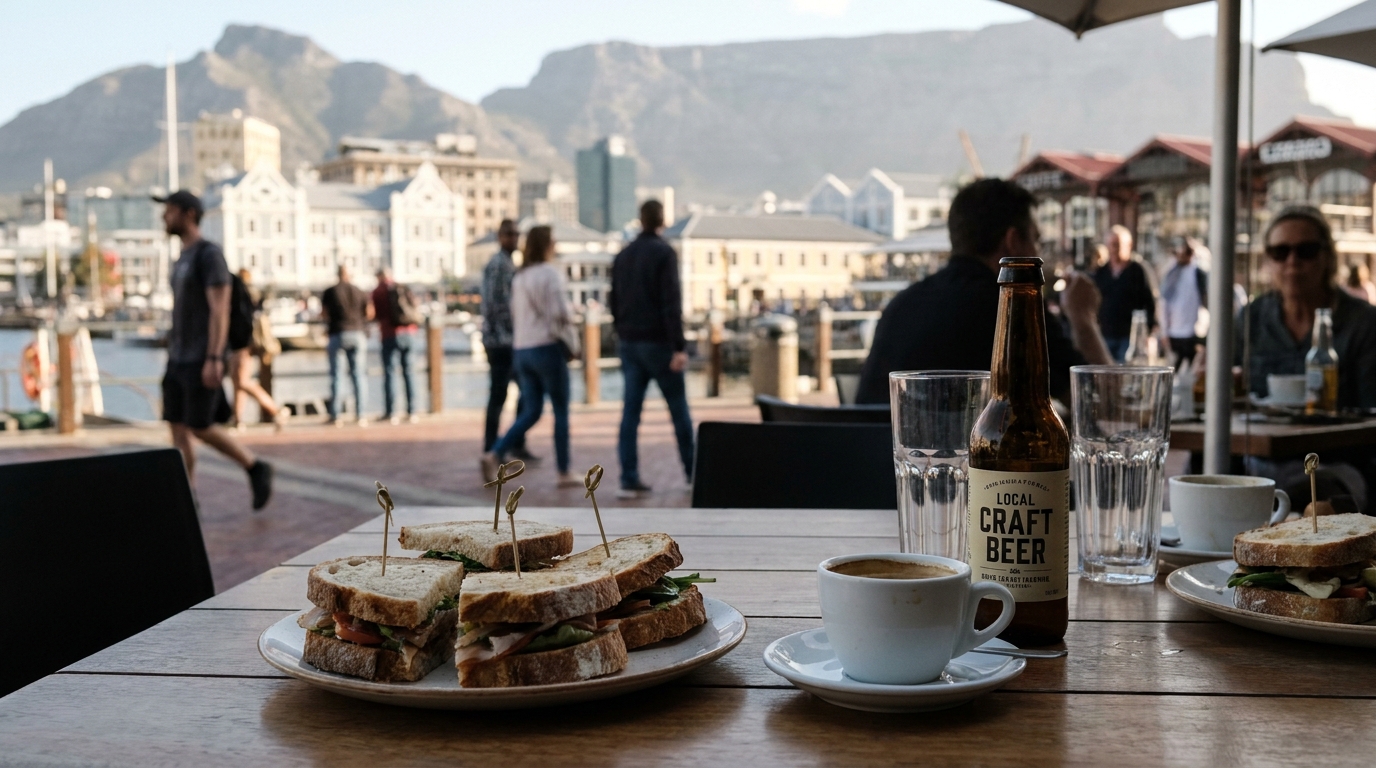
Cape Town’s food scene delivers excellent value if you eat where locals eat. A full cooked breakfast at a neighbourhood cafe costs R80-120 ($4.30-6.50). A bunny chow or a loaded toasted sandwich at a takeaway joint runs R50-90 ($2.70-4.90). Dinner at a mid-range restaurant in Gardens or Observatory averages R180-280 per main ($9.70-15), while V&A Waterfront restaurants add a 30-40% tourist premium.
Supermarkets (Woolworths Food, Pick n Pay, Checkers) are exceptional for self-catering. A week’s groceries for one person — eggs, bread, pasta, fresh produce, local wine — runs R600-850 ($32-46). Cape Town’s craft beer scene has exploded; a 500ml beer at a craft bar costs R55-80 ($3-4.30), while a bottle of local Chenin Blanc at a bottle store starts at R80 ($4.30). Cape Town’s food neighbourhoods each have their own character — we cover the best-value areas in our food guide.
Transport Costs: Getting Around Cape Town
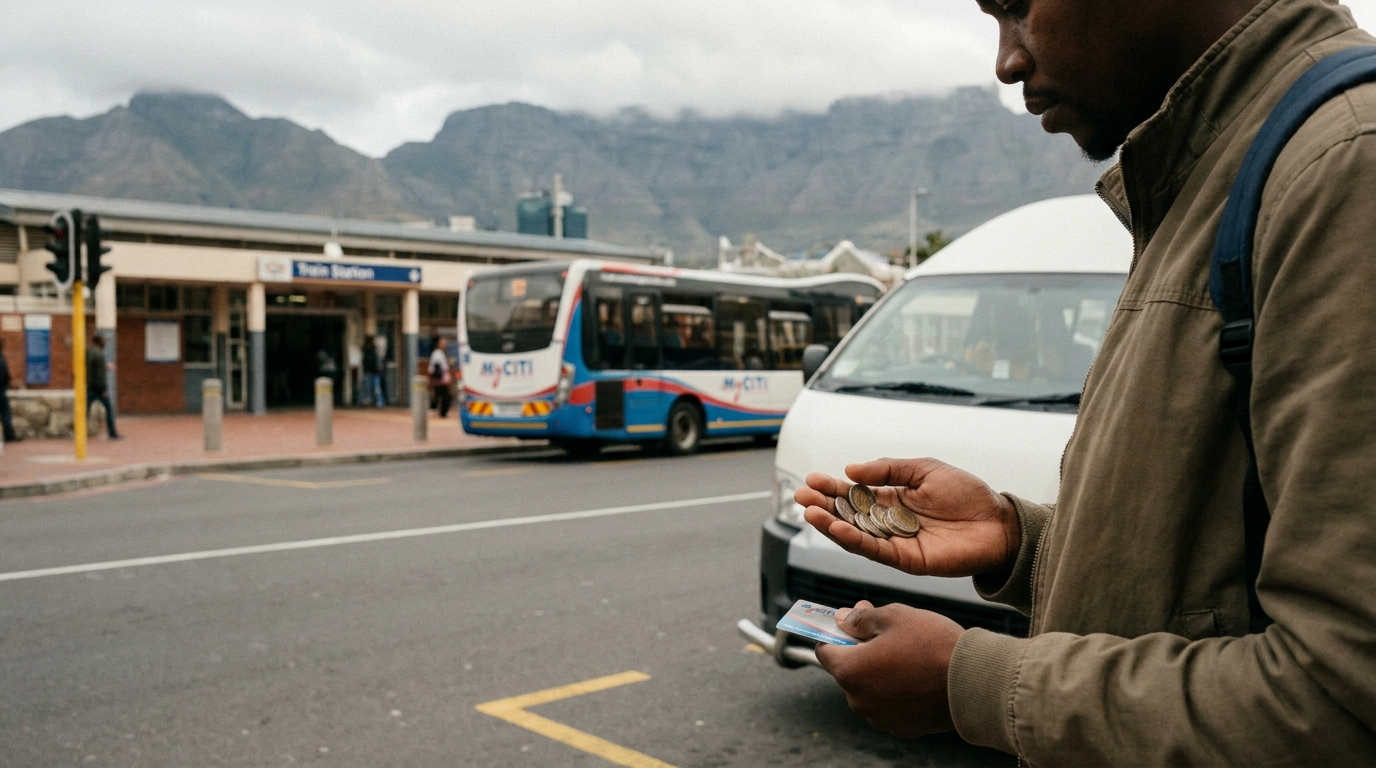
Getting around Cape Town without your own vehicle requires planning. The MyCiTi bus network covers the CBD, Sea Point, Green Point, Bellville, and the airport route reliably — a myconnect card (R35 deposit, about $1.90) then charges per trip at R9-28 ($0.49-1.51) depending on distance. The airport route (Station to Airport) costs R100 one-way ($5.40), by far the cheapest airport transfer option.
Uber is widely used and significantly cheaper than in the US or UK. A 15-minute Uber across the City Bowl typically costs R70-120 ($3.80-6.50). Car rental from Discover Cars starts at R350-420/day ($19-23) for a compact — essential if you want to explore the Cape Winelands, Cape Point, or the Garden Route independently. Renting a car in Cape Town opens up day trips that are nearly impossible by public transport. Minibus taxis (shared) are the cheapest option at R12-25/trip ($0.65-1.35) but require local knowledge.
| Transport Option | Cost (ZAR) | Cost (USD) |
|---|---|---|
| MyCiTi bus (single trip) | R9-28 | $0.49-1.51 |
| MyCiTi airport route | R100 | $5.40 |
| Uber (15-min city ride) | R70-120 | $3.80-6.50 |
| Shared minibus taxi | R12-25 | $0.65-1.35 |
| Car rental (compact, per day) | R350-420 | $19-23 |
| Airport metered taxi (one-way) | R350-500 | $19-27 |
Cape Town Attractions and Activities Costs
Cape Town’s biggest attractions vary wildly in price — and several of the best are free. Boulders Beach penguin colony costs R222 ($12) for international visitors. Table Mountain Aerial Cableway charges R490 one-way or R390 return for adults ($26/21) — hiking up the Platteklip Gorge trail is free and takes 1.5-2 hours each way. The Cape of Good Hope (inside Table Mountain National Park) costs R352 ($19) per adult as a day visitor.
Wine tasting in Stellenbosch and Franschhoek runs R100-250 per estate ($5.40-13.50), though some top estates charge R300-450 ($16-24) for guided tastings. A full-day Cape Peninsula tour via GetYourGuide costs $35-55 per person and is excellent value given the distances involved — see our Cape Peninsula day trip guide for self-drive vs. guided breakdowns. Robben Island tickets cost R950 ($51) including the ferry and are booked well in advance.
Mobile Data and Staying Connected
South Africa has solid LTE coverage in Cape Town, Stellenbosch, and along the N2 corridor. Your best options are a local SIM from Vodacom, MTN, or Telkom (sold at the airport on arrival, R10-30 SIM + data bundles from R99 for 5 GB) or an Airalo eSIM if your phone is unlocked and eSIM-compatible.
Airalo’s South Africa packages start at $4.50 for 1 GB (7 days) up to $27 for 20 GB (30 days), which we find hits the sweet spot for a 10-14 day trip if you’re not streaming heavily. The eSIM activates before you land so you’ve got maps and messaging the moment you clear customs — no hunting for a SIM vendor with a jet-lagged brain. We’ve covered the full SIM vs. eSIM comparison for South Africa if you want the detailed breakdown.
Saving Money in Cape Town: Practical Tips
The biggest savings come from timing, neighbourhood choice, and a few local habits. Staying in Gardens, Tamboerskloof, or Observatory instead of Camps Bay or the V&A Waterfront cuts accommodation costs by 40-60% for equivalent quality. Eating lunch at restaurants rather than dinner gets you the same kitchen at 20-30% lower prices — Cape Town’s lunch specials are genuinely good value.
Book accommodation on Check live hotel prices 6-8 weeks out and set a price alert; last-minute rates in Cape Town are rarely cheaper except in the low season (May-August). Travel in shoulder season (April-May or September-October) and you’ll pay 20-30% less for accommodation while still getting 18-22°C weather. Consider a self-catering apartment — even at R1,800/night ($97), splitting between two people and cooking most meals can halve your daily cost versus a mid-range hotel with restaurant dependency.
For activities, the Cape Town City Pass (R1,999, approx. $108) covers Table Mountain Cableway, Boulders Beach, Cape of Good Hope, Robben Island, and several museums — it pays off if you’re hitting three or more major paid sights in five days.
Related guide: Best Day Trips from Cape Town 2026: 10 Top Routes
Related guide: 25 Best Things to Do in Cape Town 2026
Frequently Asked Questions
How much money do I need per day in Cape Town?
Budget travelers can manage on $45-60/day covering a guesthouse private room, two meals out plus one self-catered, MyCiTi or Uber transport, and one paid activity. Mid-range comfort — hotel, three restaurant meals, and guided tours — costs $120-160/day. Luxury travelers spending freely should budget $300+/day.
Is Cape Town expensive for tourists?
Cape Town is genuinely affordable for visitors with USD, GBP, or EUR. At roughly 18.5 ZAR to the dollar (2026), it’s significantly cheaper than comparable destinations like Lisbon, Bali at peak season, or Australian cities. The main tourist zones (V&A Waterfront, Camps Bay) command premium prices, but one neighbourhood away costs drop sharply.
What is the cheapest time to visit Cape Town?
June and July are Cape Town’s cheapest months — the austral winter brings overcast skies and occasional rain, but temperatures stay mild at 12-17°C and accommodation drops 25-35%. The shoulder months of April-May and September-October offer the best combination of lower prices and reliable weather.
How much does a 10-day Cape Town trip cost?
A 10-day trip for one person (excluding international flights) costs approximately $600-700 on a budget, $1,400-1,800 mid-range, or $2,800-3,500 for a comfort-level trip. This includes accommodation, food, local transport, and major activities. Our Cape Town 10-day itinerary maps out exactly how to spend each day.
Do I need to tip in Cape Town?
Tipping is standard and expected in Cape Town. Restaurant service staff expect 10-15% of the bill. Parking attendants (car guards) receive R5-10 per watch. Tour guides and drivers typically get R100-200/day ($5.40-10.80) from the group. Budget an extra R100-150/day ($5.40-8.10) to cover tips without stress.
Is it safe to use ATMs in Cape Town?
ATMs at shopping centres, supermarkets, and inside hotel lobbies are generally safe. Avoid freestanding street ATMs, especially at night. Inform your bank before travel to prevent fraud blocks. Withdrawal fees vary by bank — typically R30-60 per transaction ($1.60-3.25). Carrying R500-1,000 in cash covers markets, minibus taxis, and tips.
How much does a SIM card or data plan cost in Cape Town?
A local SIM from Vodacom or MTN costs R10-30 and includes starter data. A 5 GB data bundle from Vodacom costs R99 ($5.35) and lasts 30 days — sufficient for maps and messaging. If your phone supports eSIM, Airalo South Africa plans start at $4.50 for 1 GB and activate instantly before departure, which we prefer for convenience.
Plan Your Cape Town Budget and Book Your First Night
Cape Town rewards travelers who do a little homework. The city’s rand-denominated prices make it one of the most accessible world-class destinations on the planet in 2026 — you get mountain hikes, world-class wine, Atlantic Ocean beaches, and genuine cuisine diversity at a fraction of what equivalent experiences cost in Europe or North America.
For accommodation, we’d start with Check live hotel prices in Cape Town filtered by your neighbourhood of choice and free cancellation — Sea Point for a beach-adjacent feel, Gardens for walkability and restaurant density.
Start planning your full Cape Town itinerary here — we’ve laid out 7, 10, and 14-day options with daily cost breakdowns so you can see exactly where the rand goes.