
Disclosure: Some links in this guide are affiliate links. If you book or buy through them, we may earn a small commission at no extra cost to you — it helps keep our guides free.
5-Day Cape Town Itinerary 2026: The Complete Practical Guide
Five days in Cape Town is enough time to ride a cable car above the clouds, drive one of the world’s great coastal roads, taste Stellenbosch Chenin Blanc at source, and still have a slow morning watching the sun rise over the Atlantic. This guide gives you a day-by-day plan with 2026 prices, transport tips, and booking links so you spend your time exploring instead of planning.
Key Takeaways
– Cape Town welcomed 1.9 million international visitors in 2025, making early booking essential — top-rated Table Mountain cable car tickets sell out 2-3 weeks ahead in summer (South African Tourism, 2025).
– A 5-day itinerary can cover Table Mountain, the Cape Peninsula, Stellenbosch wine country, Bo-Kaap, and V&A Waterfront without feeling rushed.
– Car rental from Cape Town Airport averages USD 35-55/day in 2026, and a self-drive is the most flexible way to cover the Peninsula and Winelands (Discover Cars, 2026).
– Budget roughly USD 80-120/day for a mid-range trip including accommodation, food, and activities.
Is 5 Days Enough for Cape Town?
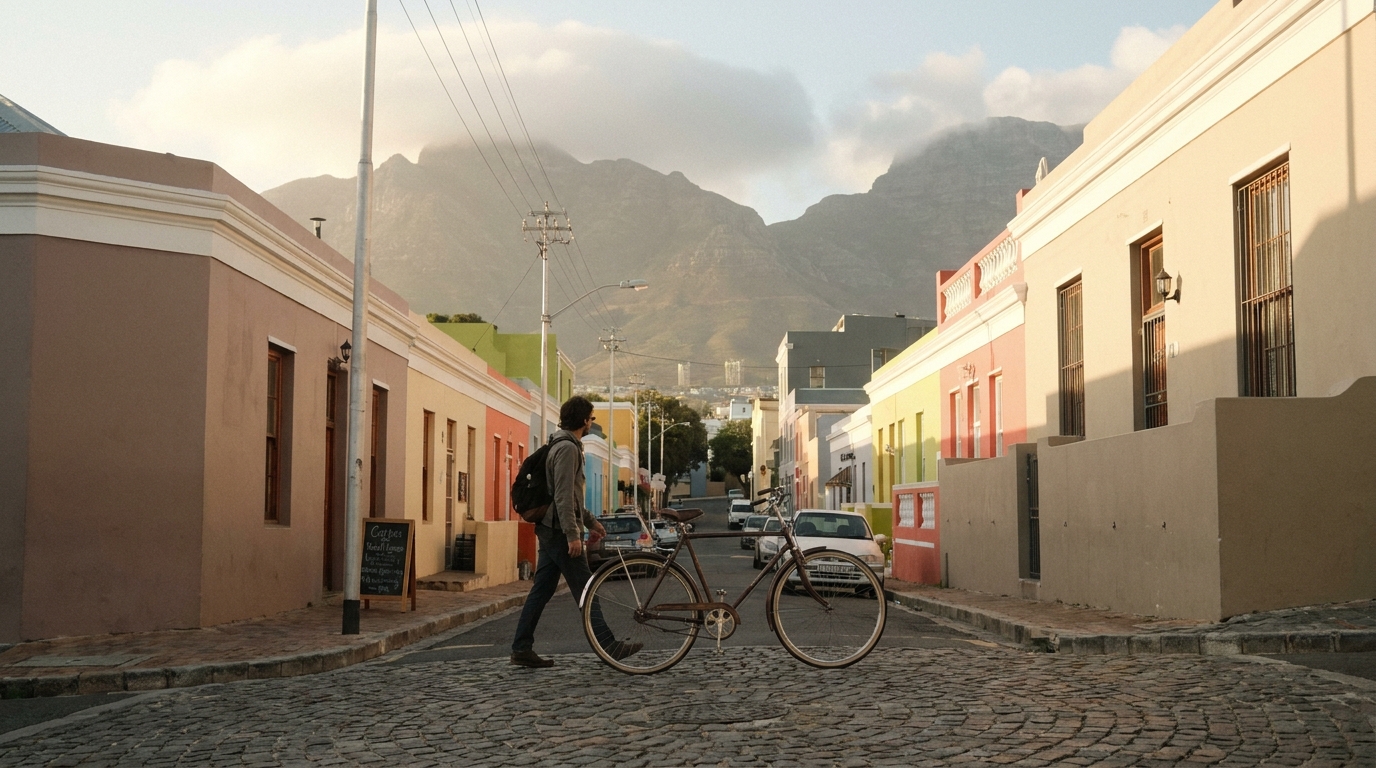
Five days covers Cape Town’s headline experiences comfortably if you plan routes logically and don’t try to cram two long drives into the same day. According to the Cape Town Tourism Authority’s 2025 visitor survey, the average leisure stay is 6.2 nights, but travellers reporting the highest satisfaction scores tended to have 4-6 nights with a well-structured itinerary rather than open-ended plans. Five days lets you allocate one full day each to the city bowl and Table Mountain, the Cape Peninsula, the Winelands, a coastal day, and a flex morning before your flight.
The key constraint is weather. Cape Town’s famously unpredictable “tablecloth” cloud can close the cable car for days at a stretch, especially May-August. We always recommend booking Table Mountain for Day 1 or Day 2 so you have a backup window. If you’re visiting between November and March (the Southern Hemisphere summer), you’ll get longer daylight and calmer seas along the Peninsula road.
[cape town best time to visit]
Day 1: Table Mountain, Bo-Kaap, and the V&A Waterfront
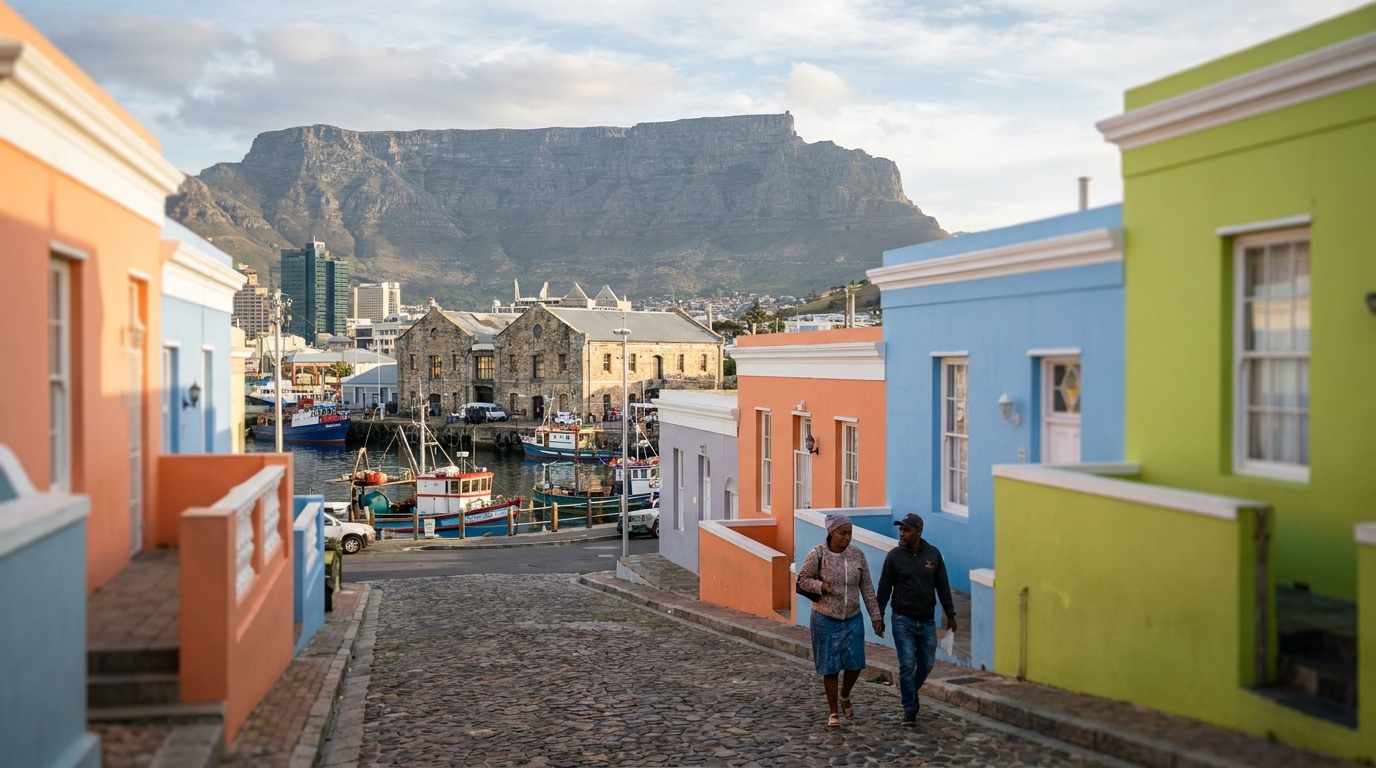
Start Day 1 with the city’s most weather-dependent activity so you have fallback days. The Table Mountain Aerial Cableway runs from around 08:00 and the first cars fill up fast — in January 2026, summit tickets cost ZAR 380 (about USD 21) for adults, up from ZAR 350 in 2025. Book online through GetYourGuide or the official cableway site at least 3 days ahead.
The cable car ride takes around 5 minutes and the rotating floor means every passenger gets a 360-degree view. At the top, allow 1.5-2 hours to walk the rim paths. On a clear day you can see the full peninsula stretching to Cape Point, Robben Island, and the Hottentots Holland mountains to the east. Flat-soled walking shoes are enough for the summit plateau; only the more technical Platteklip Gorge descent route needs trail shoes.
After descending, take an Uber (15 minutes, around ZAR 60) or walk 25 minutes to Bo-Kaap, Cape Town’s historic Malay Quarter. The brightly painted houses on Wale Street are the city’s most-photographed streetscape. The neighbourhood dates to the 18th century when the Cape Malay community settled here after emancipation. The Bo-Kaap Museum charges ZAR 50 entry and gives excellent context in about 45 minutes.
End Day 1 at the V&A Waterfront. The complex opened in 1988 and today draws 24 million visitors annually, making it one of Africa’s busiest retail and dining destinations (V&A Waterfront, 2025). Harbour House on the ground floor of the Clock Tower has a raw oyster bar and solid local fish; expect ZAR 250-400 for a main.
Day 1 transport: Uber from city centre accommodation to Table Mountain lower cable station, ZAR 50-80. Walk or Uber between Bo-Kaap and V&A.
[table mountain cable car tips]
| Activity | Duration | 2026 Cost (USD approx.) | Book Via |
|---|---|---|---|
| Table Mountain Cable Car | 2-3 hrs | USD 21 adult | GetYourGuide / Official |
| Bo-Kaap Museum | 45 min | USD 2.80 | Walk-in |
| V&A Waterfront | 2-3 hrs | Free (dining extra) | Walk-in |
Day 2: Cape Peninsula Drive — Chapman’s Peak to Cape Point
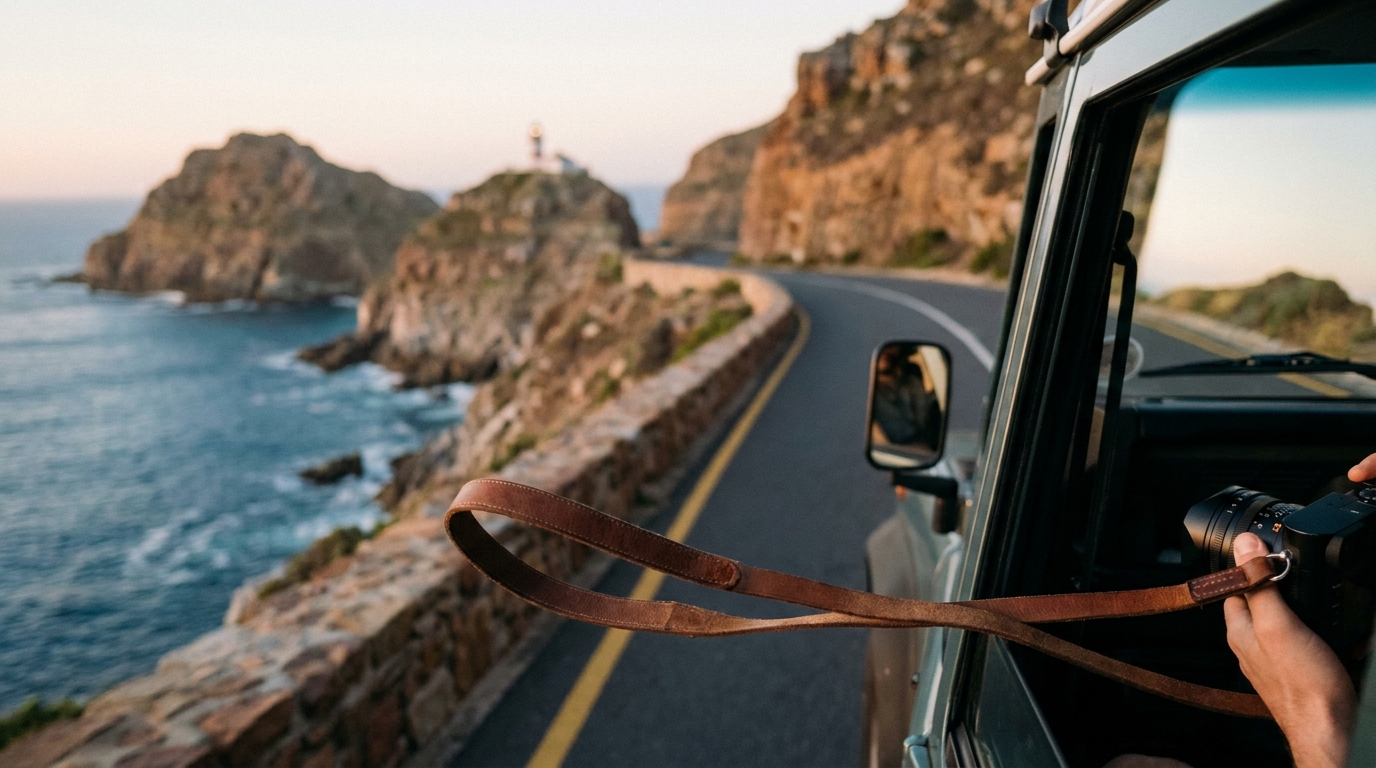
The Cape Peninsula drive is one of the world’s great road trips, and it’s best done as a full day with your own car. In 2026, Discover Cars lists Cape Town Airport pick-up rates starting at USD 35/day for a compact — book a week ahead and the price is significantly better than airport desks.
Depart by 08:30. Head south through Sea Point and Clifton, stopping at Camps Bay for coffee with a view of the Twelve Apostles mountain range. Continue to Hout Bay (40 minutes from the city) where you can walk the harbour market and, if time allows, take the 20-minute Nauticat Charters boat to Duiker Island seal colony (ZAR 200 per person, roughly USD 11).
From Hout Bay the route climbs Chapman’s Peak Drive — 9 km of cliff-hugging tarmac with 114 curves above a 600-metre drop to the ocean. The toll is ZAR 60 per vehicle. Pull over at the viewpoints; the views north towards the Sentinel are exceptional on a calm day.
Continue to Boulder’s Beach near Simon’s Town to see the African penguin colony. In 2026, South African National Parks charges ZAR 221 (USD 12) entry. There are around 3,000 penguins on the beach; the best sightings are between 08:00 and 10:00 before midday heat pushes the birds into the bushes.
The day’s highlight is Cape Point, the southwestern tip of the peninsula and part of the Table Mountain National Park. The funicular to the lighthouse costs ZAR 90 return and saves a steep 20-minute climb. Allow 2 hours here. On the drive back, take the False Bay coast road through Fish Hoek and Muizenberg — the coloured bathing boxes at Muizenberg Beach are another iconic photo stop.
According to SANParks, Cape Point and Boulders Beach combined receive over 900,000 visitors per year (SANParks Annual Report, 2025). Entry is included in a single peninsula gate fee if you enter via the park’s Cape of Good Hope gate.
[cape peninsula self drive guide]
Day 2 tip: Fill up at a Hout Bay petrol station before Chapman’s Peak; options thin out until Simon’s Town.
Day 3: Stellenbosch and Franschhoek Wine Country
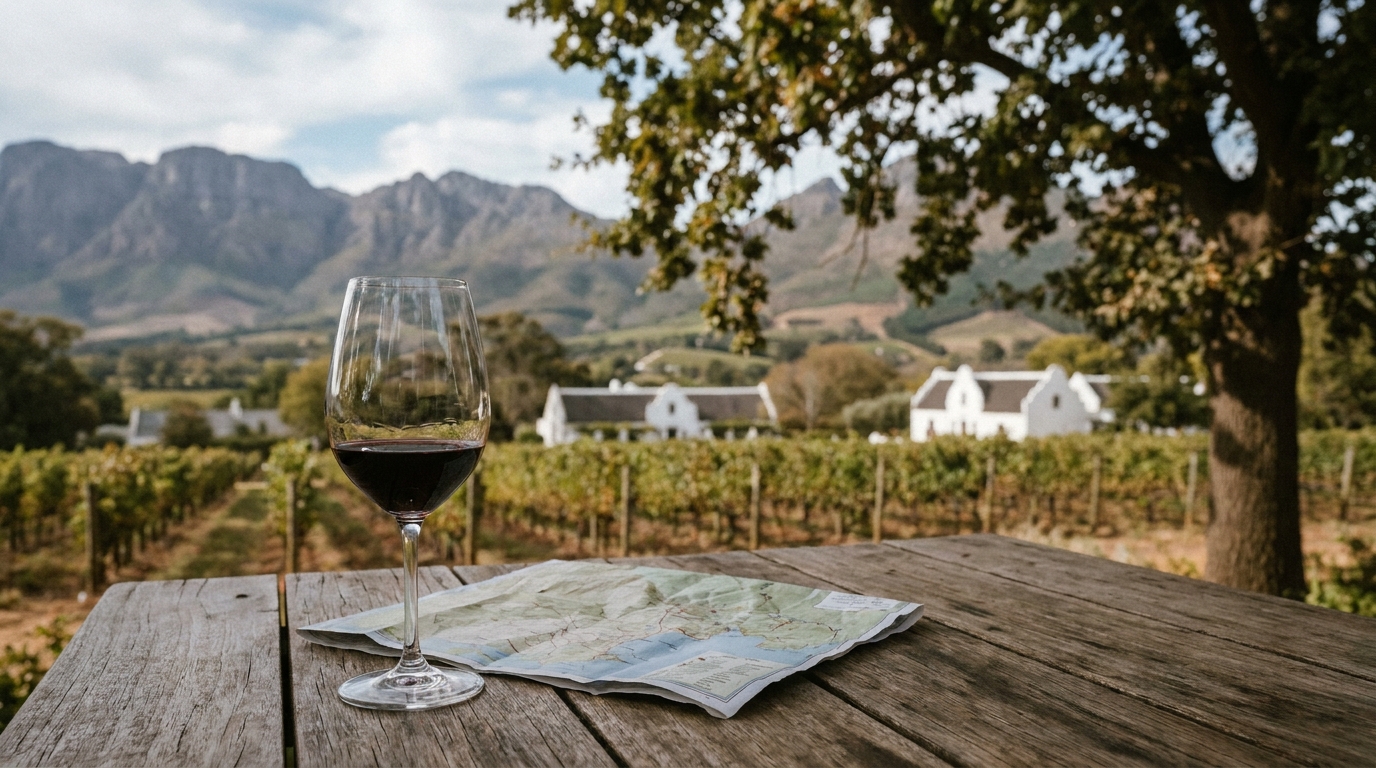
Cape Town sits 45 minutes from one of the world’s most scenically beautiful wine regions. In 2026, South Africa is the world’s 9th largest wine producer by volume, with the Winelands generating ZAR 8.7 billion annually for the Western Cape economy (Wines of South Africa, 2025). A day trip to Stellenbosch and Franschhoek gives you access to over 200 estates within a 30-km radius.
We recommend driving yourself or booking a guided wine tour through Viator, which offers half-day and full-day shared tours from around USD 65 per person including two or three estate visits and transportation. If you drive, note that drink-driving laws are enforced — the legal limit is 0.05% BAC, lower than the UK, and traffic officers regularly set up checkpoints on the R310 between Stellenbosch and Franschhoek. Designated driver, or budget for a guided tour.
Morning — Stellenbosch: Start at Spier Wine Farm (one of the oldest estates, established 1692). Their Chenin Blanc tastings cost ZAR 150 for five wines. Meander through the town’s oak-lined streets; Stellenbosch’s Cape Dutch architecture is genuinely distinctive, not just a tourist set. The Stellenbosch Village Museum cluster of 18th-century houses charges ZAR 100 entry.
Afternoon — Franschhoek: The 30-minute drive over the Helshoogte Pass delivers mountain views equal to Provence. Franschhoek means “French Corner” — Huguenot refugees settled here in 1688 and vine cultivation followed. The Huguenot Memorial Museum is free and takes 30 minutes. For lunch, Bread & Wine at Moreson Estate does farm platters from ZAR 280; book ahead, it fills up.
For wine tasting, Haute Cabriere is set in a cave cellar carved into the mountain — the theatrical atmosphere alone is worth the ZAR 100 tasting fee. Their Pierre Jourdan Cap Classique is consistently excellent.
[stellenbosch franschhoek day trip]
| Estate | Tasting Fee (2026) | Signature Wine | Distance from CT |
|---|---|---|---|
| Spier, Stellenbosch | ZAR 150 (USD 8) | Chenin Blanc | 45 min |
| Haute Cabriere, Franschhoek | ZAR 100 (USD 5.50) | Cap Classique | 75 min |
| Boschendal | ZAR 180 (USD 10) | Grand Reserve Red Blend | 60 min |
Day 4: Robben Island, Green Point, and Sea Point Promenade
Day 4 slows the pace and focuses on Cape Town’s urban waterfront and its most historically significant site. Robben Island, where Nelson Mandela was imprisoned for 18 of his 27 years behind bars, is a UNESCO World Heritage Site and one of South Africa’s most visited attractions. In 2025, the ferry service carried approximately 260,000 visitors (Robben Island Museum, 2025).
Ferries depart from the V&A Waterfront’s Nelson Mandela Gateway at 09:00, 11:00, and 13:00. The full tour — including a 45-minute bus tour of the island and a guided walk through the Maximum Security Prison led by a former political prisoner — takes around 3.5 hours including the ferry crossing. Tickets in 2026 cost ZAR 750 (USD 42) and must be booked well in advance; the island has limited daily capacity and tours frequently sell out 2-3 weeks ahead in summer.
Afternoon — Green Point and Sea Point: After returning from the island, walk north along the promenade. The Green Point Urban Park is a 110-hectare green space beside the 2010 World Cup stadium with free entry, a biodiversity garden, and a mini-golf course. It’s a good spot to decompress after the emotional weight of Robben Island.
The Sea Point Promenade runs 3.5 km along the Atlantic Seaboard and is the best free activity in Cape Town. Locals jog, cycle, and swim at the outdoor tidal pools along its length. The Pavilion Olympic Pool at the Sea Point end charges ZAR 36 (USD 2) for a swim.
For dinner on Day 4, the De Waterkant neighbourhood has a dense cluster of good restaurants. Skinny Legs and All does excellent wood-fired pizza from ZAR 145; Kloof Street House, a 15-minute walk away, is more elaborate and books up fast.
[robben island tickets guide]
Find your Cape Town hotel on the map
Live prices from Booking & Airbnb — tap a pin to compare stays around the V&A Waterfront and beyond.
Day 5: Kalk Bay, Constantia Wine Valley, and a Final Sunset
Save your last day for a quieter, more local Cape Town. Start the morning in Kalk Bay, a fishing village 30 minutes south of the city on the False Bay coast. The harbour market runs every weekend and sells fresh snoek (a local fish), antiques, and homewares. Kalk Bay Books on Main Road is a genuine independent bookshop worth 30 minutes.
From Kalk Bay, drive 20 minutes inland to the Constantia Wine Valley, the oldest wine-producing area in the Cape, dating to 1685. Groot Constantia is the historic estate at the valley’s heart and is one of South Africa’s most-visited wine tourism sites. Tastings run ZAR 125 for four wines; the estate museum is included. The Jonkershuis Restaurant on the estate serves Cape Malay-influenced food — a lunch of bobotie and malva pudding here is a proper send-off meal.
According to Wine Tourism South Africa, the Constantia Valley sees 350,000 wine tourists annually, making it the Western Cape’s most visited valley by volume (Wine Tourism SA, 2025). Its proximity to the city — just 20 minutes from the CBD — makes it the most accessible tasting experience on the Cape.
Late afternoon — Signal Hill sunset: For a final hour before dinner, drive or Uber to the Signal Hill Road viewpoint above Sea Point. Sunset over the Atlantic from here — with the city spread below and Lion’s Head to your right — is one of the great urban viewpoints in the southern hemisphere. It’s free, and it’s busy: arrive 30 minutes before sunset to get parking.
[constantia wine valley guide]
How to Get Around Cape Town on a 5-Day Trip
Cape Town’s public transport works for some routes but a rental car unlocks the full itinerary. In 2026, the MyCiti bus network covers Sea Point, the CBD, the V&A Waterfront, and Century City reliably, with single fares between ZAR 8 and ZAR 15. The network doesn’t reach Stellenbosch, Franschhoek, Kalk Bay, or the Cape Peninsula road in a practical way. Stay connected: grab a travel eSIM from Airalo before you go so you have data the moment you land.
For Days 2 and 3 especially, we recommend renting a car. Discover Cars aggregates rates from local and international operators — budget ZAR 600-900/day (USD 35-50) for a small automatic. Book at least 5-7 days ahead in peak season. International driving licences are accepted; South Africans drive on the left.
Uber operates reliably in Cape Town and is typically cheaper than metered taxis. A CBD-to-Camps Bay Uber costs ZAR 80-120 depending on time of day. The app works without local data if you pre-download the maps offline.
For the Winelands day, the Franschhoek Wine Tram is a hop-on, hop-off system connecting 30 estates. A full-day pass costs ZAR 250 (USD 14) and removes the drink-driving concern entirely. Book via the official site or Viator.
[cape town getting around guide]
What Does a 5-Day Cape Town Trip Cost in 2026?
A mid-range Cape Town trip costs roughly USD 80-130 per person per day in 2026. The South African rand (ZAR) has weakened against the US dollar and pound since 2023, making Cape Town significantly more affordable for USD and GBP travellers. As of June 2026, the exchange rate is approximately ZAR 18-19 to USD 1.
| Budget Category | Accommodation/night | Daily Food | Activities | Total/Day (USD) |
|---|---|---|---|---|
| Budget | USD 25-40 (hostel/guesthouse) | USD 15-20 | USD 15-25 | USD 55-85 |
| Mid-range | USD 60-110 (3-star hotel) | USD 30-45 | USD 25-40 | USD 115-195 |
| Luxury | USD 200-400+ (boutique hotel) | USD 60-100 | USD 50-100 | USD 310-600+ |
On Booking.com, well-reviewed 3-star hotels in the De Waterkant and Gardens neighbourhoods run USD 70-110 per night in June 2026 (shoulder season). The V&A Waterfront area commands a 20-30% premium for the location.
For activities, the five-day plan described in this guide totals roughly USD 95-110 per person in paid entry fees and tours (Table Mountain, Boulders Beach, Cape Point, Robben Island, two wine tasting sessions). Car rental for three days adds USD 105-150. Meals at local restaurants average USD 10-15 for lunch, USD 18-30 for dinner.
[cape town travel budget guide]
Frequently Asked Questions
How many days do you actually need in Cape Town?
Most travellers find 5-7 days optimal for Cape Town. Five days covers the headline experiences — Table Mountain, the Cape Peninsula, the Winelands, and Robben Island — without rushing. A 7-day trip allows a second wine valley, a day trip to Hermanus for whale watching (July-November), or a slower pace overall. Three days is possible but tight.
What is the best time of year to visit Cape Town?
November through March is Cape Town’s summer: long days, warm Atlantic swims, and the highest chance of clear Table Mountain views. October and April are excellent shoulder months with fewer crowds and lower prices. May through August is winter — wetter and windier, but the Winelands are beautiful, accommodation is 20-30% cheaper, and July-September is peak whale season in Hermanus.
Do you need a visa to visit South Africa in 2026?
US, UK, EU, Canadian, and Australian passport holders do not need a visa for South Africa for stays up to 90 days (US, UK, AU) or 30 days (Schengen), as of 2026. South African immigration requires that your passport has at least one blank page and six months’ validity from entry. Always verify current requirements with the South African Department of Home Affairs before travel.
Is Cape Town safe for tourists?
Cape Town requires the same situational awareness as any major city. The tourist areas — V&A Waterfront, the CBD, Sea Point, Camps Bay, Stellenbosch, and the Peninsula road — are generally safe during daylight hours. Avoid walking alone at night in the CBD and don’t leave valuables visible in parked cars. The South African Police Service crime statistics for 2025 show tourist-zone incidents declining 8% year-on-year following increased patrol presence in V&A and the City Bowl (SAPS, 2025).
How much cash do you need in Cape Town?
Most Cape Town restaurants, shops, and attractions accept Visa and Mastercard. Carry ZAR 200-400 (USD 11-22) in cash for markets, car park attendants, and tipping. ATMs are widely available at the V&A Waterfront and in Stellenbosch town centre. Notify your bank before travelling to avoid card blocks.
Can you do the Cape Peninsula as a day trip without a car?
Yes — guided Peninsula tours by minibus or shared coach depart from the V&A Waterfront and city hotels daily. GetYourGuide and Viator both list full-day options from USD 45-65 per person including Boulders Beach and Cape Point entry. They’re less flexible than a self-drive but remove navigation stress and parking concerns, and they’re a genuine option if you’re not comfortable driving on the left.
What currency does South Africa use?
South Africa uses the South African Rand (ZAR). In June 2026, USD 1 buys approximately ZAR 18.5 and GBP 1 buys approximately ZAR 23.5. Euro holders get roughly ZAR 19.8 per euro. The rand fluctuates; check live rates on your trip. US and EU cards get good interbank rates at South African ATMs — Capitec and ABSA ATMs typically charge lower fees than airport bureaux.
Conclusion: Your 5-Day Cape Town Plan
Cape Town packs more variety into five days than almost any other city in the southern hemisphere. On this itinerary you’ll stand on top of a flat-topped mountain, drive cliff roads above the Atlantic, drink wine in a 300-year-old cellar, walk with penguins, and hear the story of a man who changed the world from a prison cell on a rock in the bay.
The practical keys: book Table Mountain and Robben Island the moment you confirm your flights, pick up a car for Days 2-3, and keep Day 5 deliberately loose so a weather window or a wine tasting that runs long doesn’t feel like a problem.
Ready to start booking? Use our live travel map to compare Cape Town rental rates, GetYourGuide for Table Mountain cable car and Robben Island tickets, and Check live hotel prices for accommodation in De Waterkant or the V&A Waterfront area. Prices book out fast in December and January — earlier is always better.
[south africa travel guide]
Sources: South African Tourism Visitor Survey 2025; SANParks Annual Report 2025; Wines of South Africa Industry Report 2025; V&A Waterfront Visitor Statistics 2025; Robben Island Museum Annual Report 2025; Wine Tourism South Africa Regional Data 2025; SAPS Crime Statistics Q3 2025; Discover Cars Cape Town Rate Index June 2026.