
Disclosure: Some links in this guide are affiliate links. If you book or buy through them, we may earn a small commission at no extra cost to you — it helps keep our guides free.
Best Time to Visit Hoi An: Month-by-Month Guide 2026
February through April is the sweet spot for Hoi An — dry skies, warm temperatures around 25°C, and the lantern-lit Ancient Town at its most photogenic. We’ve broken down every month of the year so you can book with confidence and avoid the soggy surprises that catch many visitors off guard.
Key Takeaways
– The dry season runs November through April, with February–April offering the best combination of weather and manageable crowds. (Vietnam National Administration of Tourism, 2025)
– Hoi An receives up to 1,200 mm of rainfall between October and December — more than any other period. (Vietnam Meteorological and Hydrological Administration, 2024)
– Hotel rates in the Ancient Town drop 30–40% during the low season (May–September) compared to peak months. (Booking.com data, 2025)
– The Full Moon Lantern Festival occurs on the 14th of every lunar month and draws an estimated 5,000 extra visitors per event. (Quang Nam Tourism, 2025)
– Average temperatures stay between 20°C (68°F) in winter and 38°C (100°F) in summer, so packing layers for January visits still makes sense.
Why Timing Your Hoi An Trip Actually Matters

Hoi An’s weather is genuinely binary: you either get clear skies and golden light on the Thu Bon River, or you get flooding so severe that the ground floors of Ancient Town shophouses go underwater. Central Vietnam sits in a climatic sweet spot where two monsoon systems collide, giving the region an unusually concentrated wet season between October and December. Get the timing right and you walk through candlelit alleyways under a dry moon. Get it wrong and you’re navigating the Ancient Town in knee-deep water with your shoes tied around your neck. We’ve seen both scenarios firsthand.
February to April: The Prime Travel Window

This three-month stretch is the best time to visit Hoi An for most travellers, and the data backs it up. Rainfall averages just 20–40 mm per month in February and March — roughly the same as London in July. Temperatures hover between 22°C and 27°C, humidity stays manageable, and the post-Tet crowds thin out after the first two weeks of February. April pushes temperatures closer to 30°C, which feels warm but not brutal, especially if you’re moving between the beach at An Bang (a 5 km ride from the centre) and air-conditioned tailors in the Old Town.
Accommodation costs reflect the demand. A mid-range guesthouse inside or near the Ancient Town runs USD 45–80 per night on Booking.com during this window. Boutique properties with pool access — the kind that photograph well for Instagram — sit between USD 90–150. Book at least six weeks ahead for February, especially around the Full Moon Festival dates, when inventory shrinks fast.
| Month | Avg Temp (C) | Rainfall (mm) | Crowd Level | Avg Hotel Rate (USD/night) |
|---|---|---|---|---|
| February | 22 | 25 | High | 65–90 |
| March | 24 | 35 | High | 60–85 |
| April | 28 | 55 | Medium-High | 55–80 |
May to August: Hot, Humid, and Surprisingly Usable
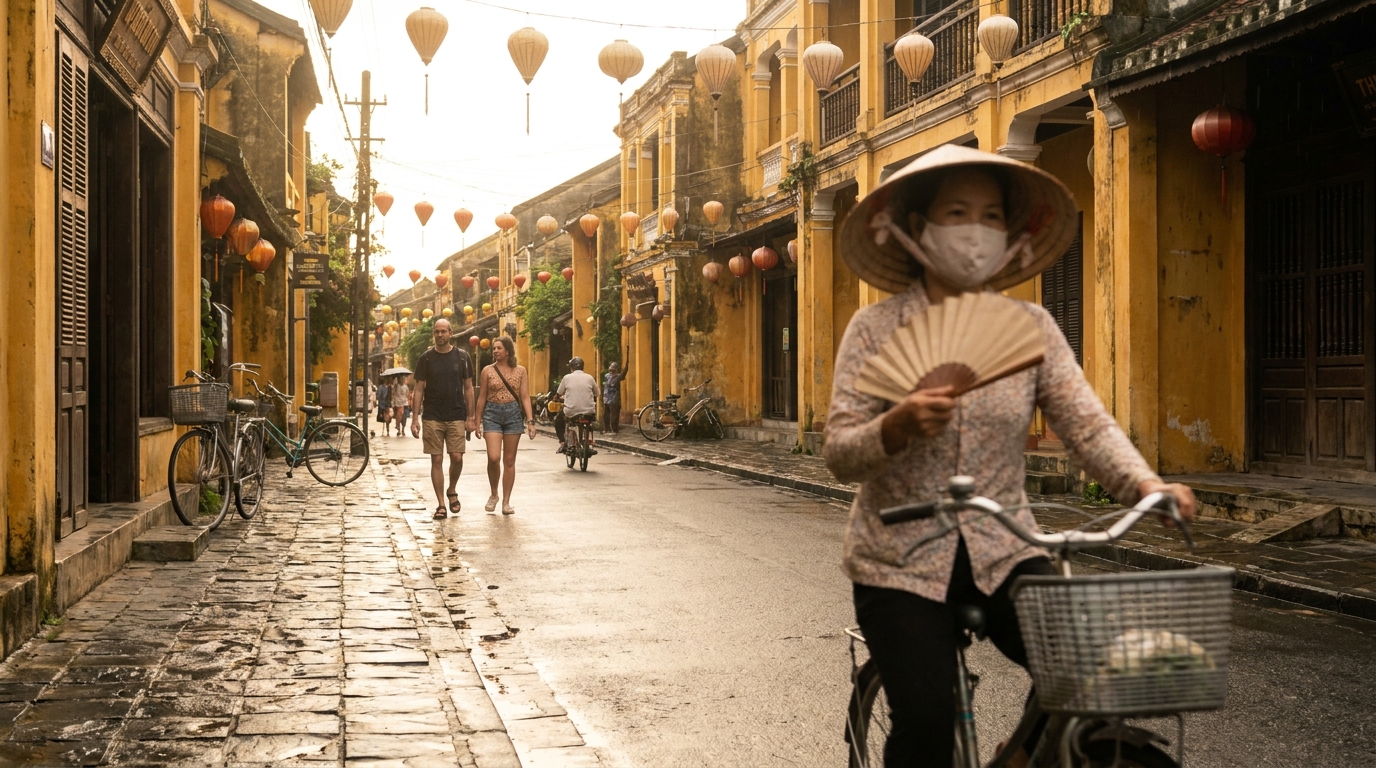
May kicks off the hot season, and Hoi An stops pretending to be mild. Temperatures regularly hit 35–38°C by June and July, with humidity that makes the midday streets feel like a sauna. That said, rainfall in May–August averages only 60–120 mm per month, which is a manageable drizzle rather than a monsoon. Most showers arrive in short afternoon bursts, clearing by evening in time for the lantern market on Tran Phu Street.
The real upside here is price. Hotels drop 30–40% compared to peak months. A river-view room that costs USD 80 in February can be booked for USD 48–55 in June. An Bang Beach is 28–30°C water temperature throughout summer, and the sea is calm enough for swimming most days — locals and expats actually prefer this beach window to the February crowds. If heat doesn’t bother you and you’re budget-conscious, May and early June deliver strong value. Pack a good SPF50+ and front-load your Ancient Town walking for early mornings before 9am.
September and October: Shoulder Season With Real Flood Risk
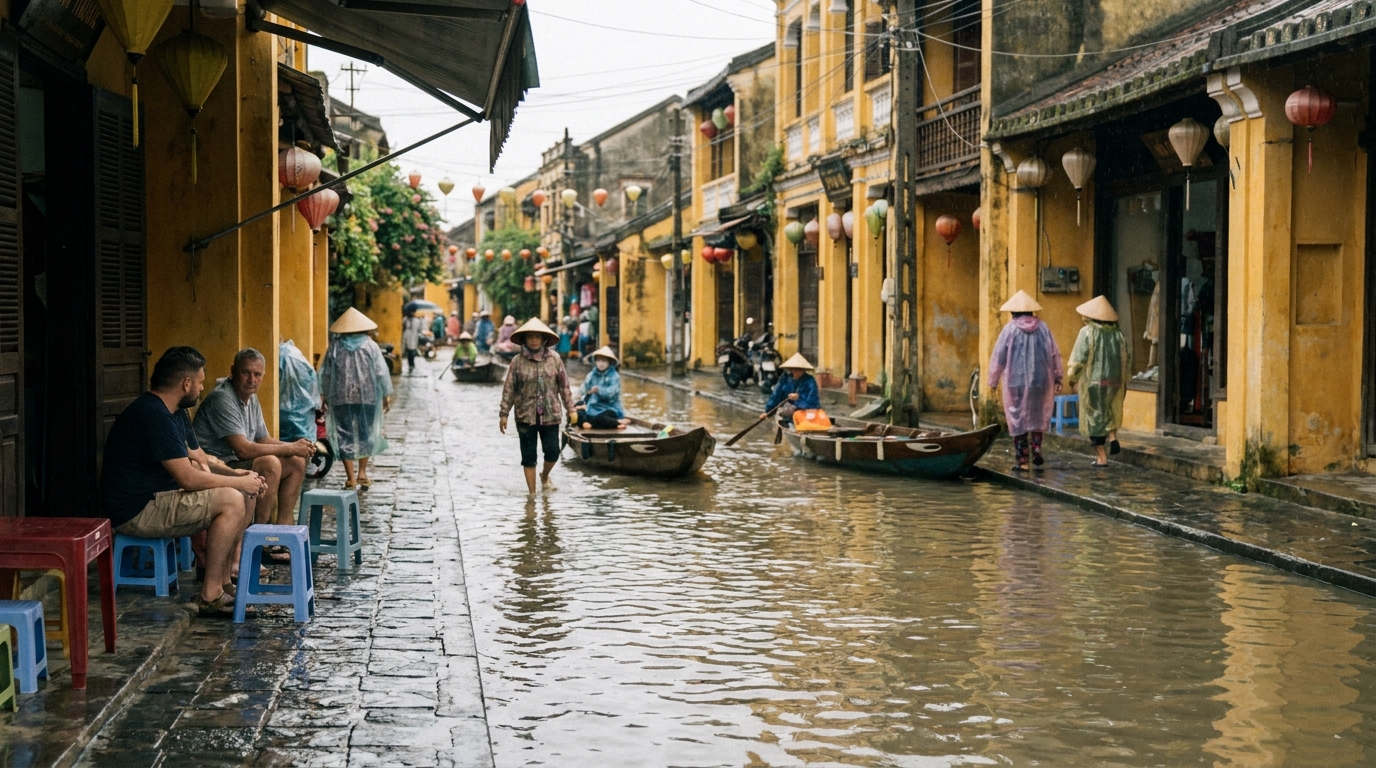
September is a transitional month — still warm, rainfall beginning to build, and hotel prices at their lowest of the year. Boutique guesthouses drop to USD 35–55 per night, making it the most affordable time to stay inside the UNESCO-listed core. October is where it gets complicated. Tropical depressions moving in from the South China Sea deliver concentrated rainfall that can dump 300–400 mm in a single week, and flooding in the Ancient Town is not a metaphor — streets flood to 30–50 cm, and some businesses close for days.
We don’t say skip October entirely. We say go in with contingency plans. Book a hotel on higher ground (the An Thuong area near the beach rarely floods), pack waterproof sandals rather than sneakers, and keep your schedule flexible. The Ancient Town during and immediately after rain has a moody, atmospheric quality that dry-season visitors never see. Prices are low, crowds are thin, and local vendors are genuinely happy to see you. It’s a calculated gamble rather than a mistake.
November: The Shoulder Sweet Spot Many Travellers Overlook
November sits at the end of the wet season, and the weather transition makes it one of Hoi An’s most interesting months to visit. Early November still carries flood risk from leftover tropical systems, but by the second half of the month the skies typically clear and temperatures settle into the comfortable 24–27°C range. Prices haven’t yet spiked to peak-season levels, so you can find mid-range options at USD 50–70 per night while the rest of the world is only just starting to book December breaks.
The Hoi An Lantern Festival on the 14th of the lunar month (which lands on 11 November in 2026) draws visitors specifically, but the Ancient Town doesn’t feel saturated the way it does in February. We’d rank mid-to-late November as the most underrated window in the Hoi An calendar — the light on the Thu Bon River at dusk in late November is genuinely some of the best the destination offers.
December and January: Peak Season Returns
December through January brings Hoi An’s coolest temperatures — 18–22°C overnight, rarely above 25°C during the day — and a return to dry, clear skies. International arrivals spike through the Christmas and New Year window, and January sees the lead-up to Tet (Vietnamese Lunar New Year), which in 2026 falls on 17 February. The two weeks before Tet are high season within high season: Ancient Town properties book out, prices peak at USD 90–160 per night for anything decent, and the streets fill with domestic Vietnamese tourists as well as international visitors.
January is genuinely cold by Vietnamese standards. Bring a light jacket for evenings — locals wear full winter coats, which looks alarming if you’ve come straight from a beach. The benefit of this window is the festive energy: lanterns go up across the entire town from mid-December, and the Tet market on Nguyen Hue Street, which opens in late January, is worth planning around. If you’re visiting during this period, search Booking.com early — the best-reviewed properties inside the Ancient Town’s core sell out 8–10 weeks in advance.
Find your Hoi An hotel on the map
Live prices from Booking & Airbnb — tap a pin to compare stays around the Ancient Town and An Bang Beach and beyond.
Hoi An Festivals Worth Planning Around
Hoi An’s Full Moon Lantern Festival transforms the Ancient Town every lunar month, but three calendar events stand out for 2026 planning. Tet (17 February 2026) is the biggest: streets close to motorbikes, paper offerings burn in front of ancestral altars, and the town operates on reduced restaurant hours for three to four days — book restaurants in advance or eat at market stalls. The Mid-Autumn Festival (30 September 2026) brings lantern parades targeted at children but genuinely magical for adults. The Hoi An International Food Festival runs in March in even years, though the 2026 edition had not been confirmed at time of writing.
The Full Moon Festival itself needs a logistics note: the Ancient Town goes pedestrian-only from roughly 5pm on festival evenings, and the approach roads fill with parked motorbikes. Book your accommodation inside the walking-zone boundary (Tran Phu, Bach Dang, Nguyen Thai Hoc streets) so you can walk back to your hotel without battling the post-festival traffic surge.
Budget Planning by Season
Your Hoi An budget shifts meaningfully depending on when you travel. During peak season (December–April), factor USD 65–120 per night for a comfortable mid-range guesthouse with breakfast. Tailoring — Hoi An’s famous made-to-measure clothing industry — holds steady at USD 25–120 per item regardless of season. Cooking classes with a riverside school run USD 30–45 per person year-round. Street food at the night market on An Hoi Island stays at VND 15,000–40,000 (USD 0.60–1.60) for banh mi, cao lau, and white rose dumplings in any season.
Transport from Da Nang International Airport (30 km north) costs USD 12–18 by private car or USD 0.40 via local bus. If you’re connecting from Hanoi or Ho Chi Minh City, the overnight train via Da Nang is the most scenic option — book through Omio for English-language seat selection and e-tickets from USD 22 in soft sleeper class. /best-day-trips-from-hoi-an/ connects to our guide on reaching Hue and My Son Sanctuary from the town.
| Season | Months | Mid-Range Hotel/night | Crowd Level | Flood Risk |
|---|---|---|---|---|
| Peak Dry | Dec–Apr | USD 65–120 | High | Low |
| Hot Shoulder | May–Aug | USD 40–65 | Medium | Low |
| Wet Season | Sep–Nov | USD 30–55 | Low | High (Oct) |
Practical Tips for Every Season
A few logistics that apply regardless of when you visit. Hoi An’s Ancient Town bans motorbikes during daytime hours — rent a bicycle (USD 2–3/day) from your guesthouse for navigating the pedestrian zone. The central market on Tran Phu runs daily from 6am and is the best place to buy fresh fruit, local spices, and the dried noodles used in cao lau at vendor prices rather than tourist prices. /hoi-an-travel-guide/ covers the market in more detail.
For the rainy season, waterproof sandals outperform shoes in every flooding scenario. Bring a compact umbrella rather than a poncho — the narrow covered walkways of the Ancient Town make ponchos impractical. Most guesthouses keep a loaner umbrella policy; ask at check-in. Sun protection matters year-round, but especially May–September when UV index readings regularly hit 10–11 (extreme) between 10am and 3pm.
Travel insurance with flood and trip disruption cover is worth adding if you’re travelling October–November. World Nomads and SafetyWing both cover travel delays caused by flooding; check the fine print on weather-event definitions before you purchase. /hoi-an-itinerary-3-days/ has a day-by-day structure built around flexible timing that works across seasons.
Frequently Asked Questions
What is the absolute best month to visit Hoi An?
March is our top pick. Rainfall averages just 35 mm, temperatures stay around 24°C, the post-Tet crowds from February have largely cleared, and hotel rates are slightly lower than January or February. You get the full Ancient Town experience without peak-season pricing or the mid-year heat.
Does Hoi An actually flood badly?
Yes, and it’s not exaggerated. October and November can bring genuine urban flooding to 30–60 cm in the lowest parts of the Ancient Town near the Thu Bon River. Hotels and restaurants along Bach Dang Street are most affected. Properties set back from the riverside or in the An Thuong beach district rarely flood. Always check your hotel’s exact location before booking.
Is Hoi An good for a beach holiday in summer?
Absolutely. An Bang Beach, 5 km from the Ancient Town, has warm 28–30°C water and calm conditions from May through August. Summer is actually the local beach season. Combine two to three days of Ancient Town time in the early mornings with afternoons at the beach and you have an efficient split itinerary that avoids the worst midday heat in the Old Town.
How far in advance should I book for peak season?
Six to eight weeks minimum for February and the Christmas–New Year window. Top-reviewed boutique properties inside the Ancient Town’s pedestrian zone can sell out three months ahead for the Full Moon Festival dates in February. Use Booking.com’s free cancellation filter to hold rooms early without committing fully.
What should I pack for a January visit?
A light jacket or fleece for evenings (temperatures drop to 18–20°C), breathable day layers for 23–25°C afternoons, and a compact umbrella. January is mostly dry but occasional cold fronts bring drizzle. Unlike the rest of Vietnam, Central Vietnam in January genuinely feels cool rather than tropical.
Can I visit Hoi An during the wet season on a tight budget?
Yes, and it’s a legitimate strategy. May through September delivers 30–40% lower hotel rates, uncrowded streets, and the same Ancient Town, tailoring shops, and cooking schools as peak season. Accept that afternoons may bring showers and plan your itinerary around morning activities. October carries genuine flood risk and is the one month we’d suggest avoiding unless you’re specifically drawn to the dramatic weather.
How does the Tet holiday affect a Hoi An trip?
Tet (17 February 2026) means some restaurants and shops close for two to four days, domestic travel surges, and the Ancient Town fills with Vietnamese families in traditional dress — which is visually remarkable. Plan around limited dining options by identifying open restaurants in advance. Book transport out of Hoi An at least three weeks ahead, as Da Nang airport and train stations are exceptionally busy in the days after Tet.
Plan Your Hoi An Trip With Confidence
The single most important booking decision you’ll make for Hoi An is when, not where to stay. February through April is the safe, reliable choice that delivers Hoi An at its photogenic best. November offers comparable quality at a lower price if you travel in the second half of the month. Summer works well for beach-focused trips on a tighter budget. Only October genuinely warrants caution.
Whatever your window, lock in accommodation early through Booking.com — the best properties inside the Ancient Town’s walkable core sell fast, and the free cancellation options mean there’s no reason to delay. Check our /where-to-stay-in-hoi-an/ guide for neighbourhood breakdowns and specific property recommendations across all budget levels.
Ready to plan the rest of your Central Vietnam trip? Our /hoi-an-travel-guide/ covers everything from tailor tips to day trips, and /best-things-to-do-in-hoi-an/ lists the 12 experiences worth prioritising regardless of season.