Is Istanbul Expensive? Real Prices for American Travelers (2026)
Disclosure: Some links in this guide are affiliate links. If you book or buy through them, we may earn a small commission at no extra cost to you — it helps keep our guides free.
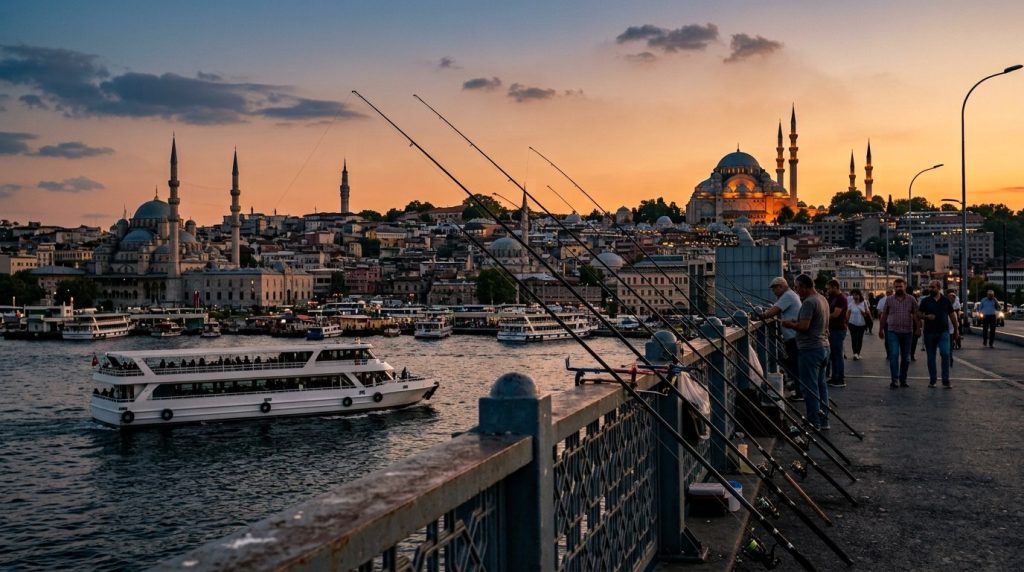
No, Istanbul is not expensive by US standards: a metro or tram ride costs USD 0.94 and a döner sandwich USD 2–3, but the headline sights are priced in euros, so Hagia Sophia (USD 28) and the Topkapi Palace combo (USD 56) make sightseeing days the costly part. Your room and your museum list decide the budget.
Eat where locals eat, ride the Istanbulkart, and the city stays cheaper than most big European capitals. Prices below are converted at USD 1 = TRY 49.1 and EUR 1 = USD 1.13.
| Item | Typical price | How to save |
|---|---|---|
| Metro, tram, bus ride (Istanbulkart) | USD 0.94 (TRY 46.20) | Load a card instead of buying single-ride tickets (USD 1.32) |
| Simit from a street cart | USD 0.60–1 (TRY 30–50) | Breakfast on the go instead of a hotel buffet add-on |
| Döner sandwich | USD 2–3 (TRY 100–150) | Walk two blocks off the tram line |
| Esnaf lokantası (workers’ canteen) lunch | USD 5–10 (TRY 250–500) | Eat your big meal at lunch |
| Tourist restaurant in Sultanahmet | USD 12–31 per person | Skip menus with photos and touts at the door |
| Hagia Sophia entry | USD 28 (EUR 25) | Go at 9 a.m. opening; the Blue Mosque next door is free |
| Topkapi Palace + Harem + Hagia Irene | USD 56 (TRY 2,750) | Pick it over smaller paid sites if you only do one palace |
| Mid-range double room, Sultanahmet | USD 90–170 a night | Travel January to March |
The honest answer: cheap streets, euro-priced sights
Istanbul runs two price systems side by side. Everyday life is priced in lira for locals: transit, tea, simit, lokanta food. Big-ticket tourism is priced for foreigners, and several state museums now quote fees in euros.
That split explains the mixed reviews. A Reddit thread titled “Istanbul – too expensive” complains that meals under EUR 20 are hard to find, while a Rick Steves forum regular wrote in June 2026 that the city is pricier than it was but not overly so. The first poster ate around Sultanahmet; the second ate where Istanbullus eat.
Inflation makes TRY menus look scary, but converted to dollars, local food is still well under New York or Chicago prices.
What the big sights actually cost
Entry fees are where Istanbul stops being a bargain. Official and current 2026 prices for foreign visitors:
– Hagia Sophia: EUR 25 (USD 28) for the visitor route, per the official museum site.
It is a working mosque, so Friday midday prayers close it to visitors. – Topkapi Palace with Harem and Hagia Irene: TRY 2,750 (USD 56), sold only at the ticket office. – Galata Tower: EUR 30 (USD 34). – Basilica Cistern (daytime): TRY 1,950–2,250 (USD 40–46), depending on the source; the evening session costs more. – Dolmabahçe Palace: TRY 2,000 (USD 41). – Blue Mosque and Süleymaniye Mosque: free.
Do all five paid sights and you spend roughly USD 200 per person on tickets alone. That’s why sequencing matters. Our list of the best things to do in Istanbul flags which ones are worth the money, and a realistic 3-day Istanbul itinerary spreads the paid sites so you never stack three USD 40+ tickets in one afternoon.
The Museum Pass Istanbul (EUR 105, USD 119) skips Hagia Sophia, the Cistern and Dolmabahçe, so most short-trip visitors should buy tickets individually.
Food and drink: where your money goes furthest
Food is the best value in the city once you leave the tourist core. A simit plus a street tea (about USD 1–2 together) is a real breakfast; a full Turkish breakfast spread runs USD 6–12. Lunch at an esnaf lokantası, the steam-tray canteens where office workers eat, costs USD 5–10, and a kebab plate USD 7–10.
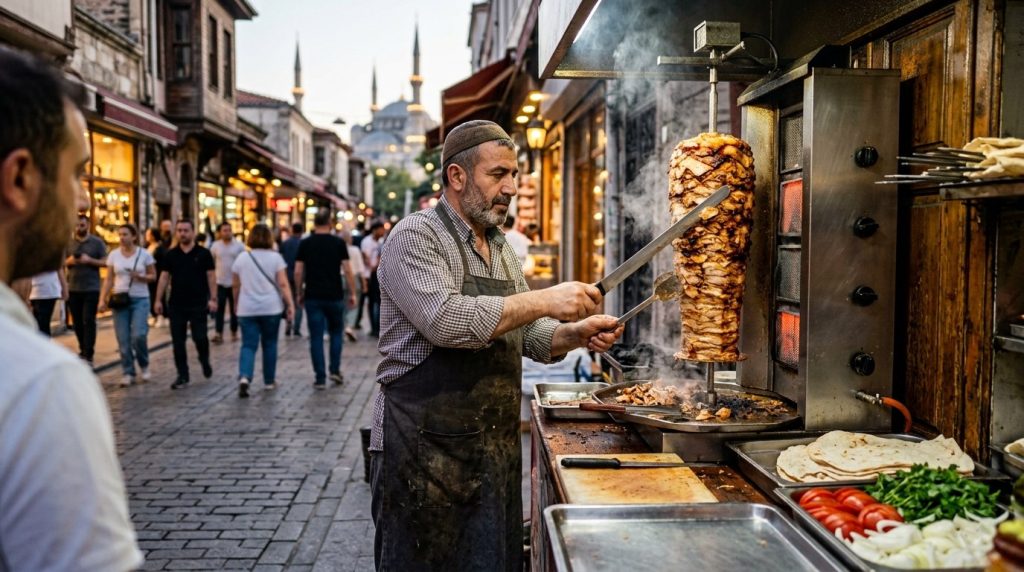
Coffee and alcohol are the exceptions. A café latte runs USD 3–5 (Turkish coffee USD 1.60–3). Alcohol is heavily taxed: a half-liter draft beer averages around USD 5, and a mid-range three-course dinner for two about USD 55 before drinks, per Numbeo’s October 2026 data. Tip 5–10% at sit-down restaurants, not the 20% you’d leave at home.
Transport is almost free
The official Metro Istanbul tariff puts a full-fare Istanbulkart ride at TRY 46.20 (USD 0.94). A single-ride card costs TRY 65 (USD 1.32), a 10-ride card TRY 530 (USD 10.80). The Istanbulkart also works on buses, the Metrobüs and commuter ferries.
Taxis carry a TRY 230 (USD 4.70) minimum, and the meter adds about USD 0.98 per kilometer plus tolls. Istanbul Airport to Sultanahmet runs about TRY 2,564 (USD 52) in light traffic. Insist on the meter or use the BiTaksi app.
Tourist traps to skip if you watch your budget
– Restaurants with touts on Divanyolu and around the Hippodrome. USD 12–31 per person for food that costs far less a few streets away. – Unpriced fish and “chef’s choice” mezes. Ask the price per kilo before anything is weighed. – Grand Bazaar first offers. Negotiate; walking away is part of the process. – Paying in dollars or at airport exchange desks. Pay in lira from a city bank ATM and decline dynamic currency conversion.
Who will find Istanbul expensive
You will feel the pinch if you travel in summer or over New Year (Sultanahmet hotels run 30–50% above winter rates), cram every paid sight into two days, want wine with every dinner near Hagia Sophia, or taxi short hops instead of taking the tram.
If that’s you, check the best time to visit Istanbul for shoulder-season dates and how many days to spend in Istanbul before booking a rushed schedule. One saving: Americans need no visa for up to 90 days in any 180, per the Turkish Ministry of Foreign Affairs.
Sample daily budgets (per person, before your room)
– Shoestring: simit, lokanta lunch, street döner or balık ekmek, three teas and four transit rides: about USD 13–21. – Comfortable: Turkish breakfast, kebab plate, half of a mid-range dinner for two, a latte, four rides and one short taxi runs about USD 50–65. – Sightseeing day: add USD 28–56 per major ticket on top.
Flight costs from the US to Istanbul
Flights are usually the single biggest line item on an Istanbul trip, and fares move a lot by season and booking window.
Fare-search sites currently show one-way tickets from New York starting around USD 360 to USD 640 on the cheapest dates, with round trips most commonly landing somewhere between USD 740 and USD 1,500 depending on the airline, how far ahead you book and whether you fly nonstop.
Turkish Airlines runs nonstop New York to Istanbul service averaging just under 10 hours, while connecting itineraries on European carriers can cost less but add several hours each way.
Prices swing hard around holidays and the summer peak, so a flexible travel-date search is worth the few extra minutes before you commit to dates. Checking fares across several booking sites rather than just one airline’s page also tends to turn up a wider spread of prices for the same route and dates.
Flying midweek and avoiding the two weeks either side of major US and Turkish holidays is the simplest way to land nearer the lower end of that range. If your dates are flexible, pair cheaper flights with the January to March low season mentioned above and you can cut both your airfare and your hotel bill at the same time.
From other US cities, expect a connection through a European or Gulf hub, which usually adds cost rather than saving it unless your home airport has a direct Turkish Airlines route. Build the flight into your budget before the sightseeing tickets; a cheap room does little for the total if the flight alone eats half your trip budget.
Istanbul has two main airports, and which one your flight lands at changes your onward cost. Istanbul Airport (IST), on the European side, is the hub for Turkish Airlines’ long-haul routes and sits roughly 45 minutes from Sultanahmet in light traffic.
Sabiha Gokcen (SAW), on the Asian side, handles more budget and charter traffic and can add a longer, pricier transfer if your hotel is in the old city, so weigh any fare saving against that extra taxi or shuttle cost before booking.
How to save money on accommodation and flights
Accommodation and flights are the two costs you can shrink the most with timing rather than willpower.
On rooms, booking a mid-range Sultanahmet double in January through March instead of summer or New Year typically cuts the nightly rate well below the USD 90 to USD 170 range quoted for peak months, since Istanbul’s hotel market is highly seasonal around both weather and the summer cruise crowds.
Apartment rentals in Kadikoy or Karakoy often undercut hotel rates for stays of four nights or longer, and come with a kitchen, which also trims your food budget if you cook even a couple of breakfasts.
On flights, the same flexible-date approach pays off: shifting a trip by even a few days away from weekends or school holidays can move you toward the lower end of the fare ranges above.
Budget carriers sometimes fly into Istanbul’s Sabiha Gokcen airport on the Asian side rather than the main Istanbul Airport, which can mean a cheaper fare offset by a longer, pricier transfer into Sultanahmet, so check the total cost of getting to your hotel before booking the cheaper airport.
Loyalty programs and airline credit card sign-up bonuses are worth checking before you buy outright, since a single nonstop Turkish Airlines route from several US cities makes miles redemptions more realistic here than on itineraries that need two or three connections.
On the room side, negotiating directly with a family-run Sultanahmet hotel or pension for a multi-night stay sometimes beats the online listed rate, especially outside July and August, since many of these properties would rather fill a room at a small discount than leave it empty.
Breakfast is included at the large majority of Istanbul hotels and pensions, which quietly removes one meal a day from your food budget compared with destinations where breakfast is charged separately.
Staying connected: SIM cards and data costs
A local data connection is cheap enough in Istanbul that there is little reason to rely on expensive roaming.
Prepaid eSIM providers aimed at tourists sell Turkey data packages starting around USD 4 to USD 5 for about 1GB over a week, with 5GB packages running roughly USD 12 and larger 10GB bundles closer to USD 20, prices that several eSIM marketplaces quote consistently for 2026.
Installing the eSIM before you land, using the provider’s app, means you have data the moment you land rather than hunting for airport WiFi.
A physical Turkcell or Vodafone SIM bought in the city is another option, and can work out cheaper per gigabyte for longer stays, though it usually requires passport registration at a shop and sometimes a short wait. For a one-week trip, a prepaid eSIM is simpler and the price difference is small enough not to matter for most travelers.
Either option beats most US carriers’ international day-pass roaming rates by a wide margin over a week-long trip, and a working data connection also makes the BiTaksi app and transit maps far more useful for keeping taxi fares honest and avoiding the tourist-trap restaurants mentioned above.
Free WiFi is widely available in cafes, the airport and most hotels, so some travelers get by on that alone for a short trip and only add data for the handful of hours each day spent walking between sights.
For anyone planning to navigate on foot through Sultanahmet’s winding side streets or catch the tram and ferries without asking for directions, though, the cost of a week of data is small enough that it is rarely worth the hassle of going without.
Where to stay
– Sultanahmet: best for first-timers on a short trip. Hagia Sophia, Topkapi, the Cistern and the Grand Bazaar are a walk away, so you spend nothing on transport. Budget hotels run about USD 45–90, mid-range USD 90–170. – Karaköy and Galata (Beyoğlu): best for couples and food lovers.
Better restaurants at fairer prices, easy tram and ferry access, livelier evenings. – Kadıköy (Asian side): best for budget travelers and repeat visitors. Local prices, a great food market, and a direct ferry to the old city.
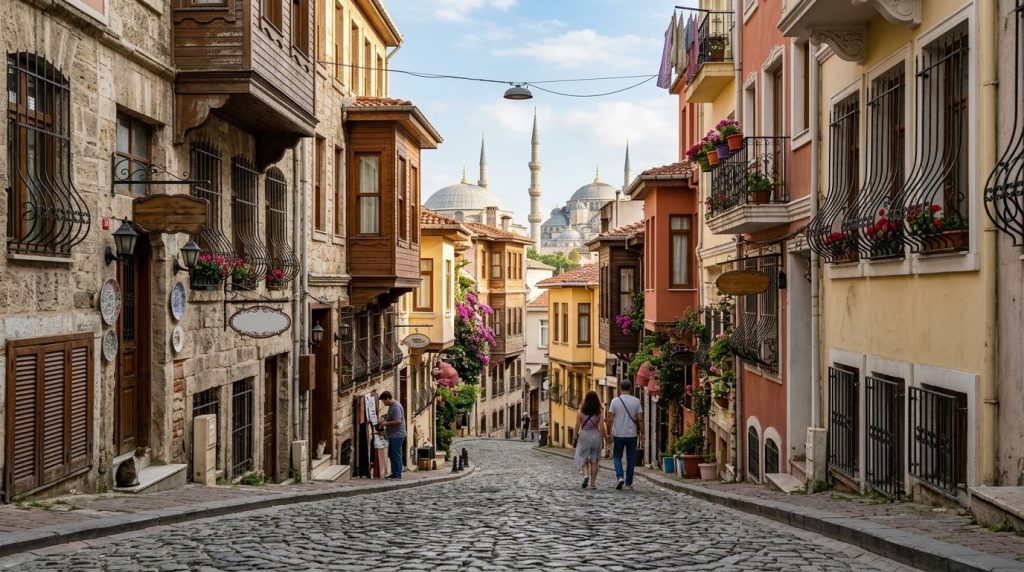
Our Istanbul travel guide compares neighborhoods in depth, and a central base keeps day trips from Istanbul easy.
Find your Istanbul hotel on the map
Live prices from Booking, Airbnb and more — move the map or change dates to compare stays across Istanbul.
Frequently Asked Questions
How much does a meal cost in Istanbul?
A street döner costs USD 2–3, a lokanta lunch USD 5–10, and a kebab plate with rice and salad USD 7–10. Tourist restaurants in Sultanahmet charge USD 12–31 per person. A mid-range three-course dinner for two averages about USD 55 before drinks, and beer adds roughly USD 5 a glass because alcohol is heavily taxed.
Is Istanbul cheap for American tourists?
Mostly yes. Transit under USD 1 a ride, cheap street food and free mosques keep everyday costs low, and Americans need no visa for up to 90 days. The expensive parts are euro-priced museum tickets such as Hagia Sophia at USD 28 and Topkapi at USD 56, plus summer hotel rates in Sultanahmet.
Is USD 1,000 enough for a week in Istanbul?
For one person, yes, if you choose a budget or lower mid-range room and eat like a local. A USD 45–90 room for seven nights plus USD 13–21 a day in food and transit comes to USD 406–777, leaving room for the five main paid sights (about USD 200). A pricier room or daily taxis will push you over.
Is the Museum Pass Istanbul worth it?
Usually not for a short trip. It costs EUR 105 (USD 119) and lasts 5 days, but it excludes Hagia Sophia, the Basilica Cistern and Dolmabahçe Palace. Topkapi plus the Archaeology Museums costs about USD 73 separately, so the pass only pays off if you plan several more state museums.