Best Time to Visit Istanbul: Month-by-Month 2026
Disclosure: Some links in this guide are affiliate links. If you book or buy through them, we may earn a small commission at no extra cost to you — it helps keep our guides free.
- Sweet spots: Late April-May and September-October deliver 15-24 C (60-75 F) days, minimal rain, and fewer tourists than midsummer.
- Tulip window: The Istanbul Tulip Festival runs April 1-30, 2026, with peak bloom roughly April 6-18 across Emirgan Park’s 47 hectares.
- Hot summer: July and August average highs near 28 C (82 F), humid crowds at every major sight, and the year’s lowest rainfall (about 24 mm in August).
- Mild winter: January averages around 6 C (43 F) and is the wettest month at roughly 114 mm, but hotel rates drop and queues shrink.
- Ramadan 2026: February 16 to March 17; Eid al-Fitr (Ramazan Bayrami) runs March 18-20, a domestic-travel peak with busier transport and some closures.
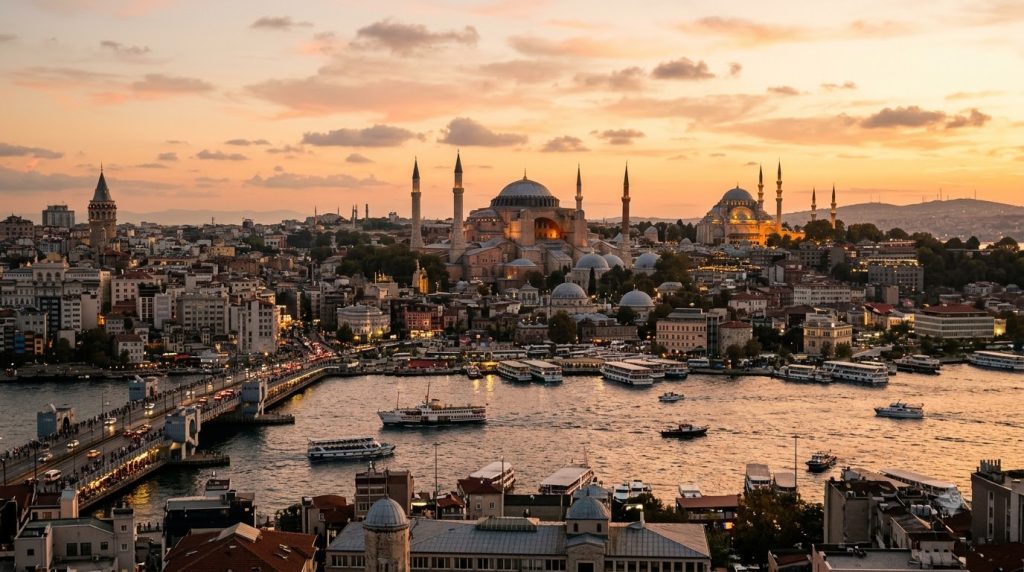
The best time to visit Istanbul is late April to May and mid-September to October. Those two shoulder-season windows pair comfortable temperatures of roughly 15-24 C (60-75 F) with lighter crowds than the July peak, and rainfall stays low compared with the wet winter months (climate-data.org).
If you want the city’s famous tulips, aim for the first three weeks of April, when the Istanbul Tulip Festival fills Emirgan Park with more than 120 registered varieties.
This guide breaks Istanbul down month by month for 2026: real temperature and rainfall figures, when the crowds thin out, what Ramadan (February 16 to March 17, 2026) means for your trip, and how each season changes the way the city feels. Whether you are chasing spring blooms or a quiet winter walk along the Bosphorus, you will find a clear answer here.
A mid-April morning in Emirgan Park, walking between the tulip beds before the tour buses arrive, is one of the best times to visit. In January, the Blue Mosque courtyard tends to be nearly empty; carry a folding umbrella and keep a backup indoor plan for the afternoon.
What Is the Overall Best Time to Visit Istanbul?
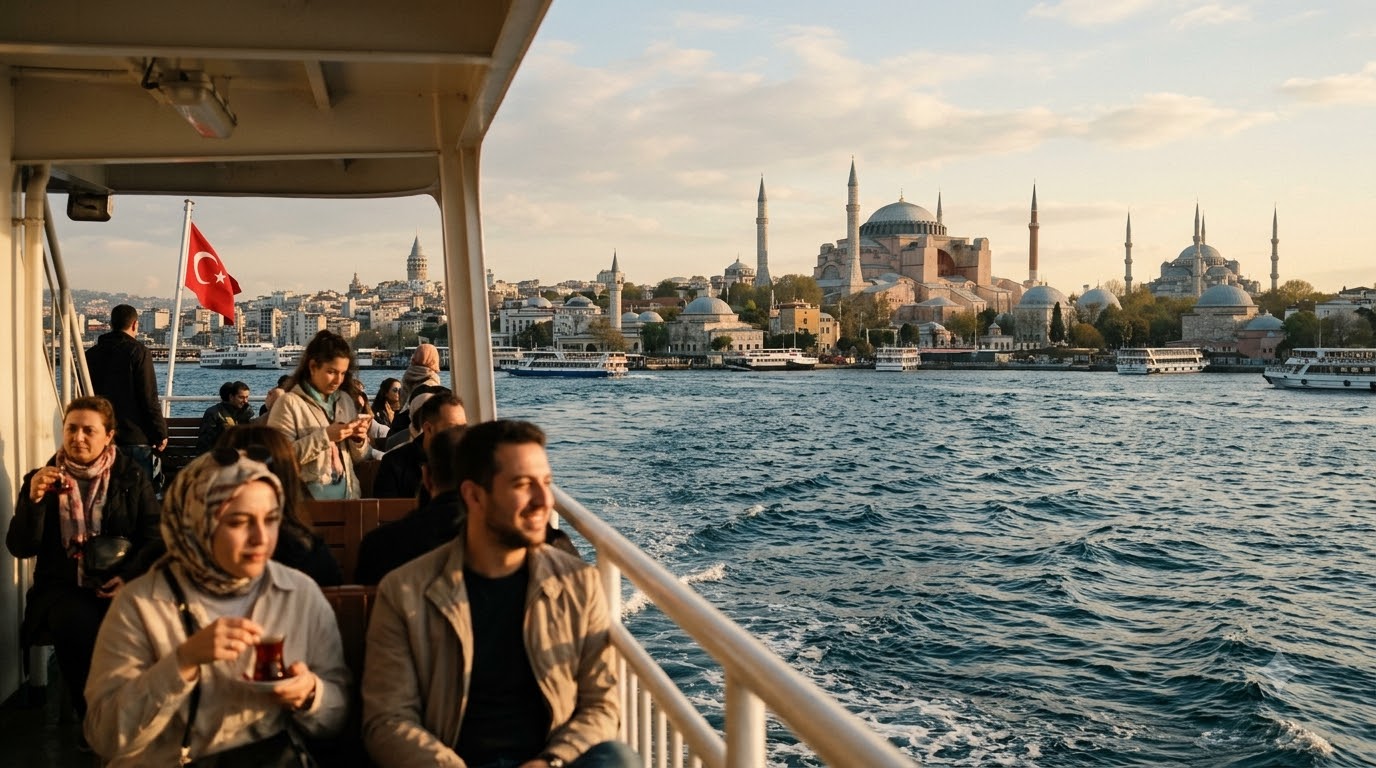
The overall best time to visit Istanbul is the shoulder seasons of April-May and September-October, when weather, crowds, and prices align most favorably. Istanbul has a borderline Mediterranean climate (Koppen Csa) with an annual average of about 14.9 C (58.8 F) and roughly 728 mm of rain a year, most of it falling October through March (climate-data.org).
That pattern is why the dry, mild spring and autumn edges consistently beat both the humid summer and the grey winter for sightseeing.
Here is how the four seasons compare at a glance:
- Spring (April-May): Mild 16-24 C days, tulips in April, longer daylight, and the year’s most photogenic light. Late April can feel busy with European school groups but stays softer than July.
- Summer (June-August): Warm to hot, 26-28 C average highs, humid, and packed at Hagia Sophia, the Grand Bazaar, and every Bosphorus ferry. Lowest rainfall of the year.
- Autumn (September-October): A near-mirror of spring, warm sea, comfortable 20-24 C days, and thinning crowds after the first week of September.
- Winter (November-March): Cool and wet, 6-11 C highs, occasional snow, but the lowest hotel prices and shortest museum queues.
Istanbul Weather Month by Month (2026)
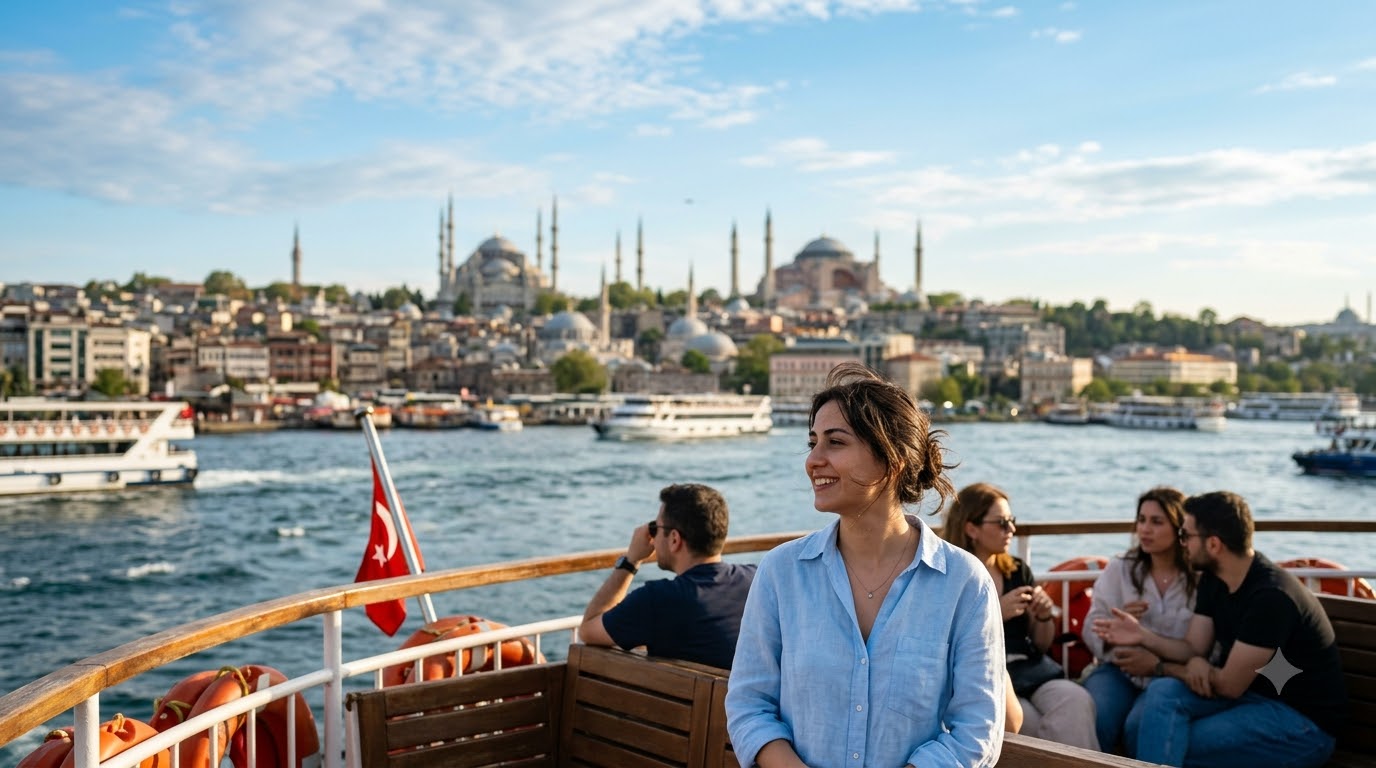
Istanbul’s weather swings from wet 6 C winters to humid 28 C summers, so the month you choose changes your packing list and your itinerary. The table below lists average high and low temperatures alongside typical monthly rainfall, so you can match your travel dates to the conditions you actually want. Figures are rounded climate normals drawn from long-term station data (climate-data.org, Weather Atlas).
| Month | Avg High | Avg Low | Rainfall | Crowd Level | Verdict |
|---|---|---|---|---|---|
| January | 9 C (48 F) | 3 C (37 F) | ~114 mm | Low | Cheap, wet, quiet |
| February | 9 C (48 F) | 3 C (37 F) | ~77 mm | Low | Cold, Ramadan begins Feb 16 |
| March | 11 C (52 F) | 4 C (39 F) | ~72 mm | Low-Mid | Warming, early blooms |
| April | 16 C (61 F) | 8 C (46 F) | ~46 mm | Mid-High | Tulips, prime time |
| May | 21 C (70 F) | 12 C (54 F) | ~34 mm | High | Warm, sunny, ideal |
| June | 26 C (79 F) | 16 C (61 F) | ~34 mm | High | Hot, long days |
| July | 28 C (82 F) | 19 C (66 F) | ~34 mm | Peak | Hottest, most crowded |
| August | 28 C (82 F) | 19 C (66 F) | ~24 mm | Peak | Driest, humid, busy |
| September | 24 C (75 F) | 16 C (61 F) | ~48 mm | Mid-High | Warm sea, ideal |
| October | 20 C (68 F) | 12 C (54 F) | ~72 mm | Mid | Comfortable, mellow |
| November | 15 C (59 F) | 8 C (46 F) | ~86 mm | Low-Mid | Cool, rain returns |
| December | 11 C (52 F) | 5 C (41 F) | ~103 mm | Low | Wettest, festive |
For a broader itinerary built around these seasons, see our full Istanbul travel guide and the sights breakdown in the best things to do in Istanbul.
Find your Istanbul hotel on the map
Live prices from Booking & Airbnb — tap a pin to compare stays around Sultanahmet and beyond.
Is Spring the Best Season to Visit Istanbul?
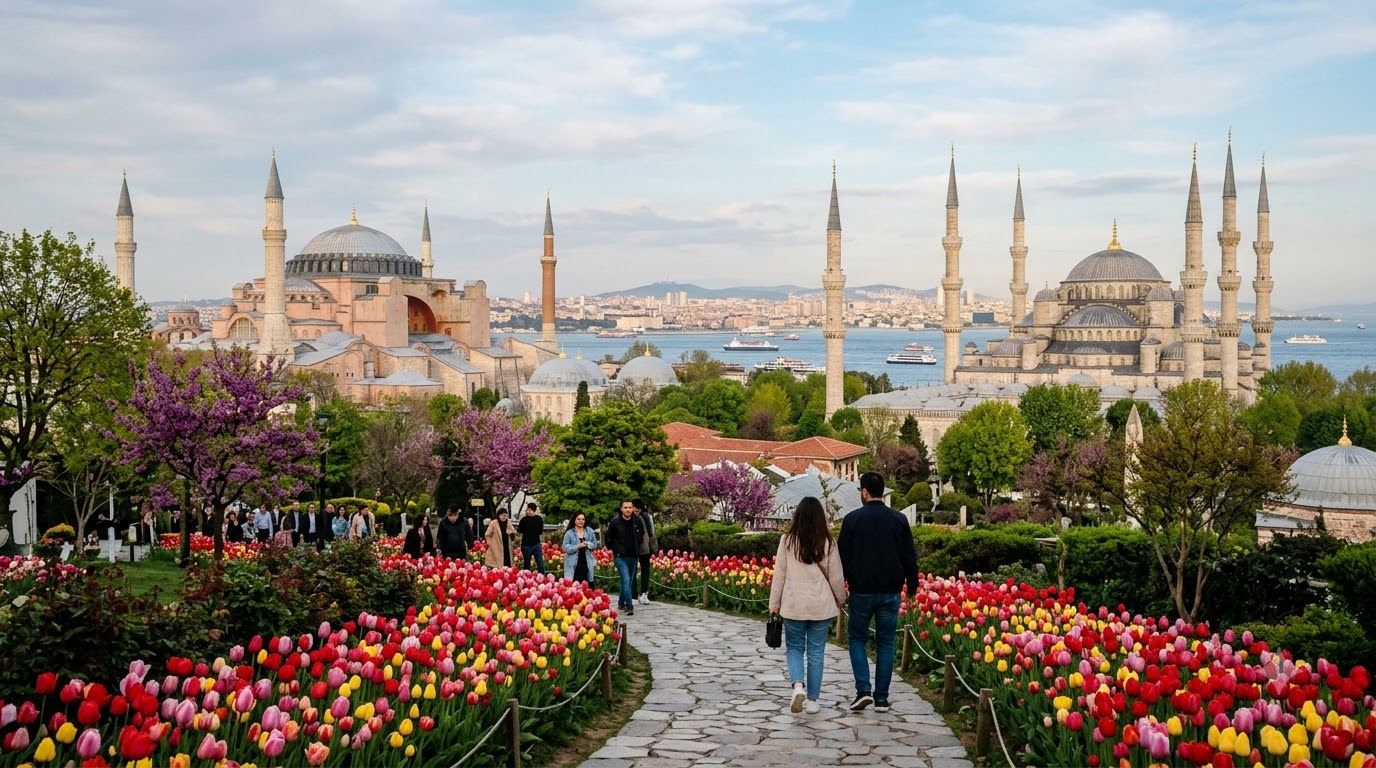
Spring is the single best season to visit Istanbul, and April is its standout month. Temperatures climb from 16 C highs in early April to a mild 21 C by late May, rainfall drops sharply from the winter peak, and daylight stretches past 7 pm. In spring, a light jacket is rarely needed after sunset.
The headline event is the Istanbul Tulip Festival (Lale Festivali), a nod to the Ottoman-era Tulip Period. Key facts for 2026:
- Dates: April 1-30, 2026, with peak bloom generally April 6-18 (istanbul.com).
- Main venue: Emirgan Park, 47 hectares on the Bosphorus in Sariyer, with more than 120 registered tulip varieties.
- Other spots: Gulhane Park near Topkapi, Sultanahmet Square, and the hillsides along the Bosphorus.
- Cost: Emirgan Park is free to enter; go before 10 am on a weekday to beat tour groups.
Late April to May also brings warmer Bosphorus water and open-air cafe terraces reopening across Karakoy and Kadikoy. It is a strong window to pair sightseeing with a neighborhood base, so it is worth reading up on where to stay in Istanbul before you lock in dates.
How Hot Is Summer, and Should You Avoid It?
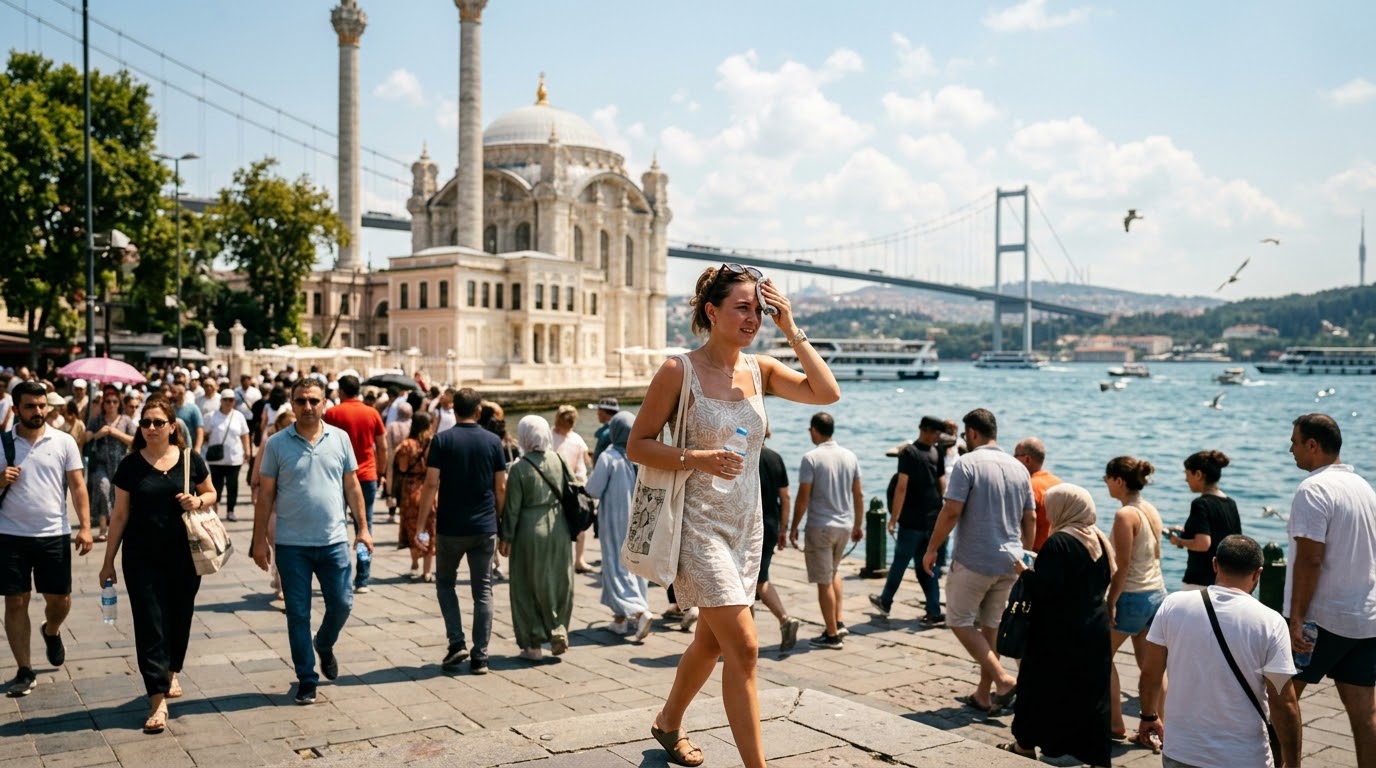
Summer in Istanbul is hot, humid, and crowded, but not unbearable if you plan around the midday heat. July and August average highs near 28 C (82 F), with humidity off the Sea of Marmara making it feel warmer, and August is the driest month at roughly 24 mm of rain (climate-data.org).
Queues at Hagia Sophia, Topkapi Palace, and the Grand Bazaar are at their longest, and Bosphorus ferries fill fast. On the hottest days, the Black Sea beaches at Sile and Kilyos make one of the best escapes from the city for a swim.
If you do travel in summer, these tactics help:
- Start early: Reach Sultanahmet sights by 8:30 am, before the heat and the cruise-ship day-trippers arrive.
- Book timed tickets: Reserve Topkapi Palace and the Basilica Cistern online to skip long outdoor lines.
- Use the water: A midday Bosphorus ferry between Eminonu and Uskudar is cheap shade and a breeze for the price of a public transit fare.
- Escape the crowds: The Princes’ Islands (a 60-90 minute ferry from Kabatas or Bostanci) offer car-free lanes and pine shade.
Summer is best for travelers who want long evenings, festival energy, and warm swimming, and who do not mind sharing every landmark. For a compact plan that dodges the worst heat, our 3-day Istanbul itinerary front-loads outdoor sights into the cooler mornings.
What About Autumn and Winter?
Autumn nearly matches spring, and winter rewards budget travelers who do not mind rain. September holds onto summer warmth with 24 C highs and a warm sea, then October eases to a comfortable 20 C before the rain returns in November. Crowds thin noticeably after the first week of September, which is why many repeat visitors call it the quiet best time to visit Istanbul.
Winter is the value season. January is the coldest and wettest month, averaging around 6 C and roughly 114 mm of rain, and light snow is possible from December through February. In exchange you get:
- Lower prices: Hotel rates in Sultanahmet and Beyoglu drop well below summer peaks.
- Empty landmarks: The Blue Mosque, Hagia Sophia, and Basilica Cistern have their shortest queues of the year.
- Cozy interiors: Hammams, covered sections of the Grand Bazaar, and tea houses come into their own.
- Festive light: Late December brings New Year decorations along Istiklal Street and around Taksim.
Pack a waterproof layer and plan indoor anchors for each afternoon, and winter becomes one of the most atmospheric ways to see the city.
When Is Ramadan, and How Does It Affect Your Trip?
Ramadan 2026 runs from February 16 to March 17, and Eid al-Fitr (Ramazan Bayrami) follows March 18-20, according to Turkey’s official Diyanet (Presidency of Religious Affairs). Istanbul stays fully open to tourists during Ramadan, and mosques, museums, and restaurants keep normal hours, though moon-sighting can shift the dates by a day or two.
What to expect if you travel during this period:
- Festive evenings: After sunset, Sultanahmet Square fills with iftar picnics, food stalls, and illuminated mosque minarets strung with mahya messages.
- Daytime dining: Plenty of restaurants serve as usual, especially in tourist areas, but some smaller local eateries scale back before dusk.
- Eid crowds: The three-day Eid al-Fitr holiday (March 18-20) is a domestic-travel peak, so expect fuller trains, ferries, and intercity roads, plus some closures on the first morning.
- Book ahead: Reserve popular restaurants for iftar, as tables go quickly the moment the fast breaks.
Ramadan is a rewarding time to experience Istanbul’s culture, provided you are relaxed about the evening rhythm and book transport around the Eid holiday early.
Cheapest and Least Crowded Times to Visit
The cheapest and least crowded time to visit Istanbul is winter, from November through March, excluding the New Year and Eid holidays. Airfare and hotel rates fall as demand drops, and major sights that back up for an hour in July can be walked into within minutes in January. The trade-off is cool, wet weather and shorter daylight.
Whatever the season, our guide to staying safe in Istanbul covers the pickpockets, overcharging taxis and well-worn scams visitors actually run into.
For the best balance of price, weather, and space, target these value windows:
- Mid-March: Prices still low, early blooms starting, before the April tulip rush.
- Late October to early November: Mild days, autumn colors, and softening crowds and rates.
- First half of September: Summer warmth with noticeably fewer tour groups than August.
- Avoid: Peak July-August, plus the Eid al-Fitr (March 18-20, 2026) and Eid al-Adha holiday periods, when domestic travel surges.
Frequently Asked Questions
What is the best month to visit Istanbul?
April and May are the best months overall. April brings the tulip festival and mild 16-21 C days, while May adds warmer weather and long daylight with rainfall still low. September is the top autumn alternative, offering summer warmth and a warm sea with fewer crowds than midsummer.
What is the cheapest time to visit Istanbul?
The cheapest time is winter, roughly November through March, outside the New Year and Eid holidays. Hotel rates and airfares drop, and landmarks like Hagia Sophia and the Basilica Cistern have their shortest queues. Expect cool, wet days around 6-11 C and pack a waterproof layer. Whatever the month, our breakdown of what Istanbul really costs finds that your room and your museum list decide the budget.
Is it worth visiting Istanbul in summer?
Yes, if you can handle heat and crowds. July and August bring 28 C highs, high humidity, and the year’s longest lines, but also long evenings, warm swimming, and festival energy. Start sightseeing early, book timed tickets, and use Bosphorus ferries and the Princes’ Islands to escape the midday crush.
Does Ramadan affect tourists in Istanbul?
Ramadan (February 16 to March 17, 2026) has little impact on tourists, since mosques, museums, and most restaurants keep normal hours. Evenings turn festive with iftar gatherings in Sultanahmet. The main thing to plan around is the Eid al-Fitr holiday, March 18-20, a domestic-travel peak with busier transport.
When do the tulips bloom in Istanbul?
Istanbul’s tulips bloom in April, with the Istanbul Tulip Festival running April 1-30, 2026, and peak color generally between April 6 and 18. Emirgan Park in Sariyer is the main venue, free to enter, with more than 120 varieties. Visit before 10 am on a weekday to beat the tour groups.
Final Word
There is no single best time to visit Istanbul, only the right time for the trip you want. Spring and autumn give you the easiest weather and the best balance of crowds and cost, summer delivers energy and warm water at the price of heat and queues, and winter trades grey skies for low prices and empty landmarks. Once the month is set, our advice on days needed in Istanbul recommends 4 days and never fewer than 2 full days on the ground.
Pin down your priority, whether that is tulips, budget, or quiet mornings, match it to the month-by-month table above, and Istanbul will meet you halfway.