Sicily vs Sardinia: Which Italian Island Should You Pick? (2026)
Disclosure: Some links in this guide are affiliate links. If you book or buy through them, we may earn a small commission at no extra cost to you — it helps keep our guides free.
Your trip is really about beaches, empty coastal roads and slow days.
See hotels in Sardinia →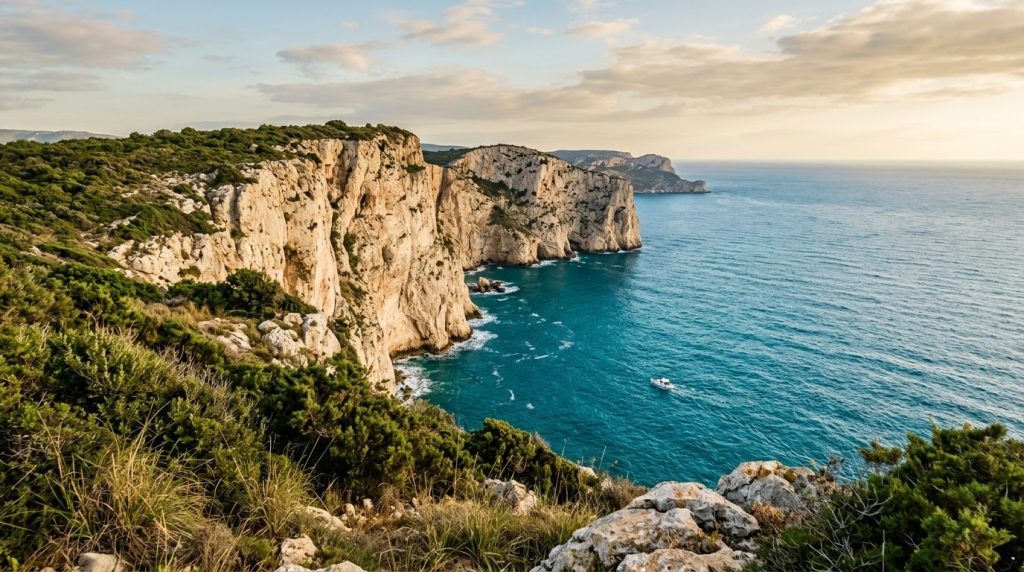
Sicily wins for most American first-timers: it has 7 UNESCO World Heritage sites to Sardinia’s 2, a daily summer nonstop from New York, and its big highlights work without a rental car. Pick Sardinia instead if your trip is really about beaches, empty coastal roads and slow days by the water. Sicily is a culture-and-food trip with good beaches on the side. Sardinia is the reverse.
| Factor | Sicily | Sardinia |
|---|---|---|
| Size | 25,711 sq km (9,927 sq mi) | 24,100 sq km (9,305 sq mi) |
| Population | about 4.8 million | about 1.55 million |
| UNESCO sites | 7 (Agrigento, Etna, Syracuse and more) | 2 (Su Nuraxi, domus de janas tombs) |
| Nonstop from the US | Delta JFK to Catania, United Newark to Palermo | Delta JFK to Olbia (seasonal) |
| Car needed? | Optional for the main cities | Practically yes |
| Best for | Culture, food, first-timers | Beaches, couples, road trips |
The core difference: cities and history vs coastline
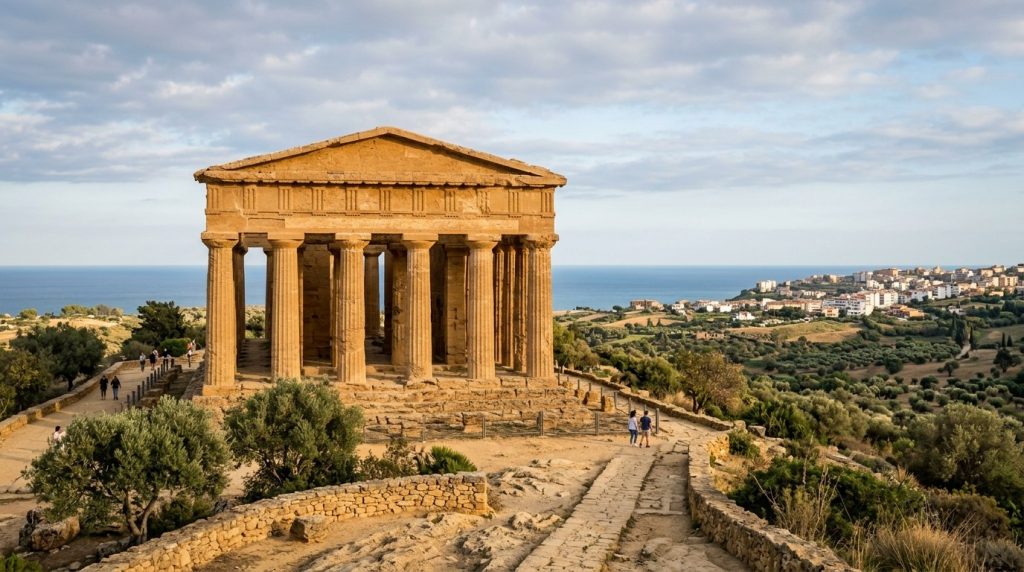
Sicily is the bigger, busier island, with roughly three times Sardinia’s population. You feel it in Palermo’s street markets, Catania’s fish market and the baroque towns of the southeast. Its UNESCO list runs from Agrigento’s Greek temples and Syracuse to Mount Etna, the Aeolian Islands and Arab-Norman Palermo.
Sardinia feels emptier and wilder. Its towns are smaller, its interior is shepherd country, and its history runs back to the Bronze Age: the island has around 7,000 nuraghi, the stone towers of the Nuragic civilization. Su Nuraxi di Barumini is the showpiece, and in July 2025 UNESCO added the domus de janas, prehistoric rock-cut “fairy house” tombs. If you’d rather read ruins than queue for them, Sardinia rewards that.
For a deeper case on the bigger island, our breakdown of whether Sicily is worth visiting covers the honest downsides too: litter in places, slow trains and summer crowds in Taormina.
Beaches: Sardinia wins, and it isn’t close
The water along the Costa Smeralda, the La Maddalena archipelago and the Gulf of Orosei is the reason people fly to Sardinia.
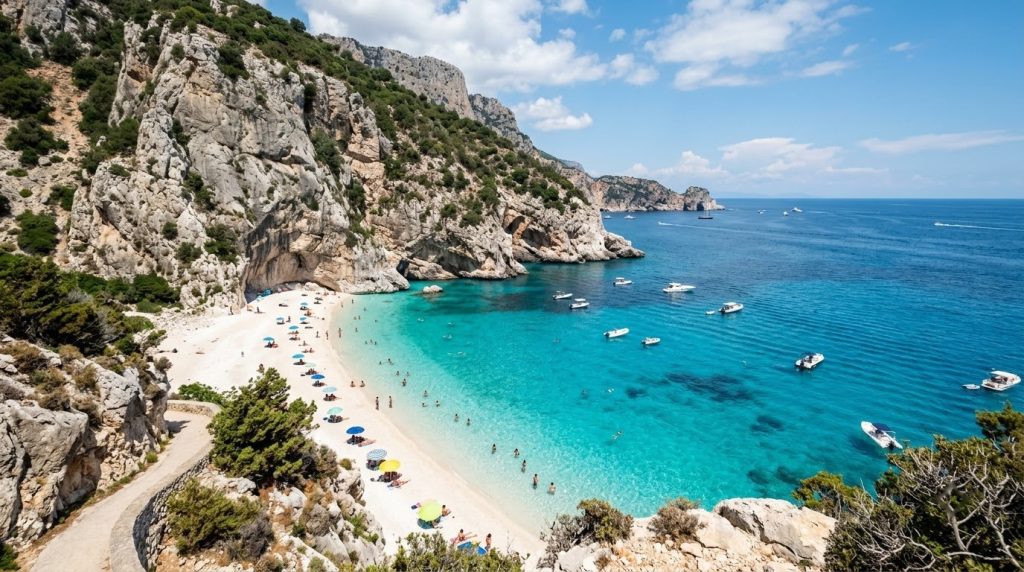
Popularity now has rules, though. At La Pelosa near Stintino, you must book a slot online between May 15 and October 15. It costs EUR 3.50 per person (about USD 4) per day, and booking opens 48 hours ahead. Kids under 12 don’t need a ticket. Several other Sardinian beaches limit numbers too, so check before you drive an hour.
Sicily has good beaches (San Vito Lo Capo, the Zingaro reserve, the Aeolian Islands), but many sit next to busy towns. In Sicily, the beach is part of the trip. In Sardinia, it is the trip.
Getting there from the US
Both islands now have nonstop flights from the New York area, which changes the math for East Coast travelers.
– Sicily: Delta flies JFK to Catania daily in season, and from April in 2026. United flies Newark to Palermo three times a week, extended into mid-December 2026. United’s posted round-trip fares from Newark started around USD 891 when checked. – Sardinia: Delta launched the first-ever US nonstop to Sardinia on May 20, 2026.
It flies JFK to Olbia four times a week through October 1, leaving JFK in the evening and landing at 9:00 a.m.
From LA or Chicago, you’ll connect through Rome or another European hub for either island. Sardinia also has the ferry option: Civitavecchia (Rome’s port) to Olbia takes about 7.5 to 8 hours on Tirrenia. Seats typically run EUR 40–70 (USD 45–79) per person, more with a car.
US passport holders can stay in Italy for up to 90 days in any 180-day period without a visa. All prices here are converted at USD 1 = EUR 0.89.
Getting around: the car question decides a lot
If you don’t want to drive in Italy, choose Sicily. Palermo, Cefalu, Catania, Taormina and Syracuse link up by train and bus well enough for a first trip, and driving in Palermo’s old center is more stress than it’s worth anyway. Our Sicily itinerary shows how to string these together, with or without a car.
Sardinia is a road-trip island. ARST buses do reach most towns, but service is thin, and the best coves sit at the end of winding roads. Plan on renting a car, and remember that most Italian rentals are manual unless you book an automatic early.
Costs: what you’ll actually pay
Neither island is cheap in August, but Sicily stretches a budget further. Street food (arancini, panelle, granita with brioche) costs a few euros, and the big-ticket sights are reasonable. A full ticket to Agrigento’s Valley of the Temples is EUR 14 (about USD 16). Entry is free for everyone on the first Sunday of the month.
Sardinia’s costs pile up around the car, beach fees, and the Costa Smeralda’s luxury-resort pricing. Stay outside the Costa Smeralda (Alghero, Cagliari or San Teodoro) and Sardinia gets much more reasonable.
Food worth planning a meal around on each island
Sardinia’s menu runs differently from mainland Italian habits, and a handful of dishes are worth seeking out specifically. Culurgiones, hand-folded pasta parcels filled with potato, mint and pecorino and sealed in a braided edge, are the island’s signature dish and turn up on nearly every trattoria menu.
Porceddu, whole suckling pig roasted over a wood fire until the skin crackles, is the dish to order for a sit-down celebration meal rather than a quick lunch.
Malloreddus alla campidanese, small ridged pasta shells in a sausage and tomato sauce, and fregola, a toasted pasta similar to couscous usually served with clams or other seafood, round out the island’s pasta range.
Spaghetti alla bottarga, dressed with shavings of cured mullet roe, is the dish that best captures Sardinia’s relationship with the sea without being a straightforward seafood plate. For dessert, seadas, a fried pastry filled with fresh cheese and drizzled with honey, closes out most of the above.
Sicily’s food culture is better known in the US already, built around the street food, arancini, panelle and granita with brioche, already covered above, but a sit-down meal pulls from a different list: pasta alla norma, with eggplant, tomato and ricotta salata, and cannoli, the fried pastry tube filled with sweetened ricotta, are the two dishes most visitors build a meal or a stop around.
The difference between the islands shows up here too: Sicily’s food scene is dense enough to graze through several specialties in one city in a single day, while Sardinia’s best dishes are often tied to one restaurant doing them well rather than available on every corner.
Wine follows the same split as the food. Cannonau, Sardinia’s most planted red grape and a close relative of Grenache, produces full-bodied reds with ripe red and dark berry notes, and is the bottle to order alongside porceddu or culurgiones.
Sicily’s standout region is the slopes of Mount Etna itself, where volcanic soil gives both the red and white wines a distinct mineral edge, powerful rather than delicate, and a glass of Etna Rosso pairs naturally with a plate of pasta alla norma or grilled fish.
Verdict by traveler type
– First-timers to Italy’s islands: Sicily. You get more variety, better food, stronger history and no forced driving. – Couples: Sardinia, if you want beaches, sunsets and quiet. Sicily, if you’d rather spend evenings in a piazza than at a beach bar. – Families: Sardinia for shallow, calm beaches and a slower pace.
Sicily if your kids are older and can handle temples and a volcano day. – Budget travelers: Sicily, thanks to cheaper food, workable public transport and no essential car rental. – Hikers and road-trippers: Sardinia, especially the Gulf of Orosei and the Supramonte interior.
Timing matters on both islands. July and August are hot and crowded, so read our guide to the best time to visit Sicily before you lock in dates. May, June and September are the sweet spot for both.
As for safety, the US State Department rates Italy as a whole at Level 2, “Exercise Increased Caution” (last updated May 23, 2025). Petty theft in Palermo and Catania is the main issue. Our full rundown of whether Sicily is safe covers the specific scams and neighborhoods.
Where to stay
If Sardinia wins your vote, these three bases cover most trips:
– Olbia and San Teodoro: best for the Delta flight, the Costa Smeralda and boat days to La Maddalena. San Teodoro is the better-value beach town. – Alghero: a walled old town with a Catalan accent.
It suits couples and anyone who wants a real town to walk at night, plus day trips to Capo Caccia and La Pelosa. – Cagliari: the capital, with the most restaurants and the best bus links. It suits shoulder-season trips and travelers who want city life plus Poetto beach.
Find your Sardinia hotel on the map
Live prices from Booking, Airbnb and more — move the map or change dates to compare stays across Sardinia.
Frequently Asked Questions
What’s better, Sicily or Sardinia?
For most first-time visitors, Sicily is better. It has 7 UNESCO sites, stronger food culture, nonstop flights from New York to both Catania and Palermo, and cities you can tour without a car. Sardinia is the better choice if beaches and quiet nature are your priority and you are happy to rent a car and drive.
Which island is bigger, Sardinia or Sicily?
Sicily is bigger, at about 25,711 square kilometers (9,927 square miles), against Sardinia’s 24,100 square kilometers (9,305 square miles). That makes Sicily the largest island in the Mediterranean and Sardinia the second largest. Sicily also has roughly three times the population, which is why it feels busier and more urban.
Can you fly direct from the US to Sardinia?
Yes, seasonally. Delta started the first US nonstop to Sardinia on May 20, 2026, flying New York JFK to Olbia four times a week through October 1. Outside that season, or from other US cities, you’ll connect through Rome or another European hub, or take a ferry from the mainland.
Do you need a car in Sardinia?
Realistically, yes. ARST buses connect most towns, but service is infrequent, and the best beaches and mountain roads are hard to reach without a car. If you won’t drive, base yourself in Cagliari or Alghero and use buses and boat tours, or choose Sicily, where trains link the main cities.