Is Kyoto Safe? What Actually Goes Wrong for Visitors (2026)
Disclosure: Some links in this guide are affiliate links. If you book or buy through them, we may earn a small commission at no extra cost to you — it helps keep our guides free.
Yes, Kyoto is safe: the US State Department rates Japan at Level 1 of 4, “Exercise Normal Precautions,” and violent crime against visitors is rare.
What actually trips Americans up is different: summer heat that hit 40°C for the first time in 2025, packed buses in a city that drew 62.8 million visitors last year, a posted USD 63 (JPY 10,000) fine for entering Gion’s private alleys, and Japan’s new bicycle fines.
| Risk | Reality | What to do |
|---|---|---|
| Violent crime | Rare; Japan is Level 1 | Normal city sense |
| Petty theft | Occasional on crowded buses and at big shrines | Front pocket or zipped bag |
| Gion private alleys | Posted JPY 10,000 (USD 63) fine since April 2024 | Stay on Hanamikoji and public streets |
| Summer heat | Kyoto hit 40°C on July 30, 2025 | Sightsee early and late |
| Cycling | Blue-ticket fines since April 1, 2026 | No phone, no umbrella, ride on the left |
| Earthquakes | Real but low risk on any one trip | Know your hotel exits |
The Honest Answer: Crime Is Not Your Problem in Kyoto
The State Department’s Japan advisory sits at Level 1, last updated 15 May 2025, the lowest rating it gives. Kyoto has no no-go districts in the American sense, and a dropped wallet often ends up at a police box (koban) with the cash still inside.
Theft does happen, mostly on crowded city buses and in the shoulder-to-shoulder lines at Fushimi Inari and Kiyomizu-dera, where a phone in a back pocket is an easy grab. The bigger 2026 story is overtourism: 62.79 million visitors in 2025, 12.7 million of them from overseas. Crowds, heat and local rules ruin far more days than criminals do.
If you are still deciding whether the city fits your trip, our honest take on whether Kyoto is worth visiting weighs that crowd trade-off.
Gion’s Private Alleys and the JPY 10,000 Fine
Most first-timers have never heard of this rule. Since April 2024, multilingual signs on private lanes in Gion’s geisha district warn that unauthorized entry carries a JPY 10,000 (USD 63) penalty. The best-known closed lane is Kosode Koji. The fine is set by the local residents’ council on private land, so treat it as a firm “residents only” rule.
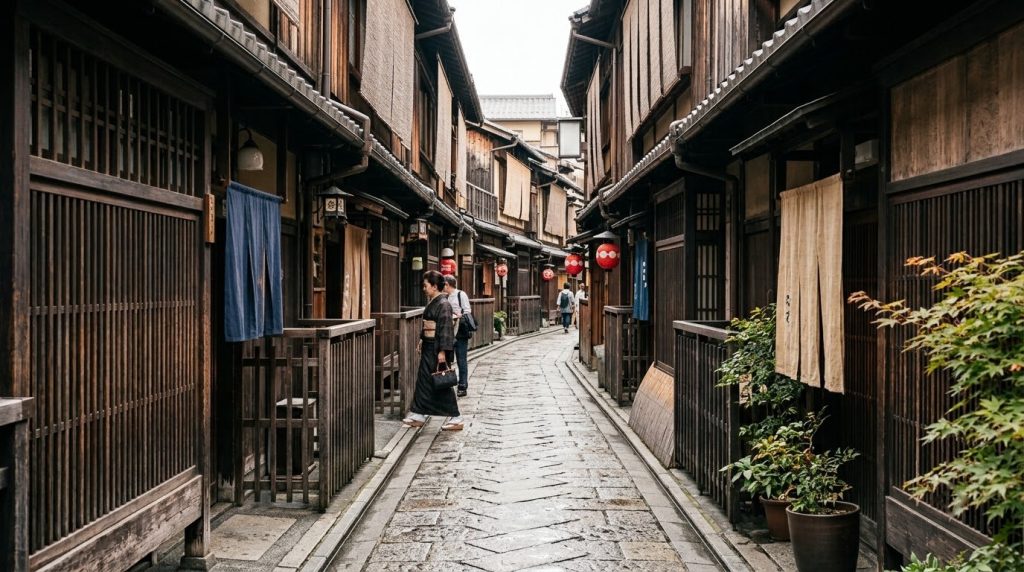
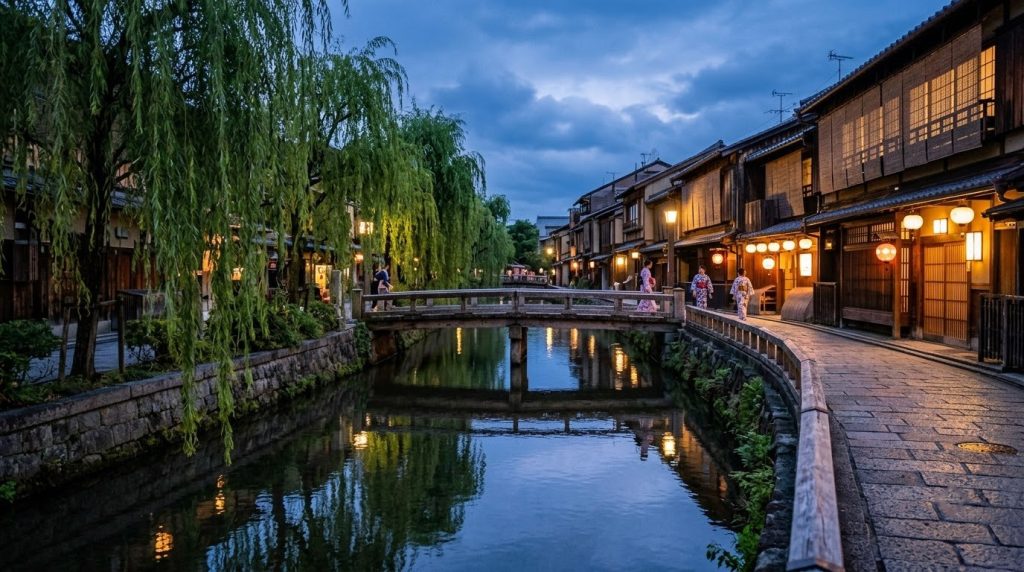
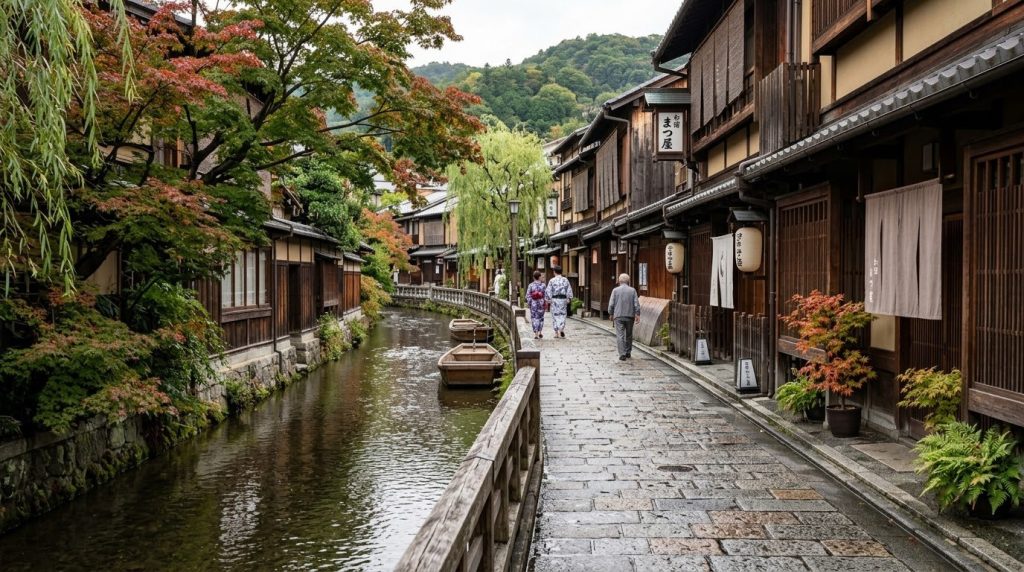
Hanamikoji, Gion’s main street, stays open to everyone, as do the Shirakawa canal and the Yasaka Shrine area. What gets people in trouble is photographing geiko and maiko without permission, blocking their path, or touching their kimono. Treat Gion as the residential neighborhood it is. Many of the best things to do in Kyoto are far calmer than Gion at dusk.
Neighborhoods to Avoid After Dark, and the Scams That Happen
No Kyoto neighborhood is dangerous at night in a crime sense. Where to think twice after dark is about footing and nightlife:
– Upper Fushimi Inari trails: the shrine is open 24 hours and free, and the lantern-lit lower section is fine at night. The upper paths are dark and steep, and the full summit loop takes 2–3 hours.
After dark, stop at the Yotsutsuji viewpoint (30–45 minutes up) and bring a charged phone. – Kiyamachi and the lanes off Pontocho late at night: Kyoto’s bar strip. Some small bars add a per-person cover charge.
Ignore street touts with menus and ask the price before you sit down. – Unlit Kamo River banks: peaceful, but there are no railings, so watch your step after a few drinks.
Kyoto is not a scam city. The realistic rip-offs are touted bars with cover charges and pickpocketing on packed buses to Kiyomizu-dera and Kinkaku-ji, so wear your daypack on your front. US passport holders can visit Japan visa-free for up to 90 days, so there is no visa paperwork to go wrong.
Transport Safety: Buses, Bikes and the New Fines
Buses are safe but packed in cherry-blossom and fall-foliage seasons, and from 7:00 to 9:00 and 18:00 to 19:00. The flat fare is JPY 230 (about USD 1.50), and express sightseeing buses cost JPY 500 (USD 3.20). Kyoto plans two-tier fares from fiscal 2027 that would raise visitor fares to JPY 350–400 (USD 2.20–2.50).
The subway is calmer where it goes. Prices here are converted at USD 1 = JPY 158.
Bicycles are the classic Kyoto ride, but Japan’s blue-ticket system started on April 1, 2026, and the National Police Agency’s bicycle rules apply to everyone aged 16 and over, tourists included:
– Phone while riding: JPY 12,000 (USD 76) – Red light or riding against traffic: JPY 6,000 (USD 38) – No light at night, or holding an umbrella: JPY 5,000 (USD 32) – Two people on one bike: JPY 3,000 (USD 19)
Drunk riding can become a criminal case. Ride on the left and park only in marked bike lots.
Heat and Earthquakes: Who Should Think Twice About Summer
Kyoto’s basin traps heat. On July 30, 2025, a Kyoto observation point hit 40°C for the first time in records going back to 1880. Japan issues heatstroke alerts when the heat index (WBGT) reaches 33.
The city’s heatstroke advice is practical: sightsee in the morning and evening, rest in air conditioning, and use the more than 800 free drinking-water stations. If you have heat-sensitive health conditions, skip July and August; our guide to the best time to visit Kyoto explains which months work better.
On earthquakes, Japan’s government puts the 30-year probability of a major Nankai Trough quake at 60% to over 90% under one model. During a one-week trip the risk is low. Check your hotel’s evacuation map and follow staff instructions.
Solo and Female Travel, Plus Emergency Numbers
Kyoto is one of the easiest cities anywhere for solo women. Walking alone at night through Gion, Kawaramachi or around Kyoto Station is normal. The main issue is groping on packed trains and buses. If it happens, say “yamete” loudly, move away, and tell the driver or station staff. For quieter scenery, several best day trips from Kyoto make easy solo train outings.
Save these numbers:
– Police: 110 – Ambulance and fire: 119, with English interpreting after a short hold – Japan Visitor Hotline: 050-3816-2787, 24 hours, run by JNTO
Buy travel insurance with medical cover, because most US health plans do not pay abroad.
Where to Stay
– Kawaramachi and Shijo: the central pick for first-timers, with restaurants, subway and buses on your doorstep and streets lit late. – Kyoto Station area: best for day trips and late arrivals. Less atmosphere, unmatched transport. – Higashiyama and the Gion edges: best for couples who want ryokan stays and dawn temple walks before the crowds, which is exactly how our 3-day Kyoto itinerary is paced.
Find your Kyoto hotel on the map
Live prices from Booking, Airbnb and more — move the map or change dates to compare stays across Kyoto.
Frequently Asked Questions
Is it safe to walk around Kyoto at night?
Yes. Central Kyoto, including Gion, Kawaramachi and the Kyoto Station area, is well lit and safe to walk late at night, alone or in a group. The things to watch are physical rather than criminal: dark, uneven paths on the upper Fushimi Inari trails, unrailed Kamo River banks, and touts steering you into bars with cover charges.
Is Kyoto safer than Tokyo?
Both cities fall under Japan’s Level 1 US advisory, and both feel safer than most large American cities. Kyoto’s nightlife is smaller and quieter than Tokyo’s, so you meet fewer bar touts. Kyoto’s bigger hazards are crowding at a handful of famous sites and intense summer heat in the basin.
Can tourists still visit Gion?
Yes. Only some private lanes are closed. Since April 2024, signs warn of a JPY 10,000 (USD 63) penalty for entering them, but Hanamikoji, the main street, stays open to everyone. Do not photograph geiko or maiko without permission, do not block their path, and keep your voice down in residential lanes.
What should I do if an earthquake hits while I am in Kyoto?
Drop, cover and hold on until the shaking stops, then follow hotel or station staff instructions. Hotels post evacuation maps in rooms, so check yours on arrival. Call 119 for injuries, or the Japan Visitor Hotline on 050-3816-2787 for help in English around the clock.