Best Day Trips from Zurich by Train, With Real Fares (2026)
Disclosure: Some links in this guide are affiliate links. If you book or buy through them, we may earn a small commission at no extra cost to you — it helps keep our guides free.
- Lucerne is the easiest win: 44 to 50 minutes direct, USD 33 (CHF 27) one way
- The Rhine Falls is 46 to 50 minutes away; pair it with Stein am Rhein for a full day
- Skip Jungfraujoch and Zermatt as day trips; both are better as an overnight
Ranked by travel time
The best day trips from Zurich are Lucerne (44 to 50 minutes on a direct SBB train, USD 33 (CHF 27) one way) and the Rhine Falls (46 to 50 minutes), followed by Mount Rigi, Bern and Stein am Rhein. Trains leave Zurich HB all day and none needs more than one change. Prices below are full-fare 2nd class, converted at USD 1 = CHF 0.83.
| Day trip | SBB train time from Zurich HB | Full fare, one way | Best for |
|---|---|---|---|
| Lucerne | 44–50 min, direct | USD 33 (CHF 27) | First-timers, couples |
| Rhine Falls | 46–50 min | USD 23–33 (CHF 19–27) | Families, short on time |
| Stein am Rhein | 66–76 min, 1 change | USD 18–34 (CHF 15–28) | Photographers, slow travelers |
| Mount Rigi | 1 h 29 min, 1 change | Rigi Day Pass USD 101 (CHF 84) on top of the train | Mountain views on a budget |
| Bern | 56 min, direct | about USD 60 (CHF 50) | History lovers |
| St. Gallen | 58–60 min, direct | USD 12–50 | Rainy days, book lovers |
| Interlaken | 1 h 57 min | USD 90 (CHF 75) | Only with a rail pass |
Lucerne: the easiest win from Zurich
If you only take one day trip, make it Lucerne. Direct IR trains run all day and take 44 to 50 minutes. The station sits on the lake, and the Chapel Bridge, the old town, the Lion Monument and the lakefront promenade fill a relaxed day on foot. A full-fare ticket costs USD 33 (CHF 27) each way.
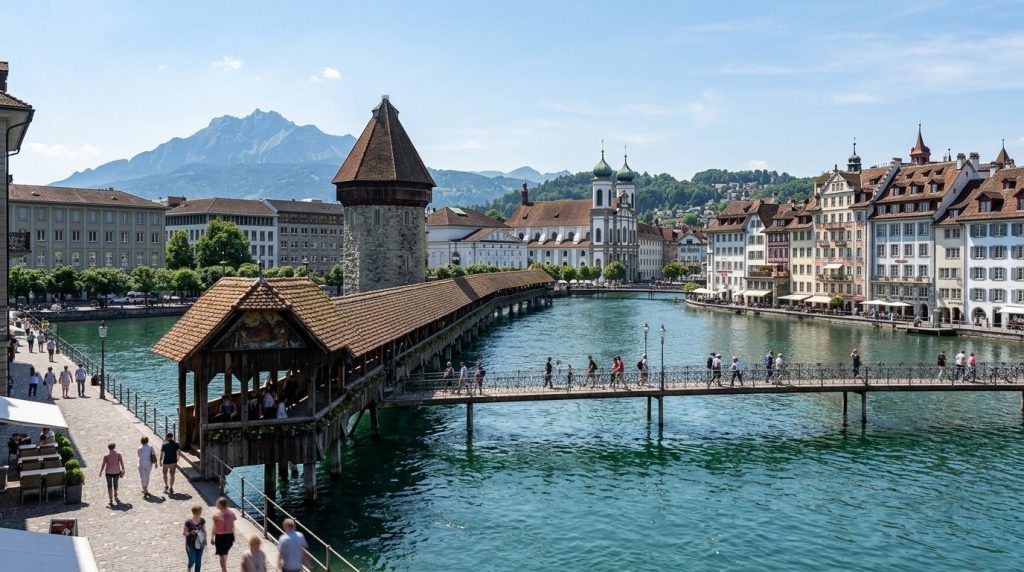
Lucerne is not for anyone who wants to escape crowds: it is Switzerland’s tour-bus capital, and the bridge is packed by late morning. Get there before 10 a.m. If you are still choosing your season, our guide to the best time to visit Zurich covers when the lake towns are quietest.
Rhine Falls and Stein am Rhein: one loop, two stops
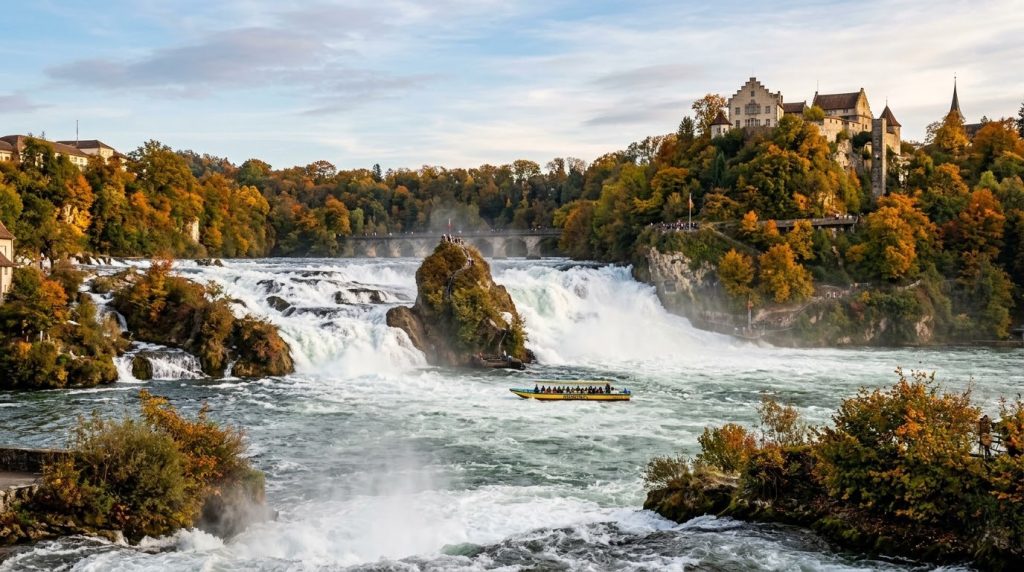
The Rhine Falls sits just outside Schaffhausen. The S12 reaches Schloss Laufen am Rheinfall in about 50 minutes, and the S9 reaches Neuhausen Rheinfall in about 50. Rome2rio lists fares of USD 23–33 (CHF 19–27). The north bank is free. The Schloss Laufen viewing platforms on the south bank cost USD 6 (CHF 5), and short boat rides to the rock in mid-river run about USD 7–30 (CHF 6–25).
Combine it with Stein am Rhein, a small walled town with painted facades further up the Rhine. Zurich to Stein am Rhein alone runs USD 18–34 (CHF 15–28), so for the full loop, compare the price of a Saver Day Pass. Families love the falls, and you are back in Zurich for dinner.
Mount Rigi: the mountain day that makes sense
Rigi is the mountain to pick from Zurich. Ride the train 40 minutes to Arth-Goldau, then take the cogwheel railway to Rigi Kulm, about 1 hour 29 minutes door to door. Rigi’s official Day Pass costs USD 101 (CHF 84) for adults, or USD 51 (CHF 42) with a Half Fare Card. It is free with a Swiss Travel Pass.
The cheaper move is a Saver Day Pass, which starts at USD 63 (CHF 52) and covers the train plus the Rigi railways. Skip Rigi on cloudy days.
Bern and St. Gallen: the city days
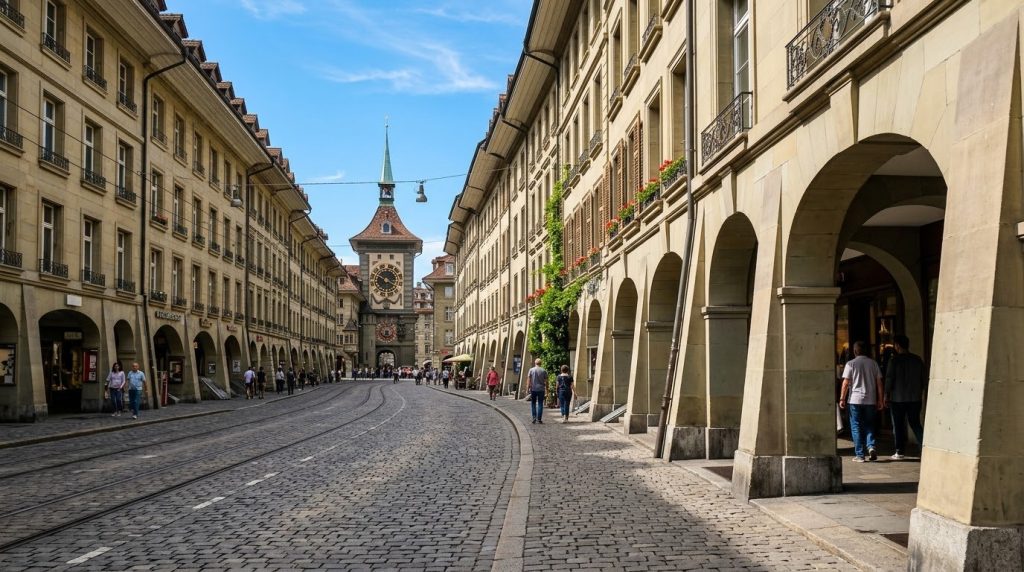
Bern is 56 minutes away on a direct IC train, and a full-fare ticket costs about USD 60 (CHF 50). The UNESCO-listed old town has covered arcades, the Zytglogge clock tower and the bear park by the river.
If you were weighing Geneva as a side trip, Bern is the better day out from Zurich, and our Geneva vs Zurich comparison explains why the two cities rarely fit into one short trip.
St. Gallen, 58 to 60 minutes direct, is your rainy-day pick. Its Abbey Library is a Baroque reading room with a paid entry. Fares on rome2rio span USD 12–50 depending on saver availability. Skip it on sunny days.
Day trips to skip from Zurich
– Jungfraujoch. The fastest connection from Zurich takes 3 hours 39 minutes each way with three to five changes. That means seven-plus hours on trains for a few hours at the top.
Stay in Interlaken for a night instead. – Zermatt. It takes 3 hours 15 minutes each way, and a full-fare 2nd class ticket costs USD 157 (CHF 130) one way.
The Matterhorn deserves an overnight stay. – Liechtenstein. Getting to Vaduz takes 1 hour 21 to 1 hour 44 minutes with a bus transfer, mostly so you can say you visited another country. Choose St. Gallen instead.
Our Zurich itinerary shows how to split city days from overnight mountain stays.
Half-Day Options Close to Zurich
Not every day out needs a 90-minute train ride. Two options start inside the city’s transport area and leave time for a morning in Zurich or an evening flight.
Lake Zurich and river cruises
The Lake Zurich Navigation Company (ZSG) runs several round trips from Zurich. Mini and short cruises last about 1 hour, a longer short cruise runs 1.5 hours, and the long cruise takes 4.5 hours. Catering is available only on the short and long cruises, and first class exists only on the long one.
A separate river cruise leaves from the Landesmuseum and lasts about 1 hour. Boats from Rapperswil add a 2-hour lake cruise and a 15-minute shuttle to the island of Ufenau. Low water can bring service restrictions and a special winter timetable, so check the operator’s page on the day.
Lindt Home of Chocolate in Kilchberg
The Lindt museum on Lake Zurich is the easiest chocolate stop, and its own site says it is reachable from most of Zurich in about 20 minutes by boat, bus or train. It opens 10 a.m. to 7 p.m. daily, with the last slot bookable at 5:30 p.m. Adult admission is CHF 17 (USD 20) at the time of writing.
Demand is high and the site tells visitors to book online ahead. Closure dates and holiday hours differ, with reduced hours on December 24 and 31, so check before building a day around it.
Timing the Rhine Falls Around the Season
The Rhine Falls span about 150 m (roughly 490 ft) across, according to the official Rheinfall site, and the loop described above works in any month because the north bank walkways are free. What changes is the extras. The official site lists events around the falls, including a Gourmet Festival from April 25 to May 30 and Winter Magic, an illumination of Schloss Laufen from November 13, 2026 to January 3, 2027.
Plan the Schloss Laufen visit for those evening dates only if the return train fits, since the trip back to Zurich takes about 50 minutes. Otherwise, go in daylight and pair the falls with Stein am Rhein as described earlier.
- Bring a rain jacket for the lower platforms in any season.
- Check boat operation on the day, as river levels can change schedules.
Checking Operating Dates Before You Go
Mountain and lake transport runs on seasonal timetables, and the shoulder months are where plans break. Rigi’s own site flags company holidays and maintenance in November that can affect service, and links to an operating information page for exact dates. Lake boats have their own low-water timetable.
A short routine avoids wasted trips:
- Check the operator’s page for the specific railway, boat or museum two days ahead.
- Look at the forecast for the specific destination, not Zurich.
- Pick a city day, such as Bern or St. Gallen, as the fallback for cloud.
- Buy the train ticket on the SBB app only once the plan is fixed.
City-based days are the least sensitive to season, which makes Bern and St. Gallen the best late-autumn choices from Zurich.
Swiss Travel Pass or Half Fare Card for day trips?
A 3-day Swiss Travel Pass costs USD 306 (CHF 254) and a 4-day pass costs USD 372 (CHF 309) in 2nd class. That works out to roughly CHF 85 a day. A Lucerne return at CHF 54 does not reach that, so the pass only pays off if your days include long rides like Interlaken or a free Rigi trip.
The Swiss Half Fare Card costs USD 181 (CHF 150) for a month and halves most train, boat and mountain fares. It pays for itself once your full-price tickets pass roughly CHF 300. Supersaver tickets, booked at least one day ahead, can be up to 50% cheaper than the flexible fare.
For two or three day trips from a single Zurich base, Supersavers and Saver Day Passes usually beat both cards.
Renting a car for day trips from Zurich
Every destination in this guide is reachable by train, so a rental car is a convenience rather than a necessity. It earns its cost mainly if you want to string together two or three stops in one day, such as Stein am Rhein and the Rhine Falls, without working around train timetables.
Any car on Swiss motorways needs a vignette, the annual highway toll sticker, which costs CHF 40 and covers the full calendar year regardless of when you buy it.
Rental companies based in Switzerland typically include the vignette on the car already, but confirm this when you book, since a car picked up just across a border may not have one fitted.
Daily rental rates vary by company and season; pricing trackers for Swiss car rentals have shown typical rates spanning roughly CHF 24 to CHF 71 a day for a standard compact car, excluding the vignette and fuel.
Driving does remove some of the appeal of this list. Lucerne and Bern both charge for parking near the old town, the scenery from a train window is hard to beat on routes like the Rigi cogwheel line, and a rental adds insurance and return-time pressure that a train ticket does not.
Reserve the car for a day combining Stein am Rhein with the Rhine Falls, or a route the rail network covers awkwardly, and take the train on every other day trip in this guide.
Guided day tours if you’d rather not drive or navigate trains
A guided day tour removes both the driving and the timetable planning, at a real cost premium over doing it yourself by train.
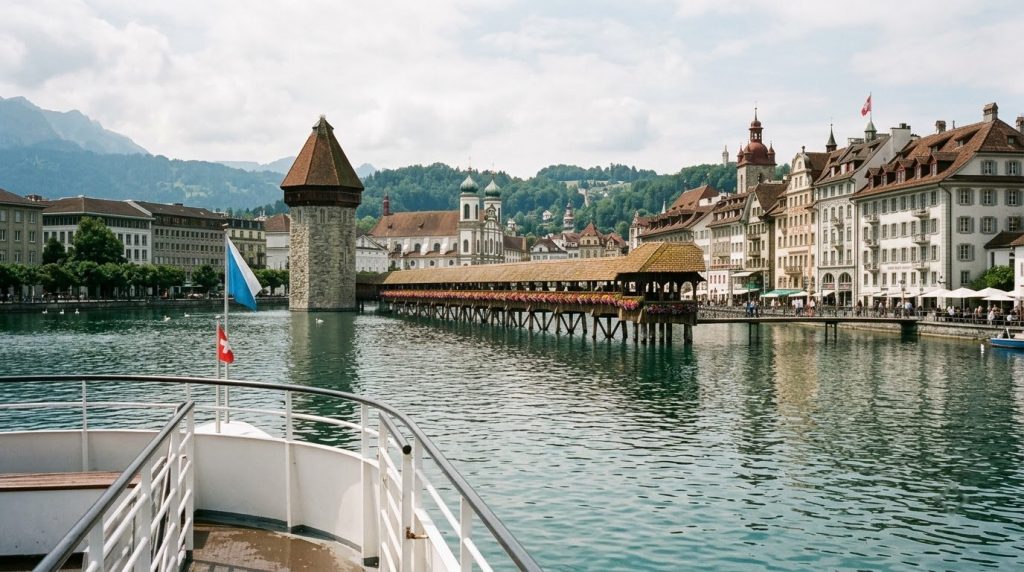
A basic guided day trip from Zurich to Lucerne, including transport and a few hours of free time in the old town, runs around USD 73 per adult for a roughly 9-hour tour, based on current Expedia listings.
Tours that add a second stop, such as Mount Titlis or Engelberg with a cable car included, typically start from about USD 150 and can run past USD 300 per person depending on the operator and what is included, according to GetYourGuide’s Zurich day-trip listings.
These tours suit travelers short on time who would rather not manage a cogwheel railway connection or a lake boat timetable themselves, or anyone traveling solo who prefers company and a guide’s commentary. For a simple Lucerne day trip, though, the self-guided train version costs a fraction of the tour price and takes about the same time door to door.
Prefer a guided option? Compare guided day trips from Zurich on GetYourGuide, with reviews and free cancellation on most tours.
Where to stay
For day trips, sleep close to Zurich HB. Every train in this list leaves from there.
– Around Zurich HB and Kreis 1: the best pick for day-trippers and first-timers, with every platform a short walk away. – Niederdorf (Old Town, east bank): suits couples who want cobbled lanes and evening restaurants, a short walk from HB. – Zurich West (Kreis 5): suits budget and nightlife travelers, a short S-Bahn ride from HB.
For specific properties, see our pick of the best hotels in Zurich.
Find your Zurich hotel on the map
Live prices from Booking, Airbnb and more — move the map or change dates to compare stays across Zurich.
Frequently Asked Questions
What is the most scenic train ride from Zurich?
For a day trip, take the train to Arth-Goldau and the cogwheel up Mount Rigi, then return via the Vitznau boat to Lucerne and the train home. It combines a mountain railway, a lake cruise and alpine views in one loop. Rigi’s Day Pass costs CHF 84 and is free with a Swiss Travel Pass.
What is the prettiest town near Zurich?
Stein am Rhein, with painted medieval facades along the Rhine, is the prettiest small town within about an hour of Zurich. Lucerne is the prettiest city. Combine Stein am Rhein with the Rhine Falls for a full day, since both sit on the same rail corridor north of Zurich.
Can you visit several countries in one day from Zurich?
Yes, but it is a box-ticking exercise. Liechtenstein is 1 hour 21 to 1 hour 44 minutes away with a bus transfer, and Austria and Germany border the same region, so you spend most of the day in transit. One Swiss destination done well beats three countries glimpsed from windows.
Do I need to book Swiss train tickets in advance?
No, regular tickets cost the same on the day and are valid on any train. But Supersaver tickets can be up to 50% cheaper and must be bought at least one day ahead. Saver Day Passes start at CHF 52 and rise toward CHF 119 the closer you get to travel.
Is the Swiss Travel Pass worth it for day trips from Zurich?
Usually not, if you sleep in Zurich and take short trips. A 3-day pass costs CHF 254, about CHF 85 a day, while a Lucerne return costs CHF 54. It pays off on long-distance days such as Interlaken, or when you add free mountains like Rigi.
Planning the whole trip? Start with our Zurich travel guide for the overview, then use this page for the details.