Is Istanbul Safe for Tourists? An Honest Answer (2026)
Disclosure: Some links in this guide are affiliate links. If you book or buy through them, we may earn a small commission at no extra cost to you — it helps keep our guides free.
- Yes, Istanbul is safe for most visitors; the State Department rates Türkiye at Level 2 of 4.
- Level 4 do-not-travel zones are along the Syrian and Iraqi borders, far from Istanbul.
- Expect pickpockets, overcharging taxis and scams; use metered or app-booked taxis and stay alert in crowds.
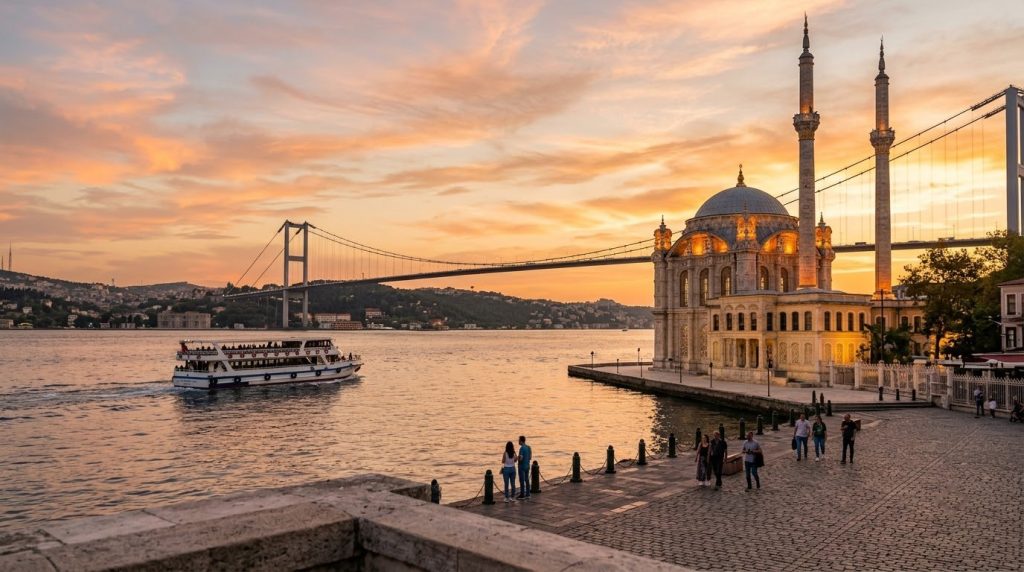
Yes, Istanbul is safe for most visitors: the US State Department rates Türkiye at Level 2 of 4 (“Exercise Increased Caution”), and its Level 4 “do not travel” zones sit along the Syrian and Iraqi borders in the far southeast, on the other side of the country.
In Istanbul itself, the problems tourists actually hit are pickpockets, overcharging taxis and a handful of well-worn scams, not violent crime. Stay alert in crowds, use metered or app-booked taxis, and you will be fine.
| Risk | Reality in Istanbul | What to do |
|---|---|---|
| Terrorism | Country-wide Level 2 warning; tourist sites have been targeted in the past | Stay aware in crowds, follow local news, enroll in STEP |
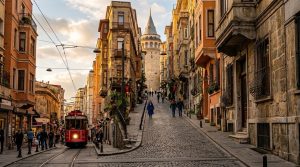
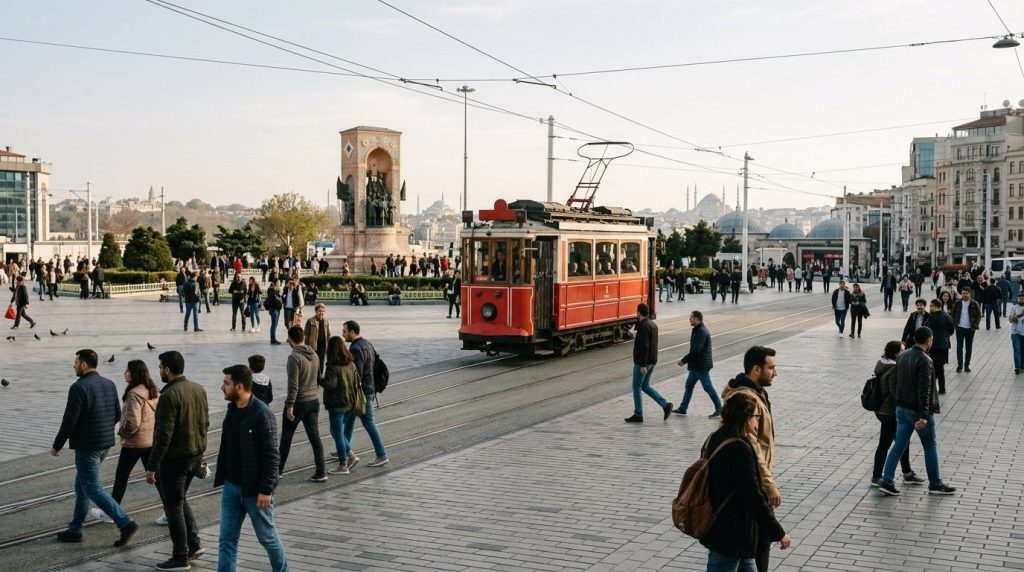
| Pickpocketing | Most common issue: Grand Bazaar, Istiklal Street, trams, ferries | Front pocket, zipped bag, phone away on packed trams |
| Scams | Shoe-shine brush drop, bar bill scam, fake guides | Walk on, decline bar invites from strangers |
| Taxis | Meter “broken”, long routes, airport overcharging | Use BiTaksi or insist on the meter |
| Protests | Unapproved demonstrations can lead to arrest | Leave the area, never film police |
| Border regions | Level 4 near Syria and Iraq | Not relevant for an Istanbul trip |
The honest answer: what the advisories actually say
The State Department’s Türkiye advisory, last updated June 9, 2026, keeps the country at Level 2 due to terrorism, armed conflict and arbitrary detentions. The only “do not travel” language covers the border region with Syria and Iraq.
Level 2 is the same tier as France, Spain and Italy. The UK government’s FCDO travel advice for Turkey lines up: it advises against all travel within 10 km of the Syrian border, but not against Istanbul.
Two parts of the advisory deserve real attention:
– Terrorism: attacks can come with little or no warning and may target tourist sites, transport hubs and markets. Hence the metal detectors at Hagia Sophia and metro entrances. – Detentions and speech: Türkiye has detained people, including Americans, over alleged terrorist links on thin evidence, and unapproved protests or criticizing the government online can lead to arrest. Keep politics off your feed.
Entry requirements and what to pack for safety
Most entry guides for US travelers list a passport valid for at least six months beyond your arrival date, with at least one blank visa page free of stamps or stickers. Border officers stamp and date passports on arrival, so check that yours got stamped clearly before you leave the booth; a missing or smudged entry stamp can cause questions when you try to leave the country.
Medication rules trip up more visitors than passport rules do. Türkiye treats some everyday-sounding drugs, including certain codeine-based painkillers and stronger sleep aids, as restricted prescription medicines that require both the original prescription and the medicine in its original, labeled packaging. Carry a doctor’s letter for anything beyond common over-the-counter items, and keep pills in their boxes rather than a pill organizer when you go through customs.
Exit is simpler: departure taxes are built into your ticket price, so there is nothing extra to pay at the airport. The 90-day allowance only counts days spent inside Türkiye, which is not part of the Schengen area, so a side trip to Greece or Bulgaria pauses the clock rather than resetting it.
For packing, the extras worth the suitcase space are a portable charger, a travel door lock or alarm for budget guesthouses, and photos of your passport and entry stamp stored separately from the original. Buy travel insurance that covers medical evacuation before you fly rather than at the airport; private hospitals in Istanbul are good but bill upfront, and no consulate can pay a hospital bill for you.
The scams that actually happen in Istanbul
Most Istanbul horror stories come down to these four:
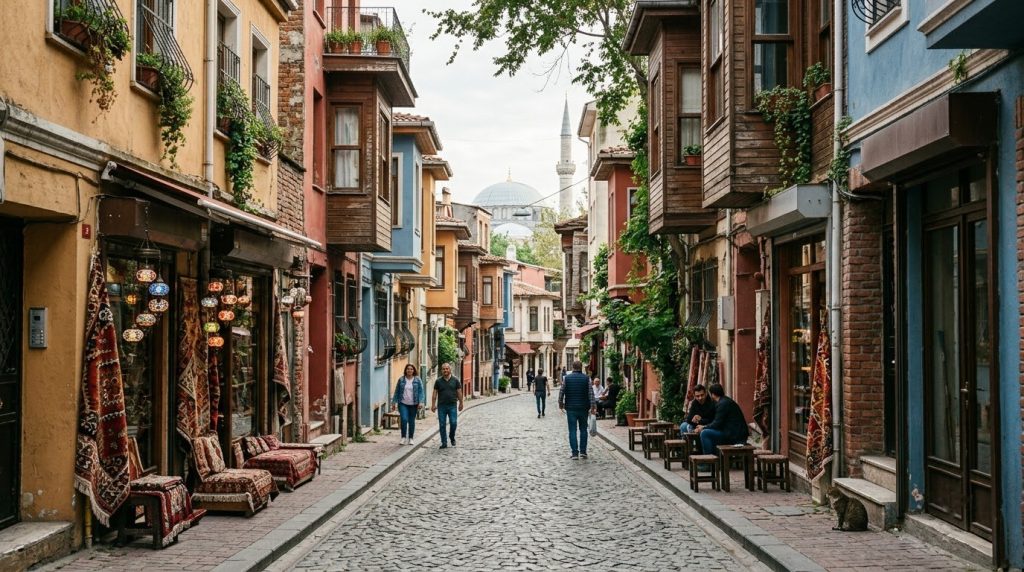
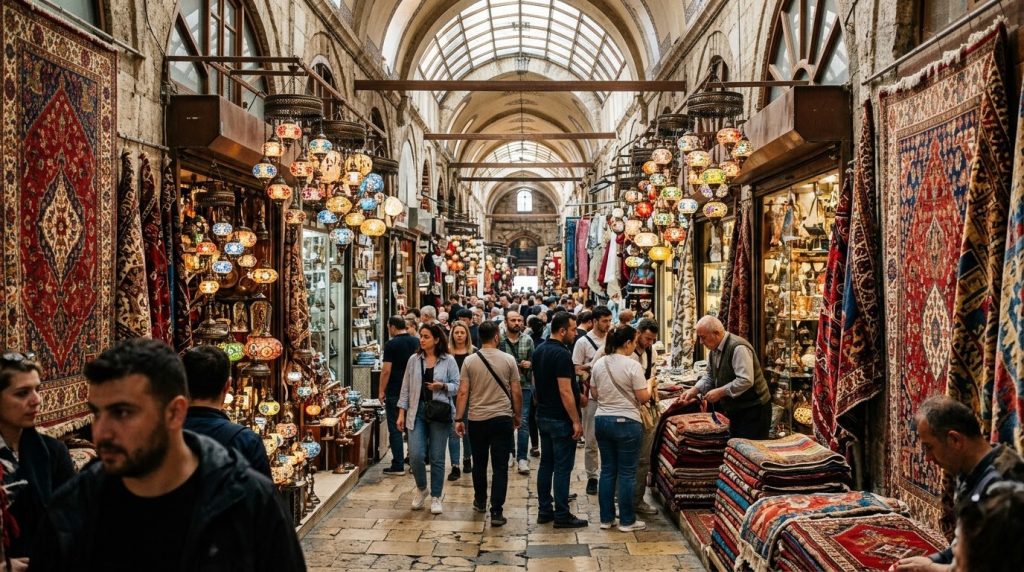
1. The shoe-shine brush drop. A shiner drops a brush, you return it, he shines your shoes “as thanks,” shares a sad family story, then charges many times the local price. Common around Sultanahmet, the Spice Bazaar, Taksim and the Grand Bazaar.
Let the brush lie. 2. The bar bill scam. A friendly, well-dressed man (usually targeting solo men around Taksim) suggests a “local bar.” Women join, drinks appear, and the bill runs into hundreds or thousands of euros while staff block the door.
Never follow a stranger to a bar. 3. Fake guides. Someone near a major sight offers an unofficial “tour” that ends in a relative’s carpet shop.
Book guides in advance. 4. Taxi tricks. Refusing the meter, the “broken meter,” or a long detour from the airport.
Neighborhoods to avoid after dark
Istanbul has no true no-go zones, but a few areas are worth skipping at night:
– Tarlabaşı: right behind Istiklal Street and Taksim Square, known for drugs and street crime, and easy to wander into from Istiklal by accident. – Aksaray and Laleli: wholesale clothing districts near the old city with petty theft and scam reports after dark. Cheap hotels here look good on price, less so on a late walk back. – Poorly lit backstreets off Taksim late at night.
Daytime visits are generally fine. After dinner, stick to busy, well-lit streets.
Getting around safely: taxis, trams and ferries
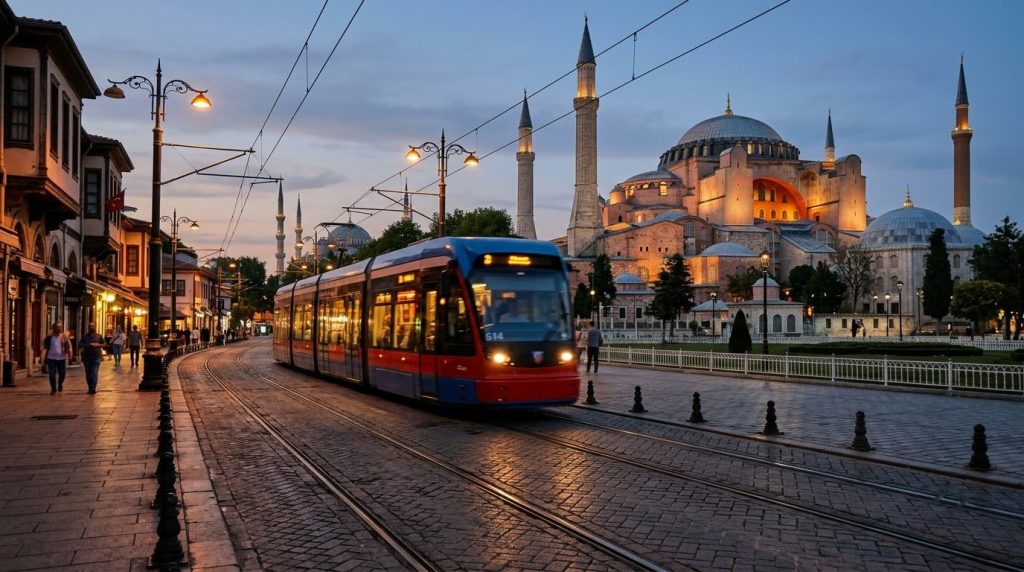
Public transport is the safest, cheapest option. An Istanbulkart ride on the metro, tram, bus or Metrobüs costs about USD 0.95 (TRY 46.20) since July 20, 2026 (converted at USD 1 = TRY 48.6). The T1 tram through Sultanahmet is a pickpocket hotspot at rush hour.
Taxis are where visitors get burned. The yellow-taxi meter starts at TRY 71.94, then TRY 47.92 per km, with a minimum fare of about USD 4.70 (TRY 230). From Istanbul Airport, a metered ride runs roughly USD 46–56 (TRY 2,230–2,710) to Taksim and about USD 48 (TRY 2,320) to Sultanahmet, before traffic time.
A flat quote far above that means find another cab. BiTaksi puts the ride on record and still uses the meter.
Turkish Airlines flies nonstop from New York JFK in about 9 hours 50 minutes, and US passport holders get 90 days visa-free in any 180-day period.
Solo and female travelers
Solo travelers, women included, visit Istanbul all the time, and the main districts feel busy and well policed into the evening. Expect some staring and pushy shop pitches; a firm “no, thank you” while you keep walking works. Cover shoulders and knees for mosques, turn down invitations to a “friend’s bar,” and use BiTaksi at night instead of flagging a car.
Earthquake and natural disaster risk
Istanbul sits close to the North Anatolian Fault, and geophysicists studying the Marmara Sea segment put the odds of a magnitude 7-plus earthquake near the city at roughly 35 to 60 percent within the next 30 years; the exact figure varies by study and model, so treat it as a real but unpredictable risk rather than a forecast with a date attached.
The nearby 1999 Izmit earthquake killed around 17,000 people, which is why the subject gets serious attention in city planning and building-safety campaigns today.
For a short visit, the practical risk is low: most hotels and the newer sections of the metro are built to modern codes, and the city has invested heavily in retrofitting and awareness programs since 1999. It still costs nothing to know the basics.
If strong shaking starts, drop and hold on to solid furniture rather than running for a door or an elevator, and expect mobile networks to jam in the first chaotic minutes, so agree on a meeting point with any travel companions in advance.
Türkiye’s disaster agency, AFAD, publishes earthquake information and safety guidance in English on its website, which is worth a bookmark if you are staying more than a few days.
Climate-wise, Istanbul has hot, mostly dry summers and cool, wet winters with occasional snow. The only weather-related planning most trips need is a light jacket for sudden spring or autumn showers and sun protection on exposed Bosphorus ferry decks in summer; severe storms are uncommon enough that they rarely disrupt a short trip.
Who should think twice about Istanbul right now
Istanbul is not the right trip for everyone:
– Travelers who plan to join or film protests. Unapproved demonstrations can lead to arrest. – Anyone extending into the southeast near the Syrian or Iraqi border, which is Level 4. – People who freeze in big crowds. Peak-season crowds at the bazaars are where theft happens. Look at the best time to visit Istanbul for quieter months.
Everyone else can plan with confidence: a 3-day Istanbul itinerary keeps you in safe areas, and our best things to do in Istanbul list flags the most crowded spots.
Health precautions before your trip
No vaccinations are required to enter Türkiye, but routine shots should be current, and health guidance commonly recommends hepatitis A for most visitors and hepatitis B and typhoid for longer or less typical trips. None of this needs same-week planning; book a travel-clinic visit a few weeks ahead if you want the full set.
Tap water across Türkiye, including Istanbul, is generally treated to meet national standards but is heavily chlorinated and tastes off to most visitors, so bottled or filtered water is the common choice for drinking; it is fine for brushing teeth.
Street food is part of the trip—simit carts and büfe stalls are everywhere—so stick to stalls with a steady queue of locals and food that is cooked in front of you.
Pharmacies (eczane) are easy to find, marked with a red-on-white E sign, and many pharmacists in tourist districts speak some English and can advise on minor ailments without a doctor’s visit.
Stray cats and dogs are a fixture of the city and are generally calm, but avoid feeding or handling them, since rabies cannot be ruled out and a bite means an urgent trip to a hospital for post-exposure treatment.
In the warmer months, mosquitoes show up near the Bosphorus and the Golden Horn in the evenings; they are a nuisance rather than a malaria risk in the city, but a small bottle of repellent makes outdoor dinners more comfortable.
What to do in an emergency
Dial 112 for police, ambulance or fire; it is free from any phone. Istanbul’s Tourist Police (offices in Sultanahmet, Sirkeci and Taksim) handle theft, scams and lost passports at +90 212 527 45 03. For a stolen passport, contact the US Consulate General in Istanbul. Buy travel insurance with medical cover. For entry rules, money and SIM cards, see our full Istanbul travel guide.
Local laws and customs to know
Türkiye takes insults to its founder seriously: Law No. 5816 makes it a criminal offense to insult the memory of Mustafa Kemal Atatürk, and separate penal code provisions criminalize insulting the Turkish nation, flag, government, president or security forces, including in social media posts. This sits alongside the arbitrary-detention risk already noted; the safest approach is to keep political commentary off your trip entirely, in person and online.
Alcohol is legal and widely available in restaurants, bars and licensed shops, but sales are restricted: supermarkets and corner shops cannot legally sell alcohol between 10pm and 6am, and some conservative neighborhoods have few or no shops that stock it at all.
Photographing military sites, police and some government buildings is restricted; if a guard waves you off, move along rather than argue the point.
Drinking in the street, in parks or within sight of a mosque or school is also restricted by local rules in many districts, even where buying alcohol is legal, so keep it to bars, restaurants and your hotel.
Same-sex relationships are legal in Türkiye, but there is no legal protection against discrimination, and public displays of affection, gay or straight, draw more attention outside tourist hotels than they would at home. None of this should put off a well-prepared visitor, but knowing the lines before you go avoids an avoidable problem.
Where to stay
– Sultanahmet: the old city, steps from Hagia Sophia, with constant police presence. Best for first-timers, though quiet late at night. – Karaköy and Galata: cafes, the Galata Tower and easy tram and ferry links.
Best for couples who want nightlife without Taksim’s late-night edge. – Kadıköy (Asian side): relaxed and local, with a big food market, a short ferry ride from the old city. Best for repeat visitors and budget travelers.
For a deeper area-by-area breakdown, read our guide on where to stay in Istanbul.
Find your Istanbul hotel on the map
Live prices from Booking, Airbnb and more — move the map or change dates to compare stays across Istanbul.
Frequently Asked Questions
Is it safe to walk around Istanbul at night?
Yes, in the main tourist areas. Sultanahmet, Karaköy, Galata, Beşiktaş and Kadıköy stay busy and well lit into the evening. Avoid Tarlabaşı behind Istiklal Street and the Aksaray and Laleli districts after dark, and book taxis through BiTaksi late at night.
Is Istanbul safe for American tourists?
Yes. The State Department keeps Türkiye at Level 2, the same tier as France or Italy, and Istanbul is outside every Level 4 zone. Americans should avoid political protests and political posts on social media, since the advisory notes arbitrary detentions, and enroll in STEP so the consulate can reach them.
What is the most common crime against tourists in Istanbul?
Pickpocketing and scams. Thieves work the Grand Bazaar, Istiklal Street, the T1 tram and crowded ferries. The most expensive scam is the bar bill trap near Taksim, where a friendly stranger leads you to a bar and the bill runs into hundreds of euros. Violent crime against visitors is rare.
Is Istanbul safe for solo female travelers?
Generally, yes. Women travel solo in Istanbul regularly and the central districts feel safe in daytime and evening. Expect some attention and persistent shop pitches. Dress modestly for mosques, decline invitations from strangers, and take booked taxis at night. In an emergency, dial 112, which connects police, ambulance and fire.