Best Time to Visit Portugal (2026)
Disclosure: Some links in this guide are affiliate links. If you book or buy through them, we may earn a small commission at no extra cost to you — it helps keep our guides free.
- The best time to visit Portugal is April through June or September through October.
- The Algarve sea warms toward 22C and hotel rates sit well below August's peak.
- Portugal stretches about 560 km north to south, so Porto, Lisbon, the Algarve and the Douro each run on a different clock.
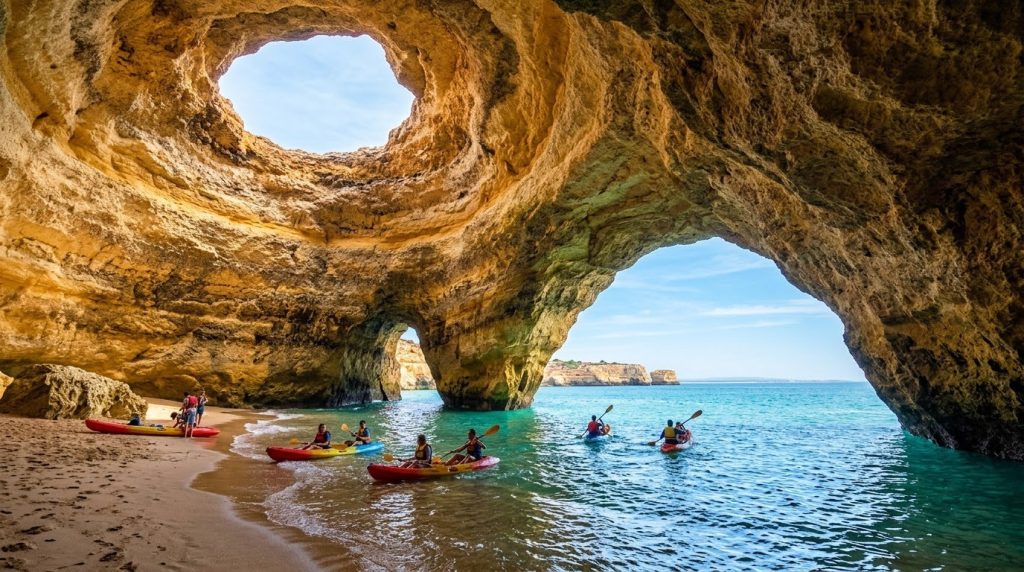
The best time to visit Portugal is April through June or September through October, when Lisbon’s daytime highs run 15°C to 25°C (59°F to 77°F), the Algarve’s sea warms toward 22°C (72°F), and hotel rates sit well below August’s peak.
Portugal stretches roughly 560 km (350 miles) north to south, so Porto’s rain, Lisbon’s shoulder seasons, the Algarve’s beach calendar and the Douro’s harvest window each run on a different clock.
| Season | Lisbon | Porto | Algarve | Douro Valley | Best for |
|---|---|---|---|---|---|
| Spring (Apr-Jun) | 18-25°C, drying out after April | A few degrees cooler, rain lingers into April | Warming to 18-24°C, quiet beaches | Vineyards greening, mild days | Sightseeing, hiking, budget travel |
| Summer (Jun-Aug) | Hot, dry, highs near 27°C | Warm, 24-26°C, driest month July | Peak beach season, sea 19-23°C | Hot, dry, pre-harvest, 35°C+ inland | Beach clubs, coastal towns |
| Autumn (Sep-Oct) | Cooling to 22-25°C | Mild, rain returns by November | Sea still 18-20°C, thinner crowds | Vindima harvest, mid-Sep to early Oct | Wine tourism, warm-sea beaches |
| Winter (Nov-Mar) | Mild, wet, highs near 15°C | Coldest, wettest, ~10°C average | Mildest region, 15-18°C | Vineyards dormant, valley fog | Budget city breaks |
Spring (April to June) — the reliable shoulder season
Spring works well for a first Portugal trip because Lisbon’s daily highs climb steadily from about 18°C (64°F) in April to 25°C (77°F) by June, well ahead of summer’s heat and crowds. April opens cool with short showers; May and June turn dry and mild, comfortable for walking Lisbon’s hills and Porto’s Ribeira district.
Porto trails a few degrees behind Lisbon and keeps more rain into April, so pack a light rain layer for an early trip north; our Porto travel guide covers the city’s month-by-month weather.
June brings Portugal’s biggest street festivals, the Santos Populares: Lisbon’s Festa de Santo António peaks the night of June 12-13, and Porto’s Festa de São João takes over the city on June 23 — both fill hotels even though June still prices as shoulder season.
The Algarve and Douro also warm through spring without summer’s extremes, so late May and early June suit a coast-plus-wine itinerary before either gets crowded or pricey.
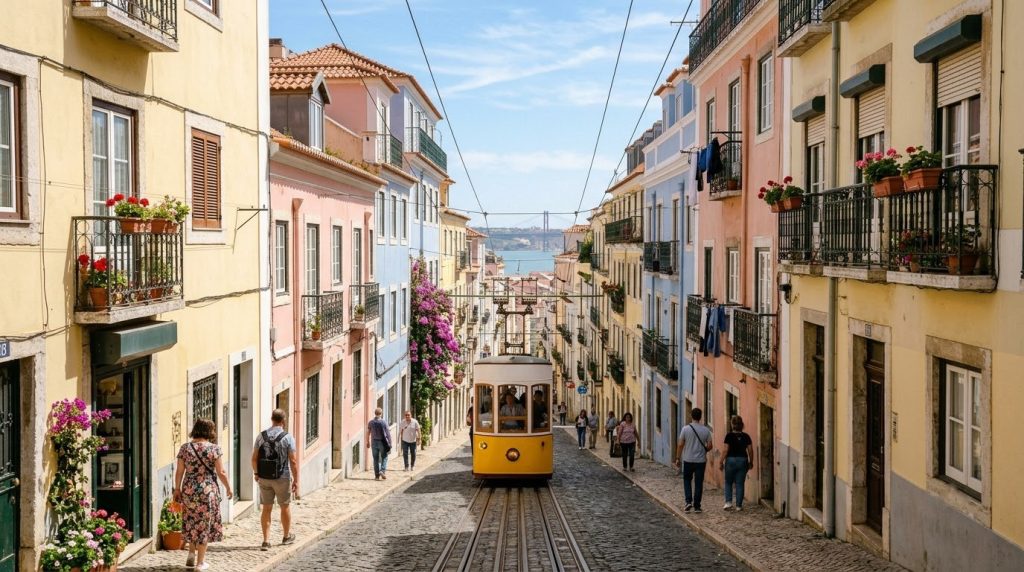
Summer (June to August) — the Algarve’s peak, everywhere else’s crowds
Summer belongs to the Algarve more than any other region: its sea climbs toward 22°C (72°F) in August, while Lisbon and Porto turn hot, dry and crowded rather than genuinely better for sightseeing.
Faro-area beach towns see July highs near 27°C (81°F) and August highs near 28°C (82°F), and hotel rates follow the same curve: a mid-range Algarve double that runs roughly USD 41-124 (EUR 36-108) a night in November climbs to about USD 124-362 (EUR 108-315) at the August peak, roughly triple the price.
Lisbon itself gets busy and dry in summer, highs near 27°C (81°F) and July almost rainless, so the appeal shifts from museums to rooftop bars and river-beach days.
Porto stays a few degrees cooler than Lisbon in summer, July highs around 25°C (77°F) and its own driest month — a reasonable fallback for city sightseeing without the Algarve’s crowds or Lisbon’s peak prices.
Inland, the Douro Valley heats up ahead of harvest, with daytime temperatures regularly past 35°C (95°F) in July and August — better suited to river cruises and early-morning vineyard visits than midday hiking.
Autumn (September to October) — the Douro’s harvest and a warm sea without the crowds
Autumn matches spring for reliability and adds Portugal’s signature wine event: the vindima, or grape harvest, running early September through mid-October, with the most active picking clustered September 15-October 5.
Harvest-day packages at Douro quintas run from about USD 92 (EUR 80) for a half-day tasting-and-treading session to USD 230 (EUR 200) for a full day with a vineyard lunch, and vindima visitors join the traditional lagar, treading grapes alongside winery staff, rather than just touring empty vineyards.
On the coast, the Algarve’s sea stays swimmable into autumn, around 18-20°C (64-68°F) through September and October as crowds thin, making September the strongest month for warm water without August’s beach-club scrum. Lisbon cools to a comfortable 22-25°C (72-77°F), and Porto’s rain returns gradually, with November rather than October marking its wettest stretch.
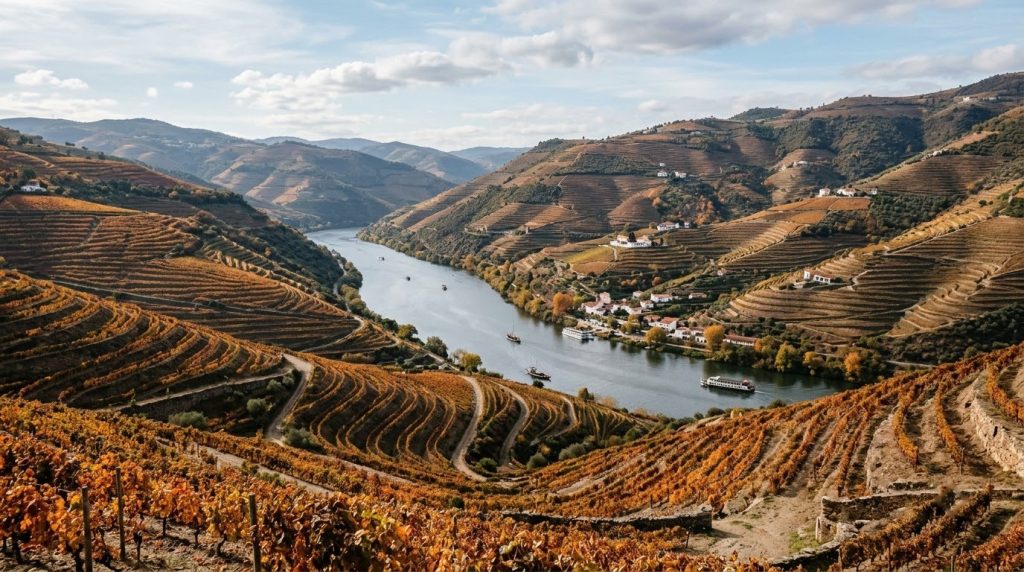
Winter (November to March) — mild in the south, wet in the north
Winter splits Portugal along the same north-south line as the rest of the year: Porto absorbs the country’s heaviest rain, and the Algarve stays the mildest region. Porto’s coldest month, January, averages around 10°C (50°F), and November alone brings roughly 163mm of rain — more than seven times July’s 22mm — so pack for genuinely wet days, not occasional showers.
Lisbon fares better, January highs around 15°C (59°F) and its wettest month, November, averaging only 84mm — mild enough for coat-and-scarf sightseeing without planning around rain the way Porto demands.
The Algarve stays the country’s warmest refuge in winter, daytime highs typically 15-18°C (59-64°F), so its golf courses and coastal trails keep running through the off-season even as beach clubs shut down.
The Douro Valley goes quiet differently: the vines are dormant, valley fog is common on cold mornings, and most quintas scale back to weekend-only tours or close tasting rooms entirely between December and February.
Why Lisbon, Porto, the Algarve and the Douro run on different calendars
Portugal’s roughly 560km north-south stretch means no single month suits a Porto city break, an Algarve beach week and a Douro wine trip equally — treating the country as one climate zone is the most common planning mistake.
Porto’s weather runs closer to a cooler, wetter version of Lisbon’s than the Algarve’s, so anyone splitting time between the two northern cities can use the same packing list and shoulder-season logic.
The Algarve, by contrast, runs a beach-resort calendar: only June through September is warm enough for lounging rather than a quick dip, and its mild winter is a different trip, built around golf and hikes instead of swimming.
The Douro Valley adds a third calendar, since its best window ties to the September-to-October harvest rather than weather alone, and a summer visit trades vineyard color for uncomfortable inland heat. A trip built around one of these calendars, rather than forcing all three regions into one two-week window, works better than a single date range for the whole country.
When NOT to visit Portugal
Skip the Algarve between December and February for a beach trip: sea temperatures near 15-16°C (59-61°F) rule out swimming, and many beachfront hotels and restaurants close for the season.
Avoid a Douro wine-tourism trip in deep winter: the vines are dormant December through February, and many quintas cut back to weekend-only tours or close tasting rooms, leaving little beyond the terraced hillsides.
The worst-case timing for a Lisbon-only city break is Christmas and New Year week, when hotel prices spike toward summer levels even though the weather stays mild and wet, not genuinely wintry.
Inland Douro and Alentejo day trips in July and August are also worth avoiding if you’re heat-sensitive, since valley temperatures above 35°C (95°F) make midday vineyard walking unpleasant even for travelers who handle Lisbon’s summer heat fine.
Plan your Portugal trip
Once the season is set, the next decision is how Portugal fits a wider European trip, since Lisbon connects easily to other short-haul cities worth comparing on timing.
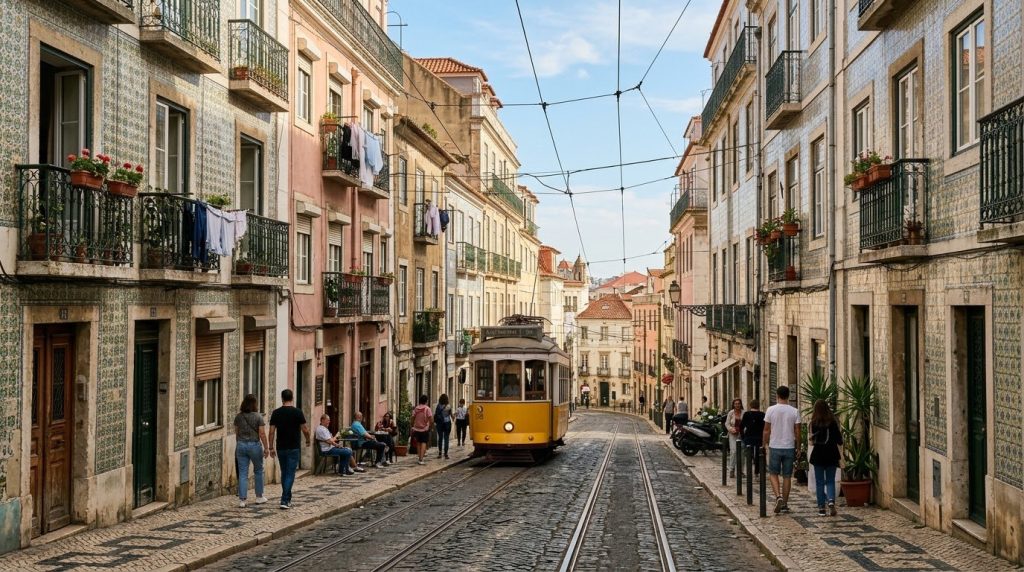
Many travelers pair Portugal with Spain, and our Barcelona travel guide and best day trips from Barcelona cover the two-country itinerary that works well in the same April-to-June or September-to-October windows Portugal favors.
For travelers deciding between Portugal and a different European city for the same shoulder-season dates, our best time to visit Prague guide covers a similar spring-and-autumn calendar for comparing which destination’s weather window fits.
Prices here convert at today’s rate of roughly EUR/USD 1.15, worth rechecking closer to booking since seasonal hotel swings matter far more to total cost than the exchange rate does.
Find your Portugal hotel on the map
Live prices from Booking, Airbnb and more — move the map or change dates to compare stays across Portugal.