Is Tuscany Worth Visiting? (2026)
Disclosure: Some links in this guide are affiliate links. If you book or buy through them, we may earn a small commission at no extra cost to you — it helps keep our guides free.
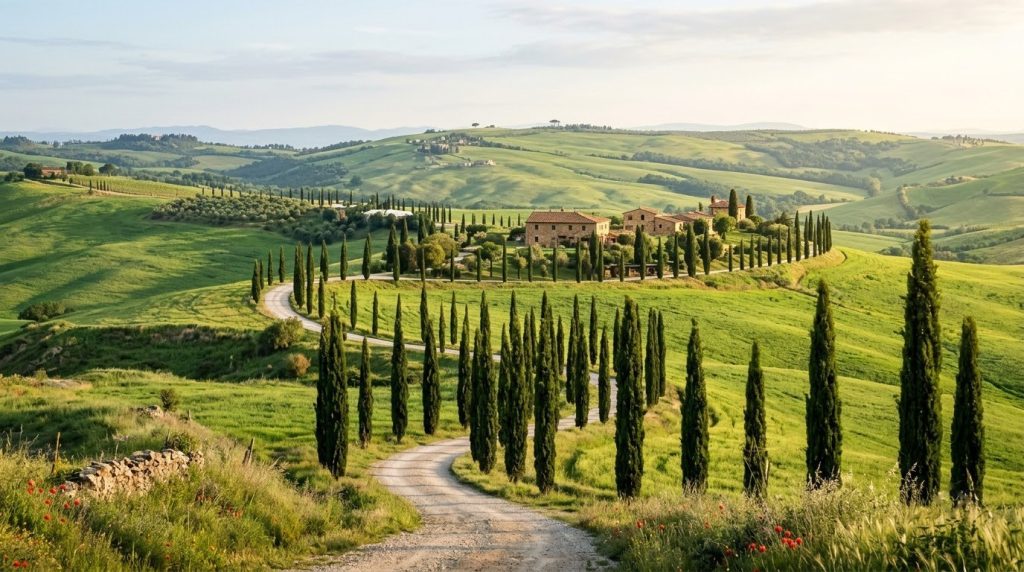
Tuscany is worth visiting for the Chianti and Val d’Orcia countryside, where a rental car averaging USD 50 (EUR 43) a day at today’s rate of roughly 1.16 reaches hill towns that the 90-minute Florence-to-Siena train line never touches.
It is not worth the trouble on a trip of three nights or less, because that time is better spent finishing Florence and Siena by train than fighting the ZTL cameras that fine unaware drivers up to EUR 332.
| Traveller type | Worth it? | Nights to give it | Why |
|---|---|---|---|
| Slow travelers with a rental car | Yes | 3-4 nights | Only way to reach Val d’Orcia and Chianti hill towns properly |
| Wine and food-focused couples | Yes | 2-3 nights | Agriturismo stays and vineyard access justify the car cost |
| First-timers with 4-5 days total in Italy | Maybe | 1-2 nights | Enough for Siena by train and one hill town, not the full countryside |
| Solo travelers without a car | No | 0 nights, day trip only | Bus connections between hill towns can run past 4 hours |
| Trips of 3 nights or fewer in Italy | No | Skip | The countryside eats days better spent in Florence and Rome |
What the Tuscan countryside has that a city cannot
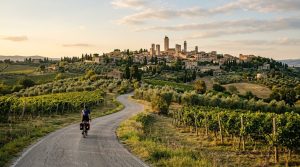
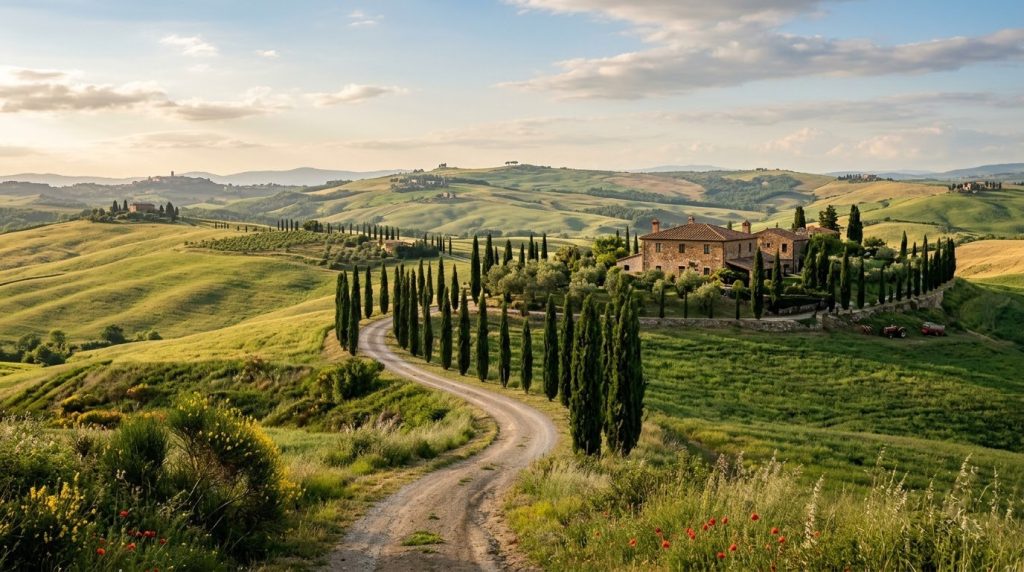
The Tuscan countryside sells slowness, and Florence cannot sell that at any price. Val d’Orcia’s cypress-lined roads between Pienza and Montalcino, the walled skyline of San Gimignano, and the vineyard terraces around Montepulciano are the postcard Tuscany that most travelers are actually picturing when they say the word.
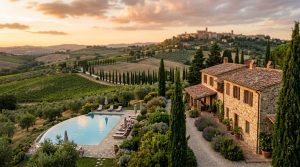
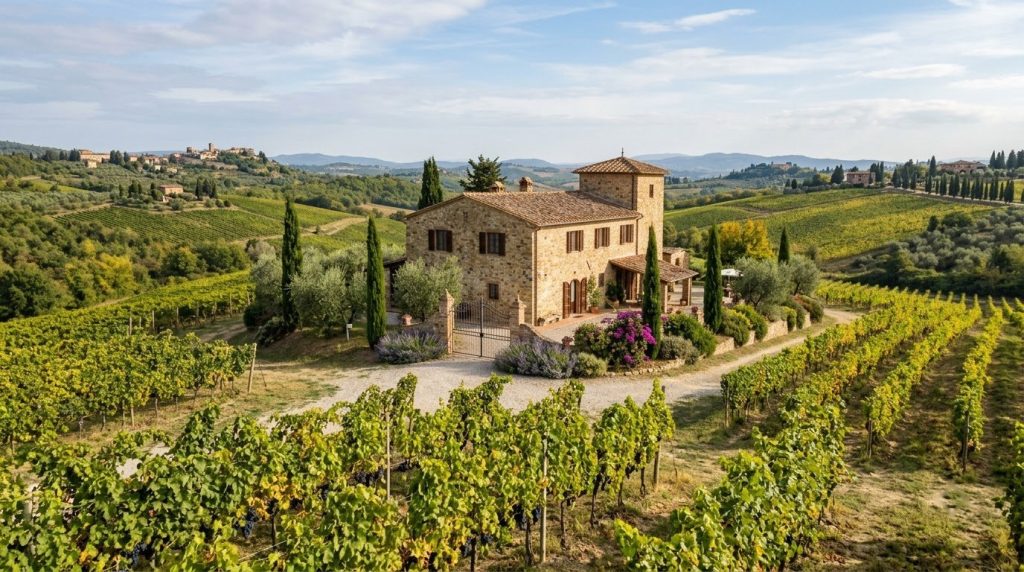
An agriturismo stay puts you inside a working farm rather than a hotel corridor, with breakfast that comes from the same land you are looking at.
None of this compresses into a day trip, because the value is in the driving itself, the unplanned stop at a roadside wine cellar, and the empty road at 7 a.m. before the tour buses arrive.
A traveler who only wants churches, museums, and a walkable old center already has that in Florence, and does not need the countryside to be satisfied. A traveler who wants to feel like they left the itinerary behind needs the countryside, and nothing in Florence replicates it.
The distances between the postcard stops are also short in kilometers but long in character, since a 40-minute drive from Montepulciano to Pienza crosses through open farmland with almost no traffic, a pace that a city itinerary simply cannot offer no matter how early you start.
Why you need a car, and the ZTL fine trap
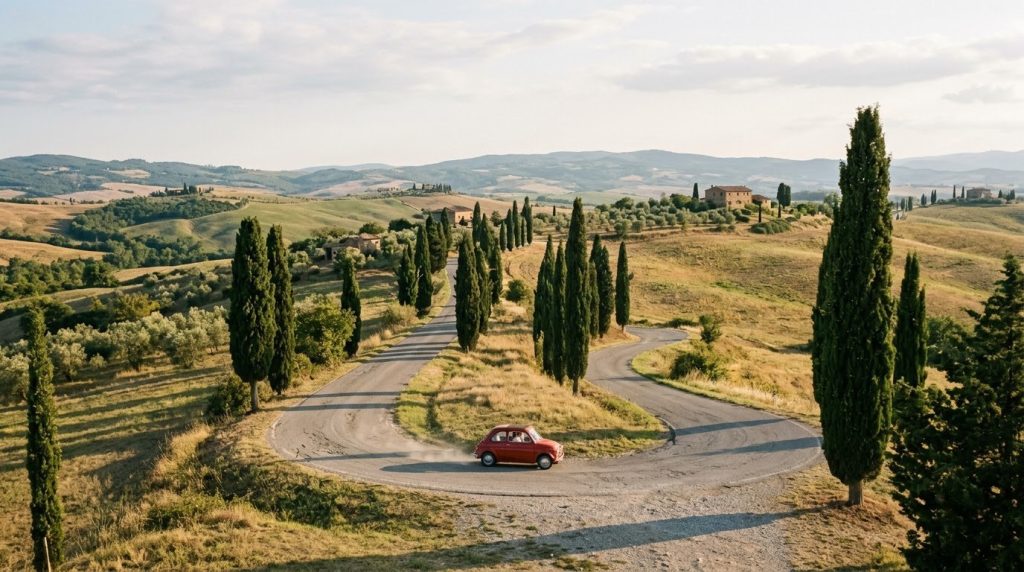
You need a car for the Tuscan countryside because the hill towns that matter are barely connected to each other by public transport. San Gimignano has no train station of its own, and the nearest one is in Poggibonsi, several kilometers away. Montepulciano’s station is even less useful, sitting far from town with no reliable bus link into the center.
Traveling between San Gimignano and Montepulciano without a car means a bus change in Siena that can take more than four hours for a route a car covers in under 90 minutes. The trap once you do rent a car is the ZTL, or zona a traffico limitato, the restricted zone inside nearly every walled hill town center.
Camera-enforced ZTLs sit at the entrances to towns like Montepulciano, Cortona, and San Gimignano, and driving through one without a resident permit brings a fine starting around EUR 83 that can climb to roughly EUR 332 with processing surcharges once the ticket reaches you months later.
The fix is simple: park in the marked lots just outside the walls, which every hill town has, and walk in.
Region or just Florence and Siena
Skip the countryside and base in Florence if you have four days or fewer and do not want to drive. Siena is the one piece of “postcard Tuscany” you can reach without a car, since the regional train from Florence takes about 90 minutes, runs roughly hourly through the day, and starts around USD 13 one way.
That gets you Siena’s Piazza del Campo and cathedral without a ZTL fine, a rental contract, or a highway toll. What a Florence-and-Siena trip cannot get you is Val d’Orcia’s open landscape, the smaller hill towns like Pienza and Montalcino, or an agriturismo night, because those sit well outside what regional trains and city buses reach.
If your full route already includes a 3-day Rome itinerary, the honest math is that a rental car for the countryside only earns its cost when you have at least three additional nights to spend outside Florence; anything shorter, take the train to Siena and call it done.
What it costs to do it properly
Doing the Tuscan countryside properly costs more than a Florence hotel night, and that is the trade you are making. A mid-range agriturismo double room with breakfast in Chianti or Val d’Orcia runs roughly EUR 90 to 180 a night, or about USD 104 to 209 at today’s rate, before dinner or wine tastings are added.
A small rental car averages USD 50 (EUR 43) a day, and that is before fuel, tolls, or the parking fee just outside each town’s walls.
Across three nights, a realistic budget for the countryside portion alone lands near USD 450 to 700 for lodging and the car combined, higher in peak season and lower in shoulder months, which our best time to visit Tuscany guide breaks down by month.
Compare that to a Siena day trip by train at roughly USD 26 round trip and no car at all, and the price gap is the real question this article is answering.
Splitting the rental and the agriturismo room between two or more travelers closes most of that gap fast, which is why the countryside math works best for couples and small groups rather than solo budget trips.
Who should skip the Tuscan countryside
Skip the Tuscan countryside if you are not comfortable driving on narrow, unfamiliar hill roads, because a scraped rental and a missed ZTL sign will cost you more than the trip was worth. Skip it if your total Italy trip is four days or fewer, since the drive time alone, not the towns themselves, is what eats the schedule.
Skip it if you are traveling solo on a tight budget without a driving companion to split the rental, because a USD 50-a-day car for one person rarely pencils out against a USD 13 train ticket to Siena. Skip it if your priority is museums and nightlife over landscape, since Florence already delivers that without a car.
None of this means Tuscany fails these travelers; it means the region is a specific product for people with time and a driver, not a universal add-on to every Italy trip. Anyone in this group who still wants a structured route through the region rather than skipping it entirely should start from our full Tuscany itinerary before deciding.
The best time to visit the Tuscan countryside
Late spring and early autumn both outperform summer in the Tuscan countryside, and for the same underlying reason: the heat. May offers mild days, typically reaching the mid-20s Celsius, green hillsides that have not yet dried out under summer sun, and lighter crowds than the peak months that follow.
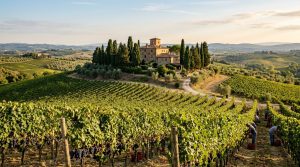
September repeats that pattern in reverse, with cooler evenings returning after the summer heat breaks and the added appeal of the grape harvest, which several wine-region guides single out as the single best month to time a Chianti or Val d’Orcia trip around, since wineries are at their most active and visitor-facing during the harvest window.
July and August are the countryside’s hottest, most crowded months, with temperatures regularly uncomfortable for a midday drive between hill towns or a walk through an un-shaded vineyard, and the ZTL-fined parking spots and agriturismo rooms covered elsewhere in this guide book out furthest in advance during this stretch.
Late September into October extends the harvest-season advantage with fewer tourists than August while keeping daytime temperatures comfortable for driving and walking both, which is why multiple Tuscany-focused travel guides point to this window, alongside May, as the two strongest stretches of the year.
Winter thins the crowds further and drops prices on agriturismo rooms, but several wineries and smaller hill-town restaurants scale back their hours outside the main season, so a winter countryside trip rewards flexibility more than a fixed itinerary built around specific openings.
November adds a specific reason to extend the season further than the grape harvest alone: it is both olive-harvest and white-truffle season across the region, and the town of San Miniato, roughly midway between Florence and Pisa, holds its well-known white truffle fair across several weekends that month, drawing food-focused travelers who time a trip around it specifically.
Accommodation prices in the countryside also ease once November arrives, since both the summer crowds and the September-October harvest rush have passed, which makes it a reasonable trade for a traveler who prioritizes truffle season and quieter roads over the warmer weather of May or September.
Tuscan food and wine worth planning around
The Tuscan countryside earns a reputation for food that Florence alone cannot match, built on a short list of dishes that show up on nearly every countryside menu.
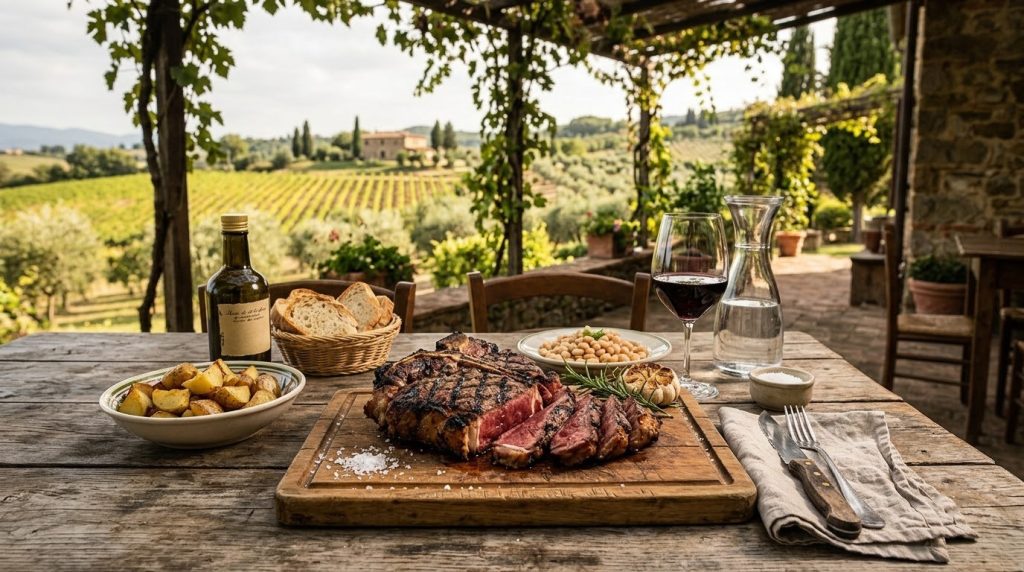
Bistecca alla fiorentina, a thick-cut, bone-in steak typically grilled rare over charcoal, ribollita, a bread-and-bean soup originally built from leftovers, pappa al pomodoro, a simpler tomato-and-bread dish, and pici or pappardelle pasta tossed with a slow-cooked wild boar ragù are the dishes most consistently flagged as the ones not to leave the region without trying.
All four rewards slowing down for a proper sit-down meal rather than grabbing something quick between hill towns, which is itself part of the case this guide already makes for giving the countryside real nights rather than a rushed day trip.
Wine tasting is the other half of the countryside’s appeal, concentrated in the Chianti region between Florence and Siena.
Pricing splits into two clear tiers: a single tasting at one winery, booked directly and without transport included, commonly costs as little as USD 25 to USD 35 (EUR 22 to EUR 30) per person, while a half-day small-group tour from Florence that bundles transport, a guide and two or more wineries runs USD 90 to USD 155 (EUR 78 to EUR 134) per person, often with a light lunch included at the higher end of that range.
Self-driving between wineries independently, which the rental-car math elsewhere in this guide already covers, works out cheaper than a guided tour for a group splitting the car, but it also means designating a driver who skips the tasting pour at each stop, a trade-off worth deciding on before booking rather than at the first cellar door.
A November trip timed around the San Miniato or San Gimignano area adds a second food experience alongside wine: a guided truffle hunt with a trained dog and its handler, arranged through local operators in either town, pairs naturally with a harvest-season wine visit and turns a single countryside day into both a truffle and a wine experience rather than just one or the other.
Many agriturismi also press their own olive oil in the same autumn window, and some open that process to guests for a tasting alongside the wine list already on offer, a detail worth asking about directly when booking a stay for October or November rather than assuming every property offers it.
Where to stay if you decide to go
Once you have decided the countryside is worth the car, the next decision is which town to base in, and our best hotels in Tuscany guide covers options from budget to luxury across the region.
Find your Tuscany hotel on the map
Live prices from Booking, Airbnb and more — move the map or change dates to compare stays across Tuscany.