How Many Days in Dubai (2026)
Disclosure: Some links in this guide are affiliate links. If you book or buy through them, we may earn a small commission at no extra cost to you — it helps keep our guides free.
- 3 to 4 days for a first visit; 1 to 2 days covers a stopover.
- 5 or more days suits a slower trip with an Abu Dhabi add-on.
- In summer, extreme heat limits outdoor time to sunrise and after sunset.
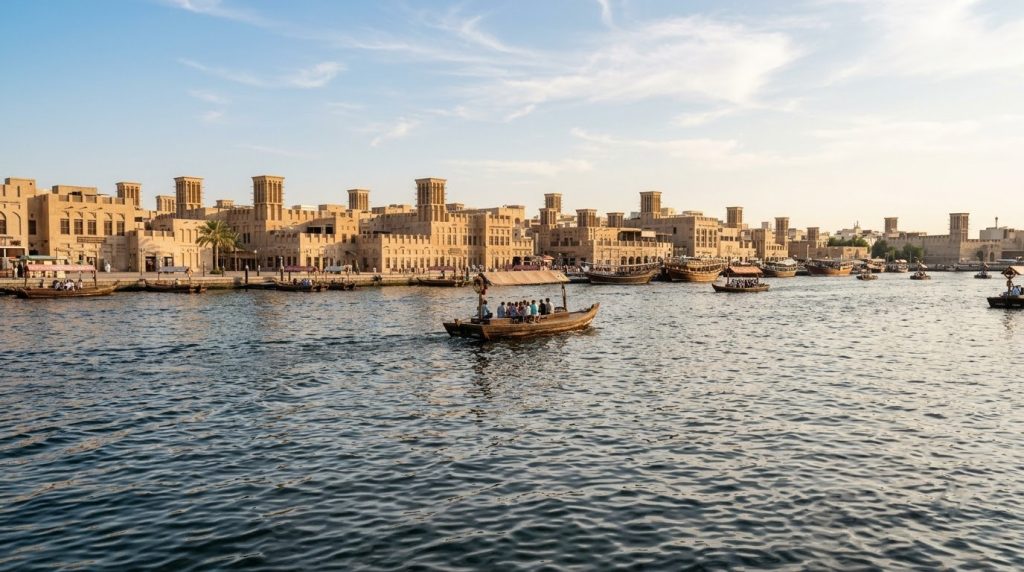
The answer to how many days in Dubai you need is 3 to 4 days for a first visit, with 1 to 2 days covering a stopover and 5 or more days suiting a slower trip with an Abu Dhabi add-on. That range shifts in summer, when extreme heat compresses each day’s usable outdoor hours down to sunrise and after sunset.
| Days | What you fit in | Season caveat | Approx cost/person (USD) | Best for |
|---|---|---|---|---|
| 1 to 2 | One neighborhood plus one paid attraction | Cut outdoor time in half, June to September | USD 109-245/day | Stopover passengers |
| 3 to 4 | Downtown, Old Dubai, one desert or beach day | Comfortable October to April, tight in summer | USD 109-245/day | First-time visitors |
| 5+ | Above plus an Abu Dhabi day trip or a slower pace | Extra days absorb summer’s shorter outdoor windows | USD 109-245/day, spread out | Families, repeat visitors, slow travel |
What your passport means for how many days you can plan
Before locking in a trip length, check how many days your own passport is actually allowed to stay, because entry allowances in the UAE vary by nationality and that cap can be shorter than the trip being planned.
Schengen-area passport holders get the clearest rule: up to 90 days within any rolling 180-day period, confirmed through the UAE’s own official visa calculator. That 180-day window counts cumulatively, so a traveler who has already spent time in the UAE earlier in the same 180-day stretch has fewer days left than the full 90 suggests.
Outside the Schengen group, the permitted stay on arrival differs by passport and has changed more than once in recent years, with some nationalities seeing their standard allowance extended and others kept at a shorter default.
Because this detail is genuinely country-specific and shifts periodically, it is worth confirming the current allowance for your own passport on the UAE’s official immigration channels a few weeks before departure rather than relying on a blanket figure – this matters most for anyone planning a trip near the 5-day-or-more end of the range, since a shorter-than-expected entry allowance can force a rebooking.
Travelers connecting through Dubai on a single ticket with a long layover have a separate option worth checking before assuming a full visa is needed: some airlines arrange a short transit visa for passengers who qualify, which is handled differently from a standard tourist entry and is worth confirming directly with the airline at booking rather than at the airport.
Passport validity is a separate check from visa length and catches travelers who assume a few weeks of validity is enough. Standard visitors need a passport valid for at least six months after the arrival date; travelers only transiting without clearing immigration need at least three months of validity from the transit date.
Both are worth confirming before booking flights, since a passport renewal can take longer than the time left before departure.
1 to 2 days on a stopover – what actually fits
One to two days in Dubai works when you treat it as a highlights reel rather than a full trip, and it is the length that fits inside a stopover between long-haul flights.
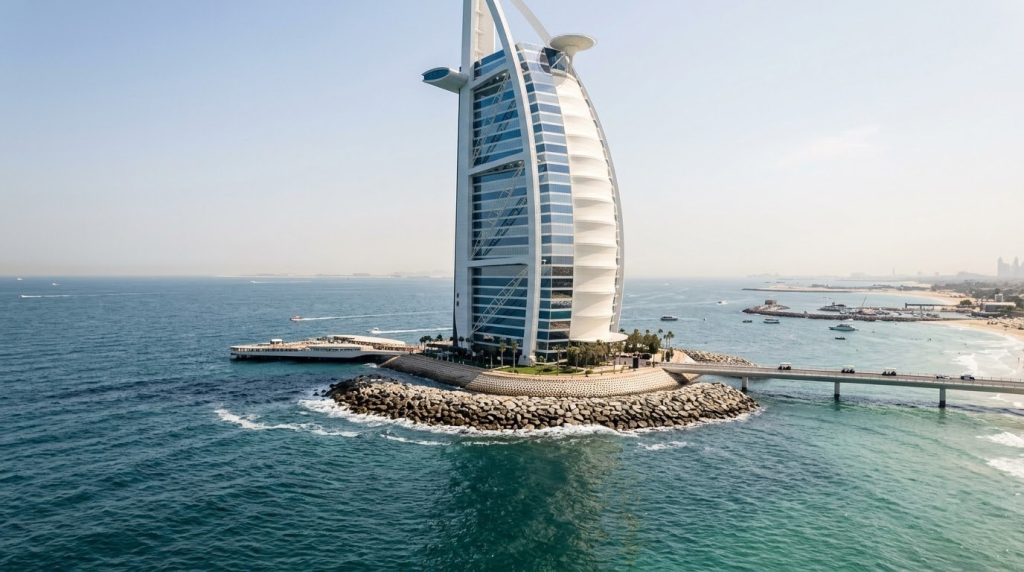
Emirates runs a Dubai Connect programme that gives qualifying passengers a free hotel, transfers, and meals for a connection between 8 and 26 hours, which is enough time to add one paid attraction before the next flight.
Passengers on other airlines, including flydubai, typically arrange a UAE transit visa valid for 48 or 96 hours, which covers a 1 to 2 day stopover without booking a full tourist visa.
In 1 to 2 days, plan on one neighborhood in the morning and one ticketed attraction in the afternoon rather than trying to cover the whole city. Burj Khalifa At The Top costs USD 41 to 54 for Level 124 depending on the time slot, and the Museum of the Future costs USD 41.
Both sit close enough to Downtown Dubai that a stopover traveler can reach either one without a long transfer. For the full range of paid attractions and how to prioritize between them, see the best things to do in Dubai guide.
3 to 4 days – the standard answer, and why
Three to four days is the standard answer because it covers Downtown Dubai, Old Dubai, and one full desert or beach day without rushing between them.
This length gives each area its own half-day or full day instead of compressing several neighborhoods into one, which matters in a city where the sights are spread across a long stretch of coastline rather than clustered in a single walkable core.
Budget around USD 109 to 245 per person per day, which covers one paid attraction, meals, and local transport, excluding flights and the hotel room itself.

Four days also leaves room for a desert safari, which most operators run as a half-day or evening trip rather than a full day, so it slots in alongside a sightseeing day rather than replacing one. For the exact day-by-day sequence, including which neighborhoods pair well together, follow the 4-day Dubai itinerary.
5 days or more – when the extra days pay off
Five days or more pays off when you add a day trip to Abu Dhabi or slow the pace enough to spend a full day at the beach instead of squeezing it between attractions.
Abu Dhabi sits roughly a 90-minute to 2-hour drive from Dubai, so a fifth or sixth day is what makes that trip realistic without cutting a day from the Dubai portion itself.
The extra time also matters for families with young children or travelers who prefer two or three activities a day instead of four, since Dubai’s attractions are spaced far enough apart that fewer stops per day still means real travel time between them.
The daily cost does not go up with a longer stay. The same USD 109 to 245 per person per day applies, it simply gets spread across more days with more downtime, which is the actual trade-off: five days costs more in total than three, but not more per day.
Hatta as a day-trip alternative to Abu Dhabi
Abu Dhabi is not the only option for a fifth or sixth day – Hatta, Dubai’s own mountain enclave, is closer and works as a shorter add-on for travelers who want a change of scenery without losing most of a day to driving.
Hatta sits roughly 135 km from Downtown Dubai, about a 90-minute drive each way via the Sharjah-Kalba Road (E102); the older E44 route is best avoided since it crosses into Omani territory. That round trip fits into a single extra day far more easily than the longer haul out to Abu Dhabi, which makes Hatta the better pick for travelers who have one spare day rather than two.
The main draws are Hatta Dam, a turquoise reservoir with free viewing and paid kayaking and pedal boats; Hatta Wadi Hub, the area’s activity base for mountain biking and hiking with bike hire on site; and Hatta Heritage Village, a restored cluster of traditional watchtowers and houses.
Hatta’s outdoor activities run seasonally, operating from 1 October to 5 May, and Wadi Hub opens 8am to 7pm daily within that season – outside those months, or in rain, the activity bookings close temporarily, so this day trip works best paired with the cooler-season end of a Dubai visit rather than deep summer.
Because bookings for kayaking and other activities at Wadi Hub are made on site rather than in advance, building in a buffer before committing the whole day to a single activity is the safer plan, especially on a short trip where there is no spare day to fall back on if something is fully booked.
| Hatta | Abu Dhabi | |
|---|---|---|
| Distance from Downtown Dubai | About 135 km | Roughly 90 minutes to 2 hours |
| Best fit | One spare day; outdoor/mountain scenery | A full extra day; city sights and culture |
| Season to go | October to early May for the activity hub | Workable year-round, hottest midday in summer |
Why summer heat changes the answer
Summer cuts Dubai’s usable day in half, because outdoor time only works at sunrise and after sunset from roughly June through September. Daytime highs in this window sit between 38C and 41C (100 to 106F), and overnight lows rarely drop below 30C (86F), which means even early evening stays hot.

Humidity pushes the heat index well past the air temperature, and the sea offers little relief since water temperatures climb to 32-33C (90-91F), warmer than a heated pool.
This is the piece most guides skip: a 3-day itinerary built for October does not fit into 3 days in July, because half of each day’s outdoor plan has to move indoors or get dropped.
Desert safaris, beach time, and rooftop views all shift toward the very early morning or after dark, which leaves the hot middle of the day for malls, the Museum of the Future, aquariums, and other air-conditioned attractions.
The trade-off is cost: flights and hotel rates drop well below the winter peak in summer, so the same trip can cost less even though it needs an extra day to fit the same amount of outdoor time. For a month-by-month breakdown of what each season is actually like, see the best time to visit Dubai guide.
When fewer days in Dubai is the better trip
Fewer days works better than the standard 3 to 4 when Dubai is one stop on a longer regional trip, when the traveler is heat-averse and visiting in summer, or when the budget favors a tighter itinerary over a fuller one.
A traveler combining Dubai with Abu Dhabi, Oman, or a longer Gulf route often gets more value from 2 focused days in Dubai than from stretching to 4, since the extra time is better spent in a different destination rather than a slower version of the same one.
Budget is the second reason. Each additional day adds USD 109 to 245 per person before flights or the hotel room are counted, so a traveler on a fixed budget can put that money toward a longer stay somewhere with a lower daily cost instead.
Heat is the third reason: a traveler visiting in July or August who dislikes indoor-heavy days may prefer 2 tightly planned days over 4 days padded with mall time and air-conditioned breaks. None of these cases mean Dubai is not worth visiting, they mean the trip works better shorter for that specific traveler.
What a day of local transport actually costs
Getting around adds a small but real line to the daily budget already quoted above, and it scales differently depending on how many days are being planned.
Dubai’s metro and bus network runs on the Nol card system, charged by zone rather than a flat fare: a single Silver-card journey costs AED 3 within one zone, AED 5 across two adjacent zones, or AED 7.50 for more than two zones.
For a stay of several days covering multiple areas, the RTA’s travel passes work out cheaper than paying per trip – a 7-day all-zone Silver pass runs roughly AED 50 to 110 depending on zone coverage, and a 30-day pass runs roughly AED 140 to 350.
A traveler doing two or three metro trips a day for a 3 to 4 day visit will usually come out ahead buying the 7-day pass rather than tapping in individually each time.
One cost that is easy to miss when budgeting by the day is the Tourism Dirham fee, a per-room, per-night charge added to the hotel bill rather than the daily spending money: AED 20 for 5-star hotels, AED 15 for 4-star hotels and most apartments, and AED 7 to 10 for budget hotel categories.
It is charged per room rather than per person, so it is worth noting for groups sharing a room, and it is collected automatically at checkout rather than booked separately – but it adds up faster on a longer stay, since it is charged every night rather than once per trip.
Taxis are the other option for travelers who would rather skip the metro, and the starting fare depends on how the ride is arranged.
A regular road pickup starts at AED 5 during the day and AED 5.5 overnight, an app e-hail booking (Careem, Bolt and similar) starts higher at AED 9 to 13 depending on the time slot, and an airport taxi has its own flat starting fare of AED 20 for a regular car or AED 25 for a van.
For a 1 to 2 day stopover doing only one or two trips, a taxi or e-hail often works out simpler than buying a Nol card at all; for 3 days or more covering multiple neighborhoods, the metro pass is usually the cheaper default with taxis kept for the airport run or late-night trips.
Where to stay for each trip length
Where to stay changes with trip length: a short stay does best staying close to one hub, while a longer stay gets more value splitting time across neighborhoods.
For 1 to 2 days, a Downtown Dubai base keeps travel time to Burj Khalifa and Dubai Mall to a few minutes, which matters when there is no time to spare on transfers.
For 3 days or more, splitting the stay between Downtown and a beach-facing area such as Dubai Marina or JBR gives access to both the skyline sights and the waterfront without a long taxi ride each way.
The full breakdown of each neighborhood, including which one suits families versus nightlife versus budget travel, is in the where to stay in Dubai guide.

Find your Dubai hotel on the map
Live prices from Booking, Airbnb and more — move the map or change dates to compare stays across Dubai.
Planning the whole trip? Start with our Dubai travel guide for the overview, then use this page for the details.