Disclosure: Some links in this guide are affiliate links. If you book or buy through them, we may earn a small commission at no extra cost to you — it helps keep our guides free.
The 30-second version Dubai
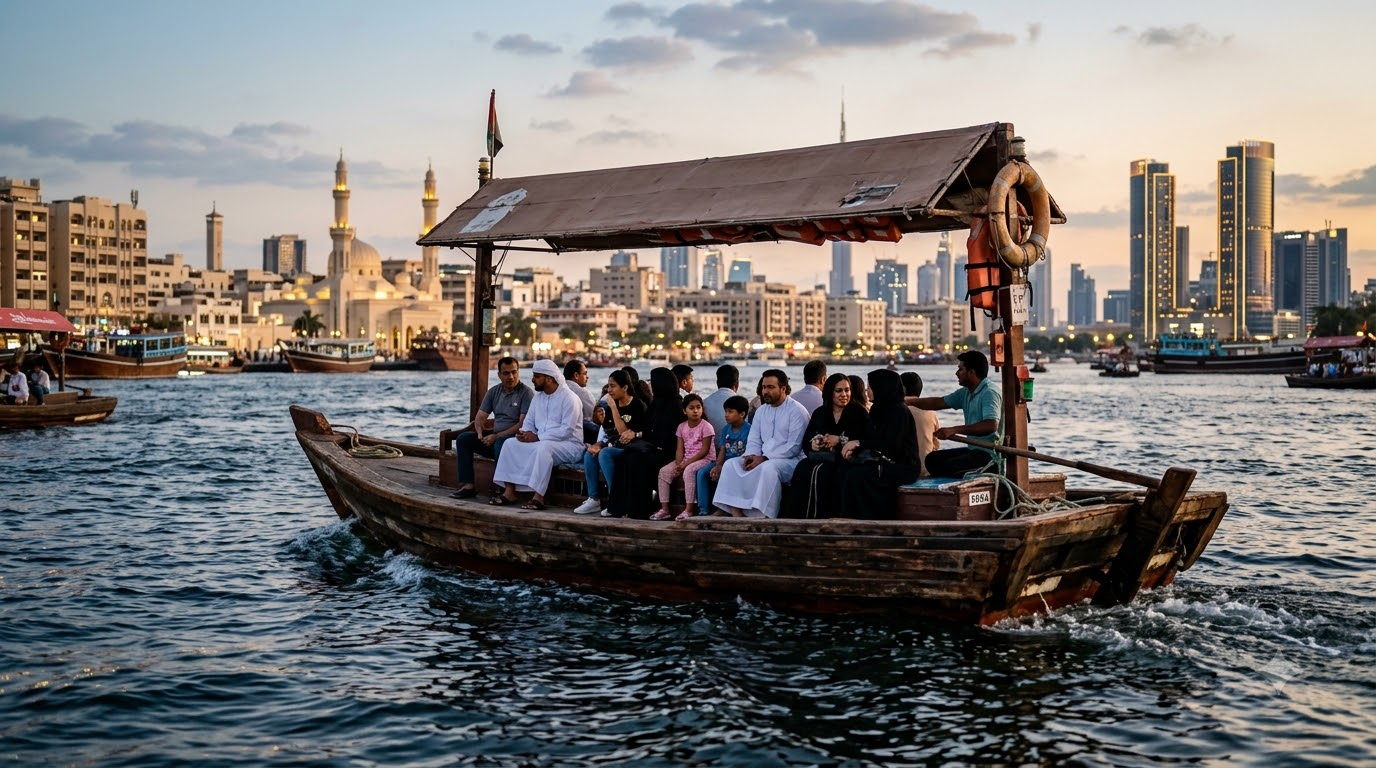
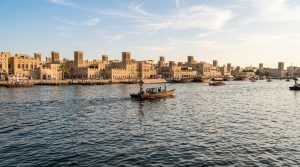
Traditional abra crossing on Dubai Creek costs 1 AED (USD 0.27) paid in cash to the boatman, no ticket needed
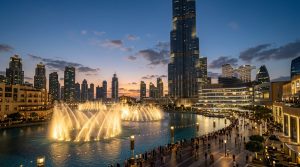
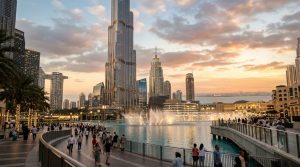
Dubai Fountain shows are free, running every 30 minutes from 6:00pm to 11:00pm daily plus 1:00pm and 1:30pm on weekends
A shawarma or falafel wrap runs 8-18 AED (USD 2-5), and a full curry thali in Karama or Al Fahidi costs 20-30 AED
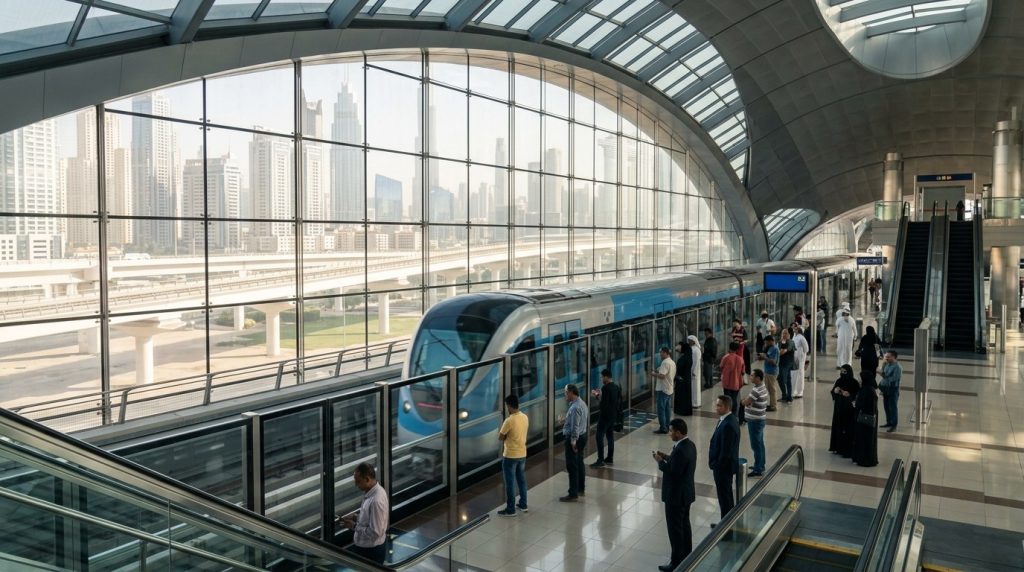
Metro fares cap at 7.50 AED for three or more zones, with a daily ceiling of 14 AED on a Silver Nol card
A true budget day runs 150-260 AED (USD 40-70) per person including hostel bed, food, transport and free sights
Doing Dubai on a budget is not only possible, it is easy once you stop treating the city as a luxury-only destination. The most photographed abra crossing on Dubai Creek still costs 1 AED (about USD 0.27), the Dubai Fountain shows are free every 30 minutes from 6pm, and a full metro ride across town caps at 7.50 AED.
Dubai welcomed 18.7 million international overnight visitors in 2024, a record, and a large share of them never set foot in a paid attraction at all (Dubai Department of Economy and Tourism, 2025).
This guide breaks down the free and cheap side of the city: the beaches, souks, creek boats, and fountains that cost little or nothing, where to eat for under 25 AED, how the Nol metro card works, and honest daily cost bands so you can plan before you book.
Currency is pegged, so 1 USD is fixed at roughly 3.67 AED, which makes budgeting refreshingly predictable. For the full picture of the city, start with our Dubai travel guide.
We spent five days in Dubai on a deliberately tight budget in early 2026, and the abra across the creek became our favourite ride in the whole city. Crossing costs 1 AED each way and gives a better skyline view than several paid boat tours. In Al Karama, a filling meal can cost under 25 AED a head.
Is Dubai Expensive?
Dubai is only expensive if you copy its luxury ads. A realistic budget day runs 150-260 AED (about USD 40-70) per person with a hostel bed, cheap eats, the Metro and free sights, mid-range travel roughly doubles that at 520-1,040 AED, and luxury has no ceiling.
The cheap side of the city is real: the Dubai Creek abra costs 1 AED, the Dubai Fountain shows are free every 30 minutes from 6pm, and a metro ride across town caps at 7.50 AED. Accommodation is the biggest lever, with dorm beds in Bur Dubai and Deira from about 70-110 AED a night.
Can You Really Do Dubai on a Budget in 2026?
Yes, Dubai on a budget is realistic if you anchor your day around free attractions and cheap public transport rather than paid tickets and taxis. The city has a reputation for gold and supercars, but the same neighbourhoods that draw Instagram crowds, Old Dubai, the creek, JBR beach, are largely free to explore.
Your two biggest controllable costs are where you sleep and how you get around, and both have genuine budget options.
The pegged currency helps. Because 1 USD stays fixed near 3.67 AED, prices do not swing the way they do in Bangkok or Istanbul, so a budget you set in July still holds in December. The uncontrollable cost is the weather: from June to September, daytime highs sit around 41-45C, which pushes you into paid air-conditioned spaces during the day. Visiting between November and March keeps you outdoors and spending less.
Free Things to Do in Dubai
The best free things to do in Dubai cluster around water, heritage, and public spectacle. You could fill three full days without buying a single attraction ticket. Here are the ones we rated highest, each standing on its own:
The Dubai Fountain: free shows every 30 minutes, 6:00pm to 11:00pm daily, plus 1:00pm and 1:30pm Friday and Saturday, viewed from the public waterfront promenade outside Dubai Mall.
JBR Beach and The Beach promenade: free public sand, open 24 hours, with showers and shaded seating along Jumeirah Beach Residence.
Kite Beach: free, popular for a running track, skate ramps and calm morning swims, roughly 15 minutes by taxi from downtown.
Al Fahidi Historical District (Bastakiya): free to wander the wind-tower lanes, courtyards and small galleries in the oldest surviving quarter.
The Dubai Mall aquarium wall: the giant tank viewing panel inside the mall is free to look at from the walkway, no ticket needed unless you enter the aquarium.
Dubai Miracle Garden window-shopping aside, the free option is the Marina walk: a 7km waterfront loop past yachts and towers, best at sunset.
La Mer and its street art: free beachfront district with murals, open promenade and public shore.
Walking the creek and the Marina costs nothing beyond the metro fare to get there.
The 1 AED Abra: Dubai’s Cheapest Ride
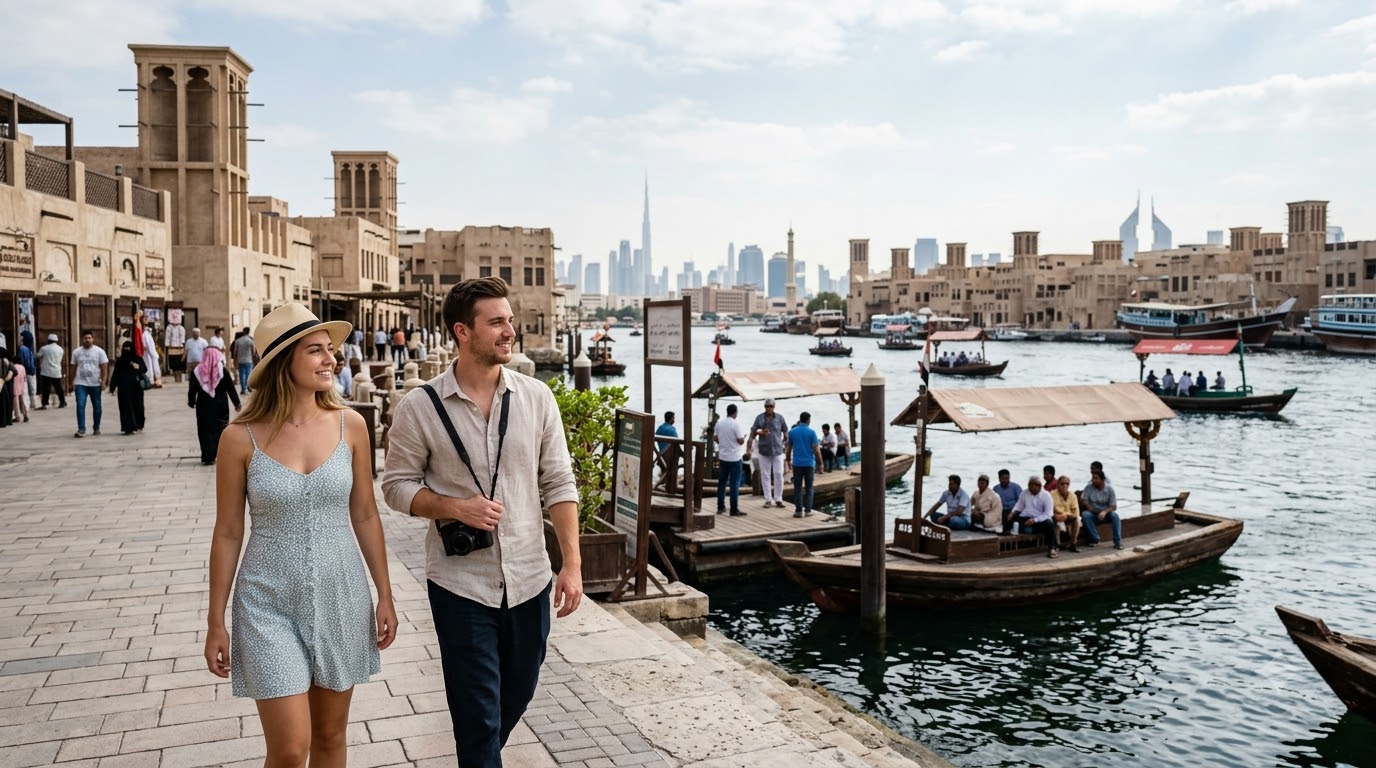
The traditional abra crossing on Dubai Creek is the single best-value experience in the city at 1 AED (USD 0.27) per person, paid in cash directly to the boatman.
These wooden boats have shuttled workers and shoppers between Bur Dubai and Deira for generations, and they still run all day from two main stations: Bur Dubai Abra Station near the textile souk, and Deira Old Souk Abra Station on the far bank.
There is no ticket machine and no schedule, the boat leaves when it fills, usually within a few minutes.
A few practical notes:
Carry coins or a 5 AED note, the boatman collects cash on board and change for large notes is slow.
The 1 AED fare is the marine-transport abra, not the tourist charter abras, which quote 120-150 AED for a private hour.
Sit on the side facing the water taxis for the cleaner skyline shot across the creek.
Cross at dusk for the best light, the crossing takes about five minutes each way.
From the Deira side you step straight into the Gold Souk and Spice Souk, both free to walk. Haggling is expected but you are under no obligation to buy anything.
Souks, Markets and Cheap Shopping
Dubai’s souks cost nothing to enter and are among the most atmospheric free things to do in the city. The Gold Souk in Deira displays tonnes of jewellery behind glass, and even if you never buy, the covered lanes are a spectacle. Next door, the Spice Souk sells saffron, dried lemons and frankincense by weight, with small bags starting around 10-15 AED if you want a cheap edible souvenir.
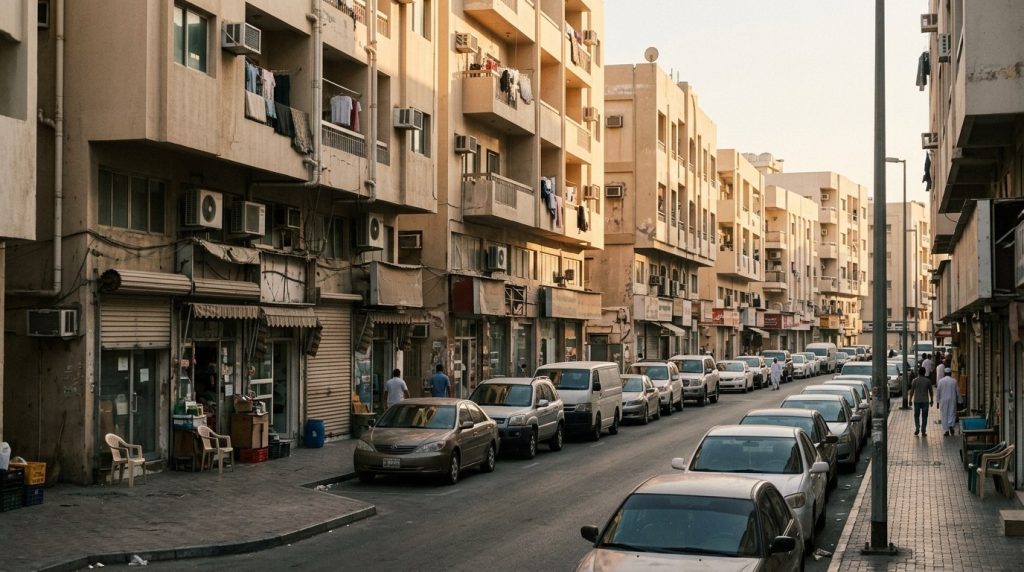
Across the creek, the Textile Souk in Bur Dubai runs through restored wind-tower buildings toward Al Fahidi. For everyday goods at local prices, skip the glossy malls and head to the streets of Al Karama, where shops sell clothing, luggage and gifts well below mall rates. We picked up a week’s worth of snacks and bottled water there for a fraction of hotel-shop prices.
Find your Dubai hotel on the map
Live prices from Booking & Airbnb — tap a pin to compare stays around Downtown and Marina and beyond.
Eating cheap in Dubai means following the workers, not the tourists, and the best value sits in Al Karama, Deira, and Al Fahidi rather than the marina or downtown. A filling meal under 25 AED (USD 7) is easy in these districts. Here is what things actually cost in 2026:
Dish / Item
Where
Typical Price (AED)
Approx (USD)
Shawarma wrap
Deira, Karama corner shops
8-15
2-4
Falafel sandwich
Al Fahidi, Satwa
6-12
2-3
South Indian thali (veg)
Al Karama restaurants
20-30
5-8
Chicken biryani plate
Deira, Karama
18-28
5-8
Karak chai (tea)
Any cafeteria
1-3
0.30-0.80
Fresh juice
Juice stalls citywide
8-15
2-4
Manousheh (flatbread)
Lebanese bakeries
7-14
2-4
Supermarket water (1.5L)
Carrefour, Lulu
1-2
0.30-0.55
Prices observed August 2026 across Deira, Al Karama and Al Fahidi. Restaurant meals exclude the optional 10% service charge some sit-down places add.
Two rules kept our food spend low. First, the cafeterias (small counter-service spots labelled “cafeteria”) serve the cheapest karak and shawarma in the city. Second, we bought water and fruit from Lulu and Carrefour supermarkets instead of hotel minibars, which alone saved us maybe 40 AED a day between two people.
The cheapest way to move around Dubai is the Metro paid with a Nol card, with single fares from 3 AED and a daily cap of 14 AED.
The Nol card is a rechargeable smart card you tap on entry and exit; the standard traveller card is the Silver Nol, which costs 25 AED to buy (including 19 AED of usable credit). Fares are zone-based, and the Metro’s two driverless lines, Red and Green, cover most tourist stops including Burj Khalifa, the Marina, and the airport.
Journey Type
Silver Nol Fare (AED)
Approx (USD)
Within 1 zone
3.00
0.80
Across 2 zones
5.00
1.35
3+ zones
7.50
2.05
Traditional abra (creek)
1.00
0.27
Daily fare cap (Silver Nol)
14.00
3.80
Silver Nol card fares, 2026 (Roads and Transport Authority, Dubai, 2026). Cap means once you hit 14 AED in a day, further rides are free until midnight.
A few money-saving transport facts worth quoting on their own:
The Silver Nol card also pays for buses, trams, water buses and the traditional abra, so one card covers almost everything except taxis.
Metro trains run roughly 5:00am to midnight, later on weekends, with the last train around 1:00am on Friday and Saturday nights.
Avoid taxis for long hops: a downtown-to-Marina taxi runs 45-70 AED versus about 7.50 AED on the Metro.
The Gold Class metro cabin costs double, so stick to standard or the free women-and-children carriage.
We relied on the Metro and abra for the entire trip and only took two taxis all week, both short late-night hops after the trains stopped. If you are pairing transport with sightseeing, our list of the best things to do in Dubai flags which stops sit right on a Metro station.
Cheap and Free Attractions Beyond the Basics
Beyond beaches and souks, several signature Dubai sights are either free or cost a fraction of the headline attractions. You do not need the 179 AED Burj Khalifa “At the Top” ticket to get a skyline view. Consider these lower-cost alternatives, each a standalone tip:
Dubai Frame: 50 AED (USD 13.60) for adults, far cheaper than Burj Khalifa, with panoramic old-and-new city views from 150m.
The View at The Palm: around 100 AED, cheaper than the Burj observation deck, overlooking Palm Jumeirah.
Global Village: seasonal cultural park, 25 AED weekday and 30 AED any-day entry, open through 10 May in its 2025-26 season, free for children under three and seniors over 65.
Al Shindagha Museum: entry around 15 AED, telling the story of old Dubai along the creek.
Etihad Museum: about 25 AED, covering the founding of the UAE.
Coffee Museum in Al Fahidi: free or a token fee, a quiet stop in the historic quarter.
If you only pay for one paid viewpoint, we thought the Dubai Frame gave the best value for money by a wide margin. For where to base yourself cheaply, our guide on where to stay in Dubai breaks down budget neighbourhoods.
Daily Cost Bands: What Dubai Really Costs
A realistic budget day in Dubai runs 150-260 AED (USD 40-70) per person once you combine a hostel bed, cheap eats, public transport and free attractions. Mid-range roughly doubles that, and luxury has no ceiling. The table below sets honest expectations before you book.
Category
Budget (AED/day)
Mid-Range (AED/day)
Approx Budget (USD)
Accommodation (per person)
80-130
250-500
22-35
Food (3 meals)
40-70
120-220
11-19
Transport (Nol)
10-20
30-60
3-5
Attractions
0-40
80-180
0-11
Water, snacks, extras
15-25
40-80
4-7
Daily Total (per person)
150-260 AED
520-1,040 AED
USD 40-70
Budget tier assumes a hostel dorm, street food, Metro and mostly free sights. Accommodation is per-person based on a shared or dorm room, 2026 rates.
The single biggest lever is accommodation. Hostel dorm beds in Bur Dubai and Deira start around 70-110 AED per night, while a private budget hotel room runs 180-300 AED. Old Dubai (Deira and Bur Dubai) is consistently cheaper than downtown or the Marina and sits right on the free creek attractions.
To see how a tight budget plays out across a full trip, our 4-day Dubai itinerary maps free and cheap stops day by day.
Money-Saving Tips We Actually Used
The fastest way to overspend in Dubai is convenience, taxis, hotel food, and mall attractions add up quickly. These habits kept our costs down across five days:
Refill a water bottle and buy 1.5L bottles from supermarkets at 1-2 AED instead of 8-10 AED at kiosks.
Eat your main meal in Al Karama or Deira, not downtown, and you can halve your food bill.
Visit malls for the free air conditioning during peak heat, then head outdoors after 5:00pm when it cools.
Use the abra and Metro instead of taxis, and load the daily 14 AED cap logic into your route planning.
Time attractions for free or cheap windows: the Fountain at night, museums in the morning, beaches at sunrise.
Skip the paid desert tour if money is tight and spend a free evening at the creek instead, though a shared desert safari (150-200 AED) is the one splurge we thought earned its price.
Frequently Asked Questions
How much money do I need per day in Dubai on a budget?
A budget traveller needs roughly 150-260 AED (USD 40-70) per day in Dubai, covering a hostel dorm bed, street food, Metro and abra transport, and free or low-cost attractions. Staying in Old Dubai, eating in Al Karama or Deira, and using the Nol card instead of taxis keeps you at the lower end of that range.
Is the Dubai Creek abra really only 1 AED?
Yes. The traditional marine-transport abra across Dubai Creek costs 1 AED (USD 0.27) per person, paid in cash to the boatman, with no ticket required. This is different from the private charter abras aimed at tourists, which quote around 120-150 AED for a one-hour hire. The 1 AED crossing runs all day between Bur Dubai and Deira.
What can you do in Dubai for free?
Plenty. The Dubai Fountain shows, JBR and Kite Beach, the Al Fahidi historic district, the Gold and Spice Souks, the Marina and creek walks, and the Dubai Mall aquarium viewing wall are all free. You can fill several days on free attractions alone, paying only for food and transport.
Is public transport in Dubai cheap for tourists?
Very. With a Silver Nol card, Metro fares run 3 AED for one zone up to 7.50 AED for three or more zones, and daily spending is capped at 14 AED. The same card covers buses, trams, water buses and the 1 AED abra, so most visitors never need a taxi except late at night.
When is the cheapest time to visit Dubai?
The cheapest and most comfortable window is the shoulder months, but the summer (June to September) brings the lowest hotel rates because highs reach 41-45C. If you can tolerate the heat and plan indoor daytime activities, summer stays and flights are noticeably cheaper, though November to March is far better for the free outdoor attractions.
Dubai rewards travellers who plan around its free side. Anchor your days on the creek, the beaches, the souks and the fountains, eat where the residents eat, and let the Nol card and the 1 AED abra do the moving. Do that, and a city built on excess turns out to be one of the easier places to enjoy on a modest budget.