Where to Stay in Dubai 2026: Best Areas by Budget
Disclosure: Some links in this guide are affiliate links. If you book or buy through them, we may earn a small commission at no extra cost to you — it helps keep our guides free.
- Downtown Dubai is the best all-round base for first-timers: mid-range rooms typically run AED 350-700 ($95-190) per night, a short walk from Burj Khalifa and Dubai Mall.
- Dubai Marina and JBR suit beach and nightlife travelers; expect AED 400-900 ($110-245) mid-range, with the JBR beachfront (The Walk) at the higher end.
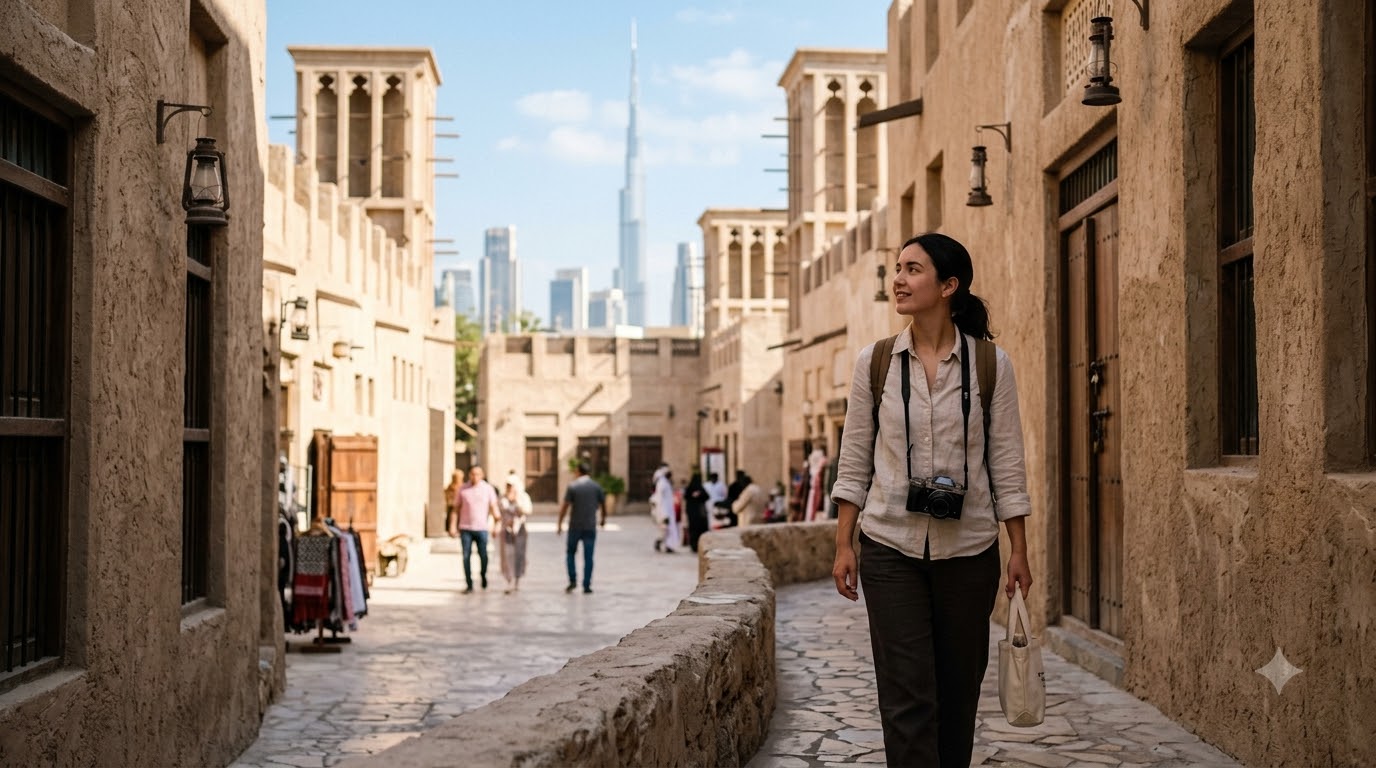
- Deira and Bur Dubai (Old Dubai) are the value picks: clean 3-star rooms often go for AED 150-350 ($40-95) per night, close to the souks and abra crossings.
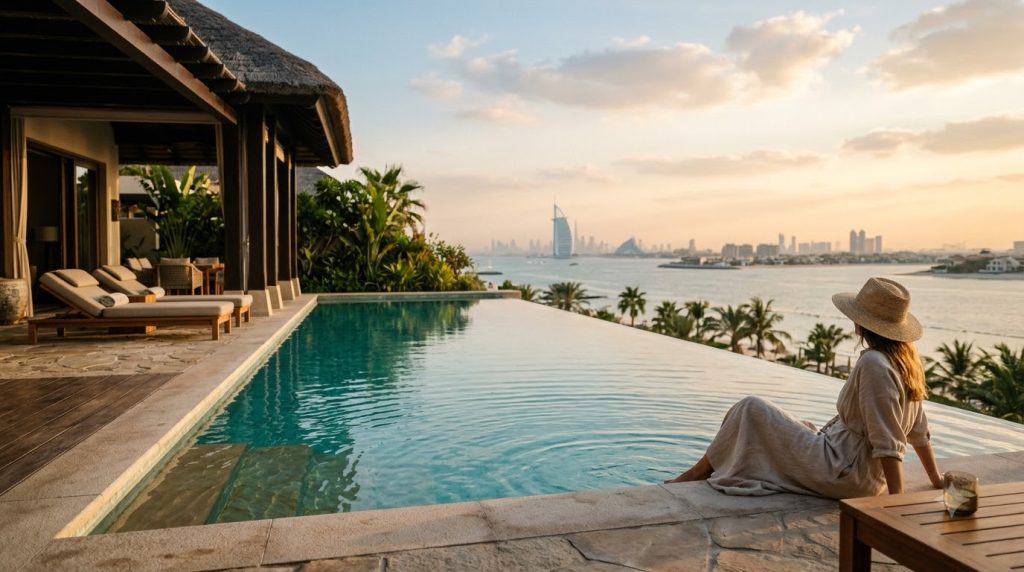
- Palm Jumeirah is a resort splurge: beach-club hotels commonly start around AED 900-1,500+ ($245-410+) and reach far higher at Atlantis.
- The Dubai Metro Red Line links Marina, Downtown, and the airport in one ride, so staying near a Red Line station cuts taxi costs sharply.
Pick your area
The short answer on where to stay in Dubai: pick Downtown for sightseeing and first trips, Dubai Marina or JBR for beach and nightlife, Deira or Bur Dubai for budget and old-city character, and Palm Jumeirah for a resort splurge.
Dubai welcomed a record 19.59 million international overnight visitors in 2025, with hotel occupancy averaging 80.7% across roughly 154,000 rooms in 827 properties (Dubai Department of Economy and Tourism, 2026). That density means your neighborhood choice matters more than the specific hotel.
Quick answer: Downtown Dubai is the best all-round base for first-timers, with Dubai Marina and JBR for beach and nightlife, Deira and Bur Dubai for budget stays, and Palm Jumeirah for a resort splurge.
This guide breaks Dubai into six areas by budget, traveler type, and transport, with typical 2026 nightly price ranges and a side-by-side comparison table. It pairs well with our Dubai travel guide for the bigger picture and our list of the best things to do in Dubai once you know where you are based.
Downtown and Dubai Marina make the best comparison. From a Downtown hotel, the Dubai Mall metro station is under a ten-minute walk; staying near the Marina’s beachfront saves time at sunset. The takeaway: base where your priority activity is, because cross-city taxis at rush hour can eat an hour a day.
Find your Dubai hotel on the map
Live prices from Booking & Airbnb — tap a pin to compare stays around Downtown and Marina and beyond.
Travel Advisory and Booking Flexibility for Dubai in 2026
US-Iran hostilities began on February 28, 2026. The US State Department lists the United Arab Emirates at Level 3: Reconsider Travel, citing the threat of Iranian drone and missile attacks and flight disruptions. The listing was updated on August 29, 2026.
Read the current advisory on the State Department website before you book, since the level can change. This section covers how the situation should shape your hotel choice, not whether to travel.
Booking choices that reduce risk
- Refundable or flexible rates: a small premium keeps your options open if flights are disrupted. Check the cancellation deadline, not only the headline price.
- Travel insurance: read whether the policy covers trips to destinations under a Level 3 advisory. Many policies exclude or limit coverage, so confirm the terms in writing.
- Embassy alerts: US citizens can enroll in the State Department’s Smart Traveler Enrollment Program to receive security messages for the area.
- Airport access: a base with a straightforward route to the airport is easier to leave in a hurry than a remote resort island.
If flight disruptions are a concern, areas on the Metro Red Line, which links the airport, Deira, Downtown, and the Marina, give you a simpler departure route than a base that depends on a single transfer.
Where Should First-Time Visitors Stay in Dubai?
First-time visitors should stay in Downtown Dubai, the most central and walkable base for the city’s headline sights. You are within reach of Burj Khalifa, The Dubai Fountain, Dubai Mall, and the Dubai Opera district, and the Burj Khalifa/Dubai Mall metro station puts the rest of the city one line away.
Downtown trades beach access for convenience. It skews modern, polished, and busy, with a lot of high-rise hotels and serviced apartments. Staying here means barely needing a taxi, which is rare in Dubai.
Who Downtown suits best:
- First-timers who want the icons within walking distance and do not mind skipping the beach.
- Short-stay travelers (2-3 nights) maximizing sightseeing per hour.
- Photographers wanting Burj Khalifa and fountain views from the room or a rooftop.
- Families who value being near Dubai Mall’s aquarium, ice rink, and food courts.
Typical 2026 nightly ranges in Downtown: budget/3-star from about AED 250 ($68), mid-range AED 350-700 ($95-190), and view-facing 5-star rooms from AED 900 ($245) upward during peak winter months.
Dubai Marina and JBR: Best for Beach and Nightlife
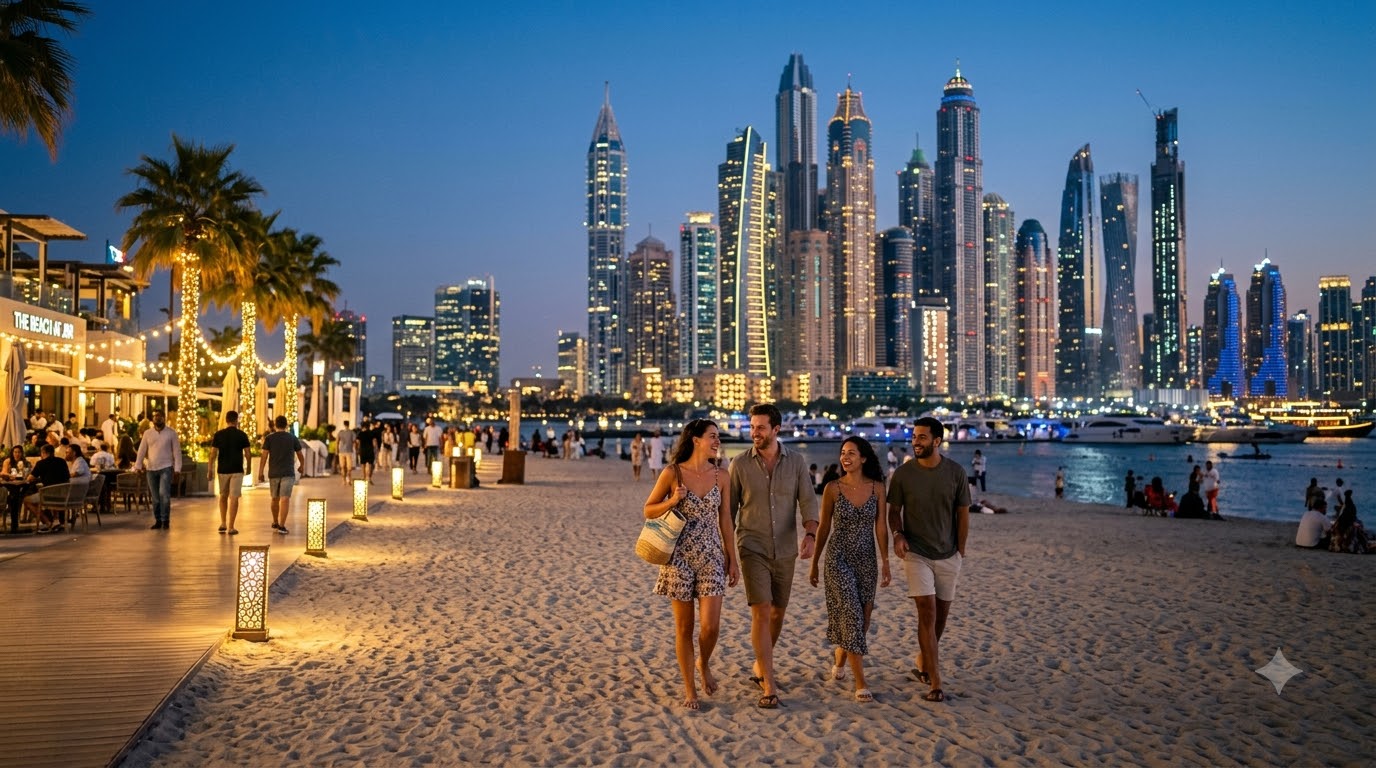
Dubai Marina and neighboring Jumeirah Beach Residence (JBR) are the best areas for travelers who want beach mornings and lively evenings. The Marina is a canal district of towers, waterfront restaurants, and yacht berths; JBR is the beachfront strip beside it, built around a pedestrian promenade called The Walk and the open-air Beach mall at The Beach.
The two blend together on foot but feel different. Marina hotels sit on the water with a Metro and tram connection; JBR hotels put you directly on the sand. The 7-kilometer Marina-to-JBR loop is one of the better free things to do in the city, especially in the evening.
What each side does best:
- Dubai Marina: waterfront dining, dhow and yacht cruises, and a Red Line metro station (Sobha Realty/DMCC) for cross-city trips.
- JBR (The Walk): direct beach access, the Ain Dubai observation wheel views, beach clubs, and a relaxed promenade scene.
- Both: the Dubai Tram links them and connects to the Metro and the Palm Monorail interchange.
Typical 2026 nightly ranges: mid-range AED 400-700 ($110-190) in the Marina, rising to AED 600-900 ($165-245) for JBR beachfront, with 5-star beach hotels well above that in winter. For a full day-by-day plan around this base, see our 4-day Dubai itinerary.
Check hotels in Dubai Marina and JBR →
Deira and Bur Dubai: Best Budget and Old-City Base
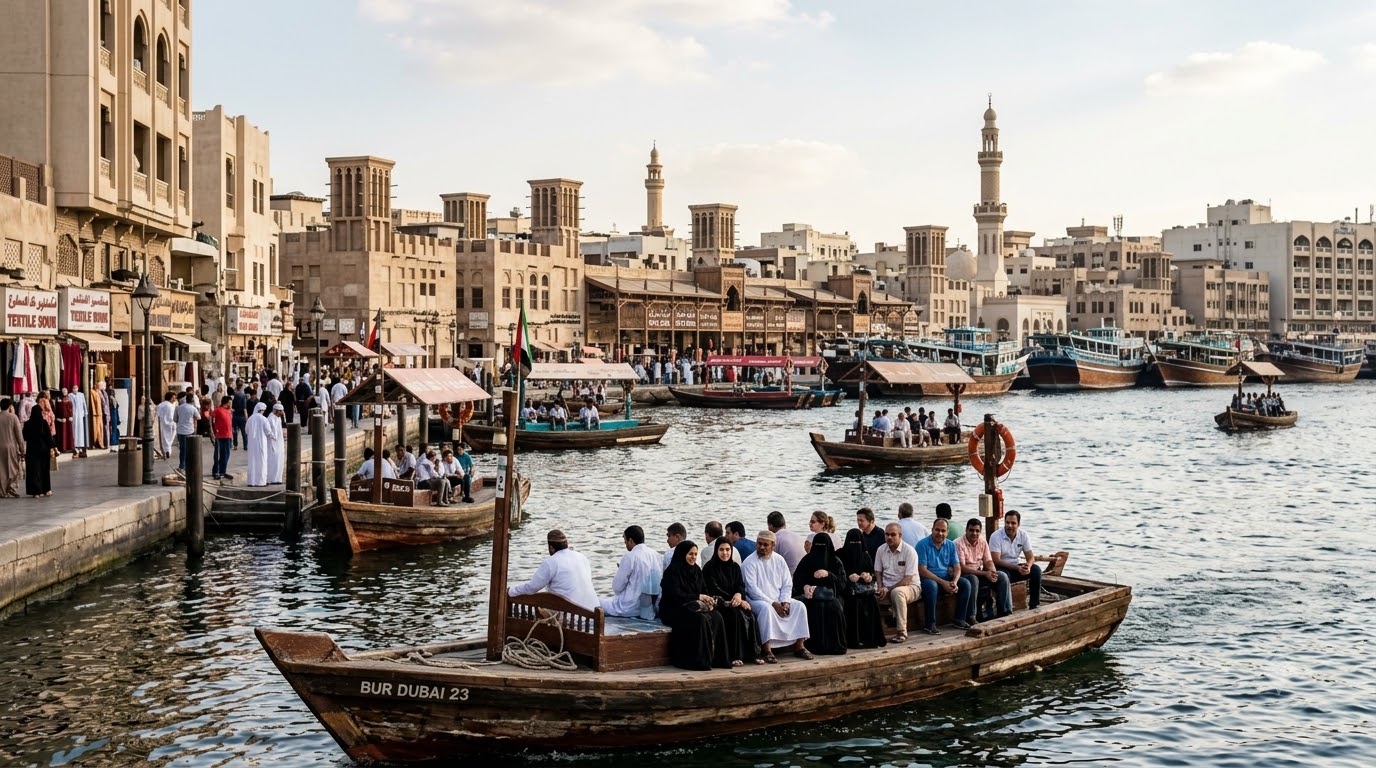
Deira and Bur Dubai, together the heart of Old Dubai, are the best areas for budget travelers and anyone wanting the city’s trading-port character. These older districts straddle Dubai Creek, home to the Gold Souk, the Spice Souk, and the wooden abra water taxis that still cross the creek for AED 1 ($0.27).
This is where Dubai feels least like a brochure. Streets are dense, food is cheap and excellent, and 3-star hotels are a fraction of Marina prices. The trade-off is distance: you are 20-35 minutes by metro or taxi from Downtown and the newer beaches.
Why Old Dubai works for value travelers:
- Cheap, clean 3-star rooms commonly at AED 150-350 ($40-95) per night, well below the citywide average.
- The abra creek crossing costs AED 1 ($0.27) and is one of Dubai’s most memorable cheap experiences.
- Authentic, low-cost dining in Meena Bazaar and Al Rigga, from South Indian thalis to Emirati and Iranian cafes.
- Two metro lines (Red and Green) meet at Union and BurJuman stations, so connections are strong despite the distance.
Old Dubai rewards travelers who value experience over polish. It is our pick when the goal is stretching a budget without staying somewhere soulless.
Check hotels in Deira and Bur Dubai →
Palm Jumeirah: Best for a Resort Splurge
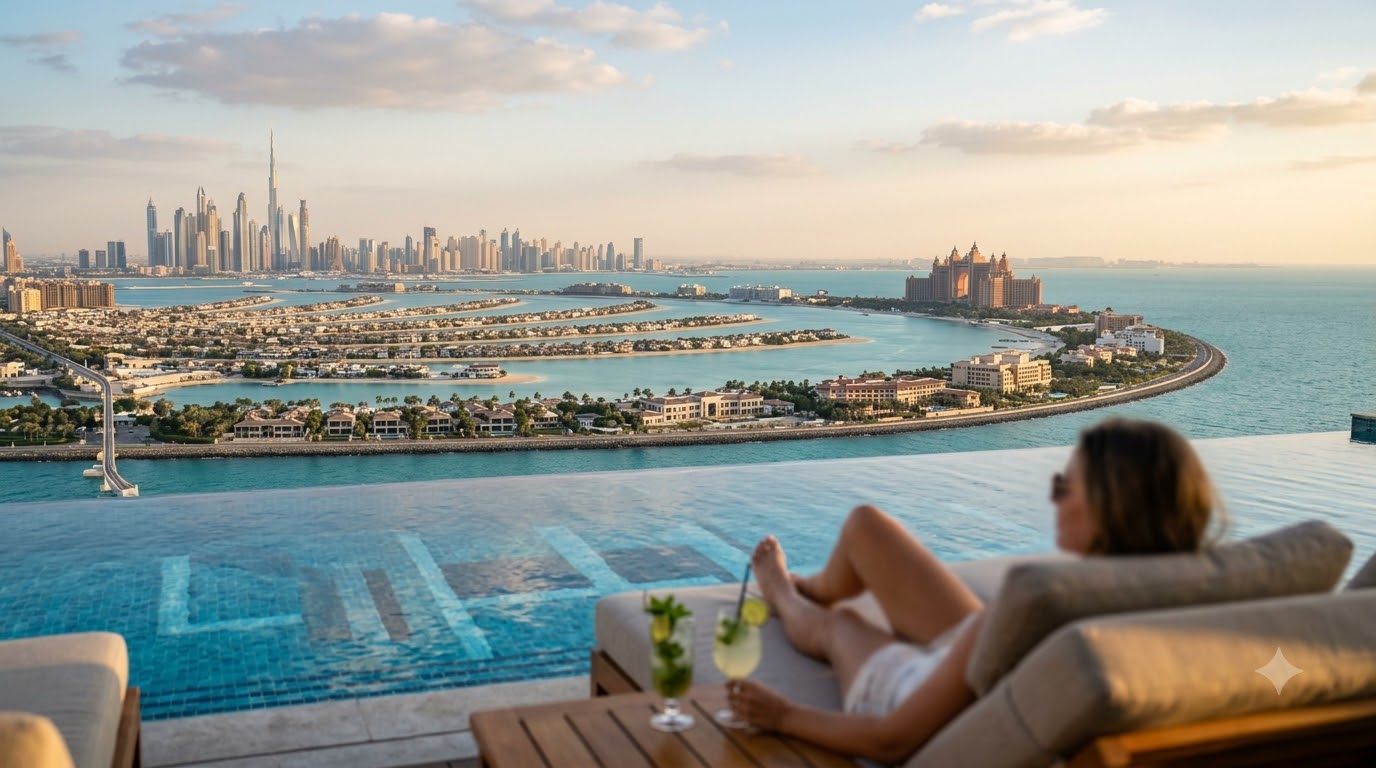
Palm Jumeirah is the best area for a resort-focused splurge, especially couples and honeymooners who want a private-beach base and do not plan to leave the property much. The palm-shaped island holds a run of beach-club hotels along its outer crescent, anchored by Atlantis The Palm and its waterpark.
The catch is access. The Palm connects to the mainland by the Palm Monorail and by road, but it is not a walk-everywhere neighborhood; you will taxi or ride the monorail to reach Marina dining and Downtown sights. Treat a Palm night as a self-contained resort day rather than a sightseeing base.
Who the Palm suits:
- Honeymooners and couples wanting a private beach and pool-focused stay.
- Resort travelers happy to spend most of the trip on-property.
- Families targeting Atlantis Aquaventure and the Lost Chambers Aquarium.
Typical 2026 nightly ranges: beach hotels commonly start around AED 900-1,500 ($245-410) and climb steeply at flagship resorts, particularly across the December-to-February peak.
Check hotels in Palm Jumeirah →
Business Bay: Central Value Next to Downtown
Business Bay sits beside Downtown Dubai on the Dubai Canal and is reported to be one Metro stop from the Burj Khalifa/Dubai Mall station. That makes it the usual answer when Downtown rates look too high but you still want a central base.
The district is a grid of office towers, serviced apartments and mid-range hotels. It has restaurants and cafes, but fewer headline landmarks than Downtown, and weekday traffic around the towers can be heavy.
Who Business Bay suits:
- Business travelers and conference visitors who want a short ride to Downtown venues.
- Couples and solo travelers who want a modern room without paying for a Burj Khalifa view.
- Longer stays, where an apartment with a kitchen can lower the daily cost.
Check the walking route to the Metro before you book. Some towers sit well back from the station, and in summer heat a ten-minute walk feels much longer. Look for a room on the canal side if you want a view of the evening lights.
Check hotels in Business Bay →
Al Barsha and Barsha Heights: Budget Base Near Mall of the Emirates
Al Barsha is the practical pick for travelers who want a lower nightly rate and do not mind being away from the beach. Guides often point to the Al Barsha 1 and Barsha Heights sub-areas rather than the whole district, because those have the best Metro access and the most hotels.
The area is anchored by Mall of the Emirates, home to Ski Dubai, and has supermarkets, cafes and low-cost restaurants nearby. It is a residential district, so evenings are quiet compared with the Marina or Deira.
The trade-offs are simple. You will not walk to a beach or to Downtown, so budget for Metro rides or short taxi trips. In return, rooms are commonly cheaper than in the tourist-heavy zones, and the area works well for families who need space and do not plan long days at the hotel.
Compare the Metro walk, not just the address. A hotel marked as “Al Barsha” can be a long way from the nearest Red Line station.
Check hotels in Al Barsha and Barsha Heights →
Jumeirah Lakes Towers: The Lower-Cost Neighbor of the Marina
Jumeirah Lakes Towers, usually shortened to JLT, sits right next to Dubai Marina and is a common answer when Marina prices look high. It is a district of residential towers around artificial lakes, with serviced apartments, hotel apartments and a smaller number of hotels at street level.
Metro access
Two Red Line stations serve the area. The station once called Jumeirah Lakes Towers is now named DMCC, and the former Dubai Marina station is now Sobha Realty. Many hotel sites still use the old names, so match the listing to the current station name when you check the walking route.
The DMCC station is generally described as the main stop for most clusters, while Sobha Realty is a little closer to the northern towers. Trams also connect to both stations and serve the Marina, JBR and the Palm monorail interchange.
Who JLT suits
- Travelers who want Marina dining and the JBR beach within a short tram or taxi hop, without Marina-front prices.
- Families and longer-stay guests who want an apartment with a kitchen.
- Visitors who plan to use the Metro daily and want a station close to the front door.
What to check before booking
Towers in JLT are grouped in numbered clusters, and a hotel at one end can be a long, hot walk from the station. Check the exact distance, and look for a covered route. The district is residential, so evenings are quieter than the Marina promenade, and you will take a short ride for nightlife.
Check hotels in Jumeirah Lakes Towers →
Jumeirah Beach Road and Bluewaters: Relaxed Beach Stays
Between Downtown and the Palm, the Jumeirah coast is lined with low-rise villas, beach hotels and public beaches. It is calmer than JBR and often recommended for couples and families who want sand without the crowds of The Walk.
Bluewaters Island, across the water from JBR, is a newer option that families often choose for its beach access and walkable promenade. Like the Palm, it is a place where you will rely on taxis or ride-hailing apps for most trips off the island, since the Metro does not serve the beachfront well.
These coastal areas make the most sense when the beach is the point of the trip. If you plan to see the Burj Khalifa, the souks and the Marina in a short stay, the transfer time between the city and the coast adds up quickly.
Sources generally put the gap between the city districts and the beach districts at roughly 20 to 35 minutes by road.
Check hotels in Jumeirah Beach Road and Bluewaters →
Beach Access by Area: Public Sand or Hotel Beach?
Beach access is easy to misjudge when you compare areas, because it varies by location and by hotel. Most of Dubai’s main beaches are public and free to enter, while hotel beaches are private.
Free public beaches
JBR Open Beach, Kite Beach and Sunset Beach are described by several guides as free public beaches. You pay only for extras such as sunbeds, water sports and parking. JBR’s beach is reported to be open around the clock, although swimming is not allowed after sunset. This is a strong reason to choose JBR or the Jumeirah coast when you want sand without a resort bill.
Paid beach parks
Al Mamzar Beach Park, on the Deira side, charges a small entry fee that is reported at AED 5 per person, and includes pools and picnic areas. A separate open beach nearby is free, so check which one you are heading to. Fees and days for women and families can change, so confirm on the park’s own page.
Hotel beaches and day passes
Beach clubs and resort beaches usually require a stay or a paid day pass. Guides put day passes anywhere from about AED 150 to over AED 500 depending on the property, and that is a rough range, not a fixed price. Sources say there are no free public beaches on the Palm, so a Palm hotel is the practical way to get sand there.
How this affects your choice
- Downtown, Business Bay, Deira and Al Barsha: no beach on foot, so plan a taxi or Metro-and-tram trip.
- Marina and JBR: free public beach nearby.
- Palm Jumeirah: private hotel beach, or a paid day pass.
Dubai Neighborhood Comparison: Which Area Fits You?
The best area depends on your top priority: sightseeing, beach, budget, or resort seclusion. The table below compares Dubai’s six main lodging zones on price, vibe, and transport so you can match an area to your trip in one glance.
| Area | Best for | Typical mid-range/night | Vibe | Nearest transport |
|---|---|---|---|---|
| Downtown Dubai | First-timers, sightseeing | AED 350-700 ($95-190) | Modern, walkable, busy | Burj Khalifa/Dubai Mall Metro (Red) |
| Dubai Marina | Waterfront dining, nightlife | AED 400-700 ($110-190) | Glossy canal high-rises | Sobha Realty/DMCC Metro + Tram |
| JBR (The Walk) | Beach, promenade life | AED 600-900 ($165-245) | Lively beachfront strip | Dubai Tram to Metro interchange |
| Deira | Budget, souks, old city | AED 150-350 ($40-95) | Dense, traditional, cheap | Union Metro (Red + Green) |
| Bur Dubai | Budget, culture, creek | AED 150-350 ($40-95) | Historic, multicultural | Al Fahidi/BurJuman Metro |
| Palm Jumeirah | Resort splurge, couples | AED 900-1,500+ ($245-410+) | Secluded beach resorts | Palm Monorail |
Currency note: figures use the pegged rate of about AED 3.67 to $1 and reflect typical booking-site ranges for standard doubles, not peak-week rates.
How Much Should You Budget for a Dubai Hotel in 2026?
Budget by traveler tier rather than by a single average, because Dubai’s range is wide. The citywide mix spans hostels under AED 100 ($27) a bed to suites well over AED 2,000 ($545) a night, so an average figure hides more than it reveals.
Rough nightly planning figures for a standard double in 2026:
- Backpacker/budget: AED 100-250 ($27-68), mostly in Deira, Bur Dubai, and Al Barsha.
- Mid-range comfort: AED 350-700 ($95-190), widely available in Downtown and the Marina.
- Upper-mid to 4-star beach: AED 700-1,100 ($190-300), common in JBR and along Jumeirah.
- Luxury/5-star resort: AED 1,200+ ($325+), concentrated on the Palm and at Downtown view hotels.
Two money-saving habits help most. First, hotel rates swing hard by season: the cool November-to-March window is peak and pricey, while June-to-August summer heat can cut rates 30-40% if you can handle 40C-plus days.
Second, most Dubai hotels add a Tourism Dirham fee of AED 7-20 ($2-5.50) per room per night plus service charges, so confirm the all-in total at booking. For help timing the trip, read our guide to the best time to visit Dubai.
Airport Transfers by Area: Metro, Taxi and Tolls
Dubai International Airport (DXB) has three terminals. The Red Line Metro serves Terminals 1 and 3, but there is no Metro station at Terminal 2, so check which terminal your airline uses before you plan on the train.
The Metro runs from about 5 AM to midnight on weekdays, with later service on Fridays. Silver nol card fares from the airport run roughly AED 3 to 7.50 (USD 0.80 to 2.05), and the longest ride from DXB is under AED 10 (USD 2.70). Free shuttle buses link the three terminals if you land at the wrong one.
Taxis are metered. The airport pickup starts at AED 20 (USD 5.45) for a standard car, and Salik road tolls are added to the meter: AED 6 (USD 1.63) at peak hours and AED 4 (USD 1.09) off-peak.
Rush hour on Sheikh Zayed Road is roughly 7 to 10 AM and 5 to 8 PM, and waiting time adds to the fare.
What this means for your base:
- Deira and Bur Dubai are closest to the airport, and a taxi there is short outside rush hour.
- Downtown and Business Bay are one Red Line ride, or a taxi that most sources estimate at AED 50 to 90 (USD 14 to 25).
- Marina, JBR and the Palm are the farthest. Taxi estimates to the Marina run higher, around AED 75 to 130 (USD 20 to 35), and the journey can take 45 minutes or more in traffic.
Treat these taxi figures as rough, because sources disagree and the per-kilometer rate changes with fuel prices. Use the Roads and Transport Authority fare calculator for a current estimate.
Check hotels in Airport Transfers by Area →
Licensed Taxis and Airport Touts: Protecting Your Transfer
Your first ride in Dubai is where most transfer problems start. The Roads and Transport Authority (RTA) warns against unlicensed taxis, saying riders can face theft, fraud and other risks. Unlicensed rides are illegal, and press reports of the RTA warning cite fines that can reach AED 5,000 (USD 1,360).
How to spot an official taxi
Official RTA taxis are beige with a colored roof and a lit taxi sign. At Dubai International, follow the signs to the designated taxi area. Ignore people who approach you inside the terminal offering a ride, since flat “limo” quotes from such drivers are reported to be well above the metered fare.
Apps and fares
- Use a licensed taxi or an approved ride-hailing app so the trip and fare are recorded.
- Check that the meter is running when you start, and note the pickup fee against the RTA fare calculator mentioned earlier.
- Have your hotel’s name and area saved on your phone, because several districts share similar tower names.
Why it affects where you stay
Marina, JBR, the Palm and Bluewaters depend on taxis more than Downtown or Deira, which have a Metro station within reach. If you arrive late at night, ask your hotel about a pre-booked pickup. The Metro also has a women-and-children cabin, which men should not use.
Dubai is widely described as safe for visitors, including solo travelers, but common sense applies. Keep your passport copy and hotel details with you, and take a licensed ride after a late night out.
Check hotels in Licensed Taxis and Airport Touts →
Getting Around from Your Base: The Metro Factor
Where you stay should track the Dubai Metro Red Line, which links the airport, Deira, Downtown, and the Marina on a single north-south spine. A nol travel card works across metro, tram, and bus, and metro fares are zone-based and cheap compared with taxis, which is why a station within walking distance changes your daily costs.

Quick transport read by area:
- Downtown, Marina, Deira, Bur Dubai: all sit on or beside the Red or Green Line, so cross-city trips are easy and low-cost.
- JBR: served by the Dubai Tram, which connects to the Metro and the Palm Monorail interchange.
- Palm Jumeirah: reached by the Palm Monorail; expect to taxi for most off-island trips.
- Taxis and ride-hailing are plentiful citywide but add up in rush-hour traffic on Sheikh Zayed Road.
If you plan to sightsee daily, staying one short walk from a Red Line station is the single most useful decision after picking your area.
Metro and Tram Fares by Zone: What a Typical Day Costs
Dubai’s fare map is divided into zones, and a nol card pays for the Metro, tram, and bus. Fares from the Roads and Transport Authority fare page for a single journey, in AED with approximate USD at the pegged rate of about AED 3.67 to USD 1:
| Journey | Silver card | Gold card |
|---|---|---|
| Within 1 zone | AED 3 (about USD 0.80) | AED 6 (about USD 1.60) |
| 2 adjacent zones | AED 5 (about USD 1.35) | AED 10 (about USD 2.70) |
| 3 or more zones | AED 7.50 (about USD 2.05) | AED 15 (about USD 4.10) |
The Gold card adds a surcharge on Metro and tram trips on top of the listed fares. Silver is the standard choice for most visitors.
What this means for your area
- Downtown to Marina or JBR: usually a 3+ zone trip, so budget the top fare each way.
- Deira or Bur Dubai to Downtown: a cross-city journey that costs far less than a taxi but takes longer.
- Short hops within one area: cheap enough that a station within walking distance is worth paying for in your hotel rate.
Seven-day travel passes also exist for Silver and Gold cards, starting at AED 50 for one zone on Silver. Compare against your planned trips before you buy.
Check hotels in Metro and Tram Fares by Zone →
Hotel, Hotel Apartment or Holiday Home: Fees to Check
Dubai offers three main types of lodging. Hotels include daily housekeeping and a front desk. Hotel apartments are serviced units with a kitchen, and holiday homes are licensed private apartments or villas that you rent through an operator.
All three add a Tourism Dirham fee. The official UAE government guide lists AED 7 to 20 (USD 2 to 5.50) per room per night, depending on the hotel category, for a maximum of 30 consecutive nights.
Holiday-home sources list lower tiers, but they disagree on whether the fee is charged per room or per bedroom, so ask the operator before you book a multi-bedroom villa.
Some hotels add the fee on top of the advertised rate while others include it, so compare the final total at checkout, not the headline price. Service charges can also be added separately.
A few checks before you pay:
- Confirm the property holds a valid Dubai tourism license, which holiday-home operators must have.
- Read the cancellation deadline and whether the first night is non-refundable.
- Ask about security deposits for apartments, which are often held on a card at check-in.
- Check house rules on guests, noise and check-in times.
For stays of four nights or more with a group, an apartment with a kitchen and washing machine can be cheaper than two hotel rooms. For a short first trip, a hotel is simpler.
Dubai Shopping Festival and New Year: Dates That Move Prices
Two periods push demand and nightly rates up faster than the general November-to-March high season. Plan around them if your dates are flexible.
Dubai Shopping Festival
Trade press reports that the 32nd Dubai Shopping Festival is scheduled from December 4, 2026, to January 17, 2027, with sales, concerts and city events. Other blogs list slightly different ranges, so confirm the dates on the Visit Dubai website before booking.
Expect busier malls and Downtown during the festival, so compare rates for several dates before you commit.
New Year’s Eve
Local press reports that hotels with views of the Burj Khalifa fireworks are close to full well in advance, and that demand starts building earlier than it once did. Read the booking conditions carefully for December 31, since some hotels attach minimum stays or compulsory dinner packages to the date.
How to book around them
- Book a refundable rate early, and compare it with a prepaid rate before you commit.
- Look at areas one Metro stop away from the fireworks zone, such as Business Bay, when Downtown is sold out.
- Check Metro hours on New Year’s Eve, as service patterns and street closures change around the fireworks.
Given the current travel advisory, a flexible cancellation policy matters even more than the lowest price during these weeks.
Check hotels in Dubai Shopping Festival and New Year →
Local Rules That Affect Hotel Choice
Dubai is relaxed about tourist dress in resort areas, but modest clothing is expected at cultural sites, and swimwear belongs at the beach and pool. Mosque visits call for covered shoulders and legs, and women are usually asked to cover their hair.
Alcohol is served to adults in licensed venues, most of which are inside hotels. That fact matters when you choose an area: a hotel-based base such as the Marina, JBR, or the Palm puts licensed bars and restaurants on your doorstep, while parts of Deira and Bur Dubai have fewer options.
Practical points for guests
- Check each property’s policy on alcohol, unmarried couples, and guests, since hotel rules vary.
- Public drunkenness, loud behavior, and public displays of affection can bring legal trouble. Keep it low-key outside your hotel.
- During Ramadan, non-Muslims are not required to fast, but it is considerate to avoid eating, drinking, or smoking in public during fasting hours. Some daytime venues adjust their hours.
- Carry your passport or a photo of it, as hotels register guests at check-in.
These norms are broadly consistent across official Dubai tourism and government guidance, but rules change. Confirm anything critical with your hotel before arrival.
Which Dubai Area Fits Your Trip Type?
Use this shortlist if the area descriptions above leave you undecided.
- First trip, three nights or fewer: Downtown, or Business Bay if you want a lower rate.
- Couples and honeymoons: Palm Jumeirah or the Jumeirah coast for a resort stay, or the Marina for dining and evening walks.
- Families with young children: JBR, Bluewaters or a Jumeirah beach hotel for sand, or Al Barsha on a tighter budget.
- Solo travelers: Business Bay, Al Barsha or Bur Dubai, all on or near the Metro.
- Budget travelers: Deira and Bur Dubai for the lowest hotel rates and cheap meals.
- Business trips: Business Bay or Downtown, depending on where your meetings are.
The key trade-off is between city and coast. If you want to see Downtown, the souks and the Metro-linked sights, stay in the city. If you want a pool and a beach day each morning, accept longer rides to the sights.
A Three-Night Dubai Stay Plan by Base
This outline shows how the choice of base shapes each day. It is a pacing guide, not a fixed schedule, and opening hours should be checked before you go.
Staying in Downtown or Business Bay
- Night 1: arrive by Metro or taxi, then walk to the Dubai Mall area for the fountain show in the evening.
- Day 2: ride the Red Line to Deira or Bur Dubai for the souks and an abra crossing, then return for dinner.
- Day 3: take the Metro to the Marina and JBR for a late-afternoon walk on the beachfront.
Staying in the Marina or JBR
- Night 1: settle in and walk the promenade.
- Day 2: beach morning, then a taxi or Metro to Downtown for the evening.
- Day 3: a morning visit to the old districts before the heat builds, and an early return for the pool.
Whichever base you pick, do outdoor sightseeing early in the day in summer and keep the afternoon for malls, museums or the pool.
Frequently Asked Questions
What is the best area to stay in Dubai for first-time visitors?
Downtown Dubai is the best base for first-timers. It is central and walkable, puts Burj Khalifa, The Dubai Fountain, and Dubai Mall within a short stroll, and sits on the Metro Red Line for reaching the rest of the city. Mid-range rooms typically run AED 350-700 ($95-190) per night in 2026.
Where should I stay in Dubai on a budget?
Stay in Deira or Bur Dubai, the two halves of Old Dubai. Clean 3-star rooms often go for AED 150-350 ($40-95) per night, and you are close to the Gold and Spice Souks, cheap authentic dining, and the AED 1 abra creek crossing. Both areas connect to the Metro, so the lower nightly rate does not strand you.
Is it better to stay in Downtown Dubai or Dubai Marina?
Choose Downtown for sightseeing and first trips, and the Marina or JBR for beach and nightlife. Downtown keeps the icons within walking distance; the Marina and JBR give you the waterfront, the beach, and a livelier evening scene but sit farther from Burj Khalifa. Both are on or beside the Metro, so day trips between them are straightforward.
Where is the best place to stay in Dubai with family?
Downtown Dubai and JBR are the strongest family bases. Downtown puts you next to Dubai Mall’s aquarium and indoor attractions, while JBR offers a safe beachfront promenade and easy beach access. Palm Jumeirah works well too if the plan centers on Atlantis Aquaventure and a resort pool.
How much does a hotel in Dubai cost per night in 2026?
Plan for roughly AED 100-250 ($27-68) for budget rooms, AED 350-700 ($95-190) for mid-range, and AED 1,200+ ($325+) for 5-star resorts. Rates peak from November to March and can drop 30-40% in the summer heat. Most hotels also add a Tourism Dirham fee of AED 7-20 per room per night, so confirm the total at checkout.
Final Word
Where to stay in Dubai comes down to a single question: what is the one thing you most want your mornings to look like. If it is standing under Burj Khalifa, base Downtown. If it is a beach and a long promenade walk, choose the Marina or JBR.
If it is stretching your budget among the souks, Old Dubai delivers, and the Palm exists for the trips that are really about the resort itself. Match the area to your priority, keep a Metro station close, and the rest of Dubai opens up from there.
For the full picture, start with our Dubai travel guide and map out the days with a 4-day Dubai itinerary.