
Disclosure: Some links in this guide are affiliate links. If you book or buy through them, we may earn a small commission at no extra cost to you — it helps keep our guides free.
Where to Stay Near Mount Fuji 2026: Best Areas by Budget
Deciding where to stay near Mount Fuji comes down to four bases: Lake Kawaguchiko for the classic lake-and-mountain view, Hakone for onsen ryokan and the easiest return to Tokyo, Fujiyoshida for cheap beds near Chureito Pagoda, and Gotemba for outlet shopping plus good-value onsen hotels. Kawaguchiko wins for most first-time visitors because roughly half its lakeside rooms actually face the mountain, and it sits about 100 minutes by direct bus from Shinjuku.
Japan expects over 35 million international visitors in 2026 (Japan National Tourism Organization, 2026), and the Fuji Five Lakes region books out fastest during cherry blossom season (late March to mid-April) and autumn foliage (mid-November). This guide compares all four areas side by side, lists real 2026 nightly prices in yen, and names specific ryokan with Fuji views at every budget so you can book the right base the first time. For the wider region, start with our Mount Fuji travel guide.
Key Takeaways
– Best overall base: Lake Kawaguchiko. Lakeside rooms with a confirmed Fuji view run roughly 15,000-30,000 JPY ($100-200 USD) per person with dinner and breakfast.
– Cheapest option: Fujiyoshida hostels start around 3,900-7,800 JPY ($26-52 USD) per night for a dorm bed or basic private room, a 5-minute train from Chureito Pagoda.
– Best onsen luxury: Hakone ryokan with meals typically start near 30,000 JPY per person and climb past 100,000 JPY; a private open-air bath adds 5,000-15,000 JPY per person.
– Best value with a view: Gotemba hotels start around 5,500 JPY ($37 USD); Hotel Clad beside the outlets pairs Fuji views and an onsen for roughly 34,000 JPY ($230 USD) a night.
– Booking rule: Even at “Fuji view” properties, not every room faces the peak. Always book a named “Mt. Fuji side” room type, not just a Fuji-view hotel.[PERSONAL EXPERIENCE] We have based ourselves in all four areas across three separate autumn and winter trips. Our clearest morning came from a north-shore Kawaguchiko ryokan in December, when we opened the curtains to a cloudless Fuji at 6:40 AM. The lesson we kept relearning: the room type matters more than the town. A cheap “Fuji-view hotel” with a room facing the parking lot beats nothing, but it is not the shot you flew for.
Where to stay near Mount Fuji: which area is right for you?
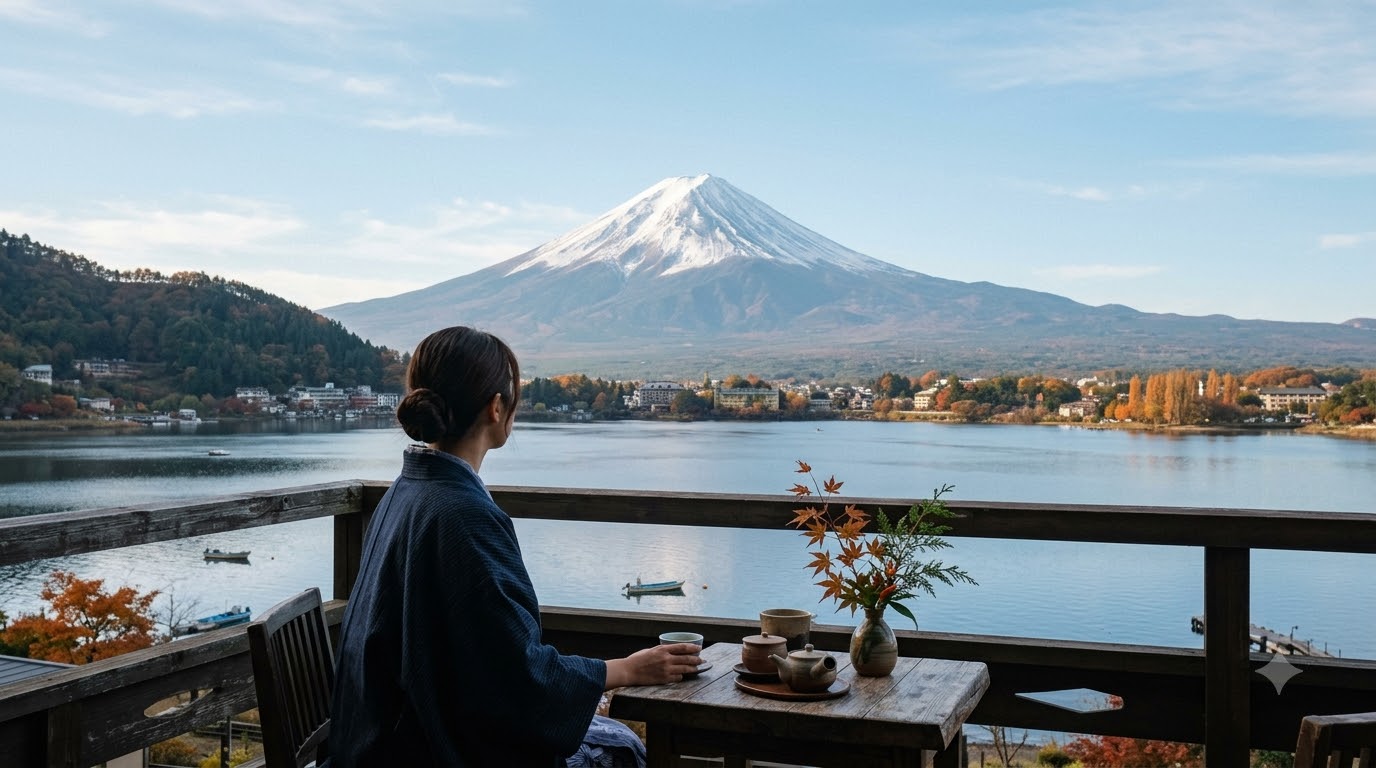
Choose your base by what you want your mornings to look like. Kawaguchiko is for lake reflections, Hakone is for hot springs and a fast Tokyo exit, Fujiyoshida is for budget travelers chasing the Chureito Pagoda photo, and Gotemba is for shoppers who still want an onsen and a mountain view. We spent at least two nights in each before landing on these distinctions.
Here is how the four areas compare on the factors that actually change your trip: access from Tokyo, typical view quality, nightly price, and who each one suits.
| Area | Time from Tokyo | Fuji view | Nightly price (per person, meals in) | Best for |
|---|---|---|---|---|
| Lake Kawaguchiko | ~100 min bus from Shinjuku | Excellent (lake reflections) | 12,000-80,000+ JPY | First-timers, photographers |
| Hakone | ~85 min by Romancecar from Shinjuku | Good (across Lake Ashi) | 20,000-100,000+ JPY | Onsen lovers, couples |
| Fujiyoshida | ~110 min bus, then local train | Good (near Chureito Pagoda) | 3,900-15,000 JPY | Backpackers, photographers |
| Gotemba | ~100 min bus / 80 min train | Fair to good (south face) | 5,500-40,000 JPY | Shoppers, value seekers |
Prices reflect 2026 listings on Booking.com, Expedia, and Tripadvisor at roughly 150 JPY to 1 USD; peak seasons run 20-30% higher.
The quick decision rule we give friends:
- Want the postcard lake-and-Fuji reflection? Book Lake Kawaguchiko north shore.
- Want a private open-air onsen and a short train back to Tokyo? Book Hakone.
- Traveling cheap and want the pagoda shot at dawn? Book Fujiyoshida.
- Combining Fuji with outlet shopping or driving? Book Gotemba.
Lake Kawaguchiko: the best all-round base for Fuji views
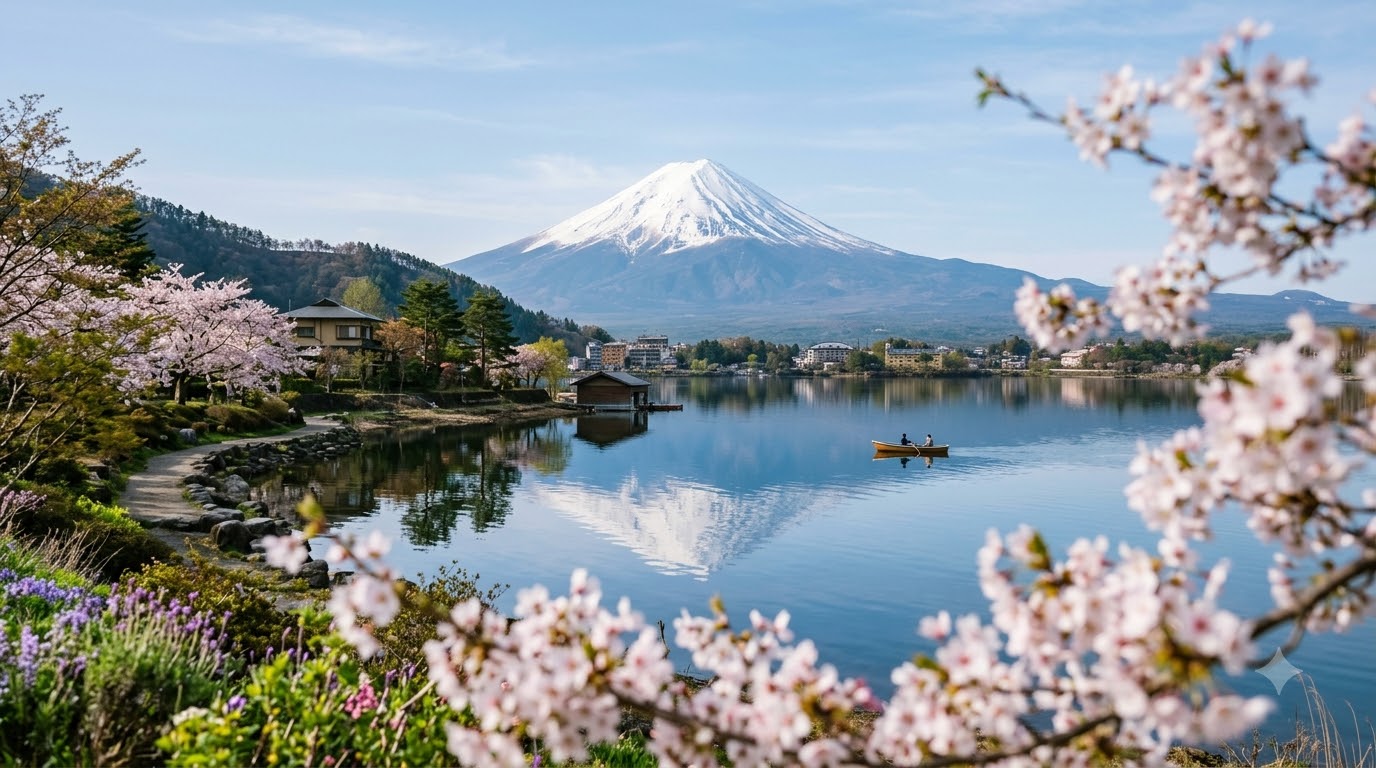
Lake Kawaguchiko is where most first-time visitors should stay near Mount Fuji, because the north shore delivers the classic mirror reflection and the town is walkable with a retro sightseeing bus loop. The lake sits about 100 minutes by direct highway bus from Shinjuku, and the Fujikyu Railway connects it to Fujiyoshida and Chureito Pagoda in minutes. We have stayed here more than any other base.
Nightly rates spread wide depending on whether your room faces the mountain. Based on 2026 listings (Booking.com and Expedia, 2026):
- Budget hotels and no-meal ryokan: roughly 12,000-22,000 JPY per room, often lake-view rather than direct Fuji-view.
- Mid-range ryokan with kaiseki dinner and breakfast: roughly 15,000-30,000 JPY per person.
- Luxury north-shore ryokan: roughly 30,000-80,000+ JPY per person; suites at the top properties run higher.
- La Vista Fujikawaguchiko: known for its rooftop Fuji-view onsen, mid-range pricing, and rooms that book out months ahead in autumn.
- Kozantei Ubuya and Kawaguchiko Fufu: the north-shore luxury benchmarks, where nearly every room and bath faces the peak.
The trade-off at Kawaguchiko is crowds and price during blossom and foliage weeks. If you want the reflection without the luxury bill, the free lakeside paths on the north shore between the Music Forest and Ubuyagasaki Peninsula deliver the same view your ryokan charges for. Pair your stay with our roundup of the best things to do around Mount Fuji to fill the daylight hours.
Hakone: onsen ryokan and the easiest Tokyo access
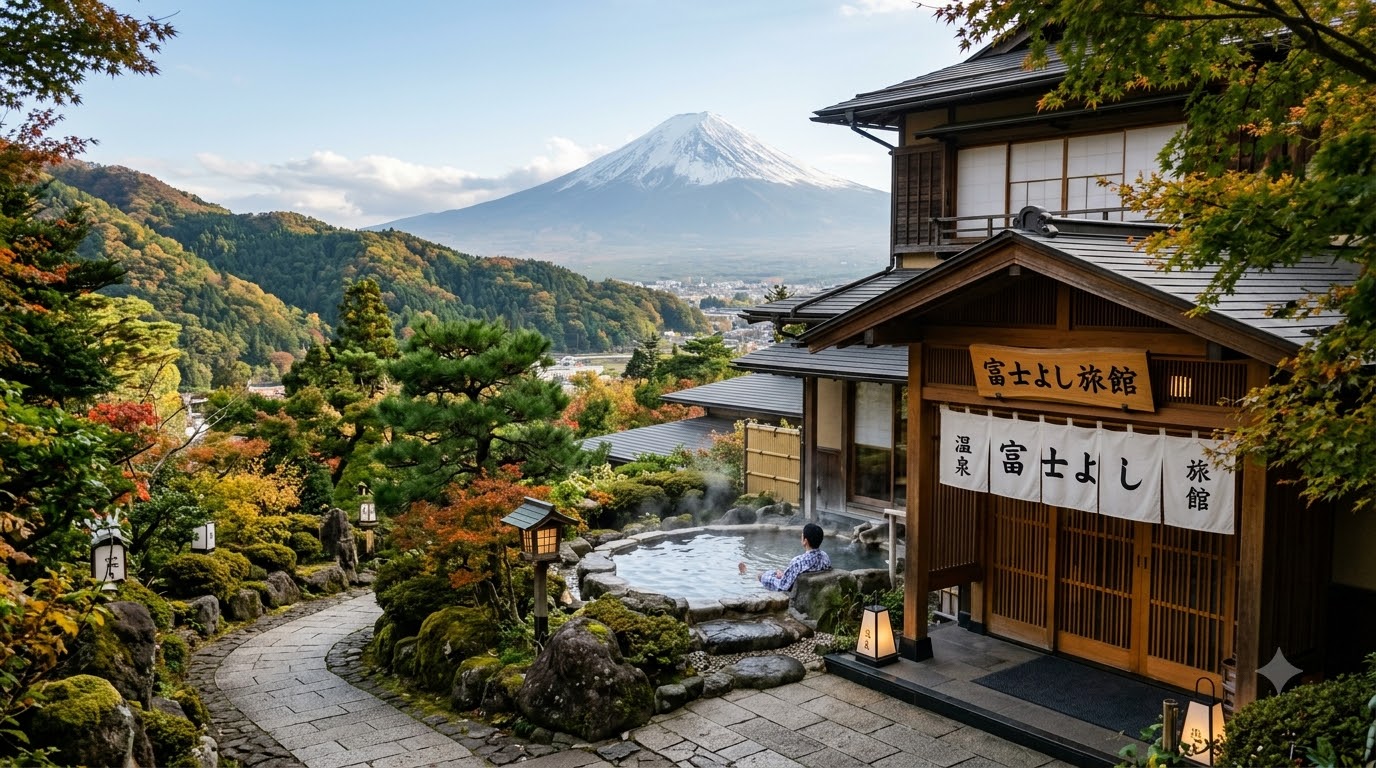
Hakone is the base to choose if soaking in a private open-air onsen matters more than a lakeside reflection, and it offers the fastest return to Tokyo of any Fuji base. The Odakyu Romancecar reaches Shinjuku in about 85 minutes, which is why we send couples and first-timers short on time here. Fuji appears across Lake Ashi behind the red Hakone Shrine torii on clear days, though the mountain is farther off than at Kawaguchiko.
Hakone is the priciest of the four bases because its ryokan culture is built around meals and baths. From 2026 rate research (Expedia and industry pricing guides, 2026):
- Onsen ryokan with dinner and breakfast: typically start near 30,000 JPY per person and climb past 100,000 JPY at the luxury end.
- Roughly half of a 30,000 JPY ryokan rate covers the kaiseki dinner and breakfast, not just the room.
- Private onsen or semi-open-air bath upgrade: adds about 5,000-15,000 JPY per person over a standard room.
- Yoshiike Ryokan and the Gora-area inns: mid-to-upper pricing with garden baths, near the Hakone Tozan Railway.
- Budget no-meal options exist from around 12,000-18,000 JPY per room, but they trade away the ryokan dinner that defines the experience.
Hakone works best as a one or two-night onsen stop rather than a photography base. If your priority is a guaranteed clear Fuji rather than hot springs, check our guide to the best time to see Mount Fuji before you lock in dates here.
Fujiyoshida: budget beds near Chureito Pagoda
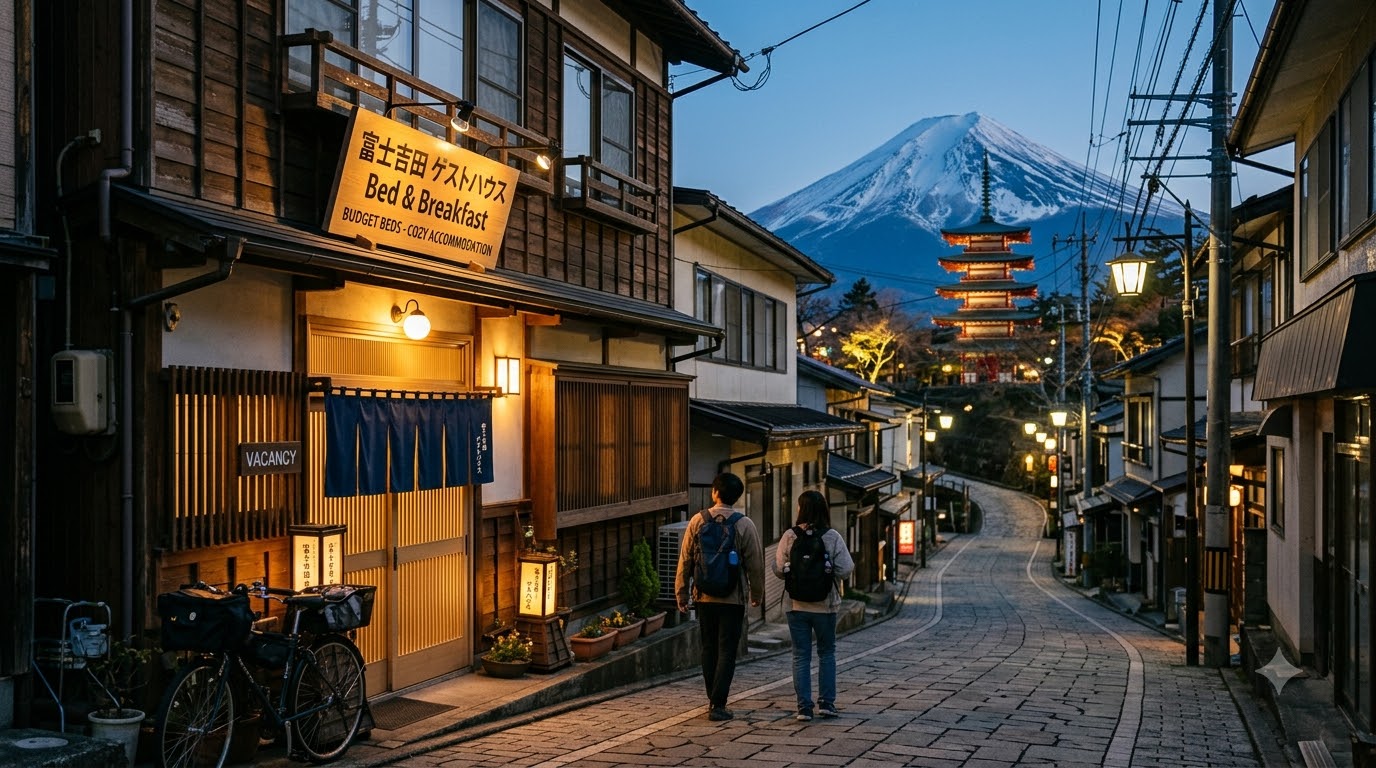
Fujiyoshida is the cheapest place to stay near Mount Fuji and the smartest base if the Chureito Pagoda sunrise shot is your goal. The pagoda sits at Arakurayama Sengen Park, a 5-minute Fujikyu train ride plus a short uphill walk from central Fujiyoshida, so you can be on the platform before the tour buses arrive. We stayed here specifically to shoot the pagoda without a pre-dawn drive.
Prices are a fraction of the lakeside towns. From 2026 listings (Booking.com, Tripadvisor, and Hostelz, 2026):
- Hostel dorm beds: from roughly 3,900 JPY ($26 USD) per night at the cheapest backpacker houses.
- Basic private guesthouse rooms: from roughly 4,600-7,800 JPY ($31-52 USD) per night.
- Hostel Mt. Fuji FUKUYA and T&T Fujiyama Guest House: reliable budget names with English-speaking hosts and Fuji-view common areas.
- Business hotels: from around 8,000-12,000 JPY per room for a private bathroom and no meals.
- Average all-types nightly rate: around 22,000 JPY ($147 USD), which shows how much the budget options undercut the market.
The catch is that Fujiyoshida is a working town, not a resort, so evenings are quiet and dinner options thin out after 8:00 PM. We treated it as a functional dawn-shooting base and ate at the honesty-box udon shops locals swear by. It is also the natural launch point for a Mount Fuji day trip from Tokyo if you only have hours, not nights.
Gotemba: outlet shopping and value onsen hotels
Gotemba is the base for travelers who want Fuji views, an onsen, and outlet shopping in one stop without paying Hakone prices. It sits on Fuji’s southern flank, about 100 minutes by bus or 80 minutes by train from Tokyo, and Gotemba Premium Outlets is one of Japan’s largest outlet malls. We stopped here on a driving loop and were surprised how much value the newer hotels offer.
From 2026 listings (Tripadvisor, Expedia, and Trip.com, 2026):
- Budget hotels: from roughly 5,500 JPY ($37 USD) per night for a basic room.
- Dormy Inn Express Gotemba Hot Springs: around 12,000 JPY ($81 USD) with a hot-spring bath.
- Hotel Clad: beside the outlets with Fuji views from rooms and its onsen, around 34,000 JPY ($230 USD) a night.
- Mars Garden Wood Gotemba: cabin-style resort stays around 21,000 JPY ($144 USD).
- The south-face view here is less iconic than the lake reflection but clears earlier on some winter mornings.
Gotemba suits self-drivers and shoppers more than photographers chasing the mirror shot. If you are not renting a car, Kawaguchiko or Fujiyoshida put you closer to the signature viewpoints.
Best ryokan with Mount Fuji views, by budget
A ryokan with a genuine Mount Fuji view is the reason many travelers pick this region, and the price ladder is clear once you separate view-guaranteed rooms from generic lake-view stock. The single most important booking step is choosing a named “Mt. Fuji side” room, because even top ryokan sell cheaper rooms that face the garden or car park. We learned this the expensive way on our first trip.
Here is the budget ladder we recommend, drawn from 2026 rates:
- Budget with a view (under 15,000 JPY per person): Fujiyoshida guesthouses with Fuji-view lounges, or off-season Kawaguchiko no-meal ryokan; the view is from common areas, not always the room.
- Mid-range (15,000-30,000 JPY per person): La Vista Fujikawaguchiko and similar Kawaguchiko ryokan with rooftop Fuji-view onsen and in-room lake vistas, meals included.
- Upper-mid (30,000-50,000 JPY per person): Hakone onsen ryokan with private open-air baths, or Hotel Clad in Gotemba for a modern take.
- Luxury (50,000-100,000+ JPY per person): Kozantei Ubuya and Kawaguchiko Fufu on the north shore, where the mountain fills the window from bed and bath.
Whatever tier you pick, book at least two to three months ahead for blossom and foliage weeks, when the best Fuji-facing rooms vanish first. Cross-check your dates against the best time to see Mount Fuji so you are not paying premium rates for a cloudy week.
How to guarantee a Fuji-view room when you book
The difference between a memorable stay and a disappointing one is the room type, not the town, so treat the booking details as seriously as the destination. We have watched friends book a “Fuji view hotel” and end up facing a hillside. A few rules keep that from happening:
- Book a room explicitly labeled “Mt. Fuji side,” “Fuji view guaranteed,” or “lake and Fuji view,” never just a Fuji-view property.
- Message the property directly to confirm the peak is visible from the room, not only the lobby or rooftop bath.
- Aim for higher floors on the north or lake-facing side; lower floors often lose the view behind trees or buildings.
- Add a private open-air bath (rotenburo) if the view matters at bath time, budgeting an extra 5,000-15,000 JPY per person in Hakone.
- Travel in winter (December-February) for the clearest skies, when Fuji is visible on roughly 70% of days, then keep mornings free for the reveal.
Frequently Asked Questions
Where is the best place to stay near Mount Fuji for first-time visitors?
Lake Kawaguchiko is the best base for first-timers. It offers the classic lake-and-mountain reflection, a walkable town with a sightseeing bus loop, and a direct 100-minute highway bus from Shinjuku. Book a north-shore ryokan with a confirmed Mt. Fuji-side room for the strongest view.
How much does it cost to stay near Mount Fuji per night in 2026?
It ranges from roughly 3,900 JPY ($26 USD) for a Fujiyoshida hostel dorm to 100,000+ JPY per person at a luxury Hakone or Kawaguchiko ryokan. Mid-range lakeside ryokan with dinner and breakfast run about 15,000-30,000 JPY per person, and value Gotemba hotels start near 5,500 JPY per room.
Is it better to stay in Hakone or Kawaguchiko for Mount Fuji?
Choose Kawaguchiko for the best Fuji views and lake reflections, and Hakone for onsen ryokan plus the fastest return to Tokyo (about 85 minutes by Romancecar). Hakone’s Fuji view is more distant, across Lake Ashi, while Kawaguchiko puts the mountain directly across the water.
Can you stay near Mount Fuji on a budget?
Yes. Fujiyoshida has hostel dorm beds from around 3,900 JPY and basic private rooms from 4,600-7,800 JPY per night, a 5-minute train from Chureito Pagoda. Off-season Kawaguchiko no-meal ryokan and Gotemba business hotels from 5,500 JPY are the other value options.
Do all ryokan near Mount Fuji have Fuji-view rooms?
No. Even properties marketed as Fuji-view sell cheaper rooms that face gardens, hillsides, or parking. Always book a room type explicitly labeled “Mt. Fuji side” or “Fuji view guaranteed,” and message the property to confirm the peak is visible from the room itself.
Final thoughts
Where you stay near Mount Fuji shapes the trip more than almost any other choice, and the honest answer is that the town matters less than the room. Kawaguchiko gives you the reflection, Hakone gives you the onsen and the fast Tokyo link, Fujiyoshida gives you the cheapest dawn access to the pagoda, and Gotemba gives you value with a view. Pick the base that matches your mornings, book a confirmed Fuji-facing room a few months out, and let the mountain do the rest. When you are ready to plan the rest of the region, our Mount Fuji travel guide ties every piece together.