Best Time to See Mount Fuji: Month-by-Month (2026)
Disclosure: Some links in this guide are affiliate links. If you book or buy through them, we may earn a small commission at no extra cost to you — it helps keep our guides free.
- Clearest views: December and January mornings, when full visibility ran 74-90% of days in the 2024 log, compared with 13-29% in July and August.
- Best time of day: arrive between 6:00 and 8:00 AM; clouds routinely swallow the summit by late morning, sometimes as early as 9:30 AM.
- 2026 climbing season: Yoshida and Subashiri trails open July 1 and close September 10; Fujinomiya and Gotemba run July 10 to September 10.
- Climbing fee: 4,000 yen (about 27 USD) per person on every trail in 2026, paid online in advance, with a 4,000-hiker daily cap on Yoshida only.
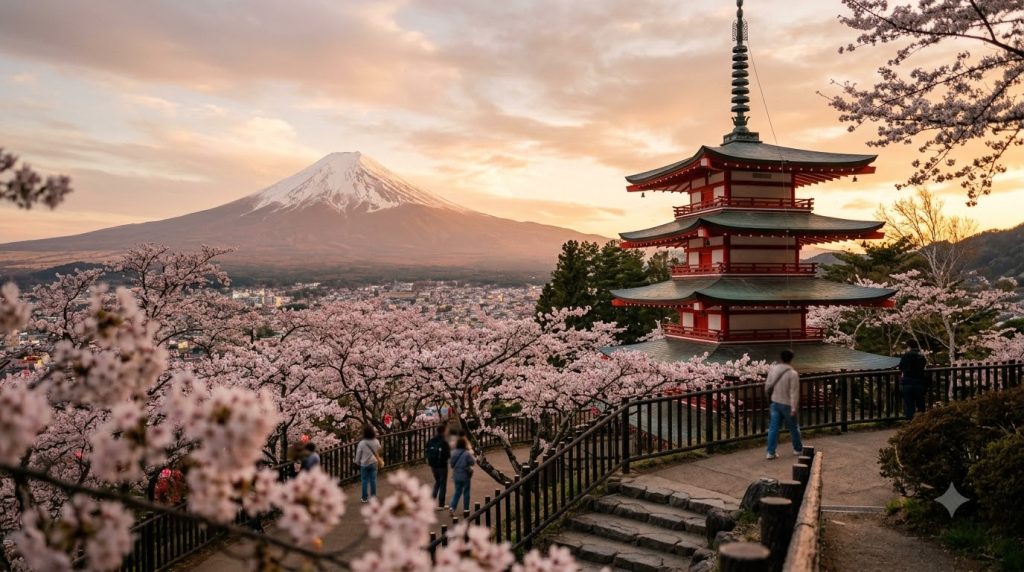
- Cherry blossoms at Chureito Pagoda: peak bloom is forecast for April 6-13, 2026, roughly a week later than Tokyo because of the higher elevation.
The best time to see Mount Fuji clearly is winter, from December through February, on an early morning before the clouds move in.
Cold, dry Siberian air strips out the summer haze, and one visibility log recorded the whole mountain fully visible on 27 of 31 days in December 2024, versus just 4 days in August (Japan Highlights visibility record, 2024 data).
If your only goal is to actually lay eyes on the peak, plan for a clear winter dawn and you tilt the odds heavily in your favor.
But “best” depends on what you want. To climb it, you are locked into the official season of early July to September 10. To photograph it wrapped in cherry blossoms at Chureito Pagoda, you want a tight window in early-to-mid April.
This guide breaks down the best time to see Mount Fuji for each of those goals, with a month-by-month visibility table, the confirmed 2026 climbing dates, and the exact days we would target for blossoms.
We have chased this mountain across three seasons, and the pattern held every time: the clearest photos we ever took were on a 6:45 AM February morning by Lake Kawaguchi, hands numb, the summit razor-sharp against a blue sky. On a July climbing trip the peak stayed hidden in cloud until we were physically standing on it. Winter for looking, summer for climbing.
When is the best time to see Mount Fuji clearly?
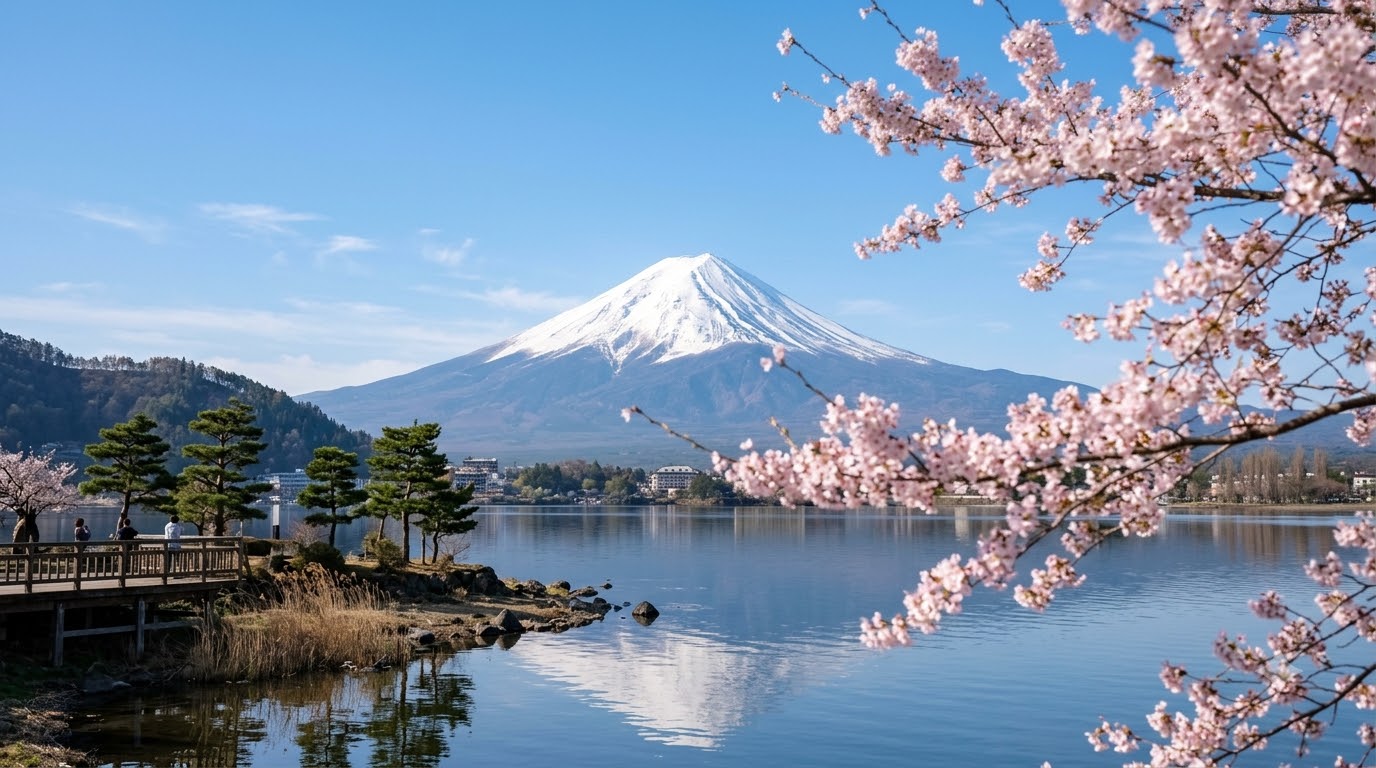
Winter gives you the best time to see Mount Fuji, and the numbers are not close. From late November through February, dry continental air from Siberia clears out the humidity and haze that blur the mountain in warmer months, so the snow-capped peak reads sharply even from Tokyo on the right day. The trade-off is cold: viewpoints around the Fuji Five Lakes sit near freezing at dawn in January.
Summer is the paradox season. July and August are when the mountain is open to climbers, yet they are the worst months to actually see it from a distance.
In the 2024 log, August delivered a full, unobstructed view on only about 13% of days, and roughly two-thirds of summer days offered no clear view at all (Japan Highlights visibility record, 2024 data). Humidity, heat haze, and afternoon cloud build-up are the culprits.
Timing within the day matters as much as the month. On our visits, the rule that never failed:
- Aim your Fuji viewing between 6:00 and 8:00 AM for the sharpest, cloud-free peak.
- Expect visibility to drop after 11:00 AM as daytime clouds form around the summit.
- Some days the cloud cap arrives as early as 9:30 AM, so a lie-in can cost you the view entirely.
- Check a live visibility webcam the night before and set a hard alarm; a clear forecast plus a dawn start is the whole game.
For the full picture of seasons, transport, and viewpoints, start with our Mount Fuji travel guide, which this article feeds into as the seasonal breakdown.
Month-by-month Mount Fuji visibility odds
Here is the full year at a glance. The table below is drawn from a 2024 daily visibility record and shows the share of days the entire mountain was fully visible. Treat it as a probability guide, not a guarantee, since any single day can surprise you either way.
| Month | Full-visibility days (2024) | Odds of a clear peak | Verdict |
|---|---|---|---|
| January | 23 of 31 | 74% | Excellent |
| February | 13 of 28 | 46% | Good |
| March | 15 of 31 | 48% | Good |
| April | 8 of 30 | 27% | Fair (blossom season) |
| May | 13 of 31 | 42% | Good |
| June | 5 of 30 | 17% | Poor (rainy season) |
| July | 9 of 31 | 29% | Fair (climbing opens) |
| August | 4 of 31 | 13% | Poor (peak haze) |
| September | 10 of 30 | 33% | Fair |
| October | 12 of 31 | 39% | Good (autumn color) |
| November | 11 of 30 | 37% | Good |
| December | 27 of 31 | 90% | Best of the year |
Source: Japan Highlights month-by-month visibility record, 2024 data.
A few reads from the data worth remembering:
- December and January are the safest bets, with clear peaks on the majority of days.
- June is the single worst month for haze-free distance views, colliding with Japan’s rainy season.
- April and October are the “compromise” months, where lower odds buy you cherry blossoms or autumn foliage as a foreground.
When is Mount Fuji climbing season in 2026?
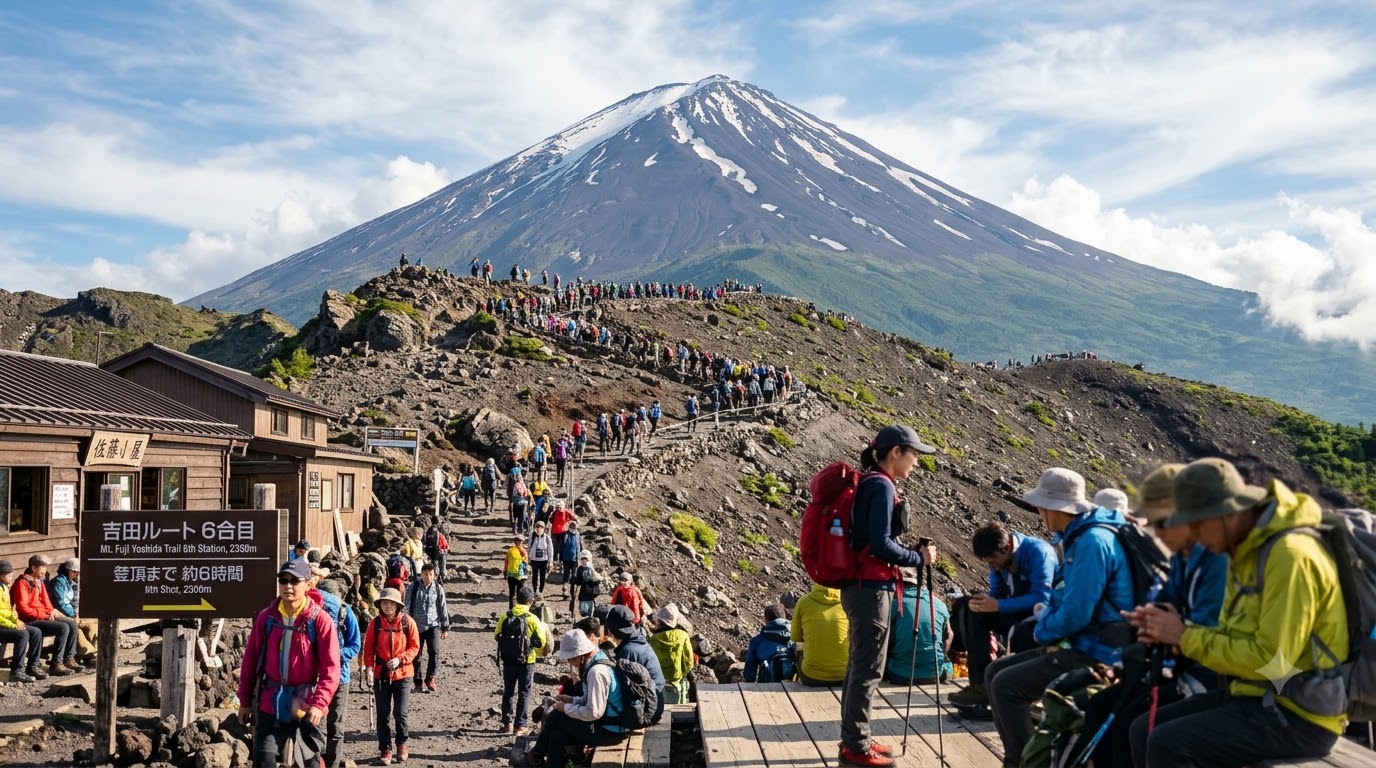
The 2026 climbing season opens July 1 and closes September 10, but the exact dates depend on which of the four trails you pick. Outside these dates the trails are officially closed, mountain huts shut, and buses to the Fifth Stations stop running, so off-season climbing is strongly discouraged and unsupported.
| Trail | 2026 open | 2026 close | Daily hiker cap | Reservation system |
|---|---|---|---|---|
| Yoshida (Yamanashi) | July 1 | September 10 | 4,000 hikers | Asoview (online) |
| Subashiri (Shizuoka) | July 1 | September 10 | None | Fujisan223 (online) |
| Fujinomiya (Shizuoka) | July 10 | September 10 | None | Fujisan223 (online) |
| Gotemba (Shizuoka) | July 10 | September 10 | None | Fujisan223 (online) |
Source: Japan National Tourism / japan-guide.com, 2026 season.
The rules tightened for 2026, and skipping them can get you turned back at the gate:
- Every trail now charges a 4,000 yen (about 27 USD) entry fee per person, paid online in advance.
- The Yoshida Trail caps entries at 4,000 hikers per day, though that ceiling was not actually reached on any day in 2024 or 2025.
- Trailhead gates close from 2:00 PM to 3:00 AM; only climbers holding a confirmed mountain-hut reservation may start their ascent inside that window.
- Yoshida hikers must carry three mandatory items or be refused entry: proper trekking shoes, cold-weather clothing, and rainwear.
If you want the full route breakdown and what to do at the summit and around the base, our guide to the best things to do at Mount Fuji covers the trails alongside the non-climbing highlights.
Should you climb Fuji or just view it?
Climb it only if the summit sunrise is your specific goal; view it if you want the postcard picture. Those are two different trips. The summit rewards you with the “goraiko” sunrise from 3,776 meters, but you climb through cloud most of the way and the mountain itself is invisible while you are on it.
Distance viewing from the Fuji Five Lakes gives you the iconic cone reflected in water, which is the image most travelers actually have in mind.
Find your Mount Fuji hotel on the map
Live prices from Booking, Airbnb and more — move the map or change dates to compare stays around Mount Fuji.
Best time for cherry blossoms and Mount Fuji
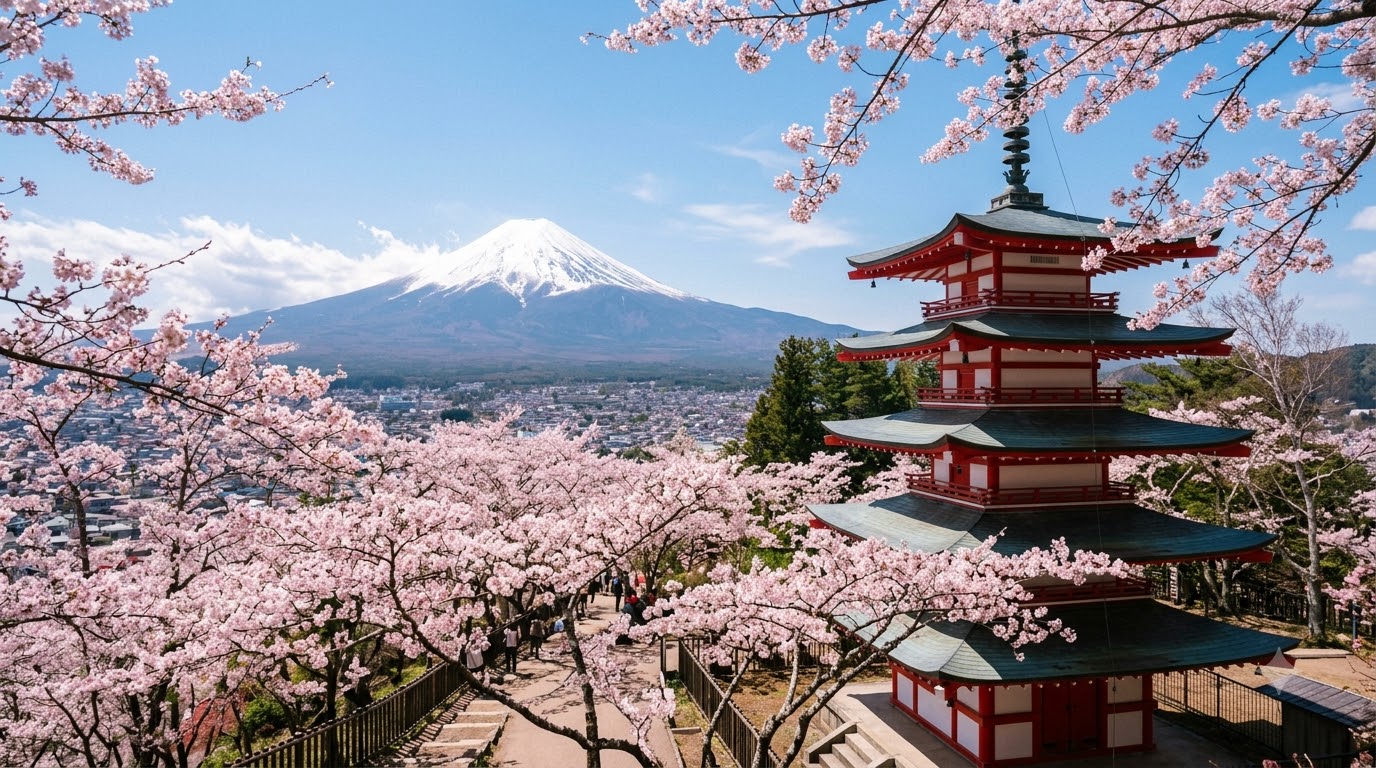
For cherry blossoms framing Mount Fuji, target April 6-13, 2026, at Chureito Pagoda in Fujiyoshida. This five-story pagoda sits on a hillside inside Arakurayama Sengen Park, and the classic shot stacks pink sakura, the vermilion pagoda, and the snow-capped peak in a single frame.
Because of the higher elevation, peak bloom here runs roughly 7 to 10 days later than central Tokyo, so a trip timed for Tokyo’s blossoms will usually be too early for Chureito.
We climbed the 398 stone steps up from Arakura Sengen Shrine on a mid-April morning, and two things stood out: the light is best early, and so are the crowds. Practical facts we would hand any first-timer:
- Arakurayama Sengen Park has no entrance fee, and the pagoda viewpoint is free to visit.
- The park’s own parking closes to visitors during the blossom festival; use the temporary paid lots nearby instead.
- More than 650 cherry trees bloom across the hillside during the mid-April festival.
- Arrive at or before sunrise; the observation deck gets shoulder-to-shoulder by mid-morning during peak bloom.
April’s distance-visibility odds are only fair at roughly 27% clear days, so build in a spare morning if blossoms-plus-Fuji is the trip’s whole reason. For where to base yourself for these early starts, see our notes on where to stay near Mount Fuji.
Best time to visit Mount Fuji by season
Each season is “best” for a different traveler, so match the month to your goal rather than chasing one perfect date. Here is how the four seasons stack up in practice.
- Winter (December-February): the clearest, snow-capped views and the highest odds of a visible peak, offset by freezing dawns and closed trails.
- Spring (March-May): cherry blossoms in early-to-mid April and milder weather, with visibility that dips in April but recovers in May.
- Summer (June-August): the only window to climb, but the haziest distance views and a wet June rainy season.
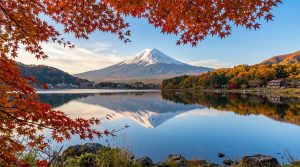
- Autumn (September-November): thinning crowds, red and gold foliage around the Fuji Five Lakes, and improving clarity as October and November cool down.
For an easy day out from the capital that works in any season, our Mount Fuji day trip from Tokyo itinerary pairs a morning view window with the main lake viewpoints.
Best viewpoints and how weather changes them
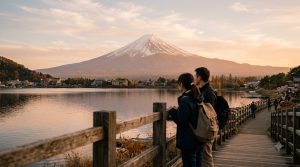
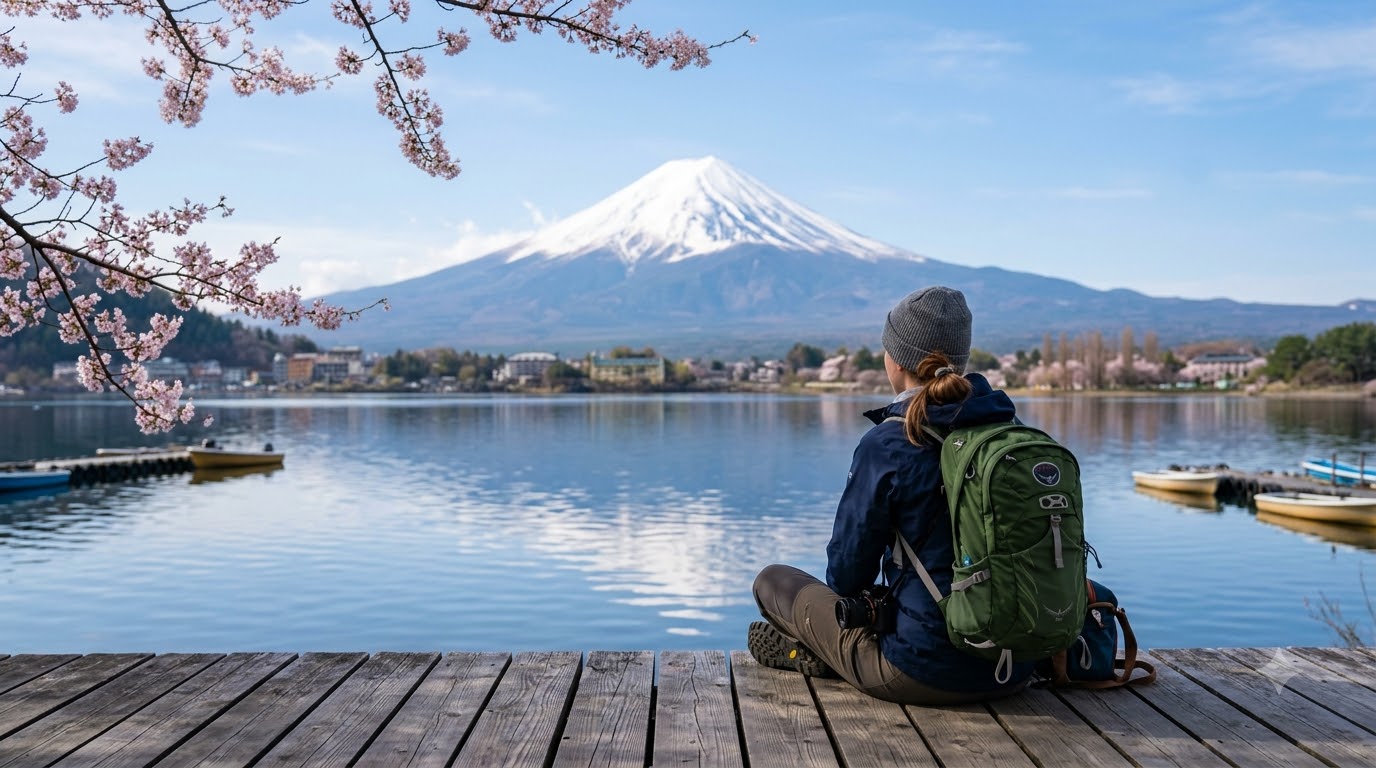
The best viewpoint depends on the weather that day, so we always keep two options: a lake for calm mornings and a higher vantage for hazier ones. On a still, clear dawn, the Fuji Five Lakes, especially Lake Kawaguchi, give you the mirror reflection. When low haze sits in the valleys, the elevated Chureito Pagoda deck often clears it. A short list of reliable spots:
- Lake Kawaguchi north shore: the classic reflection shot on windless mornings, walkable from Kawaguchiko Station.
- Chureito Pagoda / Arakurayama Sengen Park: elevated framing with the pagoda, best at sunrise and in blossom season.
- Oshino Hakkai: a village of spring-fed ponds with the peak behind, good on partly cloudy days.
- Lake Yamanaka: the highest of the five lakes and a strong bet for autumn foliage foregrounds.
Whichever spot you pick, the two constants override everything else: go in the cooler, drier months for the odds, and go at dawn for the daily window. Do both, and even a short trip has a strong chance of the view you came for.
If you are building a longer base in the area, cross-reference our where to stay near Mount Fuji guide so your hotel is close to a dawn-friendly viewpoint.
Frequently Asked Questions
What is the single best month to see Mount Fuji?
December is the strongest month on the odds. In the 2024 visibility record, the entire mountain was fully visible on 27 of 31 December days, about 90%, thanks to dry winter air. January is a close second at roughly 74%. Aim for a clear morning in either month for the best chance.
Can you see Mount Fuji in summer?
You can, but it is the hardest time. July and August are the climbing months, yet summer heat haze and afternoon cloud mean full distance views appear on only about 13-29% of days. If you visit in summer, get to your viewpoint by 6:00-8:00 AM before clouds build around the peak.
What are the 2026 Mount Fuji climbing dates?
The Yoshida and Subashiri trails open July 1 and close September 10, 2026. The Fujinomiya and Gotemba trails open July 10 and close September 10. All four charge a 4,000 yen per-person fee paid online in advance, and gates close from 2:00 PM to 3:00 AM except for hikers with a hut reservation.
When do cherry blossoms bloom near Mount Fuji?
Around Mount Fuji, peak bloom is forecast for April 6-13, 2026, notably at Chureito Pagoda in Fujiyoshida. That is roughly 7 to 10 days later than central Tokyo because of the higher elevation, so time your visit for early-to-mid April rather than late March.
What time of day is best to see Mount Fuji?
Early morning, between 6:00 and 8:00 AM, is best. Visibility typically declines after 11:00 AM as clouds form around the summit, and on some days the cloud cap arrives as early as 9:30 AM. A dawn arrival at your chosen viewpoint gives you the clearest, most reliable window.
Final thoughts
There is no one perfect date for Mount Fuji, only the right month for your goal. For the clearest, snow-dusted peak, a December or January dawn stacks the odds in your favor. For the climb, you are held to July through September 10, haze and all.
For blossoms, a narrow April 6-13 window at Chureito is the prize. Whatever you choose, the daily rule outranks everything else: get there early, before the clouds do, and this mountain will usually meet you halfway.