Ultimate Los Angeles Travel Guide 2026
Disclosure: Some links in this guide are affiliate links. If you book or buy through them, we may earn a small commission at no extra cost to you — it helps keep our guides free.
- LA welcomed 49.1 million visitors in 2024, generating $37.8 billion in spending (LA Tourism & Convention Board, 2025).
- Average mid-range hotel rates run $190-$280 per night in 2026, with Santa Monica and West Hollywood at the top end (STR/CoStar, 2025).
- You’ll want a rental car for most itineraries — Metro covers under 30% of major attractions efficiently (LA Metro, 2025).
- Budget travelers spend around $130-$170 per day; mid-range runs $260-$380 including a car (industry estimates, 2026).
- LAX handled over 75 million passengers in 2024, ranking among the world’s busiest airports (Los Angeles World Airports, 2025).
Los Angeles isn’t one city you can “see” in a weekend — it’s a sprawling collection of distinct neighborhoods stitched together by freeways and beaches. This guide gives you the real costs, the smartest areas to base yourself, and the experiences worth your time, so you can plan a 2026 trip that fits your budget and pace.
Is Los Angeles Worth Visiting in 2026?

Yes — LA is worth it if you go in with a plan and pick two or three areas instead of trying to cover everything. The city rewards travelers who slow down: world-class museums, 75 miles of coastline, a serious food scene, and easy day trips to mountains, deserts, and wine country. The travelers who leave disappointed are usually the ones who underestimate driving times.
LA spreads across roughly 500 square miles, and crossing town at rush hour can eat 90 minutes. The trick is geographic clustering. Spend mornings near where you sleep, and save long drives for off-peak windows. Do that, and the city opens up. Ignore it, and you’ll spend your vacation on the 405.
Weather helps too. LA averages 284 sunny days a year, and even “winter” highs sit around 68F (20C). There’s no truly bad season, just trade-offs we cover below.
What surprises a lot of first-time visitors is how varied the city feels within an hour’s drive. You can start your morning surfing in Malibu, spend the afternoon hiking a chaparral ridge in Griffith Park, and finish the night eating tacos in Boyle Heights or sipping cocktails on a Downtown rooftop.
That range is the real reason LA earns repeat visits — it isn’t a single attraction, it’s a dozen mini-trips layered into one metro area. We treat each visit as a chance to dig into a different slice rather than racing through a checklist, and you’ll get far more out of the city if you do the same.
The flip side is that LA punishes the unprepared. There’s no central “old town” where everything clusters, no single transit hub that drops you at the major sights, and Google Maps drive times can double during the 7-10am and 4-7pm windows. We’ve watched travelers burn an entire day on three crosstown trips that, timed differently, would’ve taken half as long. The rest of this guide is built to help you avoid exactly that.
When Is the Best Time to Visit Los Angeles?
The best months are March to May and September to November — you’ll get warm, dry weather, thinner crowds, and lower hotel rates than peak summer. Summer brings the biggest crowds and priciest rooms, while January and February stay mild but see occasional rain and the year’s lowest beach temperatures.
Here’s how the seasons break down for 2026 planning:
| Season | Avg High | Crowds | Avg Hotel/Night | Best For |
|---|---|---|---|---|
| Spring (Mar-May) | 70-75F | Moderate | $200-$260 | Hiking, beaches, value |
| Summer (Jun-Aug) | 80-85F | Highest | $240-$330 | Beach days, events |
| Fall (Sep-Nov) | 75-82F | Moderate | $200-$270 | Warm sea, fewer lines |
| Winter (Dec-Feb) | 66-70F | Lower | $180-$240 | Budget, museums |
One local quirk: “June Gloom.” Coastal fog often hangs over the beaches through morning in late spring and early summer, burning off by midday. If you’re chasing sunrise beach photos in June, head inland or wait until afternoon. For a deeper month-by-month breakdown, check our best time to visit Los Angeles before locking dates.
Spring is our personal pick. From mid-March through May, the hills turn green after winter rains, the jacaranda trees bloom purple across the Westside, and hotel rates haven’t yet hit summer peaks. Crowds at marquee sights like The Getty and Universal stay manageable on weekdays, and the ocean — while still cool at around 62-64F — is swimmable for the hardy. It’s the sweet spot where weather, price, and crowd levels all line up.
Fall runs a close second. By September and October the water has warmed to its yearly high of roughly 68F, summer school holidays are over, and the light turns golden in a way photographers love. The one caveat is wildfire season, which can occasionally bring smoky air or trail closures in the surrounding hills during dry, windy spells.
It rarely affects a coastal or museum-focused itinerary, but it’s worth a quick check of air-quality apps before any inland hike.
Summer is peak everything: peak crowds, peak prices, and peak heat in the inland valleys, where afternoons can push past 95F even when the coast stays in the 70s.
If you visit in July or August, lean toward beach-adjacent neighborhoods where the marine layer keeps things cooler, and book attraction tickets well ahead — lines at Universal and Disneyland balloon during school breaks.
Winter, meanwhile, is the quiet bargain: mild days, the occasional rainy stretch, and the lowest rates of the year, ideal if museums and food rank higher on your list than beach time.
Find your Los Angeles hotel on the map
Live prices from Booking & Airbnb — tap a pin to compare stays around Santa Monica and Hollywood and beyond.
Where Should You Stay in Los Angeles?
Base yourself in Santa Monica or Venice for beaches, Hollywood or West Hollywood for nightlife and central access, or Downtown (DTLA) for budget value and transit. Each area has a different personality and price point, so match your neighborhood to what you actually plan to do rather than picking the most famous name.
We break the main bases down here:
| Area | Vibe | Mid-Range/Night | Best For | Watch Out For |
|---|---|---|---|---|
| Santa Monica | Beachy, polished | $240-$340 | Beach, families | Highest prices |
| Venice | Bohemian, walkable | $200-$290 | Cafes, indie shops | Uneven safety |
| West Hollywood | Nightlife, central | $220-$310 | Bars, dining | Pricey parking |
| Hollywood | Touristy, lively | $170-$250 | First-timers | Crowded blocks |
| Downtown (DTLA) | Urban, transit hub | $150-$220 | Budget, Metro | Quiet nights |
If it’s your first trip and you want to split the difference between cost and convenience, we’d point you toward West Hollywood — it’s roughly 20-30 minutes from the beaches, Hollywood, and Downtown without being in any one tourist bubble. You can Check live hotel prices in LA and filter by neighborhood to see real-time availability for your dates.
For longer stays or families, vacation rentals in Venice and the South Bay often beat hotel pricing once you factor in a kitchen and laundry. We dig into the math in our where to stay in Los Angeles breakdown.
A quick word on the areas people often consider but we’d steer most first-timers away from. Beverly Hills and Bel-Air are gorgeous and famous, but you pay a heavy premium for the name and you’re not especially close to the things most visitors actually do.
Downtown’s Arts District is genuinely cool — converted warehouses, breweries, murals — but it empties out at night and can feel isolated if you don’t have a car. And the area immediately around LAX, while convenient for a red-eye, is a charmless strip of chain hotels with nothing walkable nearby. Treat it as a one-night layover base only.
If you’re traveling with a specific priority, here’s our shorthand. Beach-first families should look at Santa Monica or the quieter South Bay towns of Manhattan Beach and Redondo Beach, where the sand is wide and the vibe is calmer. Nightlife and dining people will be happiest in West Hollywood or Silver Lake, the latter being LA’s hipper, more low-key eastside scene.
Budget travelers and anyone planning to lean on Metro should anchor in Downtown, where rail lines converge and room rates run lowest. And couples after a romantic, walkable pocket often love the canals and cafe streets of Venice — just choose a property a few blocks back from the boardwalk itself.
How Much Does a Los Angeles Trip Cost in 2026?
A typical LA trip costs $130-$170 per day for budget travelers, $260-$380 for mid-range, and $600 or more for luxury — per person, excluding flights. The two costs people underestimate most are the rental car plus parking, and the tipping culture that adds 18-22% to nearly every meal.
This is a realistic daily breakdown for one mid-range traveler in 2026:
| Expense | Budget | Mid-Range | Luxury |
|---|---|---|---|
| Accommodation | $60-$90 | $150-$220 | $350+ |
| Food & drink | $35-$50 | $60-$95 | $150+ |
| Rental car + gas | $25-$40 | $45-$60 | $80+ |
| Parking | $5-$15 | $20-$35 | $45+ |
| Attractions | $10-$25 | $40-$70 | $100+ |
| Daily total | $135-$220 | $315-$480 | $725+ |
A few money-savers we lean on: hotels often charge $35-$50 a night for parking, so book stays with free parking when you can. Gas runs higher than the US average — expect around $4.80-$5.40 per gallon in 2026. And many top attractions, including The Getty and Griffith Observatory, are free to enter; you only pay to park or for special exhibits. For a full breakdown by travel style, see our Los Angeles travel budget.
Food is where you have the most control over your daily spend. LA’s taco trucks, Thai-town noodle shops, and Mexican mercados serve some of the city’s best meals for $8-$15, and you can eat extraordinarily well without ever booking a tablecloth restaurant. We’d argue the food-truck and strip-mall scene is a highlight in its own right, not a budget compromise.
Where costs spike is the Instagram-famous brunch spots and Westside fine dining, where two people can easily clear $120 before tax and that mandatory 18-22% tip.
To put hard numbers on a full trip: a frugal solo traveler doing five days — sharing a budget rental, staying in a Downtown hostel or budget hotel, eating mostly street food, and sticking to free attractions — can realistically come in around $700-$900 all-in excluding flights.
A mid-range couple over the same five days, with a comfortable hotel, a rental car, a mix of casual and nicer meals, and a couple of paid attractions like Universal, should budget roughly $2,400-$3,200 together. Luxury travelers will, predictably, spend whatever they like. Knowing which tier you’re in before you book makes every other decision in this guide easier.
What Are the Top Things to Do in Los Angeles?
The essential LA experiences split into four buckets: iconic viewpoints (Griffith Observatory, the Hollywood Sign), world-class museums (The Getty, LACMA, The Broad), beaches and piers (Santa Monica, Venice, Malibu), and studio or theme-park days (Universal, Warner Bros.). Pick a mix rather than cramming everything into one trip.
Here’s what we’d prioritize on a first visit:
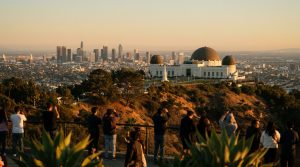
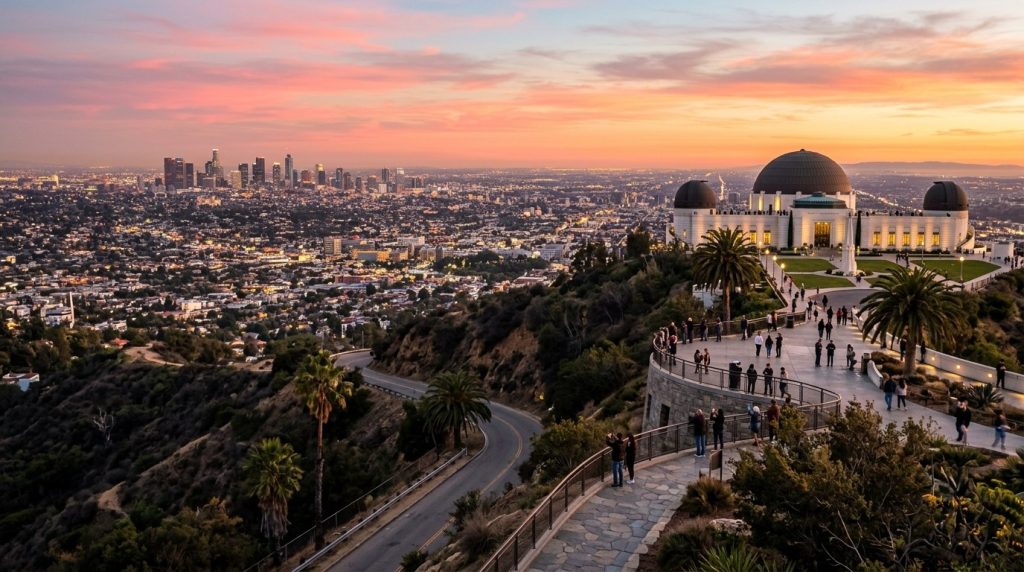
- Griffith Observatory — Free entry, the best skyline-plus-Hollywood-Sign view, and a genuinely good astronomy exhibit. Go at sunset, then watch the city light up. Parking fills fast, so arrive early or take a rideshare.
- The Getty Center — Free art museum with gardens and panoramic views, reached by a hilltop tram. Parking is $25. Plan three hours minimum.
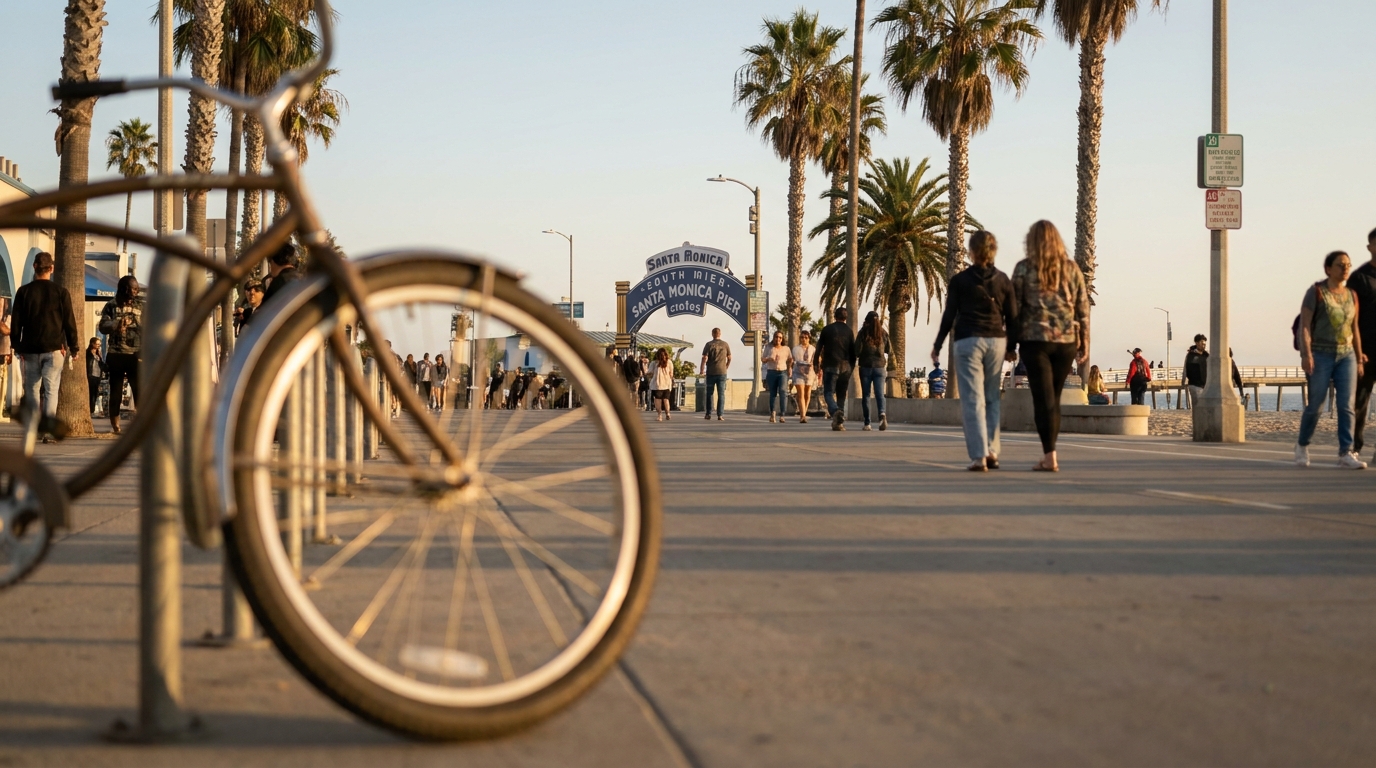
- Santa Monica Pier & Venice Beach — Walk or bike the 22-mile beach path connecting them. The Pacific Park rides on the pier are pay-per-ride; the boardwalk people-watching is free.
- Universal Studios Hollywood — Single-day tickets start around $109 in 2026 for off-peak dates. The Studio Tour is the standout.
- The Broad & LACMA — Contemporary and encyclopedic art in walking distance Downtown and on Museum Row. The Broad is free but requires timed reservations.
Beyond the headliners, LA rewards travelers who chase a theme. Film buffs can pair a Warner Bros. or Sony studio tour with the TCL Chinese Theatre handprints and a walk down the Hollywood Walk of Fame.
Foodies should block out time for Grand Central Market downtown, the Original Farmers Market at The Grove, and a deep dive into one immigrant neighborhood — Thai Town, Koreatown, or the San Gabriel Valley’s legendary Chinese food corridor.
Design and architecture fans have the Eames House, the Walt Disney Concert Hall’s gleaming Gehry exterior, and the mid-century gems scattered across Palm Springs a couple of hours east.
Outdoorsy travelers are spoiled too. The Griffith Park trail network alone offers everything from the gentle paved path up to the Observatory to the steeper climb toward the Hollywood Sign overlook. Runyon Canyon delivers quick city views and celebrity-spotting, while the Santa Monica Mountains and Malibu’s Solstice Canyon give you proper hikes with ocean payoffs. Bring water and start early — afternoon sun on exposed chaparral trails is no joke.
For guided experiences — studio VIP tours, group day trips, and skip-the-line access — you can browse Los Angeles tours and tickets on GetYourGuide or check the curated lineup on our live travel map.
Booking these ahead matters more than it does in many cities: the most popular options, like small-group Hollywood-and-Beaches tours or evening food crawls, routinely sell out days in advance during peak months. We compare the big operators in our best things to do in Los Angeles guide.
If you’ve got a packed schedule, our Los Angeles itinerary 5 days maps out a day-by-day route.
How Do You Get Around Los Angeles?
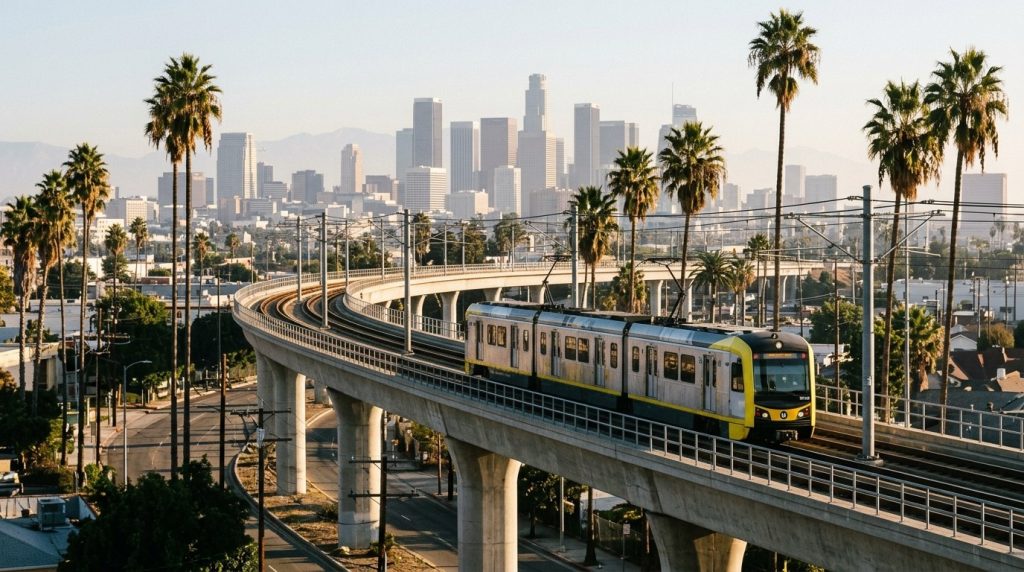
You’ll get around LA most easily with a rental car, supplemented by rideshares for nights out and Metro for a few Downtown-to-Hollywood hops. Public transit exists and is cheap, but it doesn’t connect the beach, Hollywood, and Downtown clusters quickly enough for a typical sightseeing trip.
Your realistic options, with 2026 pricing:
| Mode | Typical Cost | Best For | Limitation |
|---|---|---|---|
| Rental car | $45-$65/day + parking | Full itineraries, day trips | Traffic, parking fees |
| Rideshare (Uber/Lyft) | $15-$45/trip | Nights out, airport | Surge pricing |
| Metro Rail/Bus | $1.75/ride, $5 day cap | DTLA, Hollywood, USC | Limited coverage |
| Bike/scooter rental | $15-$30/day | Beach path, neighborhoods | Short range |
If you’re renting, book early — LAX rates jump on weekends and around events. We use our live travel map to compare rental quotes across LA suppliers and find the airport-versus-city pickup that works out cheaper; off-airport pickups often skip the concession fees. One tip: LAX itself is notorious for congestion, so the “LAX-it” rideshare lot adds 15-30 minutes on arrival.
Factor that in. For where to base yourself near transit, see where to stay in Los Angeles.
Metro’s TAP card caps daily fares at $5, which makes it a smart pairing if your hotel sits on a rail line and you only need it for a couple of Downtown days.
A note on the airport itself. LAX is huge, spread across nine terminals arranged in a horseshoe, and getting between them can mean a shuttle or a long walk.
The newer automated people mover connecting terminals to a consolidated rental-car facility and a Metro rail link has cut some of the chaos, but you should still pad an extra 30-45 minutes into both arrival and departure plans.
If you’re flying domestically and have flexibility, the smaller Hollywood Burbank Airport is far less stressful and sits closer to Hollywood and Downtown — we use it whenever a route allows.
Driving in LA has a learning curve but isn’t as terrifying as its reputation suggests. The freeways are wide and well-signed; the real challenge is volume, not aggression.
Use a navigation app that reflects live traffic, accept that the carpool (HOV) lane genuinely saves time if you have two or more people, and never assume a “20-minute” trip on the map won’t become 50 at rush hour. Parking apps like SpotHero can lock in cheaper garage rates downtown and near venues, often beating drive-up prices by half.
What Are the Best Day Trips From Los Angeles?
The standout day trips are Disneyland in Anaheim (45 minutes), Malibu and the Pacific Coast Highway (45-60 minutes), Santa Barbara wine country (90 minutes), and Joshua Tree National Park (2-2.5 hours). All are doable as a long day, though Joshua Tree rewards an overnight if you can spare one.
What to expect from each:
- Disneyland Resort — Single-park tickets start around $104 in 2026; expect a full day. Book timed reservations in advance.
- Malibu & PCH — Free scenic drive with stops at Zuma Beach, El Matador, and clifftop seafood spots. The most relaxed half-day from the Westside.
- Santa Barbara — Spanish-style “American Riviera” town with wine tasting in the Funk Zone. Pair with a stop in Solvang.
- Joshua Tree — Otherworldly desert landscape, $30 per vehicle entry, best at sunrise or sunset for cooler temps and light.
- San Diego — Two hours south; doable but better as an overnight given the drive.
A rental car makes all of these dramatically easier — train and bus options exist for Santa Barbara and San Diego but eat into your day. We detail timing, parking, and reservation windows in best-day-trips-from-los-angeles.
If you only have appetite for one day trip, we’d weigh it against what your in-city days already cover. Trip-heavy on beaches and theme parks? Joshua Tree’s stark desert is a complete change of scenery and the most memorable contrast.
Craving small-town charm and good wine? Santa Barbara wins. Traveling with kids who’d never forgive you for skipping it?
Disneyland, obviously. And if you simply want a low-effort, high-reward afternoon, the Malibu coast drive needs no tickets, no reservations, and no commitment beyond a tank of gas and a willingness to pull over for the view.
For the longer hauls toward Joshua Tree, Santa Barbara, or San Diego, leave LA before 8am or after 10am to dodge the worst of the freeway crush, and time your return to arrive back after 7pm rather than landing in the evening rush. That single scheduling habit can shave well over an hour off a round trip and turn a stressful slog into an easy outing.
What Should You Know Before Visiting Los Angeles?
Three things trip up first-timers: distances are deceptive, tipping is expected nearly everywhere (18-22%), and LA is a “neighborhoods” city, not a walkable downtown. Plan around traffic windows, keep small bills for tips and parking, and don’t expect to stroll between sights the way you would in New York or London.
A few more practical notes for 2026:
- Safety — LA is generally safe for tourists in the areas you’ll frequent, but stay aware after dark in parts of Hollywood, Venice boardwalk, and Downtown’s Skid Row edge. Standard city common sense applies.
- Tipping — 18-22% at restaurants, $1-$2 per drink at bars, and a few dollars for valet and housekeeping. It adds up, so budget for it.
- Connectivity — Coverage is excellent citywide. International visitors can grab an eSIM through Airalo for affordable US data before landing instead of paying roaming fees.
- Earthquakes — Minor tremors happen and are nothing to worry about. Hotels post simple guidance.
We’d add a few hard-won habits that make LA trips smoother. Always check the drive time in your maps app right before you leave, not the night before — the same route can swing wildly hour to hour.
Keep a refillable water bottle and a light layer in the car, because the gap between a foggy 64F morning at the beach and a 90F afternoon inland is real. Make dinner reservations for anywhere popular; LA’s best restaurants book out, and walking up rarely works on weekends.
And download offline maps before any canyon or desert drive, where cell coverage drops fast.
Sun and heat deserve respect, too. The light here is stronger than many visitors expect, especially from spring through fall, so sunscreen and a hat aren’t optional on beach or hiking days. If you’re coming from a cooler climate, ease into the inland heat rather than tackling a midday Joshua Tree hike on day one.
And while LA’s tap water is safe to drink, you’ll want to hydrate more than usual in the dry air. These are small things, but they’re the difference between a trip you remember fondly and one you spend recovering from.
Trying to decide between LA and another California hub? Our Los Angeles vs San Francisco comparison breaks down which city fits your trip style.
Frequently Asked Questions
How many days do you need in Los Angeles?
Plan for four to five days to cover the main areas without rushing. Three days works if you focus on one or two clusters — say, the Westside beaches plus Hollywood. Add days for theme parks or day trips like Disneyland, Joshua Tree, or Santa Barbara, which each eat a full day on their own.
Is Los Angeles expensive to visit?
LA is moderately to expensively priced, with mid-range travelers spending $260-$380 per day excluding flights in 2026. Accommodation and the rental-car-plus-parking combo drive most of the cost. You can cut spending meaningfully by staying in Downtown, using free attractions like The Getty and Griffith Observatory, and booking hotels with free parking.
Do you need a car in Los Angeles?
For most itineraries, yes — a rental car saves hours versus public transit, which covers under 30% of major attractions efficiently. If you’re staying purely in one walkable area like Santa Monica or Downtown and using rideshares for the rest, you can skip it. But day trips and beach-hopping really do need wheels.
What is the best area to stay in LA for first-timers?
West Hollywood offers the best balance for first-timers, sitting 20-30 minutes from beaches, Hollywood, and Downtown without being in a single tourist bubble. Santa Monica is better if beaches are your priority, while Downtown delivers the most value and the easiest Metro access for budget-conscious travelers.
Is Los Angeles safe for tourists?
Yes, LA is generally safe in the neighborhoods tourists frequent, though you should stay alert after dark around the Venice boardwalk, parts of Hollywood, and Downtown’s eastern edge. Use normal big-city precautions: don’t leave valuables visible in your rental car, and stick to well-lit, busier streets at night.
When is the cheapest time to visit Los Angeles?
January and February are the cheapest months, with mid-range hotel rates dropping to $180-$240 per night. Weather stays mild at around 66-70F, though you’ll see occasional rain and the coolest sea temperatures. Late spring and fall offer the best value-to-weather balance if winter feels too risky.
Can you visit Los Angeles without a car using public transport?
You can, but it limits you. Metro Rail and bus cost just $1.75 per ride with a $5 daily cap, and they connect Downtown, Hollywood, and a few key stops well. Pairing transit with rideshares for the gaps works for a transit-focused trip, but it’s slower and less flexible than driving for beach and day-trip plans.
Final Thoughts: Plan Your LA Trip
Los Angeles rewards travelers who plan around its geography instead of fighting it. Pick two or three areas, lock in a car if you’re venturing beyond your base, and build your days around traffic windows and free icons like Griffith Observatory and The Getty. Do that, and a sprawling city becomes surprisingly easy to love.
Ready to build your itinerary? Start by Check live hotel prices in LA for your dates, lock in a rental car quote through our live travel map, and book your must-do tours on GetYourGuide before they sell out. Then check our Los Angeles itinerary 5 days to put it all together.