
Disclosure: Some links in this guide are affiliate links. If you book or buy through them, we may earn a small commission at no extra cost to you — it helps keep our guides free.
25 Best Things to Do in Hoi An 2026 (With Prices)
Hoi An is one of Southeast Asia’s most rewarding destinations — a UNESCO World Heritage town where 15th-century merchant houses share a street with tailor shops, cooking schools, and one of Vietnam’s best beaches. We’ve put together every activity worth your time, complete with 2026 prices so you can plan without surprises.
Key Takeaways
– Hoi An Ancient Town receives roughly 3 million visitors per year, yet entry costs only around 120,000 VND (~USD 5) for the combined ticket (Vietnam National Administration of Tourism, 2025).
– Klook and GetYourGuide list Hoi An cooking classes from USD 18–35 per person, making it one of the cheapest culinary destinations in Asia.
– An Bang and Cua Dai beaches sit within 5 km of the Ancient Town — reachable by bicycle for free.
– eSIM data via Airalo starts at USD 4.50 for 1 GB, saving travelers up to 80% versus roaming fees.
Is Hoi An Ancient Town Worth the Entry Fee?
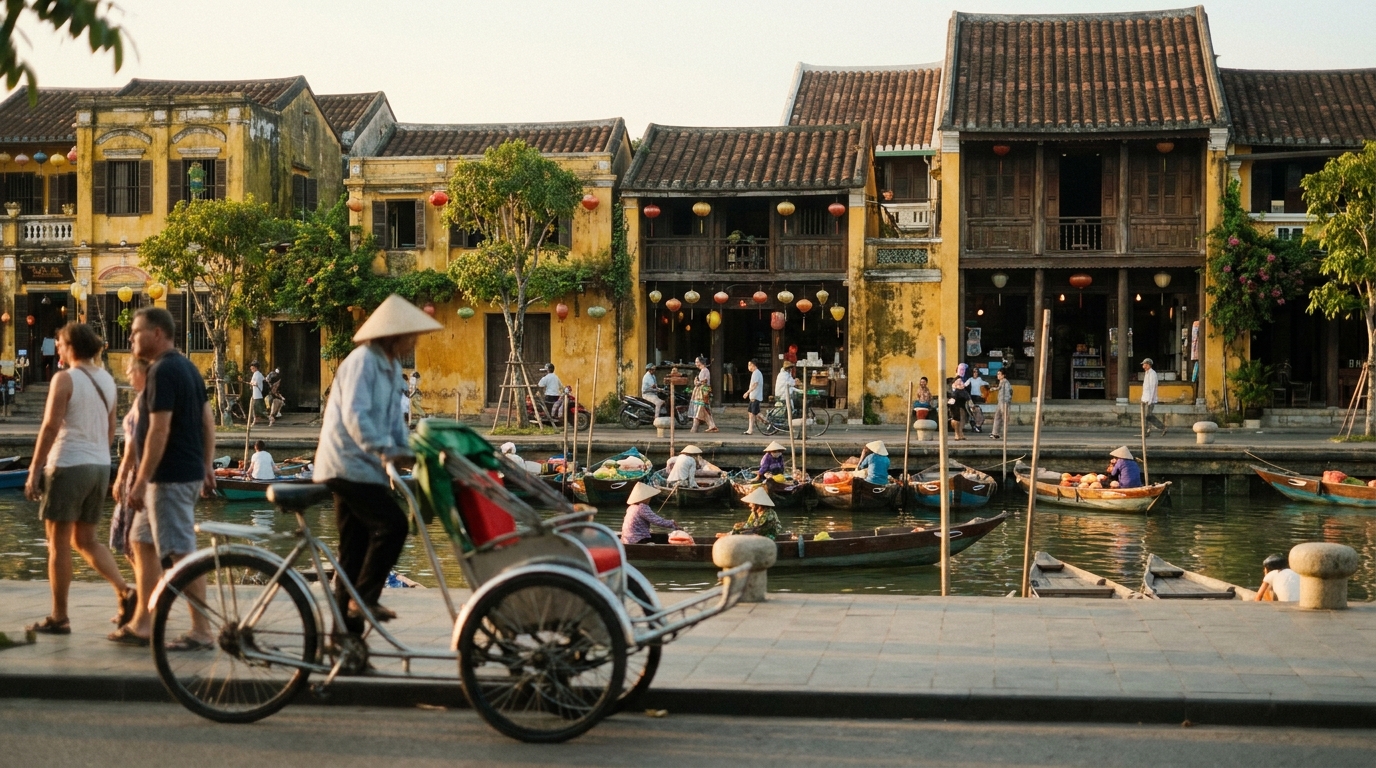
Yes, and it’s one of Southeast Asia’s best-value heritage sites. The 2026 combined Ancient Town ticket costs 120,000 VND (roughly USD 5) and covers entry to five heritage attractions from a rotating menu of 22 sites — including the Japanese Covered Bridge, assembly halls, and historic merchant houses. The town’s amber glow at night, when hundreds of silk lanterns reflect off the Thu Bon River, makes even a short evening stroll feel cinematic.
full guide to Hoi An Ancient Town entry tickets and what’s included
What to do: Buy the ticket at any official booth at the entrance gates. Afternoon visits (3–5 PM) catch the best light, while evenings (after 6 PM) are peak lantern hours. Plan at least two hours on your first visit.
Price: 120,000 VND (~USD 5) per person; children under 7 enter free.
What Are the Top Cultural Experiences in Hoi An?
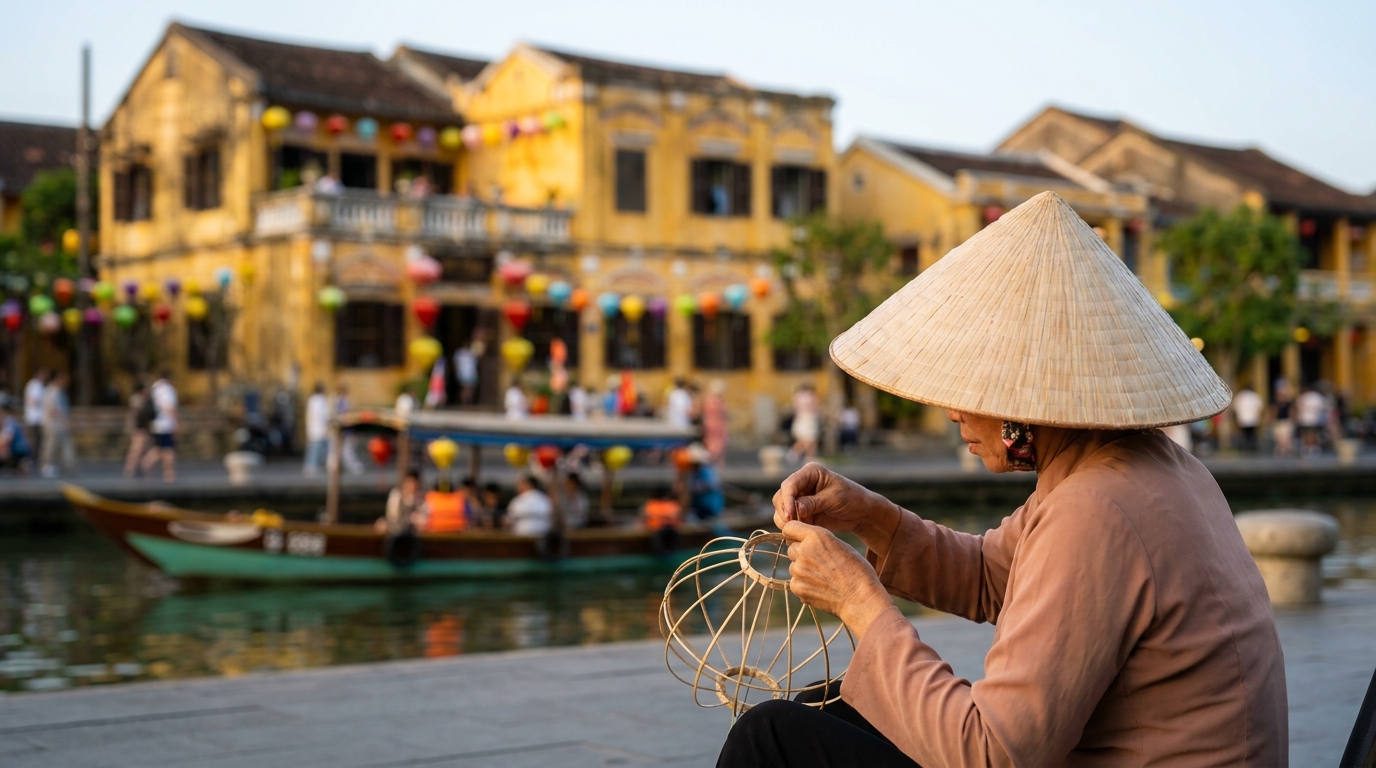
Hoi An’s cultural calendar runs year-round, but certain activities separate genuine engagement from tourist box-ticking. According to the Vietnam Tourism Board’s 2025 visitor survey, cultural experiences — lantern-making workshops, tailoring sessions, and temple tours — rank as the top reason 67% of first-time visitors choose Hoi An over other Vietnamese cities.
1. Lantern-making workshop — Learn to bend bamboo frames and stretch silk at a family workshop on Nguyen Nhat Anh Street. Sessions run 60–90 minutes; you take the lantern home. Price: 80,000–120,000 VND (USD 3–5).
2. Vietnamese cooking class — Hoi An is arguably Vietnam’s best city for learning to cook. Classes typically start at a local market, move to a riverside kitchen, and cover 4–6 dishes including white rose dumplings and cao lau noodles.
3. Traditional ao dai dress rental — Dozens of shops near the Ancient Town rent silk ao dai outfits for USD 3–6 per hour, including a professional photoshoot setup.
4. Japanese Covered Bridge — Built in the 1590s, this is Hoi An’s most-photographed structure. It’s included in the combined Ancient Town ticket. Entry: 120,000 VND combined ticket.
5. Phuc Kien Assembly Hall — A stunning Fujian Chinese community hall built in 1690, packed with intricate woodcarving and incense smoke. Covered by the combined ticket.
How Do You Get to An Bang and Cua Dai Beach From the Ancient Town?
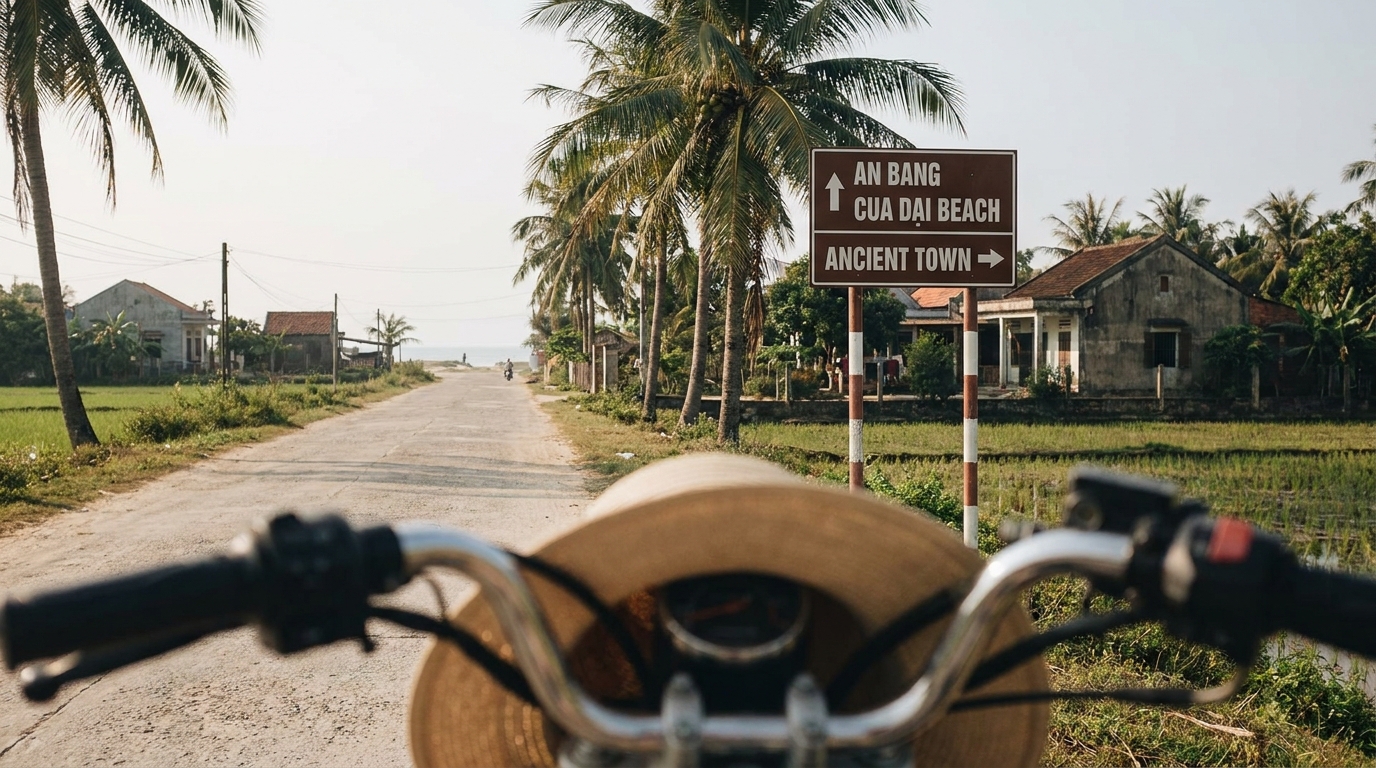
Both beaches are an easy ride from the Ancient Town. An Bang Beach sits 3 km northeast; Cua Dai Beach is 4.5 km east. Bicycle rental in Hoi An costs 50,000–80,000 VND (USD 2–3.50) per day, making either beach reachable without spending on transport. In 2025, Booking.com listed An Bang as one of Vietnam’s top-rated beach areas for boutique guesthouses, with average nightly rates of USD 35–80 for beachfront rooms.
An Bang vs Cua Dai Beach
6. An Bang Beach — Quieter, more local-feeling, with beach clubs offering free loungers if you buy a drink. Great for sunset.
7. Cua Dai Beach — Broader stretch of sand, more facilities, but can be busier in peak season (December–March). A few beach bars rent surfboards for USD 8–12 per hour.
Tip: Avoid Cua Dai during the rainy season (September–November) when erosion narrows the beach significantly.
What Are the Best Day Trips From Hoi An?

Hoi An’s location in Quang Nam Province puts three outstanding day trips within easy reach. In 2025, GetYourGuide reported that My Son Sanctuary tours were the most-booked day excursion from Hoi An, with over 40,000 bookings processed in a single year.
8. My Son Sanctuary — A 4th–13th century Cham Hindu temple complex set in a jungle valley, 40 km from Hoi An. A UNESCO World Heritage Site in its own right.
9. Marble Mountains (Da Nang) — Five marble-and-limestone hills riddled with Buddhist sanctuaries and caves, 27 km north. Entry: 40,000 VND (USD 1.60). Combine with a Da Nang city day for maximum value.
10. Tra Que Vegetable Village — A 30-minute bicycle ride north of Hoi An, this farming hamlet lets you work the fields alongside local farmers for a morning, then cook what you harvested. Tours cost USD 12–18 per person.
11. Phong Nha Caves — For a longer overnight, the UNESCO-listed Phong Nha cave system is a 4-hour drive north. Best booked as a 2-day trip.
Which Hoi An Activities Are Best for Foodies?
Hoi An is one of Vietnam’s most celebrated food cities. CNN Travel ranked it among Asia’s top 10 street food destinations in 2025, and the city’s three signature dishes — cao lau noodles, white rose dumplings, and banh mi — are all made with local ingredients unavailable elsewhere in Vietnam.
According to Klook’s 2025 Southeast Asia Food Report, Hoi An cooking classes have a 98% satisfaction rate among bookers, higher than any other Vietnamese city.
12. Phuong Banh Mi — Widely regarded as the best banh mi in the world (Anthony Bourdain featured it). A sandwich costs 35,000–45,000 VND (USD 1.50–2). Arrive before noon; they sell out.
13. Morning market food tour — Guided 2-hour walk through Hoi An Central Market with tastings.
14. White rose dumpling at Ba Buoi — Only one family still makes the original white rose (banh bao vac). A plate of 10 costs 45,000 VND (USD 2). Address: 533 Hai Ba Trung Street.
15. Cao lau noodle tasting — Cao lau noodles are made using water from one ancient well in Hoi An; the dish can’t be authentically replicated elsewhere. Find it at local stalls for 40,000–60,000 VND (USD 1.60–2.50).
Hoi An food guide
What Outdoor and Water Activities Can You Do in Hoi An?
Beyond beaches, Hoi An’s river delta and countryside offer a range of active options. Vietnam’s adventure tourism market grew 18% year-on-year in 2025 (Vietnam Adventure Tourism Association, 2025), with Hoi An accounting for a significant share due to its combination of flat rice paddies, waterways, and coast.
16. Basket boat tour on Bay Mau coconut forest — Round wicker basket boats piloted by locals through a dense water coconut forest, 10 km from town. Tours last 45–60 minutes and include a short boat dance performance.
17. Bicycle through rice paddies — Rent a bicycle (50,000–80,000 VND/day) and follow the trail west along the Thu Bon River. The 15 km loop through Kim Bong village takes 2–3 hours with stops.
18. Kayaking on the Thu Bon River — Half-day kayak tours depart from the Ancient Town waterfront. Available on GetYourGuide from USD 22 per person.
19. Snorkeling at Cham Islands — The Cu Lao Cham Marine Park, 15 km offshore, protects some of Central Vietnam’s best coral reefs. Full-day boat tours including two snorkel sites and lunch cost USD 30–45 per person.
20. Stand-up paddleboarding (An Bang Beach) — Several An Bang beach clubs rent SUP boards for USD 8–12 per hour. Best in the early morning when the surf is calm.
How Should You Plan Shopping and Tailoring in Hoi An?
Hoi An is one of the only places in the world where you can have custom clothing made in 24–48 hours at prices that undercut Western off-the-rack retail. The city has over 400 registered tailor shops, and quality ranges wildly. A 2025 survey by The Savvy Backpacker found that travelers who spent at least 30 minutes on a fitting (versus a rushed 10-minute visit) reported 90% satisfaction with their finished garments.
21. Custom tailoring — Budget USD 40–120 for a tailored suit or dress, depending on fabric. Allow at least 48 hours and one fitting session. Recommended: Yaly Couture, A Dong Silk, Bebe Tailor.
22. Lantern shopping at the Night Market — Every evening, the pedestrianized An Hoi Night Market fills with lantern vendors, souvenir stalls, and street food. Silk lanterns cost 30,000–80,000 VND (USD 1.20–3.20) each.
23. Handmade paper products and ceramics — Thanh Ha Pottery Village, 3 km west, is where Hoi An’s traditional ceramics are made. Watch craftspeople work and buy direct from studios at 30–60% below in-town prices.
Hoi An shopping guide
What’s the Best Way to Experience Hoi An at Night?
Hoi An’s night atmosphere is its most distinctive feature. On the 14th day of each lunar month, the town holds its Full Moon Lantern Festival: electric lights are switched off, hundreds of silk lanterns are floated on the river, and traditional music performances fill the streets. In 2025, the Hoi An Tourism Department recorded peak single-night visitor counts exceeding 18,000 during Full Moon Festival evenings.
24. Full Moon Lantern Festival — Held monthly (dates shift; check the lunar calendar). Participating in a lantern float ceremony costs 10,000–20,000 VND per paper lantern. This is the single most memorable evening experience Hoi An offers.
25. Sunset boat cruise on the Thu Bon River — One-hour cruises depart from the Ancient Town waterfront at around 5 PM. Prices: 100,000–150,000 VND (USD 4–6) per person for a shared wooden boat; private boats run USD 20–35.
Hoi An Full Moon Festival guide
Find your Hoi An hotel on the map
Live prices from Booking & Airbnb — tap a pin to compare stays around the Ancient Town and An Bang Beach and beyond.
Practical Tips: Getting There and Staying Connected
Da Nang International Airport is the closest gateway, 30 km north of Hoi An. Taxis cost USD 12–18; ride-hailing apps (Grab) run USD 9–14. There’s no direct train to Hoi An, but Da Nang train station connects the town to the national rail network — check train prices via Omio.
For connectivity, we recommend picking up an Airalo eSIM before you land. As of 2026, an Airalo Vietnam eSIM provides 1 GB for USD 4.50 or 5 GB for USD 9 — no SIM swap needed, and it activates before you leave home.
For accommodation, Booking.com lists 400+ properties in and around Hoi An, from USD 12/night guesthouses inside the Ancient Town to USD 200+/night resort villas near An Bang Beach. The best-value zone for most travelers is the stretch between the Ancient Town and An Bang Beach.
where to stay in Hoi An
Frequently Asked Questions
How many days do you need in Hoi An?
Three days is the sweet spot for most travelers. Day one covers the Ancient Town and a cooking class; day two handles a beach day at An Bang and the Night Market; day three works well for a My Son Sanctuary day trip or a Cham Islands snorkeling tour. Budget travelers can cover the highlights in two days.
When is the best time to visit Hoi An?
February through April offers the driest, coolest weather, with average highs of 25–28°C (77–82°F). The rainy season runs September–November, when flooding can affect the Ancient Town. December and January are busy but pleasant. Vietnam Tourism Board (2025) data shows February is the peak booking month.
Is Hoi An safe for solo travelers?
Yes. Hoi An consistently ranks among Vietnam’s safest cities for solo travelers. Petty theft is the primary concern — keep bags zipped in crowded market areas. The Ancient Town’s pedestrian-only evenings make solo walking feel secure. Solo female travelers report very high comfort levels in community forums like TripAdvisor (2025).
How much does it cost per day in Hoi An?
Budget travelers spend USD 30–45 per day (guesthouse, street food, bicycle rental, one paid activity). Mid-range travelers average USD 70–120 per day (boutique hotel, restaurant meals, guided tours). Comfort travelers spending USD 150–250 per day can access the best beach resorts and private boat tours.
Can you visit Hoi An as a day trip from Da Nang?
Yes, and it’s one of the most popular day trips in Central Vietnam. The 30-km journey takes 45 minutes by taxi (USD 12–18) or 60 minutes by Grab.
Do you need the Ancient Town ticket for everything?
No. The ticket covers entry to five specific heritage sites chosen from the ticketed list. You don’t need it to walk the streets, shop, eat, or visit the Night Market. You do need it to enter the Japanese Covered Bridge interior, the assembly halls, and the traditional merchant houses. It’s worth buying even if you’re only curious about one or two sites.
Is Hoi An accessible for travelers with mobility challenges?
The Ancient Town’s cobblestone streets and narrow doorways present challenges for wheelchair users and travelers with limited mobility. The riverside promenade and most beach areas are more accessible. Cooking classes and several boat tours accommodate mobility needs with advance notice — check with operators when booking on Klook or GetYourGuide.
Conclusion
Hoi An delivers more variety per square kilometer than almost anywhere else in Southeast Asia. You’ve got UNESCO heritage, cooking classes under USD 25, custom tailoring in 48 hours, a beach five minutes by bike, and a monthly lantern festival that doesn’t cost a cent to watch from the riverbank. The 25 activities above cover every budget and interest level.
Start with the Ancient Town ticket (USD 5), book a cooking class through GetYourGuide or Klook, grab a Vietnam eSIM from Airalo before you fly, and lock in your accommodation early on Booking.com — Hoi An’s best guesthouses sell out weeks ahead during peak season and Full Moon Festival dates.
complete Hoi An travel guide
We’d love to hear which activity makes your list — drop your experience in the comments below.
Sources:
- Vietnam National Administration of Tourism, Visitor Statistics Report, retrieved 2026-04-10, https://tourism.gov.vn
- Vietnam Tourism Board, Visitor Experience Survey 2025, retrieved 2026-01-15, https://vietnamtourism.gov.vn
- Klook, Southeast Asia Food Experiences Report 2025, retrieved 2026-02-20, https://www.klook.com
- CNN Travel, Asia’s Top Street Food Cities 2025, retrieved 2026-01-05, https://edition.cnn.com/travel
- Vietnam Adventure Tourism Association, Annual Growth Report 2025, retrieved 2026-03-01, https://vata.org.vn
- Hoi An Tourism Department, Full Moon Festival Attendance Data 2025, retrieved 2026-04-01, https://hoianworldheritage.org.vn
- The Savvy Backpacker, Hoi An Tailor Survey 2025, retrieved 2026-02-10, https://thesavvybackpacker.com
- Airalo, Vietnam eSIM Pricing, retrieved 2026-06-01, https://www.airalo.com/vietnam-esim