
Disclosure: Some links in this guide are affiliate links. If you book or buy through them, we may earn a small commission at no extra cost to you — it helps keep our guides free.
Where to Stay in Cape Town 2026: Best Areas & Hotels
Cape Town is one of Africa’s most rewarding cities to visit, and choosing the right neighborhood shapes your entire trip. We’ve broken down the best areas by traveler type — budget backpacker, beach lover, food obsessive, or luxury seeker — so you can book with confidence.
Key Takeaways
- The V&A Waterfront area commands the highest hotel rates, averaging $180-$320/night for 4-star properties in 2026 (Booking.com, 2026)
- Cape Town’s tourism arrivals reached 1.9 million international visitors in 2025, up 14% year-on-year (South African Tourism, 2025)
- Sea Point and De Waterkant offer the best value-to-location ratio, with quality guesthouses from $60-$120/night
- The City Bowl sits within 15 minutes of Table Mountain, the V&A Waterfront, and Long Street nightlife
- Camps Bay beach-facing hotels charge a 35-50% premium over comparable inland properties (Booking.com data, 2026)
Find your Cape Town hotel on the map
Live prices from Booking & Airbnb — tap a pin to compare stays around the V&A Waterfront and beyond.
Which Area of Cape Town Should You Stay In?
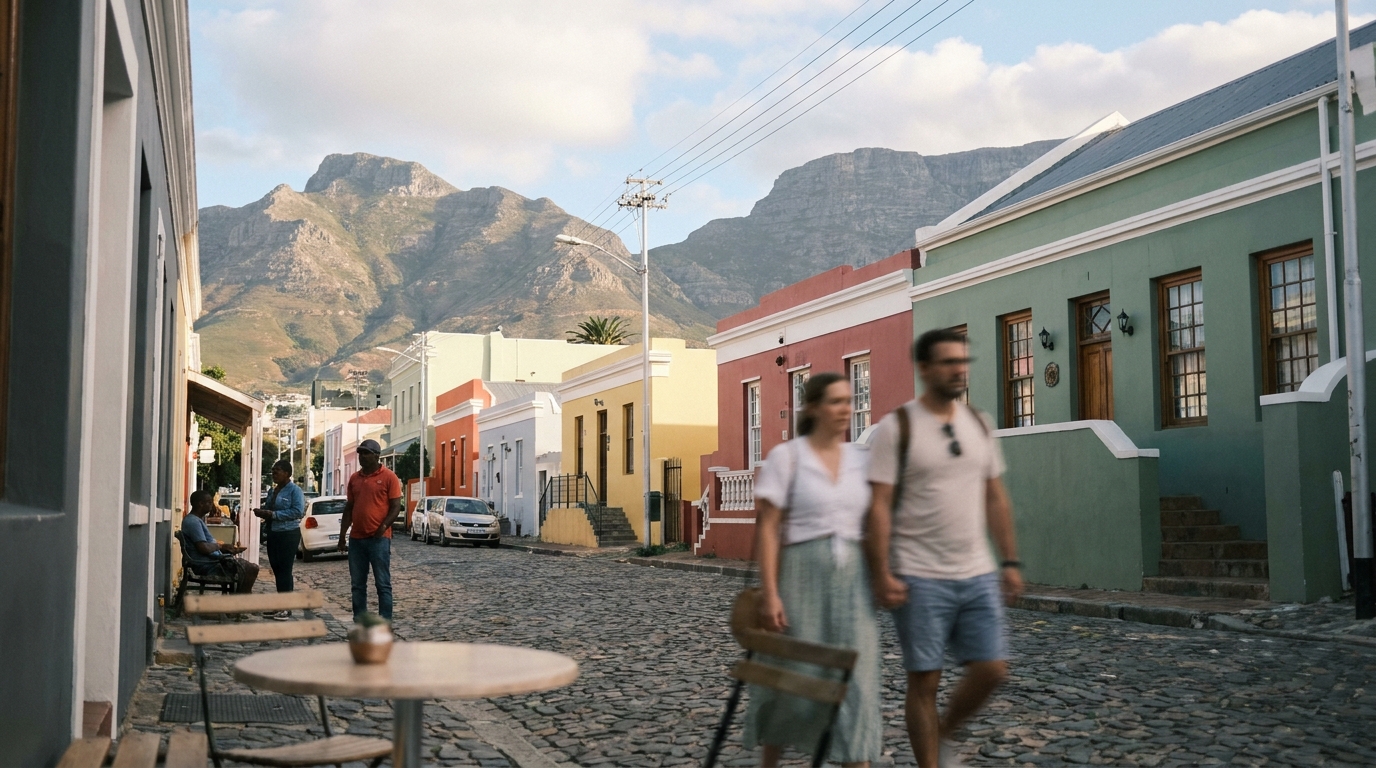
The right neighborhood depends entirely on your priorities. Families and first-timers do best at the V&A Waterfront for safety and convenience, while budget travelers get more space in Sea Point or the City Bowl. Beach-focused visitors should look at Camps Bay or Clifton, and design-hotel fans will prefer the compact, walkable streets of De Waterkant.
Cape Town’s layout is more spread out than most European cities. The Atlantic Seaboard (Sea Point, Camps Bay, Clifton) faces west toward the ocean. The City Bowl and V&A Waterfront are central and connect most areas. The Southern Suburbs (Constantia, Newlands) sit inland near wine estates. Each zone has a genuinely different personality.
| Area | Best For | Avg Nightly Rate (2026) | Safety Rating |
|---|---|---|---|
| V&A Waterfront | Families, first-timers | $180-$320 | Very High |
| City Bowl | Culture, nightlife, value | $70-$160 | High (stay central) |
| Sea Point | Beach access, budget | $60-$130 | High |
| Camps Bay | Beach glamour, splurges | $150-$400 | High |
| De Waterkant | Design hotels, LGBTQ+ travel | $90-$200 | Very High |
| Green Point | Sports events, mid-range | $80-$150 | High |
| Constantia | Wine farms, families, quiet | $100-$250 | Very High |
Staying at the V&A Waterfront: Safe, Central, and Pricey
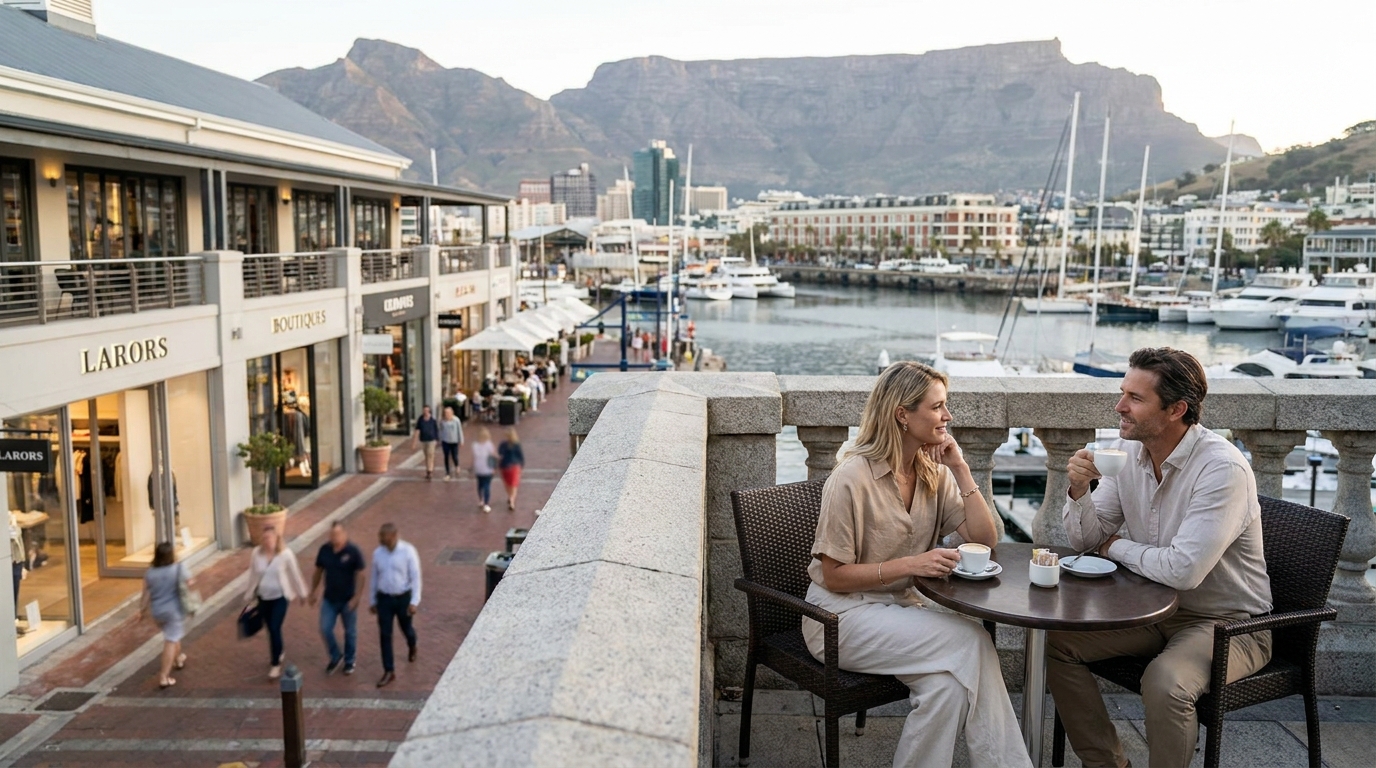
The V&A Waterfront is Cape Town’s safest and most visited precinct, and it’s the default choice for first-time visitors who want everything within walking distance. You’ll pay a premium — budget at least $180/night for a decent 3-star — but you’re getting gated security, direct access to 450+ shops and restaurants, and the easiest ferry connections to Robben Island.
Top picks on Booking.com include the Radisson Blu Hotel Waterfront (from $195/night), which puts you steps from the Two Oceans Aquarium, and the One&Only Cape Town (from $420/night) for a full luxury experience with a spa and three restaurants. The DoubleTree by Hilton Cape Town (from $160/night) hits a solid sweet spot for business travelers.
The main drawback: you’re a $12-$18 Uber ride from Table Mountain’s lower cable car station, and the area can feel sanitized compared to the grittier, more local parts of the city.
City Bowl: The Beating Heart of Cape Town
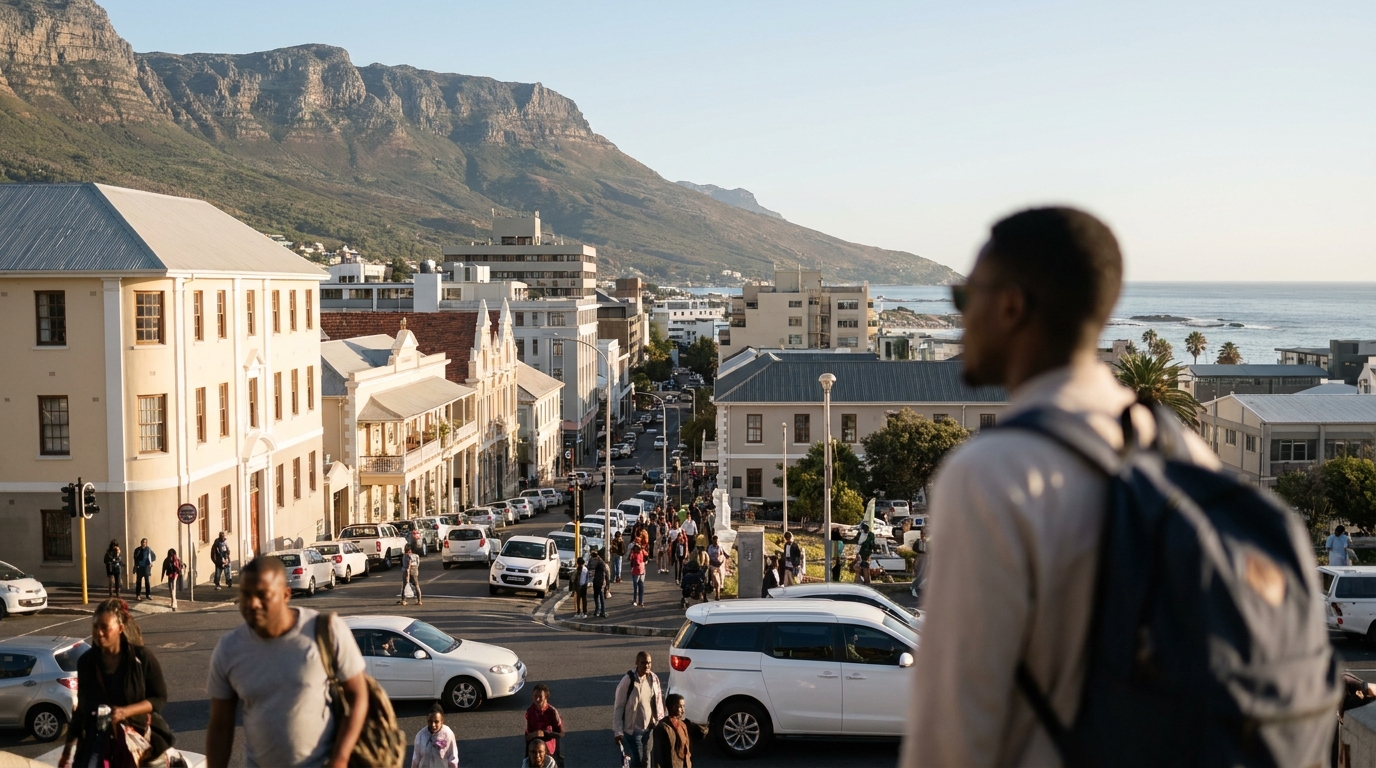
The City Bowl — covering the CBD, Gardens, Tamboerskloof, and De Waterkant — is where Cape Town’s creative and culinary scene concentrates. Long Street runs through the middle with bars, hostels, and mid-range hotels. Kloof Street, a 10-minute walk uphill, has some of South Africa’s best restaurants per square kilometer.
For accommodation, The Daddy Long Legs Boutique Hotel on Long Street (from $85/night) remains one of Africa’s most distinctive design stays, with each room styled by a different artist. The Protea Hotel Fire & Ice! (from $110/night) suits couples and solo travelers who want social energy without hostel dorms.
Safety tip: the City Bowl is safe during daylight and evening in the main strip areas. Avoid walking east toward the Foreshore alone at night — take an Uber instead. The /cape-town-safety-tips/ article covers this in detail.
Sea Point: Best Value on the Atlantic Seaboard
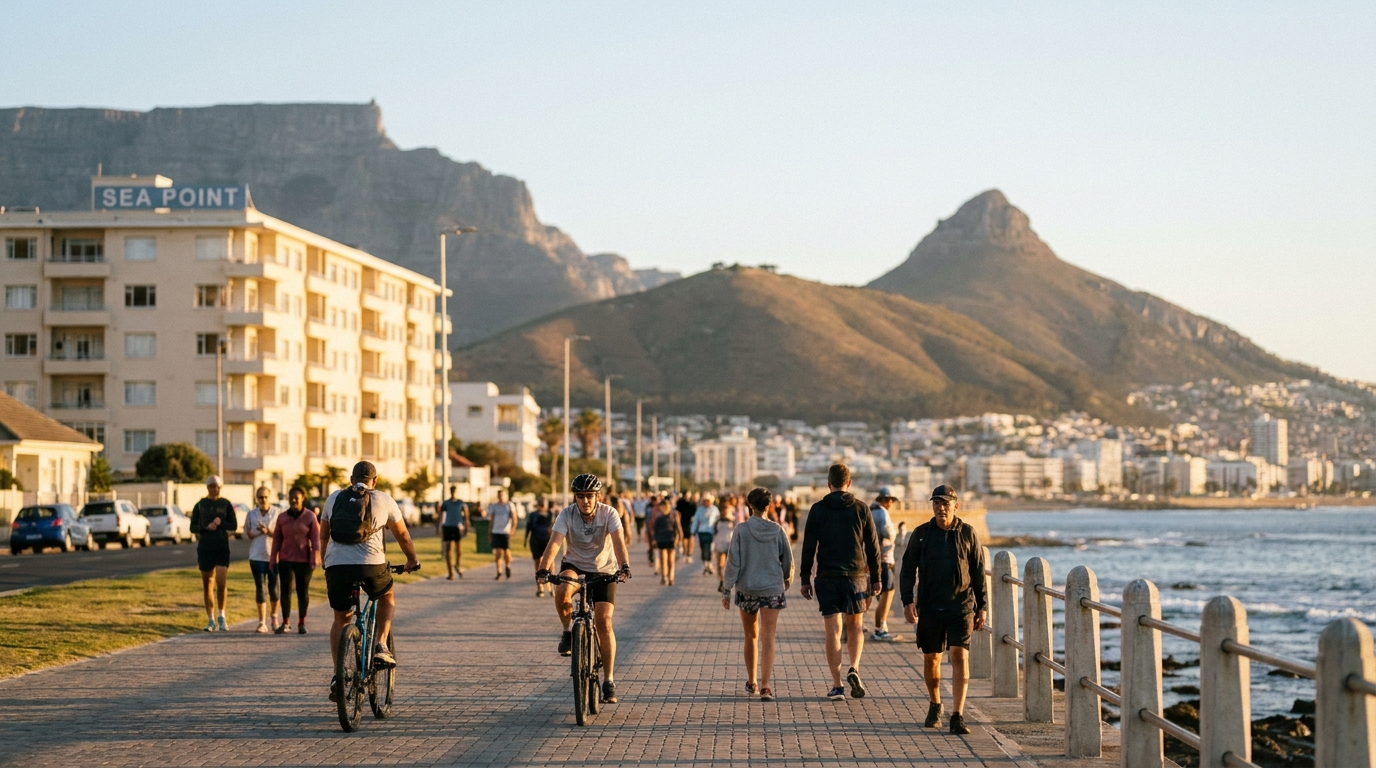
Sea Point is where Capetonians actually live — a dense, lively suburb running along the Atlantic coast between Green Point and Bantry Bay. It’s our top pick for value-conscious travelers who still want beach access, because the Sea Point Promenade (a 3km ocean-side walkway) is free, the tidal pools are swimmable year-round, and guesthouses here cost 40-50% less than equivalent properties in Camps Bay.
Expect to pay $60-$130/night for a solid guesthouse or self-catering apartment. The Winchester Mansions Hotel (from $110/night) is the area’s standout heritage property, with a pool and Sunday jazz brunch that draws locals. For self-catering, Sea Point has dozens of Booking.com apartment options from $55/night that suit families and longer stays.
Supermarkets, pharmacies, coffee shops, and Cape Town’s best sushi restaurants are all within walking distance. The 102 bus connects Sea Point to the City Bowl in 20 minutes for under $1. See our /cape-town-public-transport/ guide for full route details.
Camps Bay: Glamour, Beaches, and Steep Prices
Camps Bay is the postcard version of Cape Town — white sand, the Twelve Apostles mountain backdrop, and a strip of upscale restaurants and beach bars that fill up from noon onwards in summer. If that visual is why you’re visiting, it’s worth the premium. If you just want a bed near a beach, Sea Point delivers 80% of the experience at half the cost.
Hotel rates in Camps Bay run $150-$400/night for decent 4-star properties in peak season (December-February). The Camissa House (from $180/night) and Bay Hotel Camps Bay (from $210/night) are consistently rated highest on Booking.com. Self-catering villas and apartments — searchable on Booking.com — often offer better value for groups, with private pools from $300/night split three or four ways.
Note that Camps Bay has no supermarket and limited public transport. You’ll need a rental car or rely on Uber, which adds $8-$15 per trip into the city. Discover Cars lists local rental options from $35/day — worth comparing before you book. /cape-town-car-rental/
De Waterkant: Boutique Hotels and Village Energy
De Waterkant is Cape Town’s most walkable village-within-a-city: cobblestone streets, restored Cape Dutch cottages painted in candy colors, and a concentration of boutique guesthouses that punch above their price point. It sits between the V&A Waterfront and the City Bowl, making it equally convenient for both.
The neighborhood is known as Cape Town’s LGBTQ+ hub and draws a cosmopolitan crowd year-round. Rates run $90-$200/night, notably below the Waterfront for a comparable quality level. Village and Life De Waterkant (from $95/night) offers well-designed suites with kitchenettes. The Loader Street House (from $130/night) is a popular choice for couples who want privacy and character in equal measure.
De Waterkant’s main street, Somerset Road, connects directly to Green Point Stadium and the fan walks — useful if you’re visiting during a Stormers rugby game or the Cape Town 7s. /cape-town-events-calendar/
Green Point and the Stadium District
Green Point sits between De Waterkant and Sea Point, anchored by Cape Town Stadium (built for the 2010 FIFA World Cup) and the Green Point Urban Park. It’s a practical choice for travelers who want mid-range hotels without the tourist-tax pricing of the Waterfront.
The Holiday Inn Express Cape Town City Centre (from $80/night) and Radisson RED Cape Town (from $105/night) both sit in this zone and offer solid chain reliability with easy access to the MyCiTi bus network. Green Point’s restaurant scene has expanded sharply since 2023, with the Chiappini Street strip now rivaling Kloof Street for quality. It’s also a short walk from the Sea Point Promenade and the Saturday Green Point Market, which runs weekly. /cape-town-markets/
Constantia and the Southern Suburbs: Wine Country Calm
If you’re visiting Cape Town primarily for the winelands and prefer a quiet, leafy base over urban energy, Constantia is a genuine alternative to the city center. It’s 25-35 minutes by car from the V&A Waterfront but surrounded by working wine estates including Groot Constantia (established 1685) and Steenberg Vineyards.
Accommodation here skews toward boutique guesthouses and farm-style properties. The Steenberg Hotel (from $220/night) is the area’s flagship, with two restaurants and vineyard walks on-site. The Cellars-Hohenort (from $195/night) is a restored Victorian manor with gardens that many guests call the best hotel setting in South Africa. Budget-conscious visitors can find clean guesthouses from $75/night via Booking.com.
The trade-off: you’ll need a car for almost everything. Uber works but adds up fast if you’re making multiple daily trips. The wine-focused traveler who plans to rent a car anyway will find Constantia the most relaxing base in the Cape Town metro. /cape-winelands-day-trip/ covers the full Constantia and Stellenbosch options.
Frequently Asked Questions
What is the safest area to stay in Cape Town?
The V&A Waterfront is universally considered the safest precinct — it’s privately managed and security-patrolled around the clock. De Waterkant, Sea Point, and Camps Bay are all high-safety residential areas. The City Bowl is safe in its central zones but we recommend taking Ubers at night rather than walking toward the CBD’s eastern edges.
Is Cape Town expensive to visit in 2026?
Cape Town sits in a comfortable mid-range bracket for US, UK, and Australian visitors. The South African rand trades at roughly R19 to $1 (June 2026), which means your dollar stretches significantly on food, local transport, and mid-range accommodation. A solid 3-star hotel in Sea Point costs $60-$90/night, and a full restaurant meal with wine runs $15-$30 per person.
What’s the best area for families with children?
The V&A Waterfront combines security, entertainment (Two Oceans Aquarium, boat trips, playgrounds), and easy restaurant access, making it the top family pick. Sea Point’s tidal pool complex is also excellent for kids and free to use. Both neighborhoods have direct Uber access to Table Mountain, Boulders Penguin Colony, and Cape Point.
When is the best time to visit Cape Town?
Cape Town’s summer runs November through February — warm, dry, and peak-priced. March through May (shoulder season) offers excellent value, with rates 20-30% lower than December peaks, settled weather, and smaller crowds. June-August is Cape Town’s rainy winter, though temperatures rarely drop below 10C and Table Mountain is still accessible most days.
How many nights do I need in Cape Town?
Five nights is the practical minimum to cover the V&A Waterfront, Table Mountain, Cape Point, the winelands, and a beach day at Camps Bay. Seven nights is more relaxed and lets you add Boulders Beach, a township tour, and an evening drive along Chapman’s Peak. See our /cape-town-itinerary-7-days/ for a full day-by-day breakdown.
Do I need a car to get around Cape Town?
Not necessarily. The MyCiTi bus covers Sea Point, Green Point, the V&A Waterfront, and the CBD efficiently for under $1 per trip. Uber is reliable and cheap by international standards — a cross-city ride rarely exceeds $8. However, if you’re planning Constantia, Cape Point, or the Winelands independently, a rental car unlocks considerably more flexibility. /cape-town-getting-around/
Should I book Cape Town hotels in advance?
Yes, especially for December-January and around the Cape Town Jazz Festival (late March). Quality properties in Sea Point and De Waterkant sell out 6-8 weeks ahead in peak season. Booking.com’s free-cancellation filter lets you lock in rates early without commitment — we always book refundable rates and monitor for price drops.
The Bottom Line: Where to Stay in Cape Town
For most first-time visitors, we’d suggest splitting your stay: two nights at the V&A Waterfront to orient yourself and use the ferry to Robben Island, then moving to Sea Point or De Waterkant for the remainder. You’ll pay less, eat better, and feel like you’re actually living in the city rather than visiting a well-secured tourist zone.
Wherever you stay, book early — Cape Town’s quality properties at realistic price points do fill up, especially for weekends and public holidays. Search availability on Booking.com across all the neighborhoods above to compare what’s actually available on your dates, and filter by “free cancellation” to keep your options open as your plans develop.
For more on planning your Cape Town trip, read our /cape-town-travel-guide/ complete guide covering transport, day trips, food, safety, and the best time to visit.