Disclosure: Some links in this guide are affiliate links. If you book or buy through them, we may earn a small commission at no extra cost to you — it helps keep our guides free.
The 30-second version
Compact city: Lisbon proper has 658,236 residents on 100.05 square kilometers, with about 3.35 million in the metro area (Wikipedia, 2025).
Sunny: The city gets about 2,875 sunshine hours a year, with July averaging 23.2 C (73.8 F) (Wikipedia, 2025).
Airport is close: Lisbon Airport is about 7 km from the center, and the metro takes about 20 minutes downtown (Wikipedia, 2025).
Busy airport: It handled about 36.1 million passengers in 2025 and is described as one of Europe’s most congested (Wikipedia, 2025).
History shaped the map: The 1755 earthquake destroyed about 85% of the city’s structures, which is why the Baixa grid looks the way it does (Wikipedia, 2025).
From airport7 km · 20 minmetro downtown; taxi about 15 minutes
Metro56 stationsfour lines across 44.2 km
Sunshine2,875 hours/yearsunshine hours a year
City size658,236 residentson 100.05 square kilometers
Lisbon is a hilly Atlantic capital of tiled facades, vintage trams, river views, and late dinners. It is compact enough to explore on foot and well connected enough to use as a base for beaches, palaces, and nearby towns.
The city rewards planning in a few specific ways: choosing the right neighborhood, handling the hills, timing popular sights, and knowing which trips to take outside the center. This overview covers those decisions and points to deeper guides for each one.
Affiliate Disclosure: Some links in this guide are affiliate links. If you book through them, we earn a small commission at no extra cost to you. We only recommend services we genuinely trust. Learn more.
Is Lisbon Worth Visiting?
For most travelers, yes. Lisbon is Portugal’s largest city and combines historic neighborhoods, river scenery, strong food, and easy access to the coast. It is also less sprawling than many European capitals, which keeps transit time low.
The trade-offs are practical. The city is built on steep hills, so walking days involve many stairs and cobblestones. Popular viewpoints and trams get crowded in peak months, and the best-known areas are the most touristy.
Lisbon suits couples, solo travelers, food lovers, and anyone who wants a capital with coast and countryside nearby. If you are weighing it against another city, see Lisbon vs Porto and Barcelona vs Lisbon. For safety questions, read is Lisbon safe.
Lisbon also has a deep sense of place. The city was devastated by an earthquake estimated at magnitude 8.5 to 9.0 in 1755, which killed an estimated 30,000 to 40,000 residents (Wikipedia, 2025), and its rebuilt downtown still reflects that history.
Best Time to Visit Lisbon
Lisbon is sunny for much of the year, with about 2,875 hours of sunshine annually. August is the sunniest month at roughly 80% of daytime, while December is the dullest at about 51% (Wikipedia, 2025).
July averages 23.2 C (73.8 F) and January averages 11.8 C (53.2 F). Typical January daytime highs are 14 to 19 C, and August highs run 25 to 32 C (Wikipedia, 2025).
Spring and autumn offer the best balance of mild weather and lighter crowds. Summer is lively but hot on uphill streets, and hotel prices climb. Winter is mild by northern European standards, though rain and gray days are more likely.
Humberto Delgado Airport sits about 7 km northeast of central Lisbon and handled about 36.1 million passengers in 2025. It has two terminals linked by a free shuttle every ten minutes (Wikipedia, 2025).
The metro takes about 20 minutes to downtown, and a taxi to the center takes about 15 minutes, according to the same source. The Aerobus was discontinued in 2023, so do not plan around it. Terminal 1 is under expansion, and the airport is described as very congested, so allow generous time for departures.
Trains arrive at stations including Santa Apolonia, Gare do Oriente, and Rossio, and four CP commuter lines serve Sintra, Azambuja, Cascais, and Sado (Wikipedia, 2025).
Arriving by train from Porto or Spain is a comfortable alternative to flying for many itineraries. Check current timetables with the national operator before booking.
Getting Around Lisbon
Lisbon’s metro has four colored lines and 56 stations across 44.2 km, and it carried about 173 million passengers in 2019 (Wikipedia, 2025). It is the fastest way across the city and to the airport.
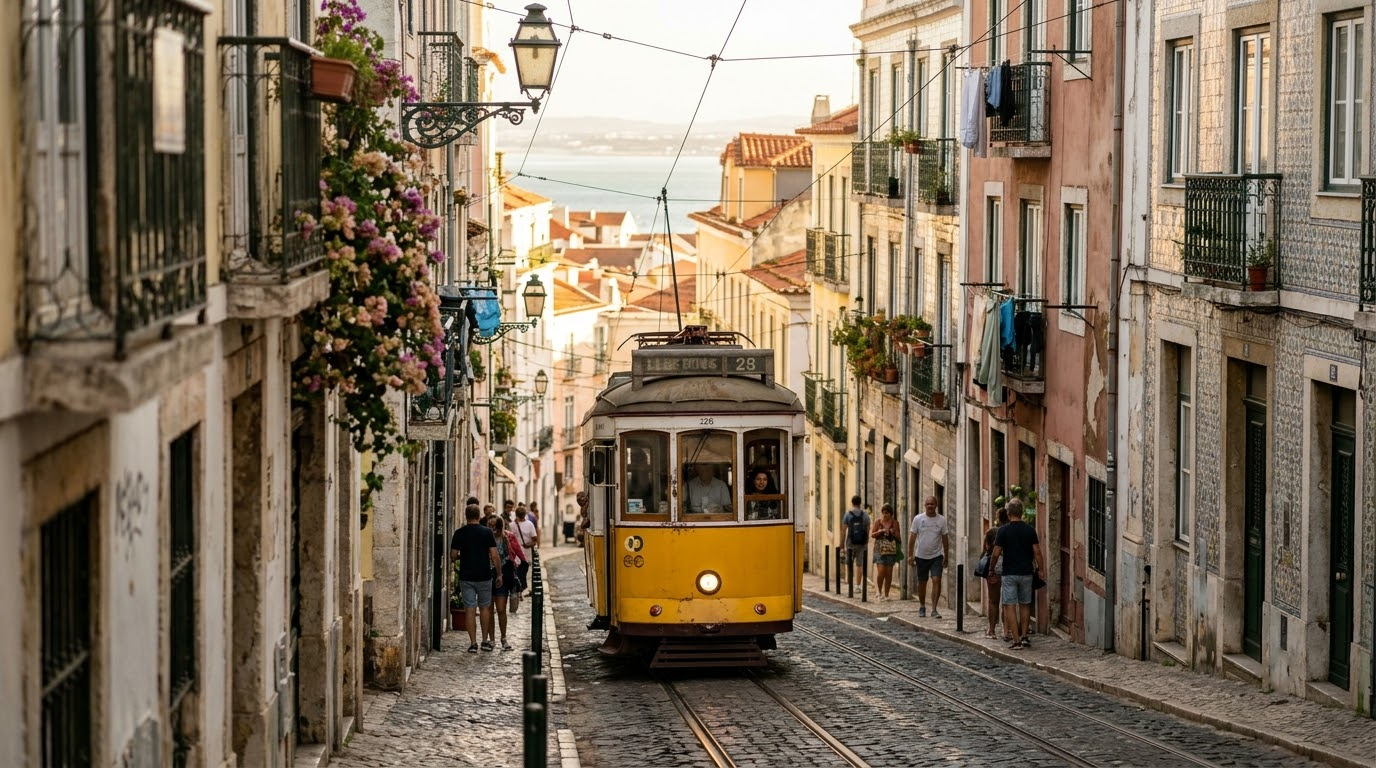
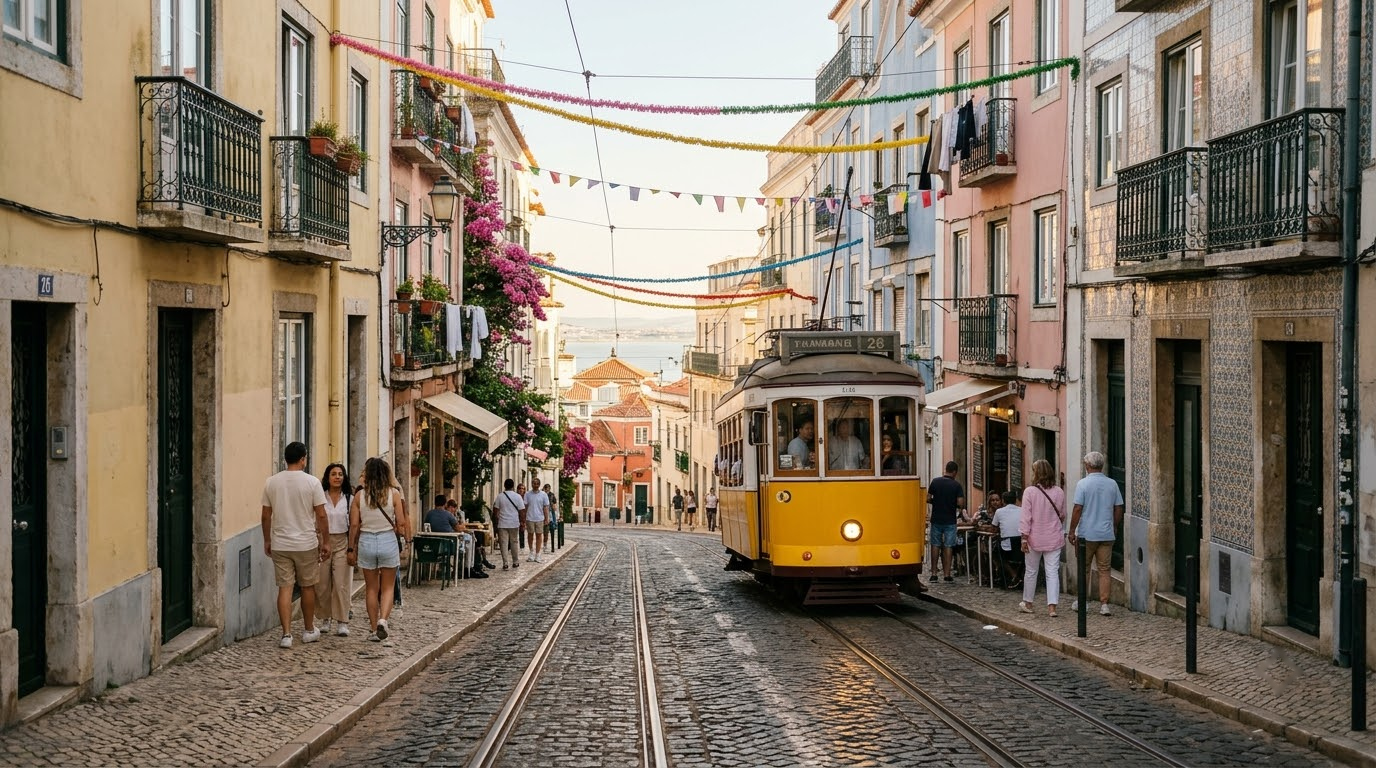
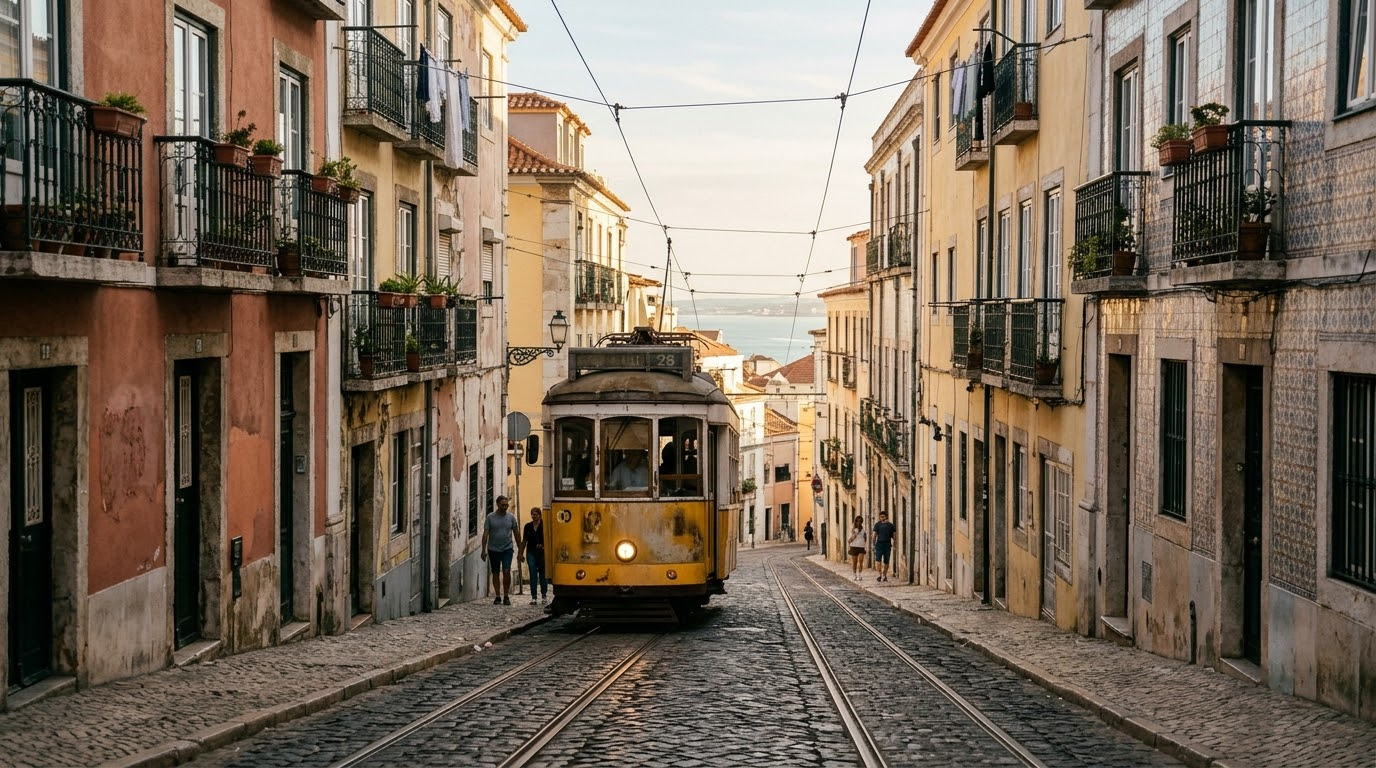
Trams are the iconic option. The network has 64 trams on 6 lines totaling 31 km, and most lines use small, early-20th-century vehicles; Line 15 is the modern exception (Wikipedia, 2025). Popular lines can be crowded, so ride early and watch your bag.
Carris also runs a bus network of 99 routes covering 748 km. Commuter trains link to Sintra and Cascais.
Walking is the best way to explore Alfama, Baixa, and Bairro Alto, but expect slopes. Comfortable shoes matter more than any pass. Taxis and ride-hailing fill gaps late at night.
Top Things to Do in Lisbon
Alfama. The city’s oldest district runs down the slope from Sao Jorge Castle to the Tagus (Wikipedia, 2025). Wander the lanes, then stop at a viewpoint. Check castle hours and tickets on the official site before going.
Baixa. The downtown grid was rebuilt largely after the 1755 earthquake. It is flat, central, and good for orientation.
Bairro Alto. A residential, shopping, and nightlife district that is quiet by day and busy after dark.
Belem. This riverside area has the Belem Tower, built between about 1514 and 1519 as a fortification at the mouth of the Tagus and about 30 m tall, and the Jeronimos Monastery. Both are UNESCO-listed, and the tower was inscribed in 1983 (Wikipedia, 2025). Visit on a weekday morning to avoid queues.
Trams and viewpoints. Ride a tram for the experience, then use the miradouros for panoramic views.
Day trips. Sintra and Cascais are reachable by commuter train, and the day trips from Lisbon guide ranks the best options.
Where to Stay in Lisbon
Choose a neighborhood based on how you want to spend evenings.
Baixa and Chiado. Central, flat, and well connected. Good for first-timers and short stays, though it is busy.
Alfama. Atmospheric and historic, with steep lanes and limited access for luggage. Better for travelers who pack light.
Bairro Alto and Cais do Sodre. Best for nightlife, with the trade-off of late noise.
Belem. Quieter and spacious, close to major monuments, but farther from nightlife.
Parque das Nacoes area. A modern district near Gare do Oriente, handy for trains and the airport metro.
Always check for stairs, elevator access, and street noise in listings. Compare current options by area and date before booking, and read recent guest reviews for noise and access notes.
Using the Lisbon Metro and Trams Well
Buy a rechargeable transit card at a metro station and load it with credit rather than buying single tickets. Check the operators’ official sites for current fares and any visitor passes, because prices change.
For tram rides, choose early morning or evening, and consider walking the same route if the queue is long. The hilly streets are often as enjoyable on foot as from a crowded car.
Lisbon Transit Fares: Which Ticket to Buy
The operators publish clear fares, and the right choice depends on how many rides you take. A rechargeable navegante occasional card costs about USD 0.60 (EUR 0.50) and is valid for one year. You load it with either a pay-as-you-go balance (called zapping) or a time-based ticket.
Option (2026)
Price
Best for
Zapping, one metro ride
USD 2.00 (EUR 1.72)
Few rides, flexible days
Carris/Metro single ticket
USD 2.20 (EUR 1.90)
One-off trips and transfers
Bank card tap, one metro ride
USD 2.20 (EUR 1.92)
No card purchase needed
24-hour Carris/Metro ticket
USD 8.40 (EUR 7.25)
Heavy sightseeing days
The break-even is simple. A 24-hour ticket at EUR 7.25 beats zapping once you ride the metro or buses more than four times in a day, since four zapping rides cost EUR 6.88 and five cost EUR 8.60. Hill-heavy days in Alfama and Bairro Alto often hit that number, because riding up and walking down means several short hops.
The 24-hour ticket covers Carris, which includes the buses and the tram network, and the metro. Add-on versions also reach the Cacilhas ferry across the Tagus for USD 12 (EUR 10.35).
Keep the physical card for the whole trip and reload it, since the cheap fare applies to the card and not to loose paper.
Where to Eat in Lisbon
Lisbon’s food scene mixes simple tavern cooking with newer restaurants. Look for grilled fish, salt cod dishes, small plates, and the city’s famous custard tarts, usually sold in bakeries across town.
Lunch is usually the best value, since many restaurants offer set midday menus. Dinner starts later than in northern Europe, and the best-known streets for tourists are often not the best for quality.
A good approach is to eat in neighborhoods rather than on the main sightseeing streets. Alfama, Baixa side streets, and Cais do Sodre all have casual places where locals eat. Reservations are wise on weekends.
If you are visiting on a budget, bakeries and tascas keep costs down. Always check whether a bread or appetizer basket brought to the table is charged separately.
Metro Hours and the Regional Day Ticket
The metro runs every day, including weekends, from 6:30 am until about 1:00 am, based on the last departure from each line’s terminal station. That makes it workable for late dinners in Cais do Sodre or Bairro Alto, though the last trains depart near the end of that window, so do not cut it close.
For day trips, the operators sell a combined ticket called Travelling all Lisboa for USD 13.30 (EUR 11.40). It is valid for 24 hours and covers Carris, the metro and CP commuter trains on the Sintra, Cascais, Azambuja and Sado lines.
A visitor who rides to Sintra or Cascais and back and uses the metro in between often finds it cheaper than buying separate tickets.
Choosing between them
Staying in the center with a few rides: zapping or a bank card tap.
Heavy city day with hills and trams: the 24-hour Carris/Metro ticket.
Sintra or Cascais plus city rides on the same day: the regional ticket.
Fares are reviewed by the operators, so check the metro operator’s site when you plan, especially if your trip falls after a January fare change.
Practical Tips Before You Go
Lisbon’s hills affect almost every plan. Group sights by neighborhood, take the metro or a tram uphill, and walk down. Cobblestone pavements can be slick when wet, so shoes with grip matter more than style.
Crowds peak at the best-known viewpoints, trams, and monuments in the middle of the day. Start early, take a long lunch, and return to the sights in late afternoon when light is softer and lines are shorter. Book timed tickets for major monuments ahead where the official site offers them.
Keep valuables secure in crowded places. Tram lines, metro platforms, and busy squares are where pickpockets work in any European capital, so use a zipped front bag and keep your phone away when not in use.
Many museums and some restaurants close one day a week, often Monday, so check opening days on official sites. Shops in smaller streets may close for a mid-day break. Tipping is modest compared with North America, and rounding up the bill is common.
Most visitors use contactless cards in cafes and shops, but small tascas may prefer cash. Carry a little for markets and bakeries.
If you plan a day trip, pack a light layer even in summer, since coastal wind near Cascais and the hills around Sintra can feel cooler than the city. Trains back to Lisbon run until evening, but confirm the last departure before a late dinner. The Tagus waterfront is worth a walk at sunset. It is flat, scenic, and a good option on days when your legs need a break from the hills.
How Many Days and Sample Plan
Three days covers the main districts. Four or five days lets you add Sintra or Cascais without rushing.
Day 1: Baixa and Alfama. Start downtown, climb to the castle area, and finish at a viewpoint.
Day 2: Belem. Visit the tower and monastery in the morning, then spend the afternoon along the river.