Disclosure: Some links in this guide are affiliate links. If you book or buy through them, we may earn a small commission at no extra cost to you — it helps keep our guides free.
The 30-second version
Size: Florence has 361,625 residents and its province has 988,494 (Wikipedia, 2026), so the center is walkable and sights cluster tightly.
UNESCO status: The Historic Centre of Florence was inscribed in 1982 and covers 505 hectares (Wikipedia, 2026).
Uffizi tickets: A same-day ticket costs USD 28 (EUR 25) and an advance ticket USD 32 (EUR 29); the museum is closed Mondays (Uffizi Galleries, 2026).
Heat: July highs average 32.3 C (90.1 F), against 11.2 C (52.2 F) in January (Wikipedia, 1991-2020 normals).
Day trips: The Tuscan hills, Pisa and Siena are all reachable from the city, so Florence works as a base (Wikipedia: Tuscany, 2026).
PassePartoutUSD 44 (EUR 40)Uffizi, Pitti Palace, Boboli, five days
Uffizi hours8:15 am-6:30 pmTuesday to Sunday; closed Mondays
Walkability20-minute walkmost sights from the cathedral
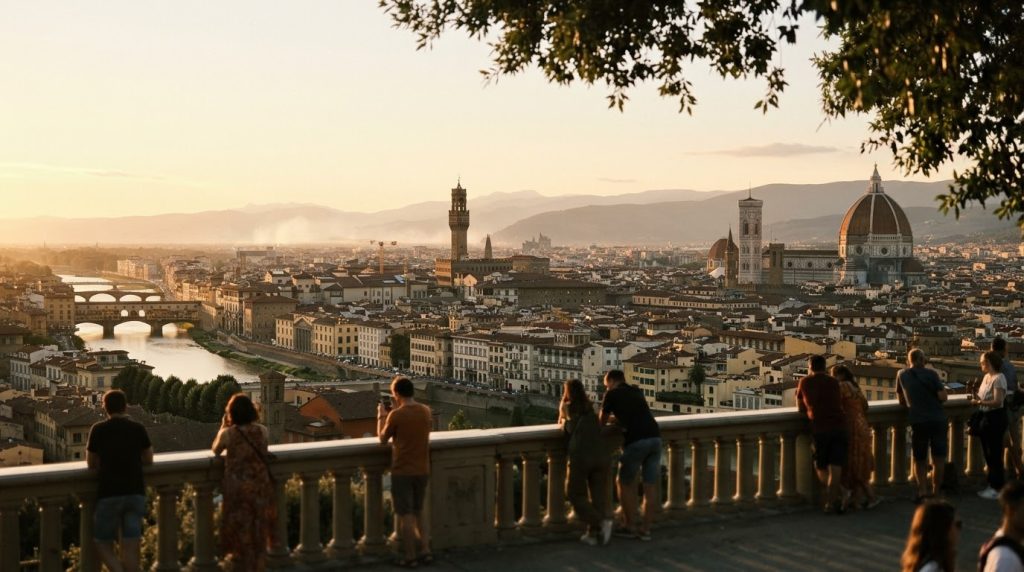
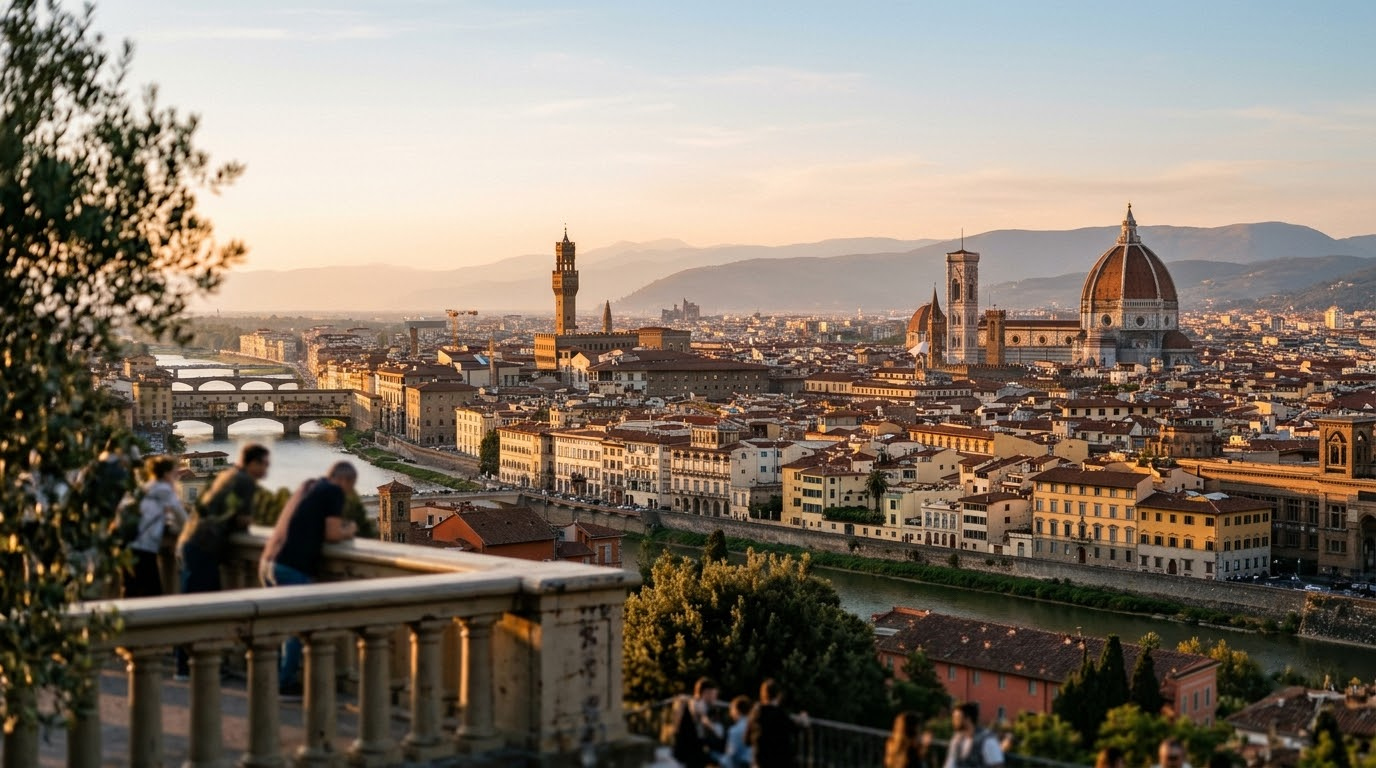
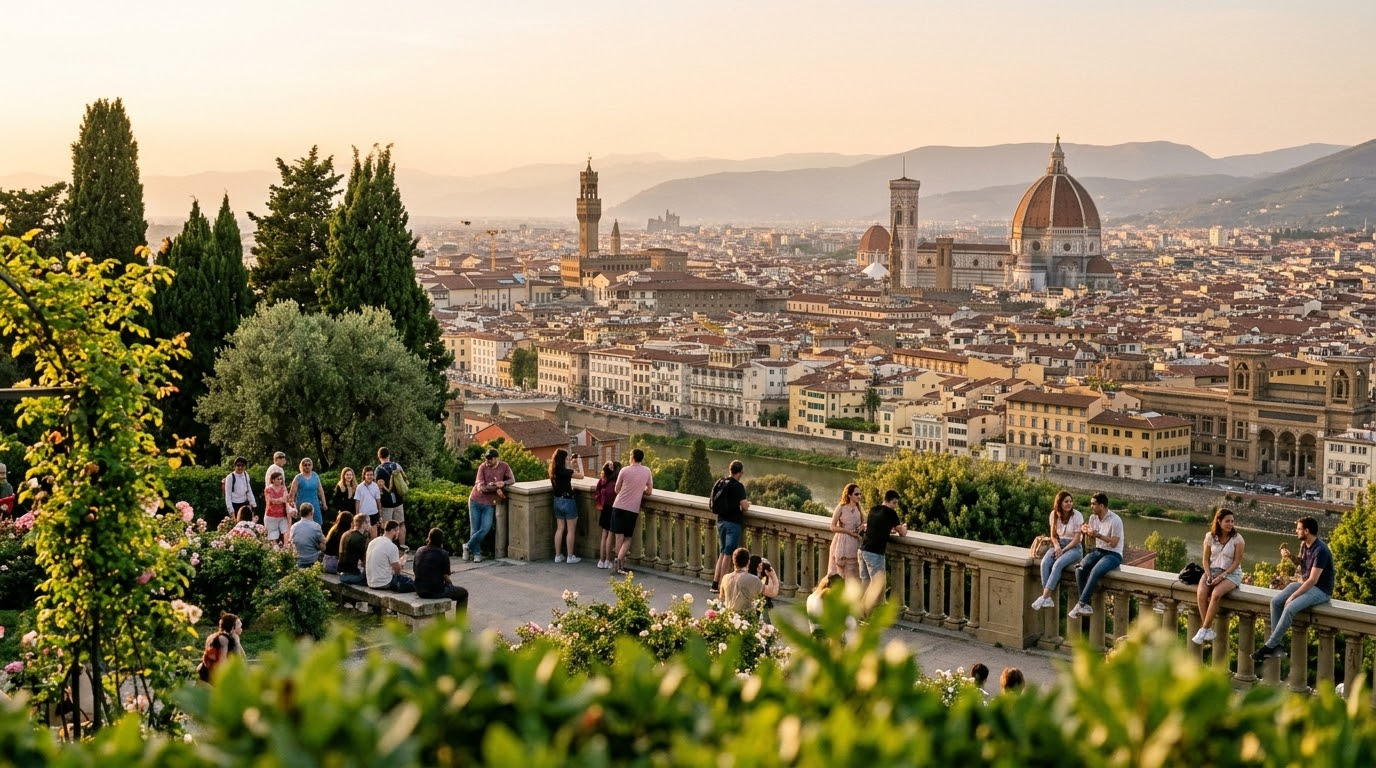
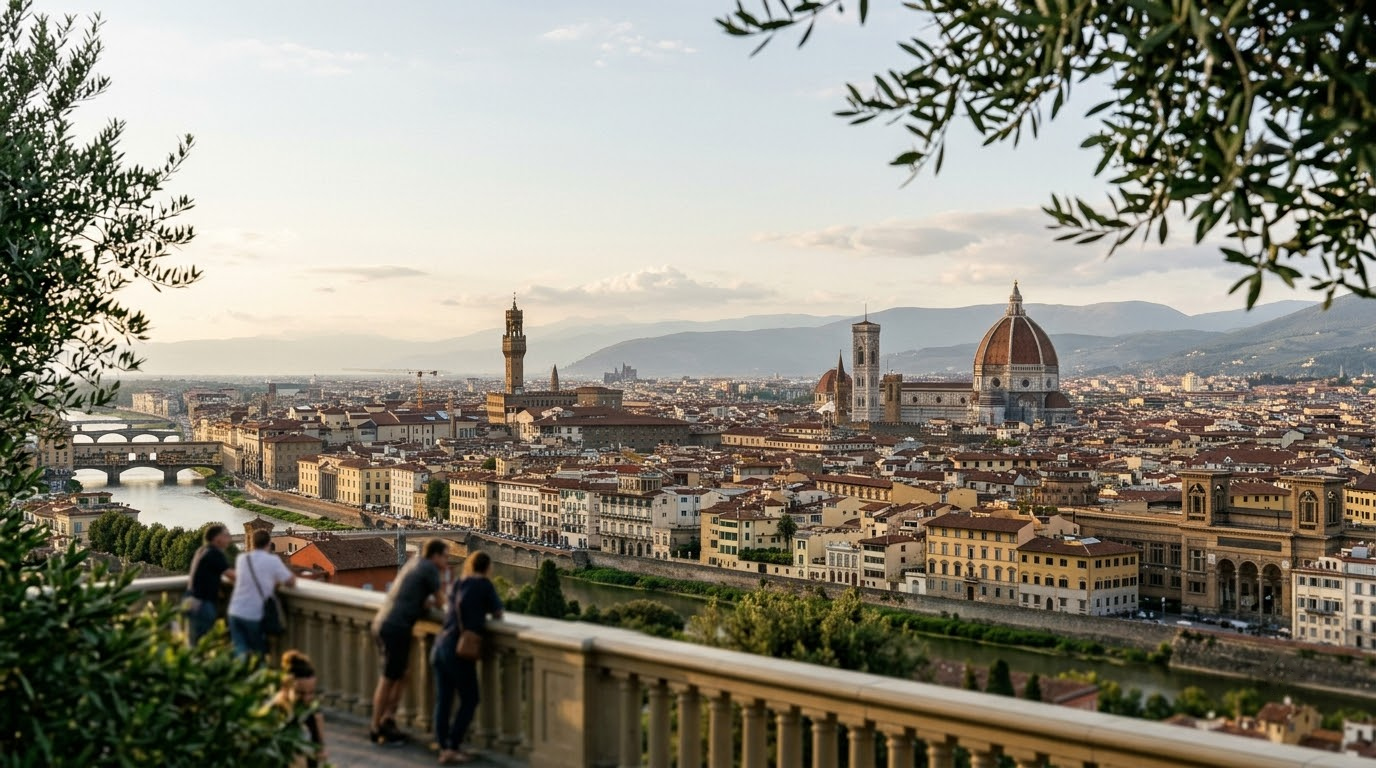
Florence packs an unusual amount of art, architecture and food into a city small enough to cross on foot. The historic center sits on a bend of the Arno river, and most major sights are within a 20-minute walk of the cathedral. That compactness is the main reason the city works for a long weekend and for a week alike.
This guide is the overview: when to go, how to arrive, how to get around, what to prioritize, where to base yourself and how to structure three days. Each topic links to a deeper guide, so you can plan the pieces that matter to you without reading everything twice.
Affiliate Disclosure: Some links in this guide are affiliate links. If you book through them, we earn a small commission at no extra cost to you. We only recommend services we genuinely trust. Learn more.
Currency note: euro prices are converted at roughly USD 1.10 per euro for planning. Check the live rate before you book.
Is Florence Worth Visiting?
Florence is the capital of Tuscany and the center of Renaissance art, and its historic core has been a UNESCO World Heritage Site since 1982 (Wikipedia, 2026). The Uffizi holds Botticelli’s The Birth of Venus and is described as the 10th most visited art museum in the world. The cathedral dome by Brunelleschi remains the largest brick dome of its kind.
The honest answer depends on what you want. Art and architecture fans get more per square mile here than almost anywhere in Europe. Travelers who want beaches, nightlife or wide open space are better served by the coast or the hills nearby. For a full verdict, read is Florence worth visiting.
Two caveats apply. Peak-season crowds around the cathedral and the Uffizi are heavy, and summer heat makes midday sightseeing tiring. Both are manageable with timed tickets and an early start.
If you are weighing Florence against other Italian cities, two comparisons help: Florence vs Venice and Rome vs Florence. Both break down cost, pace and the kind of trip each city suits.
Best Time to Visit Florence
Florence’s climate is warm in summer and cool in winter. At Florence Airport, the July mean daily temperature is 25.4 C (77.7 F) with an average maximum of 32.3 C (90.1 F). January averages 6.6 C (43.9 F) with a mean maximum of 11.2 C (52.2 F) (Wikipedia, 1991-2020 normals).
Those numbers explain the usual advice. Spring and early autumn give comfortable walking weather, while July and August bring heat that pushes you indoors by early afternoon. Winter is cooler and quieter, with shorter days and lower demand for rooms.
Season
Typical feel
Trade-off
Spring
Mild, good for walking
Popular, book ahead
Summer
Hot, long days
Heat and crowds
Autumn
Comfortable, harvest season
Rain possible
Winter
Cool, quiet
Short days
The seasonal ratings are general planning guidance based on the climate data above. For month-by-month detail, see the best time to visit Florence.
How to Get to Florence
Most visitors arrive by train or by air. Florence Santa Maria Novella is the main rail hub, and fast trains connect Florence with other major Italian cities. For many itineraries the train is the simplest option because the station sits close to the historic center.
Florence Airport handled 3,847,658 passengers in 2025, up 9.4% on 2024 (Wikipedia, 2025). The second line of the Florence light-rail network has a terminal at the airport, and a bus line to the central railway station runs about every half hour, operated by Autolinee Toscane (same source). Confirm current routes and fares with the operator before you travel.
Many international travelers fly into a larger hub and continue by rail. If you are combining cities, Florence slots naturally between Rome, Venice and Milan, which is why the Rome vs Florence guide and Florence vs Venice guide also cover transfer logistics.
Getting Around Florence
The historic center is compact, and walking is the default way to see it. Most major sights, including the cathedral, the Uffizi, Piazza della Signoria and the Ponte Vecchio, are close enough that you rarely need transport between them.
Buses and trams cover the areas beyond the center. They are useful for the airport, for neighborhoods across the Arno and for some hillside viewpoints. Taxis are available at ranks and by phone, and they help late at night or when you carry luggage.
Driving is a poor fit for the center. Historic Italian cities commonly restrict traffic in their old cores, so check the rules before you rent a car. If you plan to explore the countryside, pick up a car on the way out of the city rather than at the start of your stay, or use trains and guided tours instead.
Wear comfortable shoes. Many streets are paved with stone, and a typical sightseeing day involves several miles of walking.
Top Things to Do in Florence
The Uffizi Gallery. The Uffizi is open Tuesday to Sunday, 8:15 am to 6:30 pm, with the ticket office closing at 5:30 pm. It is closed on Mondays, 1 January and 25 December. A same-day ticket costs USD 28 (EUR 25) and an advance ticket USD 32 (EUR 29). The PassePartout, which covers the Uffizi, Pitti Palace and Boboli Gardens over five days, costs USD 44 (EUR 40) (Uffizi Galleries, 2026). The site also notes a strike on 30 October 2026 and some temporarily closed rooms at Pitti Palace, so check notices before you go.
The cathedral and dome. Santa Maria del Fiore was begun in the late 13th century, and Brunelleschi’s dome was the first major dome built in Europe since Roman times (Wikipedia, 2026). Ticket and climbing details change, so confirm them on the cathedral’s official site.
Ponte Vecchio. In August 1944, retreating German forces destroyed the Arno bridges linking the Oltrarno to the rest of the city, but the Ponte Vecchio survived (Wikipedia, 2026). Walk it early in the morning when the lanes are quieter.
The Oltrarno. Cross the river to find artisan workshops, smaller churches and local wine bars. This side of the city is calmer than the center and suits an evening stroll.
Day trips. The region around Florence rewards a day away from the city. Options include Pisa, Siena and the Chianti hills. Day trips from Florence compares them by distance, effort and what you actually see there.
Where to Stay in Florence
Choosing the right area matters more than choosing a specific property. Florence is small, so even the outer central neighborhoods are within walking distance of the main sights.
Duomo and Piazza della Signoria: Best for short stays. You can walk to nearly everything, but expect crowds, noise and higher prices.
Santa Maria Novella: Convenient for train arrivals and day trips. Streets near the station vary in feel, so read recent guest reviews.
Santa Croce: A lively district with restaurants and bars, within walking distance of the cathedral.
Oltrarno: Quieter, with workshops and local restaurants. A good choice if you have already seen the big sights and want a calmer base.
San Marco and the university area: Practical for budget-conscious travelers and close to the Accademia.
Book early for spring and early autumn, when demand peaks. For a full ranking by budget and area, see best hotels in Florence. If you are comparing a stay in the city with a countryside base, the Tuscany travel guide covers the region around it.
Where to Eat in Florence
Tuscan cooking is simple, built on bread, beans, olive oil, grilled meat and good vegetables. Expect to see a few dishes on almost every traditional menu: ribollita (a bread and vegetable soup), pappa al pomodoro (tomato and bread soup), crostini with chicken liver pate and bistecca alla fiorentina (a thick grilled T-bone steak).
Wine is part of the experience. The Chianti Classico zone lies between Florence and Siena (Wikipedia: Chianti, 2026), so a glass of local red is usually easy to find. Brunello di Montalcino and Vernaccia di San Gimignano are other Tuscan wines worth asking about (Wikipedia: Tuscany, 2026).
Where to eat:
Around the Mercato Centrale area: Casual food halls and quick lunches.
Santa Croce streets: Trattorias and wine bars with a local crowd.
Oltrarno side streets: Smaller restaurants, often with shorter menus.
Be cautious with restaurants directly on the biggest tourist squares. Menus in several languages and photos of dishes are often a sign of a place aimed at passing visitors rather than regulars. Walk two or three blocks away and compare.
Sample 3-Day Plan
This plan keeps pace moderate and groups sights by area to limit walking. For more variations, including a one-day and a five-day version, see the Florence itinerary guide.
Day 1: Historic center. Start at the cathedral complex early. Walk to Piazza della Signoria, then spend the afternoon in the Uffizi with a timed ticket. End with a stroll across the Ponte Vecchio at dusk.
Day 2: Art and the Oltrarno. Visit the Accademia or another museum in the morning. After lunch, cross the river to the Pitti Palace and Boboli Gardens. Dinner in the Oltrarno.
Day 3: Day trip. Take a train to Pisa or Siena, or join a Chianti wine tour. Siena has 53,180 residents and its historic center was inscribed by UNESCO in 1995 (Wikipedia: Siena, 2026). Return to Florence for a final evening meal.
If you only have two days, combine days 1 and 2 and skip the day trip. If you have more than three, add the Tuscan hill towns.
Frequently Asked Questions
How many days do you need in Florence?
Two full days cover the main sights, and three days allow a relaxed pace plus a half-day trip. Longer stays work well if you use Florence as a base for day trips. See how many days in Florence for a breakdown by travel style.
Is Florence safe for tourists?
Florence is generally considered a manageable city for visitors, and the main concerns are petty theft in crowded areas and around the station. Keep bags closed and phones out of back pockets. The dedicated guide on whether Florence is safe covers common scams and neighborhood advice.
When is the cheapest time to visit Florence?
Winter outside the holiday period usually brings lower room rates and shorter lines, though days are cooler and shorter. Climate data shows January highs around 11.2 C (52.2 F) (Wikipedia, 2026). Compare options in the best time to visit Florence.
Do you need to book the Uffizi in advance?
Booking ahead costs USD 32 (EUR 29) against USD 28 (EUR 25) on the day, but it saves time in queues (Uffizi Galleries, 2026). The PassePartout and Vasari Corridor visits require advance booking, per the museum’s site.
Can you visit Florence as a day trip from another city?
Yes, fast trains make it possible from several Italian cities, but a day trip allows only the headline sights. Staying overnight lets you see the Uffizi, the cathedral and the Oltrarno without rushing. If you are choosing between cities, see Florence vs Venice.