Glacier Express Tickets: Fares, Seat Reservations and Swiss Travel Pass (2026)
Disclosure: Some links in this guide are affiliate links. If you book or buy through them, we may earn a small commission at no extra cost to you — it helps keep our guides free.
- The ride takes about 8 hours from Zermatt to St. Moritz.
- Every passenger needs a seat reservation on top of a valid ticket, CHF 49 to 54.
- A Swiss Travel Pass covers the fare but not the reservation; 2nd class is around CHF 153 one way.
6 tours at a glance
Most travelers
Extra space and quiet
Special occasions
Multi-day Swiss trips
Rail pass holders
A Glacier Express journey takes about 8 hours from Zermatt to St. Moritz, and every passenger needs a seat reservation on top of a valid ticket, with 2nd class fares around CHF 153 one way plus a reservation fee of CHF 49 to 54. A Swiss Travel Pass covers the fare but not the reservation. Prices below were checked in October 2026; the operator’s price page sets the final amount.
| Option | Duration | From (as listed) | Best for |
|---|---|---|---|
| 2nd class ticket plus reservation | About 8 hours | CHF 153 plus CHF 49 to 54 | Most travelers |
| 1st class ticket plus reservation | About 8 hours | CHF 265 plus CHF 49 to 54 | Extra space and quiet |
| Excellence Class | About 8 hours | CHF 490 to 540 (reported) | Special occasions |
| Swiss Travel Pass plus reservation | About 8 hours | Reservation CHF 49 to 54 | Multi-day Swiss trips |
| Eurail pass plus reservation | About 8 hours | Reservation CHF 49 to 54 | Rail pass holders |
| Shorter section ride | Under 8 hours | Price by route | Short on time |
How the Glacier Express works
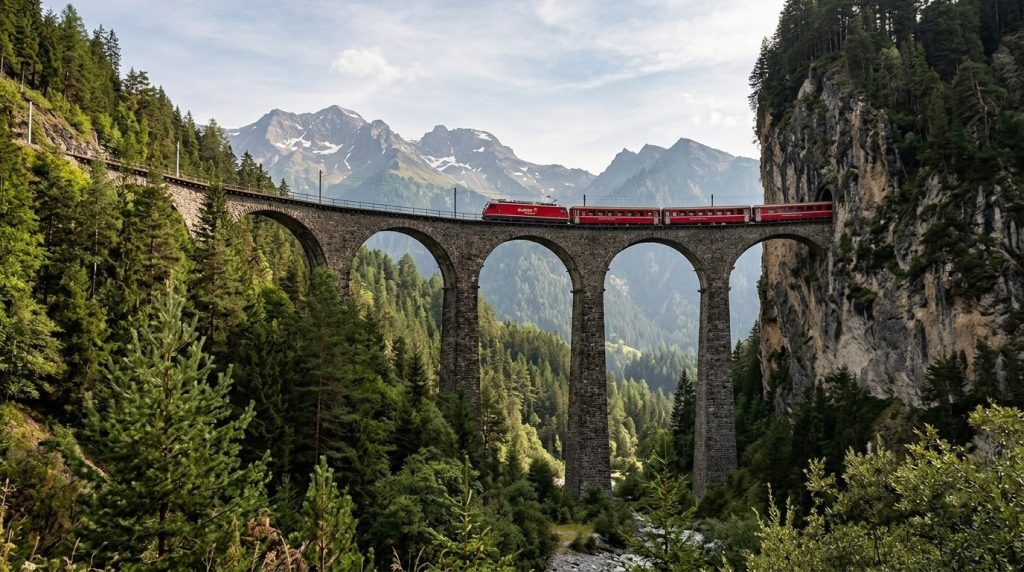
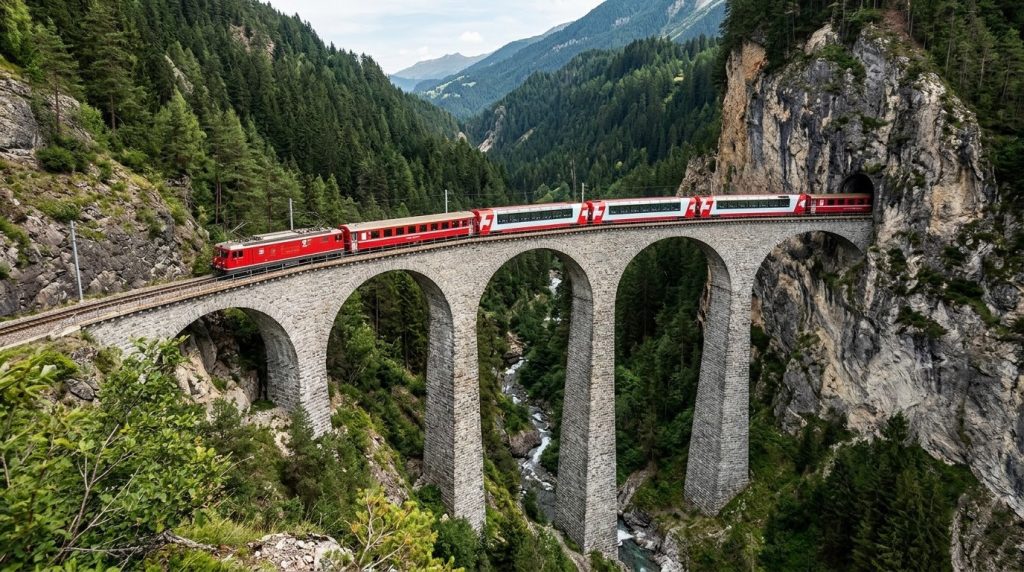
The route runs from the foot of the Matterhorn in Zermatt to the Engadin lakeland near St. Moritz, crossing 291 bridges and passing through 91 tunnels. The operator describes it as an eight-hour panoramic journey, with panoramic windows and meals served at your seat.
Two things are needed to ride: a valid ticket or pass for the route and class, and a compulsory seat reservation. Children who need a seat pay the reservation fee in full, according to the operator’s FAQ.
Seats are limited, so the reservation is also what holds a place on a popular day. The train is a scenic experience first and transport second, which explains the fees.
Booking windows and the timetable
Tickets are available up to six months before travel. Seat reservations for 1st and 2nd class open 93 days before travel, and Excellence Class reservations can be booked for the entire timetable period.
The winter timetable runs from December to April, and the summer timetable from May to October. The operator lists an annual break from mid-October to early December, so late autumn trips need a different plan. Confirm the dates for the year at the Glacier Express official site.
The ticket options, one by one
1. 2nd class ticket plus seat reservation
Second class has comfortable seats in four-seater compartments. A one-way full-price adult fare is listed at CHF 153, plus the reservation of CHF 49 per person, which rises to CHF 54 from December 2025 according to one guide.
The downside is the stacked cost. Between fare and reservation, a single trip lands near CHF 200, before any food.
Check availability on GetYourGuide →
2. 1st class ticket plus seat reservation
First class has two- and four-seater compartments with more space and privacy. The full-price one-way fare is listed at CHF 265, plus the same reservation fee.
The panoramic windows are larger in first class, which helps on the bridges and viaducts. The extra CHF 112 over second class buys space, not a different view.
Check availability on GetYourGuide →
3. Excellence Class
Excellence Class adds guaranteed window seats in a two-seater lounge, concierge service and a five-course menu with wine and drinks. One guide reports CHF 490 to 540 all-inclusive, and another lists a CHF 313 supplement over first class, so the sources conflict.
It suits a splurge or an anniversary. For scenery alone, first class sees the same mountains for far less. Confirm the exact fare on the operator’s price page.
Check availability on GetYourGuide →
4. Swiss Travel Pass plus seat reservation
A Swiss Travel Pass covers the ride itself, so a separate ticket is not needed, but the seat reservation is always extra. For 1st class or Excellence Class, the pass must be a first-class pass.
One guide lists an 8-day pass at CHF 439. It pays off when the Glacier Express is one of several long rides in the same week.
Check availability on GetYourGuide →
5. Eurail pass plus seat reservation
The operator’s FAQ says a rail pass covers the fare, with the reservation still compulsory. Check that the pass covers Swiss private railways on your travel days before relying on it.
The saving depends on how many travel days a pass includes. A single trip with no other rides rarely makes it worth the price.
Check availability on GetYourGuide →
6. Shorter section rides
The full trip takes around eight hours, and shorter sections are possible on some routes. A section works well for travelers with limited time or those who prefer a few scenic hours to a full day seated.
Fares depend on distance and class. The reservation fee still applies to a booked seat, so check the total before choosing.
Check availability on GetYourGuide →
Deciding between a pass and a point-to-point fare
A single trip in second class lands near CHF 200 once you add the reservation, as covered above. That figure frames every pass decision.
- One long ride and little else: the point-to-point fare plus reservation is usually simpler.
- Several long rides in one week: a Swiss Travel Pass can cover the fare, though the reservation is always extra.
- Rail pass already in hand: add the reservation and confirm that the pass covers your travel day.
Add up every journey on your plan before you compare. One guide lists an 8-day Swiss Travel Pass at CHF 439, so the pass wins only if the rides and attractions it covers exceed that total.
What the eight hours look like
The Glacier Express is slow by design, so plan the day as an experience. Meals are served at your seat, according to the operator, so you do not need to leave the window for lunch.
- Dress in layers, since temperatures change as the train climbs and descends.
- Bring a charger or power bank for phones and cameras.
- Check the operator’s baggage guidance before you board with large suitcases.
- Download maps or a route guide for offline reference.
Windows are large, but reflections can affect photos, so keep a cloth handy and shoot at an angle.
Planning around the timetable and the seasonal break
The winter and summer timetables differ, and the operator lists an annual break from mid-October to early December. Check the dates for your travel year before booking hotels at either end.
Book the seat reservation as soon as it opens, 93 days before travel for first and second class, because the reservation is what holds your place. Once you hold it, plan your connections so a delay on a feeder train does not put the main journey at risk.
Choosing a seat class
Second class and first class see the same mountains, so the choice comes down to space and budget. First class costs more and offers more room and privacy, while second class is the practical pick for most travelers.
- Choose second class if scenery is the goal and the budget matters.
- Choose first class for more space on a long day, or if you travel with a group that wants privacy.
- Consider Excellence Class only for a special occasion, after confirming the fare on the operator’s page.
If you hold a pass, match the class on the pass to the class you want, since a second-class pass does not cover a first-class seat.
Whatever you choose, reserve a window seat if the booking page allows it, and confirm the car and seat number in your confirmation before the day.
When to skip the Glacier Express
Skip it if eight hours seated sounds long. The route is slow by design, and the reservation fee adds to the cost.
Skip a late-autumn trip, because the train stops running from mid-October to early December. Winter and summer timetables differ, so match the date to the season.
Skip the full journey if the ticket price matters most. Regional trains also serve towns along the route without a reservation fee, so the Glacier Express is best treated as an experience, not a shortcut. Check regional timetables for the exact connections.
Plan the trip around it
Zermatt works as a start or finish point, and the best time to visit Zermatt guide explains the seasons. For the bigger picture, the Swiss Alps travel guide shows how the train fits with other regions.
Where to stay
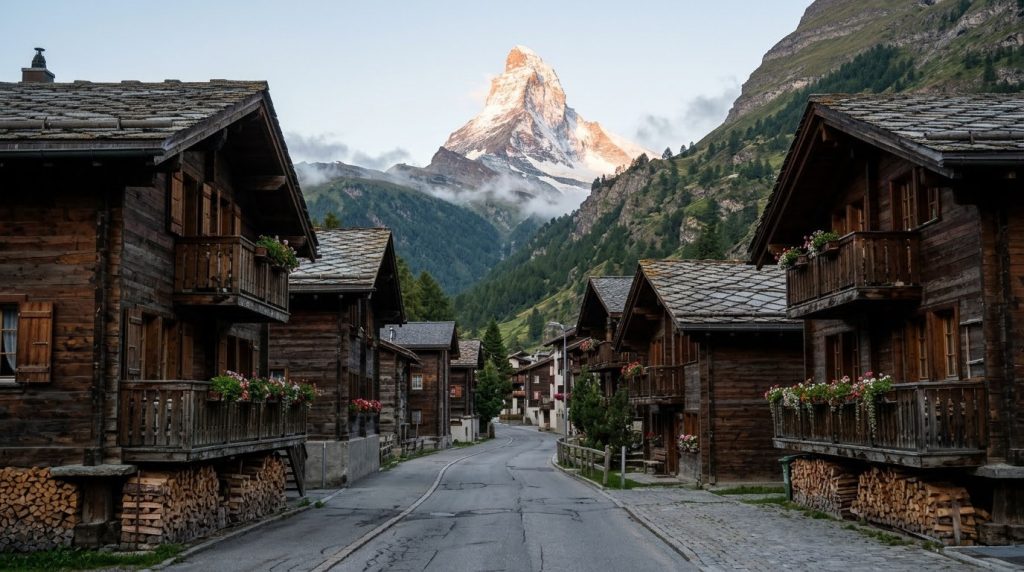
Zermatt is the usual start, and the best hotels in Zermatt guide compares the areas. Sleep there the night before an early departure to avoid a rushed morning.
St. Moritz or Chur suit a finish, with onward connections. Book the return plan before paying for the scenic leg.
Find your Zermatt, Switzerland hotel on the map
Live prices from Booking, Airbnb and more — move the map or change dates to compare stays across Zermatt, Switzerland.
Frequently Asked Questions
Do I need a seat reservation for the Glacier Express?
Yes. The operator says a seat reservation is compulsory in addition to a valid ticket for your route and class. A Swiss Travel Pass or rail pass covers the fare, not the reservation. Reservations for 1st and 2nd class open 93 days before travel.
How much is the Glacier Express reservation fee?
Guides list CHF 49 per person in both classes, rising to CHF 54 from December 2025. The operator’s FAQ gives no fixed amount, so check its price page. The fee applies to children who need their own seat.
How long is the Glacier Express journey?
The full trip takes around eight hours, from Zermatt to St. Moritz. Published timetable listings run closer to nine hours, and times vary by season, so check your date. Shorter sections are possible on some routes.
Does the Swiss Travel Pass cover the Glacier Express?
It covers the base fare for the matching class, but the seat reservation is always extra. For 1st class or Excellence Class, a first-class pass is required. Buy the reservation separately as soon as the booking window opens.
Does the Glacier Express run all year?
Not entirely. The operator lists a winter timetable from December to April and a summer one from May to October, with an annual break from mid-October to early December. Confirm the exact dates for your travel year before booking.