Ultimate Maldives Travel Guide 2026: Islands, Costs + When to Go
This Maldives travel guide covers every practical detail for planning a trip to one of the world’s most recognizable ocean destinations.
The Maldives is an archipelago of 1,192 islands spread across 26 atolls in the Indian Ocean, with only around 200 islands inhabited and roughly 160 operating as resort islands (Maldives Tourism Ministry, 2025). The gap between its luxury reputation and actual budget options is far wider than most travelers realize. Read this before you book anything.
Key Takeaways
The Maldives has 1,192 islands; budget travelers can stay on local islands from $50-80/night with bikini beaches available
Best time is November-April (dry season); May-October is cheaper and still diveable
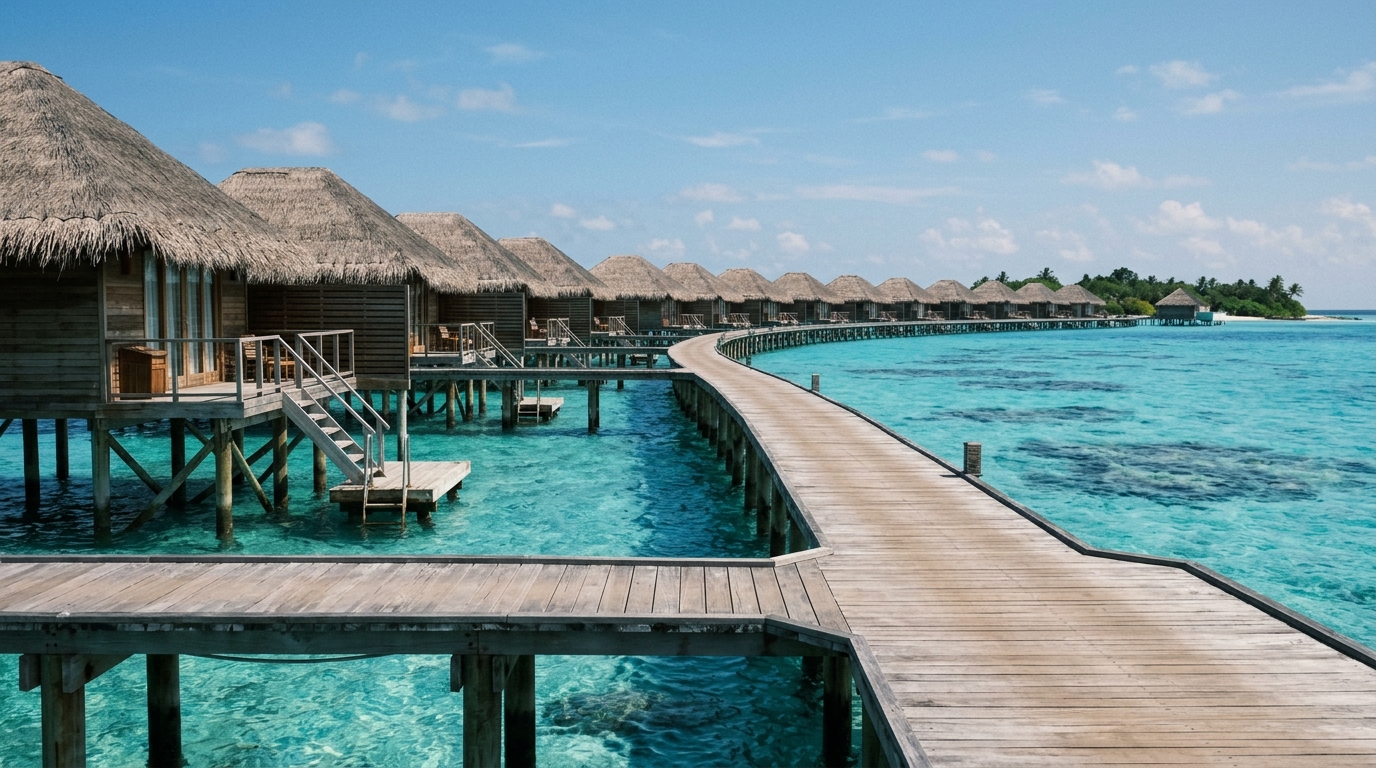
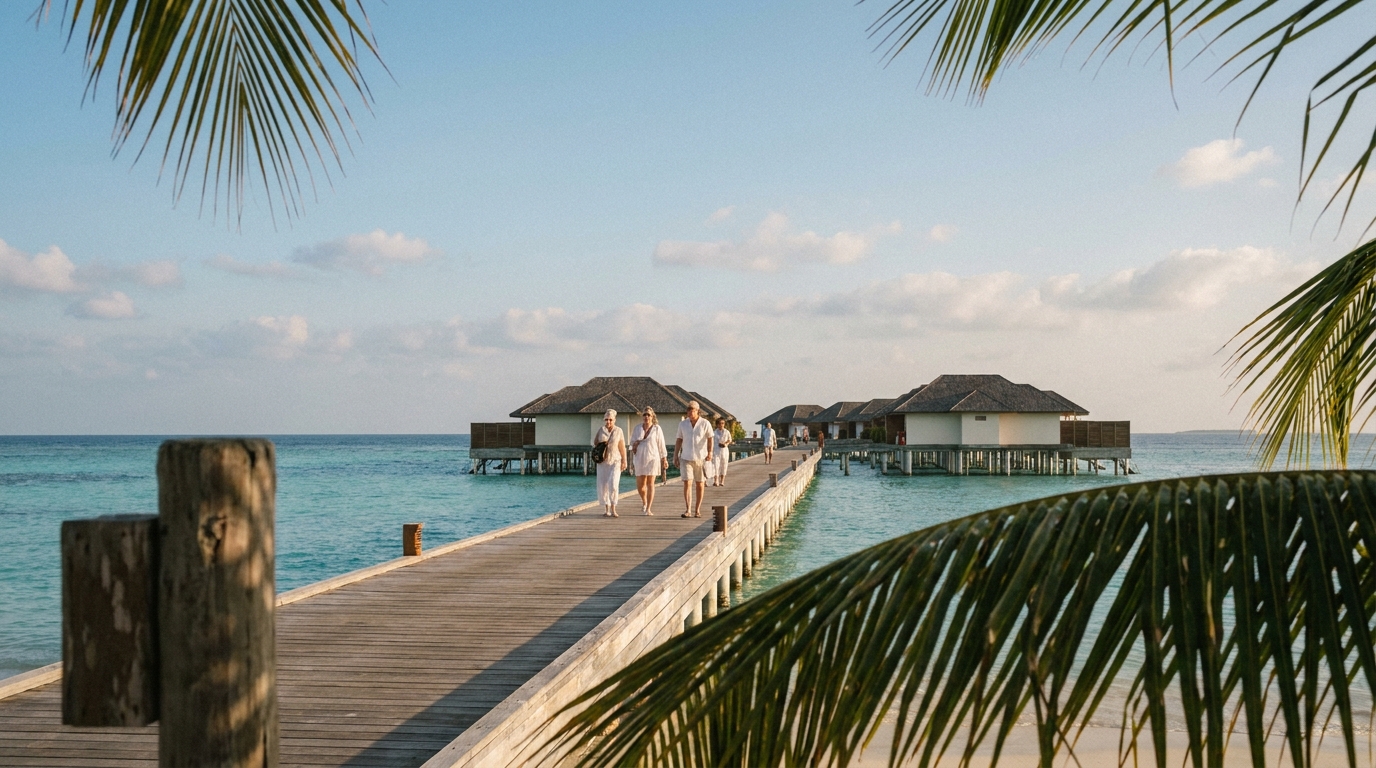
Overwater bungalows start from $150/night at Kuredu Island Resort (Booking.com, 2026); luxury resorts run $1,000-3,000+/night
Velana International Airport (MLE) in Male is the main entry; seaplanes ($300-500 round trip) reach remote resorts, speedboats from $30-100
Whale sharks in Ari Atoll year-round, manta rays in UNESCO Biosphere Baa Atoll June-November
Affiliate Disclosure: This article contains affiliate links to tours, hotels, and travel services. If you book through these links, we may earn a small commission at no extra cost to you. We only recommend services we have researched thoroughly.
Maldives Travel Guide 2026: What Kind of Destination Is This?
The Maldives receives around 1.9 million international tourists per year, with the sector accounting for roughly 28% of GDP (Maldives Tourism Ministry, 2025). It is the world’s lowest-lying country, with an average ground elevation of 1.5 meters above sea level. That physical reality, combined with the sheer distance between islands, shapes every logistical decision a traveler makes here.
The most important thing to understand is the two-track structure of Maldives tourism. Resort islands operate as private, self-contained ecosystems where alcohol is served and swimwear is standard. Local islands follow Islamic law: modest dress in public, no alcohol sold (though most guesthouses permit BYO in rooms), and segregated “bikini beaches” in designated zones. These two worlds coexist within the same country but rarely overlap. Choosing which track suits your priorities is the first decision, not the last.
The capital Male sits at the northern end of North Male Atoll and handles all long-haul arrivals at Velana International Airport (MLE). Most travelers spend less than 24 hours in Male before transferring onward. Hulhumale, a reclaimed island connected to the airport by a bridge, is the practical budget base for Male-area nights, with a free ferry from the airport and guesthouses from $40-70 per night.
All international long-haul flights land at Velana International Airport (MLE) in Male. Flights from Dubai take approximately 4 hours, from Singapore around 5 hours, and from London roughly 10 hours direct. Emirates, Qatar Airways, Singapore Airlines, and several charter carriers serve Male from major hub airports. Domestic transfers to resort and local islands are a separate cost on top of flights, and they are significant.
Seaplane Transfers
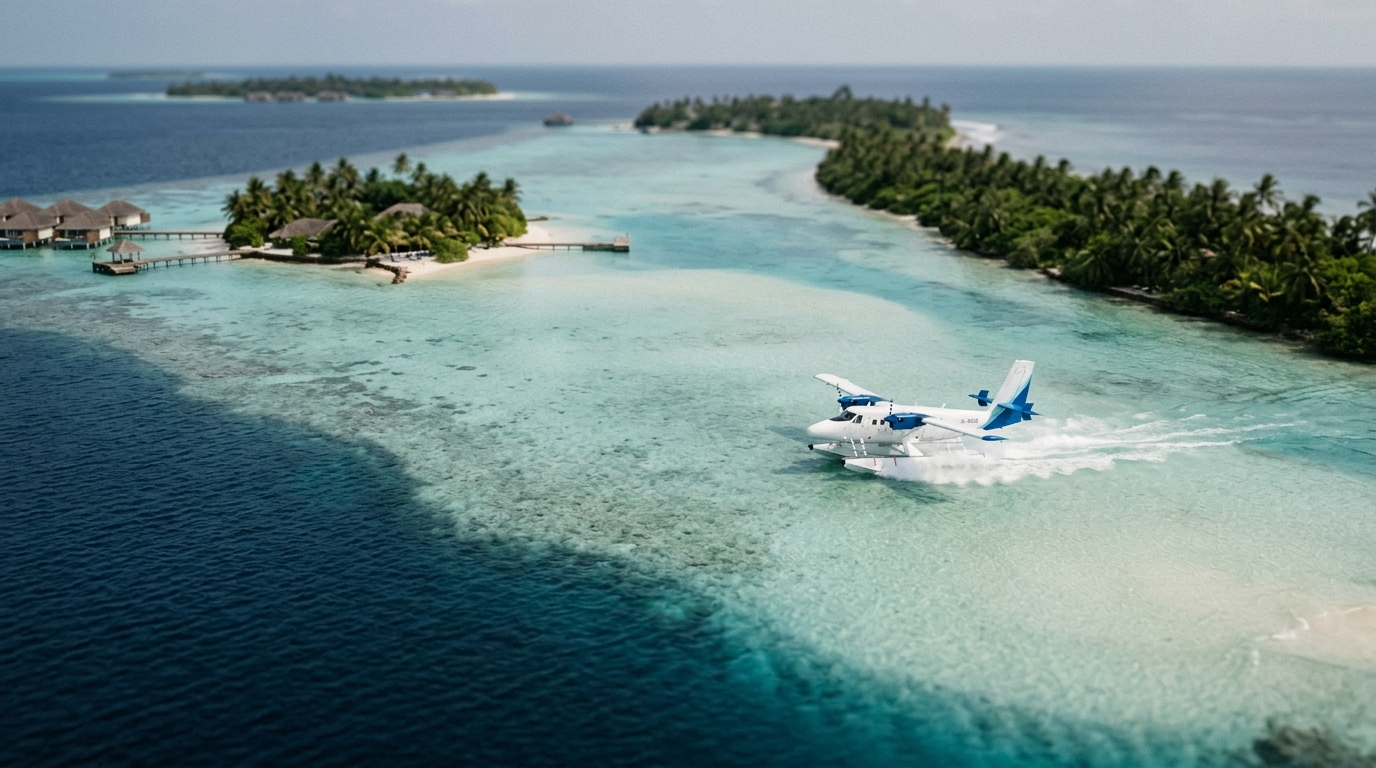
Seaplanes connect Male airport to resorts across the atolls, covering distances that would take hours by boat. The views during the 15-45 minute flight over the lagoon network are genuinely spectacular. Round-trip seaplane transfers typically cost $300-500 per person, and they only operate in daylight hours. Resorts requiring seaplane access automatically push total trip costs upward.
Speedboat Transfers
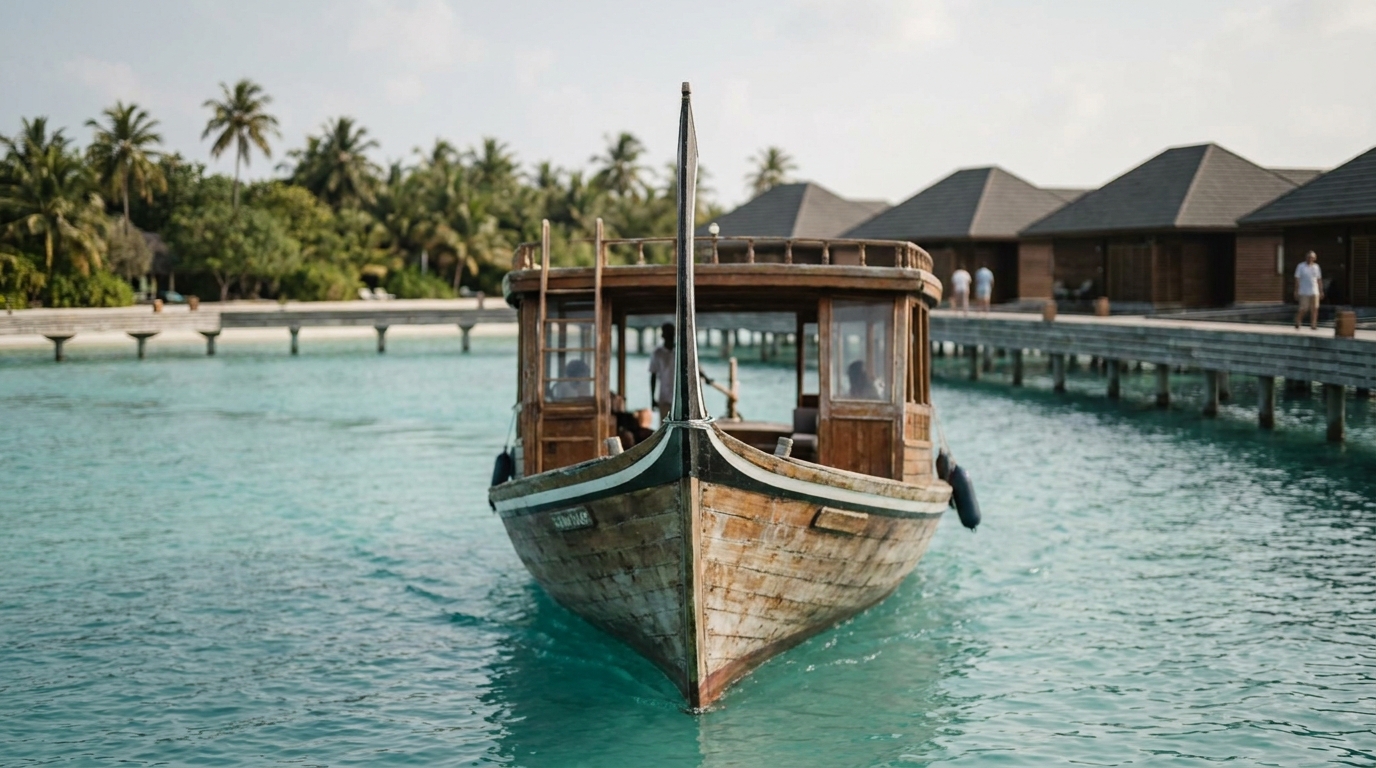
Local islands and many resorts within 30-90 minutes of Male are served by speedboat. Prices range from $30-100 per person round trip depending on distance. Public ferry services connect Male to inhabited islands on a fixed schedule, with fares as low as $1-2. These are the lifelines for budget travelers reaching guesthouses on Maafushi (45 minutes, $10-15 speedboat), Guraidhoo, and Thulusdhoo.
Transfer Type
Time from Male
Cost (Round Trip)
Best For
Seaplane
15-45 min
$300-500 pp
Remote resort access, scenic experience
Speedboat (private)
30-90 min
$30-100 pp
Mid-range resorts, local island guesthouses
Public ferry
45 min – 2h
$1-15 pp
Budget travelers, local island hopping
Airport-Hulhumale ferry
10 min
Free
Budget accommodation base near airport
Source: Maldives Transport Authority and resort rate averages, 2026
Best Time to Visit the Maldives
November through April is the dry northeast monsoon season and the optimal window for visiting. Seas are calm, visibility for snorkeling and diving reaches 20-30 meters, and rainfall is minimal (Maldives Meteorological Service, 2025). This is also peak season, with higher prices across all accommodation tiers. December through February is the busiest period.
Month
Season
Crowd Level
Notes
Nov-Apr
Dry NE monsoon
High
Best visibility; calm seas; peak pricing Dec-Feb
May
Transition
Medium
Prices drop; weather mixed; good for budget trips
Jun-Nov
SW monsoon
Low-Medium
25-35% cheaper; rain sporadic not constant; manta ray season Jun-Nov Baa Atoll
Source: Maldives Meteorological Service and resort pricing surveys, 2026
The southwest monsoon (May-October) is misrepresented as unvisitable. In reality, rain comes in short, heavy bursts rather than all-day downpours. The west side of atolls stays calmer during this period. Baa Atoll UNESCO Biosphere Reserve opens its manta ray season in June, drawing serious divers specifically during the “off” season. Budget-conscious travelers consistently find this window offers 25-35% lower rates with only modest weather trade-offs.
Where to Stay in the Maldives: Budget to Luxury Breakdown
Accommodation in the Maldives spans a wider price range than almost any destination on earth. The key variable is whether you choose a resort island (private, all-inclusive model) or a local guesthouse island (budget-friendly, community-based). Both offer excellent snorkeling and water activities. Only resort islands offer overwater bungalows and in-room alcohol.
Budget: Local Island Guesthouses ($50-200/night)
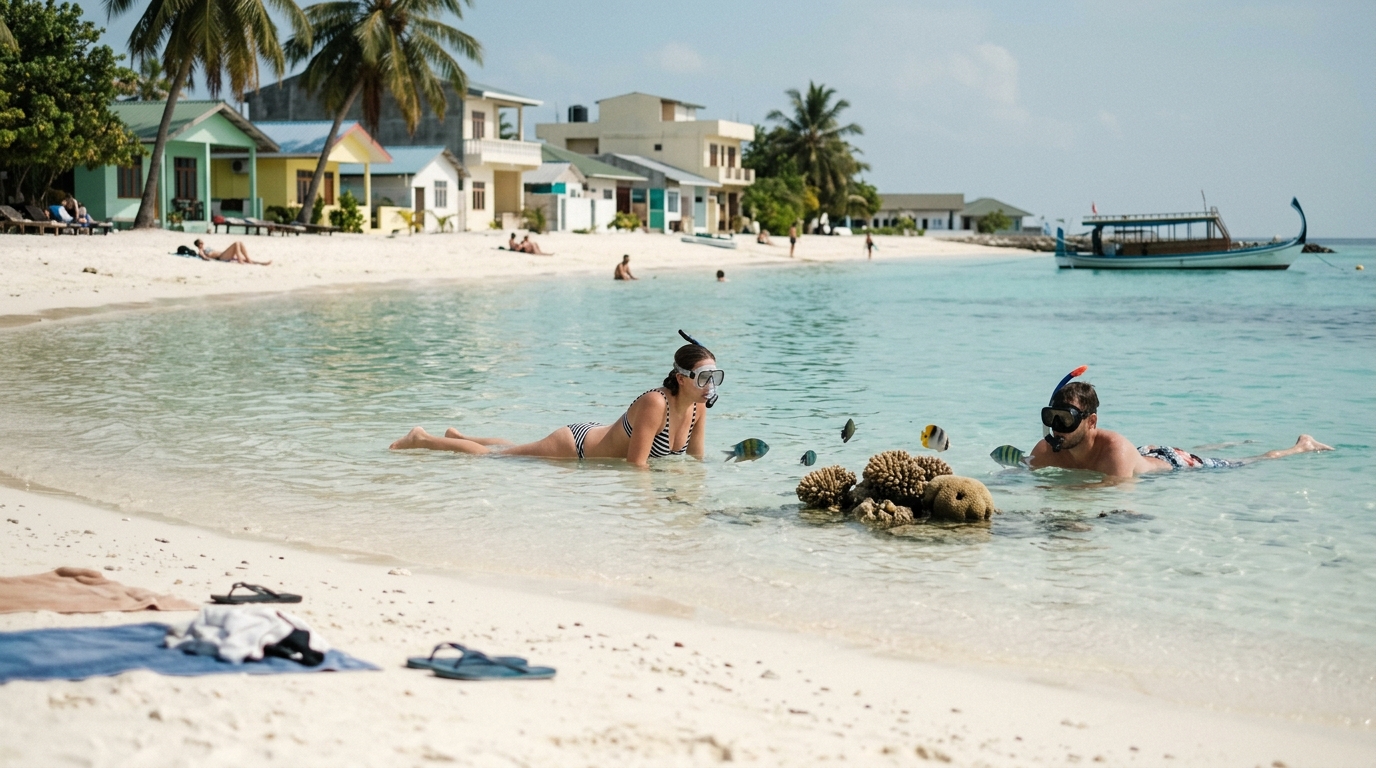
Maafushi is the most developed local island for budget tourism, with 20+ guesthouses, multiple bikini beaches, and dive operators. Rates start from $50-80/night for a double room. Guraidhoo (South Male Atoll) and Thulusdhoo (North Male Atoll, surf-focused) follow the same model. Both are reachable by speedboat from Male for $10-20 per person. Search Maldives guesthouses on Booking.com
The local island model transformed Maldives tourism after the government legalized guesthouse operations in 2009. Before that policy change, only resort islands could accept tourists. Maafushi in particular grew from a fishing village to a destination with dozens of guesthouses in under a decade. The experience is genuinely different from resort life: you eat at local restaurants, interact with Maldivian families, and spend your days on the same beaches as residents. It is not a lesser version of the resort experience — it is a different one.
Mid-Range Resorts ($250-500/night)
Cinnamon Velifushi (Vaavu Atoll), Sun Siyam Iru Veli (Dhaalu Atoll), and Cocoon Maldives (Lhaviyani Atoll) represent the $250-500 bracket. These properties include overwater bungalow categories, house reef snorkeling, and most water sports in the room rate or for modest supplements. Transfer costs by seaplane or speedboat add to the total; factor these in when comparing rates.
Luxury Resorts ($1,000-3,000+/night)
Soneva Fushi (Baa Atoll, barefoot luxury), Six Senses Laamu (Laamu Atoll, sustainability-focused), and Gili Lankanfushi (North Male Atoll, closest luxury resort to airport) occupy the top tier. All-inclusive packages, private pools, and butler service define this category. Gili Lankanfushi’s location — 10 minutes by speedboat from Male airport — makes it the most accessible of the major luxury names.
Tier
Price/Night
Daily Budget (all-in)
Example Properties
Budget (local islands)
$50-80
$100-200/day
Guesthouses, Maafushi / Guraidhoo
Entry overwater
$150-250
$200-350/day
Kuredu Island Resort (North Male Atoll)
Mid-range resort
$250-500
$300-600/day
Cinnamon Velifushi, Cocoon Maldives
Luxury resort
$1,000-3,000+
$1,000+/day
Soneva Fushi, Six Senses Laamu, Gili Lankanfushi
Source: Booking.com and resort direct-booking rate averages, May 2026
What to Do in the Maldives: Snorkeling, Diving + Surf
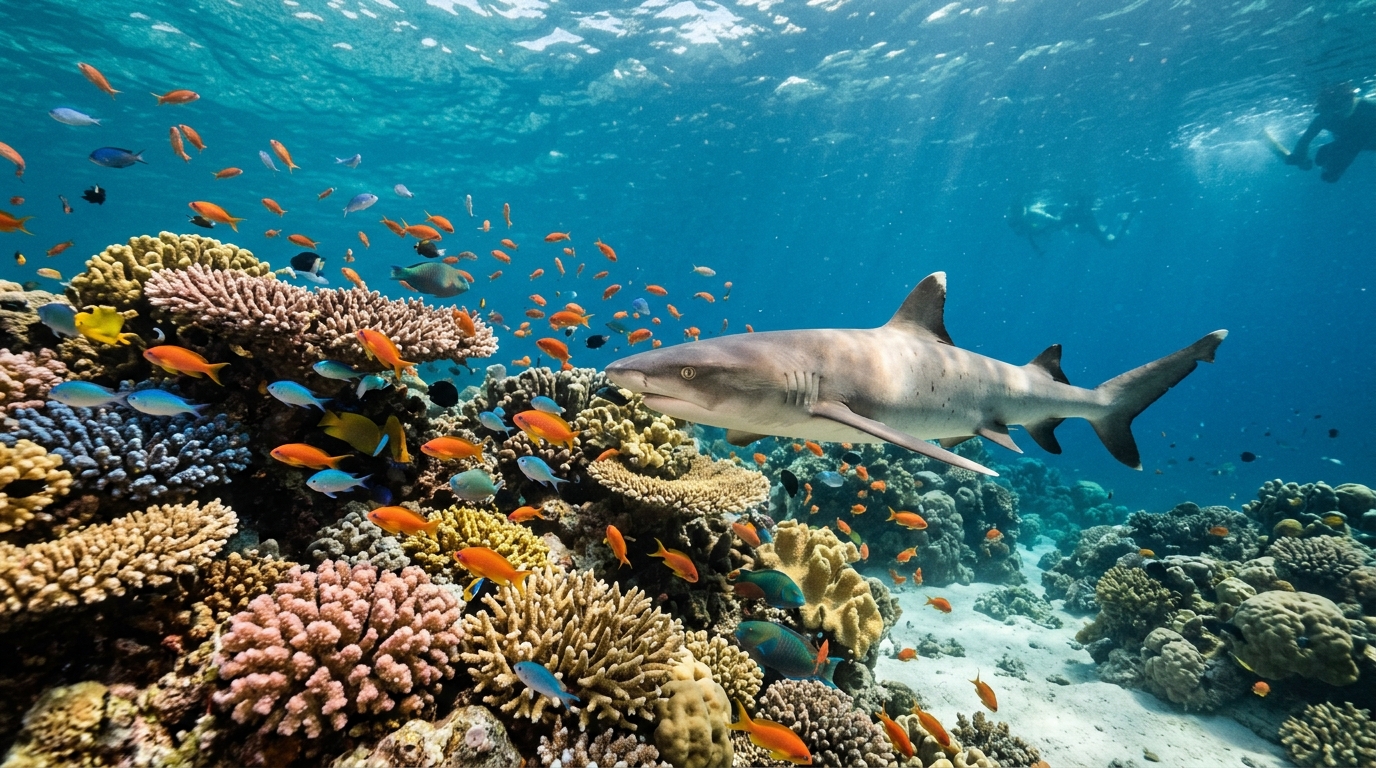
The underwater world is the primary reason to visit. The Maldives sits on the convergence of the Indian Ocean’s major current systems, which drives extraordinary marine biodiversity. Snorkelers encounter reef sharks, turtles, rays, and vibrant coral from the shore on most local islands and from resort house reefs.
Snorkeling and Diving
Ari Atoll hosts year-round whale shark aggregations around Maaya Thila and Rangali Island — the only reliably predictable whale shark site in the Indian Ocean (Maldives Whale Shark Research Programme, 2025). Baa Atoll’s Hanifaru Bay is a UNESCO Biosphere Reserve where manta rays gather in feeding aggregations from June through November, sometimes numbering 200+ individuals in a single session. Entry to Hanifaru Bay requires a permit ($20) and is restricted to snorkeling only to protect the mantas.
The Maldives has a small but serious surf scene concentrated in North Male Atoll and Addu Atoll. Pasta Point (Chaaya Island Dhonveli) and Cokes (Lohifushi area) are the two most consistent reef breaks. The surf season runs April through October, peaking in June-August when the southwest monsoon generates strong swell. Both breaks are powerful and fast — suitable for intermediate to advanced surfers. Kite surfing operates year-round in the Vaadhoo Channel south of Male.
Water Sports
Resort islands include kayaking, paddleboarding, windsurfing, and snorkeling equipment in most room rates. Jet skis, parasailing, and boat excursions (sunset fishing, dolphin watching, sandbank picnics) run $30-100 per person per activity. Local island guesthouses offer the same excursions through independent operators at similar prices. Get Maldives eSIM on Airalo
Maldives Travel Costs + What to Know Before You Go
Taxes and Fees
Resort bills include a 16% GST on all services, a $6 per person per night green tax, and an $18 airport departure tax. Most resort packages quote pre-tax rates online; budget for 20-25% on top of the listed price when comparing total costs. Local guesthouse islands charge the same GST and green tax, but the lower base rates keep absolute amounts manageable.
What to Pack
Reef shoes protect feet from coral when entering the water from beaches without sandy shores. SPF 50 sunscreen is essential; the equatorial sun is intense year-round. Modest clothing (covered shoulders and knees) is required on inhabited islands outside designated bikini beach zones — the Maldives is a Muslim country and local customs apply everywhere outside resort islands. A PADI Open Water certification or higher unlocks the full range of dive sites; otherwise, resort dive centers offer try-dives from $80-100.
Connectivity
Local SIM cards (Dhiraagu or Ooredoo) are available at Male airport and offer reliable 4G data from $15 for 30 days. Resort islands often charge separately for Wi-Fi. An Airalo eSIM can be activated before departure as a backup option.
Practical Tips for First-Timers
1. Factor in transfer costs early. A $300/night resort 45 minutes by seaplane from Male costs $600-800 more in transfers than an equivalent property 30 minutes by speedboat. Calculate total trip cost, not just room rates.
2. Book seaplanes as soon as the room is confirmed. Seaplane capacity fills faster than resort rooms during December-February. Resorts coordinate bookings, but confirm your transfer the day you confirm the room.
3. Bring cash for local islands. Guesthouses and local restaurants on Maafushi and similar islands prefer US dollars or local rufiyaa (MVR). ATMs exist on inhabited islands but run short during peak weeks.
4. Respect local island customs. Cover up immediately when leaving the bikini beach zone. Remove shoes before entering homes and mosques. Alcohol is not sold on local islands, and public consumption is illegal outside licensed resort environments.
5. Verify green tax inclusion. Some resort rates include all taxes; others add $6/night green tax at checkout. Confirm before booking to avoid surprise charges on departure.
6. Snorkel at the right tide. House reefs are most active at incoming tide, when nutrient-rich water flows over the reef edge. Ask your guesthouse or resort dive center for the optimal snorkel window on any given day.
7. Check airline baggage for dive gear. If bringing personal equipment, most airlines allow one extra bag for dive gear at no charge if declared in advance. Confirm with your carrier before packing.
Frequently Asked Questions
Is the Maldives only for luxury travelers?
No. Budget travelers stay on local islands like Maafushi, Guraidhoo, or Thulusdhoo for $50-80/night. These islands have bikini beaches, snorkeling, and dive operators at a fraction of resort prices. The main trade-off is no alcohol on-island and no overwater bungalows. For travelers prioritizing marine life over resort amenities, local islands often provide equal or better access to the same dive sites (Maldives Tourism Ministry, 2025).
Do I need a visa for the Maldives?
Most nationalities receive a free 30-day on-arrival visa at Velana International Airport. No advance application is required. You need a confirmed onward ticket, proof of accommodation, and sufficient funds. Extensions to 90 days are available through the Department of Immigration. Confirm current requirements with the official Maldives immigration website before travel.
What is the best atoll for snorkeling and diving?
Ari Atoll is the top choice for whale sharks (year-round at multiple sites) and has some of the Maldives’ best-known dive sites including Maaya Thila. Baa Atoll is unmatched for manta rays from June through November at Hanifaru Bay, which holds UNESCO Biosphere Reserve status. North Male Atoll suits travelers who want good marine life with short, cheap transfers from Male (Maldives Whale Shark Research Programme, 2025).
How far in advance should I book a Maldives resort?
For December through February peak season, book resorts 4-6 months in advance. Overwater bungalow categories sell out first. Mid-range and local island guesthouses can be booked 1-2 months out for most dates. The shoulder months of May and October often have last-minute availability at discounted rates.
Is the Maldives safe for solo travelers?
Yes. Crime rates targeting tourists are very low. Local islands are safe to walk at night. The main risks are water-based: strong currents at exposed reef edges, sunburn, and dehydration. Solo female travelers report feeling comfortable on both resort and local islands. Dress codes on inhabited islands should be observed, but interactions with locals are generally friendly and respectful.
This Maldives travel guide was researched and written in May 2026. Prices and schedules are subject to change; verify with official sources and properties before booking.