Where to Stay in Tulum 2026: Best Areas & Hotels
Disclosure: Some links in this guide are affiliate links. If you book or buy through them, we may earn a small commission at no extra cost to you — it helps keep our guides free.
- Aldea Zama sits roughly a 10-minute drive from both the beach and town, making it the best-value middle ground.

Pick your area
The best area to stay in Tulum depends on your budget and pace: the Beach Zone for barefoot luxury, Aldea Zama for modern condos near both worlds, and Tulum Town for the cheapest rooms. Below, see exactly what you get for your money in 2026. It is worth pairing this page with this things to do in Tulum before deciding which attractions are worth the time on a short visit.
Quick answer: For most travelers Aldea Zama is the best-value base, the Beach Zone suits honeymooners wanting barefoot luxury, and Tulum Town has the cheapest rooms.
Find your Tulum hotel on the map
Live prices from Booking & Airbnb — tap a pin to compare stays around the Beach Zone and beyond.
What’s the Best Area to Stay in Tulum?

For most travelers, Aldea Zama wins. It’s a planned residential zone with new condos, walkable streets, and prices a fraction of the beach. You’ll pay $90-$180 per night for a modern one-bedroom with a pool, and you’re a 10-minute drive or cheap taxi from both the Beach Zone and Tulum Town. It’s the sweet spot if you can’t decide.
That said, the right area really hinges on your trip. Honeymooners and Instagram-first travelers want the Beach Zone. Budget travelers and digital nomads gravitate to Tulum Town. Families and longer-stay visitors love Aldea Zama and the newer La Veleta neighborhood. We break down each one below so you can match the area to your priorities. For a wider lens, see our tulum travel guide before you book.
Tulum Beach Zone: Barefoot Luxury

The Beach Zone (Zona Hotelera) is the postcard Tulum — eco-chic hotels, jungle-meets-sand design, and beach clubs lining a single road. Expect $280-$650 per night in high season, and some flagship resorts push past $1,000. You’re paying for direct beach access and atmosphere, not square footage; many rooms are small by US standards.
Power outages and limited Wi-Fi are common here because the strip runs partly on generators. We think it’s worth it for a short, splurgy stay, but it’s not where you’ll want to work remotely. Hotels like Nomade, Be Tulum, and Mi Amor anchor the high end, while Coco Tulum and Diamante K offer cheaper boho rooms from around $150. Book early — the best beachfront properties sell out months ahead.
| Property | Style | High-Season Rate (2026) | Best For |
|---|---|---|---|
| Nomade Tulum | Luxury wellness | $550-$900/night | Couples, spa lovers |
| Be Tulum | Design resort | $600-$1,100/night | Honeymoons |
| Coco Tulum | Boho mid-range | $150-$260/night | Beach atmosphere on a budget |
| Diamante K | Rustic eco | $140-$230/night | Off-grid feel |
Compare live beachfront rates on Check live hotel prices before you commit. For day-trip ideas once you’re settled, check our tulum things to do.
Check hotels in Tulum Beach Zone →
North, Middle or South: Which Stretch of the Beach Zone Fits You?
The Beach Zone is one long road, but the stretches behave very differently. Travel guides generally split it into north, middle and south, and picking the wrong third is the most common regret for travelers who book the strip.
North stretch: calmer and closer to the ruins
The north end is the quietest part of the strip, with fewer restaurants and very little nightlife. It sits closest to the archaeological zone and the public beach, which is wide but can get crowded at busy times.
Some hotel frontages here are rocky, with thin sand or low cliffs rather than a long swimming beach. Check recent guest photos of the actual shoreline before you pay for a beachfront label.
Middle stretch: the party zone
The middle is where beach clubs, bars and evening events cluster, so it carries the most noise after dark. It suits travelers who want to walk to dinner and a DJ set.
Light sleepers should ask for a room away from the beach side, or choose a different stretch. Non-guests can find beach access harder here, so a room on the sand is worth more than in other areas.
South stretch: secluded and slower
The south is described as the honeymoon end: quieter, more secluded and less congested. Wi-Fi and cell service can be patchy, and some eco properties run on solar power, so lower your expectations for streaming and video calls.
Traffic on the single road can back up at peak times, which makes trips into town slow. After sunset, many guests compete for the same taxis, so book dinner on the property or within walking distance.
A simple rule: choose north for ruins and calm, middle for nightlife, south for seclusion, and stay inland if you want to spend less and sleep well.
Aldea Zama: The Best-Value Middle Ground
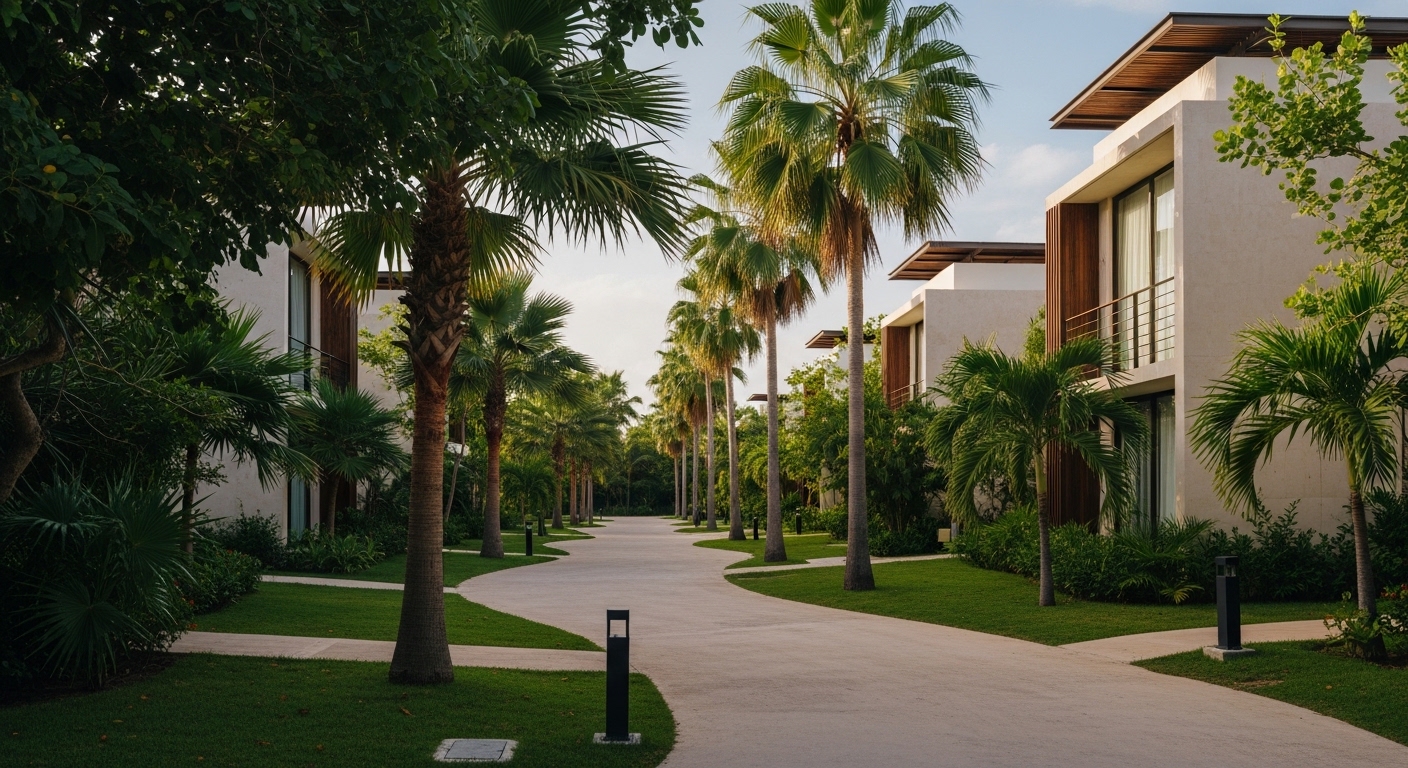
Aldea Zama is where we’d send a first-timer who wants comfort without the beach markup. It’s a master-planned community of low-rise condo buildings, smooth roads, and a handful of cafes and a small plaza. Rooms run $90-$180 per night for a modern unit with air conditioning, reliable Wi-Fi, and a shared pool — things that aren’t guaranteed on the beach.
You’re about 4 km from the sand, so you’ll taxi (roughly $8-$12 each way) or rent a bike. The trade-off is real value: you get double the space for half the beach price, and the area feels safe and quiet at night. It’s popular with couples, small families, and remote workers who want a base rather than a scene.
Browse Aldea Zama condos and aparthotels on Check live hotel prices to see what’s open for your dates.
Tulum Town (Pueblo): Cheapest Rooms & Real Mexico
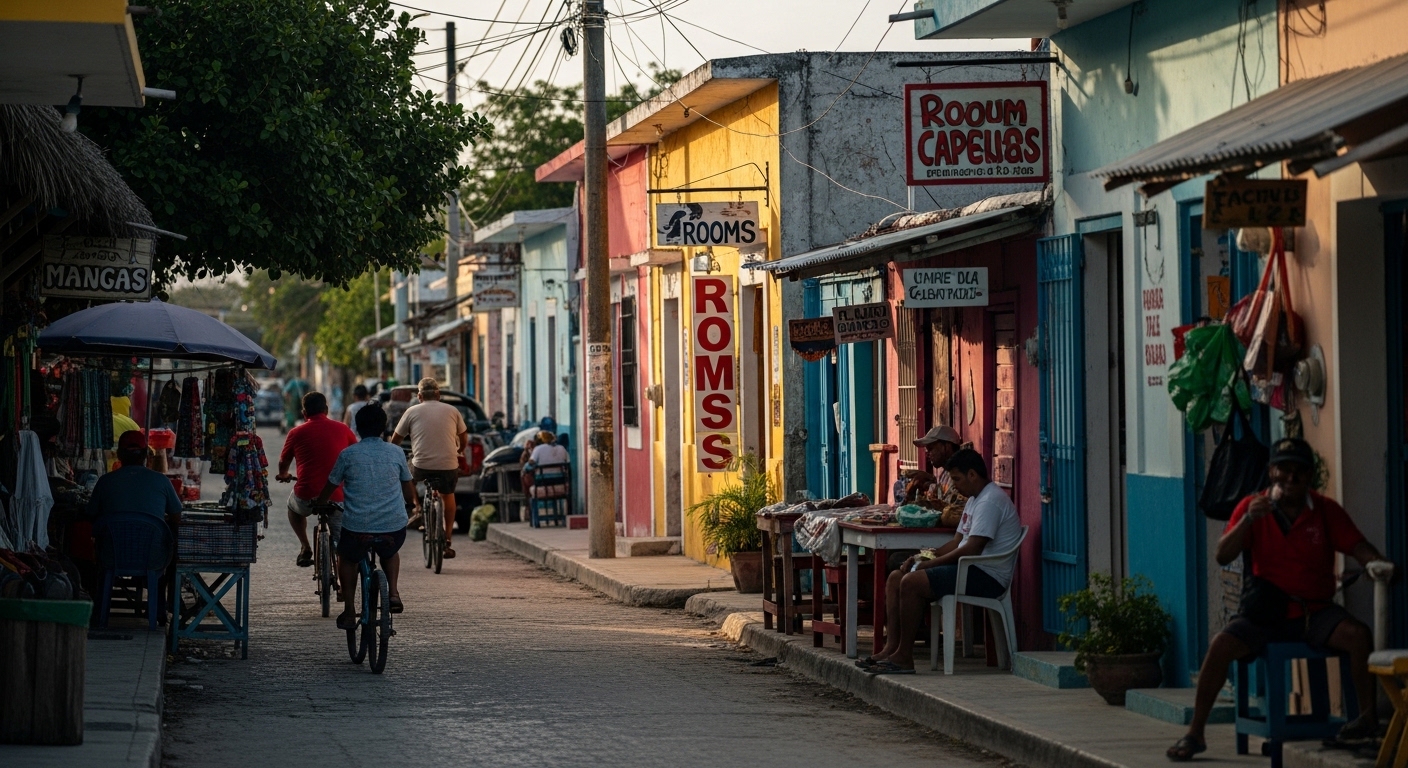
Tulum Town is the budget winner and the most authentically Mexican part of town. Hostels start near $20 a night, and clean private rooms or small hotels run $40-$80. You’ll find taco stands, ATMs, supermarkets, and a working local economy — not curated beach clubs. It’s grittier and louder, but it’s where your money stretches furthest.
The downside is distance: the beach is a 10-15 minute drive or a 20-minute bike ride. Bus and colectivo connections are easy and cheap, though. We recommend the Town for backpackers, solo travelers, and anyone staying a week or more who plans to cook and explore. If you’re weighing Tulum against the rest of the coast, our cancun vs tulum comparison helps you decide.
Check hotels in Tulum Town (Pueblo) →
La Veleta: The Up-and-Coming Nomad Hub
La Veleta sits just south and west of Tulum Town, and it’s become the go-to for digital nomads and longer stays. It’s newer than the Pueblo, with jungle-edge condos, coworking-friendly cafes, and quieter streets. Nightly rates land around $70-$140 for a modern one-bedroom, and monthly rentals can drop the per-night cost significantly.
You’ll still need a bike or taxi for the beach, and some streets remain unpaved, so pack closed shoes for the rainy season. We like La Veleta for the balance of price, space, and a community of remote workers — it feels residential without being remote. Look for condos with backup power and fiber Wi-Fi if you’re working; listings on Check live hotel prices usually flag both.
Quiet Alternatives Beyond the Main Areas: Holistika, Tankah and Soliman Bay
If none of the four main areas fits, three smaller options sit outside the usual comparison. Each trades convenience for calm, and each works best with a bike, a rental car or a pre-booked driver.
Holistika area
This wellness-focused pocket is quiet and not walkable to the beach or to town. Expect yoga studios, lodges and jungle paths rather than shops. It suits travelers who plan to stay put for most of the day and treat the beach as an occasional outing.
Tankah Bay
Tankah is a gated bay with round-the-clock security and a beach that is usually close to empty. The water is shallow and good for swimming, and the bay can sometimes shield the sand from seaweed.
The catch is that services are minimal outside hotel restaurants, and a rental car is often needed. It fits couples and families who want peace more than a scene.
Soliman Bay
Soliman Bay lies roughly a 20 to 25 minute drive north of town. It is secluded and known for snorkeling, but you need a car or taxi to reach Tulum itself.
Stock up on groceries and cash in town before you head out, since nearby choices are limited.
All three areas reward a longer stay. For a two-night trip, the transfer time eats too much of the visit, so stay in Aldea Zama or the Beach Zone instead.
How Much Does It Cost to Stay in Tulum?
Tulum spans backpacker to luxury, so your nightly budget varies wildly by zone. A bed in a Town hostel runs about $20-$30, a mid-range Aldea Zama or La Veleta condo sits around $90-$160, and a Beach Zone resort starts near $280 and climbs fast. Add roughly 16% IVA tax plus a small lodging tax to quoted rates.
Timing matters too. The December-April high season commands peak prices and books out early, while May through October sees rates fall around 12-15% — with the trade-off of afternoon rain and some seaweed (sargassum) on the beach. Use the table below to set expectations, then plan the rest with our tulum itinerary. Travelers budgeting the trip often check this Tulum itinerary before sketching out a day-by-day plan for the trip.
| Area | Budget/Night | Mid-Range/Night | Vibe |
|---|---|---|---|
| Beach Zone | $150 | $280-$650 | Luxury, beachfront, scene |
| Aldea Zama | $80 | $90-$180 | Modern, quiet, central |
| La Veleta | $60 | $70-$140 | Nomad, residential |
| Tulum Town | $20 | $40-$80 | Local, cheapest, lively |
How Do You Get From the Airport to Your Tulum Hotel?
Most visitors fly into Cancun, not Tulum. Cancun has more flights and cheaper fares, while Tulum’s Felipe Carrillo Puerto airport opened at the end of 2023 and sits about 40 minutes south of town, with routes still being added.
From Cancun airport, the ADO bus runs direct to Tulum’s bus station in town in roughly 2.5 hours. Reported fares in 2026 are around USD 15-25, and departures are about every hour or two, thinning out late at night. Check the last departure if you land after dark.
- Private transfer: around USD 90-160 per vehicle for up to about four people, door to door in 1.5-2 hours.
- Shared shuttle: around USD 30-55 per person, 2-3 hours because the van makes several stops.
- Bus plus taxi: the cheapest option, but the bus ends in town, so beach-zone guests need a second ride.
Uber is not available in Tulum, and taxis are unmetered. Agree on the fare before you get in, or ask your hotel to arrange the pickup. Groups, late arrivals and anyone with heavy luggage usually come out ahead with a pre-booked private transfer straight to a beach-zone hotel. Confirm prices with the operator, since they change by season.
Getting Around From Your Hotel
Your area choice decides how much you’ll spend getting around. From the Beach Zone you can walk the strip, but a taxi into Town costs $15-$25 — drivers set fixed rates and rarely negotiate. From Aldea Zama or La Veleta, a town taxi runs $5-$8 and a beach run $8-$12. Renting a bike (about $10-$15 a day) is the cheapest and most popular option for short hops.
Many visitors rent a car to reach cenotes, the Coba ruins, and beaches outside town. Rates start around $35 per day in 2026, and parking is easy outside the beach strip. We book through our live travel map to compare local agencies and skip the airport upsells. For organized tours and cenote trips, GetYourGuide lists most Tulum experiences with free cancellation.
Is Tulum Town Safe at Night, and Where Do Scams Happen?
Tulum Town is the center of local nightlife, and many visitors come in just for bars and restaurants after dark. One travel guide describes safety in the busiest streets as hit or miss, especially late and near venues serving alcohol, and notes that violent crime does occur in the area.
That does not make the town off limits, but it argues for a few habits. Treat it like any busy city center at night.
- Stay on lit main streets and avoid walking home alone after drinking.
- Use a taxi arranged by your hotel or a restaurant instead of hailing the first car you see.
- Agree on the fare before the car moves, because taxis are unmetered.
- Keep phones and wallets out of sight when walking or biking.
- Lock bikes in a visible spot and never leave valuables in a basket.
Aldea Zama is generally seen as one of the safer residential areas, although it has frequent power outages and construction is still ongoing. Walls, gates and a front desk matter more than the neighborhood label, so read recent reviews that mention security and night noise.
In the Beach Zone, the main risks are practical: few sidewalks, heavy traffic on one road and bicycles sharing the lane. Wear closed shoes and carry a flashlight if you walk back after dark.
Money is the other pitfall. Some venues and taxis prefer cash, so withdraw pesos at a bank ATM inside a branch or supermarket in daylight, and decline any card terminal that asks you to pay in USD at a poor rate.
When to Book and How to Save
Book beach hotels three to six months ahead for high season; the best properties genuinely sell out. For Aldea Zama and La Veleta condos, one to two months is usually enough outside the December holidays. Free-cancellation rates let you lock a room now and rebook if prices drop, which they often do for these areas.
To save real money, travel in the May-October shoulder and off-season, stay slightly inland, and book monthly if you’re a remote worker — many condos discount 30%+ for 28-night stays. We always filter Check live hotel prices for free cancellation and pay-at-property so a plan change doesn’t cost us. A travel eSIM from Airalo (Mexico plans from about $5) also beats roaming for confirming bookings on the move.
What Fees Hit Your Bill Besides the Room Rate?
Quoted rates in Tulum often leave out several charges. Read the checkout page line by line before you commit.
Taxes and service charges
Beyond the value-added tax, some properties add a service or cleaning fee. Condo listings are the most likely to include a cleaning charge that turns a cheap nightly rate into an average one. Compare the total price for your dates, not the headline number.
The Quintana Roo visitor fee
Visitax is a per-person state fee for international visitors. Reports describe it as separate from hotel reservations and flights rather than something built into your room price. The state has discussed having hotels and tour operators collect it, but sources conflict on whether that plan is in force, and they quote different amounts. Confirm the current figure and rules on the official state portal, visitax.gob.mx.
Be cautious with look-alike websites. Some third-party pages are reported to charge well above the official fee, so pay only through the government portal and keep the QR code on your phone, as airport agents may ask for it.
Archaeological and park fees
Entry fees for the ruins and nearby parks are separate from lodging, and reports say foreign-visitor prices rose in 2026. Budget for them in your daily plan rather than your hotel budget, and check the price on the day you go.
Deposits and payment timing
Many boutique beachfront properties take a deposit or full prepayment, while condos on large booking platforms more often allow pay at the property. Read the cancellation window and screenshot it. Prepaid, non-refundable rates only make sense when your flights are already fixed.
Does Sargassum Change Where You Should Stay in Tulum?
Yes, because seaweed affects some beaches far more than others. Local experts describe the Quintana Roo season as running roughly April to September, with the heaviest landings in the Mexican Caribbean usually between June and September. Tulum has reported an unusually heavy 2026 season, so the topic matters for summer bookings.
The long, open beaches of the hotel zone tend to collect more seaweed. The sheltered, cove-like beaches south of the archaeological zone see substantially lower accumulations, which is why locals and day-trippers often head there. Beachfront hotels also carry the cleanup burden, hiring extra crews and machinery.
Restaurants, tour operators and shops that do not depend on the beach see little direct effect. That is a point in favor of Aldea Zama, La Veleta and Tulum Town in peak sargassum months, since your days revolve around pools, cenotes and day trips anyway.
How to book around it
- Choose a property with a pool if you plan to stay in the Beach Zone from June to September.
- Check a live sargassum report a few days before arrival, and ask the hotel how often crews rake the sand.
- Book a rate with free cancellation so you can adjust if conditions are poor.
- Plan beach days for the cooler months if seaweed-free sand is your top priority.
Which Tulum Area Fits Which Type of Traveler?
The earlier sections compare areas by price. This quick matrix matches them to trip types, so you can decide in a minute.
| Traveler | Best base | Why |
|---|---|---|
| Honeymooners | Beach Zone | Sand outside your door, small boutique properties, a romantic setting |
| Families | Aldea Zama | Pools, kitchens, quiet streets, and more space per dollar |
| Solo and backpackers | Tulum Town | Hostels, cheap tacos, easy bus links, and other travelers |
| Remote workers | La Veleta | Cafes, coworking spots, and monthly rental options |
| Groups of friends | Aldea Zama condos | Split a multi-bedroom unit and share one pool |
| Short, splurge stay | Beach Zone | Atmosphere matters more than space on two or three nights |
If you are torn between two areas, split the stay. Spend the first nights in Aldea Zama or Town to settle in cheaply, then move to the beach for the last night or two. That keeps the budget in check while still giving you the postcard sunrise.
Hotel, Condo or Rental: Which Works Better in Tulum?
Hotels dominate the Beach Zone, while Aldea Zama and La Veleta are mostly condos and aparthotels. Each format solves different problems.
- Hotels: daily housekeeping, on-site restaurants and staff who can arrange taxis and tours. They suit short stays and travelers who want everything handled.
- Condos and aparthotels: kitchens, washing machines and more room, usually with a shared pool. They suit stays of five nights or more and groups.
- Private rentals: the widest range of quality, so read recent reviews closely and look for photos of the actual bedroom and bathroom.
In the Beach Zone, a hotel is the safer choice because generators, limited Wi-Fi and uneven road access are part of daily life there.
In the residential areas, confirm backup power and a working internet connection before booking, especially if you need to work. Ask whether air conditioning runs all night, since Tulum is hot and humid for much of the year.
Read the full price before you commit. Cleaning fees, service charges and taxes can turn a low nightly rate into an average one, and the cancellation window varies widely by property.
Late Arrival, Early Flight and Luggage: How to Handle Transfers
Tulum sits well away from the main airport in Cancun, so arrival and departure days shape which area works. Plan them first, then pick the hotel.
If you land after dark
Bus departures thin out late at night, so check the last scheduled service before you rely on it. A pre-booked private transfer is the safer choice, and it drops you at the hotel door, which matters on a dark beach road with no sidewalks.
Message your hotel with your flight number. Many properties on the strip do not staff the front desk around the clock, and you do not want to wander a jungle road looking for a gate.
If you leave early
The ride back to Cancun airport takes around two and a half hours by bus, so an early flight means a very early start. The easiest fix is to sleep your last night in Tulum Town, where taxis and the bus station are close, or to book a Cancun airport hotel for the final night.
Luggage between check-out and departure
Ask the front desk to hold bags after check-out. Many hotels do this free or for a small tip, which lets you spend the last afternoon at the beach or a cenote. In Tulum Town, some shops and stations offer paid storage, but terms vary, so confirm hours before you leave anything.
Power and Wi-Fi on departure day
Outages are common in parts of town and on the beach strip. Download your boarding pass and transfer confirmation while you still have a signal.
Check hotels in Late Arrival, Early Flight and Luggage →
A Sample Three-Night Tulum Stay Plan
This plan uses a split base to balance cost and atmosphere. Adjust it around your flight times.
Night 1: arrive and settle in Aldea Zama or Town
Take the ADO bus or a pre-booked transfer, drop your bags, and eat dinner in Tulum Town, where prices are lowest. Rent a bike or arrange a taxi for the next morning.
Day 2: ruins early, beach later
Visit the Tulum archaeological zone first thing in the morning, before the heat and the tour buses build. Foreign-visitor entry fees were reported to have increased in 2026, and sources quote different amounts, so check the current price on the day.
Spend the afternoon at a beach club or the public beach, then move to the Beach Zone for night 2.
Day 3: cenotes or a quiet morning
Book a cenote visit or a Sian Ka’an tour, or simply stay on the sand. Parque del Jaguar is another option, with a reported entry fee of 100 pesos for foreign visitors under a federal decree effective July 2026. Confirm that figure locally.
Night 3: easy exit
If your flight leaves early from Cancun, move back to Town or book a transfer in advance. The trip takes around 2.5 hours, so leave generous time.
Common Booking Mistakes in Tulum
A few repeat problems come up when travelers choose a Tulum hotel from a list.
- Trusting the label “near the beach.” Aldea Zama and La Veleta listings often say this, but the sand can be several kilometers away. Check the map pin and the distance in minutes.
- Ignoring the road. The Beach Zone runs along a single road with heavy traffic at peak times. A property one kilometer away can take far longer to reach than it looks.
- Skipping the power question. If you need air conditioning or Wi-Fi for work, ask about generators and backup systems.
- Booking one night only. Transfers eat half a day, so two or three nights is the minimum that makes sense.
- Forgetting the cash. Some beach-zone venues and taxis prefer cash. Carry small bills in pesos.
- Booking peak dates late. Holiday weeks and winter weekends sell out first, particularly on the beachfront.
Before you pay, screenshot the cancellation terms and confirm the total price including taxes and fees. That one step prevents most disputes at check-in.
Frequently Asked Questions
Where should first-time visitors stay in Tulum?
First-timers should stay in Aldea Zama. It balances modern comfort, safety, and reasonable prices ($90-$180/night) while sitting a short taxi from both the Beach Zone and Tulum Town. You get a quiet base without paying beachfront rates or sacrificing Wi-Fi and air conditioning.
Is the Tulum Beach Zone worth the price?
For a short, special trip, yes. The Beach Zone delivers direct beach access and a design-forward atmosphere you can’t replicate inland, with rates of $280-$650 per night. But power and Wi-Fi can be unreliable, so it’s better for a 2-3 night splurge than a long remote-work stay.
Is Tulum Town safe to stay in?
Yes, Tulum Town is generally safe for travelers, with normal city precautions. It’s busier and louder than the beach, but it has the cheapest rooms ($40-$80), real restaurants, ATMs, and grocery stores. Avoid flashing valuables at night and use registered taxis, as you would anywhere.
How far is the beach from Aldea Zama?
Aldea Zama is about 4 km from the Beach Zone, a 10-minute drive or a 20-minute bike ride. Taxis cost roughly $8-$12 each way, and bike rentals run $10-$15 per day. It’s close enough for daily beach trips without paying beachfront hotel prices.
Do I need a car in Tulum?
You don’t need one to stay in town, but a car helps for cenotes, the Coba ruins, and quieter beaches. Rentals start near $35 per day in 2026. If you’re staying put on the beach or in town, bikes and taxis cover most needs more cheaply.
When is the cheapest time to stay in Tulum?
May through October is cheapest, with rates falling around 12-15% versus the December-April peak. The trade-offs are afternoon rain and possible sargassum seaweed on the beach. September and early October see the lowest prices, though some businesses close briefly during the slowest weeks.
The Bottom Line
Where you stay in Tulum comes down to your trip: pick the Beach Zone for a barefoot splurge, Aldea Zama for the best all-round value, La Veleta if you’re working remotely, and Tulum Town to stretch every dollar. Whichever you choose, book a free-cancellation rate early so you can lock today’s price and adjust later.
Compare current Tulum hotels on Check live hotel prices and start planning the rest with our tulum itinerary.