Rome vs Venice: Which Italian City Should You Visit First? (2026)
Disclosure: Some links in this guide are affiliate links. If you book or buy through them, we may earn a small commission at no extra cost to you — it helps keep our guides free.
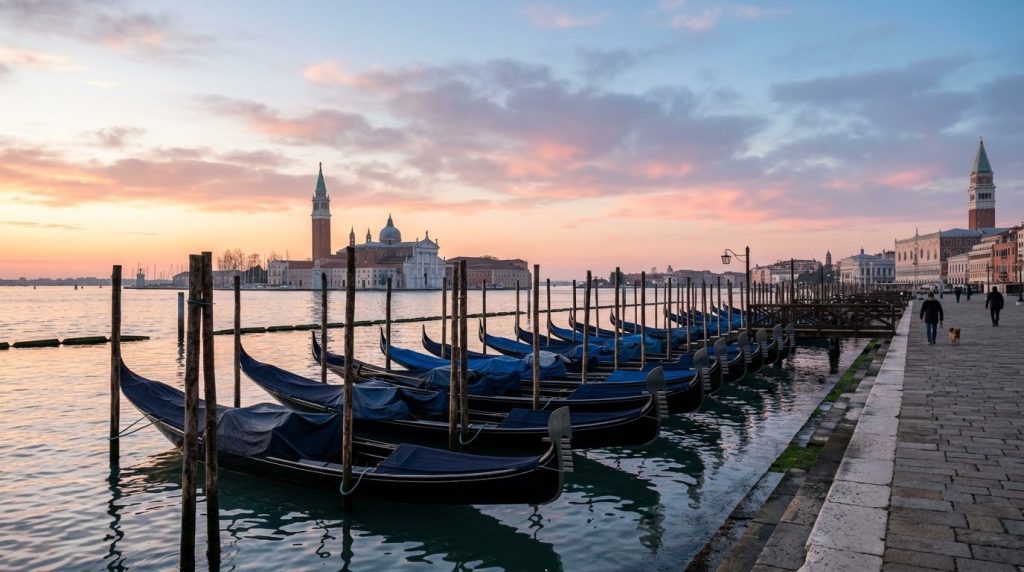
Pick Rome if you have 4 or more days and want the biggest dose of ancient history, art and food in Italy; pick Venice if you have 2 to 3 days and want a compact, car-free city you can walk end to end.
For most first-timers, Rome wins because it has more to do, cheaper beds and better flight options from the US. If you can, do both: the fastest train between them takes about 3 hours 50 minutes.
| Factor | Rome | Venice |
|---|---|---|
| Ideal stay | 3–5 days | 2–3 days |
| Feel | Sprawling capital, traffic, nightlife | Small lagoon city, no cars, quiet after dark |
| Getting around | Walking, metro, buses, taxis | Walking and vaporetto (USD 10.70 / EUR 9.50 per ride) |
| Headline sights | Colosseum, Vatican, Pantheon | St. Mark’s, Grand Canal, Rialto |
| Hotel prices | Wide range, real budget options | Higher for the same comfort |
| Extra fees | City tax per night | City tax, plus day-tripper access fee on set dates |
| Best for | First-timers, families, foodies | Couples, slow travelers, photographers |
Prices in this post are converted at USD 1 = EUR 0.89.
How the two cities actually feel on the ground
Rome is a working capital built on top of its own ruins. You’ll dodge scooters, wait for buses that don’t come, and then turn a corner into a piazza with a fountain by Bernini. It’s loud and hot in summer, and worth it.
Venice is the opposite. The historic center has fewer than 48,000 residents and no cars at all. You get around on foot or by water, and after the day-trippers leave around 5 p.m., whole neighborhoods go silent. The catch: by midday in summer, the lanes between the station, Rialto and St. Mark’s are shoulder to shoulder.
Sights and things to do
Rome simply has more: the Colosseum and Forum, the Vatican Museums and Sistine Chapel, the Pantheon and the Borghese Gallery can fill five days. Our list of the best things to do in Rome ranks them. Book the Vatican ahead: official entry is USD 22.50 (EUR 20) at the door or USD 28 (EUR 25) online with the skip-the-line booking fee.
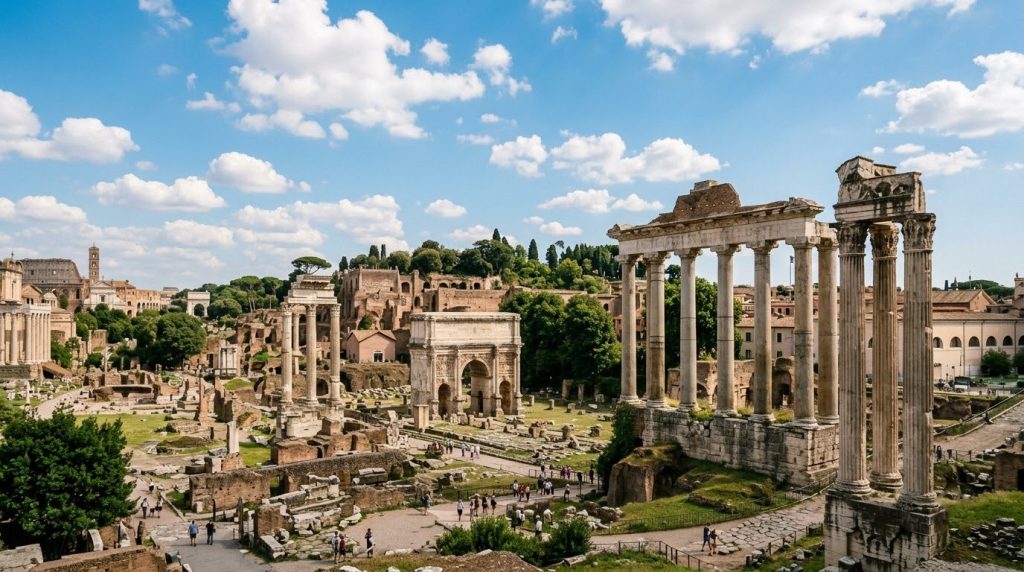
Venice is more about wandering. St. Mark’s Basilica, the Doge’s Palace and a Grand Canal vaporetto ride cover the essentials in a day; the rest is Murano, Burano and cicchetti at standing bars. For a full list, see the best things to do in Venice.
Verdict: if sights per day matter to you, Rome wins clearly.
Cost: which city is cheaper?
Rome is the cheaper base for most travelers, with far more hotels at every level. Venice packs fewer rooms onto islands, so the same comfort costs more, especially in summer.
Specific costs to plan for:
– Rome city tax: EUR 3–10 (USD 3.40–11.20) per person per night depending on the hotel category, charged for up to 10 nights. – Venice transport: an ACTV vaporetto single is USD 10.70 (EUR 9.50) for 75 minutes. A 24-hour pass is USD 28 (EUR 25) and a 7-day pass USD 73 (EUR 65).
Buy a pass if you’ll ride more than twice a day. – Gondola: the official city rate is USD 101 (EUR 90) for 30 minutes by day and USD 124 (EUR 110) for 35 minutes after 7 p.m. That’s per boat for up to 5 people, not per person.
Verdict: budget travelers should spend more nights in Rome and fewer in Venice.
The Venice access fee: what changed in 2026
Venice charges day visitors an access fee on peak dates. In 2026 it ran on 60 days between April 3 and July 26, from 8:30 a.m. to 4 p.m., covering the historic center but not islands like Lido, Murano or Burano. It cost USD 5.60 (EUR 5) if paid at least four days ahead, or USD 11.20 (EUR 10) for last-minute payers.
Overnight guests in the Venice municipality and children under 14 are exempt but must still register for a QR code. The 2026 trial ended on July 27, so a fall or winter trip this year has no access fee at all. Check the official access fee site before a 2027 spring trip, since dates are set yearly.
Getting there from the US and between the cities
Nonstop flights from New York take about 8 hours 35 minutes to Rome Fiumicino and about 8 hours 25 minutes to Venice Marco Polo, so book whichever is cheaper.
Between the cities, take the train. High-speed Frecciarossa and Italo trains run from Roma Termini to Venezia Santa Lucia in about 3 hours 50 minutes, with dozens of departures a day and advance fares from about USD 24. Skip Venice as a day trip from Rome: nearly 8 hours of round-trip rail leaves you only a few hours there.
Our guide to the best day trips from Rome covers closer options like Orvieto and Tivoli.
Entry for Americans: no visa is needed for a short tourist trip, and the EU’s ETIAS travel authorization is still not operating, with no launch date announced.
When to go to each city
Rome is at its best in April to May and late September to October, when it’s warm but not brutal. July and August are hot and crowded, and many locals leave in mid-August. Our breakdown of the best time to visit Rome goes month by month.
Venice runs on a different calendar. Spring brings crowds and the access fee dates; summer adds heat; late fall and winter bring acqua alta (high water) but also empty lanes. February is Carnival, the busiest stretch. Check our guide to the best time to visit Venice before you lock in dates.
Verdict by traveler type
– First-timers to Italy: Rome. More to see, more flights, easier on the budget. Add 2 nights in Venice if you have 7+ days. – Couples: Venice for at least 2 nights.
The evenings, once the day crowds leave, are the most romantic in Italy. – Families: Rome. Gladiators and gelato beat hauling strollers over Venice’s bridges. – Budget travelers: Rome. Lower hotel rates and free sights like the Pantheon and Trevi Fountain. – Short on time (3 days or fewer): Venice. It’s small enough to feel complete in 2 days. Rome needs more.
Food and drink scenes: Venice or Rome?
Both cities eat well, but the format of a meal is almost opposite in each one.
Rome runs on the sit-down trattoria and the four classic pastas: carbonara, amatriciana, gricia and cacio e pepe. A plate of cacio e pepe at a proper trattoria, rather than a tourist-menu spot near a major sight, typically costs USD 11 to 20 (EUR 10 to 18).
Pizza al taglio, pizza sold by the slice from a counter, is the cheaper, faster option for a between-sights lunch, and it is everywhere in neighborhoods like Trastevere and Monti.
One Rome-specific line item to watch for is the coperto, a small per-person cover charge that many sit-down trattorias add to the bill on top of the food, separate from any service charge; check the menu footer before you order rather than being surprised at the end.
Venice is built around the bacaro, a small standing bar serving cicchetti, bite-sized snacks on bread or polenta that function like Venetian tapas.
Individual cicchetti commonly cost USD 1.70 to 3.40 (EUR 1.50 to 3) each at a typical bacaro, and the usual drink alongside them is a spritz, the Aperol-and-prosecco cocktail that runs roughly USD 2.25 to 5.60 (EUR 2 to 5) depending on whether you stand at the bar or sit at a table, with sitting almost always costing more.
Typical cicchetti include sarde in saor, sweet-and-sour sardines with onions, and baccalà mantecato, whipped salt cod on grilled polenta, both specific to the lagoon’s seafood and rarely seen on Roman menus. A proper Venetian evening means hopping between two or three bacari near the Rialto market or in Cannaregio rather than committing to one sit-down restaurant.
For budget travelers, Rome’s format is easier to control, since a slice of pizza or a single pasta dish is a complete, cheap meal.
Venice’s cicchetti crawl can cost about the same per person once you add up several rounds, but it suits travelers who want variety over a full plate, and it pairs naturally with the slow, car-free evenings that make Venice worth the extra hotel cost in the first place.
Where to stay
– Monti, Rome: walkable to the Colosseum, with trattorias and wine bars. Best for first-timers and couples. – Trastevere, Rome: cobbled lanes and late dining, but noisy on weekends. Best for food lovers. – Cannaregio, Venice: close to the train station, with real neighborhood life and better hotel value than San Marco. Best for a 2-night add-on.
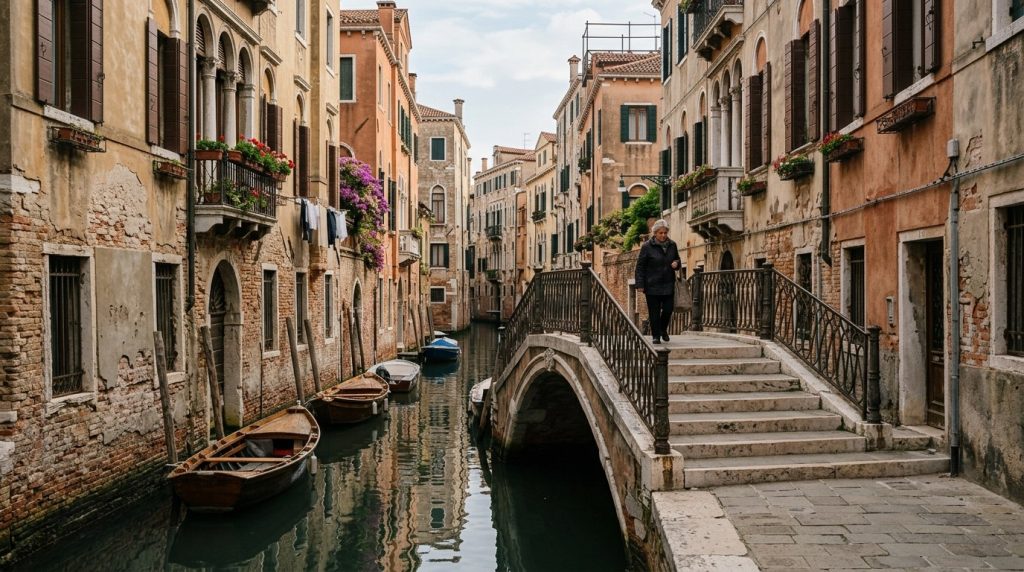
Find your Rome hotel on the map
Live prices from Booking, Airbnb and more — move the map or change dates to compare stays across Rome.
Frequently Asked Questions
Is Rome or Venice more expensive?
Venice is usually more expensive. Hotels cost more for the same comfort because rooms are limited to the islands, and getting around by vaporetto runs USD 10.70 (EUR 9.50) per ride. Rome has more budget beds and free sights. Plan on fewer, pricier nights in Venice and more in Rome.
How far apart are Rome and Venice?
The two cities are about 330 miles apart by rail. High-speed trains from Roma Termini to Venezia Santa Lucia take about 3 hours 50 minutes on the fastest services, with departures roughly once or twice an hour. Flying isn’t faster once you add airport time, and the train drops you right on the Grand Canal.
Should I visit Rome or Venice first?
Start wherever your flight is cheaper, but flying into Venice and out of Rome works well: you begin slow in car-free Venice, walk off jet lag, then finish with Rome’s bigger sights. An open-jaw ticket also saves you the 4-hour backtrack by train at the end of your trip.
Is 2 days enough in Venice?
Yes, 2 days covers St. Mark’s, the Doge’s Palace, a Grand Canal ride and a half-day on Murano or Burano. Stay overnight rather than day-tripping, since the evenings are the best part and overnight guests skip the access fee on its active dates. Rome needs at least 3 full days.