Disclosure: Some links in this guide are affiliate links. If you book or buy through them, we may earn a small commission at no extra cost to you — it helps keep our guides free.
The 30-second version Mount Kilimanjaro
Mount Kilimanjaro stands 5,895m (19,341 ft) — Africa’s highest point and the world’s tallest freestanding mountain
Overall summit success rate is ~65%; Lemosho route achieves 90%+ due to superior acclimatization (KINAPA, 2024)
Operator packages start at USD 2,000 (Marangu, 5 days) and run to USD 2,800+ (Lemosho, 8 days); park fees of ~USD 800 are included
No technical skills needed, but altitude sickness (AMS) is the leading cause of failed summits
Best windows: January-March and June-October; avoid April-May and November (rainy seasons)
Mount Kilimanjaro is Africa’s highest peak at 5,895 meters (19,341 ft), and it is the highest freestanding mountain on Earth. Around 50,000 people attempt the summit every year, with an overall success rate of approximately 65% (Kilimanjaro National Park Authority / KINAPA, 2024).
No ropes, ice axes, or technical climbing experience are required — but altitude sickness claims more failed summits than fitness. This guide covers every practical decision you need to make before the trek begins.
We only recommend services we have researched thoroughly.
What Is Mount Kilimanjaro Like to Climb?
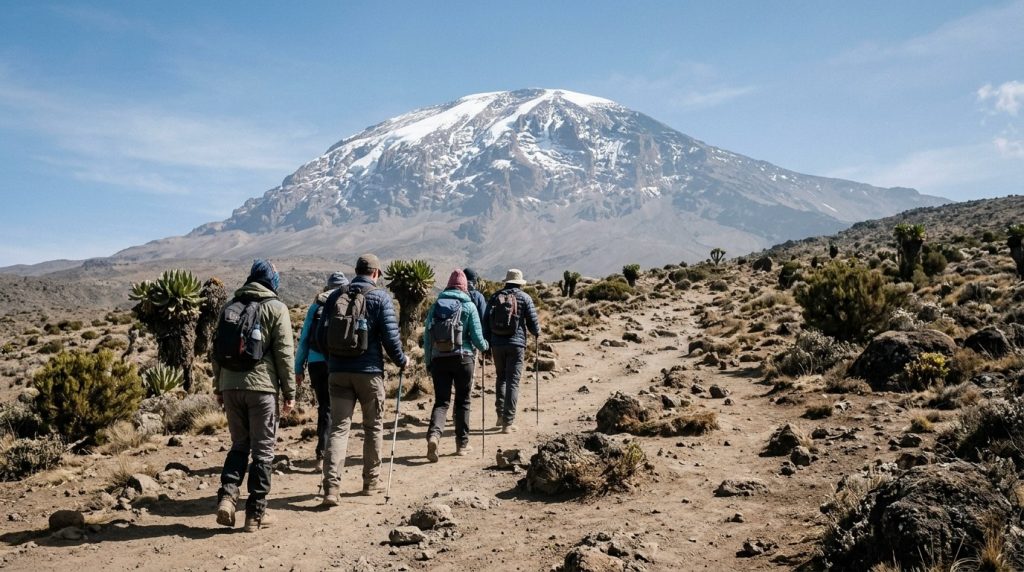
Mount Kilimanjaro is a dormant stratovolcano with three volcanic cones: Kibo (the highest, where Uhuru Peak sits), Mawenzi, and the heavily eroded Shira plateau. Uhuru Peak — the summit target — means “Freedom” in Swahili and sits on the rim of Kibo’s crater at 5,895m. The climb is a multi-day high-altitude trek, not a technical mountaineering route. No ropes, harnesses, or crampons are required for any standard route.
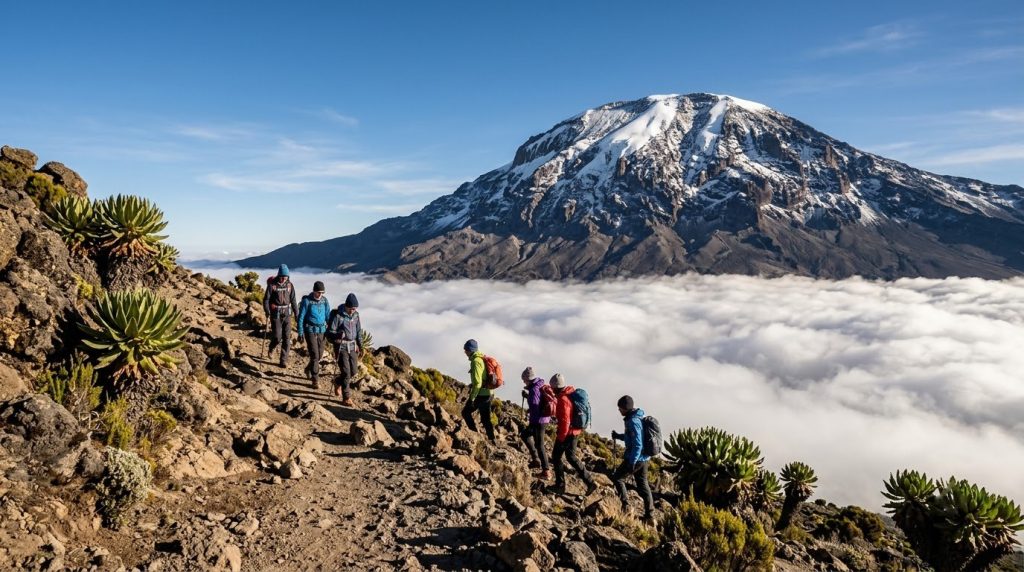
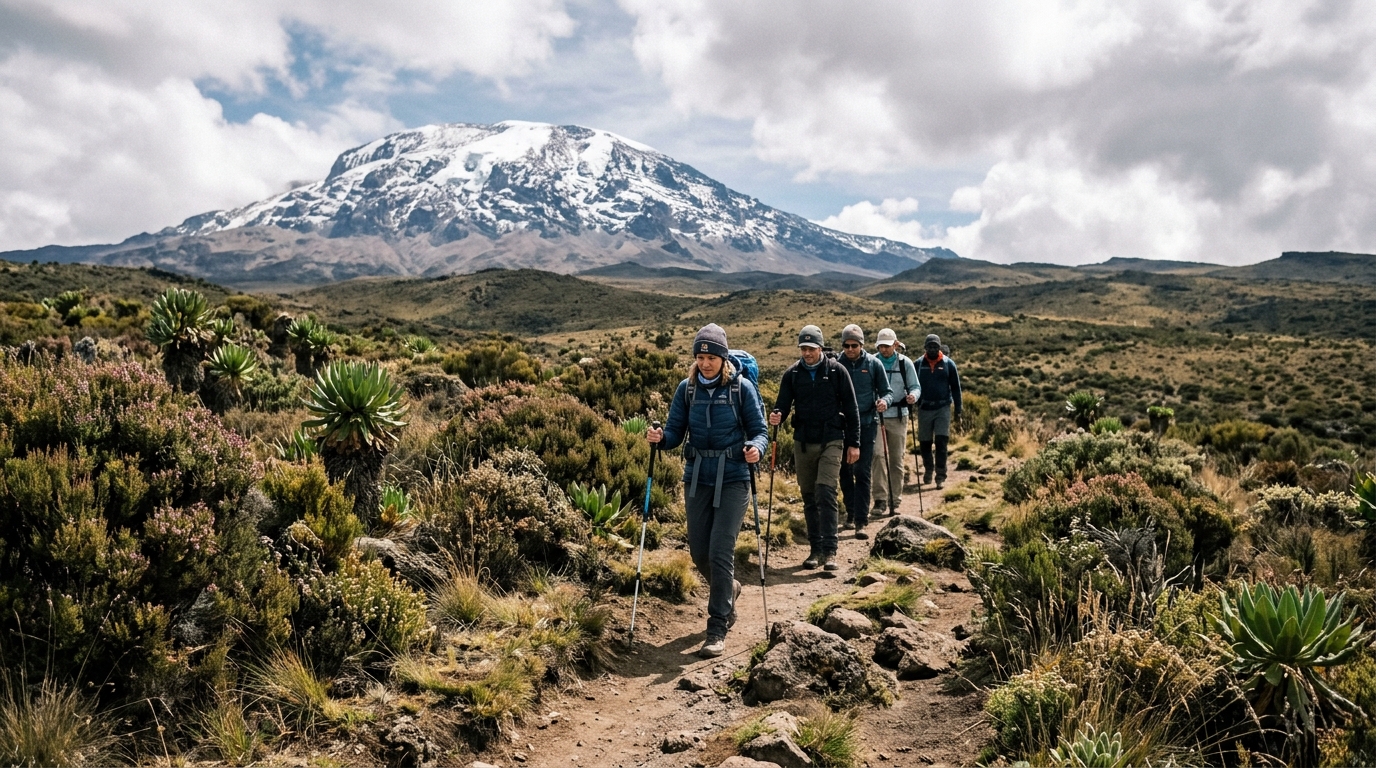
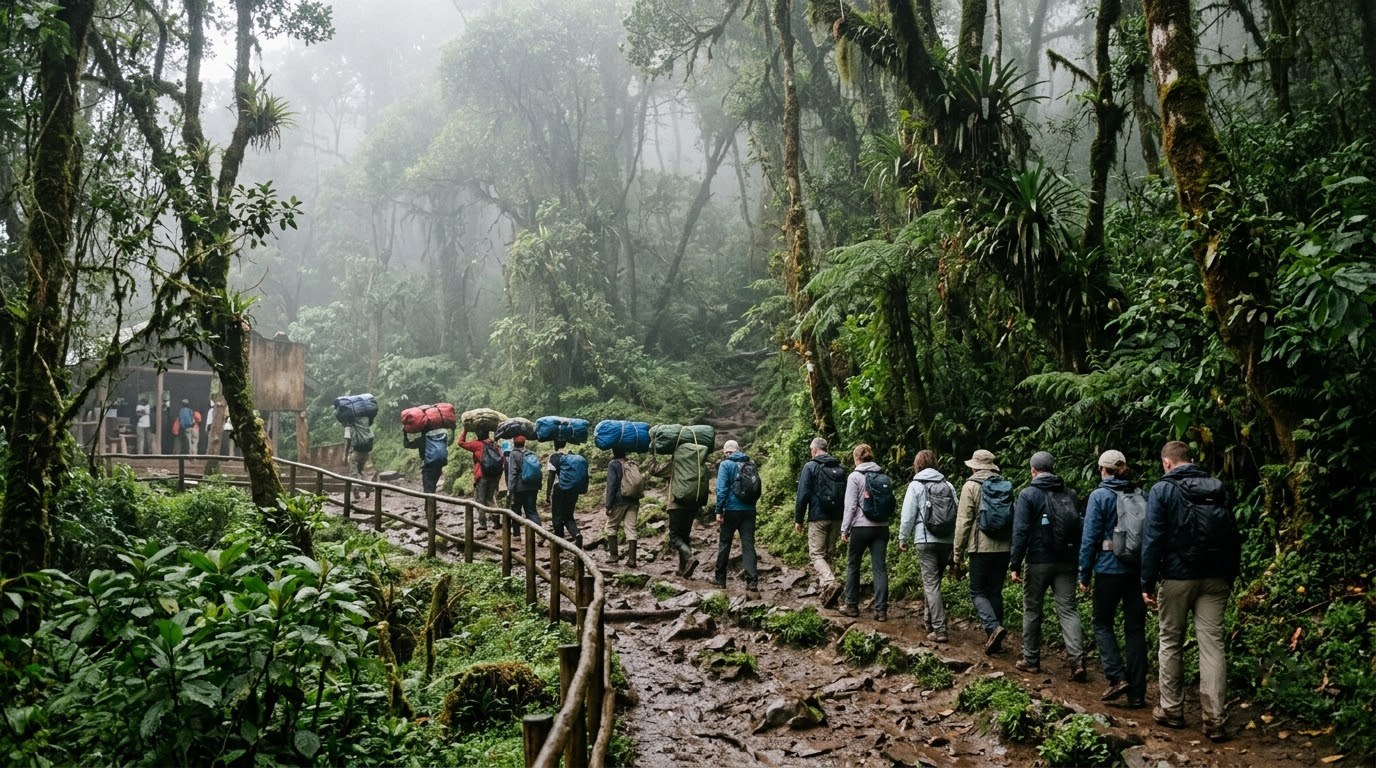
What surprises most first-time climbers is the sheer ecological range. You pass through five distinct climate zones on the way up: cultivated farmland at the base, dense rainforest, heather and moorland, alpine desert, and finally the arctic summit zone with glaciers and snowfields. The journey from humid jungle to frozen crater rim happens in roughly four days of walking. Few mountains on Earth compress that much environmental diversity into a single ascent.
The summit push, called the “summit night,” begins around midnight from High Camp. Climbers walk 6 to 8 hours in darkness, reaching Uhuru Peak at dawn, then descend the same day. The full day runs 14 to 16 hours of movement.
Altitude, cold (summit temperatures reach -10 to -20 degrees C), and sleep deprivation combine on summit night. Physical fitness helps significantly, but acclimatization — taking enough days for your body to adjust — determines the outcome more than leg strength.
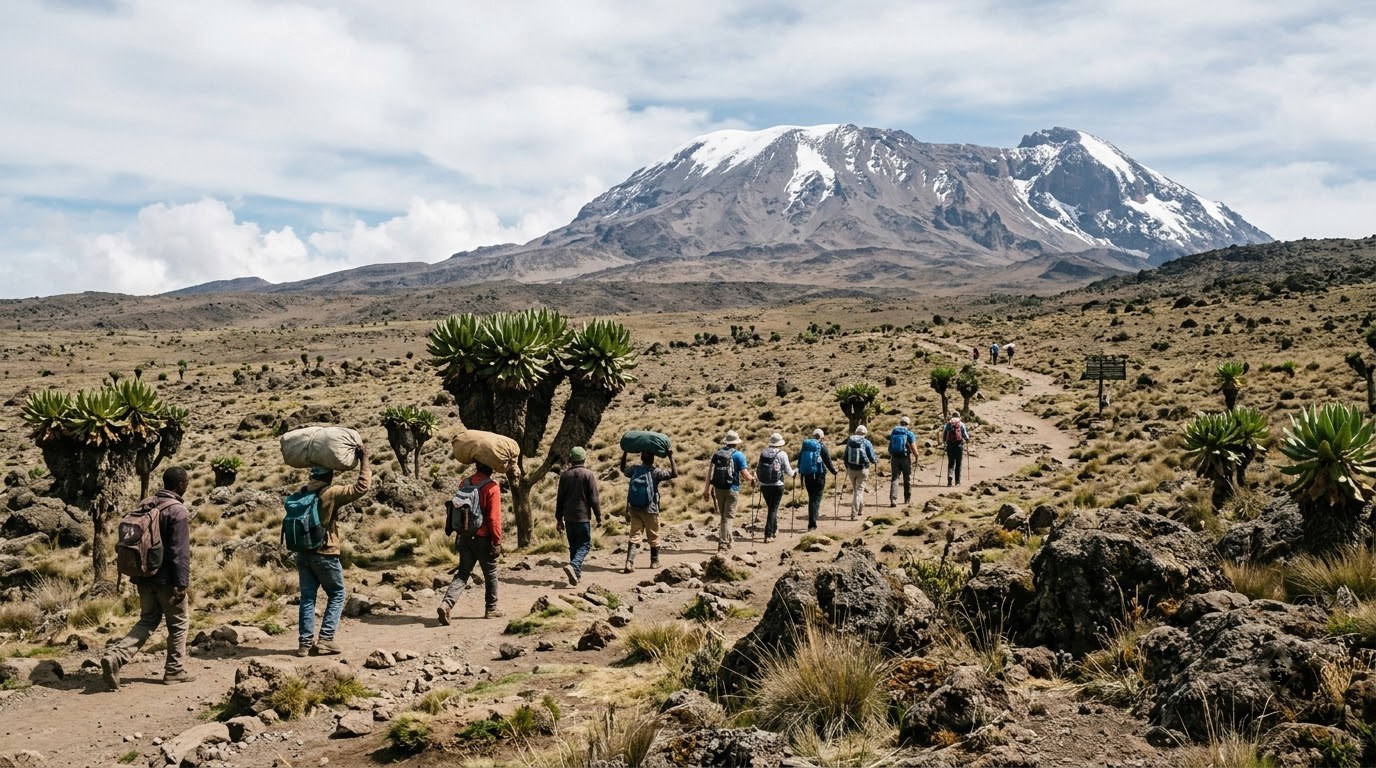
All climbing requires a licensed operator and guide. Solo trekking is prohibited by Kilimanjaro National Park regulations. Operators arrange permits, guides, cooks, and porters (typically 2 to 3 porters per climber). Park fees of approximately USD 800 are bundled into all operator quotes.
kilimanjaro packing list
Kilimanjaro Routes Compared: Which Should You Choose?
The route you pick is the most consequential decision in your Kilimanjaro planning. Lemosho achieves a 90%+ success rate compared to roughly 50-60% on Marangu, primarily because longer routes allow more acclimatization days (KINAPA operator statistics, 2024). More days on the mountain costs more money but dramatically improves your odds of standing at Uhuru Peak.
Route
Duration
Difficulty
Success Rate
From (USD)
Notes
Marangu
5-6 days
Moderate
50-60%
~2,000
“Coca-Cola” route; dormitory huts; only route with permanent sleeping structures; least scenic
Machame
6-7 days
Moderate-Hard
~70%
~2,200
“Whiskey” route; tent camping; most popular overall; good scenery; steeper than Marangu
Lemosho
8 days
Moderate
90%+
~2,800
Most scenic; widest acclimatization window; best for first-timers willing to invest extra days
Rongai
6-7 days
Moderate
~70%
~2,200
Approaches from Kenya side; less crowded; drier than southern routes; good for a quiet experience
Umbwe
5-6 days
Hard
~50%
~2,000
Steepest and shortest; minimal acclimatization; not recommended for most climbers
Source: KINAPA operator data and operator published rates, 2024-2026
The common advice to “just do Marangu because it’s cheapest” is statistically counterproductive. A climber who spends USD 2,000 on a 5-day Marangu attempt and fails at Gilman’s Point (5,681m, below Uhuru Peak) has paid for a partial climb. A climber who spends USD 2,800 on an 8-day Lemosho attempt stands a 90%+ chance of reaching Uhuru Peak. If the summit matters, the Lemosho premium is worth every dollar.
We recommend Lemosho as the default for first-time climbers. Machame is a solid second choice for those with previous high-altitude experience above 4,000m. Rongai suits travelers who want fewer people on the trail.
kilimanjaro route guide
How Much Does Kilimanjaro Cost in 2026?
A complete Kilimanjaro climb costs USD 2,500 to USD 4,500 for most travelers when you add up the operator fee, tips, gear, and flights. The operator package (which covers park fees, guides, porters, meals, and camping) is the largest single line item, ranging from USD 2,000 on budget Marangu options to USD 3,500+ for premium 8-day Lemosho operators (Kilimanjaro operator market survey, 2025).
Full Cost Breakdown
Operator package (all-inclusive): USD 2,000 to USD 3,500, depending on route and operator tier. Park fees (~USD 800) are bundled in. Never book an operator who quotes fees separately — it signals corner-cutting on porter welfare.
Porter and guide tips: USD 150 to USD 250 total is the widely recommended minimum across the crew. The Kilimanjaro Porters Assistance Project recommends specific per-day amounts: USD 3-5 per porter per day, USD 5-7 per cook per day, USD 10-15 for the lead guide per day (KPAP tipping guidelines, 2025).
Gear: Budget USD 200 to USD 600 if renting locally in Moshi; USD 500 to USD 1,500 if buying new gear at home. Key items: -20C sleeping bag, trekking poles, gaiters, waterproof layers, summit gloves.
International flights (return): USD 700 to USD 1,400 from Europe; USD 900 to USD 1,800 from North America to Kilimanjaro International Airport (JRO) or Arusha (ARK).
Pre- and post-climb accommodation: USD 25 to USD 120/night in Moshi or Arusha; budget USD 150 to USD 400 total for 3 to 5 nights.
Travel insurance with emergency evacuation: USD 80 to USD 200 for a trekking policy covering 6,000m altitude and helicopter evacuation. Non-negotiable.
Budget operators who undercut the market on price almost always do so by underpaying porters. Porter welfare is a documented problem on Kilimanjaro. Before booking, verify that your operator is a member of the Kilimanjaro Porters Assistance Project (KPAP) partner program, which audits porter treatment, equipment, and pay.
The price difference between a KPAP partner and a non-partner operator is typically USD 100 to USD 300 — a small amount relative to total trip cost.
kilimanjaro operators review
How to Train for Kilimanjaro
Physical preparation for Kilimanjaro should start 3 to 4 months before the climb, according to trekking medicine guidelines published by the Wilderness Medical Society. The goal is building cardiovascular base, leg strength for sustained uphill walking with a daypack, and — where possible — altitude pre-exposure. Kilimanjaro does not require elite fitness, but it punishes people who arrive undertrained.
Recommended Training Program
A 12-week base program works for most candidates. Focus on three elements:
Cardiovascular endurance. Walk or hike 3 to 5 days per week, building to 4 to 6 hours on your longest day. Elevation gain matters more than flat distance. Aim for 800 to 1,500m of ascent on weekend hikes in the final 6 weeks.
Strength and stability. Squats, lunges, step-ups, and calf raises prepare the legs for 6 to 8 hours of uphill movement on summit night. Core strength reduces fatigue when carrying a loaded daypack.
Acclimatization pre-exposure. If you can access altitude before Kilimanjaro — a ski resort at 2,500m, a high-altitude trek, or a trip to Colorado or the Alps — do it. Even one weekend at altitude primes your body’s acclimatization response. Some climbers schedule a 3 to 4 day Rwenzori or Atlas Mountains hike before Kilimanjaro for this reason.
Managing Altitude on the Mountain
Acute Mountain Sickness (AMS) is the primary cause of summit failure on Kilimanjaro. Symptoms include headache, nausea, dizziness, and loss of appetite. The key rules:
Walk slowly (“pole pole” in Swahili — the mantra of every Kilimanjaro guide). The instinct to push pace is the most common mistake.
Drink 3 to 4 liters of water per day on the mountain.
Discuss Diamox (acetazolamide) with your doctor before the trip. Many climbers take it prophylactically starting 24 hours before the ascent. It is not a substitute for acclimatization but reduces AMS symptoms.
Never ascend if experiencing moderate AMS. Descend 300 to 500m and reassess. This rule applies regardless of how close you are to the summit.
kilimanjaro altitude sickness guide
Find your Mount Kilimanjaro hotel on the map
Live prices from Booking, Airbnb and more — move the map or change dates to compare stays around Mount Kilimanjaro.
Moshi is the primary base for Kilimanjaro climbers, sitting 30 minutes from Marangu Gate and 45 minutes from Lemosho/Machame trailheads. Most operators are headquartered here. Arusha, 90 minutes away, is a larger city and the hub for Tanzania safari operations. If you are combining Kilimanjaro with a Serengeti or Ngorongoro safari, Arusha makes more logistical sense as your base.
Moshi has a well-developed budget and mid-range accommodation scene built around trekkers. Guesthouses and B&Bs run USD 25 to USD 60 per night. The town is walkable, has strong cell service, and most operators have offices on or near the main street. It’s a practical, low-frills base.
Base Town
Distance to Gate
Accommodation Range/Night
Best For
Moshi
30-45 min to gates
USD 25-120
Kilimanjaro-only trips; budget travelers; briefing days with operators
Arusha
90 min to gates
USD 35-200+
Safari + Kilimanjaro combos; more dining and nightlife options
Marangu village
5-10 min to Marangu Gate
USD 30-80
Marangu route climbers; small-town quiet pre-trek
Source: Booking.com rate averages, May 2026
Plan 1 to 2 nights in base town before the trek for rest, operator briefings, gear checks, and packing. After the climb, most operators include the first post-trek night in the package. Budget 1 to 2 additional nights for recovery before flying out.
You’ll need a reliable data connection for navigation apps, weather checks, and coordination. Tanzania has good LTE coverage in Moshi and Arusha. Getting a local eSIM before you land saves the hassle of finding a SIM card vendor.
moshi hotels guide
Best Time to Climb Mount Kilimanjaro
The two dry seasons are January through March and June through October, and these are the recommended windows for the climb. Summit days in the dry season bring clearer skies, firmer trail conditions, and better views from Uhuru Peak.
The rainy seasons — April through May (long rains) and November (short rains) — bring mud, cloud cover, and reduced visibility, though some climbers successfully summit year-round (Tanzania Meteorological Authority seasonal data, 2024).
Month
Season
Summit Conditions
Crowds
Recommendation
Jan-Mar
Dry (cool)
Cold, clear; January coldest
Moderate
Excellent — best for clear summit views, fewer trekkers than July-Aug
Good overall — July and August are peak; June and September less crowded
Nov
Short rains
Cloud, some rain
Low
Avoid — unpredictable; short rains can be light but timing is unreliable
Dec
Transitional
Variable; improving late Dec
Moderate
Acceptable — late December approaching the dry window; Christmas period busy
Source: Tanzania Meteorological Authority and operator seasonal reports, 2024-2026
January and February are underrated months on Kilimanjaro. The mountain is cold — summit temperatures drop to -15 to -20 degrees C on January nights — but the skies are consistently clear, the trails are less crowded than the July-August peak, and the views from Uhuru Peak across the African plains are unobstructed.
Experienced trekkers with proper cold-weather gear consistently rate January as one of the best summit months for both conditions and atmosphere.
For first-timers who want a balance of good conditions and manageable crowds, June or September hit the sweet spot within the long dry season.
kilimanjaro best time to visit
Mount Kilimanjaro: Frequently Asked Questions
Do I need mountaineering experience to climb Kilimanjaro?
No. Kilimanjaro requires no technical climbing skills, ropes, or ice axes on any standard route. It is a high-altitude trek on well-maintained trails. What it does require is good physical fitness, strong mental resolve for summit night, and respect for altitude acclimatization protocols. The Lemosho route (8 days) gives first-timers the best odds of success at roughly 90%+ (KINAPA, 2024).
How fit do I need to be for Kilimanjaro?
You should be able to walk 5 to 7 hours continuously with a 5 to 7kg daypack before attempting Kilimanjaro. Regular hikers who train consistently for 3 to 4 months before the trip manage the climb well. Summit night is the hardest section: 6 to 8 hours at altitude in cold and darkness. Core fitness, previous multi-day hiking experience, and starting the trip well-rested all improve outcomes significantly.
What gear do I absolutely need for Kilimanjaro?
The non-negotiables: a sleeping bag rated to -15 to -20 degrees C, a waterproof outer shell jacket and pants, trekking poles, gaiters, insulated summit gloves, and warm base layers. Boots should be waterproof and broken in before the trek.
Most gear can be rented in Moshi for USD 5 to USD 15 per item per day if you prefer not to pack it from home. Your operator will provide a full gear checklist at booking.
Can I see wildlife on Kilimanjaro?
Yes, in the lower zones. The rainforest belt (1,800 to 2,800m) hosts colobus monkeys, blue monkeys, bushbuck, and abundant birdlife including sunbirds and hornbills. Buffalo and elephant occasionally move through the lower forest, though sightings are uncommon.
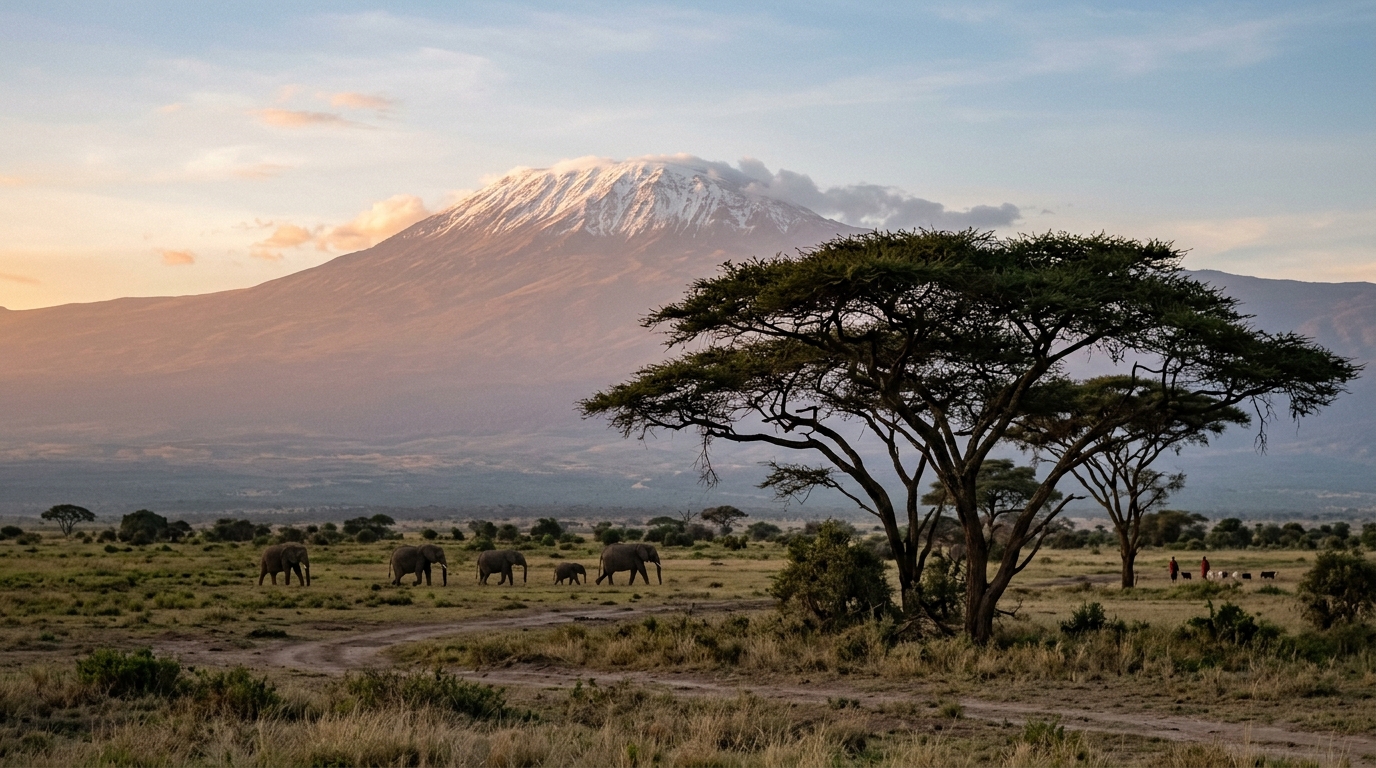
Above the treeline, wildlife thins out. The summit zone is essentially lifeless. For big game safari, Amboseli National Park (just across the Kenya border) offers iconic Kilimanjaro backdrop views with elephant herds in the foreground.
How long does the whole Kilimanjaro trip take from arrival to departure?
Plan for 10 to 14 days total. The climb itself takes 6 to 8 days (depending on route). Add 1 to 2 days before the trek for travel, rest, and operator briefings, plus 1 to 2 days after for recovery before flying. If you are combining with a Tanzania safari (Serengeti, Ngorongoro, Tarangire), budget 12 to 18 days for the combined itinerary.
Mount Kilimanjaro Travel Guide: Final Verdict
Mount Kilimanjaro is one of the world’s great trekking experiences — accessible to any fit, determined person, yet genuinely demanding enough that poor preparation means failure. The statistics are clear: route choice and acclimatization days determine outcomes more than fitness alone. Choose Lemosho if you want the best odds on your first attempt.
Plan 10 to 14 days for the complete trip. Book a licensed, KPAP-affiliated operator. Train consistently for 3 to 4 months. Pack for -20 degrees C at the summit. Budget USD 2,500 to USD 4,500 all-in. And walk slowly — “pole pole” is the most important advice on the mountain.
For guided climbing packages with verified operators, browse options on GetYourGuide’s Kilimanjaro listings. For pre-trek accommodation in Moshi, Check live hotel prices in Moshi cover everything from budget guesthouses to comfortable lodges near the operator offices.
This Mount Kilimanjaro travel guide was researched and written in May 2026. Prices, park fees, and operator rates are subject to change; verify with official sources and your chosen operator before booking.
Keep planning Mount Kilimanjaro
Ready to book Mount Kilimanjaro?Live prices from Booking, Airbnb and more for your dates.