Is Rome Expensive? Real Prices and Daily Budgets (2026)
Disclosure: Some links in this guide are affiliate links. If you book or buy through them, we may earn a small commission at no extra cost to you — it helps keep our guides free.
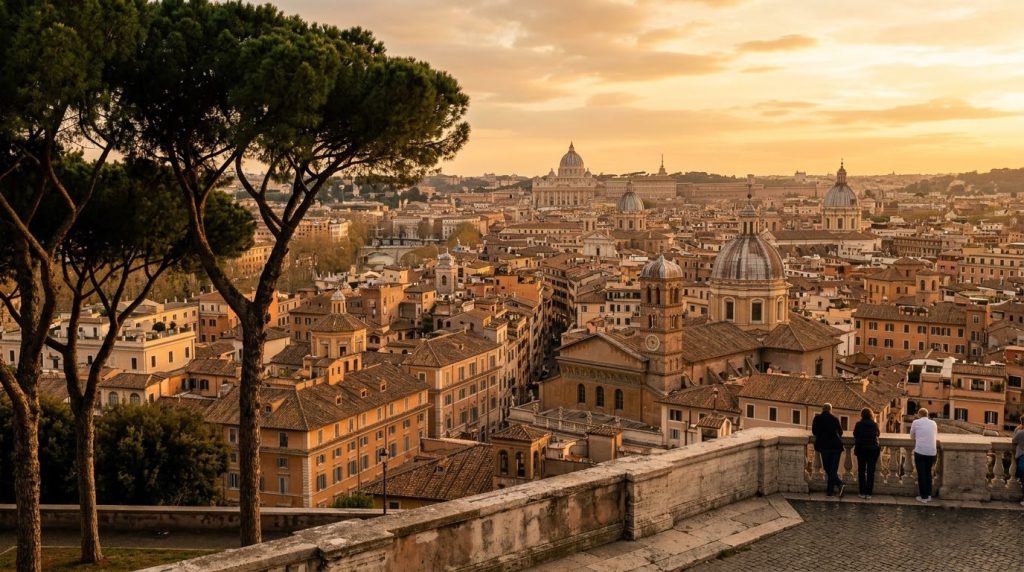
Rome is moderately expensive rather than outrageous: a careful budget traveler can get by on about USD 86–111 (EUR 76–98) a day, while a mid-range couple should plan on USD 300–380 (EUR 265–336) a day for two. Hotels push the total up; food, transit and landmark tickets are fair, and many top sights are free. Prices are converted at USD 1 = EUR 0.89.
| Item | Typical price | How to save |
|---|---|---|
| Mid-range hotel, double | from about USD 170 (EUR 150) | Stay in Prati, Monti or near Termini instead of by the Pantheon |
| City tax, 3-star hotel | USD 6.80 (EUR 6) per person per night | Kids under 10 are exempt; the tax stops after 10 nights |
| Colosseum, Forum and Palatine | USD 20 (EUR 18) | Buy only on the official site, not resellers |
| Vatican Museums | USD 28 (EUR 25) online | Free on the last Sunday of the month (expect huge lines) |
| Metro or bus ticket | USD 1.70 (EUR 1.50) | Walk the historic center; buy a 72-hour pass for heavy use |
| Pasta in a trattoria | USD 10–15 (EUR 9–13) | Eat your big meal at lunch, away from the big piazzas |
The honest answer: your hotel is the expensive part
A well-reviewed hostel dorm bed runs USD 57–73 (EUR 50–65) a night, a basic clean room starts around USD 113 (EUR 100), and a good mid-range hotel starts at about USD 170 (EUR 150), climbing fast around the Spanish Steps and the Pantheon.
Then add the city tax, charged per person, per night, on top of the room rate. Official rates are EUR 4 for 1-star hotels, EUR 5 for 2-star, EUR 6 for 3-star, EUR 7.50 for 4-star and EUR 10 for 5-star hotels; B&Bs and short-term rentals pay EUR 6, hostels EUR 3.50.
A couple spending five nights in a 4-star hotel pays EUR 75 (about USD 85) in tax alone. The full table is on the Roma Capitale city tax page.
What the big sights actually cost in 2026
– Colosseum, Roman Forum and Palatine: EUR 18 (USD 20) on the official Colosseum site.
The Full Experience ticket with the arena floor is EUR 24 (USD 27). – Vatican Museums and Sistine Chapel: EUR 20 (USD 23) at the door, or EUR 25 (USD 28) with the skip-the-line online booking fee on the Vatican Museums’ own ticket page.
Entry is free on the last Sunday of the month. – Pantheon: EUR 7 (USD 8), free for under-18s and on the first Sunday of the month. – Trevi Fountain: since February 2, 2026, getting down to the basin costs EUR 2 (USD 2.26) during the day. The piazza view stays free.
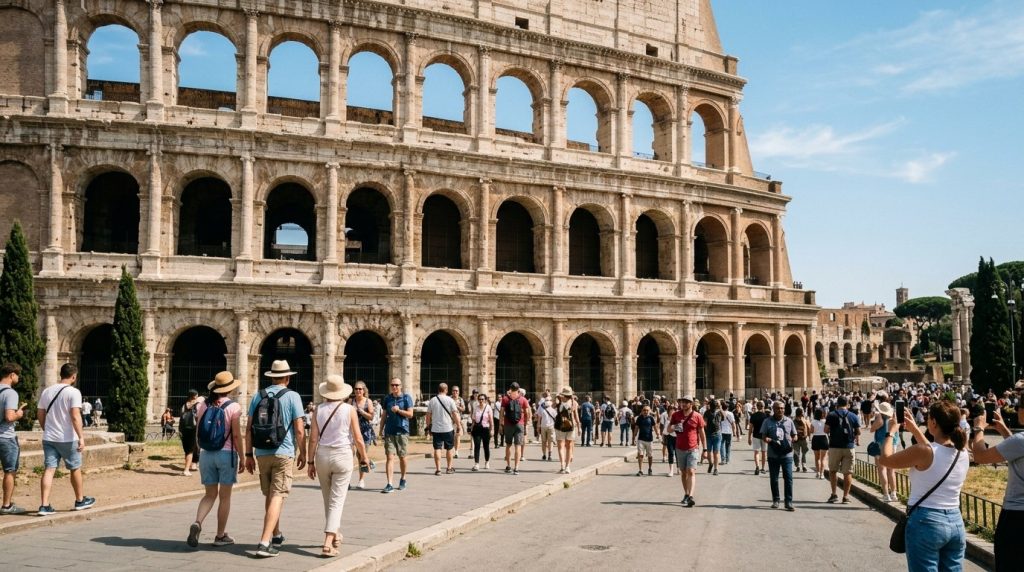
Resellers are where Rome gets expensive, so buy direct. Many of the best things to do in Rome cost nothing at all: St. Peter’s Basilica, Piazza Navona, the Spanish Steps, and dozens of churches.
Eating well for less than you’d expect
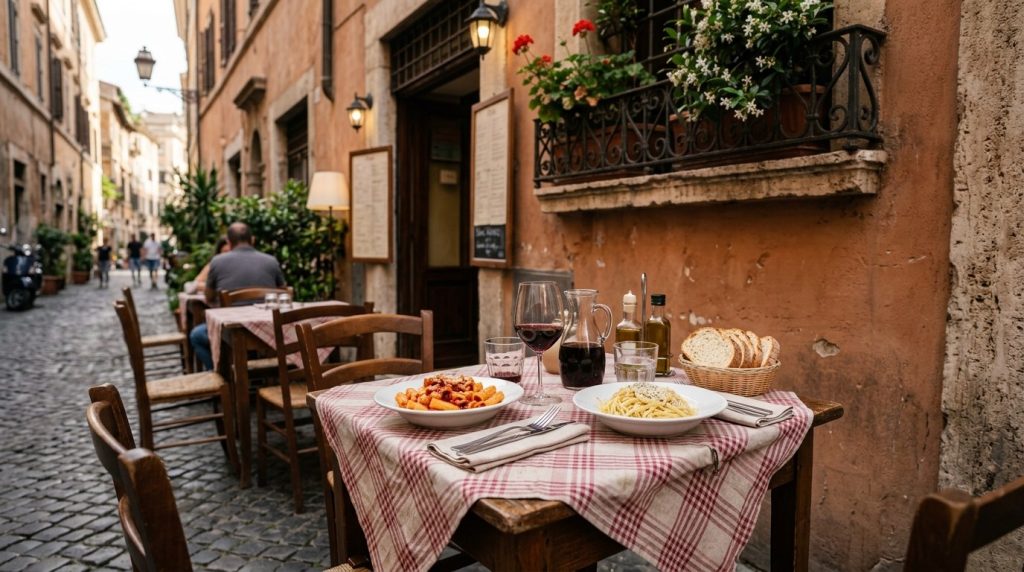
Food is genuinely good value. Cacio e pepe in a family-run trattoria runs about USD 10–15 (EUR 9–13). A sit-down pizza is USD 11–14 (EUR 10–12), a glass of house wine USD 3–6 (EUR 3–5), and a scoop of gelato USD 2–3 (EUR 2–3).
Many restaurants add a coperto (cover charge), usually EUR 1–3 per person. An espresso standing at the bar costs about EUR 1; table service costs more. Tipping is not expected.
Getting around: transit is cheap, taxis are not
According to ATAC, the city transit operator, a single BIT ticket costs EUR 1.50 (USD 1.70) and is valid for 100 minutes (one metro ride). Passes run EUR 8.50 for 24 hours, EUR 15 for 48 hours, EUR 22 for 72 hours and EUR 29 for seven days.
From Fiumicino Airport, the Leonardo Express train to Termini costs EUR 14 (USD 16) and takes 32 minutes. The official flat taxi fare into the historic center is EUR 55 (USD 62), worth it only for three or four people with bags. Regional trains also beat packaged tours for many of the best day trips from Rome.
Three daily budgets that actually add up
These tiers are per person, built from the prices above:
– Budget, USD 86–111 (EUR 76–98): a hostel dorm, hostel city tax, a 24-hour transit pass, an espresso, pizza slices for lunch, a trattoria pasta for dinner and gelato. – Mid-range, USD 150–190 (EUR 133–168): a shared 3-star room, a 24-hour pass, a sit-down pizza dinner with wine, a trattoria lunch, gelato and one paid ticket such as the Colosseum. – Comfortable, USD 250 and up: a 4- or 5-star hotel near the Pantheon or Spanish Steps plus guided tours.
Our 3-day Rome itinerary shows how to group paid sights so you don’t overspend.
When Rome costs less
Hotel prices track demand, so if your dates are flexible, compare the same hotel across several months before booking. Our guide to the best time to visit Rome covers crowds, heat and price season by season.
Supermarket and self-catering costs
If your room has even a small fridge or kettle, a quick supermarket run cuts the food budget sharply.
A 1.5-litre bottle of water costs about USD 0.55 (EUR 0.48) at a Roman supermarket such as Conad or Carrefour Express, versus EUR 1.50–2.50 and up at a restaurant or near a major sight; a 500-gram loaf of fresh bread runs about USD 2.25 (EUR 2), a litre of milk about USD 1.70 (EUR 1.50), and a dozen eggs around USD 4.75 (EUR 4.25), based on current crowdsourced grocery pricing for the city.
A simple self-assembled lunch, bread, cheese, cured meat and fruit from a local supermarket or a neighborhood alimentari, costs a fraction of a sit-down meal and works well eaten in a park such as Villa Borghese or on the steps of a piazza once the crowds thin.
Pastries and coffee taken standing at a bar counter, rather than seated at a table, also save money, since many cafes charge extra for table service.
Supermarkets worth knowing: Conad, Carrefour Express and Despar have small branches scattered through the center, usually open daily with a short midday pause outside the busiest tourist blocks. Sunday hours are shorter at some branches, so check before planning a Sunday picnic.
None of this replaces the trattoria experience covered above, but mixing in a few self-catered meals is one of the easiest ways to bring a tight Rome budget down further.
Who should think twice about Rome on a tight budget
Skip Rome if you need a central, private, spacious room on a backpacker budget; that combination barely exists here. Terrace dinners by the Pantheon and reseller tickets also inflate costs fast.
If you stay a metro ride out and eat where Romans eat, daily costs are kinder than the reputation. For whether the crowds and costs pay off, see our take on whether Rome is worth visiting.
Where to stay
– Trastevere: guesthouses far cheaper than hotels near the Pantheon, plus cheap trattorias. Suits couples and food lovers who don’t mind evening noise. – Prati: quiet, residential and walkable to the Vatican. Suits families and first-timers. – Esquilino and Termini: the cheapest central beds, next to the Leonardo Express. Suits budget travelers; the station streets feel rough at night.
Find your Rome hotel on the map
Live prices from Booking, Airbnb and more — move the map or change dates to compare stays across Rome.
Frequently Asked Questions
How much money do I need for 4 days in Rome?
On a budget, plan on roughly USD 344–444 (EUR 304–392) per person for four days, built on a hostel bed, cheap meals and free sights. Mid-range travelers sharing a 3-star room should budget about USD 600–760 per person. Flights and insurance are extra.
Is food and drink expensive in Rome?
No, food is one of Rome’s best values. A trattoria pasta costs about USD 10–15 (EUR 9–13), a restaurant pizza USD 11–14, a glass of house wine USD 3–6 and an espresso at the bar around EUR 1. Many restaurants add a EUR 1–3 cover charge.
Do you have to pay to see the Trevi Fountain?
Only up close. Since February 2, 2026, Rome charges EUR 2 (about USD 2.26) to reach the fountain’s lower basin during daytime hours, and city residents are exempt. Viewing it from the surrounding piazza is free, and so is getting close after the paid hours end late in the evening.
Is Rome cheaper than Paris?
On sightseeing, usually yes. The Colosseum costs EUR 18 and the Vatican Museums EUR 20 at the door, while the Louvre now charges most non-European visitors EUR 32. Rome’s transit is cheap too, at EUR 1.50 for a 100-minute ticket. Where Rome loses its edge is central hotels, so the savings shrink if you insist on staying by the Pantheon.
How much is the tourist tax in Rome?
Rome’s city tax is charged per person, per night, for up to 10 consecutive nights. It ranges from EUR 3.50 in hostels to EUR 6 in B&Bs and 3-star hotels, EUR 7.50 in 4-star hotels and EUR 10 in 5-star hotels. Children under 10 are exempt.