Is Dubai Worth Visiting? (2026)
Disclosure: Some links in this guide are affiliate links. If you book or buy through them, we may earn a small commission at no extra cost to you — it helps keep our guides free.
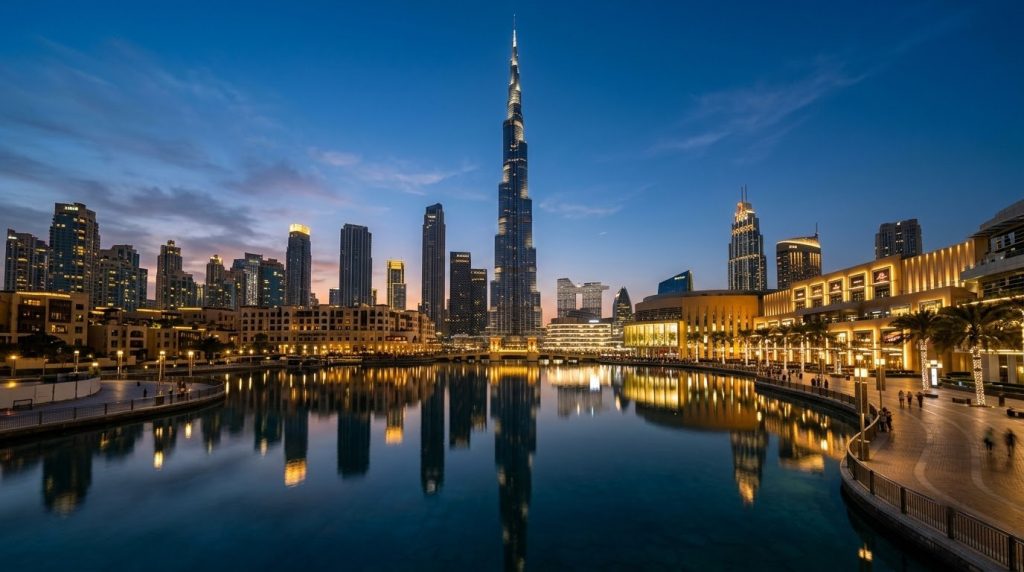
Dubai is worth visiting for most travellers: it drew a record 19.59 million international overnight visitors in 2025, and four days of transport, tickets and activities costs roughly USD 435-980 (AED 1,600-3,600) per person before flights and hotel.
It is not worth visiting for anyone chasing green space, an easy drinking culture or a backpacker budget, or unwilling to look past a skyline raised largely by migrant labour still bound by a sponsorship system rights groups have condemned.
| Traveller type | Worth it? | Nights to give it | Why |
|---|---|---|---|
| First-time, bucket-list traveller | Yes | 4-5 | Record-breaking sights and a genuinely frictionless, ultra-safe city |
| Emirates or Etihad layover traveller | Yes | 1-2 | Old Dubai and Marina both fit into a single stopover day |
| Family with young children | Yes | 4-6 | Air-conditioned malls, beaches and low crime built for convenience |
| Budget backpacker | No | 0 | Little to wander into for free; alcohol and attractions both cost |
| Hiking or nature traveller | No | 0 | No trails, no wilderness, almost everything indoor or engineered |
| Traveller uneasy with labour-rights record | Skip, or go eyes-open | 0-2 | Skyline built under a system Human Rights Watch has criticised |
What Dubai genuinely does better than anywhere
Dubai does big, safe and frictionless better than any city its size. The UAE topped Numbeo’s 2025 country safety index at 85.2, with the lowest crime index measured anywhere in the world at 14.8, and Dubai sits among the world’s five safest major cities alongside Abu Dhabi, Sharjah, Ajman and Ras al-Khaimah.
In practice that means taxis that show up, a metro that charges a flat USD 0.82 (AED 3) per single zone, and 92% of residents surveyed rating it safe to walk alone in daylight, with 85% saying the same after dark.
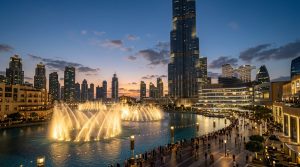
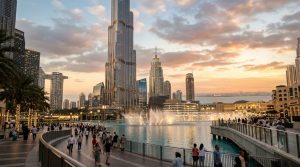
The Burj Khalifa’s At The Top deck delivers a view no other building matches for USD 47 (AED 173) outside peak hours, or USD 68 (AED 250) for the 4pm-7pm sunset slot, and the service around it, from airport to hotel check-in to the observation deck queue, runs with a consistency few destinations manage at this volume of visitors.
A half-day desert safari with dune driving and a Bedouin camp dinner runs USD 41-68 (AED 150-250) including hotel pickup. Exactly how many nights that polish is worth depends on the traveller, which is why this breakdown of how many days you need in Dubai is worth reading before booking flights.
The “soulless” objection, and how fair it is
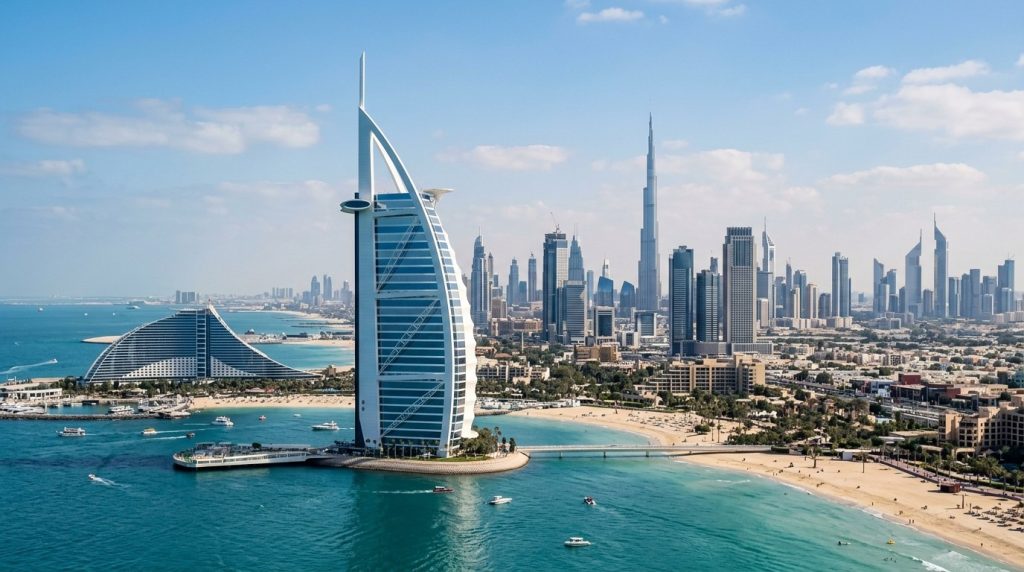
The soulless criticism is fair about the malls and unfair about everything else. Much of new Dubai genuinely is engineered: air-conditioned retail, franchise restaurants, and skyscrapers with no organic street life connecting them, so a trip spent only between Downtown and the Marina will feel like a very well-run shopping mall.
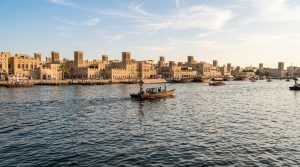
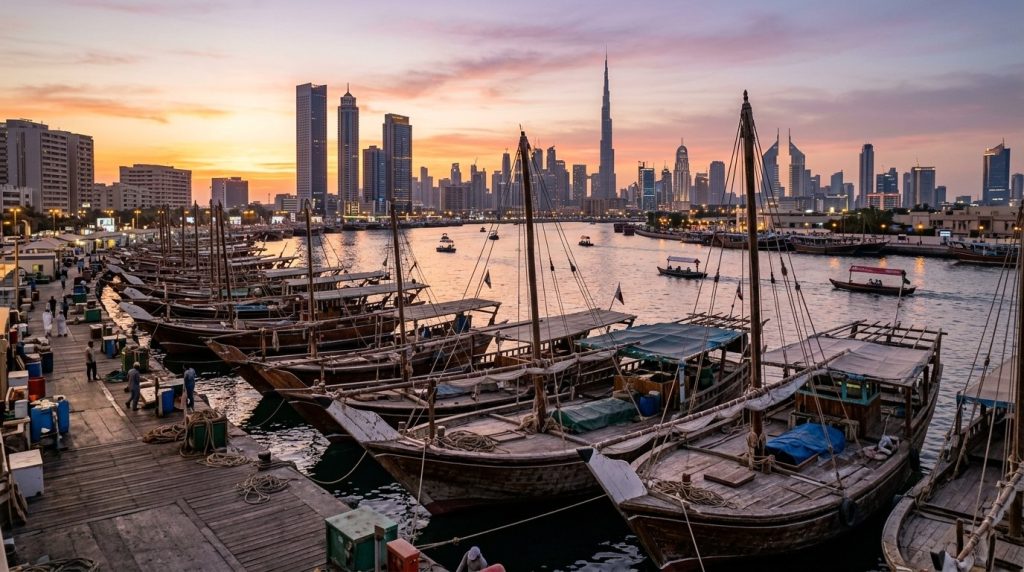
But the historic Al Fahidi quarter, the Deira gold and spice souks, and an abra crossing the creek for USD 0.27 (AED 1) show a working, textured city that predates the skyline by generations.
The honest read is that Dubai’s old town is small and easy to miss, not absent, and travellers who stick to the postcard sights have usually chosen the soulless version themselves.
The criticism also assumes Dubai is trying to be a European old town and failing, when it is closer to a Gulf trading port that reinvested oil-era wealth into tourism infrastructure rather than heritage preservation, a different project rather than a failed one. A full day-by-day plan that balances both sides is laid out in this four-day Dubai itinerary.
What it actually costs
Dubai is expensive by design, not uniformly. A budget room in Deira or Bur Dubai runs USD 41-95 (AED 150-350) a night, a mid-range Downtown hotel runs USD 95-190 (AED 350-700), and a Palm Jumeirah resort starts at USD 245 (AED 900) and climbs well past USD 408 (AED 1,500).
The metro, street food stalls and abra crossings keep daily costs low if a traveller uses them, which undercuts the pure playground-for-the-rich reputation.
Every stay also carries a Tourism Dirham fee of USD 1.90-5.45 (AED 7-20) per room per night, added at checkout rather than folded into the room rate, and hotel supply is large enough to absorb demand: occupancy averaged 80.7% across roughly 154,000 rooms in 827 properties even in a record visitor year.
The real remaining expense is alcohol: it is taxed and sold only inside licensed hotel bars and restaurants, so any night built around drinking gets costly fast regardless of budget tier. Where a hotel sits changes this math more than almost anything else, covered in full in this guide to where to stay in Dubai.
The heat, and the half-year it constrains
Half the year, Dubai’s heat cancels almost everything outdoors. July and August average highs of 41°C with lows near 30°C, and sea temperatures climb to 32-33°C, meaning humidity pushes the “feels like” figure well past 45°C for weeks at a stretch. January, by contrast, averages a 24°C high and 14°C low, comfortable enough for rooftop pools and open-air markets.
That gap effectively splits the year into an outdoor season and an indoor one, roughly November through March against May through September, and it is the single biggest planning variable for this destination.
Booking a summer trip is not a mistake in itself, since hotel rates drop 30-40% from June through August and every major attraction is air-conditioned, but it does mean writing off beaches, desert drives and rooftop terraces for the length of the stay. A full month-by-month breakdown is in this best time to visit Dubai guide.
Who should skip Dubai
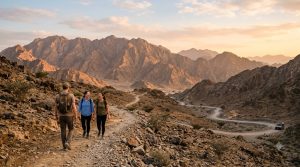
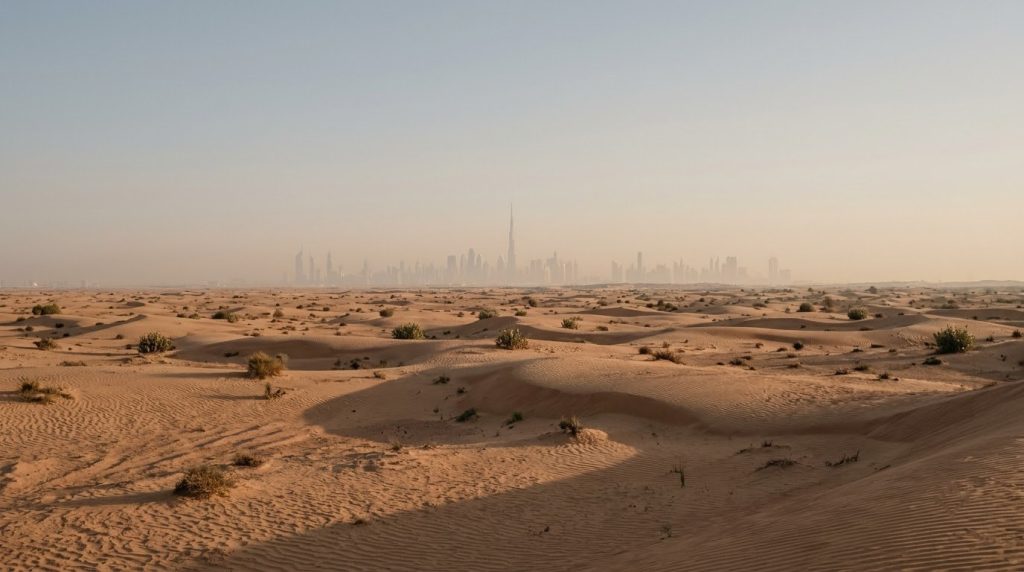
Skip Dubai if the trip only works as a backpacker budget, since there is little free public space to wander and both attractions and alcohol are priced for a different traveller. Skip it if hiking, wild coastline or greenery matter to the itinerary, because the city offers almost none of that within reach.
Skip it, or go carefully closeted, if openly expressing an LGBTQ identity matters on a trip: same-sex relations remain criminalised under UAE federal law, and while documented tourist arrests for private conduct are rare, the legal risk is real rather than theoretical.
And skip it, or go with eyes open, over the labour question: migrants make up roughly 90% of the UAE workforce under a sponsorship system that ties a worker’s legal status to their employer, and the 2023 Global Slavery Index estimated around 132,000 people in the UAE in conditions of modern slavery.
The UAE has introduced mobility and contract reforms in response to years of criticism from Human Rights Watch and Amnesty International, but enforcement gaps persist, especially for domestic and subcontracted workers building and running the hotels tourists stay in.
Where to stay if you decide to go
Once the verdict is yes, location decides most of the trip: Downtown puts the Burj Khalifa and Dubai Mall on foot, JBR and Marina put the beach and nightlife on foot, and Deira keeps costs down at the price of distance from both. Compare live rates across neighbourhoods before booking.
Find your Dubai hotel on the map
Live prices from Booking, Airbnb and more — move the map or change dates to compare stays across Dubai.