
Disclosure: Some links in this guide are affiliate links. If you book or buy through them, we may earn a small commission at no extra cost to you — it helps keep our guides free.
Ultimate Cape Town Travel Guide 2026: What You Need to Know
Cape Town routinely ranks among the world’s most striking cities — and we’ve spent weeks testing whether it lives up to the hype in 2026. It does, with caveats: budget carefully, stay in the right neighborhoods, and you’ll have one of the most diverse travel experiences on earth for roughly $85 a day.
Key Takeaways
Cape Town welcomed 1.96 million international visitors in 2024, a record, with numbers continuing to climb through 2026. (South African Tourism, 2025) Table Mountain Cable Car tickets in 2026 cost ZAR 410 (~$22) for adults; book online to skip queues that regularly run 90 minutes. (TMNP, 2026) The South African rand has weakened 12% against the US dollar since 2023, making Cape Town significantly cheaper for USD, GBP, and AUD holders. (SARB, 2025) Cape Town’s dry, warm season runs May through September — optimal hiking weather despite being the Southern Hemisphere winter. Fly into Cape Town International (CPT), 30 minutes from the city center; Bolt/Uber rides cost roughly $5-8 from the airport.
When to Visit Cape Town: Seasons, Crowds, and Real Costs
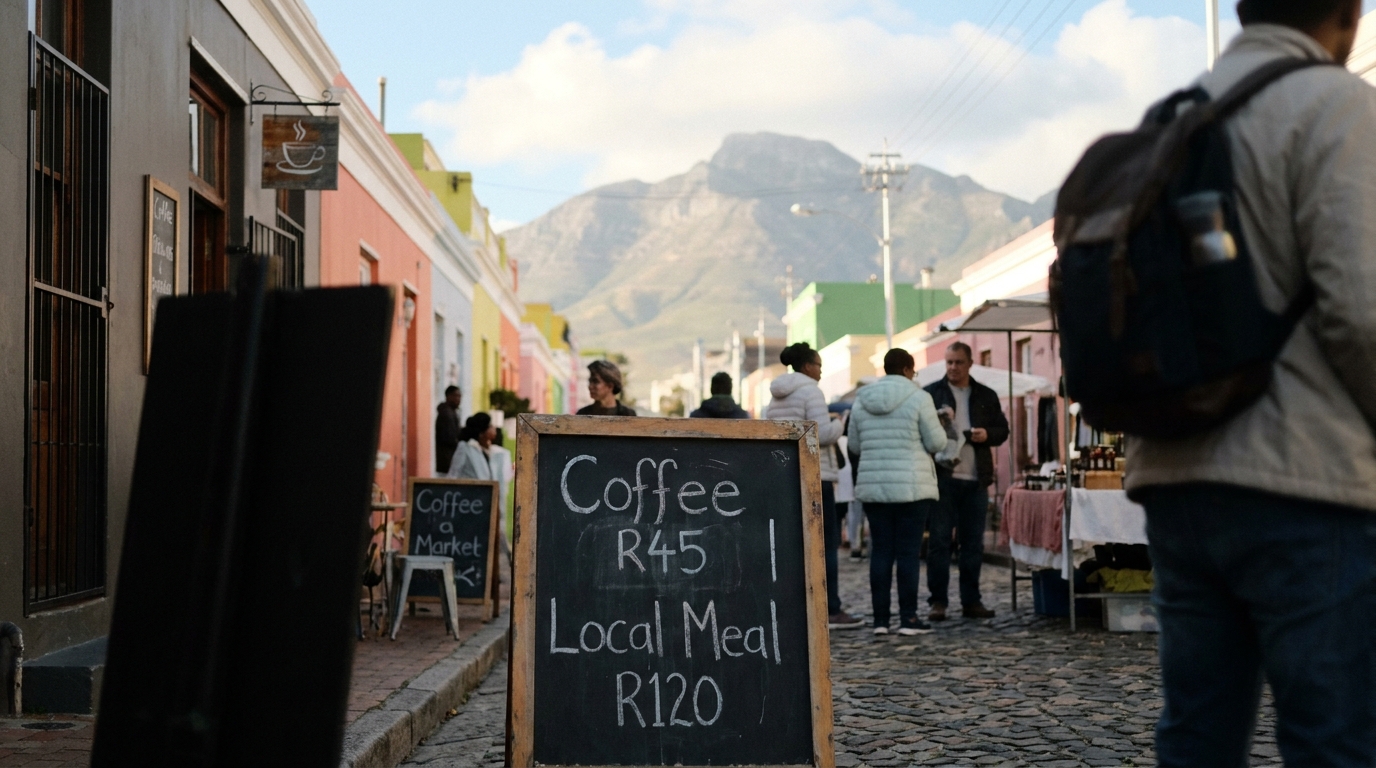
The best time to visit Cape Town is between May and September, which is the Southern Hemisphere winter. Days are crisp and sunny with highs around 18-22C (64-72F), skies are clear for Table Mountain hikes, and hotel rates drop 25-40% compared to the December peak. We know it sounds counterintuitive to visit a beach city in winter, but Cape Town’s geography makes it work.
The December to February summer brings reliable sunshine and is perfect for Clifton Beach and Cape Winelands day trips, but expect crowds, inflated prices, and periodic southeaster (Cape Doctor) winds that make rooftop dining miserable. School holiday periods in December see guesthouse rates in Sea Point double overnight.
Monthly breakdown for 2026:
| Month | Weather | Avg Hotel (mid-range) | Crowds | Best For |
|---|---|---|---|---|
| January | Hot, 28C, windy | $120-180/night | Very high | Beaches |
| February | Hot, 27C | $110-160/night | High | Cape Winelands |
| March | Warm, 25C | $90-130/night | Medium | All-round |
| April | Mild, 22C | $80-115/night | Low | Hiking |
| May–Aug | Cool, 18C, clear | $65-95/night | Low | Hiking, budget |
| September | Mild, 20C | $75-105/night | Low-med | Flowers, hiking |
| October | Warm, 23C | $85-120/night | Medium | Winelands |
| November | Warm, 25C | $95-140/night | Rising | Beaches opening |
| December | Hot, 28C | $130-200/night | Peak | Festivals |
If we had to pick one month, we’d say May or June. You get crisp mountain air, no crowds at the cable car, and rates at Airbnbs in Sea Point drop to $45-65 per night for a comfortable one-bedroom.
Find your Cape Town hotel on the map
Live prices from Booking & Airbnb — tap a pin to compare stays around the V&A Waterfront and beyond.
Where to Stay in Cape Town: Neighborhoods Explained
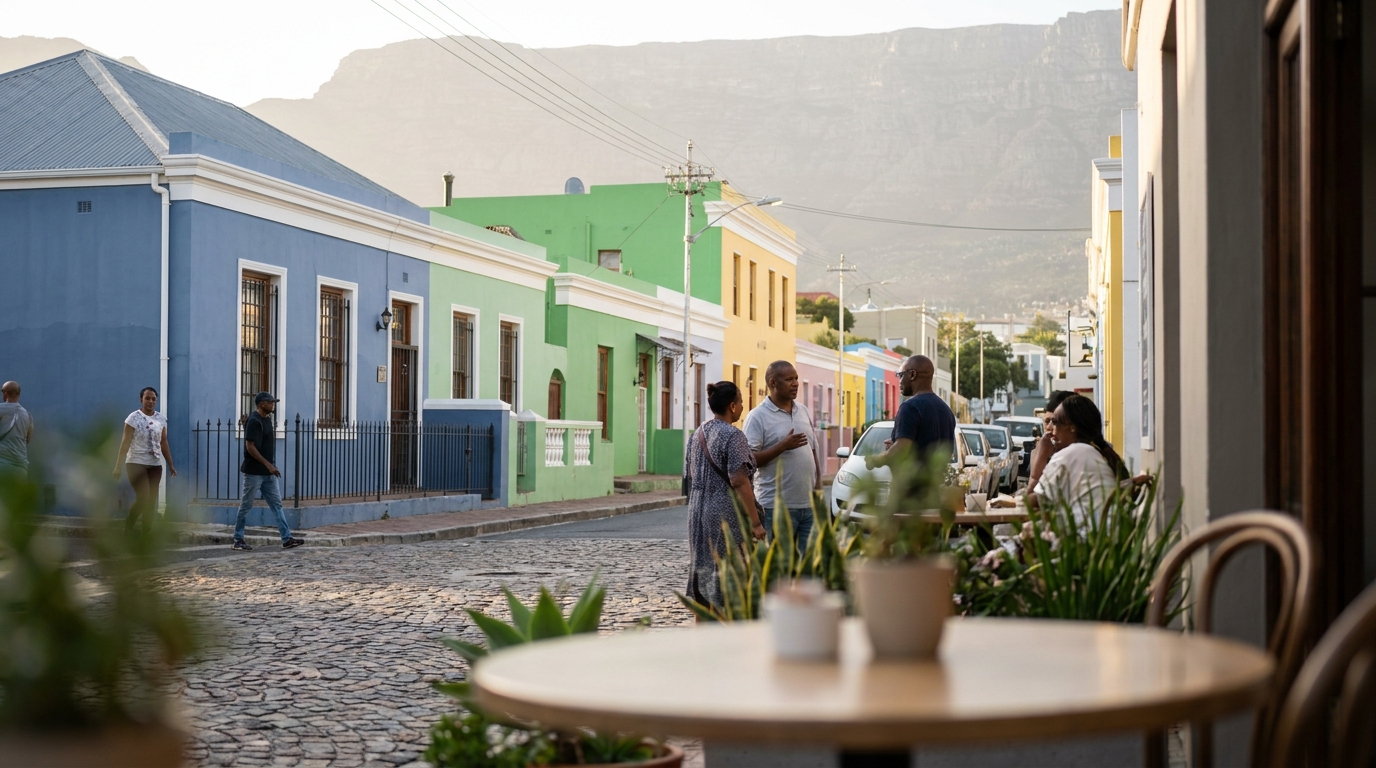
Cape Town’s neighborhoods are dramatically different from each other, and choosing the wrong base costs you real time and money. We recommend Sea Point or the City Bowl for first-timers, the Waterfront for convenience, and De Waterkant for nightlife proximity.
Sea Point is our top pick for most travelers. The beachfront promenade runs 3 km and is safe even at night, the density of restaurants and cafes rivals anywhere in the city, and guesthouses offer genuine value. Expect $60-90/night for a well-rated B&B in 2026. It’s 10-12 minutes by Uber to the V&A Waterfront.
City Bowl (including Gardens and De Waterkant) puts you close to Long Street bars, the Company’s Garden, and the Cape Town International Convention Centre. Boutique hotels run $85-140/night. De Waterkant has a strong LGBTQ+ scene and some of Cape Town’s best brunch spots.
V&A Waterfront is convenient but expensive — expect $150-250/night for hotel rooms in walking distance of the ferries and malls. Good choice if you’re on a short itinerary and want to minimize transport decisions.
Camps Bay looks like a postcard but comes with peak-season prices ($180-350/night for anything decent), limited walkability, and a 20-minute drive from central attractions. Reserve it for a special-occasion splurge night.
We’d steer first-timers away from Woodstock and Observatory despite their cool-neighborhood buzz — both require consistent Uber use and situational awareness that adds friction to a first Cape Town visit.
Check live hotel prices in Sea Point and City Bowl
Table Mountain and the Peninsula: What to Expect in 2026
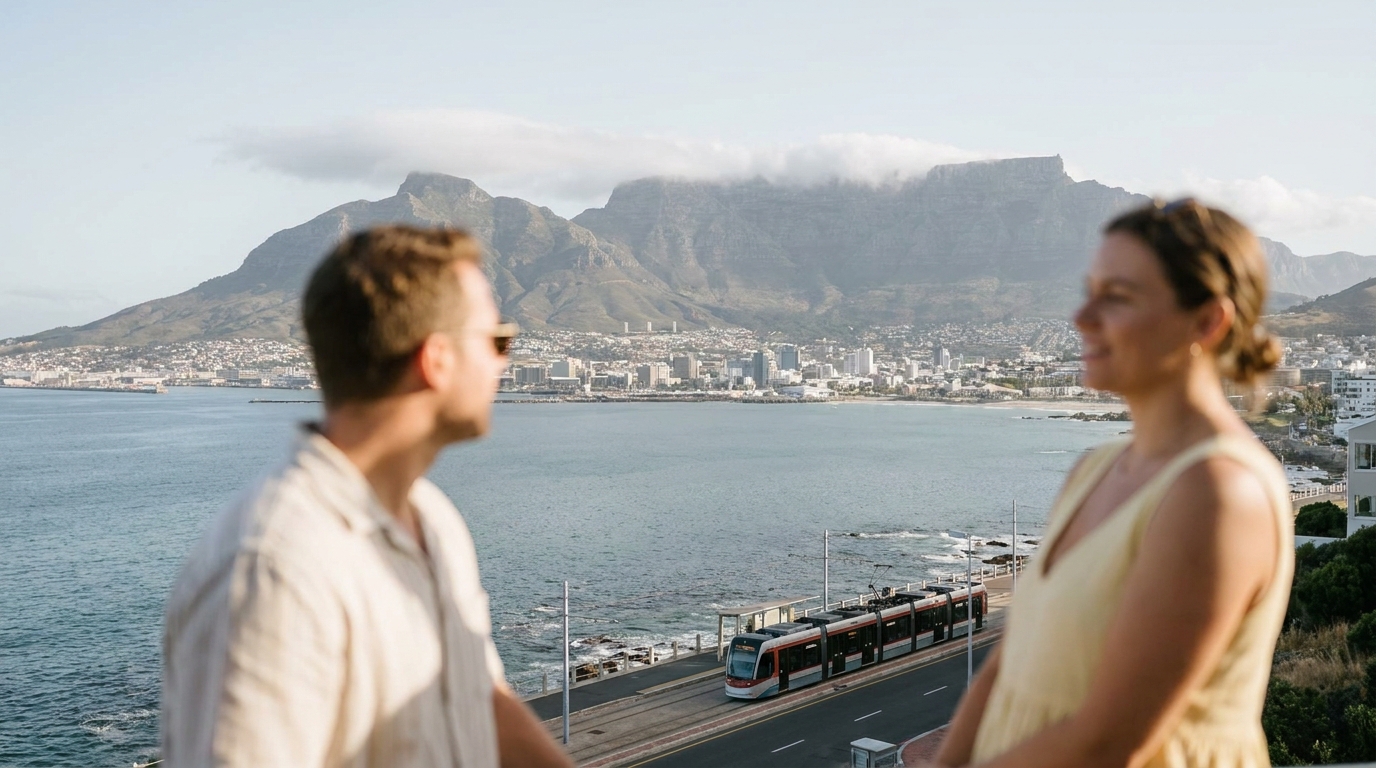
Table Mountain is the single non-negotiable Cape Town experience, and 2026 logistics are straightforward if you plan ahead. Book the cable car online through the official Table Mountain Aerial Cableway website at ZAR 410 ($22) for adults — this gets you timed entry and skips the standby queue that forms by 9 AM on any clear day.
The cable car runs daily weather permitting, typically 8 AM to 7:30 PM (last car up at 7 PM). The mountain closes an average of 30% of operating days due to cloud cover, so buy a fully refundable ticket and have a backup day. The summit plateau is flat, walkable in all directions, and rewards 60-90 minutes of roaming. Bring a windproof layer even in summer.
Cape Point and the Peninsula takes a full day and is worth every minute. The classic route: drive Chapman’s Peak (one of the world’s most dramatic coastal roads), reach Cape Point via the Cape of Good Hope Nature Reserve (ZAR 402 entry, ~$22), walk the boardwalk to the lighthouse, then return via Simon’s Town to see the African penguin colony at Boulders Beach (ZAR 240 entry, ~$13).
Renting a car makes this day dramatically more flexible. Rates from Cape Town airport in 2026 start at ZAR 450 ($24) per day for a compact through Discover Cars — compare options through Discover Cars for Cape Town airport pickup. Alternatively, a full-day guided Peninsula tour through GetYourGuide runs $45-65 per person and handles all driving and entries.
Two Oceans Aquarium at the Waterfront is solid for a rainy half-day with kids: ZAR 310 ($17) adults, ZAR 190 ($10) children. Skip the over-priced cable car tickets sold inside the aquarium — book direct.
Cape Town’s Beaches: A Practical Comparison
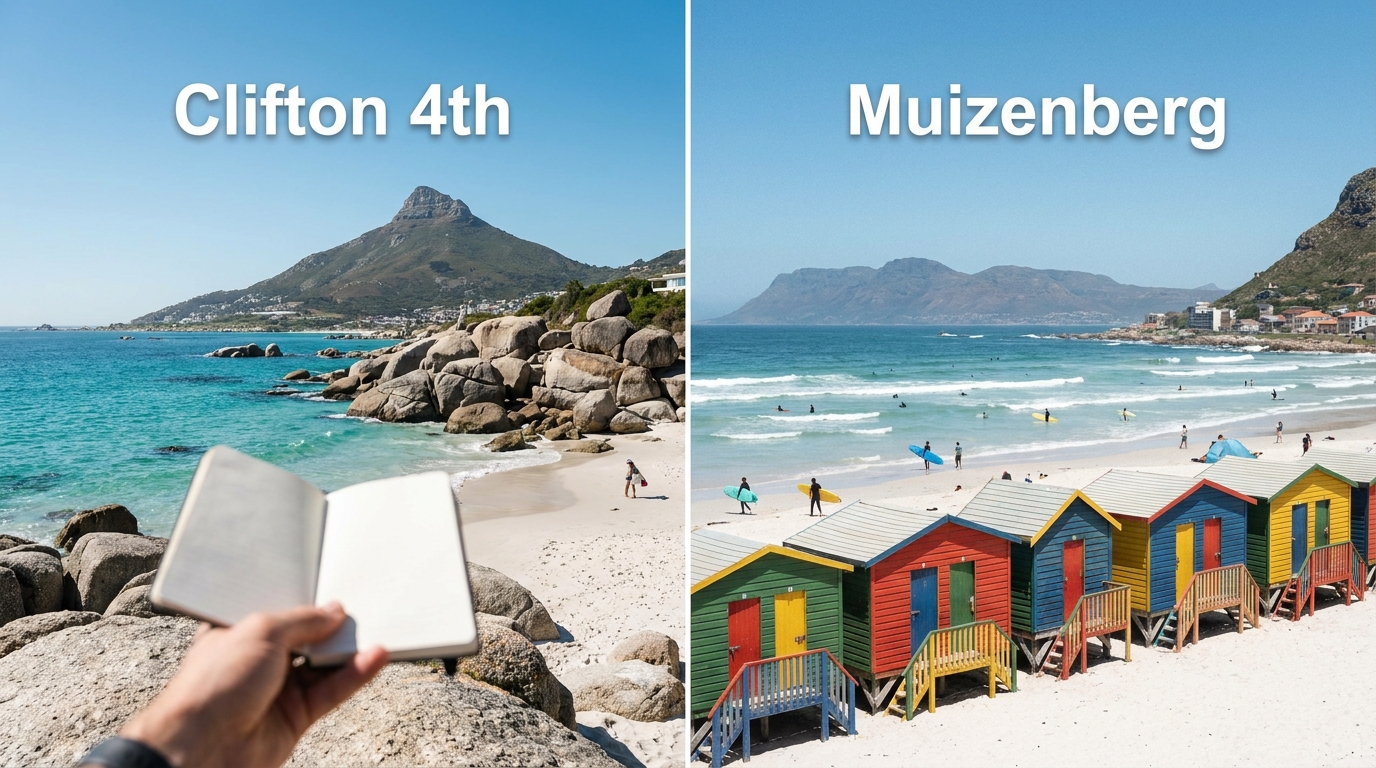
Cape Town has 11 main beaches within 40 minutes of the city center, and they’re not interchangeable. Water temperature, wave energy, crowd character, and facilities vary enormously. Here’s what actually matters: Getting there: compare flights on Aviasales to lock in the best fare before prices climb.
Clifton Beaches (1st-4th) are calm, sheltered from the southeaster, and pack a glamorous crowd on summer weekends. 4th Clifton is the most accessible and family-friendly. The catch: water temperature sits at 14-16C (57-61F) year-round — the Benguela Current is genuinely cold. Most people do short dips and long sunbathing sessions.
Camps Bay Beach is photogenic, steps from restaurants and bars, and gets a party-leaning crowd on summer Sundays. Water here is equally cold. Parking is a nightmare December-February; take an Uber.
Muizenberg Beach (45 min south) has warmer water (18-20C in summer), consistent waves that make it Cape Town’s primary surf beach, and the iconic pastel beach huts. Surfboard rental from local shops costs ZAR 200-250 ($11-14) for two hours. The area is undergoing regeneration — stick to the main beach strip.
Boulders Beach near Simon’s Town isn’t a swimming beach — it’s where you walk among 2,000+ African penguins. Book the Boulders Beach penguin experience through GetYourGuide to include transport from the city center.
Hout Bay Beach is quieter, backed by mountains, and less visited by tourists. The harbor area has good casual seafood restaurants. Chapman’s Peak is a short drive north, making this a logical lunch stop on a Peninsula day.
Cape Winelands: Stellenbosch, Franschhoek, and Paarl
The Cape Winelands sit 45-60 minutes from the city center and represent one of the strongest value-for-money wine experiences in the world. We’re talking world-class Chenin Blanc, Pinotage, and Cabernet Sauvignon tasted in 17th-century Cape Dutch architecture for $5-15 a tasting.
Stellenbosch is the most established wine town: a university town with excellent restaurants, a walkable center, and over 200 estates within 20 minutes. Start at Lanzerac, Rust en Vrede, or Meerlust for structured reds. Tasting fees run ZAR 120-250 ($6.50-$14) per person and almost always include pours of 5-8 wines. Book estates in advance for weekends.
Franschhoek is smaller, more French-influenced, and has the better food scene. The Franschhoek Motor Museum is worth an hour. Mont Rochelle, Haute Cabriere, and Chamonix are standout estates. The famous Franschhoek Wine Tram (ZAR 390, ~$21) hops between estates on a vintage tram system — fun but touristy; serious wine drinkers should self-drive or hire a driver.
Day trip logistics: Self-driving means designating a sober driver, which works but limits everyone else’s tastings. A better option is booking through GetYourGuide — small-group Winelands tours run $55-85 per person and include 3-4 estate visits, lunch, and transport. They’re genuinely good value given the ZAR cost of individual tastings and transport.
| Wine Town | Drive from Cape Town | Best For | Avg Tasting Fee | Stay Needed? |
|---|---|---|---|---|
| Stellenbosch | 45 min | Reds, walkable town | ZAR 150-220 ($8-12) | No, easy day trip |
| Franschhoek | 75 min | Food + wine, French vibe | ZAR 130-200 ($7-11) | Overnight to enjoy fully |
| Paarl | 60 min | Chenin Blanc, fewer crowds | ZAR 100-180 ($5.50-10) | No |
| Constantia | 20 min | Closest, historic estates | ZAR 120-200 ($6.50-11) | No |
Browse Cape Winelands day tours and tasting packages
Cape Town Food Scene: Where and What to Eat
Cape Town’s food scene punches well above its weight globally — three restaurants appeared in the Africa Top 50 in 2025, and the street food and market scene has grown significantly. The rand’s weakness makes eating out extraordinary value for foreign visitors.
Bo-Kaap is Cape Town’s Malay Quarter, and the bobotie (spiced minced meat with egg topping) and koeksisters (syrup-soaked braided dough) here are the real thing. Biesmiellah Restaurant on Wale Street has been feeding the neighborhood since 1975. Expect ZAR 120-180 ($6.50-$10) for a full Cape Malay meal.
Long Street has the most concentrated restaurant strip in the city — everything from casual Portuguese chicken joints to rooftop cocktail bars. It’s tourist-facing but genuinely good and walkable.
Woodstock hosts the Old Biscuit Mill market every Saturday morning (8 AM to 2 PM), which is the best food market in South Africa by our assessment. Around 60 vendors — oysters, artisan cheese, Korean BBQ, proper Cape Malay bunny chow, and some of the best espresso in the Southern Hemisphere. Get there before 10 AM.
Kalk Bay on the southern Peninsula has become a destination in its own right for weekend brunch: Olympia Cafe and Deli, Harbour House for fresh fish, and the antique shops running along the main street. Budget ZAR 200-350 ($11-19) for a full sit-down meal with drinks.
For a fine-dining night, Test Kitchen and The Pot Luck Club by Luke Dale Roberts are internationally recognized. Book Test Kitchen 6-8 weeks in advance; expect ZAR 1,200-1,800 ($65-98) per person for a full tasting menu.
Everyday eating budget: ZAR 200-350 ($11-19) gets you a good lunch and dinner in local restaurants. Tourist-area waterfront restaurants charge double — save those for special occasions.
Cape Town Safety: What Actually Applies to Tourists
Cape Town has a reputation that requires calibration — the city has real safety challenges in specific areas, and the areas most tourists visit have a very different risk profile. We’re going to be direct about this because vague advice is useless.
The townships (Khayelitsha, Langa, Gugulethu) have high crime rates and should only be visited on organized township tours with a reputable, community-based operator — not independently, not even by car. These tours (ZAR 400-600, $22-33) are genuinely worthwhile as cultural experiences and support local economies, but safety depends on your guide’s relationships.
The areas where tourists spend most of their time — City Bowl, Sea Point, V&A Waterfront, Camps Bay, the Winelands, Peninsula routes — have manageable risk with standard precautions. Don’t flash expensive cameras or phones in crowds. Don’t walk on deserted streets at night. Use Uber/Bolt rather than walking long distances after dark. Keep car doors locked when driving through unfamiliar areas.
The mountain trails (Lion’s Head, Signal Hill, parts of Table Mountain) have had isolated mugging incidents — always hike with at least one other person and go during busy daylight hours. The Lion’s Head full-moon hike (monthly) is popular and effectively self-policing due to crowd size.
We’d rate Cape Town as comparable in risk to visiting parts of Johannesburg, Rio de Janeiro, or certain US cities — manageable with awareness, genuinely dangerous if you’re careless. Check the South African Police Service crime statistics by precinct before your trip for granular, current data.
Read our full South Africa safety guide for travelers
Getting Around Cape Town: Transport Options and Costs
Cape Town’s public transport is limited compared to European cities, and most tourists rely on a combination of Uber/Bolt and occasional car rental. Here’s what works and what doesn’t in 2026.
Uber and Bolt are the backbone of tourist transport. Both apps work reliably in central Cape Town, Sea Point, Camps Bay, and the Winelands. Rates in 2026: City Bowl to Sea Point ZAR 55-75 ($3-4), City Bowl to V&A Waterfront ZAR 45-60 ($2.50-3.25), City Bowl to Camps Bay ZAR 110-140 ($6-7.50). Wait times are typically 3-7 minutes in central areas.
Car rental is worth it for Peninsula day trips, Winelands self-drive, and any itinerary that involves multiple out-of-city stops in a single day. Rates from Cape Town International Airport start at ZAR 450-650/day ($24-35) for a compact through Discover Cars — they aggregate local and international agencies for comparison. Note: South African roads use the left-hand side; GPS is essential outside the city center.
MyCiTi Bus runs a limited network with useful routes: the N1 City and Belfast routes serve the airport (ZAR 150 myconnect card deposit + ZAR 60 fare, ~$11 total for first trip), and routes along Sea Point and Camps Bay are convenient and cheap (ZAR 11-20 per trip, ~$0.60-$1.10). The system doesn’t reach the Winelands or the Peninsula.
Hire car with driver is an option worth considering for larger groups: a full-day private car hire with driver runs ZAR 1,500-2,500 ($82-136) depending on distance, splits well between 4-5 people, and handles parking and navigation stress.
Compare car rental prices at Cape Town Airport via Discover Cars
Budget Planning: What Cape Town Really Costs in 2026
Cape Town is exceptional value for US, UK, and Australian travelers right now due to rand weakness. A solid mid-range experience costs significantly less than equivalent quality in European cities. Here’s a realistic breakdown:
| Category | Budget Traveler | Mid-Range | Splurge |
|---|---|---|---|
| Accommodation/night | $20-35 (hostel/guesthouse) | $65-110 (B&B/Airbnb) | $150-300 (hotel) |
| Food/day | $15-22 | $30-55 | $80-150 |
| Transport/day | $5-8 (Uber) | $12-25 | $35-60 (private hire) |
| Activities/day | $8-15 | $25-50 | $80-200 |
| Total per day | $48-80 | $132-240 | $345-710 |
Key 2026 prices to know:
– Table Mountain Cable Car: ZAR 410 ($22) adults, ZAR 210 ($11) children
– Cape of Good Hope Nature Reserve: ZAR 402 ($22) per person
– Boulders Beach penguins: ZAR 240 ($13) per person
– Wine tasting (per estate): ZAR 120-250 ($6.50-$14)
– Airbnb one-bedroom, Sea Point (off-peak): ZAR 850-1,200 ($46-65)/night
– Restaurant main course (casual): ZAR 150-250 ($8-14)
– Restaurant main course (fine dining): ZAR 450-850 ($24-46)
– Uber, city center trips: ZAR 45-130 ($2.50-7)
– Grocery store (self-catering): ZAR 350-500 ($19-27)/day for 2 people
Data and connectivity: Pick up an Airalo eSIM before you land — a 5GB South Africa data plan costs around $10 and activates instantly. This is the most friction-free option for most smartphones. Alternatively, Vodacom and MTN SIM cards are available at the airport for ZAR 50-100 with bundle options.
Check the latest Cape Town Airbnb rates and availability on Booking.com
Related guide: Best Day Trips from Cape Town 2026: 10 Top Routes
Frequently Asked Questions
How many days do you need in Cape Town?
Five to seven days lets you cover the essentials without rushing: Table Mountain, the Peninsula day trip, at least one Winelands visit, and time in the city neighborhoods. With 10 days you can add the Garden Route or Kruger National Park as extensions. Three days is possible for a highlights-only visit but leaves you feeling short-changed.
Is Cape Town safe for solo travelers?
Yes, with preparation. Solo travelers do well in Sea Point, City Bowl, and the Waterfront — stick to Uber after dark, avoid deserted streets, and hike popular trails with others. Solo female travelers consistently report Cape Town as manageable with these habits. Join organized tours for township visits and remote Peninsula hikes.
What currency should I bring to Cape Town?
South African rand (ZAR) is the only currency widely accepted. ATMs are reliable throughout tourist areas — Absa and Standard Bank machines have good exchange rates. Avoid airport forex desks; their rates are 6-9% worse than ATMs. In 2026, ZAR 18-19 buys $1 USD; ZAR 22-24 buys GBP 1. Major cards (Visa, Mastercard) are accepted almost everywhere.
Do I need a visa for South Africa?
US, UK, Canadian, Australian, and EU passport holders receive a free 90-day visitor’s visa on arrival. You’ll need a passport valid for at least 30 days beyond your intended stay, a return ticket, and proof of accommodation. South African immigration has tightened enforcement on return ticket requirements at CPT — have your booking confirmation accessible.
When does Table Mountain cable car run, and what if it’s closed?
The cable car operates approximately 8 AM to 7:30 PM daily when weather permits, closing on high-wind and heavy-cloud days. Closures happen roughly 30% of days. Fully refundable tickets are available through the official website. If the cable car is closed on your only available day, the Skeleton Gorge and Platteklip Gorge hikes both reach the summit and take 2-3 hours round trip.
How do I get from Cape Town airport to the city center?
Uber and Bolt are the standard options — reliable, safe, and cost ZAR 90-150 ($5-8) for the 25-35 minute ride to central Cape Town. The MyCiTi N1 City bus serves the airport for ZAR 60 ($3.25) but requires a myconnect card, takes 45-60 minutes, and doesn’t serve Sea Point or Camps Bay directly. Pre-arranged hotel shuttles run ZAR 200-350. Metered taxis exist but use only official ranks.
What vaccinations are recommended for Cape Town?
Cape Town itself requires no mandatory vaccinations, but if you’re combining your trip with safari areas or traveling anywhere in Krueger/KwaZulu-Natal, malaria prophylaxis is recommended. Routine vaccinations (Hepatitis A, Hepatitis B, Typhoid) are generally advised for South Africa. Consult your GP or a travel health clinic 6-8 weeks before departure. No yellow fever certificate is required for arrivals from non-endemic countries.
Robben Island and Cape Town’s History
Robben Island is one of the most significant historical sites in the world, and visiting it deserves serious preparation rather than a last-minute decision. Nelson Mandela spent 18 of his 27 prison years here, and the guided tour of the prison block — led by former political prisoners — is unlike any museum experience we’ve had anywhere. Allow 3.5 to 4 hours for the full visit including the ferry crossing.
Tickets sell out weeks ahead in peak season (December-February) and most weekends year-round. Book directly through the Robben Island Museum website. Adult tickets in 2026 cost ZAR 600 ($32.50), which includes the ferry, bus tour of the island, and prison tour. The ferry departs from the V&A Waterfront’s Nelson Mandela Gateway, three times daily at 9 AM, 11 AM, and 1 PM. Seas can be rough — take seasickness medication if you’re sensitive to boat movement.
Beyond Robben Island, Cape Town’s history is layered in ways that reward curiosity. The District Six Museum on Buitenkant Street documents the forced removals of 60,000+ residents under apartheid; it’s one of the most affecting museums in Africa and costs a voluntary donation. The Bo-Kaap Museum traces the Cape Malay community’s history in the city’s most colorful neighborhood. Both take 60-90 minutes and are within walking distance of each other.
Slave Lodge on Adderley Street is South Africa’s second oldest surviving building and one of the most important colonial-era sites in the country. Entry is ZAR 100 ($5.50). Combine it with the Company’s Garden next door — a 9-hectare historic park with resident squirrels and an excellent National Gallery (free admission for permanent collection).
For context before your trip, we’d recommend reading Antjie Krog’s “Country of My Skull” (Truth and Reconciliation Commission journalism) or watching Shameela Ahsan’s documentary work on Cape Town’s current housing crisis — both sharpen what you’ll see and hear on a township tour.
Book Robben Island ferry tickets and Cape Town historical tours via Viator
Day Trips Beyond Cape Town: Garden Route and Safari Options
Cape Town is a natural gateway to two of South Africa’s most celebrated travel routes, and both are worth considering if you have more than 5 days. Adding a Garden Route drive or a short safari extension transforms a city break into one of the more complete travel itineraries available anywhere.
The Garden Route begins at Mossel Bay, roughly 4 hours east of Cape Town, and runs 300 km to Port Elizabeth (now Gqeberha). Key stops include Wilderness (quiet beaches, lagoons), Knysna (oyster capital, dramatic Heads viewpoint), Plettenberg Bay (whale watching June-November), and Tsitsikamma National Park (ancient forest, suspension bridge at Storms River Mouth). Self-driving makes the most sense — rent through Discover Cars at Cape Town Airport and drop off in George or Port Elizabeth for a one-way itinerary. Allow 3-5 days minimum to avoid the trap of driving more than experiencing.
For safari from Cape Town, the closest Big Five experience is Aquila Private Game Reserve (2.5 hours north), which offers half-day and full-day packages from ZAR 1,750 ($95) per person including transport from Cape Town. It’s a private reserve rather than a national park, so densities are managed — you’ll reliably see the Big Five in a single game drive. Serious safari travelers should extend to Kruger National Park (2-hour flight from Cape Town to Johannesburg, then 4-5 hours drive or 1-hour connecting flight to Hoedspruit). Budget USD 200-400 per person per night for mid-range lodges in Kruger or the Sabi Sand.
Whale watching from Hermanus (90 minutes east of Cape Town) is one of the world’s premier land-based whale watching experiences from June to November. Southern right whales come within meters of the cliff walks — no boat needed, no entrance fee. The peak months are August and September. The cliff path walk between the old harbor and New Harbour is 12 km and completely free. If you want boat-based watching, permits are tightly controlled in Hermanus Bay — book through licensed operators only.
Compare Garden Route rental car prices — pickup and drop-off options via Discover Cars
Planning Your Trip: Putting It All Together
Cape Town rewards travelers who plan the logistics but leave room for spontaneity. The cable car schedule, wine estates, and township tours need advance booking — everything else you can handle on the day. Here’s a framework that works for a 7-day first visit:
Days 1-2: City Bowl orientation, Bo-Kaap food walk, Long Street evening, V&A Waterfront. Book Table Mountain cable car for Day 2 morning (check weather the night before).
Day 3: Full-day Cape Peninsula loop — Chapman’s Peak, Cape of Good Hope, Boulders Beach penguins, Kalk Bay lunch on the way back.
Day 4: Cape Winelands. Stellenbosch for serious wine, or Franschhoek for the food scene. Book a guided tour or hire a driver.
Day 5: Sea Point promenade morning, Clifton/Camps Bay afternoon beach. Old Biscuit Mill if it’s Saturday.
Day 6: Township cultural tour (morning, with reputable local operator), optional Robben Island afternoon (ZAR 600, ~$32 — book weeks ahead, sells out).
Day 7: Flexible — return to a favorite neighborhood, Kirstenbosch Botanical Garden (ZAR 280, ~$15), or a sunrise Lion’s Head hike.
For accommodation, we consistently recommend Booking.com for Sea Point guesthouses — the free cancellation options let you lock in rates while keeping flexibility. Browse Cape Town accommodations with verified reviews.
For organized activities — Peninsula tours, Winelands day trips, township experiences, and Robben Island alternatives — check both GetYourGuide and Viator. Both platforms offer free cancellation on most Cape Town bookings, and comparing the two often surfaces the same operator at a 10-15% price difference.
Cape Town in 2026 is an extraordinary-value destination for visitors from strong-currency countries. The rand weakness, world-class natural settings, genuinely diverse food scene, and ease of combining city, beach, wine, and safari make it one of the most complete travel experiences available at this price point. Book early for December visits; for May through September, you can plan 2-3 weeks out with no stress.
Start planning your South Africa itinerary — browse multi-day Cape Town tours