Best Time to Visit Petra: Month-by-Month Guide 2026
Disclosure: Some links in this guide are affiliate links. If you book or buy through them, we may earn a small commission at no extra cost to you — it helps keep our guides free.
- Spring (March-April) and autumn (October-November) deliver the best all-around conditions, with highs around 20-25°C (68-77°F). (Jordan Tourism Board, 2025)
- Peak summer temperatures inside the Siq gorge regularly exceed 38°C (100°F) — heat illness is a real risk. (Jordan Meteorological Department, 2025)
- Petra draws roughly 1 million visitors annually; over 40% arrive in March-April and October. (UNWTO, 2024)
- Jordan’s low season (July-August) offers hotel discounts of 20-35%, but brutal heat limits what you can realistically do. (Booking.com rate data, 2025)
- The annual Petra by Night experience runs Monday, Wednesday, and Thursday year-round — admission is JOD 17 (~USD 24) on top of the standard entry fee. (Petra Development and Tourism Region Authority, 2025)
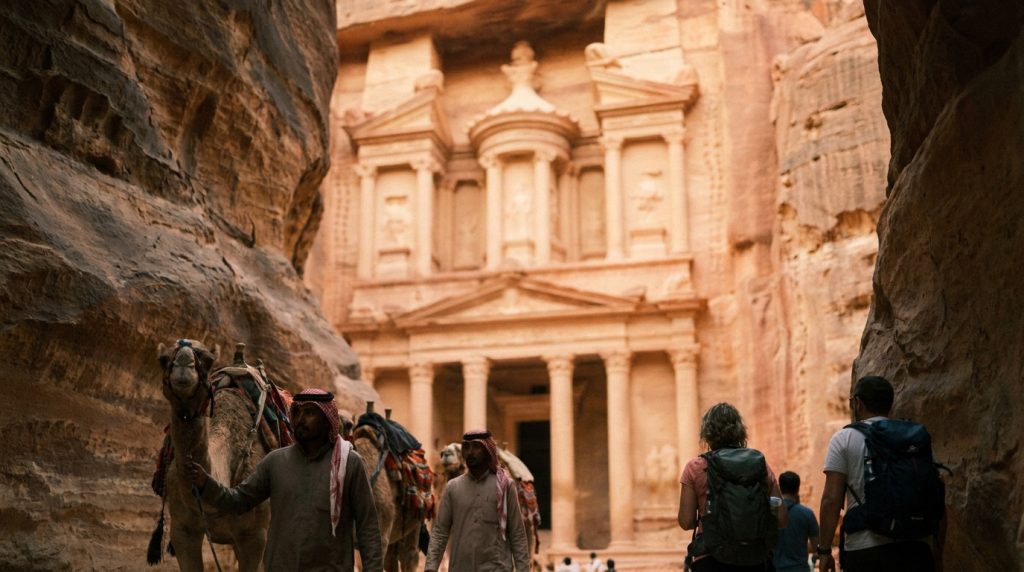
Petra rewards visitors who time their trip carefully — the right month means cooler temperatures, manageable crowds, and lower hotel rates. We’ve broken down every month of the year so you can pick the window that fits your budget, tolerance for heat, and appetite for company.
Why Timing Your Visit to Petra Actually Matters
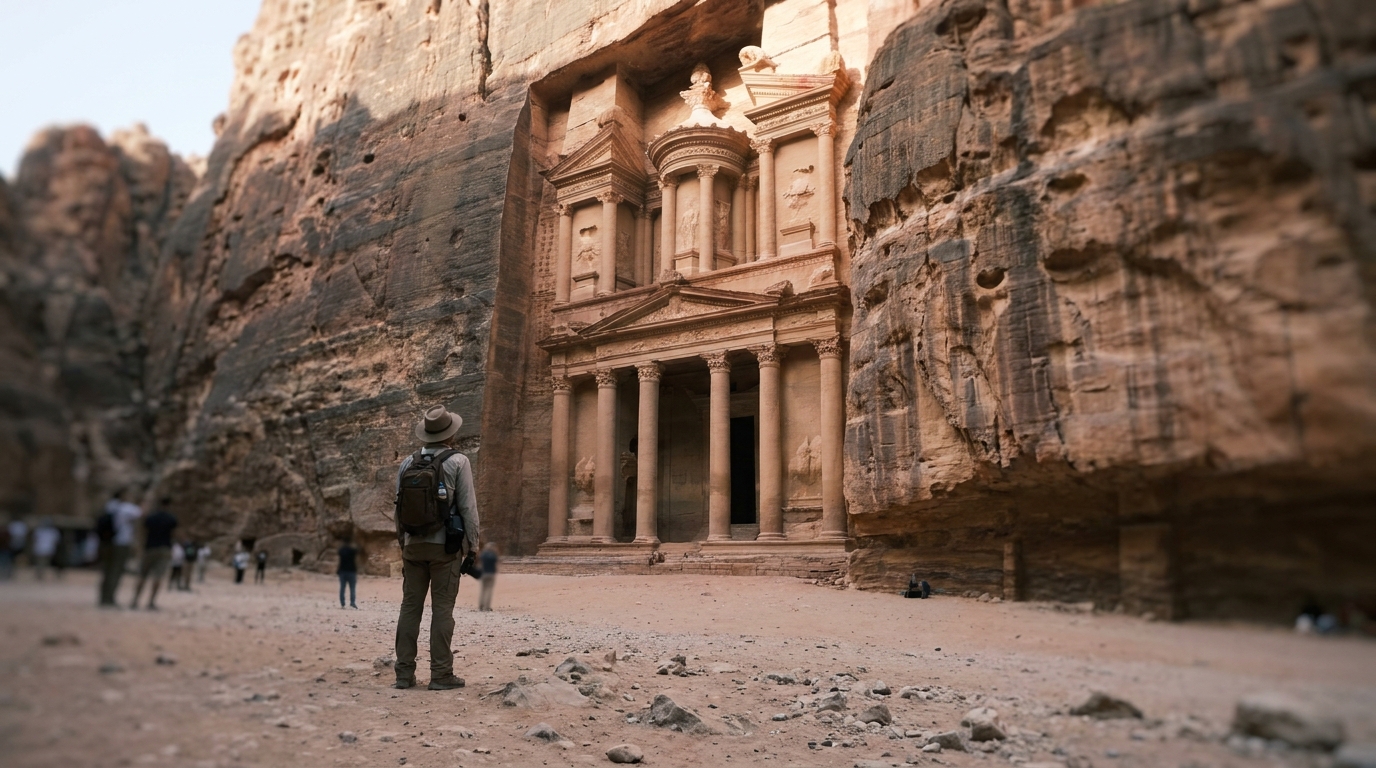
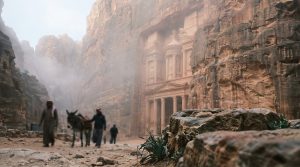
Petra isn’t a site you can muscle through in bad conditions. The main trail from the visitor centre to the Treasury is 1.2 km just one way, and most visitors cover 8-12 km total on a full day. In July, midday temperatures routinely hit 40°C (104°F) in the canyon, making that kind of distance genuinely dangerous without serious preparation.
On the flip side, January nights can drop to 0°C (32°F), and occasional flash floods close access trails with no warning. Picking the right month isn’t about comfort — it’s about safety and getting full value from a USD 78 entrance fee (2026 price for a one-day pass).
Spring (March to May): The Sweet Spot for Most Travellers
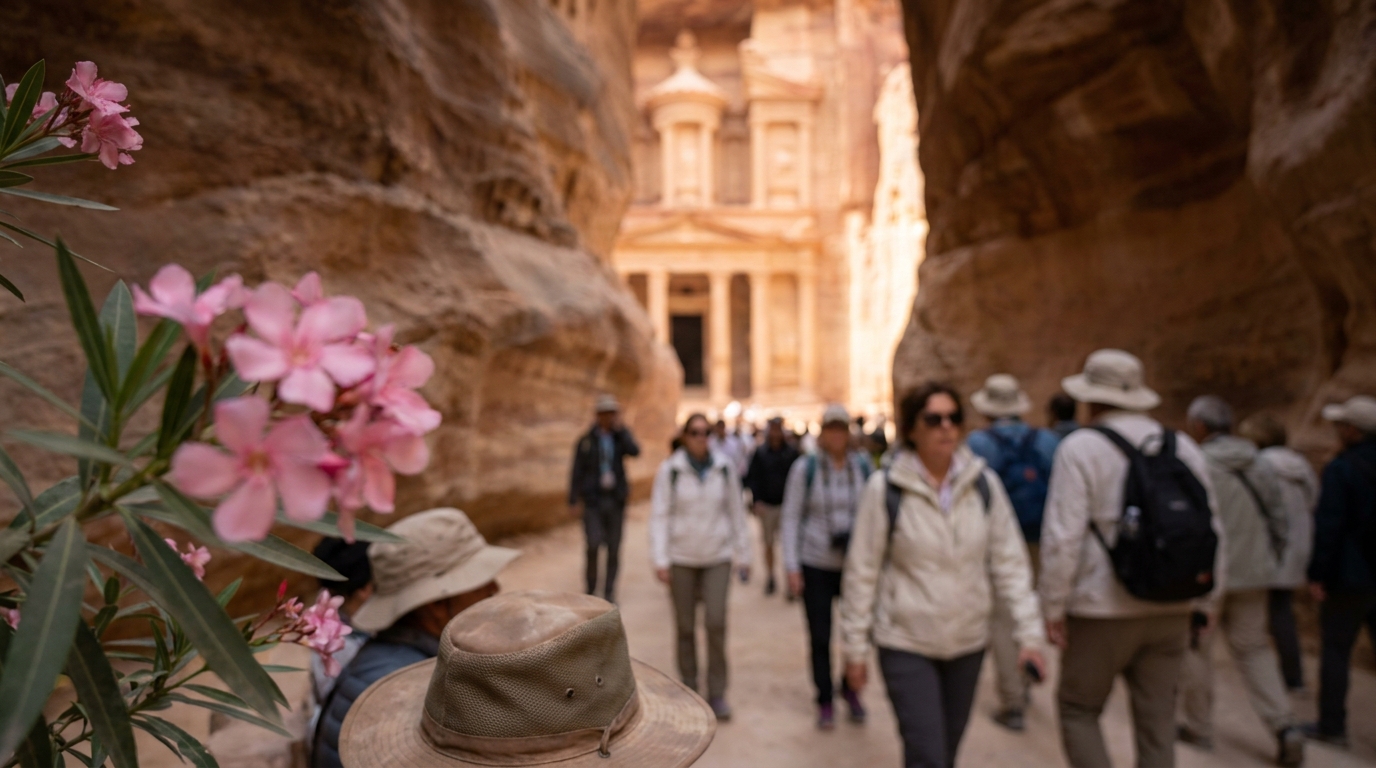
Spring is the best time to visit Petra for most travellers, combining mild temperatures, wildflowers on the surrounding hills, and long daylight hours. March averages 18°C (64°F) during the day; by May that climbs to 27°C (81°F) — warm but very walkable. The downside is crowds: March and April are the two busiest months of the year.
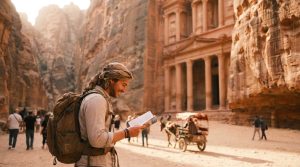
Tour groups fill the Siq by 9 a.m., and queues at the Treasury viewpoint can stretch 20 minutes during peak hours.
If you’re visiting in spring, book accommodation at least 8 weeks ahead. The See Movenpick Resort Petra and other options on our hotel map sits literally at the entrance gate and charges around USD 180/night in high season — it sells out weeks in advance. Budget options in Wadi Musa village run USD 30-60/night but book fast too. Search live availability on Booking.com for both ends of the price range.
Spring highlights:
- Rose-red canyon walls glow best in soft morning light (arrive by 7 a.m.)
- Wildflowers bloom across the surrounding Edomite plateau through April
- Average rainfall: 10-20mm in March, dropping to near zero by May
Summer (June to August): Hot, Quiet, Cheaper
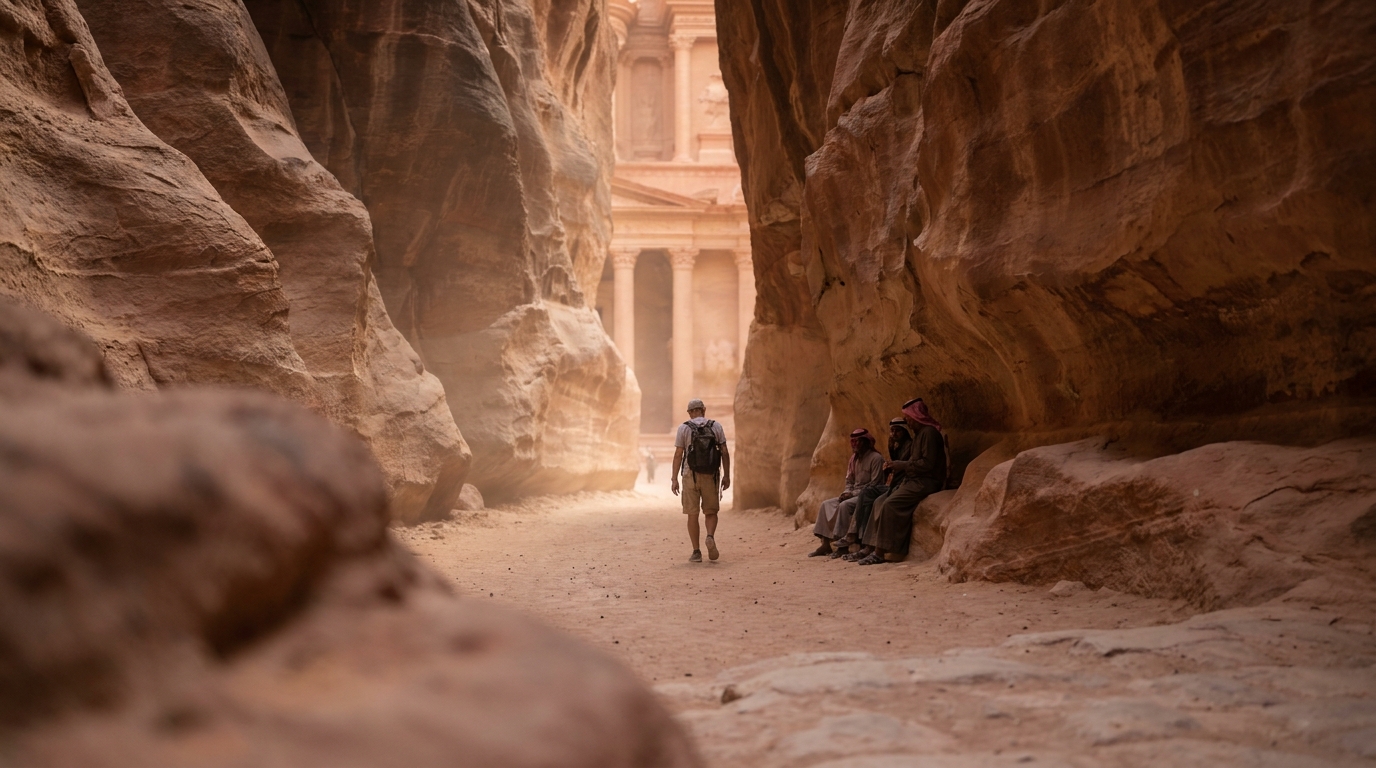
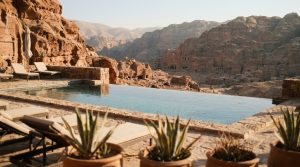
Summer is Petra’s low season and the hardest time to visit physically. June already sees highs around 33°C (91°F); July and August push 38-40°C (100-104°F). The site officially opens at 6 a.m. — the only sensible strategy is to arrive at opening, push deep into the site before 10 a.m., then retreat to a shaded cafe or your hotel pool from noon to 4 p.m.
The trade-off is real savings. Hotels in Wadi Musa drop 25-35% compared to spring peak. A mid-range property that charges USD 100/night in April often runs USD 65-70 in July. Booking.com’s flexible rate filters are especially useful for summer planning since you can compare free-cancellation options side by side — worth having if a heat wave forces a schedule change.
Petra by Night in summer is actually pleasant: temperatures fall to around 22-25°C (72-77°F) after sunset, the crowds are thinner, and the candlelit Siq feels genuinely atmospheric. It’s one of the few summer activities we’d recommend without caveats.
Autumn (September to November): Second-Best Window
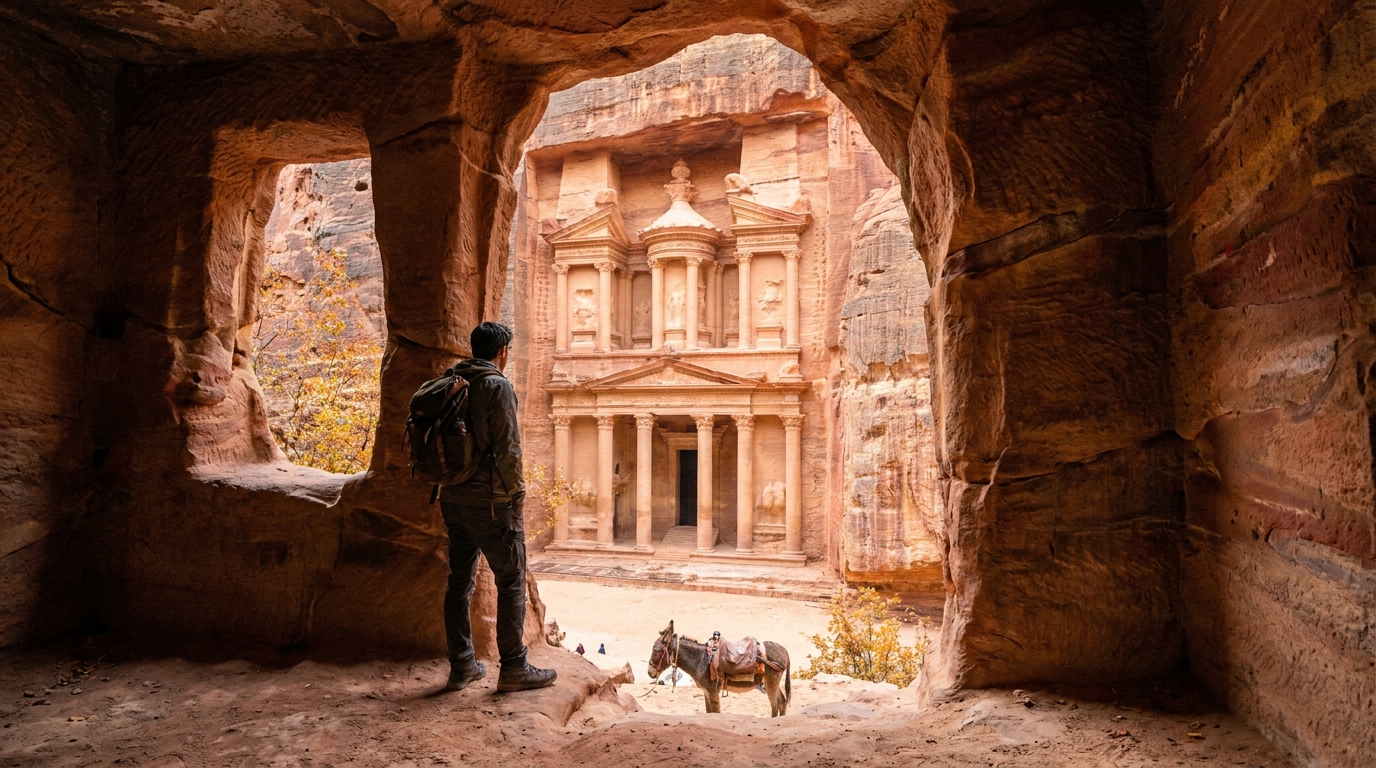
Autumn rivals spring as the best time to visit Petra, and for some travellers it’s superior. September still runs warm (31°C/88°F average), but by October temperatures settle to a comfortable 23°C (73°F) and crowds thin noticeably after the school-holiday surge ends. November is perhaps the most underrated month: highs of 18°C (64°F), very low tourist numbers, and the occasional dramatic cloudy sky that makes photography spectacular.
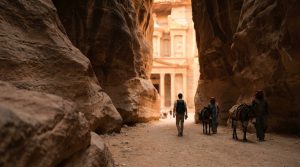
The main risk from October onward is flash flooding. Petra’s canyon system funnels rainfall from a wide catchment area; storms as far as 50 km away can send a wall of water through the Siq in minutes. The site authority closes access trails when warnings are issued — check the Jordan Meteorological Department forecast each morning.
Travel insurance covering trip interruption is worth carrying. We use Airalo eSIMs for reliable data access in Jordan so we can monitor weather alerts without relying on hotel Wi-Fi. Pick up a Jordan eSIM before you fly.
Winter (December to February): Cold, Dramatic, and Uncrowded
Winter is Petra’s most polarising season. Daytime temperatures in December and January hover around 12-15°C (54-59°F) — cold for a desert, but perfectly manageable with layers. Crowds drop to their annual low, and hotel rates follow. You’ll often have the Treasury viewpoint to yourself in the early morning.
January and February carry the highest chance of rain and the slim but real possibility of snow. When Petra gets snow — roughly once every few years — the rose-red rock against white is extraordinary, and photos go viral. But snow also means the site closes until it’s safe.
February 2025 saw a two-day closure due to snow and flash flood risk, leaving visitors stranded in Wadi Musa. If you visit in winter, build a flexible itinerary and book refundable hotel rates.
One practical note: Petra by Night runs year-round but can feel genuinely cold in January. Bring a proper jacket — the Siq acts as a wind tunnel.
Month-by-Month Conditions at a Glance
| Month | Avg High (°C) | Avg Low (°C) | Rainfall (mm) | Crowd Level | Hotel Price Index |
|---|---|---|---|---|---|
| January | 12 | 2 | 25 | Low | $ |
| February | 14 | 3 | 22 | Low | $ |
| March | 18 | 7 | 14 | Very High | $$$ |
| April | 23 | 11 | 7 | Very High | $$$ |
| May | 27 | 15 | 3 | High | $$ |
| June | 33 | 19 | 0 | Medium | $$ |
| July | 38 | 22 | 0 | Low | $ |
| August | 38 | 22 | 0 | Low | $ |
| September | 31 | 18 | 1 | Medium | $$ |
| October | 23 | 12 | 7 | High | $$$ |
| November | 18 | 7 | 14 | Medium | $$ |
| December | 13 | 3 | 22 | Low | $ |
Sources: Jordan Meteorological Department 2025; Booking.com rate averages 2025. Price index: $ = budget-friendly, $$$ = peak pricing.
Find your Petra hotel on the map
Live prices from Booking & Airbnb — tap a pin to compare stays around Wadi Musa and beyond.
How to Beat the Crowds Regardless of When You Visit
Even in peak April, you can find pockets of solitude if you plan strategically. The single most effective tactic is arriving at gate opening (6 a.m.) and walking directly past the Treasury — most tour groups stop there for 30-45 minutes while you push deeper toward the Monastery. By the time the masses catch up, you’ll already have had the Monastery to yourself for an hour.
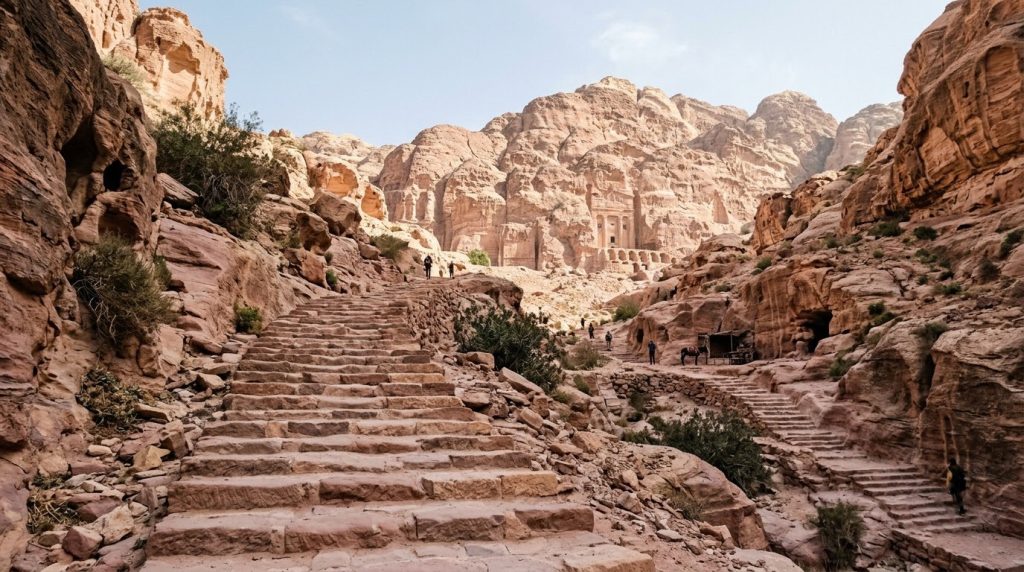
A few other crowd-reduction moves that genuinely work:
- Stay two nights minimum. Day-trippers from Aqaba and Amman flood in between 9 a.m. and 3 p.m. Overnighters can explore in the early morning and late afternoon when the site is far quieter. Search Wadi Musa hotels on Booking.com to find properties near the gate.
- Take the back route to the Monastery. The standard donkey path is crowded; the signposted back trail from the Basin restaurant is less used and offers better views.
- Visit Little Petra (Siq al-Barid) on day two. Included in the two-day ticket (JOD 55 / ~USD 78), it sees a fraction of Petra’s traffic and gives you a sense of what the main site felt like decades ago.
Petra Entry Fees and Ticket Types in 2026
Petra’s entrance fees increased in 2024 and have held steady into 2026. Understanding the structure helps you budget accurately.
| Ticket Type | Price (JOD) | Price (USD approx.) | Notes |
|---|---|---|---|
| 1-Day Pass | 55 | 78 | Most day-trippers use this |
| 2-Day Pass | 65 | 92 | Best value; includes Little Petra |
| 3-Day Pass | 75 | 106 | For serious walkers doing all trails |
| Petra by Night | 17 (add-on) | 24 | Mon/Wed/Thu, runs 8:30-10:30 p.m. |
| Jordan Pass holders | 0 (included) | — | Jordan Pass covers entry for 1/2/3 days by tier |
Source: Petra Development and Tourism Region Authority, 2025 pricing confirmed for 2026.
The Jordan Pass (JOD 70-80 depending on tier) bundles the visa fee (JOD 40) and Petra entry. If you’re staying more than two nights anywhere in Jordan, it almost always saves money. Buy it online before arrival at the official Jordan Pass website.
Getting to Petra: Your Practical Options
Most international visitors fly into Amman (Queen Alia International Airport) or Aqaba (King Hussein International). From Amman, Petra is roughly 230 km south — a 3-3.5 hour drive via the Desert Highway. From Aqaba, it’s 130 km and around 2 hours. You can compare flights on Aviasales to find the cheapest dates and routes.
Option 1: Rental car. The most flexible option if you’re combining Petra with Wadi Rum, the Dead Sea, or Aqaba. Discover Cars aggregates rates across local and international agencies, with rates from around USD 30/day for a compact in shoulder season, rising to USD 50+ in peak spring.
Option 2: JETT bus. Jordan’s public intercity bus runs daily from Amman’s South Bus Station to Wadi Musa (the town adjacent to Petra). Journey time is around 3 hours; fares run JOD 10-12 (~USD 14-17) each way. Book at the station or through the JETT website. Not the fastest, but reliable and air-conditioned.
Option 3: Organised day tour from Amman. Tour operators run day trips for around USD 80-120 including transport and a guide, but a day trip barely scratches Petra’s surface. We strongly recommend at least an overnight stay.
Related guide: 3-Day Petra Itinerary 2026: The Complete Jordan Guide
Frequently Asked Questions
What is the absolute best month to visit Petra?
March and October are the two months we’d choose above all others. March offers the longest daylight, the most comfortable temperatures (17-20°C), and wildflowers. October delivers similar temperatures with slightly fewer crowds after the summer-holiday surge. Both months require advance hotel booking of at least 6-8 weeks.
Is Petra worth visiting in summer despite the heat?
Yes, but only if you follow a strict early-start strategy. Arrive at gate opening (6 a.m.), complete your main trail objectives by 10 a.m., rest through midday, and return for late afternoon. Carry a minimum of 3 litres of water and wear a wide-brim hat. Summer actually works well for budget travellers who can handle heat and want lower hotel rates.
How many days do you need at Petra?
Two days is the realistic minimum to cover the main Petra circuit and the Monastery trail without rushing. Three days lets you add Little Petra, the High Place of Sacrifice, and the less-visited back-country routes. One day is technically possible but leaves you feeling you’ve only scratched the surface of a genuinely enormous site.
Does Petra close in bad weather?
Yes. The site authority closes Petra during flash flood warnings and when snow creates unsafe conditions on trails. Closures are rare but they happen — particularly in January-February and during autumn thunderstorm season. Always check the official Petra Authority social channels or your hotel front desk on the morning of your planned visit.
How do I book Petra tickets in advance?
Tickets can be purchased at the visitor centre gate or online through the official Jordan Tourism Board portal. There’s no price difference, but buying online means you skip queues at busy times. The Jordan Pass (bought before arrival at jordanpass.jo) bundles the visa fee and Petra entry into a single purchase that saves most visitors JOD 20-30.
Is Petra safe for solo female travellers?
Petra is generally considered safe for solo female travellers. The main concern most report is persistent sales pressure from vendors and horse/donkey handlers along the main trail — a firm “no thank you” repeated calmly is usually sufficient. Dress modestly (shoulders and knees covered) out of respect for local culture, which also helps reduce unwanted attention. The site has good mobile coverage so you can stay connected throughout.
What should I pack for a Petra day visit?
Essentials regardless of season: comfortable closed-toe walking shoes (the terrain is rocky and uneven), at least 2-3 litres of water, sunscreen SPF 50+, a wide-brim hat, and a light layer for the Siq which stays cool even in summer. In winter, add a proper fleece or down jacket. A headlamp is useful if you’re doing Petra by Night after a full day on the trails.
When to Book Your Petra Trip: Our Final Recommendation
For most travellers, the answer is simple: target late March to mid-April or mid-October to early November. You’ll get the best weather, enough daylight for a full day, and conditions that make the 8-12 km of walking genuinely enjoyable rather than a survival exercise.
Book accommodation early — Wadi Musa has limited quality options and they fill up fast in peak season. Check current availability and rates on Booking.com to lock in a refundable rate while you finalise your itinerary. If you’re building a broader Jordan trip around your Petra visit, our Jordan itinerary guide walks through how to combine Petra, Wadi Rum, the Dead Sea, and Amman into a single efficient loop. It is worth pairing this page with this Petra travel guide before mapping out transport, neighborhoods, and a rough daily schedule. Travelers budgeting the trip often check this where to stay in Petra before picking a neighborhood that matches the planned pace of the trip.
Petra is one of those rare sites that genuinely lives up to its reputation — as long as you give it the time and the right season it deserves.