Best Time to Visit Patagonia in 2026: Season and Region Guide
Disclosure: Some links in this guide are affiliate links. If you book or buy through them, we may earn a small commission at no extra cost to you — it helps keep our guides free.
- Trekking season runs about November to March, with December to February the busiest and windiest stretch.
- Shoulder months are the sweet spot: October to early November and March to April bring fewer crowds and, in autumn, golden foliage.
- Book early for Torres del Paine: refugios and campsites can fill 3 to 6 months ahead, and park entry tickets are mandatory.
- Winter (about June to August) is quiet and mostly closed for trekking, though Perito Moreno Glacier stays open year-round.
- Remember the seasons are reversed if you’re coming from the US, UK, or Canada: January is midsummer here.
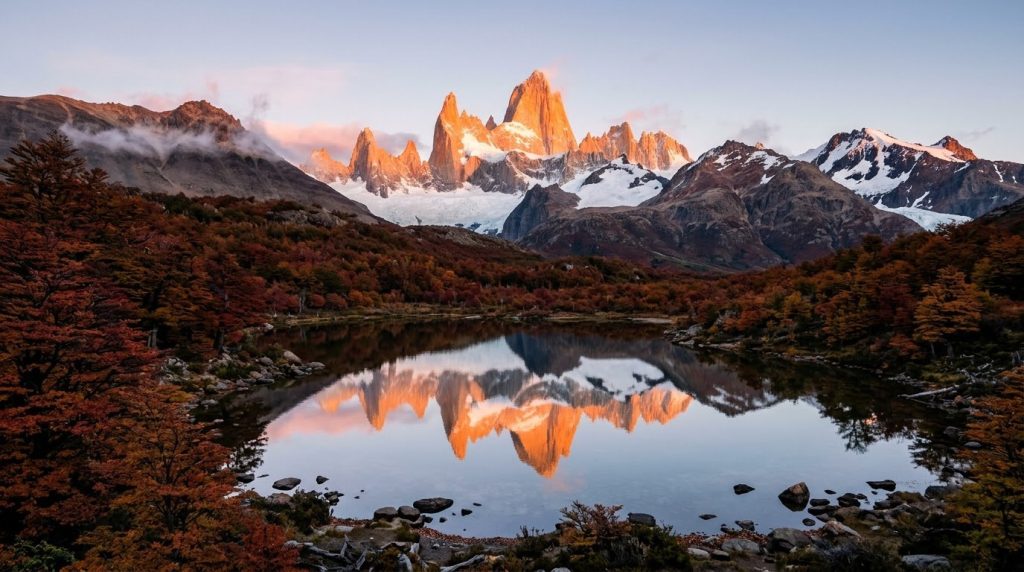
The best time to visit Patagonia is November through March, with December to February as the peak. That is the Southern Hemisphere summer, when trails are open, days run long, and the boats and buses operate on full schedules. If you want fewer people and still good trekking, aim for late October to mid-November or March into April.
Here’s the catch: the sources don’t agree. Some tour operators say September to April works, others say December to February is the only real window, and others call November to February peak with the shoulder months the best balance. Patagonia is huge and spans two countries, so the answer changes by region. This guide breaks it down by area and by month, and flags where you can save money.
The first time I planned a Patagonia trip, I treated “summer” as a guarantee of good weather and got a lesson in humility. On a January trek, we had a morning of full sun, an afternoon of sideways rain, and a night when the wind rattled the tent so hard nobody slept much. The trip that went best was a later one in March, when the trails felt calmer and the light looked richer. Since then, I always pack for four seasons in one day, whatever the month.
When is the best time to visit Patagonia overall?
For most travelers, the best time to visit Patagonia is November to March, when trails are open and daylight stretches late into the evening. Tour operators commonly describe December to February as the peak for trekking, while Torres del Paine and the Chilean Lake District are usually cited as open from about October to March (operator guides, 2026).
Think of it as three windows. Peak summer (December to February) gives you the longest days, the warmest temperatures, and the most reliable access, but also the wind, the crowds, and the highest prices. Shoulder seasons (October to November and March to April) trade a little weather risk for space and lower costs. Winter (June to August) is for skiers, photographers, and travelers who don’t mind closures.
My practical take: if you have flexibility, pick the shoulder season that matches your priorities. Choose late spring for blooming landscapes and waking wildlife, or choose autumn for color and quieter refugios. If your dates are fixed to school holidays, plan your bookings first and your flights second.
What is the weather like month by month?
Patagonian weather is famously changeable, and no month is a guarantee. Sources broadly agree that the warmest, longest days fall between December and February, while autumn from March to April brings cooler air and fall colors. Winter, roughly June to August, is cold, short on daylight, and mostly closed for multi-day trekking (regional tour operators, 2026).
The table below pulls the picture together. Treat it as a planning guide, not a forecast, because conditions shift between Chile and Argentina and between the Andes and the steppe.
| Month | Season | Trekking | Crowds | Prices | Notes |
|---|---|---|---|---|---|
| Sep | Late winter | Limited | Very low | Low | Many services still closed; spring just starting |
| Oct | Early spring | Opening up | Low | Low to mid | Some trails and huts reopen; changeable weather |
| Nov | Late spring | Good | Moderate | Mid | Longer days; a good balance of access and space |
| Dec | Early summer | Very good | High | High | Holiday demand builds toward Christmas |
| Jan | Midsummer | Very good | Very high | Highest | Peak crowds, long days, strong wind |
| Feb | Late summer | Very good | Very high | Highest | Still busy; wind can be fierce |
| Mar | Early autumn | Good | Moderate | Mid | Fall colors begin; crowds thin out |
| Apr | Autumn | Fair | Low | Low to mid | Peak color; shorter days; services start closing |
| May | Late autumn | Poor | Very low | Low | Most trekking infrastructure winding down |
| Jun to Aug | Winter | Mostly closed | Very low | Low | Perito Moreno stays open; limited park access |
Source: regional tour operator guides and national weather service summaries, 2026
Notice that the “good” months cluster in two groups. If a particular month looks full, look one month either side. That alone often drops accommodation costs noticeably.
Which region is best at which time?
Patagonia is not one place. The Chilean side, the Argentine side, the Lake District, and Tierra del Fuego each have their own rhythm. Torres del Paine and the Chilean Lake District are usually described as best from October to March, while Perito Moreno Glacier in Argentina stays open year-round, which makes it the easiest stop to fit into a winter trip (regional tour operators, 2026).
The region table below shows what each area is best for. I’ve kept the windows broad because sources differ, and I’ve marked anything I couldn’t verify.
| Region | Base town | Best window | Highlights | Winter access |
|---|---|---|---|---|
| Torres del Paine (Chile) | Puerto Natales | Oct to Mar (peak Nov to Feb) | W Trek, O Circuit, day tours | Limited |
| El Chalten (Argentina) | El Chalten | Patagonian summer | Fitz Roy, Laguna de los Tres | Quiet, mostly closed for trekking |
| Perito Moreno (Argentina) | El Calafate | Year-round | Walkways, boat trips, ice trek | Open |
| Ushuaia (Tierra del Fuego) | Ushuaia | Summer is simplest (not fully verified) | National park, Beagle Channel, train | Reduced services |
| Bariloche (Lake District) | Bariloche | Summer and autumn for hiking (not fully verified) | Circuito Chico, Llao Llao | Winter is ski season |
Source: regional tour operator guides and national tourism board information, 2026
If you want to see everything in a single trip, build around the southern end in peak season and add the Lake District when the weather is milder. For ideas on what to do once you’re there, see our guide to the best things to do in Patagonia.
When should you go to Torres del Paine?
Torres del Paine is best from October to March, with November to February the peak. Autumn, March to April, offers fall colors and fewer crowds. Because park entry tickets are mandatory (since 2023), and peak-season refugios and campsites can fill 3 to 6 months ahead, your booking window matters as much as your travel month (regional tour operators, 2026).
The two classic treks are the W (about 4 to 5 days hut-to-hut) and the O Circuit (about 7 to 9 days). The longer O Circuit needs more lead time, since you’re stringing together more nights in limited beds.
How far ahead should you book the W and O treks?
For December to February, start looking as soon as reservations open, ideally 3 to 6 months out. That’s the window cited for refugios and campsites filling up. For shoulder months, you’ve got more breathing room, but I wouldn’t wait until the last month, especially for the O Circuit.
Expect approximate costs of $60 to $90 per night for refugios with meals, and roughly $600 to $1,500 per person for a full W trek, depending on how you structure it (blogs and operator pricing, unofficial, approximate). Prices change, so check current rates.
What about park entry and day trips?
Chilean park tickets come in types such as Full Day, Base Torres, W, and O, and the QR code is scanned at the gate. Sources conflict on fees: one cites about $35 in high season (November to March), another cites roughly CLP 38,000 to 48,500, and CONAF reportedly moved to route-based fees in May 2026. Check CONAF directly before you pay.
If you can’t commit to a multi-day trek, a day tour from Puerto Natales runs roughly $66 to $120 for 9 to 11 hours of sightseeing. Park fees are often extra and sometimes paid in Chilean pesos cash, so ask what’s included.
When is the best time to hike El Chalten and see Fitz Roy?
El Chalten is best in the Patagonian summer, when the trails are open and the days are long enough for big hikes. The Laguna de los Tres hike is about 20 to 25 km round trip, takes 8 to 10 hours, and finishes with a climb of roughly 400 m (regional tour operators, 2026).
That climb is the steep final stretch, and it’s where wind often hits hardest. Start early, carry a windproof layer, and treat the weather forecast as a suggestion rather than a promise. In peak season the town gets busy, so book lodging well ahead.
Is El Chalten worth visiting outside summer?
It’s quieter and mostly closed for serious trekking in winter, so I’d skip it if big hikes are your goal. The shoulder months are better: you’ll find easier lodging and calmer trails, with the trade-off of shorter days and more variable weather.
If you’re on a budget, guided trips from El Calafate run about $120 to $400, depending on the format. Hiking independently from El Chalten itself is far cheaper, since the main trails are reachable on foot from town.
When should you visit Perito Moreno Glacier and El Calafate?
Perito Moreno is the easy one: it’s open year-round. That makes El Calafate the most flexible base in Patagonia. Day trips run about $51 to $84, and an ice trek costs roughly $330 to $490 (operator pricing, 2026), so your season choice is more about comfort and crowds than access.
Summer brings the best weather for walkways and boat trips, but also the largest groups. Winter is colder, quieter, and often cheaper, and the glacier is still dramatic against a low sun. If your main goal is the glacier rather than long treks, a winter or shoulder trip can be a smart money-saver.
I’d pair the glacier with other regions rather than treating it as a standalone stop. It slots neatly between Torres del Paine and El Chalten on a southern circuit.
What about Ushuaia and the Lake District?
Ushuaia, at the far southern tip, offers Tierra del Fuego National Park, the End of the World train, and Beagle Channel boat trips to see penguins. Full-day combinations cost about $152 to $190, a penguin cruise about $130, and park fees were quoted around AR$30,000 to 40,000 (operator pricing, 2026). I couldn’t verify a firm best-month window, so summer is simply the safest bet.
Bariloche and the Lake District are different again. The Circuito Chico loop, with Llao Llao and the Campanario chairlift, costs about $29 to $75 for a half day. Bariloche is also known as a ski destination in winter, which means it works in a very different season than the southern treks.
How do I choose between them?
Match the region to your month. Going in January? Torres del Paine, El Chalten, and Ushuaia are all in season. Traveling in July? Head to Perito Moreno or the Lake District for skiing instead of planning a big trek. That small shift saves you from disappointment and cancelled plans.
How can you save money when visiting Patagonia?
The simplest way to save is to travel in the shoulder season. In the table above, prices climb to their highest in January and February and ease in March and November. Lodging, guided tours, and refugio beds follow the same pattern, so moving your dates by even a few weeks can lower the total (operator pricing, 2026).
Here are the tips I’d use again:
- Go in March. You still get decent trekking weather, fall colors, and lower prices than midsummer.
- Book refugios first. Beds are the limiting factor in Torres del Paine, so reserve them before flights.
- Ask what’s included. Day tours often exclude park fees and lunch, which can add a surprising amount.
- Carry some local currency. Some fees are paid in pesos, and cash can be required.
- Skip guided trips where you can. Independent hiking from El Chalten is far cheaper than a guided day from El Calafate.
All prices here are approximate and change, so confirm current rates with operators before you book.
Find your Patagonia hotel on the map
Live prices from Booking, Airbnb and more — move the map or change dates to compare stays across Patagonia.
Frequently Asked Questions
What is the cheapest time to visit Patagonia?
The cheapest months are usually the shoulder seasons and winter. April to May and September to October tend to be lower priced than midsummer, though services and trails may be limited. For a balance of cost and access, March and November are often the best compromise.
Is Patagonia worth visiting in winter?
It can be, if you adjust expectations. Winter, roughly June to August, is quiet and mostly closed for trekking, and Torres del Paine access is limited. Perito Moreno stays open year-round, and the Lake District works for skiing. Don’t plan big hikes.
How far in advance should I book Torres del Paine?
For peak season, plan on 3 to 6 months ahead, since refugios and campsites can fill that early. Park entry tickets are mandatory and must be booked in advance. Shoulder months are easier, but it’s still smart to reserve early, especially for the O Circuit.
When is the windiest time in Patagonia?
Wind is strongest in the summer peak, roughly December to February, and it’s one reason the shoulder months are popular. You can get gusts on any trek, so bring a windproof shell and plan for delays on exposed sections.
Can I see fall colors in Patagonia?
Yes. March and April bring autumn colors, particularly in Torres del Paine and the surrounding areas, along with fewer crowds. Days are shorter and services start to close as April goes on, so check opening dates before you commit.
If you’re choosing between peak summer and the shoulder season, I’d lean toward the shoulder every time: fewer people, lower prices, and often the best light. Whatever you pick, book your beds and park tickets early, pack layers, and use our things to do in Patagonia guide to fill in the rest of your itinerary.