Best Time to Visit Greece (2026)
Disclosure: Some links in this guide are affiliate links. If you book or buy through them, we may earn a small commission at no extra cost to you — it helps keep our guides free.
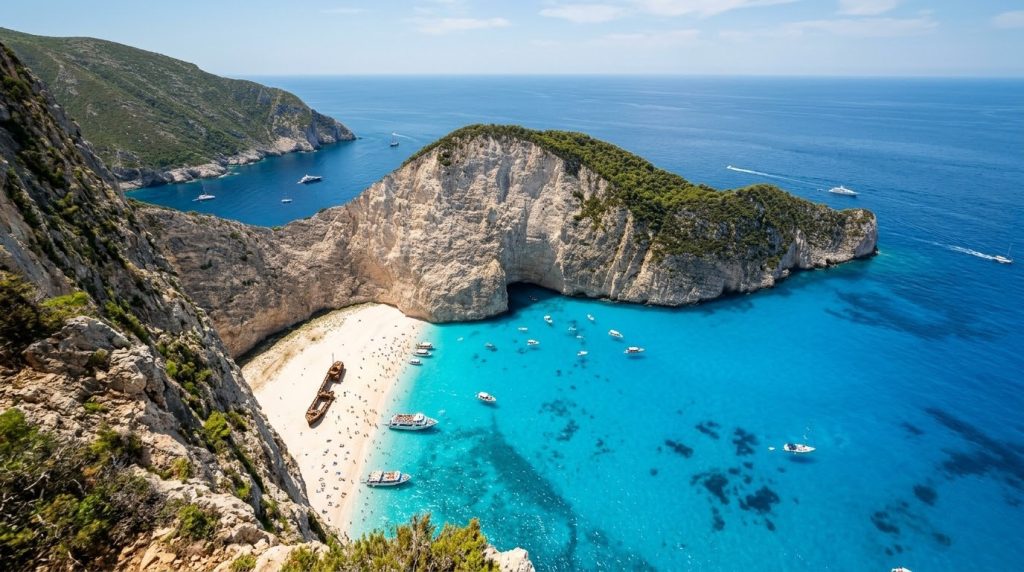
The best time to visit Greece is May, June or September, when the Cyclades ferry network runs its full timetable, the sea has warmed past 22°C, and Athens has not yet reached the 32°C highs of July and August.
Athens and the mainland work as a destination in any month of the year, but the islands run on a much shorter season that is set by ferry schedules as much as by temperature.
| Season | Islands (Cyclades) | Athens/mainland | Sea temp | Best for |
|---|---|---|---|---|
| April-May | Ferries restarting, still quiet | Mild, comfortable for walking | 19-21°C | Sightseeing, lower prices |
| June | Full ferry timetable | Hot, dry, low crowds | Around 22°C | Beaches before peak season |
| July-August | Peak season, meltemi risk | Very hot, 31-32°C highs | 24-25°C | Guaranteed sun, nightlife |
| September | Full ferry timetable, wind easing | Cooling, still warm | 24-25°C, near the yearly peak | Best value, warm sea |
| November-March | Ferries cut back sharply | Mild, 13-14°C highs | Cold, not swimmable | Athens city break only |
May, June and September – the island sweet spots
May, June and September give the best trade-off in Greece, pairing a full island ferry schedule with sea temperatures above 19°C and daytime heat that stops short of the 31-32°C highs of high summer.
In May, the Cyclades sea sits around 19-21°C, still cool enough that only confident swimmers go in daily, but the islands are quiet, hotel rates are lower, and boats run reliably between the main hubs.
June pushes the sea to roughly 22°C and adds long, dry days without the meltemi wind at its strongest, which makes it the best single month for combining beaches with sightseeing.
September holds sea temperatures near their yearly peak of 24-25°C while ferry frequency stays close to the high-season level, so island-hopping is just as easy as in July, only cheaper and calmer.
Each of these three months suits a different priority: May rewards a slower, budget-focused trip; June suits travelers who want long beach days without July-level heat; September suits anyone who wants the warmest water of the year without the meltemi at its strongest.
Combining an island leg with Athens sightseeing also works best in these months, since Athens is warm rather than punishing and island ferries are frequent enough that a missed connection rarely derails a full itinerary.
Santorini’s own shoulder-season window narrows this further for that specific island, since crater-rim viewpoints and boat tours get crowded on a different curve than the ferry timetable.
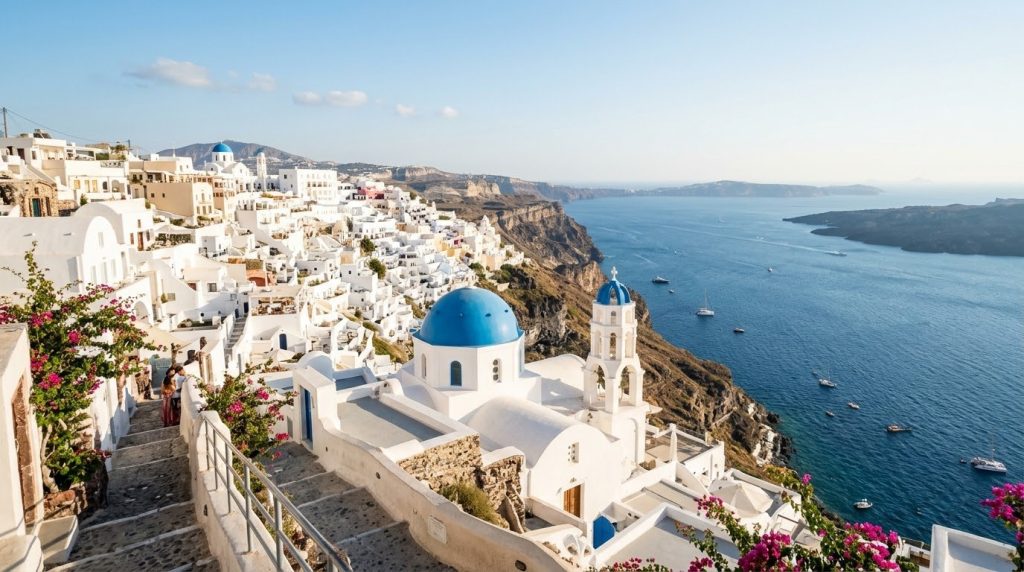
Why the ferry season decides an island trip
An island-hopping trip in Greece is really a ferry-hopping trip, so the ferry calendar matters more than the weather forecast. Regular ferry service across the islands runs from roughly late March through early November, with the highest frequency from June to September, when multiple daily departures connect even smaller Cycladic islands directly.
Once that window closes, in November through March, schedules drop sharply and mostly serve the larger islands with year-round populations, while routes to smaller islands thin out or stop completely.
That gap is why an off-season multi-island trip can leave a traveler stranded on a small island waiting for the next available boat, in a way that simply does not happen on the mainland.
Large, well-connected islands keep some service through winter because they carry year-round residents, while smaller islands that rely on tourist-season demand lose most of their scheduled connections once the ferry companies switch to their winter timetable.
A 4-day Santorini itinerary built around several islands only holds together within the late-March-to-early-November ferry window; try to compress the same route into December and half the connections will not exist.
Anyone planning to island-hop should check each leg’s schedule separately rather than assuming that the ferry that worked in August will still run in November, since operators publish new timetables each season rather than running a single fixed year-round schedule.
July and August – heat, crowds and the meltemi wind
July and August bring the most reliable sunshine of the Greek calendar, but also the highest prices, the largest crowds and the meltemi, a strong seasonal wind that can cancel ferries even under a clear blue sky.
Athens averages a 32°C high in July and 31°C in August, with lows only easing to 22-24°C overnight, and heatwaves can push the city as high as 40°C, so midday sightseeing needs to be planned around shade and air conditioning.
The meltemi, a northerly wind that blows down the Aegean, is strongest in July and August, typically establishing from mid-July through late August and occasionally arriving in late June or lingering into September in stronger years; gusts can exceed 100 km/h.
The Cyclades feel it hardest, since the islands sit directly in the wind’s path, and operators generally start cancelling smaller high-speed catamarans once conditions reach 7-8 on the Beaufort scale, with larger conventional ferries holding out until the wind is stronger still.
Booking an early-morning crossing improves the odds of sailing on a windy day, because the meltemi typically builds through the afternoon and peaks in the early evening.
Winter – Athens works, the islands mostly do not
Athens makes a genuinely good winter city break, while the islands mostly shut down outside the ferry season, so the two halves of a Greece trip need to be planned separately in the colder months. Athens holds mild daytime highs of roughly 13-14°C from December through February, mild enough for museums, the Acropolis and long walks without needing island-style planning.
On the islands, hotel and restaurant closures follow the drop in ferry frequency, and by December most smaller Cycladic islands are running on a skeleton service aimed at residents rather than visitors.
For anyone still set on an island stop in winter, sticking to a larger island with year-round ferry links and checking the current Santorini travel guide before booking avoids arriving to find hotels and restaurants closed for the season.
A Greece trip built around Athens plus the mainland, such as day trips into the surrounding Attica region, avoids the ferry problem altogether and turns winter from a limitation into simply a different kind of trip.
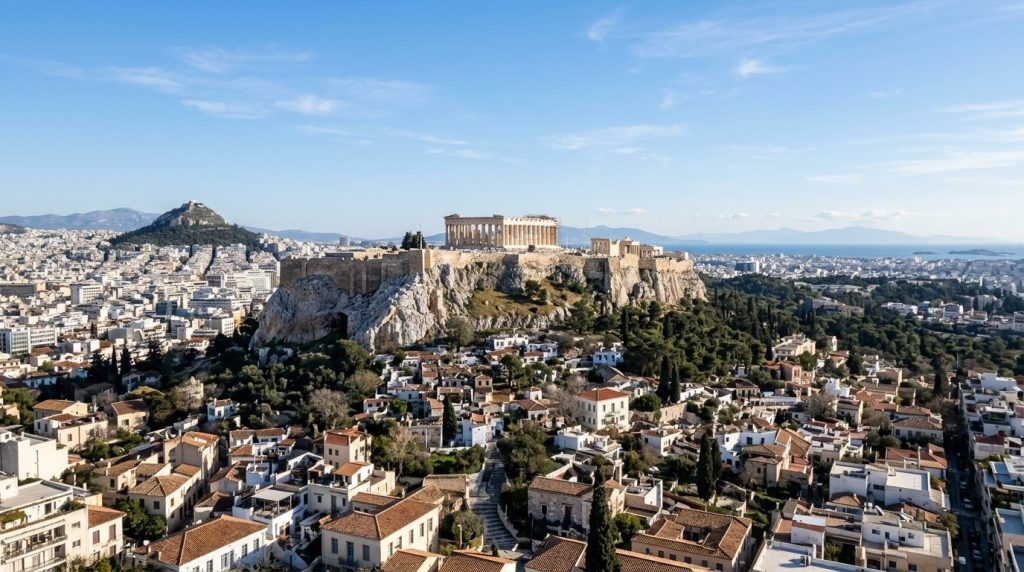
When NOT to visit Greece
Skip a multi-island itinerary between November and March, because reduced ferry frequency in that window is the single biggest risk of getting stuck on a small island with no way off on schedule.
Skip August specifically if budget matters, since it combines the year’s highest hotel and flight prices with the largest crowds at major sites like the Acropolis and Santorini’s caldera viewpoints.
Skip a beach-focused Cyclades trip planned for the second half of July or all of August if rough seas and wind noise would ruin the experience, since that is exactly when the meltemi is most established.
Skip peak midday hours for any outdoor sightseeing in Athens during July and August, when the 31-32°C highs make walking tours genuinely uncomfortable rather than just warm.
Do Americans need a visa for Greece?
US citizens do not need a visa for tourist trips to Greece, since Greece is part of the Schengen Area and Americans can enter visa-free for stays of up to 90 days within any 180-day period, provided the passport is valid for the planned stay.
That rule applies to Greece the same way it applies to other Schengen members, and it covers tourism, family visits and short business trips rather than work or long-term stays.
A separate requirement, ETIAS, a short online travel authorization for visa-exempt travelers including Americans, has been announced repeatedly but had not taken effect as of late 2026, with its start date pushed back multiple times; travelers should check the official ETIAS status shortly before departure rather than assume the current visa-free rule has changed.
Once ETIAS does take effect, it is expected to require an online application and a fee in the neighborhood of USD 23 (EUR 20) per traveler, valid for multiple entries over a few years rather than a visit-by-visit charge. Until then, a valid US passport is the only document Americans need to enter Greece for a standard tourist stay.
How many days are enough for a trip to Greece?
A short trip of five to seven days is enough to cover Athens plus a single island without rushing, since Athens alone fills two to three full days between the Acropolis, the Acropolis Museum and the surrounding neighborhoods, leaving the rest for a ferry crossing and an island stay.
Most travel guides recommend ten to fourteen days for a first visit that pairs Athens with two or three islands, since that length absorbs a travel day on each end and at least one ferry transfer without squeezing every stop into a single day.
Shorter trips work better with fewer stops rather than a packed list, since each added island means another ferry crossing and another check-in, and Greece’s ferry schedules reward a slower pace over a rushed multi-island sprint.
Travelers with two weeks or more can add a second region, such as the Peloponnese or a second island group, without the trip feeling compressed.
Matching the day count to the ferry season outlined above matters as much as the raw number of days, since the same ten-day itinerary that works easily in June can be far harder to execute in December when fewer boats are running.
Plan your Greece trip
Prices across the Greek islands are quoted in EUR, and at today’s rate of EUR 1 = USD 1.16, it is worth converting island accommodation listings before comparing them to mainland or Athens options.
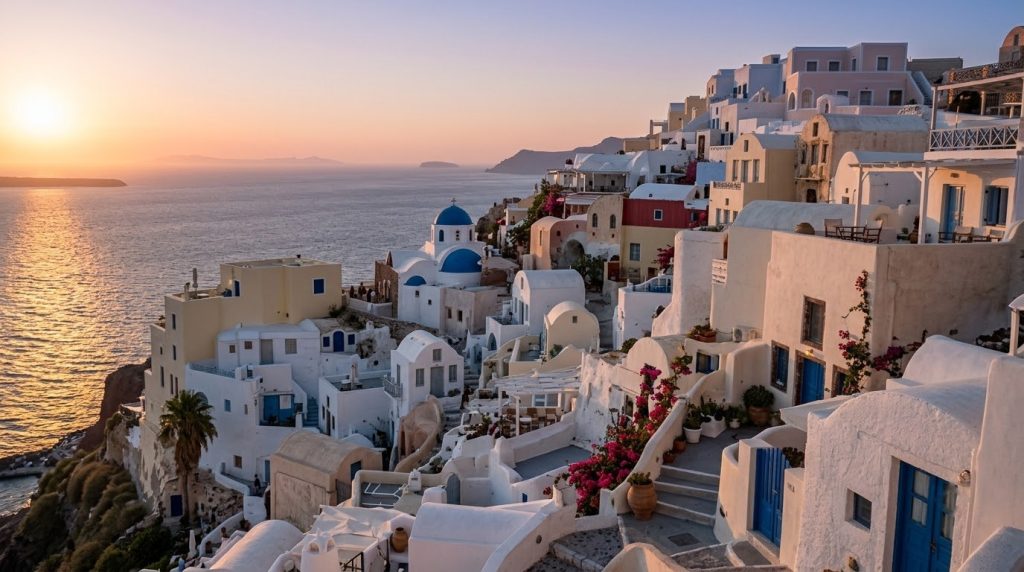
Once the season is settled, matching it to a specific base, whether that is a Cycladic island or Athens itself, is the next decision; for island stays, where to stay in Santorini breaks down neighborhoods by budget and view.
Find your Greece hotel on the map
Live prices from Booking, Airbnb and more — move the map or change dates to compare stays across Greece.