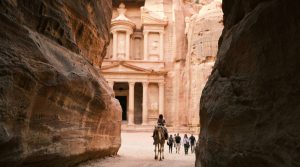
25 Best Things to Do in Petra 2026: Complete Visitor Guide
Disclosure: Some links in this guide are affiliate links. If you book or buy through them, we may earn a small commission at no extra cost to you — it helps keep our guides free.
- Petra covers 264 square kilometres; most visitors only see about 15% of the site (Jordan Tourism Board, 2025)
- The Jordan Pass (from JD 70 / ~$99) bundles the visa fee and 1-, 2-, or 3-day Petra entry
- it’s cheaper than buying both separately for nearly every nationality (Jordan Tourism Board, 2026)
- Petra by Night runs Sunday, Tuesday, and Thursday; tickets cost JD 17 (~$24) on top of regular entry (Petra Development & Tourism Region Authority, 2025)
- Over 1.5 million tourists visited Petra in 2024, making early entry (before 7 a.m.) essential for crowd-free shots (Jordan Tourism Board, 2025)
- Temperatures in the Siq reach 40°C (104°F) in July; April–May and September–October are the two most comfortable windows (Jordan Met Department, 2025)
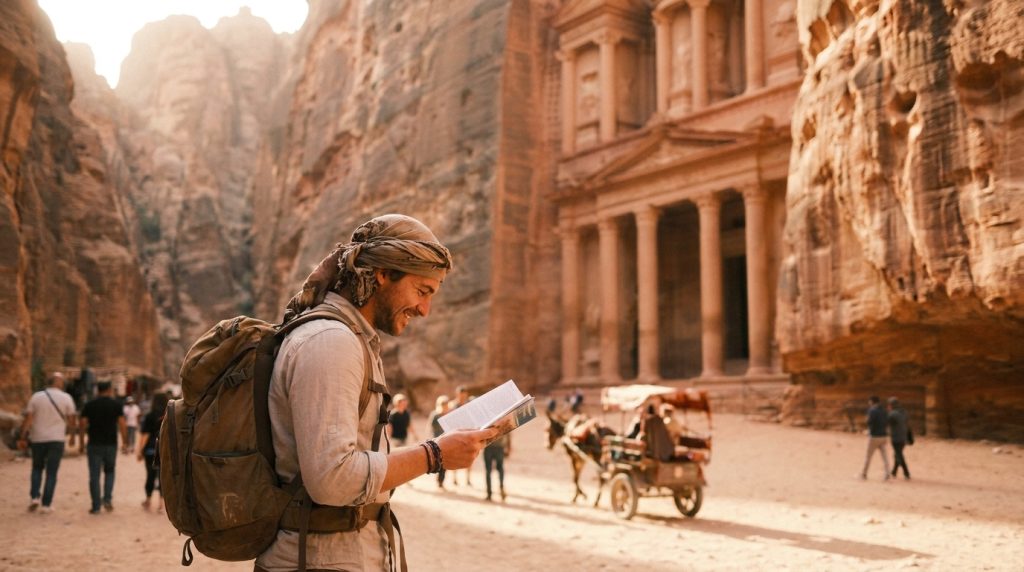
Petra rewards visitors who show up prepared — the ancient Nabataean city carved into rose-red sandstone cliffs delivers far more than the single Treasury photo most people chase. We’ve pulled together 25 concrete activities, real 2026 entrance prices, and practical timing advice so you leave Jordan feeling like you actually experienced this place rather than just passed through it. It is worth pairing this page with this Petra travel guide before mapping out transport, neighborhoods, and a rough daily schedule. Travelers budgeting the trip often check this where to stay in Petra before picking a neighborhood that matches the planned pace of the trip.
1. Walk the Siq at Dawn and Beat the Crowds
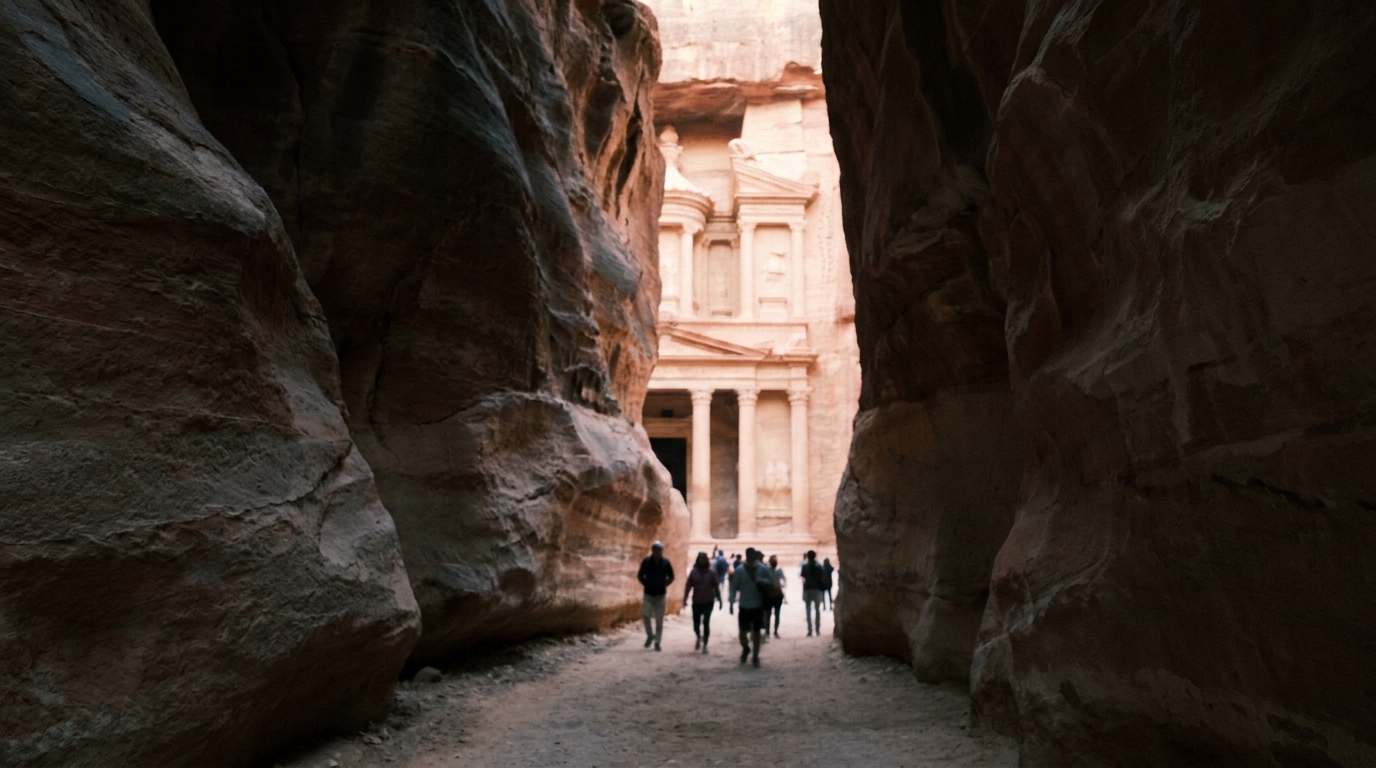
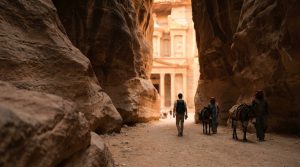
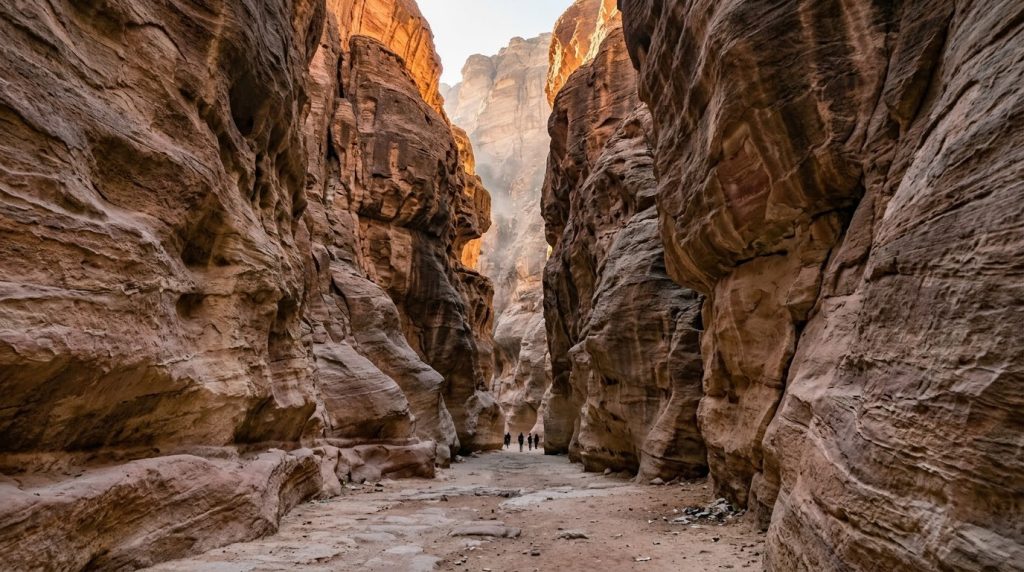
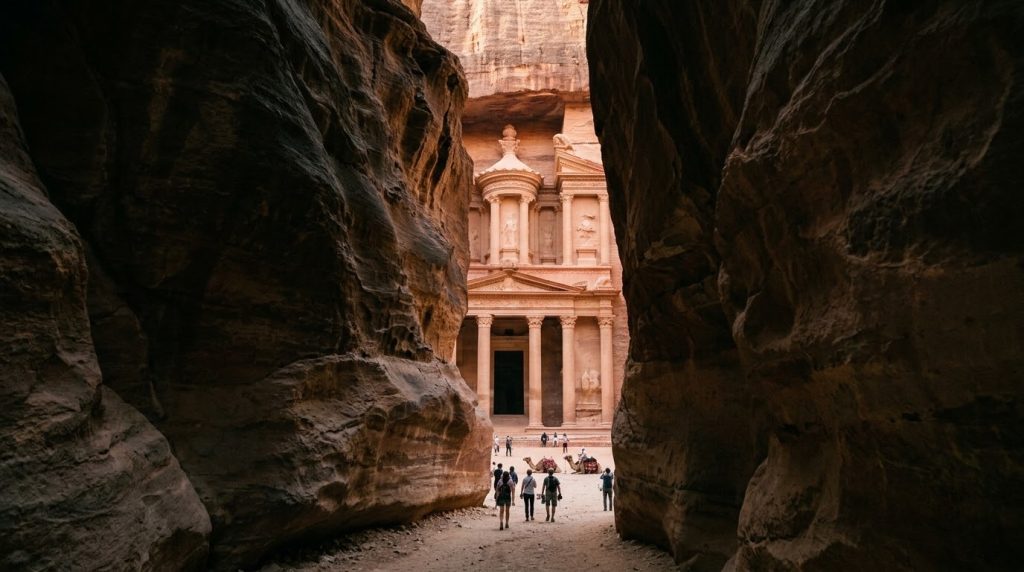
Arriving at the main gate by 6 a.m. puts you inside the 1.2-kilometre Siq gorge a full 90 minutes before the first tour buses unload. The canyon walls narrow to 3 metres in places and the light turns gold-pink as the sun rises — conditions that vanish completely by 9 a.m. when shadows flatten and noise levels spike.
The Siq is not just a corridor. Look for the carved Nabataean water channels running along both walls, the votive niches cut into the sandstone at regular intervals, and the stretches of original paved Roman road still visible underfoot. Count on 25–35 minutes to walk its full length without stopping.
2. See Al-Khazneh (the Treasury) on Your Own Terms
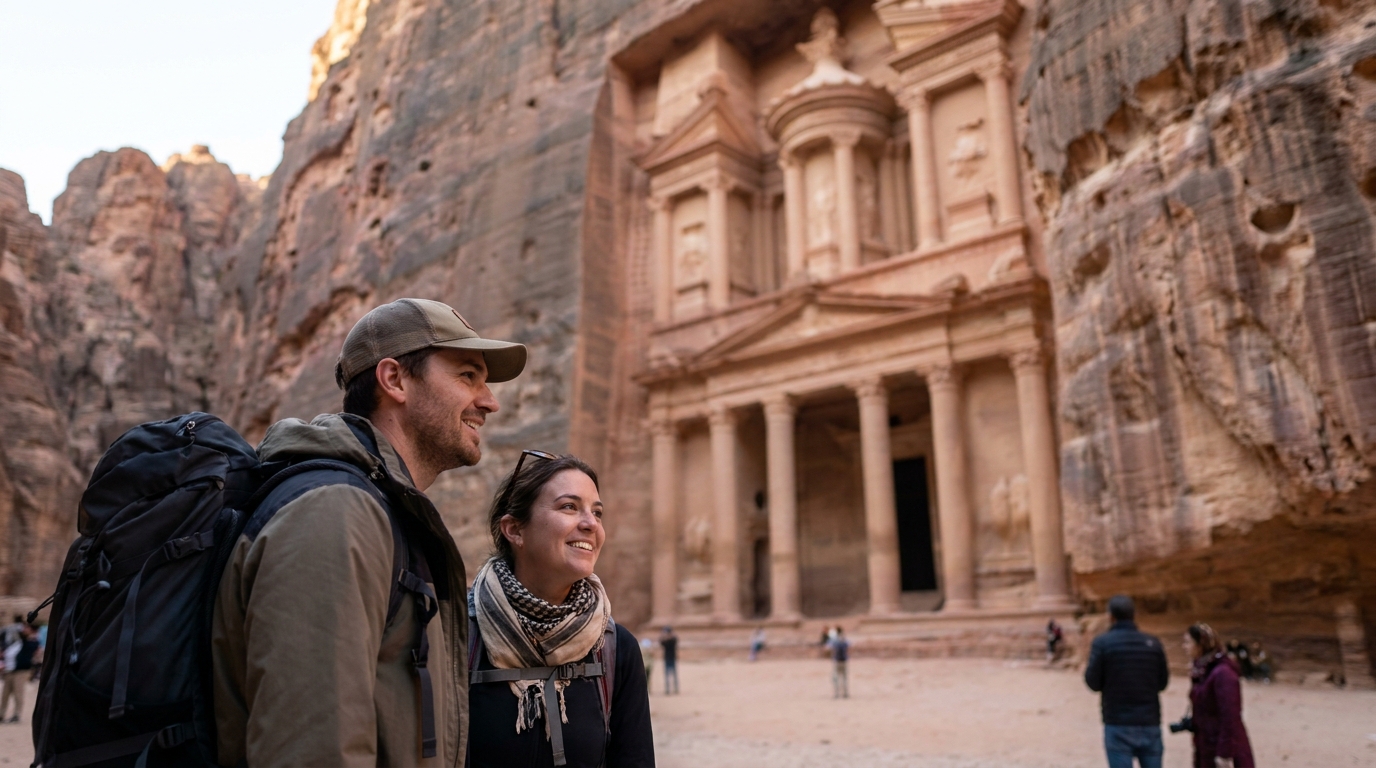
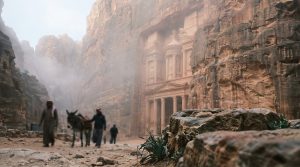
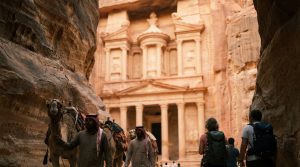
Al-Khazneh is the facade that appears on every travel poster, but the story behind it matters: this is almost certainly a royal tomb, not a treasury, dating to the 1st century BCE. The top urn was shot at by Bedouin legend-seekers who believed it held a pharaoh’s gold — the bullet marks are still visible.
Stand at the Siq exit between 6:30 and 7:30 a.m. to photograph the facade in direct sunlight with almost no one in the frame. Camels and horse-drawn carriages operate at the base from around 7 a.m. A short camel ride costs roughly JD 5–10 ($7–14) depending on your negotiation skills.
3. Book a Guided Tour for Context You Won’t Get Alone
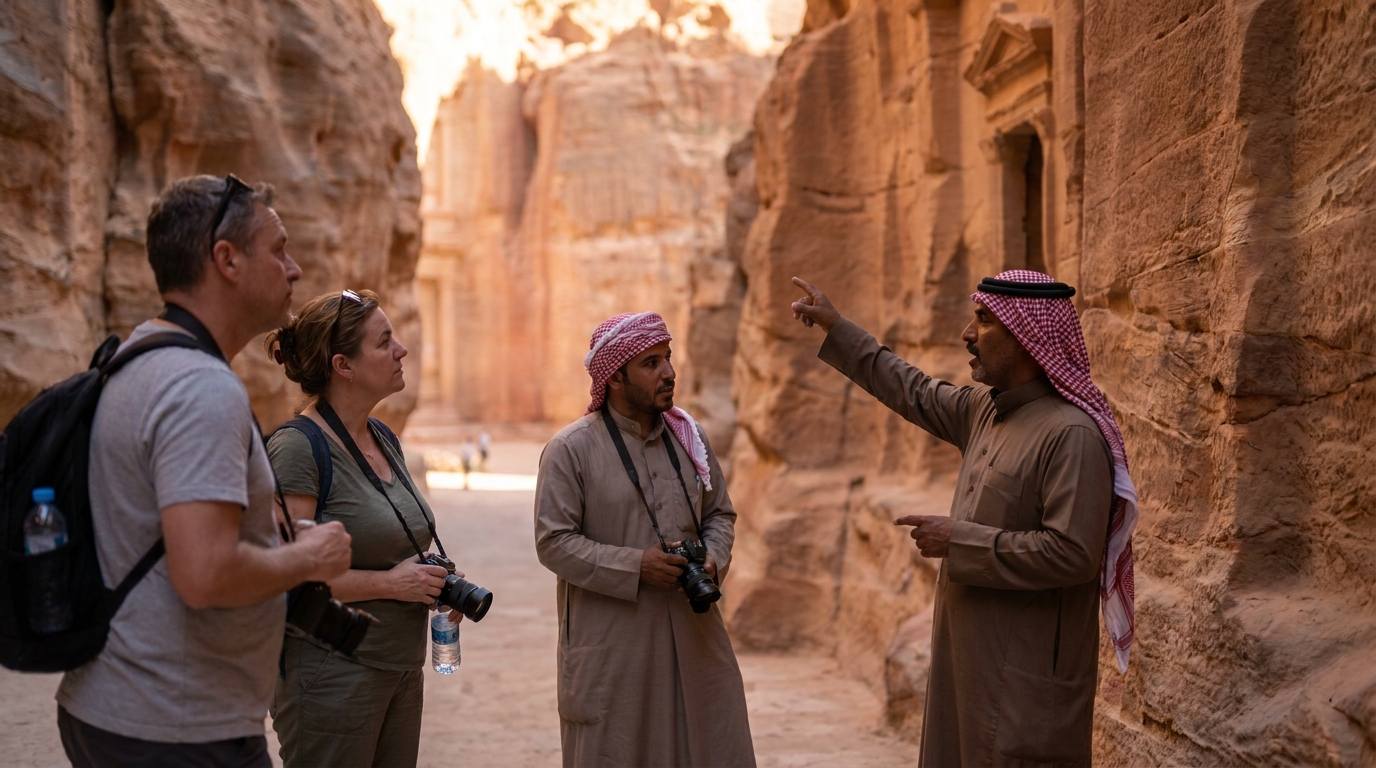
A licensed guide transforms the site from impressive shapes in rock into a coherent civilisation. You learn why the Nabataeans controlled the incense trade, how they engineered a water system feeding 30,000 people in a desert, and which carved facades are tombs versus temples. We recommend booking in advance through GetYourGuide — half-day guided Petra walks start around $35–45 per person.
Full-day guided tours that cover both the classic route and the High Place of Sacrifice run $55–80 per person. Private guides hired locally at the visitor centre charge JD 50–75 ($70–105) for a half-day. Either way, having a guide on your first day and exploring independently on a second day is the most efficient approach.
4. Climb the High Place of Sacrifice
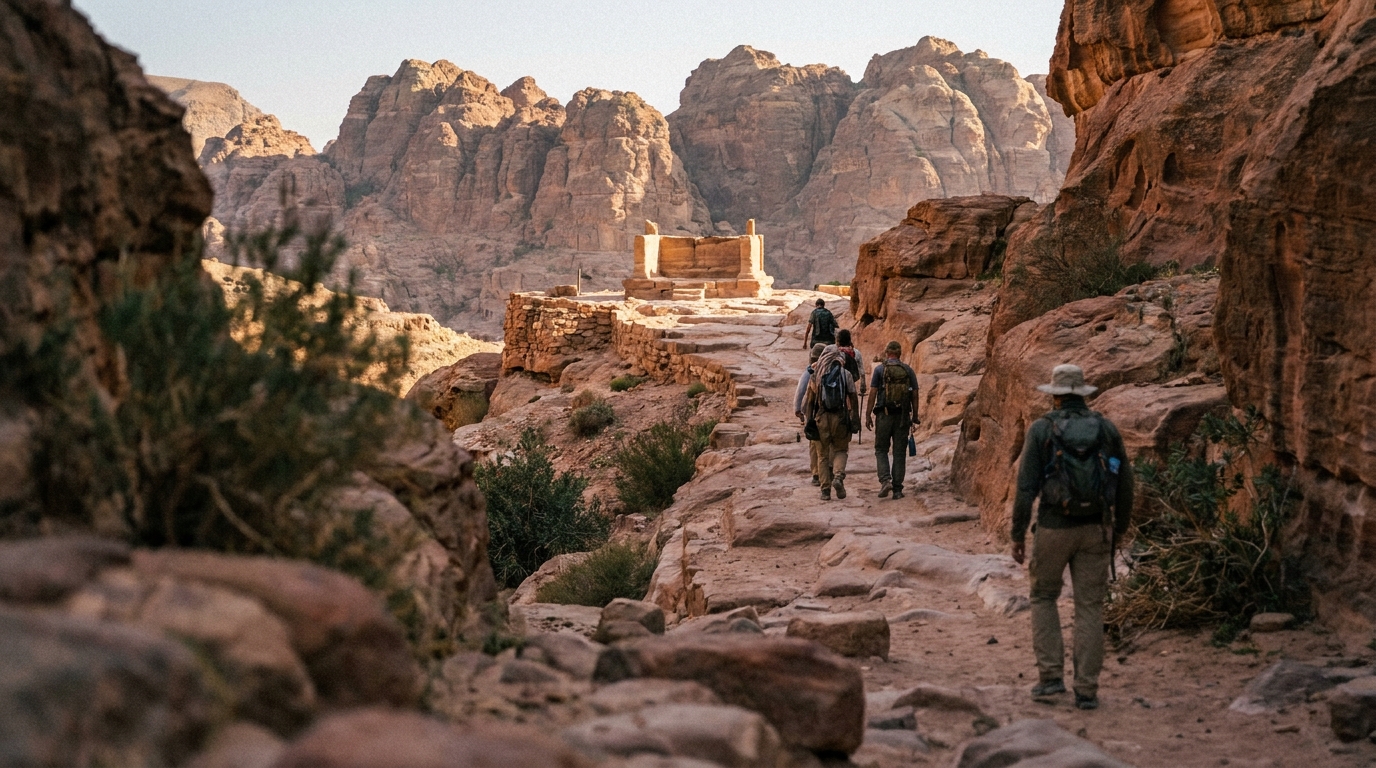
The High Place of Sacrifice sits at 1,035 metres above sea level and requires a 45-minute uphill scramble from the Street of Facades. At the top you’ll find two obelisks carved directly from the mountain, a ritual altar with drainage channels for blood offerings, and panoramic views that stretch across the entire Petra basin and out toward Wadi Araba.
Most visitors stop at the Treasury and the Colonnaded Street. Far fewer make this climb, which means you’re trading crowd density for elevation and genuine solitude. Factor in 1.5–2 hours round-trip including time at the summit. Wear closed shoes — the steps are uneven sandstone.
5. Explore the Royal Tombs in the Afternoon Light
The cluster of facades known collectively as the Royal Tombs — Urn Tomb, Silk Tomb, Corinthian Tomb, and Palace Tomb — lines the eastern cliff face and faces west. This means afternoon light, typically between 2 and 4 p.m., hits them directly and creates the warm amber glow you see in magazine photos.
The Urn Tomb is the most architecturally significant: its interior was converted into a Byzantine church in 446 CE and you can still see Greek inscriptions on the wall. Interior entry is included in the Petra entrance ticket. Bring a headlamp or phone torch — the interior corners are very dark.
6. Visit Qasr al-Bint, Petra’s Only Free-Standing Temple
Qasr al-Bint (“Palace of the Pharaoh’s Daughter”) is the only major structure in Petra built from cut stone rather than carved from the cliff. Nabataean engineers constructed this temple in the 1st century BCE for a deity scholars now believe was Dushara, the chief Nabataean god. It once stood 23 metres tall.
The structure sits at the end of the Colonnaded Street, past the Great Temple and the markets. Most tour groups turn around at the Treasury or the Street of Facades, so this area tends to be quieter despite being well inside the site. Budget 30 minutes here and read the interpretive panels — they’re genuinely informative.
7. Attend Petra by Night for a Completely Different Experience
Three nights a week (Sunday, Tuesday, Thursday), the path from the Siq to the Treasury is lined with over 1,500 candles set in paper bags. The experience runs from 8:30 p.m. to 10:30 p.m. and ends with Bedouin music and tea at the Treasury plaza. It’s theatrical and atmospheric rather than educational — manage expectations accordingly.
Tickets cost JD 17 (~$24) and are sold at the visitor centre or through authorised local operators. Note: this is on top of a standard day-entry ticket — you can’t do Petra by Night on a day when you haven’t paid regular entry unless you buy a combined ticket. Arrive at the Siq entrance by 8:15 p.m.
8. Hike to the Monastery (Ad-Deir) via the Back Trail
Ad-Deir is larger than the Treasury — 50 metres wide, 45 metres tall — but receives roughly one-fifth the foot traffic because it requires climbing 850 rock-cut steps from the main valley. The hike takes 45–60 minutes uphill. Donkey rides are available for JD 10–15 ($14–21) one-way if you’d rather not walk.
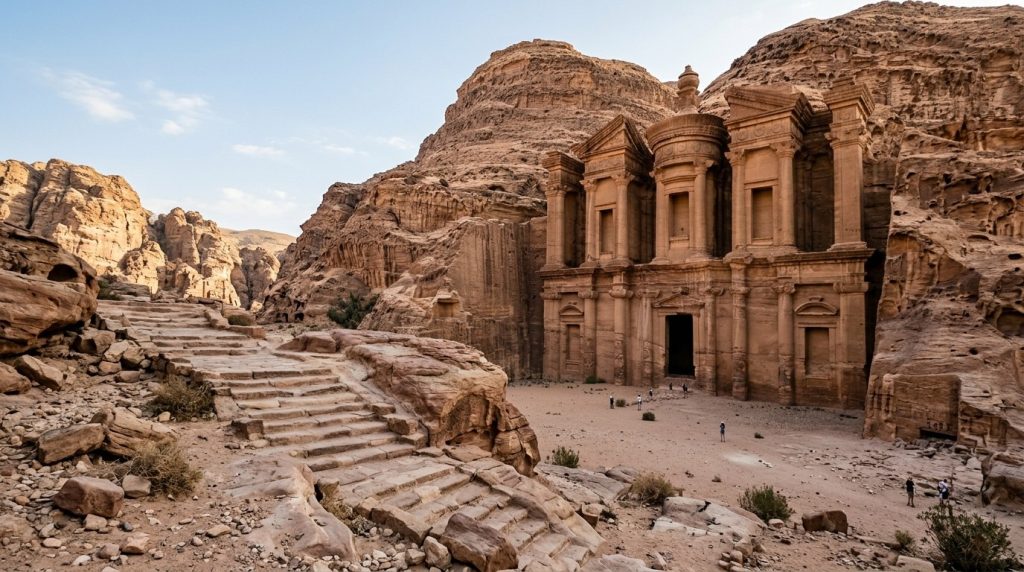
The interior chamber is empty but immense. A small Bedouin tea house operates at the summit near the monastery and the views from the ridge behind it look out across the desert all the way to Israel on a clear day. Allow 3–4 hours for the round-trip including time to explore the ridge.
Best Petra hiking routes guide
9. Get a Petra SIM Card or eSIM Before You Arrive
Jordan’s mobile coverage inside Petra proper is inconsistent — Zain and Orange both have dead zones in the Siq and around the Monastery trail. Download offline maps (Maps.me or Google Maps offline) the night before, and consider an Airalo eSIM for Jordan if you want data without paying roaming fees.
Airalo’s Jordan eSIM costs around $4.50 for 1GB or $9 for 3GB (valid 30 days). Local physical SIMs at Queen Alia Airport run JD 3–5 ($4–7) for 5GB. Either option beats roaming charges, which can run $10–15/day on US and UK plans.
10. Hire a Horse from the Gate to the Treasury Entrance
A horse ride from the main visitor centre gate to the Siq entrance (not through the Siq itself) is included in the standard Petra ticket — this is a short, 800-metre ride on the paved approach road and takes about 5 minutes. It’s a formality rather than an experience.
The horse-drawn carriages that run through the Siq to the Treasury plaza cost JD 25–40 ($35–56) round-trip and are primarily designed for visitors with mobility issues.
If you’re physically able, walk the Siq on foot. You’ll miss significant details from a carriage seat and the noise of the horses detracts from the echo-chamber experience of the narrow gorge.
11. Explore Little Petra (Siq al-Barid) as a Half-Day Add-On
Little Petra is a free separate site 8 kilometres north of the main entrance, accessible by taxi (JD 10–15 / $14–21 one-way from Wadi Musa town). It’s a smaller Nabataean suburb with its own mini-siq, carved dining rooms with faded frescoes, and cisterns — and it receives maybe 5% of the main site’s visitor numbers.
The frescoes in the Painted House are the only surviving examples of Nabataean figurative painting and are worth the detour alone. The site is open daily, entrance is free, and you can walk the entire siq and back in 45–60 minutes. Pair it with a morning at the main site or as a standalone afternoon trip.
12. Walk the Colonnaded Street and Roman Ruins
After the Nabataeans came Rome, and the Colonnaded Street reflects the 2nd-century CE Roman civic upgrade: a 6-metre-wide paved road flanked by columns, shops, and public buildings. The original road surface is still partially intact. Side ruins include the Nymphaeum (an elaborate public fountain), the Great Temple, and the triple-arched Temenos Gateway.
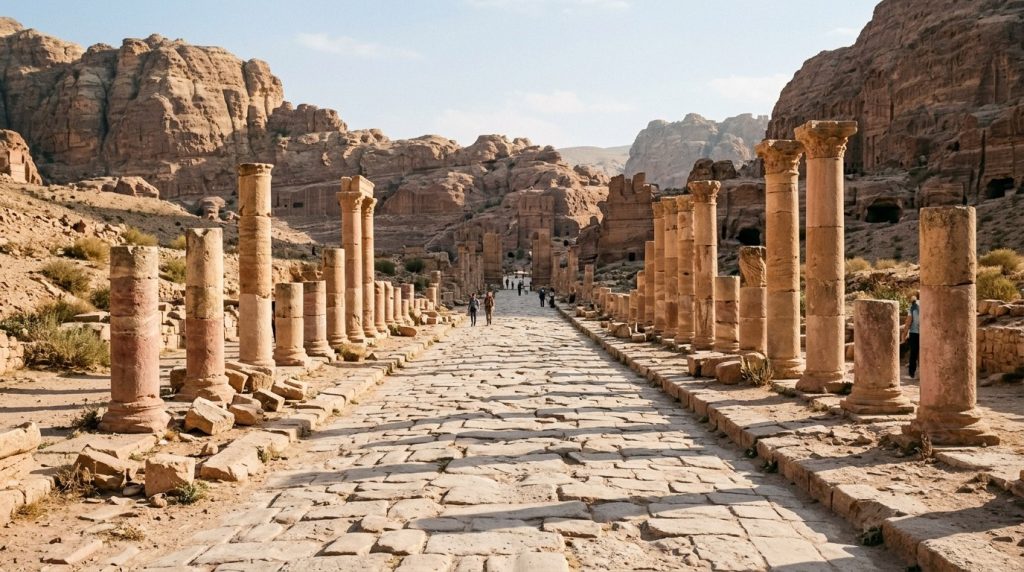
Archaeologists from Brown University excavated the Great Temple complex throughout the 1990s and 2000s, uncovering a 600-seat theatre inside what was thought to be a religious precinct. The site is still being studied. Walk slowly here — the ruins look like rubble from a distance but reveal their scale once you’re standing among them.
13. Take the Al-Khubtha Trail for Views Over the Treasury
The Al-Khubtha Trail branches off from the Royal Tombs area and climbs to a viewpoint directly above the Treasury. This is the angle you’ve seen in drone footage — looking down into the canyon mouth with the Treasury facade below. The hike takes 30–40 minutes and requires moderate fitness.
Start the trail before 9 a.m. or after 3 p.m. to avoid the worst heat. The path is marked and maintained. You’ll also pass several smaller rock-cut tombs along the route that the majority of visitors never see. Bring water — there are no vendors on this trail.
Book a Petra photography tour
Find your Petra hotel on the map
Live prices from Booking & Airbnb — tap a pin to compare stays around Wadi Musa and beyond.
14. Check Into a Cave Hotel in Wadi Musa
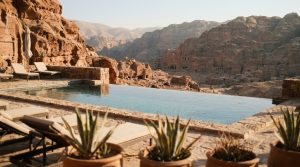
You don’t need to stay in Amman and day-trip to Petra — Wadi Musa, the town immediately adjacent to the site, has accommodation ranging from JD 15 ($21) dorm beds to JD 180 ($253) per night at the Seven Wonders Hotel with Treasury views. Staying locally lets you enter the site at opening (6 a.m.) and return in the evening without losing 2+ hours to bus transfers.
Book accommodation through Check live hotel prices — they have the widest inventory for Wadi Musa, including the cave hotels and Bedouin-style camps a few kilometres outside town. Mid-range doubles at Three Corners Hotel or Rocky Mountain Hotel run JD 45–65 ($63–91) including breakfast in 2026.
Best hotels near Petra
15. Visit the Petra Museum (Free with Entry Ticket)
The Petra Museum opened in 2019 adjacent to the visitor centre and is included in the standard Petra ticket. It houses around 700 artefacts recovered from the site — coins, jewellery, ceramics, inscriptions, and figurines — with English labelling and contextual panels explaining Nabataean culture, religion, and trade networks.
Plan 45–60 minutes here either before entering the site (to build context) or after (to reinforce what you saw). The air-conditioned galleries are a welcome relief if you visit in summer. The shop inside sells quality reproductions and locally made jewellery at fixed prices, which spares you the haggling at site vendors.
16. Take a Jeep Tour Through Wadi Rum After Petra
Petra and Wadi Rum form a logical two-destination Jordan trip. Wadi Rum is 100 kilometres south of Wadi Musa (1.5-hour drive) and offers a completely different landscape: open red-sand desert, dramatic sandstone pillars, and Bedouin camp nights under extraordinary star skies. A standard Wadi Rum jeep tour costs JD 35–55 ($49–77) for 2 hours.
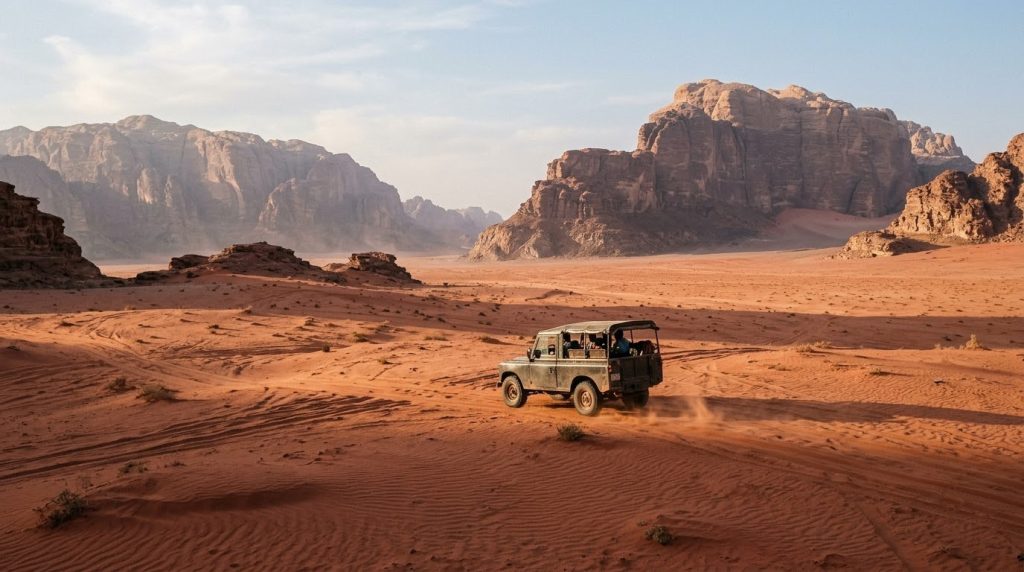
GetYourGuide lists Petra-to-Wadi-Rum combined day tours from Amman starting at $85–110 per person. Alternatively, rent a car from Petra with our live travel map — the Wadi Musa to Wadi Rum Desert Highway drive is straightforward on a modern 4-lane road and takes about 90 minutes.
Wadi Rum travel guide
17. Shop for Petra Sand Bottles in Wadi Musa
The hand-layered sand bottles with miniature Petra scenes inside are genuinely skillful local craft — vendors use thin metal rods to layer dyed sand in narrative patterns while you watch. Prices start at JD 2–3 ($3–4) for small bottles and rise to JD 20+ for large elaborate pieces. Bargaining is standard and expected; open at 60–70% of the asking price.
The market street in Wadi Musa (the main commercial strip) has fixed-price shops alongside haggling vendors. If you want to avoid negotiating entirely, the Petra Museum shop and the Petra Kitchen gift shop both have fixed pricing. Avoid buying inside the site itself — prices are consistently 30–50% higher than in town.
18. Eat Mansaf, Jordan’s National Dish, in Wadi Musa
Mansaf is slow-cooked lamb served over rice and flatbread, drenched in fermented dried yogurt sauce (jameed) and topped with almonds and pine nuts. This is Jordan’s celebratory dish and eating it in Wadi Musa — where Bedouin families still prepare it in the traditional way — is a legitimate cultural experience rather than a tourist concession.
The Petra Kitchen restaurant in Wadi Musa serves a cooking class format (JD 28 / $39 per person) where you prepare a three-course Jordanian meal including mansaf before eating it. Al-Wadi Restaurant and Cave Bar (a bar inside a 2,000-year-old Nabataean cave tomb) are other solid options. Dinner mains at mid-range Wadi Musa restaurants run JD 8–14 ($11–20).
19. Explore the Snake Monument and Byzantine Church
Two sites that most Petra visitors skip entirely: the Snake Monument is a large carved serpent that Nabataean scholars believe marked a processional route, located off the main path before Qasr al-Bint. The Byzantine Church, discovered in 1990, contains 6th-century floor mosaics in excellent condition depicting animals, plants, and allegorical figures.
The Byzantine Church mosaics are inside a covered structure and entry is included in the main ticket. Signs point to it from the Colonnaded Street. Budget 20 minutes here. A hoard of 152 papyrus documents was found here during excavations — they’re now in the Jordan Museum in Amman and represent the site’s most significant recent discovery.
20. Do the Back Route: Aaron’s Tomb Hike
For serious hikers: Jabal Haroun (Aaron’s Mountain) sits 1,350 metres above sea level and is topped by a white domed shrine traditionally associated with Aaron, brother of Moses. The round-trip hike from the Petra main site takes 6–7 hours and passes through backcountry that sees almost no tourist traffic.
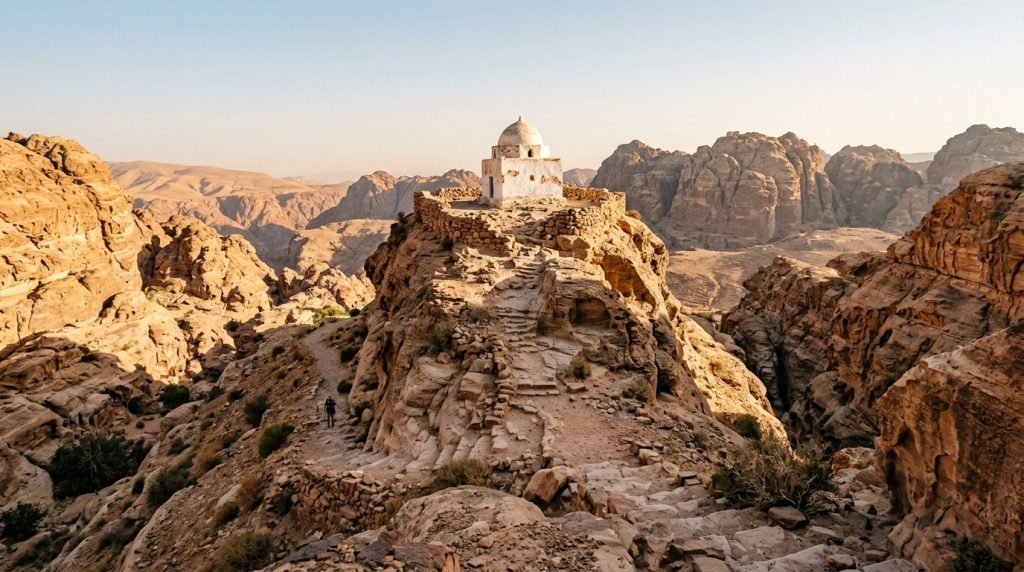
This route requires a local guide (mandatory, for safety and navigation) and costs JD 25–40 ($35–56) including the guide fee. Carry 3+ litres of water per person. The views from the summit — across Wadi Araba toward Israel and toward the Hejaz mountains of Saudi Arabia — are genuinely unlike anything else accessible from the site.
21. Stay for Sunset Over the Petra Basin
The best sunset position in Petra is from the ridge above the Street of Facades, reached by continuing past the Urn Tomb staircase to the upper plateau. At around 6–7 p.m. in summer (5–6 p.m. in winter), the light turns the sandstone from pink to deep amber to purple in about 20 minutes. Guards begin clearing the site at closing time (6 p.m. in winter, 8 p.m. in summer).
Time your exit to reach the Treasury on the return walk while it’s still lit from the west — the Siq faces east, so the Treasury gets direct afternoon light that makes the facade glow from inside. This reversal of the morning visit gives you two completely different lighting conditions from the same spot.
22. Join a Petra Archaeology Day Tour
Specialised tours focus on the current active excavations, behind-the-scenes storage areas, and academic research taking place in Petra. Brown University, the German Archaeological Institute, and the Jordanian Department of Antiquities all maintain active research programmes. Some offer public access during field season (typically March–May and September–November).
Check the PDTRA (Petra Development and Tourism Region Authority) website for current programmes. Alternatively, GetYourGuide lists archaeology-focused tours from JD 45–85 ($63–120) per person that include access to less-visited excavation zones and specialist commentary from trained archaeologists or senior guides.
23. Photograph the Coloured Canyon Walls
Petra’s sandstone isn’t uniformly red — the mineral content shifts through layers of cream, grey, orange, red, and purple depending on the iron, manganese, and silica composition of each stratum. The Siq displays the most dramatic colour variations; the stretch between the Triumphal Arch (Bab al-Siq) and the Treasury narrows reveal swirling bands that look like frozen watercolours.
The best photography conditions for the canyon walls are overcast days or the golden hours immediately after sunrise and before sunset. Midday light bleaches the colour from the rock. Bring a wide-angle lens — the Siq averages only 3–12 metres in width and you need the field of view to capture the full wall height.
24. Buy a Jordan Pass Before You Fly
The Jordan Pass costs JD 70 (~$99) for 1-day Petra entry or JD 75 (~$106) for 2-day entry — and it includes the JD 40 ($56) Jordan visa fee for most nationalities. That means a 2-day Petra visitor effectively pays JD 35 ($49) for two days of entry versus JD 50 ($70) for two days bought at the gate without a pass.
Purchase the Jordan Pass online at jordanpass.jo before travel — you can’t buy it on arrival. Print the QR code or keep the PDF on your phone. It covers entry to 40+ Jordan attractions including Wadi Rum, Jerash, and Aqaba’s Underwater Military Museum in addition to Petra. For any visit longer than one day, this is a straightforward decision.
Jordan itinerary 7 days guide
25. Plan Your Visit Around Weather Windows
April, May, September, and October are the optimal months — temperatures range 18–28°C (64–82°F), daylight extends to 7–8 p.m., and afternoon thunderstorms (rare but dangerous in the Siq) are uncommon. June through August is survivable with 5 a.m. starts and midday rest breaks, but temperatures regularly exceed 38°C (100°F) in the exposed sections.
Winter (December–February) brings cold nights (near freezing), occasional flash floods in the Siq, and the possibility of snow on the upper ridges — which creates extraordinary photographs but requires waterproof layers. Petra officially closes during active flash flood warnings; these closures are short (1–2 hours) but unpredictable. Check the Jordan Meteorological Department forecast the morning of your visit.
| Activity | Duration | Cost 2026 | Best Time |
|---|---|---|---|
| Treasury (Al-Khazneh) | 30–60 min | Included in entry | 6:30–8 a.m. |
| High Place of Sacrifice | 1.5–2 hrs | Included | Morning |
| Ad-Deir (Monastery) | 3–4 hrs | Included (donkey JD 10–15) | Morning |
| Petra by Night | 2 hrs | JD 17 (~$24) | 8:30 p.m. |
| Little Petra | 45–60 min | Free | Afternoon |
| Guided tour | Half/full day | $35–80 | Morning |
| Aaron’s Tomb hike | 6–7 hrs | JD 25–40 | Early start |
| Petra Museum | 45–60 min | Included | Before/after visit |
Frequently Asked Questions
How many days do you need in Petra?
Two days is the practical minimum for serious visitors: day one covers the Treasury, Street of Facades, Royal Tombs, and Qasr al-Bint via the main route; day two adds the Monastery hike and the High Place of Sacrifice. Budget travellers squeezing one day can cover the highlights but will feel rushed after 9 a.m. crowds arrive.
What does Petra entrance cost in 2026?
One-day entry costs JD 50 (~$70); two-day entry JD 55 (~$77); three-day entry JD 60 (~$84). The Jordan Pass bundles the visa and entry for JD 70–80 and is the better deal for most nationalities. Children under 12 enter free. Entry purchased after 3 p.m. is valid the following full day as well.
Is Petra safe for solo female travellers?
Yes, Petra and Wadi Musa are considered safe for solo female travellers by regional standards. Persistent vendor attention and horse handlers can be assertive, but declining firmly and walking on is effective. Dress modestly (shoulders and knees covered) to reduce unsolicited commentary. Use licensed guides from the visitor centre rather than anyone who approaches you outside it.
What should I wear and bring to Petra?
Closed-toe shoes with ankle support are mandatory — the terrain ranges from paved paths to steep uneven rock steps. Bring 2–3 litres of water per person, sun protection (hat, SPF 50, long sleeves work better than sunscreen in direct exposure), and a small backpack. Dress modestly as a baseline cultural courtesy.
Can I visit Petra on a day trip from Amman or Aqaba?
Technically yes — Amman is 3 hours by road (JETT bus JD 10 / $14 each way), Aqaba is 2 hours. In practice, day trips leave too little time at the site. If Amman is your base, the overnight option (stay in Wadi Musa) lets you access two full days for the cost of one night’s accommodation.
Is the Jordan Pass worth buying?
Yes for nearly all nationalities that require a Jordanian visa (most do). The pass costs JD 70–80 and includes the JD 40 visa fee plus Petra entry, so you’re paying JD 30–40 net for entry — less than the JD 50 gate price for a single day. Buy it at jordanpass.jo before travel; it cannot be purchased on arrival.
What’s the best restaurant in Wadi Musa?
Al-Wadi Restaurant (mid-range, JD 8–14 mains) and Basin Restaurant inside the site (JD 12–18 for lunch buffet, convenient but overpriced) are the most reliable options. Cave Bar, set inside a 2,000-year-old Nabataean cave tomb, is worth one visit for the atmosphere even if the food is secondary. Petra Kitchen (JD 28 for cooking class dinner) is the best overall experience.
Plan Your Petra Visit Now
Petra repays preparation more than almost any other destination we’ve covered. Buy the Jordan Pass before you fly, book accommodation in Wadi Musa rather than day-tripping from Amman, get through the Siq gate by 6 a.m. on your first morning, and leave a full day for the Monastery hike and the sites the crowds skip.
Two days done right will give you a more complete picture of the Nabataean world than most visitors get in a week.
Jordan travel guide hub | Best time to visit Jordan | Petra vs Wadi Rum: which to prioritise