
Disclosure: Some links in this guide are affiliate links. If you book or buy through them, we may earn a small commission at no extra cost to you — it helps keep our guides free.
Bergen Norway Travel Guide 2026: Bryggen, Fjords & Rain
Bergen Norway is the country’s second-largest city and the practical starting point for anyone heading into the western fjords. Two days is enough to cover the essentials: the UNESCO-listed Bryggen wharf, the Floibanen funicular up Mount Floyen, and the Fish Market at Torget. The catch is the weather. Bergen sits under roughly 2,493 mm of precipitation a year across more than 200 rainy days (Norwegian Meteorological Institute data via weather-and-climate.com), which makes it the rainiest city in Europe. Pack for it and the city is a pleasure; ignore it and you will spend the trip damp.
This guide covers what to see, how the funicular and Fish Market prices actually work in 2026, how to reach Bergen by train and light rail, where to stay and eat, and when to go. We have grouped the practical numbers into lists and tables so you can plan a route in one sitting. Bergen also links directly to the region’s biggest draw, so we point to the wider Norway fjords travel guide where the boat trips begin.
Key Takeaways
– Bryggen is free to walk and was inscribed as a UNESCO World Heritage Site in 1979; the narrow wooden alleys behind the facade are the real attraction.
– Floibanen funicular costs NOK 105-120 one-way and NOK 200-220 return for adults in summer (1 April to 30 September), climbing to Mount Floyen in about 6-8 minutes.
– The Fish Market splits into the indoor Mathallen (open all year, roughly 09:00-21:00) and the outdoor stalls (1 May through summer, 10:00-18:00); the indoor hall is cheaper.
– Rain is constant: Bergen averages 12.7 rain days per month and 8.8 mm of rain per rainy day, the highest in Europe, so waterproofs beat umbrellas.
– Getting in is easy: the Bybanen light rail runs airport to centre in about 45 minutes for NOK 51, and the Bergen Line train from Oslo takes 6.5-7.5 hours.[PERSONAL EXPERIENCE] We based ourselves in Bergen for four nights across two separate trips, using it as a fjord launch pad both times. On our last visit in spring the rain held off for exactly one morning, which we spent walking the Bryggen back-alleys before the cruise crowds arrived, then rode the Floibanen up Floyen for the view over the harbour. The lesson stuck: plan the outdoor things for the first clear window you get, because Bergen rarely gives you two.
Is Bergen Norway worth visiting?
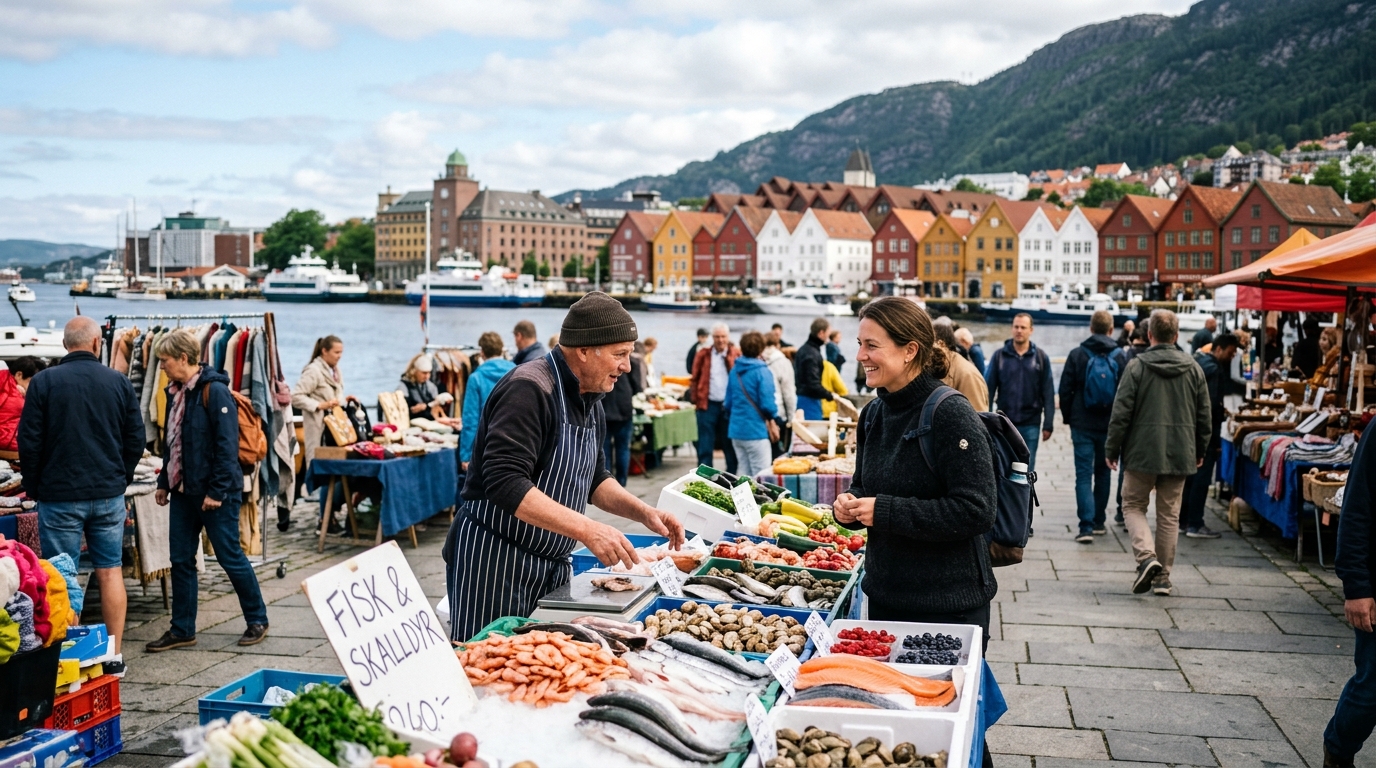
Yes, Bergen is worth visiting, both for the city itself and as the western gateway to Norway’s fjords. The compact centre packs a UNESCO wharf, a hilltop viewpoint reachable by funicular, a working seafood market, and a harbour full of fjord-bound boats into an area you can cross on foot in 20 minutes. Most travellers spend one or two nights here before or after a fjord trip.
What Bergen does especially well is combine city comfort with immediate access to nature. Within a short walk you move from cobbled Hanseatic lanes to a mountain trailhead. If your trip is mostly about the water, pair this guide with our list of the best things to do in the Norway fjords, which covers the excursions that start from Bergen’s harbour.
Reasons Bergen earns a stop:
- It is the only Hanseatic trading city outside the League where the original wharf structure still stands in the city centre (Riksantikvaren, Norwegian Directorate for Cultural Heritage).
- The Floibanen puts a genuine mountain view 320 metres above the harbour within ten minutes of the centre.
- Bergen sits on the Bergen Line, one of Europe’s most scenic railways, connecting it to Oslo, Voss, and the Flam branch.
- It is the departure point for the Norway in a Nutshell route and most Sognefjord and Hardangerfjord cruises.
- The centre is walkable, so you rarely need a car or taxi during a stay.
The 7-Day Norway Fjords Itinerary
The plan we use ourselves — sent straight to your inbox.
- Day-by-day route
- Where to stay
- Real 2026 costs
Free · No spam · Unsubscribe anytime
Bryggen: the UNESCO wharf explained
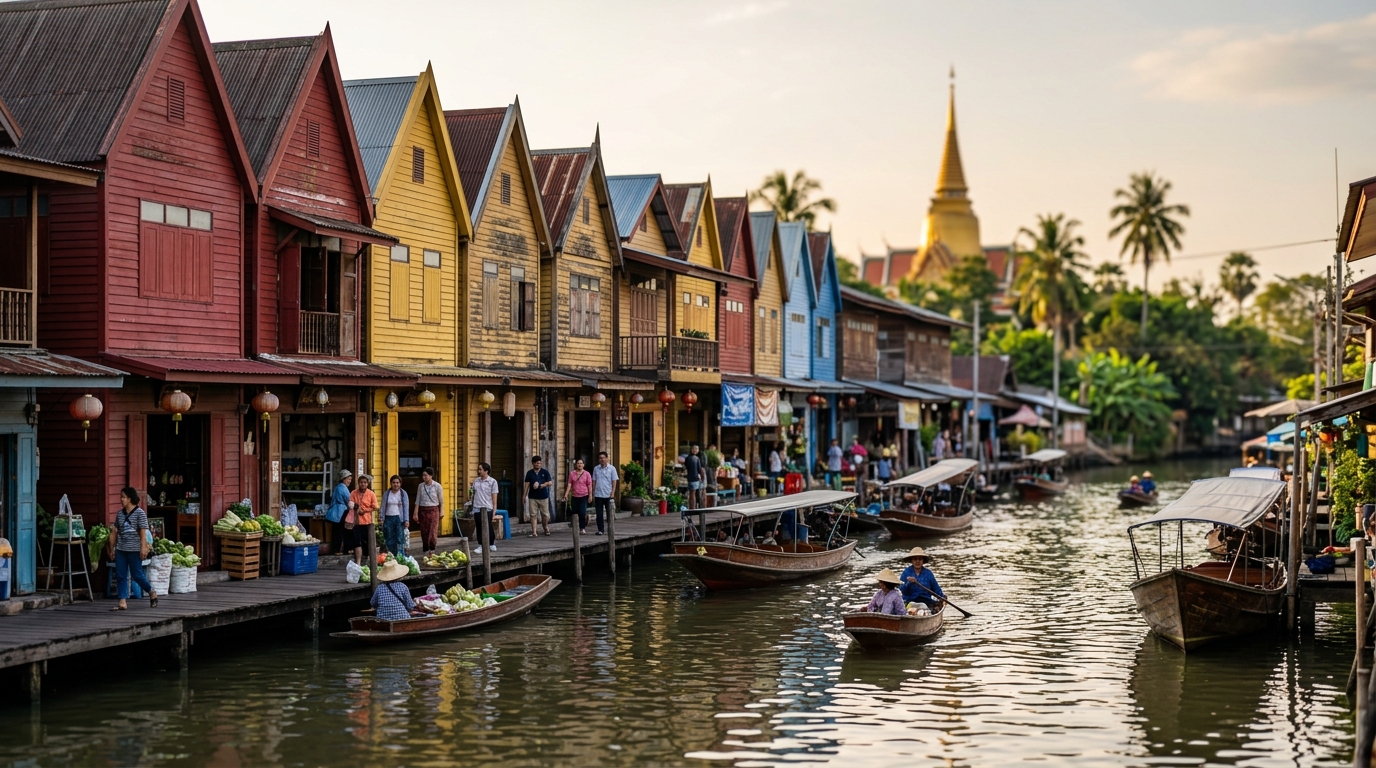
Bryggen is the row of colourful wooden merchant houses along Bergen’s eastern harbour, inscribed as a UNESCO World Heritage Site in 1979 for its record of Hanseatic trade dating to the 14th century. The photogenic gabled facade is only the front; the real experience is the maze of wooden passageways, leaning galleries, and small workshops behind it. Walking Bryggen is free and open at all hours.
The district has burned and been rebuilt many times, the last major fire in 1955, yet each rebuild followed the original medieval layout, which is why the site keeps its heritage status. Archaeological digs after the 1955 fire confirmed the pattern of repeated rebuilding on the same plan.
What to see in and around Bryggen:
- Bryggen back-alleys: free, always open; the wooden galleries creak and lean, so watch your footing in the wet.
- Bryggens Museum: built over medieval foundations uncovered after the 1955 fire; typical adult ticket around NOK 120-150.
- Hanseatic Museum and Schotstuene: reconstructs the merchants’ living and assembly quarters; check current opening status before visiting as sections have undergone restoration.
- St Mary’s Church (Mariakirken): Bergen’s oldest building, a 12th-century stone church a two-minute walk uphill from the wharf.
- Bryggen craft shops: silversmiths, ceramicists, and leatherworkers occupy the rebuilt sea houses, most open roughly 10:00-17:00.
We spent two slow mornings here and found the alleys almost empty before 10:00, then packed once the cruise ships docked. Go early.
Floibanen funicular and Mount Floyen

The Floibanen funicular is Bergen’s most popular attraction, carrying passengers from a station one block behind the Fish Market up to Mount Floyen at 320 metres in roughly 6-8 minutes. The top has a viewpoint over the city and harbour, a cafe, walking trails, and, in summer, a small herd of goats. From the summit you can walk back down to the centre in about 45-60 minutes on a marked path, which is what we did to save the return fare.
Prices change by season, and buying in the app or online is cheaper than at the counter. Here are the 2026 adult fares.
| Ticket type | Summer (1 Apr-30 Sep) | Winter (Oct-Mar) | Notes |
|---|---|---|---|
| Adult one-way | NOK 105-120 | NOK 76 | Lower price is app/online |
| Adult return | NOK 200-220 | (varies) | Bergen Card gives 50% off return |
| Child (one-way/return) | Reduced | Reduced | See Floyen.no for exact rates |
| Bergen Card holder | 50% off return only | 50% off return only | Not valid on one-way |
Source: Floyen.no official prices, 2026.
Tips we would give a first-timer:
- Buy in the Floibanen app to get the lower price band and skip the counter queue.
- Ride up, walk down: the descent path is easy and free, cutting your cost to a one-way ticket.
- Go at opening or near sunset for the clearest light and the smallest crowds.
- If you hold a Bergen Card, the 50% discount applies only to a return ticket, not one-way.
- The top is exposed and windier than the harbour, so bring a layer even in July.
The 7-Day Norway Fjords Itinerary
Hour-by-hour plan, where to stay and what it really costs — free PDF.
Free · No spam · Unsubscribe anytime
The Fish Market at Torget

Bergen’s Fish Market sits at Torget at the head of the harbour and comes in two parts: the indoor Mathallen food hall, open all year, and the outdoor stalls that run from 1 May through the summer. This is the single most useful thing to know before you go, because the two have very different prices. The outdoor stalls charge a premium aimed at cruise passengers; the indoor Mathallen, opened in 2012, is where locals and repeat visitors buy.
| Section | Season | Typical hours | Price level |
|---|---|---|---|
| Mathallen (indoor) | All year | ~09:00-21:00 (Sun from 11:00) | Lower |
| Outdoor stalls | 1 May-summer | 10:00-18:00 | 2-3x indoor |
Source: Fjord Norway and visitBergen.com, 2026; vendor hours vary individually.
What to eat and roughly what it costs:
- Shrimp bag (reker): from around NOK 80 at the stalls; a cheap, authentic snack.
- Fish soup: a Bergen staple, commonly NOK 150-200 a bowl indoors.
- Fish cakes (fiskekaker): a few NOK 30-50 apiece; the local everyday food.
- King crab and platters: sit-down seafood meals run NOK 250-500 and up.
- Skip at the outdoor stalls: whale and king-crab legs sold by weight, where the bill escalates fast.
On our last visit we compared the same fish soup indoors and out and paid noticeably less inside Mathallen for a larger bowl. If you are counting kroner, eat indoors.
How to get to Bergen Norway
Getting to Bergen is straightforward by air, rail, or road. Bergen Airport Flesland is the main hub, connected to the centre by the Bybanen light rail. The Bergen Line train links Bergen to Oslo across the mountains, and the E16 road follows a similar route.
| Route | Mode | Time | Cost / frequency |
|---|---|---|---|
| Flesland airport to centre | Bybanen light rail line 1 | ~45 min | NOK 51; every 5-15 min |
| Oslo to Bergen | Bergen Line (Vy) train | 6.5-7.5 hrs | 6-7 departures/day |
| Voss to Bergen | Bergen Line train | ~1 hr 15 min | Frequent |
| Flam to Bergen | Train via Myrdal + Bergen Line | ~2.5-3 hrs | Norway in a Nutshell route |
Source: Vy.no and visitBergen.com, 2026.
Two timing notes for 2026:
- The Bybanen light rail runs airport to centre normally, but between 29 June and 26 July 2026 the Slettebakken-to-centre section closes for maintenance; get off at Lagunen and take replacement bus B1 or route 600 to reach the centre.
- The Oslo-Bergen train sells out on summer weekends and holidays; book seats weeks ahead, especially if you want the daytime scenic run rather than the night train.
Because Bergen is the fjord gateway, many travellers arrive by train and leave by boat. If you are building a multi-day route, our Norway fjords itinerary shows how Bergen slots between Oslo, Flam, and the Sognefjord.
Find your Bergen hotel on the map
Live prices from Booking, Airbnb and more — move the map or change dates to compare stays around Bergen.
Where to stay in Bergen
The best area to stay in Bergen for first-time visitors is the compact centre around Bryggen, Torget, and Vagen harbour, which puts the funicular, Fish Market, and boat terminals within a ten-minute walk. Prices are high by European standards year-round and peak in July.
Neighbourhoods at a glance:
- Bryggen and Vagen harbour: most central, walk to everything; expect NOK 1,800-3,000 a night for a mid-range double in summer.
- Nordnes peninsula: quieter, residential, a 10-15 minute walk to the wharf; good for a calmer base.
- Around the train station (Bergen Stasjon): convenient for rail arrivals and departures, slightly cheaper.
- Sandviken: north of Bryggen along the water, characterful old wooden houses, a longer but pleasant walk in.
- Near Floibanen base: handy if you want an early funicular start before the crowds.
We stayed once in the centre and once on Nordnes and preferred Nordnes for evenings, since the harbour side empties out once the day-trippers leave. Whichever area you pick, book early for summer; Bergen’s room stock is limited and cruise days push prices up.
Best time to visit Bergen
The best time to visit Bergen is May to September, when temperatures are mildest and daylight is longest, though rain is possible in every month. July is the warmest, with an average high near 17 C and a low near 11 C, and enormous daylight of about 18 hours (Weather Atlas, 2026). It is also one of the wettest months, averaging around 20 rainy days and 99 mm of rain, so summer visits still need waterproofs.
| Season | Months | Avg high | What to expect |
|---|---|---|---|
| Spring | Apr-May | 9-14 C | Fewer crowds, long light returning, changeable rain |
| Summer | Jun-Aug | 15-17 C | Peak season, 18h daylight, warmest but wettest, busy |
| Autumn | Sep-Oct | 9-13 C | Fewer tourists, strong autumn colour, rising rain |
| Winter | Nov-Mar | 3-6 C | Dark, wet more than snowy at sea level, quiet |
Source: Weather Atlas and climatestotravel.com, 2026.
Rain-proofing Bergen (the tips that actually matter):
- Bring a proper waterproof jacket and shoes, not an umbrella; Bergen wind turns umbrellas inside out.
- Plan outdoor sights (Bryggen, Floyen) for the first dry window, not a fixed day.
- Keep indoor backups ready: Mathallen, Bryggens Museum, KODE art museums.
- Quick-dry trousers beat jeans, which stay wet all day once soaked.
- December is the wettest month at about 269 mm; May is the driest of the mild months at about 127 mm.
For the wider regional picture on seasons and fjord conditions, see our guide to the best time to visit Norway, which lines up Bergen’s weather with the fjords and the north.
Bergen as the gateway to the fjords
Bergen is the main gateway to Norway’s western fjords, with day cruises and multi-day routes departing from the harbour to Sognefjord, Hardangerfjord, and the Flam valley. This is why most fjord trips begin or end here. The Norway in a Nutshell route combines the Bergen Line, the Flam Railway, and a Naeroyfjord cruise into a single loop that many travellers do in one long day.
Common fjord departures from Bergen:
- Mostraumen fjord cruise: a half-day round trip up Osterfjord to the Mostraumen strait, leaving from the centre.
- Norway in a Nutshell: Bergen to Flam and back via Myrdal, the classic scenic combination.
- Hardangerfjord tours: day trips east to orchards, waterfalls, and the Folgefonna glacier area.
- Sognefjord express boat: fast passenger ferries up Norway’s longest and deepest fjord.
We treated Bergen as a hub on both trips, doing a fjord run one day and the city the next. If the fjords are your priority, read the Norway fjords travel guide and the list of best things to do in the Norway fjords before you lock in dates, since the best cruises book out in summer.
Frequently Asked Questions
How many days do you need in Bergen Norway?
Two days is enough to cover Bergen’s core: one for Bryggen, the Floibanen funicular, and the Fish Market, and a second for a fjord cruise or the KODE museums. If Bergen is only your fjord base, a single night on either side of a cruise works, though the frequent rain means an extra day of buffer is useful.
How much does the Floibanen funicular cost in 2026?
In summer (1 April to 30 September 2026) an adult one-way ticket costs NOK 105-120 and a return costs NOK 200-220, with the lower price for buying in the app or online. In winter the one-way drops to about NOK 76. A Bergen Card gives 50% off return tickets only. You can also ride up and walk down free to pay just one fare.
Is Bergen really the rainiest city in Europe?
Yes. Bergen averages roughly 2,493 mm of precipitation a year over more than 200 rainy days, with the highest average rain-days-per-month (12.7) and daily rainfall (8.8 mm) of any European city (weather-and-climate.com). Rain falls in every month, so waterproof clothing is essential regardless of season.
Is the Bergen Fish Market worth it?
The Fish Market is worth a visit if you eat at the indoor Mathallen food hall rather than the outdoor stalls, where prices run two to three times higher and target cruise passengers. Mathallen is open all year, roughly 09:00-21:00, and serves the same fish soup, shrimp, and fish cakes for less. Treat the outdoor stalls as a photo stop.
How do you get from Bergen Airport to the city centre?
Take the Bybanen light rail line 1, which runs from the terminal at Flesland to the centre in about 45 minutes for NOK 51, departing every 5-15 minutes. Note that from 29 June to 26 July 2026 the Slettebakken-to-centre section closes for maintenance; get off at Lagunen and take replacement bus B1 or route 600.
Final thoughts
Bergen rewards travellers who plan around its weather rather than fight it. Walk Bryggen early, ride the Floibanen on your first clear morning, eat at the indoor Fish Market, and keep an indoor museum in reserve for the inevitable downpour. With the Bergen Line at its back and fjord boats at its front, the city works best as both a destination in its own right and the doorway to Norway’s western fjords. Give it two unhurried days and the rain becomes part of the character instead of a problem.