Day Trips From Sapporo: 7 Real Options With Train Times and Fares (2026)
Disclosure: Some links in this guide are affiliate links. If you book or buy through them, we may earn a small commission at no extra cost to you — it helps keep our guides free.
- Otaru is the easiest trip: 30 minutes by rapid train for USD 5.
- Noboribetsu Onsen is the other top pick, about 75 minutes by limited express.
- Furano and Biei only make sense in summer; one long trip or two short ones, never three.
Ranked by travel time
The 2 best day trips from Sapporo are Otaru, 30 minutes away by rapid train for USD 5 (JPY 800), and Noboribetsu Onsen, about 75 minutes by limited express. After those, Jozankei, Lake Toya, Lake Shikotsu and Asahiyama Zoo all work without a car, while Furano and Biei only make sense in summer.
Below is each trip with transport time, fare, what you actually see and who it suits. Prices are converted at USD 1 = JPY 158.
| Day trip | Time and one-way fare from Sapporo | What to see | Best for |
|---|---|---|---|
| Otaru | 30-45 min train, USD 5 (JPY 800) | Canal, Sakaimachi Street, seafood | First-timers, couples |
| Jozankei Onsen | 75 min bus, USD 6 (JPY 1,000) | Hot springs, cave temple, fall colors | Onsen beginners |
| Noboribetsu Onsen | 75 min train + 15 min bus, USD 30 (JPY 4,780) + bus | Hell Valley, day-use baths | Volcano and onsen fans |
| Lake Toya | 2 hr 45 min bus, USD 23 (JPY 3,700) | Caldera lake, Mount Usu ropeway | Scenery chasers |
| Lake Shikotsu | About 75 min train + bus, USD 14 (JPY 2,180) | Clear caldera lake, lakeside onsen | Quiet nature days |
| Asahiyama Zoo | 85 min train + 40 min bus, USD 34 (JPY 5,440) + bus | Penguins, polar bears | Families |
| Furano and Biei | About 2 hr train, USD 25-34 (JPY 4,000-5,440) | Lavender fields, Blue Pond | Summer visitors with a car |
The two easy wins: Otaru and Jozankei
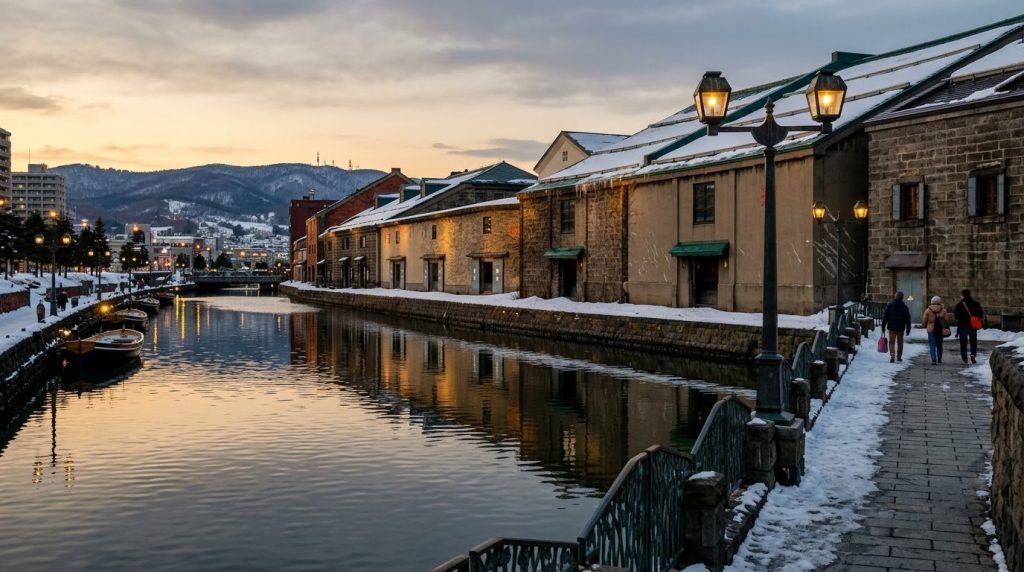
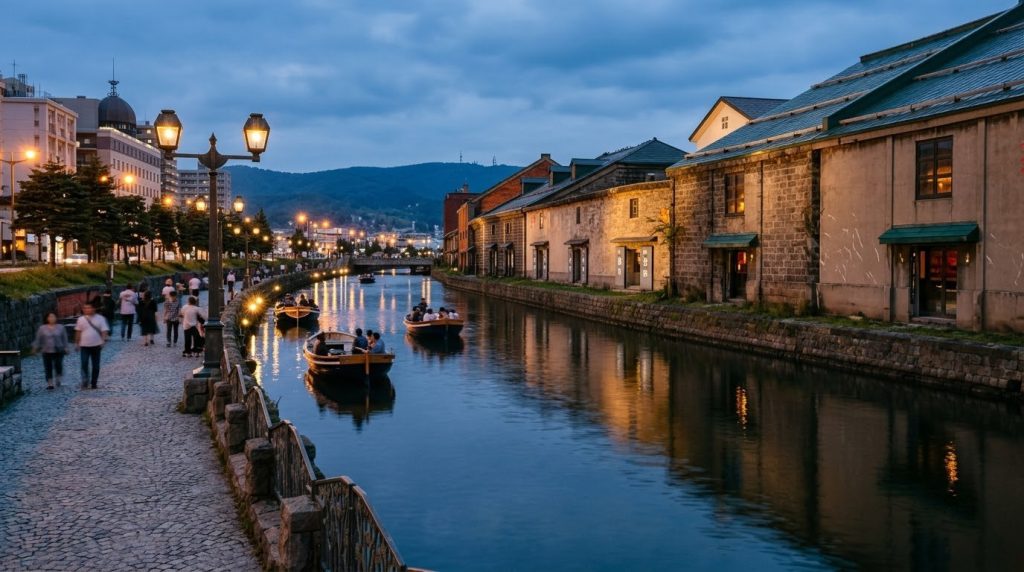
Otaru is the day trip almost everyone should take. JR trains run several times an hour: 30 minutes by rapid or 45 by local, USD 5 (JPY 800) each way, per Japan Guide’s Otaru access page. Walk the canal, then Sakaimachi Street with its glass shops and sushi counters, 10 minutes on foot from the station.
Half a day is enough. It suits first-timers and couples; the downside is mid-morning tour-bus crowds, so take an early train.
Jozankei Onsen sits in a river gorge about an hour from central Sapporo. Jotetsu buses 7 and 8 leave the Sapporo Station terminal about hourly (75 minutes, USD 6 / JPY 1,000), or take the subway to Makomanai and bus 12 (50 minutes, USD 5 / JPY 750).
Day-use baths run JPY 500-2,000 (USD 3-13), foot baths are free, and the Iwato Kannondo cave temple costs USD 2 (JPY 300). Fall colors usually peak around mid-October. Go here for a low-pressure first onsen.
Hot springs and volcanoes: Noboribetsu and Lake Toya
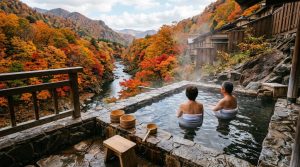
Noboribetsu Onsen is Hokkaido’s best-known hot spring town, and its Jigokudani (Hell Valley) is a steaming volcanic crater crossed by boardwalks. Take the Limited Express Hokuto to Noboribetsu Station (about 1 hour 15 minutes, USD 30 / JPY 4,780), then a 15-minute local bus (JPY 350-450; sources differ).
The only direct bus leaves Sapporo at 1:40 pm, too late for a day trip. Day-use bathing at Dai-ichi Takimotokan costs USD 14 (JPY 2,250) before 4 pm. Best for onsen and volcano fans.
Lake Toya is a caldera lake with an active volcano on its shore. The Donan direct bus takes 2 hours 45 minutes (USD 23 / JPY 3,700, 4 departures daily; reserve by 5 am on travel day).
The train is faster but pricier: Hokuto to Toya Station in 1 hour 55 minutes (USD 42 / JPY 6,690) plus a USD 3 (JPY 400) bus. The Usuzan Ropeway (USD 13 / JPY 2,000 round trip) looks over the lake and Showa Shinzan. Scenery chasers love it, but it is a long day.
Lake Shikotsu: the quiet caldera
Shikotsu gets far fewer visitors than Toya, which is the point. Take a rapid airport train to Chitose (30 minutes, USD 7 / JPY 1,040), then a local bus (45 minutes, USD 7 / JPY 1,140). Only 4-6 buses run daily, so note return times first.
Glass-bottomed boats cruise from late April to early November, and Marukoma Onsen opens its lakeshore baths to day visitors (USD 8 / JPY 1,200, 10:00-15:00, closed Monday to Thursday). It suits travelers who want a calm nature day.
Asahiyama Zoo and Asahikawa
Asahiyama Zoo lets you watch penguins, polar bears and seals from tunnels and viewing tubes. All-reserved Lilac and Kamui expresses reach Asahikawa in about 1 hour 25 minutes (USD 34 / JPY 5,440), then buses 41, 42 or 47 take 40 minutes to the zoo (USD 3 / JPY 500). Admission is USD 6 (JPY 1,000).
Check the zoo’s seasonal hours: it closes November 4-10 and most of April, and winter hours shrink to 10:30-15:30. Great for families; for everyone else, a 4-hour-plus round trip is a lot for a zoo.
Furano and Biei: summer only
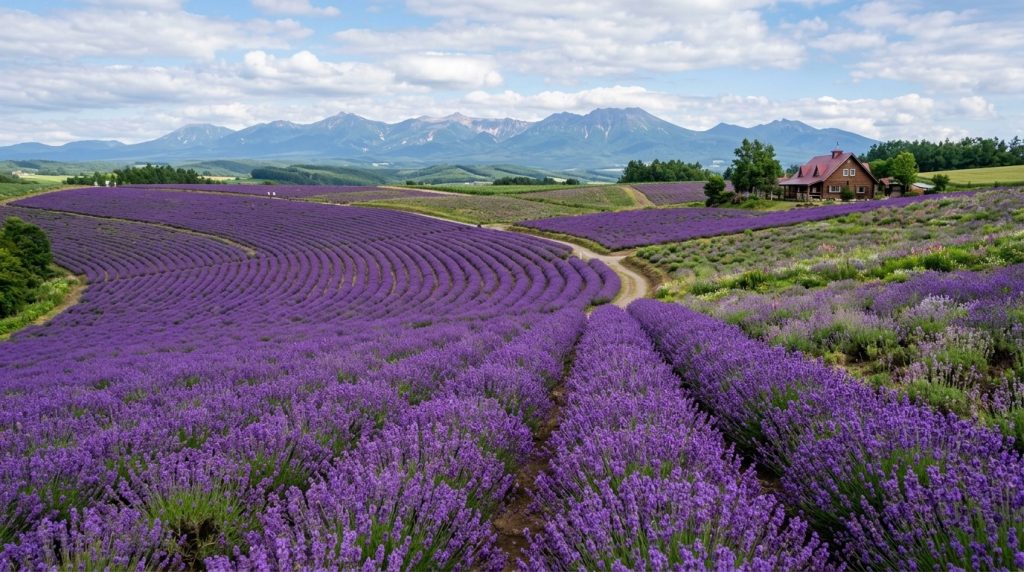
Furano’s lavender peaks in July, and that is when the trip earns its travel time. The seasonal Furano Lavender Express runs direct in about 2 hours (USD 34 / JPY 5,440), June to September 2026.
Otherwise transfer at Takikawa (about 2 hours, roughly USD 25 / JPY 4,000) or take the Chuo highway bus (2.5 hours, USD 17 / JPY 2,700), per Japan Guide’s Furano access page.
Biei is 40 more minutes by local train (USD 5 / JPY 800), and sights like the Blue Pond are spread out, so a car or tour helps. Our guide to the best time to visit Sapporo by season shows when lavender, fall colors and snow line up.
Winter day trips from Sapporo: what changes
Hokkaido winters change the math for every trip in this guide. Daylight is short, snow can slow trains and buses, and some seasonal services stop running. Check the operator’s status page on the morning you travel, and leave a larger buffer than you would in summer.
- Otaru works in every season and is the safest winter choice, since the train runs often and the canal area is walkable from the station.
- Jozankei and Noboribetsu suit cold weather well, because a day-use hot spring bath is the point of the trip.
- Asahiyama Zoo keeps shorter winter hours, as covered above, so check the calendar before you ride out.
- Lake Shikotsu boats run only from late April to early November, so winter visits are about the lakeshore bath.
- Furano and Biei lose their lavender and fall colors, so the summer reasoning above no longer applies.
Wear boots with real grip. Station platforms and bus stops can be icy, and a short walk from the stop to the sight takes longer on snow.
Do JR Hokkaido Passes Pay Off for Day Trips?
Most trips in this guide go out and back from one base, which rarely justifies a long-distance rail pass. The numbers show why. JR Hokkaido sells a Hokkaido Rail Pass for adult travelers in 5-, 7- and 10-day versions, priced when bought in advance at JPY 22,000 (USD 139), JPY 28,000 (USD 177) and JPY 37,000 (USD 234). Buying at a station costs JPY 1,000 more.
The pass covers JR Hokkaido lines except the Hokkaido Shinkansen, and it is not valid on the Sapporo subway or streetcar. Some JR Hokkaido buses are included, though intercity and temporary buses are excluded. The pass runs on consecutive days from a start date that cannot be changed, and non-Japanese passport holders must show their passport.
The smaller Sapporo-Noboribetsu Area Pass
JR Hokkaido also lists a 4-day Sapporo-Noboribetsu Area Pass at JPY 10,000 (USD 63) when bought in advance. It covers Sapporo, Otaru and Noboribetsu and excludes Toya.
Check the pass against the fares listed earlier. Noboribetsu costs JPY 4,780 each way and Otaru JPY 800, so a round trip to each totals about JPY 11,160 (USD 71). The area pass saves a modest amount only if you do both trips within four days, and nothing if you do just one.
Reserved Seats on Limited Express Trains
Limited express trains on JR Hokkaido lines, including the Hokuto to Noboribetsu and the Lilac and Kamui to Asahikawa, run with reserved seating. You need a reserved seat ticket before boarding, even with a rail pass. Reservations can be made online through the JR-EAST Train Reservation site or at a station, while some local, sightseeing and temporary trains cannot be reserved.
If a train is full, pass holders may stand on certain limited express trains, though not in the Green Car. That is a fallback, not a plan, so reserve seats the evening before for any trip with a long ride.
- Reserve outbound and return seats together.
- Leave a buffer between the return train and the last bus connection on lake trips.
- Keep the passport handy if you hold a pass, since staff may ask for it.
Refund and Change Rules to Know Before Buying
Rail passes carry stricter terms than single tickets. JR Hokkaido states that refunds are possible only before the start date, or for an unused pass at a designated counter, with a 10% handling fee. A lost pass cannot be reissued or repurchased.
Because the start date is locked once chosen, a pass is risky if winter weather could cancel trips. In that case a flexible set of single tickets is the safer option.
Which trips pair well in one day
Most of these trips take a full day on their own. A few can share a day if you keep the second stop short.
- Otaru in the morning, Sapporo in the evening. This is the one pairing that always works, because Otaru needs only half a day and the trains run often.
- Jozankei as a half day. The bus ride and a bath fill an afternoon, so you can add a late lunch back in the city.
- Noboribetsu alone. Between the train, the local bus, Hell Valley and a bath, the day is already full.
- Lake Toya alone, or turned into an overnight. Pairing it with Noboribetsu leaves little time at either place.
A good rule is one long trip or two short ones, never three. Hokkaido distances are larger than they look on a map, and a missed connection can cost an hour or more.
Day trips to skip (or turn into an overnight)
– Furano and Biei outside summer without a car. You spend 4-plus hours in transit for empty fields. – Lake Toya and Noboribetsu in one day. Possible, but mostly transit. Book a night at Toya or Noboribetsu instead. – Asahiyama Zoo during closure weeks. People ride 2 hours each way to shut gates. – Shikotsu without checking buses. With so few buses, a missed return strands you.
With only 3 or 4 days, pick one or two trips; our Sapporo itinerary fits Otaru and an onsen around the city’s own sights.
A checklist before you leave Sapporo
A few minutes of preparation prevents most day-trip problems.
- Write down the last return bus or train before you leave, especially for Lake Shikotsu and Lake Toya, where service is limited.
- Know which seats are reserved. Limited express trains and some buses can sell out, so decide the night before.
- Carry some cash. Small onsen, rural buses and local cafes may not take cards, so confirm payment options in advance.
- Check bathing rules. Some hot spring facilities restrict visitors with tattoos, and rules differ by facility.
- Pack a small towel and a plastic bag for wet items if you plan a day-use bath.
- Leave large bags at your hotel. Day trips involve stairs and transfers, and a light bag is easier on every connection.
Fares in this guide are one-way and based on the figures listed above, so budget for the return ticket too.
Where to stay
Base yourself in Sapporo and do these as out-and-back trips.
– Sapporo Station area: the best day-tripper base, with trains to Otaru, Noboribetsu, Asahikawa and Furano plus the main bus terminal. – Odori: central and walkable, good for couples and first-timers. – Susukino and Nakajima Park: the food and nightlife district, closer to the subway for Jozankei. Better for evenings than early trains.
Our list of the best hotels in Sapporo compares specific properties in each area.
Find your Sapporo hotel on the map
Live prices from Booking, Airbnb and more — move the map or change dates to compare stays across Sapporo.
Frequently Asked Questions
What is the easiest day trip from Sapporo?
Otaru. JR trains run several times an hour, the ride is 30 to 45 minutes and costs JPY 800 (about USD 5) each way, and the canal and Sakaimachi Street are walkable from the station. You need no reservations and only half a day, which makes it the safest choice for a first trip to Hokkaido.
Can you visit Noboribetsu as a day trip from Sapporo?
Yes. The Hokuto limited express reaches Noboribetsu Station in about 75 minutes, and a 15-minute local bus takes you up to the onsen town. That leaves plenty of time for Hell Valley and a day-use bath. The only direct bus from Sapporo leaves in the afternoon, so use the train going out.
Do you need a car for day trips from Sapporo?
Not for Otaru, Jozankei, Noboribetsu, Lake Toya or Asahiyama Zoo, which all have reliable train or bus links. A car helps a lot for Furano, Biei and Lake Shikotsu, where buses are infrequent and sights are spread out. Americans need an International Driving Permit to rent a car in Japan.
How many days do you need in Sapporo with day trips?
Plan 4 to 5 days: two for the city itself and two or three for day trips such as Otaru, an onsen town and one seasonal trip. If Sapporo is one stop on a longer route, our two-week Japan itinerary shows how Hokkaido fits with Tokyo and Kyoto.