Is Florence Worth Visiting? (2026)
Disclosure: Some links in this guide are affiliate links. If you book or buy through them, we may earn a small commission at no extra cost to you — it helps keep our guides free.
Florence is worth visiting: its five-square-kilometer historic core packs the Duomo, the Uffizi Gallery and Michelangelo’s David into a 15-minute walk, more Renaissance art per block than anywhere else on earth. Florence is not worth visiting on a few rushed hours squeezed between a Rome hotel checkout and a train home, because that same five square kilometers concentrates the queues along with the art.
| Traveller type | Worth it? | Nights to give it | Why |
|---|---|---|---|
| First-time Italy visitor | Yes | 2-3 | The Duomo, Uffizi and Accademia justify the trip alone |
| Art and museum lovers | Yes | 3-4 | The Uffizi needs a half day; add the Accademia, Bargello and Pitti Palace |
| Rome-based day-tripper | Yes, as a day trip | 0 (day trip) | The 1h30m train each way works if every ticket is booked ahead |
| Slow travelers basing in Tuscany | Yes | 2 | Close enough to combine with countryside nights |
| Family with kids under 8 | Think twice | 1 | Queues and no-stroller museum rules wear young kids down fast |
| Budget backpacker | Think twice | 1 | Florence prices run higher than most Tuscan hill towns |
| Livorno cruise stopover | Skip the center rush | 0 | A 90-minute transfer each way leaves too little time for the sights that matter |
What Florence has that nowhere else does
Florence concentrates more world-changing art into a 15-minute walk than any other city in Europe. The Duomo’s dome, engineered by Filippo Brunelleschi, is climbable via 463 steps for USD 35 (EUR 30) on the Brunelleschi Pass, which also covers the bell tower, baptistery, museum and crypt.
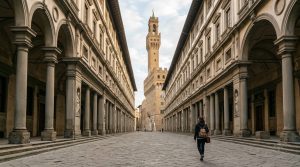
The Uffizi Gallery holds Botticelli’s “The Birth of Venus” and dozens of other Renaissance-defining works behind a same-day desk ticket priced at USD 29 (EUR 25), an online-booked ticket at USD 34 (EUR 29), or a new-for-2026 afternoon slot from 4pm at USD 19 (EUR 16), all figures converted at today’s rate of roughly EUR/USD 1.16.
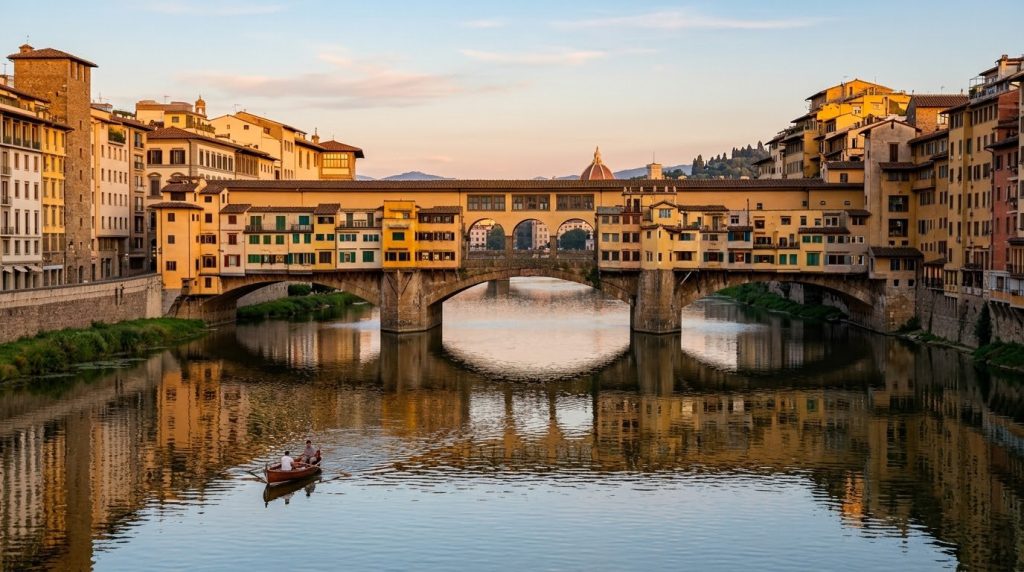
Michelangelo’s David stands a short walk away at the Accademia, and the Ponte Vecchio, Florence’s medieval bridge lined with gold shops, connects the main center to the Palazzo Pitti and the Boboli Gardens on the far bank.
The Uffizi, the Accademia and the Palazzo Pitti all close on Mondays, which matters more here than in most cities because there is no second-tier museum to fall back on that day, so a two-night stay needs to skip a Monday for its main museum day or accept a gardens-and-churches day instead.
The crowds and the queues, in numbers
Florence’s crowding problem is real and it is concentrated, not exaggerated. The city logged 16.2 million visitors in 2024, and mobile-network data puts day-trippers alone at around 8 million over a recent 12-month period.
Daily footfall averages roughly 44,000 people and exceeds 80,000 on peak summer days, nearly all of it funneled through the same five-square-kilometer UNESCO core that holds the Duomo and the Uffizi.
Without a pre-booked ticket, the Uffizi queue runs 2 to 3 hours in peak season if you arrive mid-morning; arriving right at the 8:15am opening cuts that to 45 minutes to 1.5 hours, and the wait drops sharply from November through March, especially on Tuesday and Wednesday mornings.
Booking a timed slot online removes the queue entirely and is the single highest-value thing to do before landing in Florence. That crowding is also seasonal rather than constant: the heaviest months run April through October, so the numbers above describe a high-season Tuesday far more than a January morning.
Day trip from Rome, or nights of its own
Florence works as a day trip from Rome only if every ticket is booked before boarding the train.
The fastest Frecciarossa covers the route in about 1 hour 30 minutes, with more than 30 departures a day from Roma Termini; advance fares run roughly USD 17-23 (EUR 15-20) when booked six to eight weeks out, against USD 52-70 (EUR 45-60) for a walk-up same-day ticket.
An early train in and a late one back gives roughly seven or eight hours in the city once the walk from Santa Maria Novella station is subtracted, which is enough for the Duomo exterior, one major museum and a slow lunch, not both the Uffizi and the Accademia in the same visit.
Anyone trying to fit more than that into a single day should read our Florence itinerary and our breakdown of how many days to spend in Florence before deciding, because both make the case for at least one overnight far more concretely than a single day trip can.
Staying overnight buys something a day trip cannot: the hour after the last tour bus leaves and the hour before the first one arrives, when the same Duomo square that held thousands at 11am is nearly empty at 8am or 9pm.
What a visit to Florence actually costs
A day in Florence runs on three line items: a bed, a meal, and whichever museum ticket is on the agenda that day, and all three move more than a first-time visitor expects.
Daily budgets across published cost guides for Florence and the wider Tuscany region cluster around EUR 75 to EUR 200 (USD 80 to USD 220) per person, a spread wide enough to cover a backpacker sharing a hostel dorm and a traveler booking a mid-range hotel with sit-down dinners.
Accommodation drives most of that range: a hostel dorm bed runs roughly EUR 25 to EUR 50 (USD 29 to USD 58) a night, a mid-range hotel room in or near the historic center runs EUR 110 to EUR 170 (USD 128 to USD 197), and a luxury property starts around EUR 320 (USD 371) and climbs from there.
Food follows the same tiering. A meal built around street food, a bakery counter, or a quick sandwich shop costs about EUR 18 to EUR 30 (USD 21 to USD 35), a sit-down trattoria meal runs EUR 40 to EUR 70 (USD 46 to USD 81) per person once a glass of wine is added, and a tasting-menu dinner at a destination restaurant starts near EUR 130 (USD 151) a head.
None of this includes the museum admissions already covered elsewhere in this guide, which add up quickly once the Uffizi, the Accademia and a Duomo climb are all booked for the same trip.
A traveler stacking a mid-range hotel, trattoria meals and two or three paid sights should plan on the upper half of that EUR 75 to EUR 200 daily range rather than the lower end, since Florence prices sit above the Italian national average even by Tuscan standards.
One extra cost that rarely shows up in a booking total is the city tax, a per-person, per-night charge collected in cash at check-in rather than folded into the room rate online.
Florence’s rate runs roughly EUR 3.50 to EUR 8 (USD 4.10 to USD 9.30) per person per night depending on the property’s star rating, applies for a maximum of seven consecutive nights even on a longer stay, and generally exempts children under 12.
Budgeting an extra EUR 25 to EUR 55 (USD 29 to USD 64) per person for a week-long stay covers it without a surprise at checkout.
Where Florence disappoints people
Florence disappoints travelers who expect open piazzas and quiet churches, because the historic core rewards patience more than spontaneity. The streets around the Duomo and the Ponte Vecchio stay genuinely packed for most of the day, and restaurants within a two-minute walk of either landmark are reliably worse value than a trattoria five or ten minutes further out.
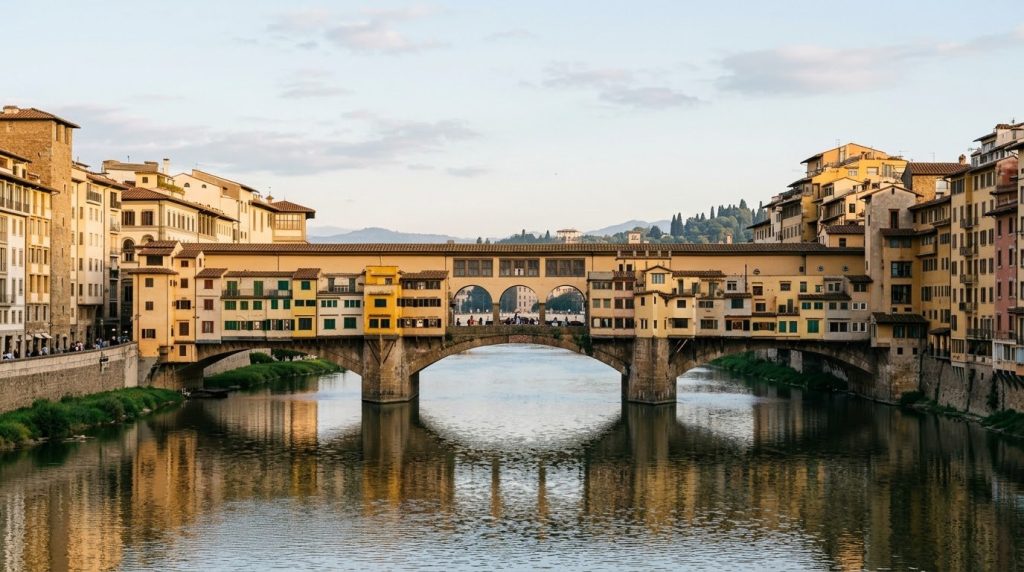
The cobblestones that give the center its character are hard on strollers, wheelchairs and anyone with knee problems, and older buildings without air conditioning make July and August visits uncomfortable indoors as well as out.
The Accademia and Uffizi both require a timed-entry booking rather than a walk-up ticket during busy months, so travelers who prefer deciding their museum day the morning of will find that spontaneity costs hours in line.
None of this is a reason to skip Florence outright, but it is a reason to plan around the crowds rather than being surprised by them; our guide to the best time to visit Florence covers which months actually thin the queues.
Do you need a car in Florence?
No. Florence’s historic center is built for walking, and large stretches of it, including the areas around Piazza del Duomo, Via Tornabuoni, Piazza della Signoria and Piazza Pitti, are closed to private traffic as pedestrian-only zones. A car adds cost and risk without adding convenience inside the five-square-kilometer core this guide already describes, since every sight that matters sits within that same short walk.
The restriction that trips up visitors who do rent a car is the ZTL, the zona a traffico limitato that covers the wider historic center beyond the pedestrian-only streets.
Camera-enforced ZTL gates keep unauthorized vehicles out on weekdays from 7:30am to 8pm and on Saturdays from 7:30am to 4pm, with Sundays and overnight hours generally open to all traffic; an additional nightlife-hours restriction applies Thursday to Saturday nights from 11pm to 3am between April and October.
A rental car driven through one of these gates without a permit triggers a fine that is mailed out, often through the rental company, months after the trip ends, which is the most common way visitors discover the restriction existed at all.
The fix is simple: park at a garage or lot outside the ZTL boundary and walk or taxi in, which is also cheaper than paying for a city-center parking space even before a possible fine is added.
A car only earns its cost once a trip extends beyond Florence into the Tuscan countryside, a different calculation covered elsewhere on this site, which this Florence-only visit does not need.
For anyone who does drive in from elsewhere in Tuscany for a single day, guarded parking garages outside the ZTL boundary typically charge EUR 15 to EUR 25 (USD 17 to USD 29) for a full day, less at lots further from the Duomo, which is still cheaper than the fine and towing risk of guessing at a gate’s hours.
Who should skip Florence
Cruise passengers docking at Livorno with under five hours ashore should skip the historic center push entirely, since the transfer alone consumes nearly half the available time. Families traveling with a stroller or a toddler who tires after an hour of queuing will get more out of a Tuscan hill town with fewer lines and more open space.
Budget backpackers who have priced rooms and museum tickets against cheaper stops in Umbria or the Tuscan countryside will find Florence consistently more expensive for a comparable night’s sleep. Travelers whose main goal is quiet countryside scenery rather than dense museum-going are better served basing outside the city and treating Florence as a half-day add-on rather than the main event.
Anyone who already knows they dislike standing in line, even a short pre-booked one, should weight that dislike heavily here, because Florence is one of the few cities on this site where the queue is not an occasional annoyance but a planned part of nearly every day.
Free and low-cost things to do
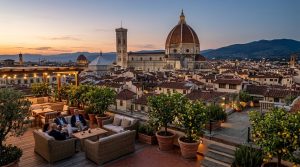
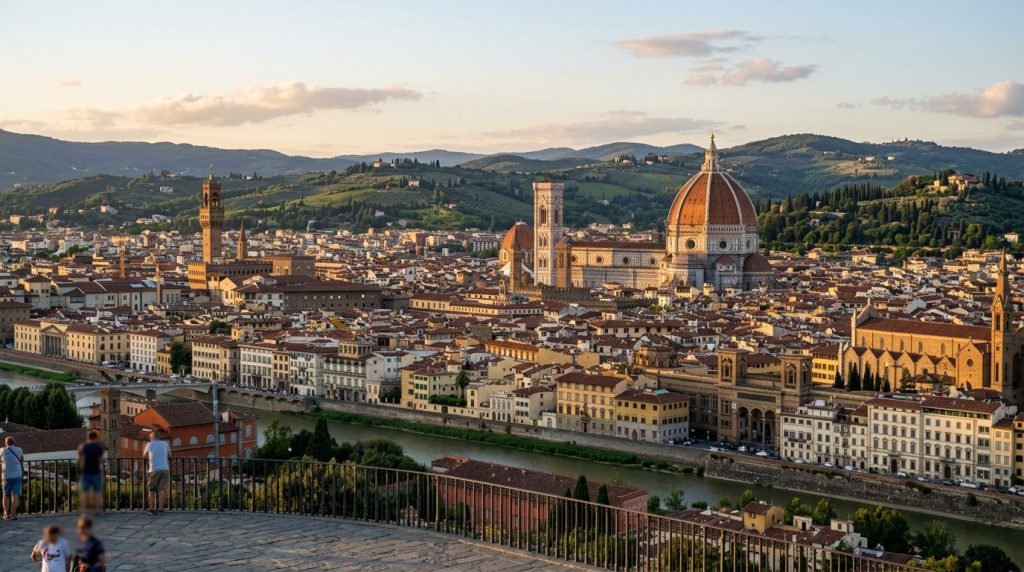
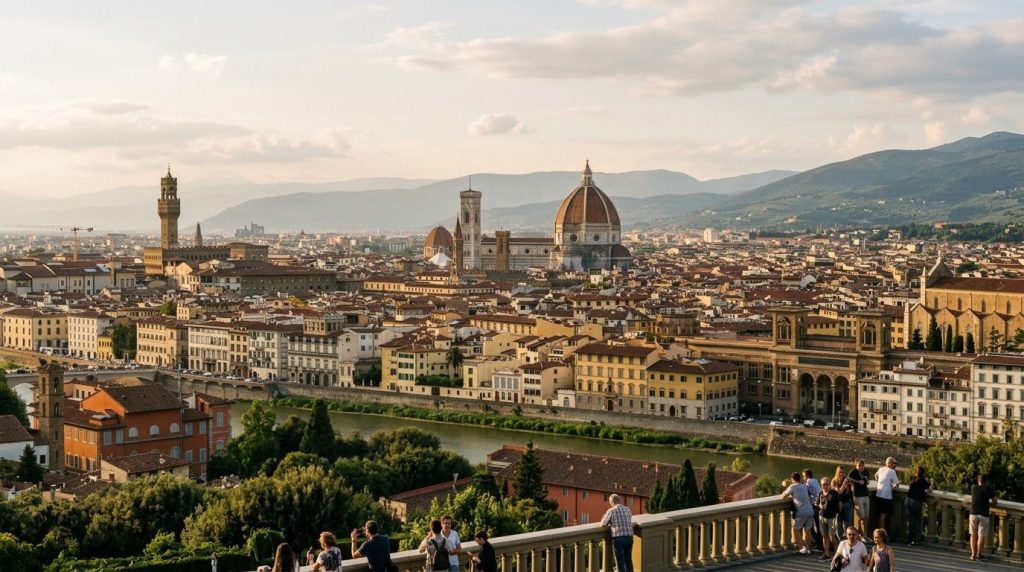
Florence’s best free view costs nothing and needs no booking: Piazzale Michelangelo, a short uphill walk or bus ride from the Arno, looks back across the Duomo, the Palazzo Vecchio and the whole historic skyline, and it is free to visit at any hour.
Walking another ten minutes further uphill reaches the Basilica di San Miniato al Monte, a free-to-enter Romanesque church with a similar view and far fewer visitors than the piazzale below it, since most day-trippers stop at the main platform and turn back.
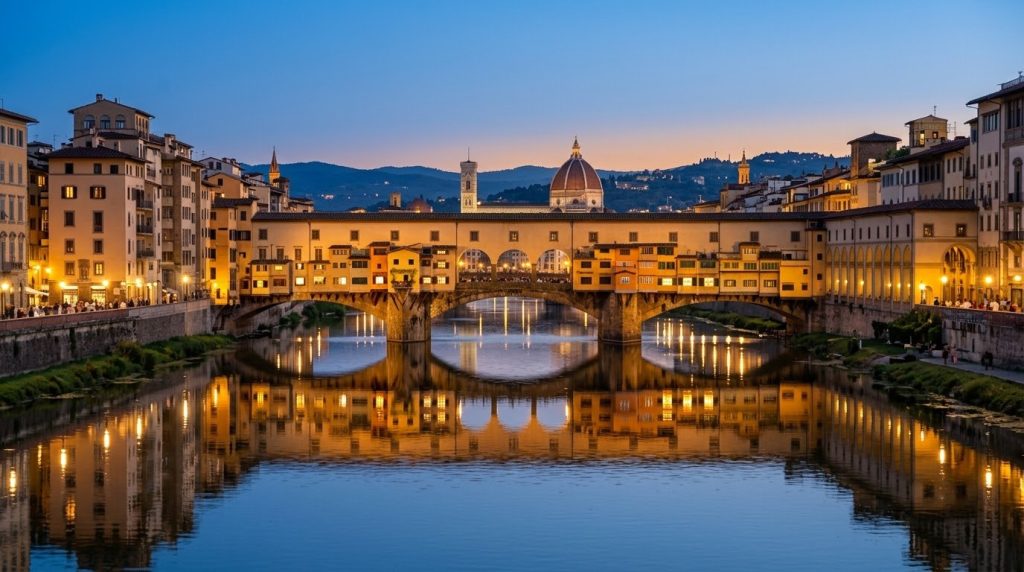
The Duomo’s main nave is also free to enter, separate from the paid climb up the dome or bell tower covered earlier in this guide, and simply crossing the Ponte Vecchio to look at the Arno from Florence’s oldest bridge costs nothing either.
The one guaranteed way to get inside a major museum for free is timing rather than searching for a loophole.
State-run museums and monuments, which include the Uffizi Galleries and the Accademia, open free of charge on the first Sunday of every month under the long-running Domenica al Museo initiative, with no advance booking or skip-the-line option available on that day.
The trade-off is a longer queue than a paid, timed-entry ticket would involve, since free admission draws a bigger crowd than a normal Sunday would, so arriving at opening time matters even more on a free Sunday than on any other day.
The Duomo museum and a handful of other church-run sites sit outside this scheme since they are not state-owned, so the free-Sunday plan only pays off for the Uffizi-and-Accademia half of a Florence itinerary.
Santo Spirito, across the river in the Oltrarno, is a working church that costs nothing to step inside and sits in a genuinely local piazza away from the Duomo crowds, worth combining with a Ponte Vecchio walk for an afternoon that adds up to zero euros in admission.
Tip-based walking tours also run daily from meeting points near the Duomo, covering the main sights with a guide paid whatever the participant chooses to give at the end rather than a fixed ticket price, a reasonable middle ground for a traveler who wants context without booking a paid tour outright. Travelers torn between the two destinations can weigh the trade-offs in our Rome vs Florence comparison.
Where to stay if you decide to go
Staying inside or just outside the historic center cuts out the worst of the daily commute into the crowds described above, since walking to the Duomo or the Uffizi in under 15 minutes beats bussing in from the suburbs every morning. Our best hotels in Florence guide breaks down specific neighborhoods and price tiers; the map below shows live availability across the same area.
Find your Florence hotel on the map
Live prices from Booking, Airbnb and more — move the map or change dates to compare stays across Florence.