Where to Stay in Los Angeles 2026: Best Areas & Hotels
Disclosure: Some links in this guide are affiliate links. If you book or buy through them, we may earn a small commission at no extra cost to you — it helps keep our guides free.
- Los Angeles spans over 500 square miles, so neighborhood choice determines which sights are walkable vs. a 45-minute drive (LA Tourism Board, 2026).
- In 2026, average nightly hotel rates in Santa Monica run $220-$380; Downtown LA averages $160-$280 (Booking.com rate data, 2026).
- Hollywood remains the most searched LA base for first-timers, but locals consistently rate Silver Lake and Los Feliz higher for walkability and dining.
- Families consistently rank Santa Monica and Culver City as the top two neighborhoods for safety and kid-friendly attractions.
Pick your area
Choosing where to stay in Los Angeles is the single decision that shapes your entire trip — pick the wrong neighborhood and you’ll spend half your holiday stuck in freeway traffic. We’ve broken down LA’s eight most practical base camps, with real 2026 prices and honest trade-offs so you can book with confidence. Travelers heading this way often look for this Los Angeles travel guide before mapping out transport, neighborhoods, and a rough daily schedule.
Quick answer: Hollywood and West Hollywood are the easiest bases for first-timers, while families usually do best in Santa Monica or Culver City.
Find your Los Angeles hotel on the map
Live prices from Booking & Airbnb — tap a pin to compare stays around Santa Monica and Hollywood and beyond.
Which Los Angeles Neighborhood Is Best for First-Time Visitors?
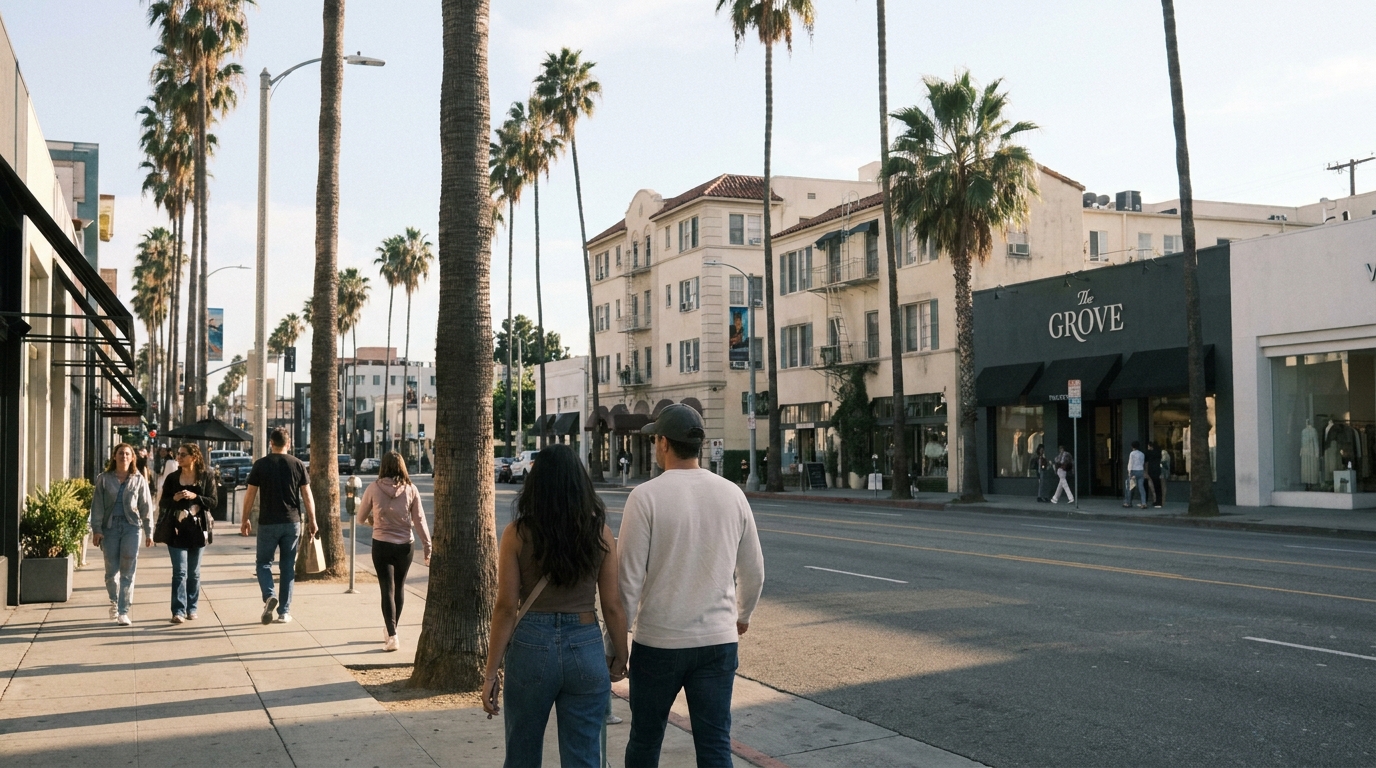
Hollywood and West Hollywood are the easiest first-timer bases because they sit roughly in the geographic center of the metro and put iconic sights within a short Uber ride. In 2026, a mid-range hotel in Hollywood averages $185-$260 per night (Booking.com, 2026), making it one of the more affordable central options.
That said, Hollywood Blvd itself is heavily touristic, so we’d point you one block off the main strip for a more honest street-level experience.
What you get in Hollywood and West Hollywood:
| Feature | Hollywood | West Hollywood |
|---|---|---|
| Avg. hotel rate/night (2026) | $185-$260 | $210-$340 |
| Walk Score | 82/100 | 91/100 |
| Closest beach | Santa Monica (28 min drive) | Venice Beach (25 min drive) |
| Best for | First-timers, sightseeing | Nightlife, dining, LGBTQ+ travelers |
| Safety rating | Moderate | High |
West Hollywood (WeHo) earns a higher walk score and hosts the famous Sunset Strip. It’s marginally pricier, but the restaurant density on Santa Monica Blvd alone justifies the rate bump for food-focused travelers. Search current availability on Check live hotel prices to compare live rates across both areas before committing.
Is Santa Monica Worth the Higher Price Tag?
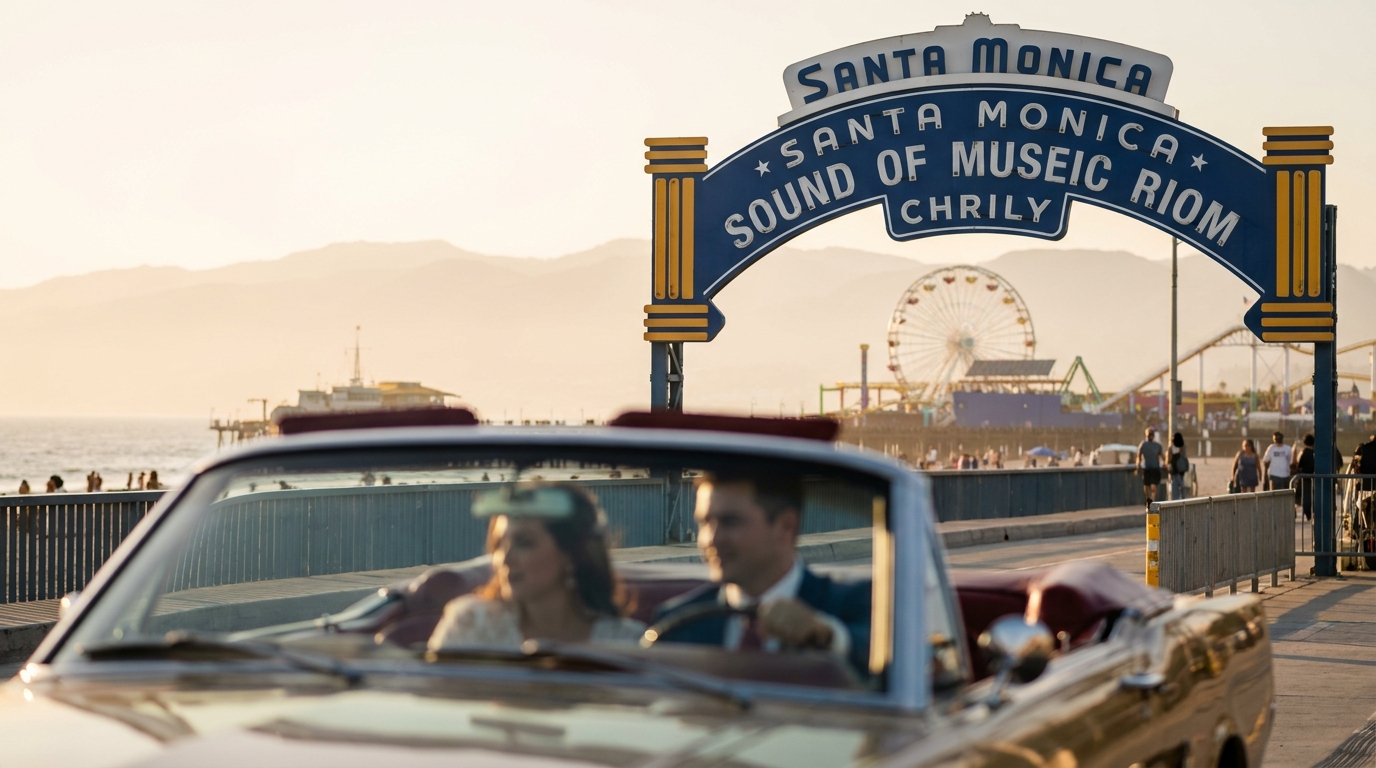
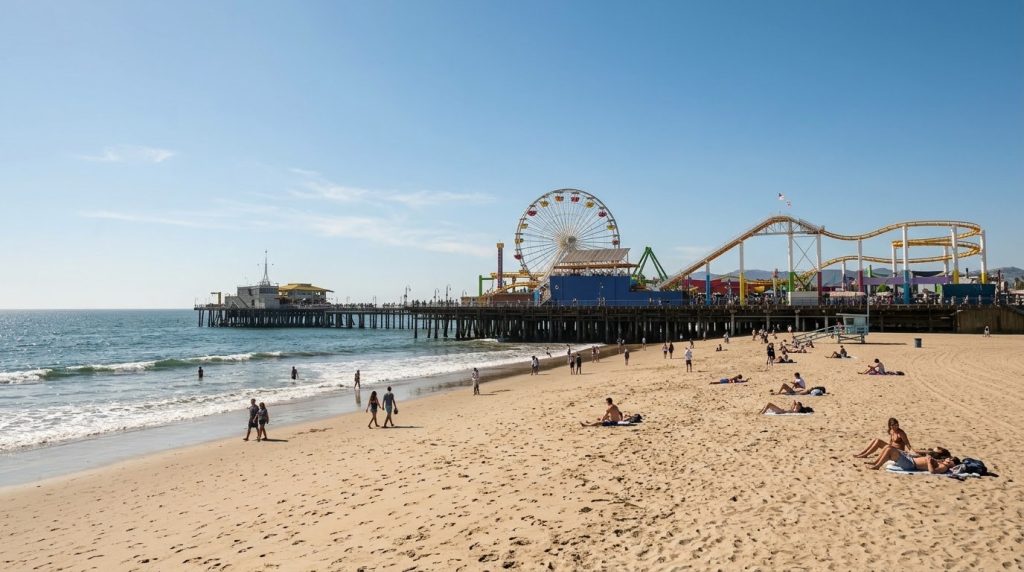
Santa Monica is worth it if beach access and walkability are your priorities — it’s the only LA neighborhood where you can genuinely leave the car parked all day. In 2026, the area averages $220-$380 per night for a standard hotel room, roughly 30% above the city median.
You’re paying for the 3rd Street Promenade, the Santa Monica Pier, and direct beach access without a parking battle.
The practical upside: Santa Monica’s downtown grid is genuinely pedestrian-friendly, which is a rarity in LA. The Metro Expo Line connects it to Downtown in about 46 minutes, so you’re not fully isolated from the rest of the city.
Best Santa Monica hotel tiers (2026 rates):
| Budget Tier | Example Hotel | Avg. Rate/Night | Distance to Beach |
|---|---|---|---|
| Budget | HI Los Angeles Santa Monica | $55-$90 (dorm) | 0.4 miles |
| Mid-range | Sea Shore Motel | $180-$240 | 0.2 miles |
| Upscale | Shutters on the Beach | $580-$950 | Beachfront |
| Luxury | Fairmont Miramar Hotel | $500-$820 | 0.3 miles |
One important nuance: the southern end of Santa Monica (near Venice border) is noticeably grittier than the blocks around the Promenade. If you’re booking budget accommodation, check the exact address on a map rather than assuming “Santa Monica” is uniformly safe and polished.
What’s Downtown LA Like for Tourists in 2026?
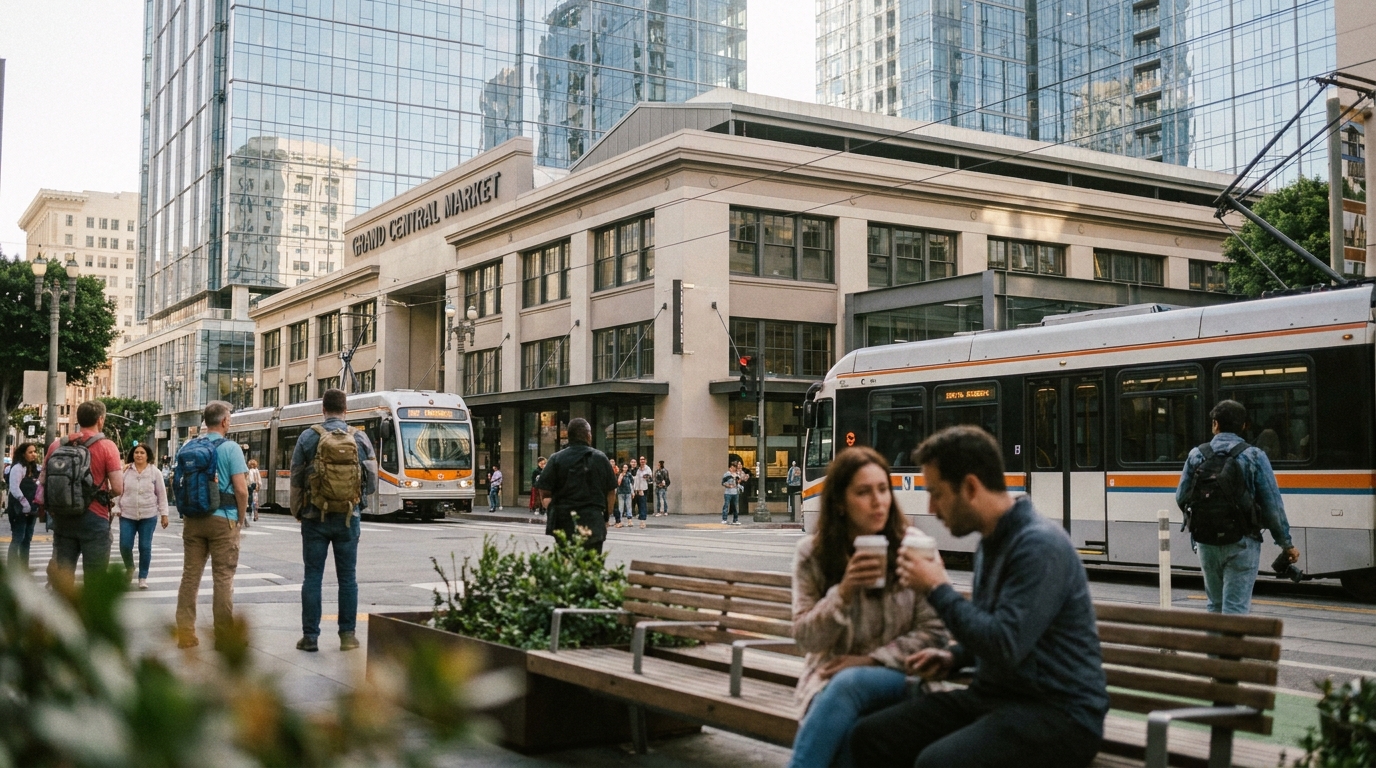
Downtown LA has genuinely transformed in the past five years — it’s no longer the ghost town it was at weekends before the pandemic.
In 2026, you’ll find nightly rates averaging $160-$280, which makes it the best-value central option in the city.
The drawcards: the Broad Museum, Grand Central Market, the Arts District, and the newly expanded SoFi Stadium precinct for sports fans. The honest downside: homelessness is concentrated around Skid Row (east of South Broadway), and if your hotel sits on the wrong block, the street environment can feel uncomfortable. We’d stick to hotels west of Main Street and north of 9th Street for the most pleasant experience.
What works well in Downtown LA:
Should You Stay in Beverly Hills or Bel-Air?
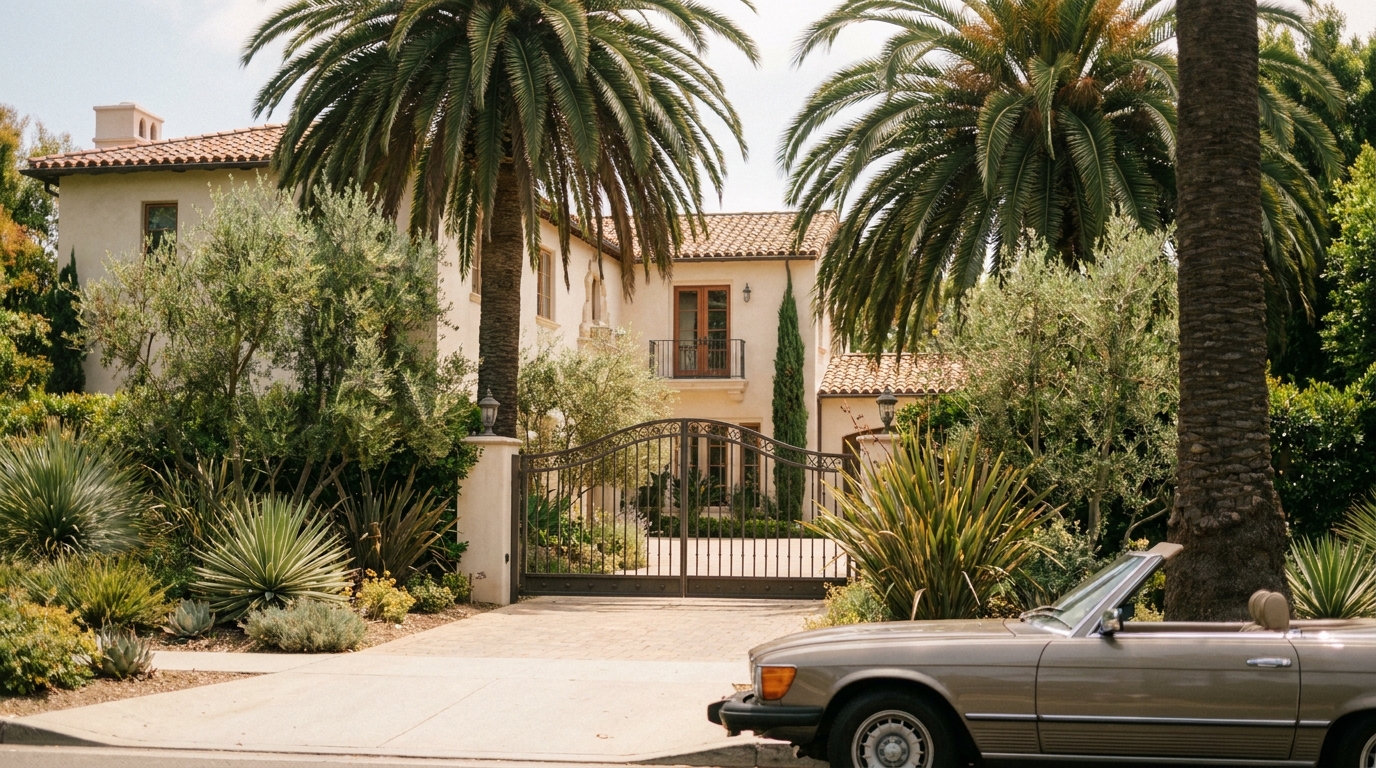
Beverly Hills delivers a specific fantasy — the palm-lined boulevards, Rodeo Drive boutiques, and manicured hotel gardens — but it’s genuinely expensive. In 2026, even the most modest Beverly Hills hotel runs $320+ per night, and the neighborhood’s walkability is limited outside the Golden Triangle shopping district (Booking.com, 2026). You’re paying for prestige and proximity to Rodeo Drive, not practical city access.
Bel-Air is almost exclusively residential — the famous Bel-Air Hotel is spectacular, but rates start at $700+/night and you’ll need a car for every meal. Our honest take: unless you’re staying at one of the landmark properties on an occasion trip, Beverly Hills and Bel-Air are better visited by day from a Hollywood or West Hollywood base.
Beverly Hills vs alternatives — value comparison (2026):
| Area | Avg Rate/Night | Metro Access | Walkable Dining | Best For |
|---|---|---|---|---|
| Beverly Hills | $320-$650+ | No | Limited | Luxury/occasion trips |
| West Hollywood | $210-$340 | Yes (bus) | Excellent | Most travelers |
| Culver City | $155-$230 | Yes (Metro) | Good | Families, budget |
| Mid-Wilshire | $145-$220 | Yes (Metro) | Moderate | Museum-goers |
Is Venice Beach a Good Base, or Just a Day Trip?
Venice Beach works as a base if you’re a solo traveler or couple who wants that beachy, laid-back LA atmosphere over sightseeing efficiency. In 2025, Walk Score ranked the Abbot Kinney Blvd corridor at 88/100 for walkability, putting it among the most pedestrian-friendly spots in the metro. In 2026, mid-range accommodation averages $190-$290 per night — slightly below Santa Monica rates for similar beach proximity (Booking.com, 2026).
The honest caveat: the boardwalk area sees significant transient activity and petty theft is higher than comparable beach towns. Keep your phone in your pocket, don’t leave valuables in rental cars, and choose accommodation at least one block inland from the boardwalk itself.
Why Venice works for some travelers:
For car-free travelers, we’d still give Santa Monica the edge. But if you can drive and want a neighborhood that feels more authentic and less touristic than the Promenade, Venice earns its place.
What Are the Best Budget-Friendly Areas to Stay in LA?
Culver City and Mid-Wilshire (Koreatown/Mid-City) are the two best-value bases that don’t force you to compromise on safety or city access. In 2026, Culver City hotels average $155-$230/night — roughly 35% below Santa Monica rates — while sitting on the Metro Expo Line that connects directly to both the beach and Downtown.
The neighborhood has seen serious investment since Amazon Studios anchored there in 2019, and the dining scene around Downtown Culver City is legitimately excellent.
Koreatown (within Mid-Wilshire) is the most genuinely budget-friendly central option, with rates starting around $110-$160/night. It’s walkable, has strong Metro connections (Wilshire/Vermont and Wilshire/Normandie Purple Line stations), and the late-night Korean BBQ options are among the best eating experiences in the city.
Budget-friendly LA areas — quick comparison:
| Area | Budget Rate/Night (2026) | Metro Station | To Santa Monica | To Hollywood |
|---|---|---|---|---|
| Koreatown | $110-$160 | Yes (Purple Line) | 45 min | 15 min by car |
| Culver City | $155-$230 | Yes (Expo Line) | 25 min | 30 min by car |
| Pasadena | $130-$195 | Yes (Gold Line) | 55 min | 25 min by car |
| El Segundo | $125-$180 | No | 20 min | 35 min by car |
Search and compare live rates across all these neighborhoods on Check live hotel prices — filter by district to narrow results quickly.
Which LA Neighborhood Is Best for Families?
Santa Monica and Culver City are the two neighborhoods we’d recommend without hesitation for families with kids. Before finalizing plans, it helps to check this things to do in Los Angeles before deciding which attractions are worth the time on a short visit.
Culver City earns high marks for its quieter streets, the Culver City Stairs for active families, and proximity to the Sony Pictures Studio tour.
Key family-focused criteria by neighborhood:
| Neighborhood | Family Rating | Kid Attractions | Avg Rate (Family Room) | Car Needed? |
|---|---|---|---|---|
| Santa Monica | 5/5 | Pier, beach, aquarium, bike paths | $280-$420 | Optional |
| Culver City | 4/5 | Sony tour, parks, Museum of Jurassic Tech | $200-$310 | Recommended |
| Pasadena | 4/5 | Huntington Library, Old Pasadena | $180-$270 | Recommended |
| Universal City | 4/5 | Universal Studios, CityWalk | $220-$380 | Recommended |
One practical tip: if you’re visiting Universal Studios, staying at or near the park for at least one night saves a significant amount of commute stress. Universal-adjacent hotels average $220-$380/night in 2026 — not cheap, but the 5-minute walk to the park gates is genuinely worth it for families doing a full theme park day.
Silver Lake, Echo Park and Los Feliz: A Local-Feeling Base East of Hollywood
These three neighborhoods sit side by side, just east of Hollywood and a few miles northwest of Downtown. Guides describe them as hilly, residential and creative, with coffee shops, restaurants and bars that suit visitors who want a local street scene, not a tourist strip.
How they differ
- Silver Lake: bohemian and residential, between Echo Park to the south and Los Feliz to the north. Several guides flag it as a car neighborhood, so plan on rides.
- Echo Park: the most nightlife-oriented of the three, with a lake and park as the main draw and bars along Sunset Boulevard. Fodor’s notes that it has long been scrutinized for gentrification.
- Los Feliz: the quietest, with tree-lined streets and quick access to Griffith Park.
Who should stay here
These areas fit repeat visitors, couples and food-focused travelers who have a car or are comfortable with rideshare. They are a poor fit for a first trip that is centered on the beach, since the coast is a long drive away.
A typical day from this base mixes a morning walk or hike in Griffith Park, reached through Los Feliz, with lunch in Silver Lake and an evening on the Echo Park lake or along Sunset Boulevard. Hollywood is a short ride away, so the sights on the main tourist strip remain easy to reach.
Hotel supply is thinner than in Hollywood or Downtown, and much of it is small or mid-range. Check recent reviews for the exact block, since guides rate safety differently across the three, with one ranking placing Echo Park below Los Feliz.
Check hotels in Silver Lake, Echo Park and Los Feliz →
Pasadena: A Calmer Base East of Hollywood
Pasadena sits northeast of Downtown Los Angeles and feels like a separate small city. It has a walkable historic core in Old Pasadena, the Rose Bowl stadium, and gardens and museums such as the Huntington Library and the Norton Simon Museum.
It suits travelers who prefer a quieter evening and are comfortable making longer trips for the big sights. Hotels range from economy chains to full-service properties, and parking is often charged separately, as noted below.
The trade-off is distance from the coast and from Hollywood. Public transit links Pasadena to Downtown, but the ride is long, and many visitors drive.
If you plan to spend most days at the beach, Pasadena is a poor fit. It works best for garden and museum lovers, event travelers visiting the Rose Bowl, and visitors who want lower prices than the main tourist zones.
From LAX to Your Neighborhood: Metro, FlyAway and Shuttles
Los Angeles International Airport (LAX) sits on the west side, so your neighborhood affects the cost and length of your arrival. You have three practical options besides a taxi or ride-hail.
Metro rail plus the free shuttle
Metro’s C Line and K Line both serve the LAX/Metro Transit Center. A free, frequent shuttle runs from bus bays 1 and 2 at the transit center to all LAX terminals. The regular Metro fare is USD 1.75, with free transfers for two hours when you tap to ride.
This is the cheapest way to reach Culver City, Downtown and Koreatown. It involves a shuttle ride and one or more train changes, so it works best with light luggage.
FlyAway bus
The FlyAway runs non-stop between LAX terminals and Union Station in Downtown LA. Recent sources list the fare at USD 12.75 each way, though one older page lists USD 9.75, so check the current price. It suits Downtown hotels and anyone who wants a direct ride with luggage.
Municipal buses
Several city bus operators stop at the transit center, including Santa Monica’s Big Blue Bus and Culver CityBus. Big Blue Bus is the relevant link for a Santa Monica hotel.
A new LAX Automated People Mover is expected to open in 2026 and link the transit center directly to the terminals. Confirm its status on the LAX or Metro websites before you rely on it.
For Hollywood, West Hollywood, Beverly Hills and the Pasadena area, a taxi or ride-hail is the simplest option, particularly after a long flight.
Staying Near LAX for an Early Flight or a Late Arrival
Los Angeles flights often leave early, and freeway traffic is unpredictable. A hotel near the airport on the last night can remove the stress, even if you spent the rest of the trip elsewhere.
Where to look
El Segundo is the closest hotel town to the airport. Listings for several chain hotels there mention free shuttles, with one property about a mile from the terminals and others a few miles out. Westchester also has budget and chain options, according to Time Out.
Some shuttles run on request, so call the hotel from the baggage claim area. Confirm shuttle hours before you book an early flight, since the schedule may not cover a very early departure.
Beach towns to the south
Manhattan Beach is a short drive from the airport, and some properties near the coast advertise LAX shuttles. These towns are calmer and more expensive than the airport strip, and they suit travelers who want a night near the sand before a flight. Compare the total cost, including parking, with a plain airport hotel.
For a late arrival, an airport-area hotel also saves a long ride to the other side of the city. Message the property with your flight number, since some front desks handle late check-ins only when told in advance.
Practical points
- Ask whether the shuttle also serves the terminal you leave from.
- Compare a hotel with free breakfast against an earlier checkout and a ride-hail fare.
- Leave extra time on the morning of departure, because freeway traffic near the airport starts early.
Hotel Parking Fees in Los Angeles
If you rent a car, parking can change the real price of a room. Hotels in dense areas often charge a separate nightly fee, and it may not appear in the headline rate.
Listings checked for this guide show how much the charge varies even within one suburb. Pasadena hotel pages show self-parking from USD 10 per day at an economy chain to USD 28 at a full-service hotel and USD 40 per day, with in-and-out privileges, at an extended-stay property.
These figures are examples, not a price list, and they change often.
Use these checks to protect your budget:
- Look for the parking fee in the fine print or the “fees” section of the booking page.
- Ask whether the fee covers in-and-out privileges, so you can leave and return without paying twice.
- Compare valet and self-park prices if both are offered.
- Ask about vehicle height limits if you rent an SUV or van.
- Consider staying near a Metro station and renting a car for only one or two days.
The parking fee can cancel the savings from a cheaper suburban hotel, so add it to the nightly rate when you compare options.
Is Anaheim a Good Base for Disneyland Visitors?
Anaheim is the right base only if Disneyland is the main reason for the trip. Hotels there serve park visitors and often include shuttles, family rooms and breakfast. One Anaheim-area hotel listing shows a parking fee of USD 35 plus tax per night for the first vehicle, so check parking costs there too.
The trade-off is distance from the rest of Los Angeles. Anaheim is in Orange County, and a trip to Hollywood, Santa Monica or Downtown means a long freeway drive that can take much longer in rush hour.
If you want to see both Disneyland and LA, split the stay: a few nights in Anaheim, then a few in Hollywood or Santa Monica.
For a trip with little or no theme-park time, Anaheim adds driving and gives little in return.
How to Get Around Los Angeles From Your Hotel
LA transit works best when your hotel sits near a rail station or a frequent bus line. Metro charges a base fare of USD 1.75 per ride in 2026, with fare caps of USD 5 per day and USD 18 per 7 days. The caps do not apply to cash fares on the bus, so skip cash if you plan several rides.
Because the daily cap makes a fourth ride in a day free, a hotel near a station can save money for visitors who skip a rental car. Check the current Metro rail map before booking and confirm the walk from your hotel to the nearest stop.
Airport to hotel
The LAX FlyAway bus runs nonstop between the airport and Union Station in Downtown LA, 24 hours a day, seven days a week. A visitor-bureau listing puts the ride at roughly 35 minutes to an hour depending on traffic. That makes Downtown the simplest base for anyone arriving without a car.
For Santa Monica, Hollywood, or Culver City, a rideshare or taxi is the practical option from LAX. Build in extra time at rush hour, because the freeways set the clock rather than the distance.
Match your transport to your base
- Downtown: easiest for car-free stays because the FlyAway bus and Metro both serve Union Station.
- Hollywood and West Hollywood: walkable in pockets, but beaches and Downtown need a ride or a train transfer.
- Santa Monica and Venice: good for beach days on foot, but plan rides for the studios and museums inland.
When to Visit Los Angeles: Weather, Rain, and Ocean Temperature
Climate averages for the USC campus (2001-2020) show how mild the city is year-round. Winter highs run about 69-72 F (20-22 C). Spring highs reach roughly 74-78 F (23-26 C), summer highs about 83-84 F (28-29 C), and autumn highs about 75-80 F (24-27 C).
Rain falls mostly from December to March. January averages about 85 mm (3.3 in) over six rainy days and February about 90 mm (3.5 in). From June through September, monthly rainfall is close to zero.
Ocean temperature matters for beach hotels
The Pacific is cool. Sea temperature averages about 58 F (14.5 C) from January to April and peaks near 65 F (18.5 C) in August and September. If swimming is part of your plan, late summer is the warmest window, though many visitors treat Santa Monica and Venice as places to walk and sunbathe rather than swim.
Timing your base
- Spring (April to June) is the top pick on one climate guide for mild, sunny days with little risk of heat.
- Summer is dry and warm, but Santa Ana winds can bring heat waves, so check that an inland hotel has air conditioning.
- Autumn is generally pleasant, though early rain can arrive in November.
- Winter is the wettest stretch, which favors a base close to indoor attractions in Hollywood or Downtown.
When to Book and Which Events Change Rates
Los Angeles hotel prices rise around large events, so check the calendar before you choose dates. Major concerts and sports events at stadiums and arenas, film-industry weeks and holiday weekends can push rates up and fill the best-located rooms.
Book a refundable rate once your dates are firm, then check again closer to your trip if prices drop. Compare the total price, including taxes and parking, instead of the base rate alone.
If your dates are flexible, compare midweek and weekend nights. Many hotels in business-heavy areas such as Downtown charge less on weekends, while beach hotels often charge more.
Staying Safe and Comfortable at Night in Los Angeles
Los Angeles is large, and conditions change from block to block. These practical habits apply in any area.
- Check the exact address on a map, then look at recent guest photos and reviews dated within the last few months.
- Avoid leaving bags, electronics or shopping visible in a parked car, including in hotel garages.
- Use ride-hail or a taxi for late-night trips between neighborhoods rather than walking long distances.
- Ask the front desk which streets to avoid after dark.
- Keep valuables in the room safe, and carry only what you need on the beach or boardwalk.
Downtown, Hollywood and Venice all have areas that feel very different within a few blocks. Reading street-level reviews is more useful than relying on a neighborhood’s overall reputation.
Renting a Home in Los Angeles: What the Home-Sharing Rules Mean for Guests
Apartments and houses appear on most booking sites, especially in Venice, Silver Lake and Highland Park. The City of Los Angeles regulates short-term rentals under a Home-Sharing Ordinance, in effect since July 1, 2019, and it applies only inside the city limits.
The main rules
- Only a host’s primary residence can be rented short term, meaning the home where the host lives at least six months of the year.
- Hosts must register with City Planning and show the registration number in the listing.
- Standard home-sharing is capped at 120 days a year, unless the host qualifies for extended status.
- Rent-stabilized units are not eligible.
What to check as a guest
Look for a registration number on the listing. If there is none, ask the host about it before you pay. The city ordinance does not cover the rest of the county, so rules can differ in neighboring cities. Check the local rules for the area you pick.
Also compare the full price. Cleaning fees and service fees can erase the saving on a short stay, and a hotel with a front desk offers more help if something goes wrong. For a stay of a week or longer, a rental with a kitchen may be better value, but only if the listing is registered and the reviews are recent.
Check hotels in Renting a Home in Los Angeles →
Hotel Fees and What the Nightly Rate Should Include
A California law that takes effect each year on July 1 per one industry summary requires hotels to include non-governmental fees in the advertised room rate. It targets “drip pricing,” where mandatory extras such as resort fees appear late in the booking flow. Government taxes are the exception and do not need to appear in the headline price.
In practice, compare the total shown at checkout across hotels rather than the first price you see. If a property lists a separate daily charge you did not expect, ask the booking site or the hotel to confirm whether it is mandatory.
Questions to ask before you book
- Is the advertised nightly rate all-inclusive apart from taxes?
- Is parking a separate charge, and is it per night?
- Does the cancellation policy allow a free change if your plans shift?
Parking policies vary by hotel and neighborhood, so check them directly. A car-free stay near Metro or the FlyAway can avoid the cost entirely.
Which LA Base Fits Your Trip Type?
- First visit with a rental car: Hollywood or West Hollywood, for central access to the main sights.
- No rental car: Santa Monica for beach days and walkability, or Downtown for Metro links.
- Families with young children: Santa Monica or Culver City for easier logistics.
- Budget travelers: Koreatown or Mid-Wilshire for lower rates and Metro Purple Line access.
- Theme-park trips: Anaheim, then a second base elsewhere.
- Luxury occasion: Beverly Hills or a beachfront Santa Monica hotel.
The best choice depends on how much you plan to drive. If you want to avoid the freeway, choose a smaller set of neighborhoods and stay close to each activity.
Splitting a Five-Night Stay Between the Coast and the City
Los Angeles is large, so one base can mean a lot of driving. A split stay can cut the freeway time if you plan it well.
A simple pattern
- Nights one to three on the coast: Santa Monica or Venice, where you can walk to the pier, the beach and dinner and leave the car parked.
- Nights four and five in Hollywood or West Hollywood: closer to Griffith Park, the studios and Sunset Boulevard, with nightlife within walking distance.
When it works
A split stay works best if you have a rental car or plan to use rideshare, and if your interests divide into beach days and city days. Check out in the morning and go to the next hotel in the middle of the day, so you avoid commuter traffic.
When to stay put
Stay in one place if you have only three or four nights, travel with young children, or have a lot of luggage. A move takes half a day, and the saving in drive time is small on a short trip. If you choose one base, pick the area where you will spend the most evenings.
Ask the first hotel to hold your bags if the second room is not ready, and book each leg on a refundable rate.
A Three-Day Los Angeles Plan by Base
These outlines show how your base changes your days. Confirm opening hours and bookings before you go.
Hollywood or West Hollywood base
- Day 1: Hollywood Boulevard and the Walk of Fame in the morning, then Griffith Park or an evening on the Sunset Strip.
- Day 2: a museum morning on Miracle Mile, then Beverly Hills and Rodeo Drive.
- Day 3: drive to Santa Monica for the pier and promenade, then Venice at sunset.
Santa Monica base
- Day 1: the pier, the beach and the Third Street Promenade on foot.
- Day 2: Venice and Abbot Kinney Boulevard, returning by bike or bus.
- Day 3: an early start for Hollywood and Griffith Park, using ride-hail to avoid parking.
Whichever base you choose, avoid driving between the coast and Hollywood at peak commute hours when you can.
Frequently Asked Questions
What is the safest area to stay in Los Angeles?
Santa Monica, West Hollywood, Culver City, and Pasadena consistently rank as the safest areas for tourists in LA. According to LAPD crime statistics for 2025, these neighborhoods record the lowest rates of tourist-targeted theft and street crime in the metro. We’d avoid booking accommodation directly on Hollywood Blvd or in the area east of Skid Row in Downtown.
How far in advance should I book hotels in Los Angeles?
For travel in September through November, 3-4 weeks is usually sufficient. Don’t wait until the last week — LA’s hotel inventory tightens fast for weekend nights year-round.
Is it worth staying in Downtown Los Angeles?
Downtown LA works well if you prioritize value and Arts District dining over beach access. In 2026, DTLA rates average $160-$280/night — 20-30% below Santa Monica. The Metro connects you to most major sights, but the street environment around certain blocks is rough, so pick your hotel address carefully and avoid the Skid Row corridor.
Do I need a car to get around Los Angeles?
It depends entirely on which neighborhood you base yourself in. Santa Monica, West Hollywood, and Koreatown are genuinely manageable without a car using Metro and rideshare. For everywhere else — Beverly Hills, the San Fernando Valley, Malibu, and most of the Eastside — a car makes a meaningful difference. Rideshare costs have risen sharply in 2026; budget $35-$55 for most cross-town Uber trips.
What’s the best area to stay in LA for nightlife?
West Hollywood (the Sunset Strip and Santa Monica Blvd) and Downtown LA (around the Arts District and Spring Street corridor) are the two best nightlife bases. WeHo has the advantage of walkability — you can bar-hop on foot, which is almost impossible in the rest of the metro. DTLA rooftop bars and the new nightlife cluster around ROW DTLA are strong alternatives if you’re staying centrally.
How much should I budget for a hotel in Los Angeles per night?
Budget travelers can find clean, safe accommodation from $110-$160/night in Koreatown or El Segundo. Mid-range travelers should expect $180-$280/night in Hollywood, Culver City, or Mid-Wilshire. Beachside areas (Santa Monica, Venice) start at $220/night for decent mid-range options. Luxury travelers will spend $400-$950+/night in Beverly Hills, Bel-Air, or Shutters on the Beach (Booking.com rate data, 2026).
Is Airbnb cheaper than hotels in Los Angeles?
Venice Beach, Silver Lake, and Highland Park have the highest Airbnb supply, giving you the most price competition. For single-night stays, hotels typically match or beat Airbnb rates once cleaning fees are factored in.
Conclusion
Los Angeles doesn’t have a single “best” neighborhood — it has the right neighborhood for each type of traveler. First-timers and those wanting central access should start with Hollywood or West Hollywood. Beach lovers get their best value in Santa Monica, with Venice Beach as a more character-rich (if slightly rougher-edged) alternative.
Families can’t go wrong in Santa Monica or Culver City. Budget travelers should seriously consider Koreatown and the Metro Purple Line as their secret weapon for getting around affordably.
Whatever your base, book early for summer 2026 — the city’s hotel occupancy is running at near-record levels, and the neighborhoods that matter most to tourists fill up fast.
Ready to compare live rates? Search your dates on Check live hotel prices and filter by neighborhood to find the right fit.
*Sources: Booking.com rate data, June 2026; STR Global Hotel Occupancy Report, 2025; TripAdvisor Traveler Survey, 2025; Downtown Center Business Improvement District Annual Report, 2025; LAPD Crime Statistics, 2025; AirDNA Los Angeles Market Report, 2025; Walk Score city data, 2025; LA Tourism Board neighborhood data, 2026.*