Best Time to Visit New York City: Month-by-Month Guide 2026
Disclosure: Some links in this guide are affiliate links. If you book or buy through them, we may earn a small commission at no extra cost to you — it helps keep our guides free.
- NYC hotel rates peak in July–August, averaging $320/night, and drop to around $190/night in January–February (Booking.com data, 2026)
- Central Park sees roughly 42 million visitors per year; summer weekends push the park to near-capacity (NYC Parks Dept., 2025)
- Fall foliage in Central Park typically peaks between late October and early November, drawing photographers and families from across the US
- The NYC Marathon (November) and New Year’s Eve Times Square ball drop attract over 50,000 and 58,000 in-person attendees respectively (NYC Events, 2025)
- Average January lows hit 27degF (-3degC), while July averages peak at 84degF (29degC) — a 57-degree swing that shapes the entire visitor calendar

April through June and September through November are the best months to visit New York City — mild temperatures, fewer crowds than peak summer, and hotel rates that run 20–30% lower than July and August. We’ve broken down every month so you can match your trip to your budget, your tolerance for cold, and which events you actually want to catch.
Why Timing Your NYC Trip Actually Matters
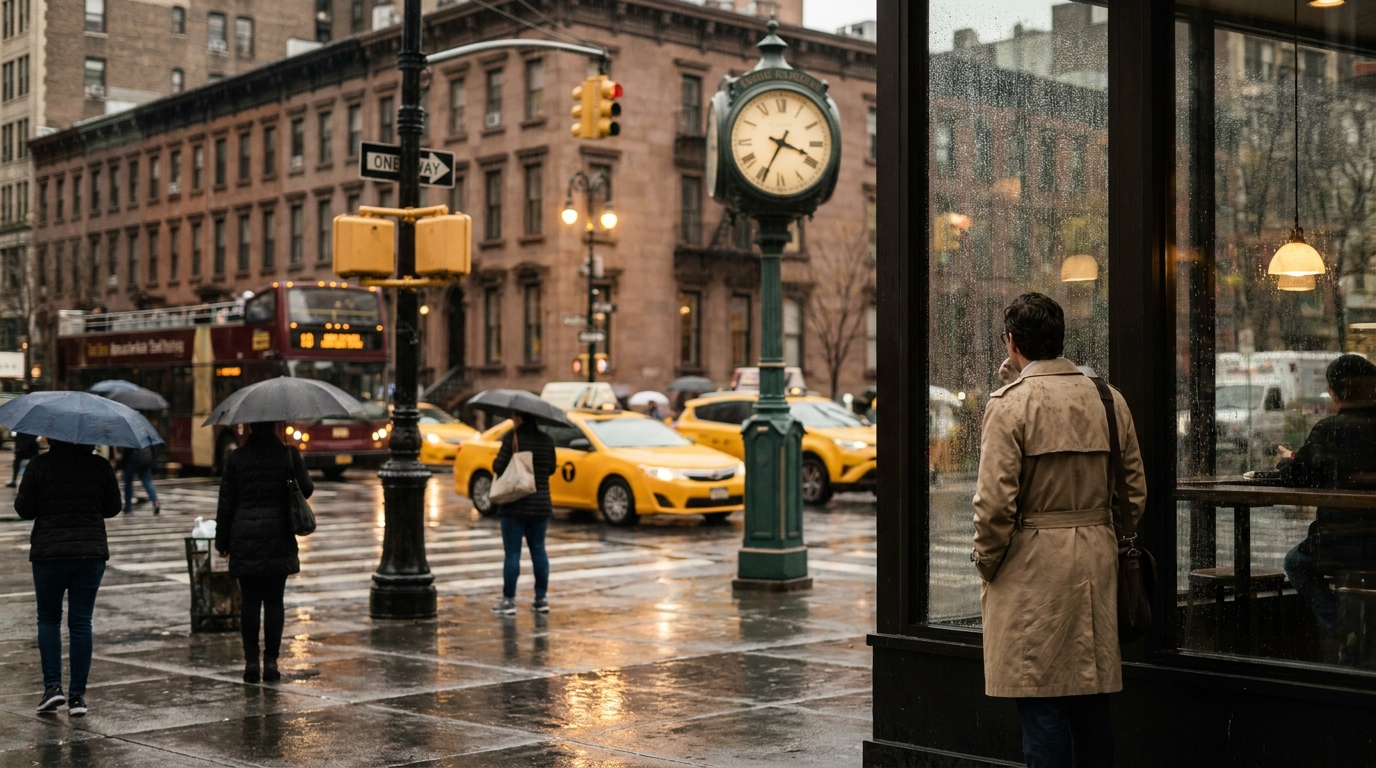
New York City doesn’t have an “off season” in the traditional sense — it’s busy year-round. What timing controls is your hotel bill, your queue length at the Empire State Building, and whether you’re walking the High Line in a T-shirt or a down jacket.
Hotel prices on Booking.com fluctuate by as much as 60% between January lows and summer peaks, so getting the calendar right can easily save a couple hundred dollars on a four-night stay.
The city runs on events. A week either side of the NYC Marathon, Pride, or Fashion Week means sold-out hotels and surge-priced Ubers. We always cross-check our dates against the NYC events calendar before booking — it takes ten minutes and saves real money.
Spring (March–May): Our Top Pick for First-Timers
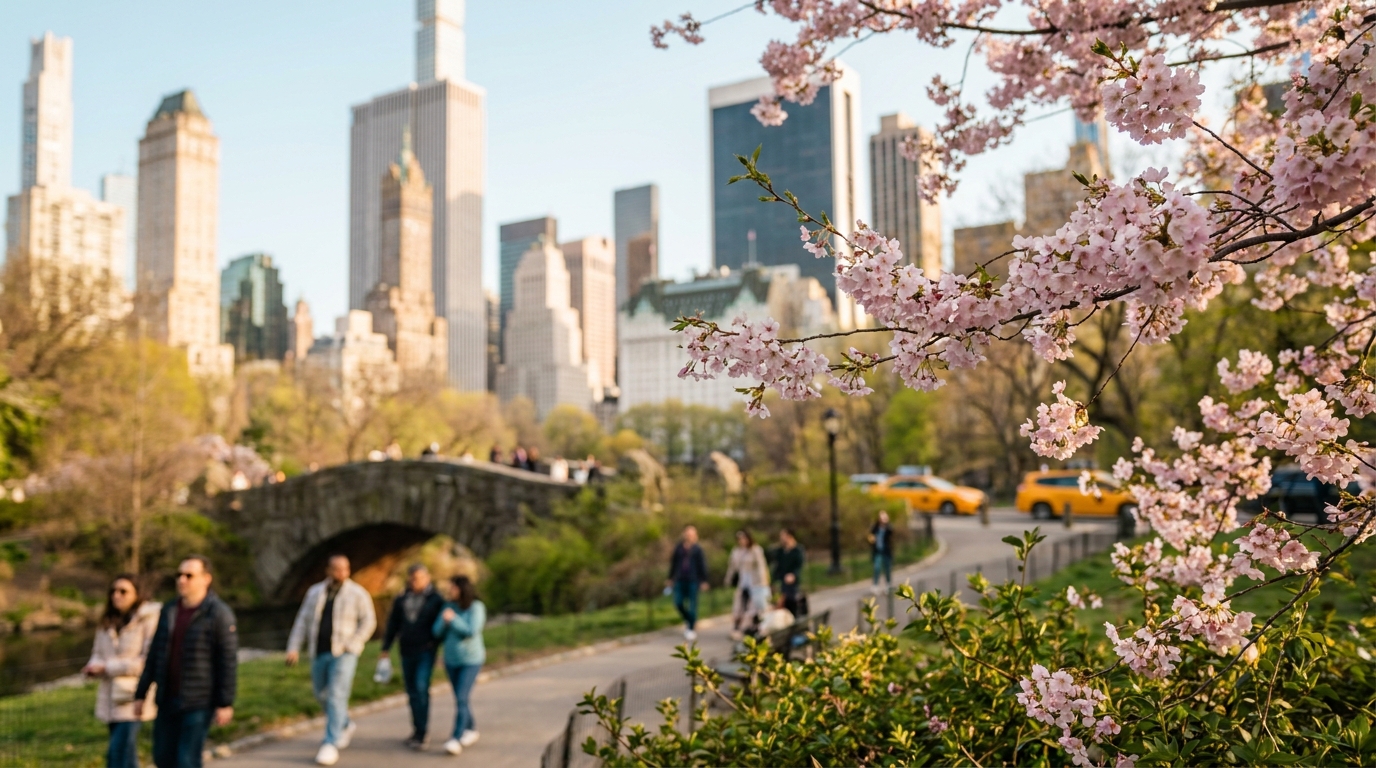
Spring is the window we recommend most often to first-time visitors, and it earns that position. Temperatures climb from the low 40s degF in March to the mid-60s degF by May, the trees in Central Park bloom through April, and hotel rates haven’t yet hit their summer ceiling. A mid-range Manhattan hotel that runs $320/night in August is routinely available for $230–$250 in April on Check live hotel prices.
Key facts: The Cherry Blossom Festival at the Brooklyn Botanic Garden runs late April to early May each year. St. Patrick’s Day on March 17 shuts down Fifth Avenue — charming if you’re into it, a logistical headache if you’re not. Rain is frequent in March and April, so pack a compact umbrella.
Crowds at top attractions like the Statue of Liberty and 9/11 Memorial are noticeably thinner than in summer.
What to book ahead: Statue of Liberty and Ellis Island ferry tickets via GetYourGuide sell out two to three weeks in advance even in spring. Reserve early.
Check /new-york-city-itinerary-7-days/ for a day-by-day spring itinerary that times the Brooklyn Botanic Garden visit correctly.
Summer (June–August): Peak Crowds, Peak Energy
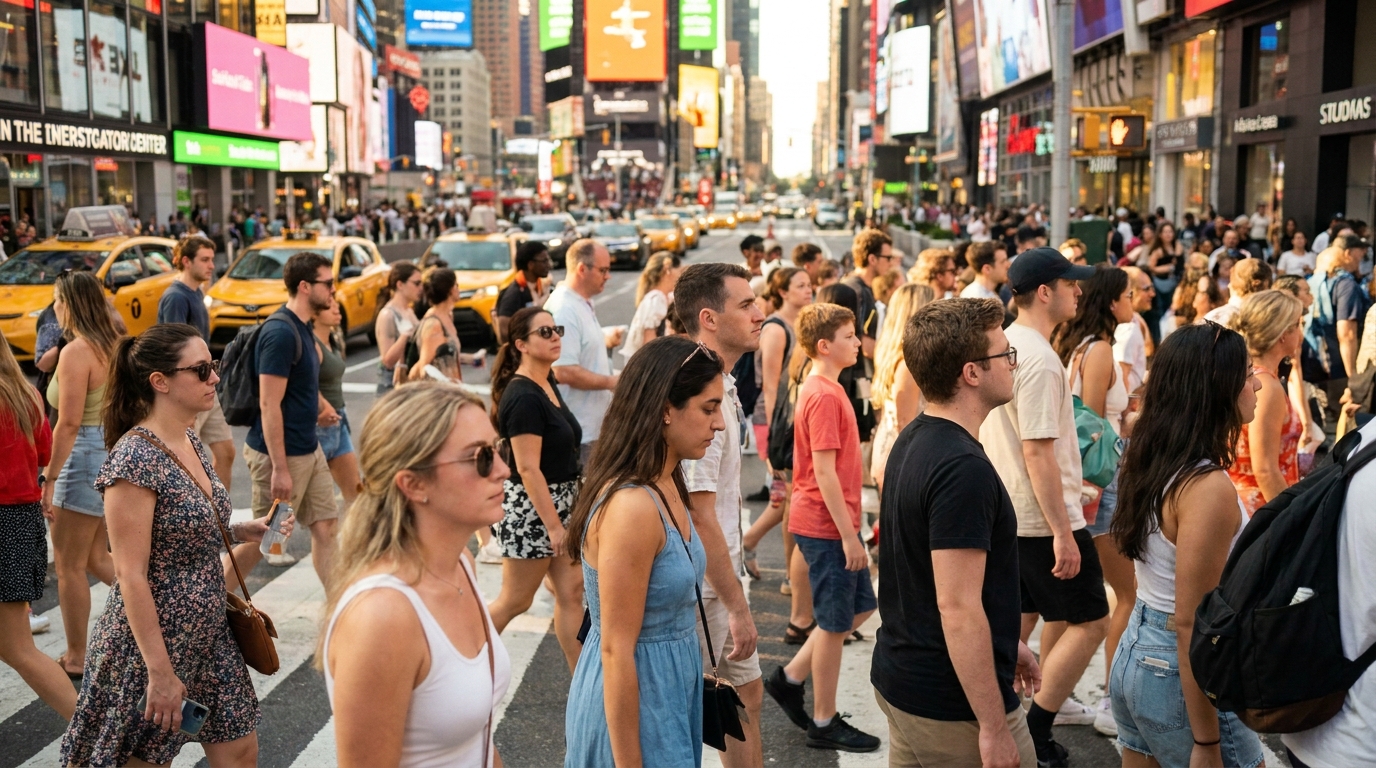
Summer is NYC’s busiest season, and the city leans into it hard. Free concerts in Central Park (SummerStage), Governors Ball music festival in June, and the Fourth of July fireworks over the East River all land in this window. The energy is real — but so are the downsides.
Expect average highs of 82–84degF (28–29degC) in July and August, with humidity that makes it feel closer to 90degF on many afternoons. Hotel rates hit their annual peak: budget on $280–$350/night for a standard Manhattan property, with luxury options clearing $500 easily. The top observation decks — One World Observatory, Top of the Rock, Edge — routinely quote 45–75 minute wait times on summer weekends.
NYC Pride Weekend in late June draws over 2 million people to Manhattan. If that’s your reason for coming, book accommodation three to four months out. If it isn’t, consider shifting your dates by a week in either direction to avoid the hotel premium.
Summer travel tip: the 7 train to Flushing Meadows and the A train to the Rockaways give you legitimate respite from Midtown heat without leaving the city. Both are free on a standard MetroCard.
Fall (September–November): Best Balance of Weather and Value

September through November is arguably the finest stretch on NYC’s calendar, and it’s where we’d put our own money. Temperatures cool gradually from the low 70s degF in September to the low 50s degF by November.
The city’s arts season kicks off — Broadway opens its new season in September, the New York Film Festival runs in October, and the foliage in Central Park and Prospect Park peaks between late October and early November.
Hotel rates ease off the summer ceiling: expect $220–$270/night for a solid mid-range Manhattan hotel on Booking.com in September and October. November sees an uptick around the NYC Marathon (first Sunday of November, ~50,000 runners) and Thanksgiving week, when rates climb back toward summer levels. Book those two windows at least six weeks ahead.
The fall also means less rain than spring and genuinely comfortable walking temperatures for the city’s best-suited activity: walking. The High Line, the Brooklyn Bridge, and the Staten Island Ferry are all at their best on a clear October afternoon.
See /best-things-to-do-in-new-york-city/ for our ranked list of fall-appropriate activities.
Winter (December–February): Cheapest Rates, Real Cold
Winter in New York City is polarizing, and we’ll be straight with you. January and February are genuinely cold — average lows of 27degF (-3degC), occasional snow, and wind that makes Fifth Avenue feel like a wind tunnel. But January and February also offer the cheapest hotel rates of the year, with mid-range Manhattan properties dropping to $180–$210/night. Crowds at museums, the Metropolitan Museum of Art, and indoor attractions thin out noticeably.
December is a different story. Holiday markets at Bryant Park and the Union Square Holiday Market, the Rockefeller Center Christmas Tree, and Macy’s window displays make December one of the city’s most atmospheric months — and one of the priciest. Hotel rates in the week before Christmas rival August; book three to four months out.
If budget is your primary driver and you can tolerate cold, a late January or February trip delivers the best cost-per-experience ratio in NYC’s calendar. Layer up, lean into the indoor museum circuit (MoMA, the American Museum of Natural History, the Frick), and you’ll have a legitimate deal.
See /new-york-city-travel-budget/ for a full cost breakdown by season.
Find your New York City hotel on the map
Live prices from Booking & Airbnb — tap a pin to compare stays around Midtown Manhattan and beyond.
Month-by-Month Price and Weather Snapshot
| Month | Avg High (degF) | Avg Low (degF) | Avg Hotel/Night (USD) | Crowd Level |
|---|---|---|---|---|
| January | 39 | 27 | $185 | Low |
| February | 42 | 29 | $190 | Low |
| March | 51 | 37 | $215 | Medium |
| April | 62 | 46 | $240 | Medium |
| May | 72 | 55 | $265 | Medium-High |
| June | 81 | 65 | $295 | High |
| July | 85 | 70 | $325 | Peak |
| August | 84 | 69 | $320 | Peak |
| September | 76 | 61 | $260 | High |
| October | 65 | 51 | $245 | Medium-High |
| November | 54 | 42 | $230 | Medium |
| December | 44 | 33 | $290 | High |
Hotel averages are based on mid-range Manhattan properties via Booking.com, 2026 pricing. Rates vary significantly by neighborhood and advance booking window.
Booking Strategy: How to Lock in the Best Rates
The single most effective tactic for NYC is booking 6–8 weeks ahead for spring and fall, and 3–4 months ahead for summer and the holiday season. Last-minute deals in NYC are rare because demand is deep and consistent. We always run a Booking.com search as soon as our dates are fixed — their flexible cancellation filters let you hold a rate without committing.
Neighborhoods matter too. Midtown Manhattan commands the highest rates because of proximity to Times Square and the main sights. Booking in the Upper West Side, Chelsea, or Long Island City (one subway stop from Midtown) typically saves $40–$80/night on equivalent quality. For families, Brooklyn neighborhoods like DUMBO and Park Slope combine more space and lower rates with easy subway access.
For car rental on day trips to the Hudson Valley or the Jersey Shore, we use our live travel map to compare across agencies — rates for compact cars from JFK or Newark start around $55–$70/day outside peak periods.
See /where-to-stay-in-new-york-city/ for our full neighborhood breakdown with price ranges.
NYC Events Calendar: Dates Worth Planning Around
New York City’s event density is one of its defining features. Some events are worth planning your trip around; others are worth actively avoiding if you’re not there for them.
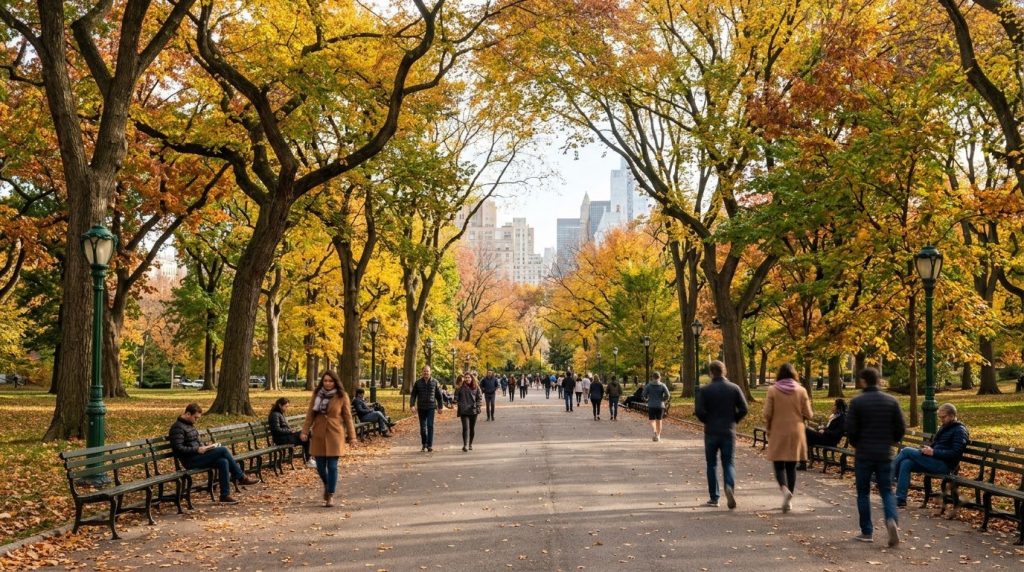
Plan around: NYC Pride (late June) for atmosphere and energy; Fall Foliage (late October–early November) for photography and park walks; Tribeca Film Festival (June) for a more local, less commercial NYC experience; and the Lunar New Year Parade (late January/early February) in Chinatown for one of the city’s most genuine community celebrations.
Plan around or avoid: NYC Marathon first Sunday of November — spectacular if you’re watching, a mobility nightmare if you’re not; Fashion Week in February and September means hotel premiums in Midtown; New Year’s Eve in Times Square is physically exhausting and logistically complex unless you’ve secured a viewing spot by late afternoon.
A local eSIM from Airalo ($5–$9 for a US data plan) keeps you connected for maps and last-minute bookings without paying hotel Wi-Fi rates or roaming fees.
See /best-day-trips-from-new-york-city/ for event-adjacent day trip options when the city gets overwhelming.
Frequently Asked Questions
What is the cheapest month to visit New York City?
January and February are consistently the cheapest months. Mid-range Manhattan hotels average $185–$195/night, compared to $320–$325/night in July. Attractions are less crowded and flights from the US, UK, and Australia tend to dip. You’ll need a proper winter coat, but the savings are substantial.
Is New York City worth visiting in summer despite the crowds?
Yes, if the events align with your interests. Free SummerStage concerts, the Fourth of July fireworks, NYC Pride, and the general buzz are genuinely worth the higher costs and crowds for many visitors. Book accommodation 3–4 months out and plan indoor activities for peak-heat midday hours to make summer work.
How far in advance should I book a NYC hotel?
For July, August, and the week before Christmas, book 10–12 weeks ahead. For spring and fall, 6–8 weeks typically secures good availability and rates. January and February allow shorter windows — 3–4 weeks is usually fine for non-holiday dates.
What’s the weather like in New York City in October?
October is one of the most comfortable months in NYC. Average highs run 62–67degF (17–19degC) and lows stay around 49–53degF (10–12degC). Rain is less frequent than spring. Light layers and a jacket handle most days easily. Central Park foliage typically peaks in the last two weeks of October.
Does New York City get very hot in summer?
July and August average highs of 84–85degF (29degC), but humidity regularly pushes the feels-like temperature above 90degF (32degC). The subway system adds to the heat underground. Lightweight, breathable clothing and staying hydrated are essential. Most indoor attractions are heavily air-conditioned.
Are there any months to avoid New York City entirely?
No month is truly worth avoiding if your schedule is fixed. That said, the combination of peak prices and peak crowds in July–August makes it the least cost-efficient window. If you’re flexible, shifting to May or September gives you similar temperatures with 20–30% lower accommodation costs.
Is New York City safe to visit year-round?
Yes. NYC is a major global city with active policing and significant tourist infrastructure year-round. Standard urban precautions apply: stay aware in crowded areas, use official yellow or app-based taxis rather than unlicensed car services, and keep bags zipped in the subway. The city’s overall crime metrics have improved consistently through 2024 and 2025. Our honest NYC safety answer also flags the illegal airport taxis, phone snatching and pushy Times Square hustlers you are far more likely to meet than violent crime.
When to Go: Our Final Call
For most travelers — especially first-timers from the US, UK, or Australia — we’d book April or early October without hesitation. The weather is cooperative, the hotel rates are reasonable on Booking.com, and the city’s main attractions are accessible without summer’s peak-season friction.
Experienced NYC visitors who want the full event calendar energy should look at late September (Broadway season opener, NYFF) or late June (Pride) and book accommodation early enough to control costs.
Whatever month you land on, NYC rewards visitors who do the logistics work upfront. Search hotels on Check live hotel prices as soon as your dates are firm, reserve attraction tickets the same week, and build some flexibility into your daily plan — because the city’s best moments frequently happen on the walk between wherever you intended to go.
See /new-york-city-travel-guide/ for our full practical guide to getting around, tipping, and budgeting for your trip.