25 Best Things to Do in New York City 2026
Disclosure: Some links in this guide are affiliate links. If you book or buy through them, we may earn a small commission at no extra cost to you — it helps keep our guides free.
- A 9-day New York CityPASS covers five top attractions and costs $149 per adult in 2026, saving up to 51%
- Central Park hosts 42 million visits per year — entry is free every single day
- The average visitor spends $459 per day in New York City (US Travel Association, 2025)
At a glance
| Attraction | Entry | Hours | Time needed |
|---|---|---|---|
| Central Park | Free | Conservatory Garden 8am-dusk | |
| Brooklyn Bridge Walk | Free | 30 minutes one way | |
| Staten Island Ferry | $0 | 24/7 | |
| MoMA | $30 | Free Fridays 5:30-9pm | |
| Empire State Building (86th floor) | $44 | Sunrise slots 8am |
Where you sleep decides your mornings
New York City packs more world-class experiences per square mile than almost any destination on earth — and in 2026, it’s drawing a record 64 million visitors who all want to do it right.
How Should You Plan Your Days by Neighborhood?
New York is spread across several boroughs, and crossing town takes longer than the map suggests. Grouping sights by area keeps transit time low and leaves room for a long lunch or a missed train.
- Lower Manhattan and the Brooklyn Bridge: the bridge walk, DUMBO, the Staten Island Ferry terminal, and the World Trade Center area fit together in one day.
- Midtown: observation decks, Grand Central, Times Square, and Broadway. Visit the busy areas early or late, and keep the evening for a show.
- Central Park and the Upper West and East Sides: the park, the major museums along its edges, and a slow lunch. This pairs well with a morning start.
- West Side and the Meatpacking District: the High Line, Chelsea, and Hudson Yards connect on foot.
Two paid attractions in one day is a comfortable limit for most visitors. Pair each with a free walk nearby so a delayed entry does not collapse the schedule.
How Do You Walk the Brooklyn Bridge Without the Frustration?
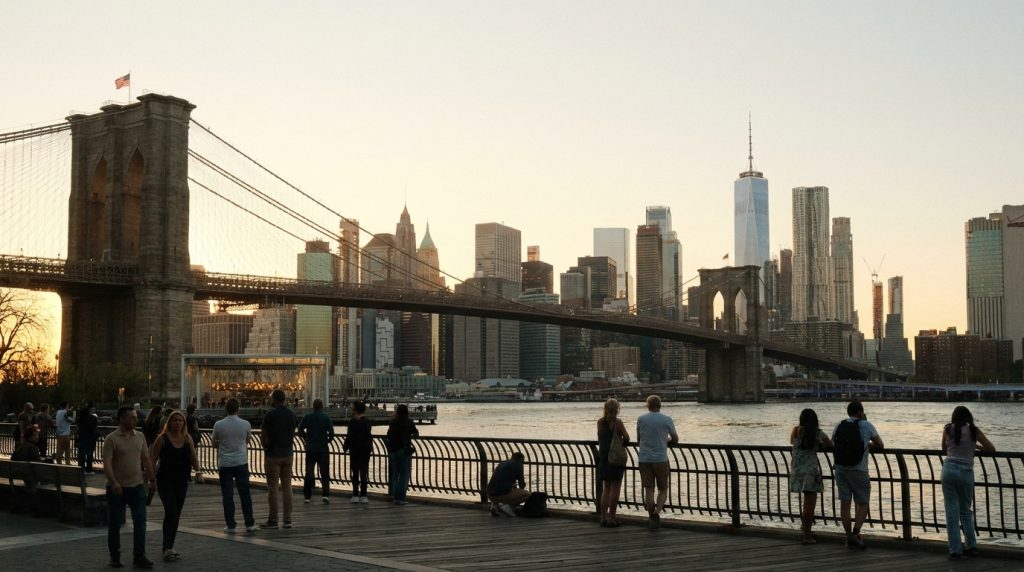
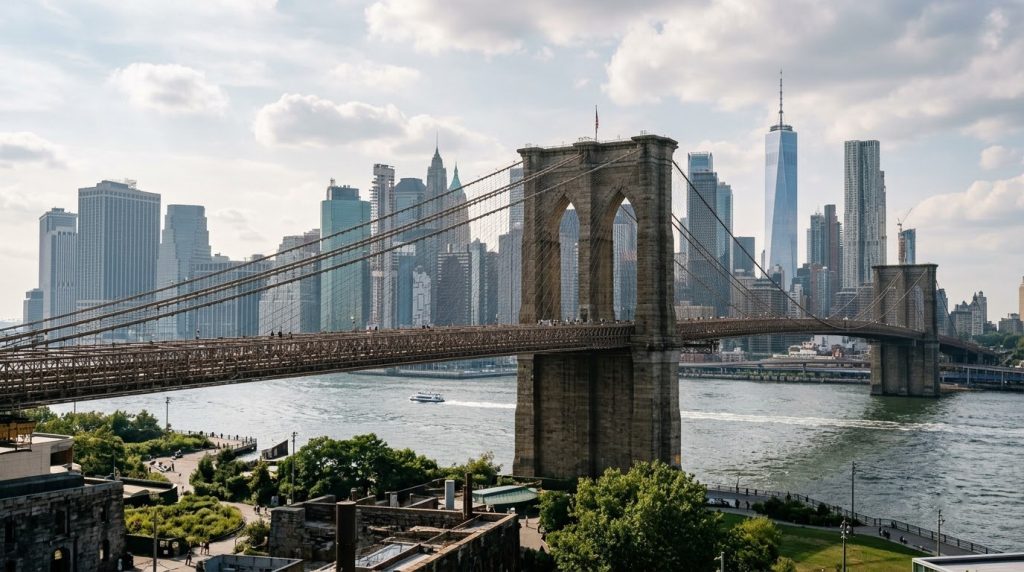
The bridge and its approaches measure 6,016 feet, with a main span of 1,595.5 feet, according to NYC DOT. The pedestrian promenade runs above the roadways and sits beside a protected two-way bike lane that opened in September 2021. Stay out of the bike lane, since cyclists move fast and have little room to avoid walkers.
DOT reports about 28,845 pedestrians cross daily as of 2024, so photo stops block the path quickly. The promenade stays open during tower rehabilitation work, although parts of it may narrow. Step to the edge of the walkway before you stop for a picture.
On the Brooklyn side, the A and C trains stop at High Street-Brooklyn Bridge, a short walk from the bridge. Starting in Manhattan gives you the skyline in front of you for most of the crossing, as the existing walking tip above suggests.
What Makes Central Park Worth an Entire Morning?
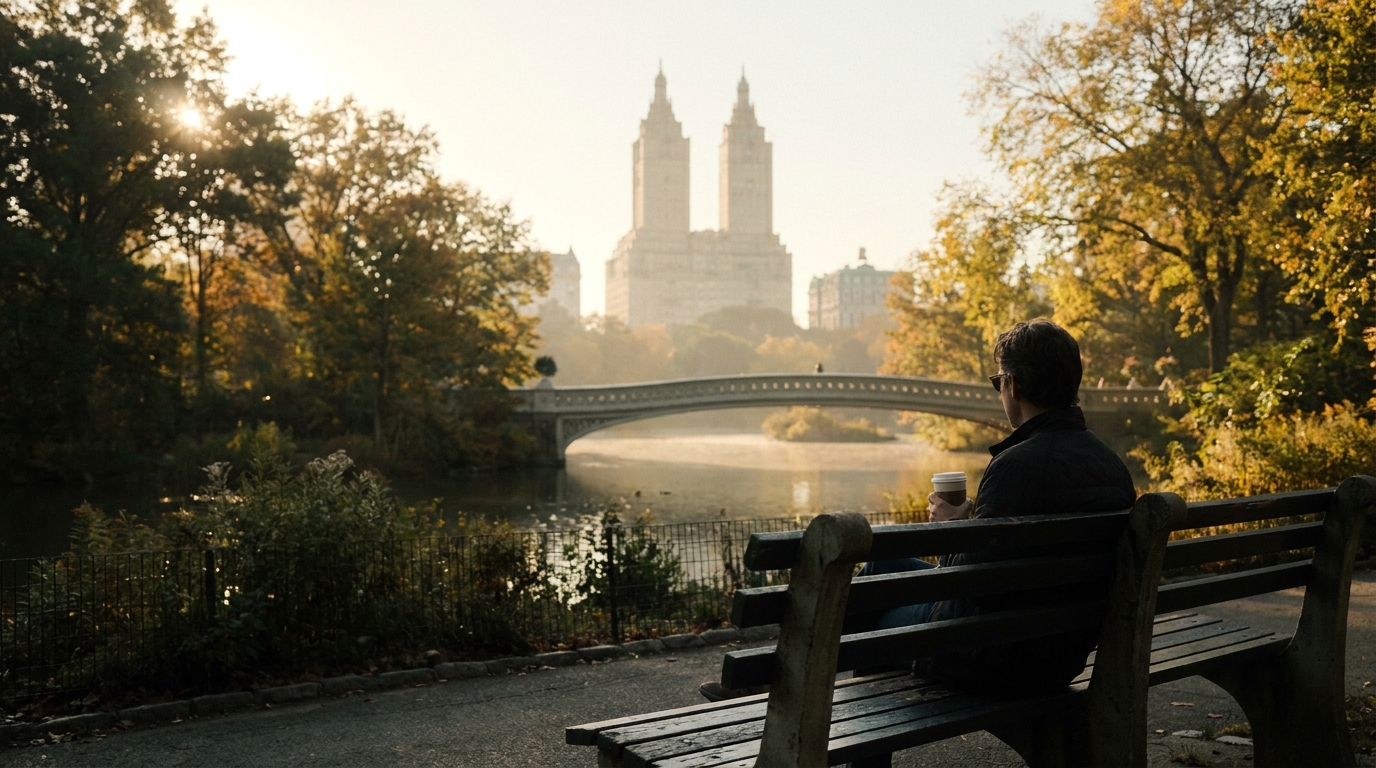
Central Park genuinely earns every hour you give it. Rent a rowboat on the Lake ($20/hour in 2026), catch a free Shakespeare in the Park performance in summer, or hire a pedicab for a narrated loop of the main highlights.
Don’t miss Bethesda Fountain, the Conservatory Garden (free, open 8am-dusk), and the 1.58-mile Reservoir running loop. If you’re visiting with kids, Belvedere Castle is free and gives castle-top views across the Ramble.
Book a guided Central Park walking tour on GetYourGuide to get the history behind the landmarks — tours start at $29 per person and run 90 minutes.
Is the Statue of Liberty Worth the Ferry Trip?
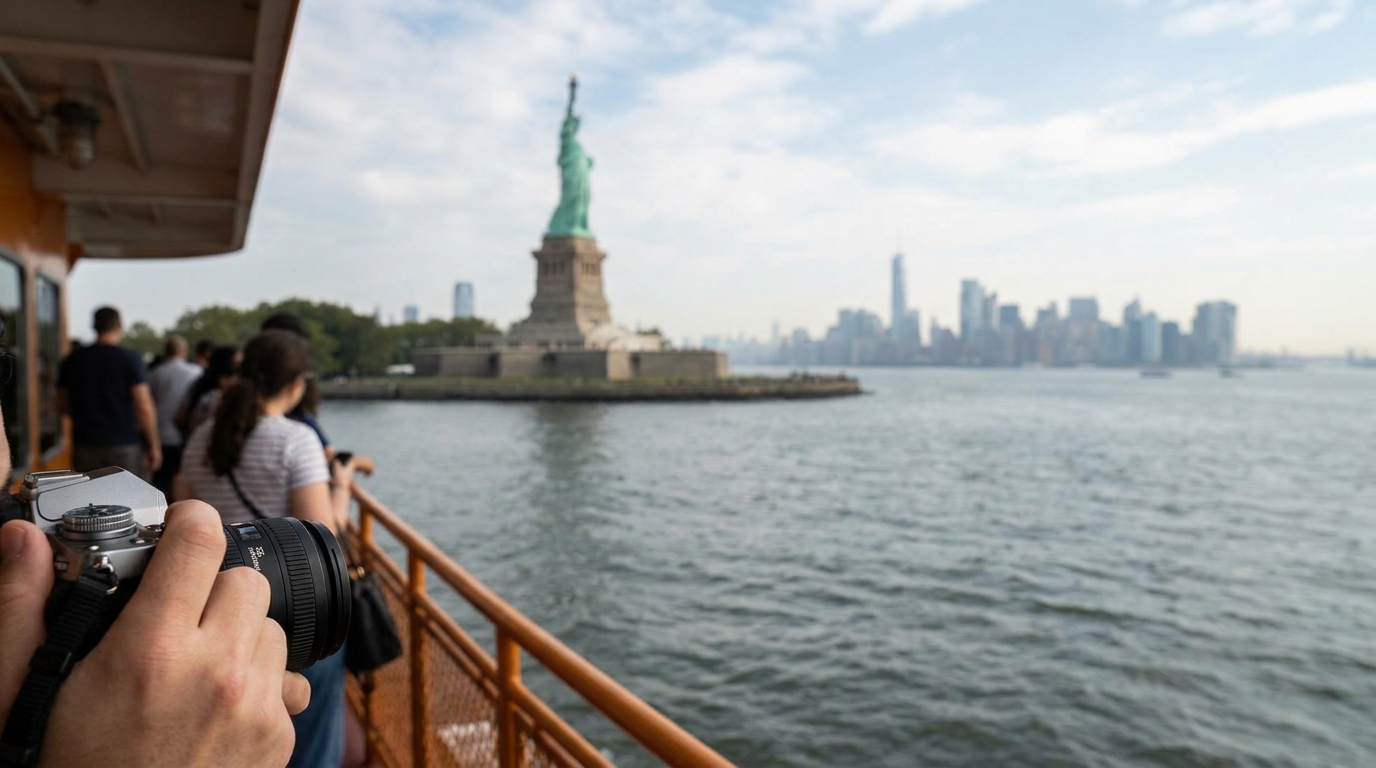
Yes — but only if you book the right ticket. In 2026, a basic ferry ticket costs $24.50 for adults (Statue Cruises, 2026) and gets you to Liberty Island and Ellis Island. The pedestal access ticket ($24.50 + reserve fee) lets you climb inside the statue’s base for harbor views.
The crown ticket ($24.50 + $3 reserve fee) sells out months in advance, so book the moment your dates are confirmed.
The ferry departs from Battery Park (Manhattan) and Liberty State Park (New Jersey). We recommend the Battery Park departure for its proximity to the Wall Street neighborhood, which you can explore before or after. Travelers budgeting the trip often check this where to stay in New York City before picking a neighborhood that matches the planned pace of the trip.
Reserve your Statue of Liberty ferry tickets via GetYourGuide or directly through StatueCruises.com — prices are identical, but GetYourGuide often bundles skip-the-line boarding.
How Much Does the Empire State Building Cost in 2026?
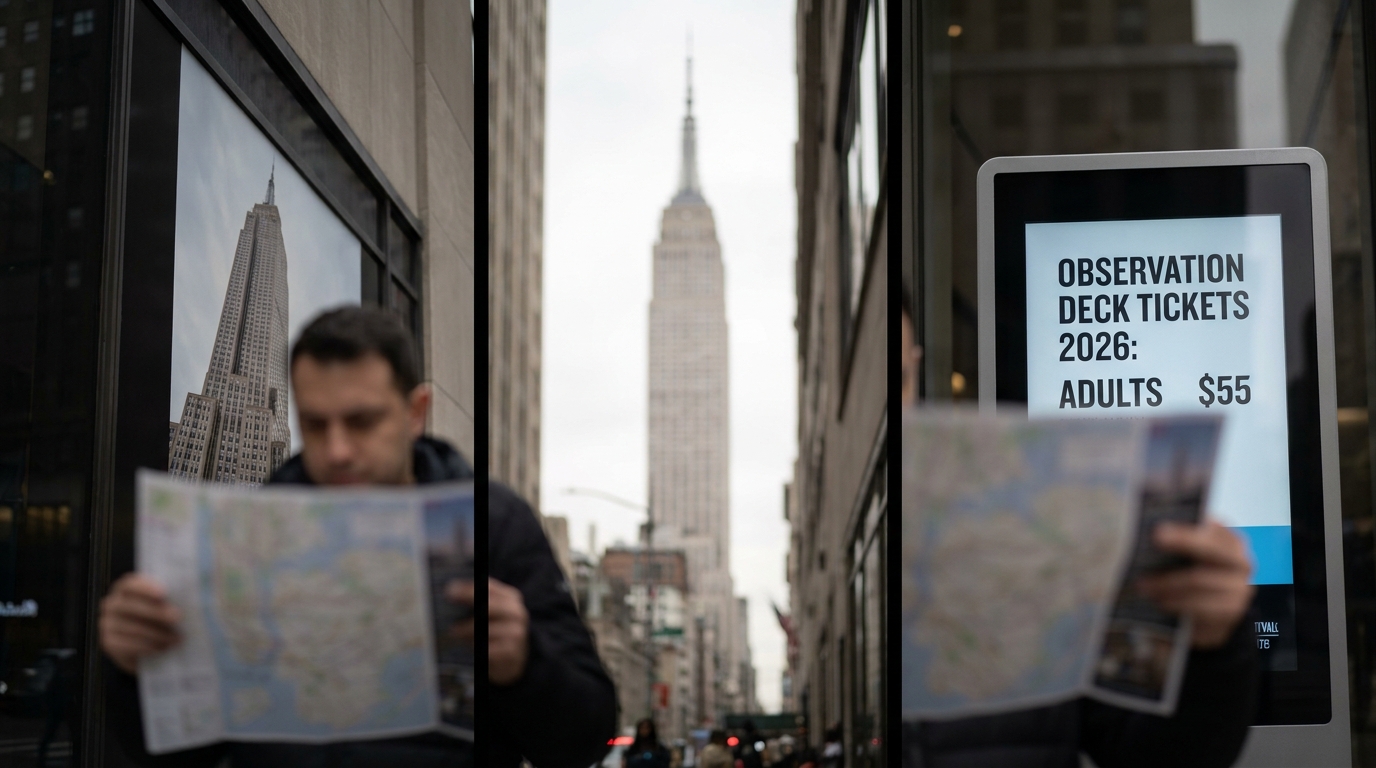
The Empire State Building’s main 86th floor observation deck costs $44 per adult for a standard timed ticket in 2026 (Empire State Building, 2026). The 102nd floor top deck adds another $30. We think the 86th floor gives the better experience — open-air views in every direction versus the enclosed glass cabin on 102.
Buy tickets at least 48 hours ahead to lock in your preferred time slot and avoid the walk-up premium. Sunrise slots (8am) and sunset slots (around 7:30-8pm in summer) are the most atmospheric but sell fastest.
The 86th floor wind at that time of year is genuinely cold — pack an extra layer even if it’s warm at street level.
What Are the Best Free Things to Do in New York City?
New York rewards budget travelers more than almost any major city. The Brooklyn Bridge walk is completely free and takes about 30 minutes one way — the Manhattan-to-Brooklyn direction gives you the best skyline photos. The Staten Island Ferry runs 24/7, costs $0, and delivers postcard views of the Statue of Liberty and lower Manhattan without buying a single ticket.
Free highlights in 2026:
| Attraction | Cost | Best Time |
|---|---|---|
| Brooklyn Bridge Walk | Free | Early morning (7-9am) |
| Staten Island Ferry | Free | Sunset crossing |
| High Line Park | Free | Weekday mornings |
| Brooklyn Bridge Park | Free | Weekend afternoons |
| The Oculus (World Trade Center) | Free | Midday for light |
| Times Square | Free | Evening |
| DUMBO neighborhood | Free | Golden hour |
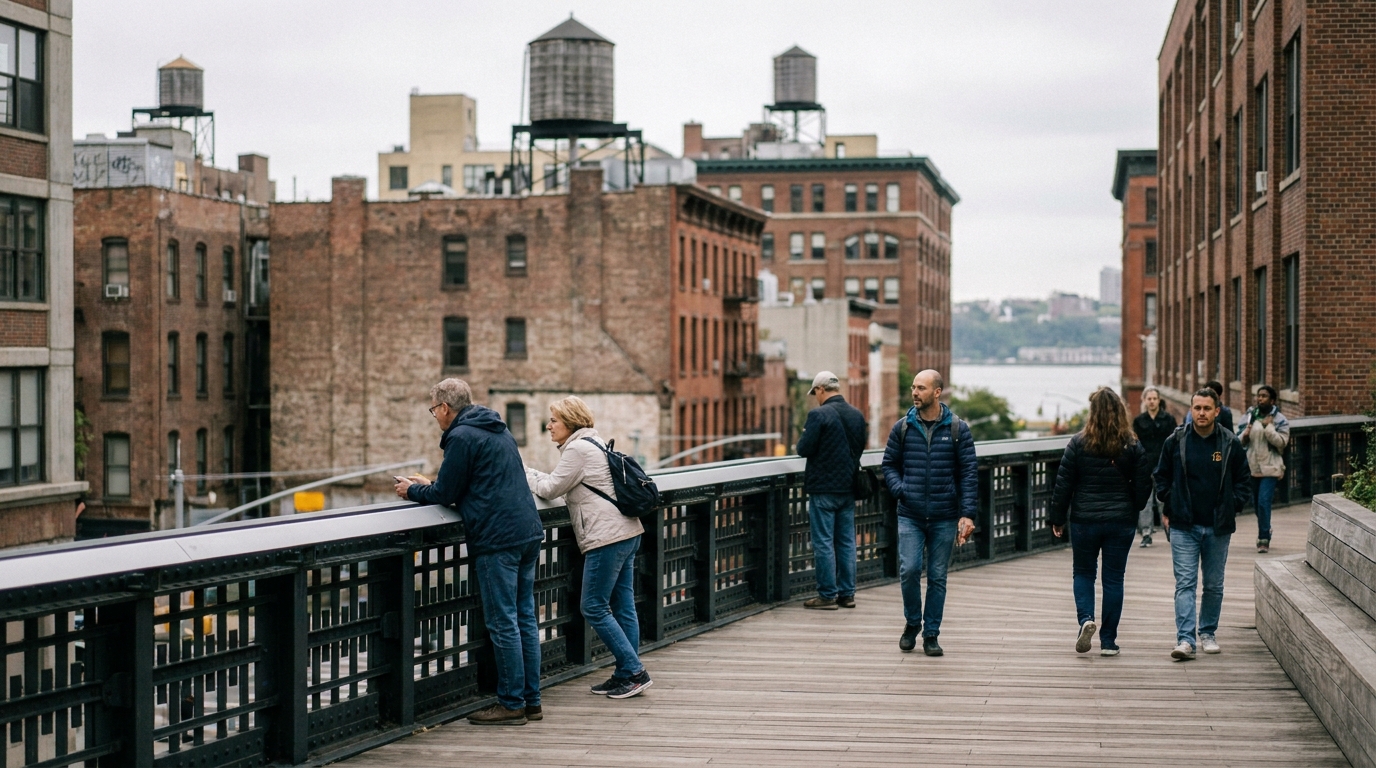
The High Line — a 1.45-mile elevated park built on a former freight rail line — is one of NYC’s genuine success stories. Admission is free, and the public art installations change seasonally.
Which NYC Museum Should You Prioritize?
The Metropolitan Museum of Art should be first on your list if you only have time for one.
“Suggested” means you can technically pay less, but the collection — spanning 5,000 years of human creativity — is worth every dollar.
The American Museum of Natural History ($28 suggested adult admission in 2026) is the better choice if you’re traveling with children. Its Hall of Ocean Life and dinosaur halls are genuinely spectacular.
For contemporary art, MoMA charges $30 for adults but offers free Friday evening access (5:30-9pm) — arrive by 5pm to avoid the queue.
How Do You Get Around New York City Without Overspending?
The subway is your best tool. A single ride costs $3.00 in 2026, and OMNY fare capping limits weekly spending to $35 — a clear win if you’re riding more than 12 times over the week (MTA, 2026). Tap-to-pay with a contactless card or phone also works at all turnstiles.
For outer borough trips and airport transfers, use the subway over taxis wherever possible. The A train from JFK to Manhattan costs $3.00 and takes 50-70 minutes. A yellow cab from JFK runs a flat $70 plus tolls and tip (NYC Taxi & Limousine Commission, 2026).
Renting a car in New York City itself makes almost no sense — parking averages $45/day in Midtown Manhattan (SpotHero, 2026). If you’re planning day trips to the Catskills, Hudson Valley, or Hamptons, compare rental car rates via our live travel map for pickup at JFK or Newark, where rates are significantly lower than Midtown depots.
What’s the Best Way to See the NYC Skyline?
Three platforms give you genuinely different perspectives, and the best one depends on what you want. The Empire State Building’s 86th floor (facing south) frames the downtown skyline in full. One World Observatory ($46 adult, 2026) puts you on top of the tallest building in the Western Hemisphere at 1,776 feet, with a floor-to-ceiling glass viewing deck.
The SUMMIT One Vanderbilt ($49 adult, 2026) adds immersive art installations to the observation experience — it’s more Instagram-ready but less traditionally “view-focused.”
One underrated alternative: the free observation deck at the Top of the Rock (30 Rockefeller Plaza) charges $40, but — unlike the ESB — it gives you an unobstructed view that includes the Empire State Building itself in the frame.
| Observation Deck | Height | Adult Price 2026 | Best For |
|---|---|---|---|
| Empire State Building (86F) | 1,050 ft | $44 | Classic NYC views |
| One World Observatory | 1,250 ft | $46 | Highest vantage point |
| SUMMIT One Vanderbilt | 1,020 ft | $49 | Art + views combined |
| Top of the Rock | 850 ft | $40 | ESB in the frame |
Find your New York City hotel on the map
Live prices from Booking & Airbnb — tap a pin to compare stays around Midtown Manhattan and beyond.
What Food Experiences Should You Plan in New York City?
New York’s food scene is too good to leave to chance. The city has 66 Michelin-starred restaurants in 2026 (Michelin Guide, 2026), but the experiences that define NYC eating are far less formal. A classic New York slice from a pizzeria in Brooklyn or the East Village costs $3-4.

A pastrami sandwich at Katz’s Delicatessen on the Lower East Side runs $27.95 in 2026 — expensive, but one sandwich feeds two people comfortably.
For a structured food tour, book a Brooklyn food tour via GetYourGuide — they start around $75 per person and cover 8-10 tastings across neighborhoods like DUMBO, Cobble Hill, and Carroll Gardens.
Chelsea Market is free to enter and packs artisan food vendors, fishmongers, and bakeries into the ground floor of a converted biscuit factory. Get there by 11am on weekdays to avoid the lunch rush.
What Are the Best Day Trips from New York City?
Getting out of the city for a day resets your perspective entirely. The Hudson Valley is the most rewarding option — the Metro-North train from Grand Central gets you to Cold Spring or Beacon in 90 minutes (from $20 round-trip in 2026). Beacon is home to Dia Beacon, a contemporary art museum in a 300,000-square-foot former factory ($20 admission).
The Catskill Mountains are best reached by car — about 2.5 hours from Midtown, with excellent hiking at North South Lake State Campground. Compare rental car rates on our live travel map for the best prices at NYC-area airports; budget $60-90/day for a compact car.
Atlantic City (2 hours by bus, from $25 round-trip via Greyhound) suits travelers who want beach and casino options. The Hamptons are equally accessible by LIRR train ($35-45 round-trip) and deliver a completely different side of New York State.
What Do You Need to Know Before Visiting the High Line and the Met?
These two stops are popular and easy to mistime. A few facts avoid wasted trips.
The High Line
The park is open from 7 AM to 10 PM between April 1 and November 30, and from 7 AM to 8 PM between December 1 and March 31. Elevators operate at four locations, and park-level access also exists at 30th Street at Hudson Yards and at 31st Street and Dyer Avenue near the Moynihan Connector.
Bicycles, skateboards, scooters, smoking, and non-service dogs are not allowed. Free docent-led tours run on select days, which the park publishes on its website.
The Metropolitan Museum of Art
The Met offers pay-what-you-wish admission only to New York State residents and to students from New York, New Jersey, and Connecticut. Other visitors pay the posted adult price, so budget for it. Plan a focused visit, with two or three galleries rather than a full-museum sweep, and confirm current opening days on the museum’s website before you go.
Visit the 9/11 Memorial and Museum
The Memorial plaza at the World Trade Center site is open daily from 8 a.m. to 8 p.m., and admission to the plaza is free every day. The museum is open Wednesday through Monday, plus select Tuesdays, from 9 a.m. to 7 p.m., with last entry at 5:30 p.m. Museum visits require advance tickets.
The museum recommends at least 45 to 90 minutes inside. Check the official site for ticket prices and discount categories, since the adult price was not listed on the visit page.
- Book the museum ahead and choose a morning slot to avoid peak crowds.
- Visit the plaza at a quieter time of day if you want a reflective stop.
- Pair it with a walk through the Financial District or a Staten Island Ferry ride.
Ride the Roosevelt Island Tram for a Cheap Skyline View
The Roosevelt Island Tramway runs 3,140 feet (960 m) from Manhattan’s Upper East Side, near Second Avenue between 59th and 60th Streets, to Roosevelt Island. The ride lasts three to four minutes, and the cabins rise to 135 feet (41 m) above the East River at their lowest point.
A one-way fare is USD 3.00 as of 2026, paid with OMNY tap-to-pay, and transfers to buses and subways are available subject to normal fare rules. Each cabin holds up to 110 people, so avoid commuting hours if you want window space.
- Stand near the windows facing the Queensboro Bridge side for the best view.
- Ride across and return, or walk along the island’s waterfront in good weather.
- Use it as a transit-priced alternative to a paid observation deck.
Walk Little Island on the Hudson
Little Island opened in 2021 on Pier 55 in Hudson River Park, near West 13th Street and the Meatpacking District. The 2.4-acre park sits on pier-top planted landforms and has a 687-seat amphitheater nicknamed the Amph, plus footbridges at 13th and 14th Streets.
The park opens daily at 6 a.m. and closing times vary by season. At opening, visitors were asked to reserve midday visits, so check the official site for current entry rules before you go.
- Come early in the day or at sunset for softer light and fewer people.
- Combine it with a High Line walk and a Chelsea Market stop.
- Check the performance calendar. Under its lease, at least 51% of Amph tickets must be priced under USD 30, including free tickets.
See a Broadway Show Without Paying Full Price
TKTS sells discounted same-day tickets at Duffy Square (West 47th Street and Broadway) and at the David Rubenstein Atrium at Lincoln Center. Discounts are generally 20 to 50 percent off face value, although dynamic pricing can narrow the savings. Prices are listed with the discount and service charges.
The booth accepts cash and cards. Waits at Duffy Square are usually longer than at Lincoln Center, so the Lincoln Center booth can save time.
- Arrive early for the best choice, as tickets are released throughout the day.
- Be flexible on the show, since popular productions may not appear.
- Compare the TKTS price with the theater box office before buying.
Step Inside Grand Central Terminal
Grand Central Terminal opened on February 2, 1913. It has 44 platforms, more than any other railroad station in the world, all below ground. It drew about 21.6 million visitors in 2018, not counting train and subway passengers.
The Main Concourse has a four-sided brass clock above the information booth. Below it, the ramps toward the Oyster Bar include a whispering gallery under the arches, where a soft voice can carry diagonally across the landing. Grand Central Market occupies a passage with food shops.
- Visit in the morning for space to look up and take photos.
- Try the whispering gallery with a friend in opposite corners.
- Use it for a coffee or lunch break between Midtown stops.
Spend a Half Day at Coney Island
Coney Island is easy to reach by subway, with the Stillwell Avenue station serving the area since 1919. Landmarks include the Wonder Wheel, which opened in 1920, and the Cyclone coaster, designated a city landmark in 1988. The Riegelmann Boardwalk was built in 1922 to 1923.
Nathan Handwerker began selling hot dogs here for a nickel in 1916, and the Nathan’s Famous brand grew from it. Luna Park and the New York Aquarium are also nearby.
- Go on a warm weekday if you want smaller crowds, since weekends fill up in summer.
- Check which rides and attractions are open in the off-season.
- Bring sun protection and allow a few hours for the subway trip each way.
What Mistakes Do First-Time Visitors Make in New York?
- Booking observation decks without checking the sky. Cloud and haze can erase the view. Choose a time slot with a clear forecast when ticket terms allow changes.
- Over-scheduling. Subway delays and long lines make a six-attraction day unrealistic. Cap paid stops at two.
- Staying in Times Square for the whole trip. The area is loud and crowded; visit at night rather than base your day there.
- Walking against the crowd on the Brooklyn Bridge. Move at the edge, and keep out of the bike lane.
- Ignoring comfortable shoes. A typical sightseeing day involves long walks on hard pavement.
How Do You Save Money on NYC Attractions?
The New York CityPASS is the most straightforward discount tool. The standard 2026 CityPASS costs $149 per adult and covers five attractions you choose from a list of ten, including the Empire State Building, the American Museum of Natural History, Top of the Rock, the Intrepid Museum, and a Circle Line cruise. Travelers torn between the two destinations can weigh the trade-offs in our New York City vs Los Angeles comparison.
The New York Pass is better for aggressive sightseers — a 3-day pass at $249 covers 100+ attractions. Run the numbers against your itinerary before buying; it only saves money if you’re hitting five or more paid attractions per day. It is worth pairing this page with this New York City travel guide before mapping out transport, neighborhoods, and a rough daily schedule.
Free days and hours worth knowing in 2026:
Frequently Asked Questions
How many days do you need in New York City?
Most first-time visitors need five to seven days to cover Manhattan’s highlights, a Brooklyn afternoon, and one day trip. Three days is workable if you’re focused on specific neighborhoods. NYC Tourism + Conventions reports the average stay is 4.2 nights for domestic visitors and 7.8 nights for international travelers (2025). For a first trip, our breakdown of how many days New York deserves lands on 4 full days, since 3 only covers Manhattan’s headline sights at a sprint.
What’s the cheapest way to get from JFK to Manhattan?
The AirTrain to Jamaica Station plus the E or A subway train costs $2.90 + $8.25 AirTrain fee = $11.15 total in 2026 — the cheapest option by far. It takes 50-70 minutes. A flat-rate yellow cab runs $70 plus tolls and tip. Rideshares typically run $45-65 depending on traffic and surge pricing.
Is New York City safe for tourists in 2026?
Yes, for the vast majority of visited areas. Standard urban precautions apply: keep valuables out of view, be aware of your surroundings on the subway late at night, and stick to well-lit streets after dark in unfamiliar neighborhoods. The latest figures are even better: our New York City safety guide cites NYPD data showing 173 murders through August 31, the fewest on record for that stretch.
What’s the best neighborhood to stay in for first-time visitors?
Midtown Manhattan (34th to 59th Street) puts you closest to the Empire State Building, Times Square, Central Park, and major subway lines. Expect to pay $250-$400/night for a decent hotel in 2026. The Lower East Side and Brooklyn’s Williamsburg neighborhood offer cheaper rates ($150-$250/night) with a more local feel — Check live hotel prices to find the best rates for your dates.
Do you need to book NYC attractions in advance?
For time-specific experiences — Statue of Liberty crown access, Hamilton on Broadway, One World Observatory timed entry — book weeks or months ahead. General admission to most museums can be reserved 24-48 hours out. Walking-up works for free attractions but expect queues at the Empire State Building and One World Observatory on weekends without a reservation.
Is the New York CityPASS worth it in 2026?
The CityPASS saves money if you visit all five of your chosen attractions. At $149 per adult versus roughly $250+ to buy each ticket individually, the savings are real. It’s less worthwhile if you’d rather prioritize free attractions like the High Line, Brooklyn Bridge, and Staten Island Ferry.
Can you use Airalo eSIM in New York City?
Yes. Airalo’s USA eSIM starts at $4.50 for 1GB and $18 for 10GB in 2026, covering all major US carriers. It activates instantly and avoids international roaming fees. We recommend the 10GB plan for a week-long trip — Google Maps and photo uploads consume data quickly in a city this size.
Plan Your New York City Trip Today
New York City doesn’t run out of things to do — the challenge is building an itinerary that fits your pace, budget, and interests without trying to cram everything into one frantic sprint. Start with the free anchors (Central Park, Brooklyn Bridge, High Line, Staten Island Ferry) to get your bearings, then layer in two or three paid experiences that genuinely matter to you.
For the smoothest trip, browse NYC tours and experiences on GetYourGuide, Check live hotel prices, and grab a our live travel map if you’re planning any regional day trips. Lock in your Statue of Liberty and observation deck tickets before you land — 2026 summer dates are already selling fast.
Sources: NYC Tourism + Conventions (2025), The Metropolitan Museum of Art Annual Report (2024), NYC Parks Department (2024), MTA Fare Information (2026), Statue Cruises official pricing (2026), Empire State Building official pricing (2026), NYC Taxi & Limousine Commission (2026), CityPASS official pricing (2026), NYPD CompStat Report (2025), Michelin Guide New York (2026), SpotHero Parking Index (2026), US Travel Association (2025).