
Disclosure: Some links in this guide are affiliate links. If you book or buy through them, we may earn a small commission at no extra cost to you — it helps keep our guides free.
The Maldives delivers more than postcard-perfect beaches — it’s one of the world’s top destinations for underwater encounters, water sports, and barefoot luxury, with over 1,200 islands spread across 26 atolls. We’ve pulled together the 25 best things to do in Maldives in 2026, complete with current prices, practical booking tips, and honest advice so you spend less time planning and more time in the water.
Key Takeaways
– Snorkeling with whale sharks at South Ari Atoll is rated the top marine activity in the Indian Ocean, with an 85% encounter rate between January and April (Maldives Marine Research Institute, 2025)
– A standard overwater bungalow costs $350-$1,200/night in 2026, but guesthouse island stays run as low as $80/night (Booking.com, 2026)
– The Maldives welcomed 2.04 million tourists in 2025, a 4.2% year-on-year increase (Ministry of Tourism Maldives, 2025)
– 99% of the country’s land area is less than 1 meter above sea level, making it the world’s lowest-lying nation (IPCC, 2024)
– Travelers save an average of 18% on Maldives water sports packages when booking 72 hours in advance via GetYourGuide (GetYourGuide data, 2025)
1. Snorkel the Maldives’ House Reef
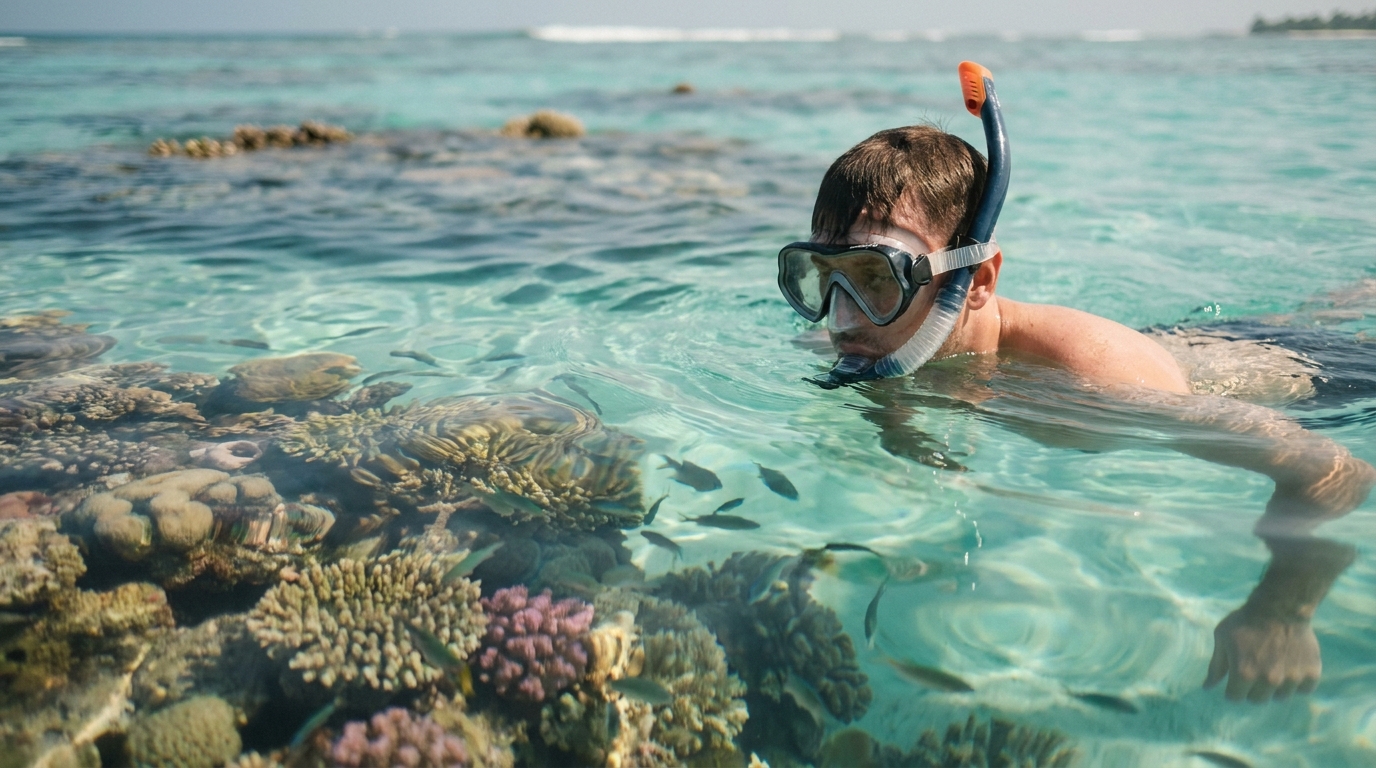
Every resort island and most guesthouse islands sit on a house reef where you can drop in straight from the beach. We think this is the single best free activity in the Maldives. North Male Atoll reefs average 20-30 meters visibility year-round, and you’ll spot reef sharks, sea turtles, and schools of fusiliers within 10 minutes. Many guesthouses on Maafushi and Thulusdhoo loan snorkel gear free of charge; resort rentals run $15-$25/day.
The best house reefs for beginners are at Kuredu Resort (Lhaviyani Atoll), where the coral garden starts just 5 meters from shore. Advanced snorkelers should head to the outer edge of Banana Reef in North Male Atoll, a 40-minute speedboat transfer from Male. You’ll see Napoleon wrasse, eagle rays, and the occasional hammerhead between January and April.
Pack your own reef-safe sunscreen — Maldives customs confiscates oxybenzone-containing products at the border.
2. Swim with Whale Sharks at South Ari Atoll
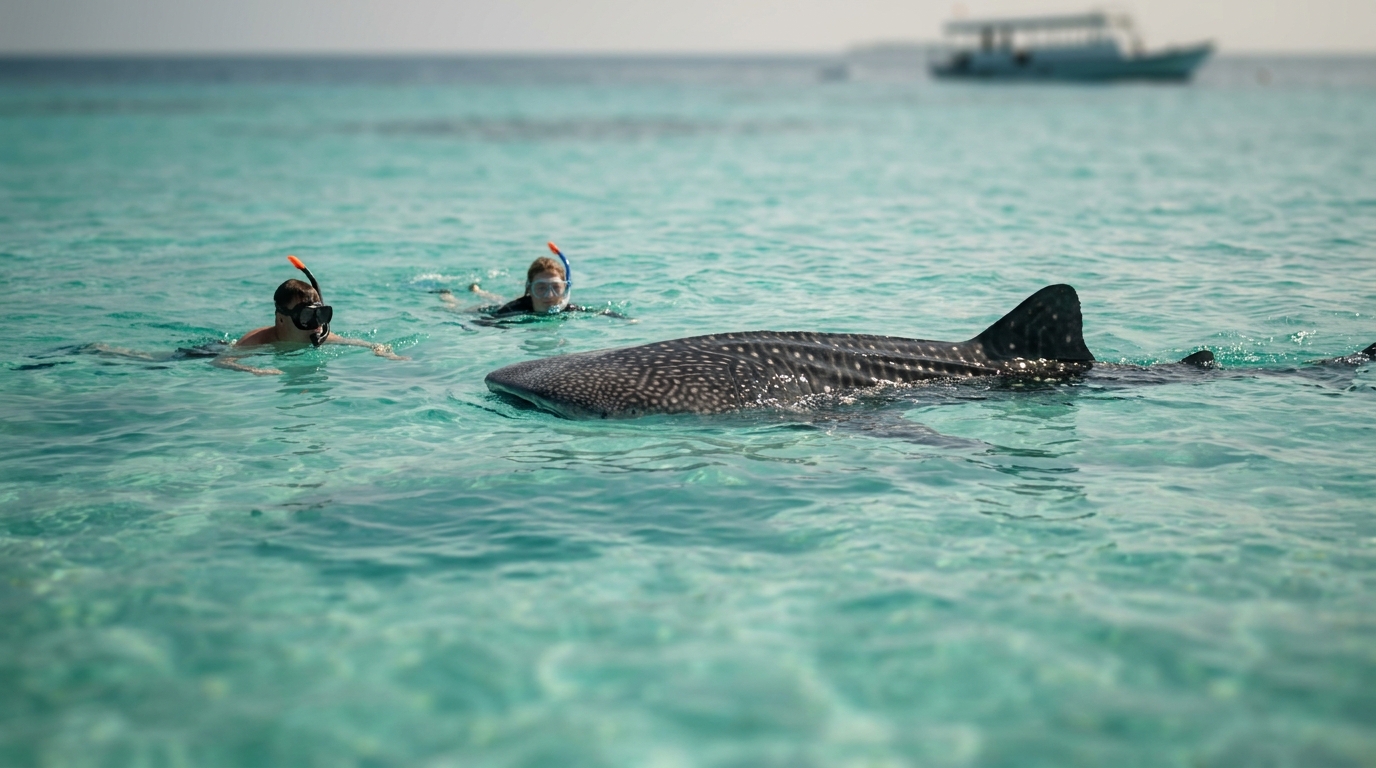
South Ari Atoll is one of the only places on earth where whale sharks are resident year-round rather than seasonal. An 85% encounter rate between January and April drops to about 60% from May to December, but you’ve still got strong odds on any given day (Maldives Marine Research Institute, 2025). Day trips from Male cost $120-$160 per person including a speedboat transfer, snorkel gear, and a guide who spots the sharks from above.
We recommend booking through GetYourGuide rather than your resort — tours are identical but prices are typically $20-$30 cheaper. Whale sharks are filter feeders and non-aggressive; you’ll swim alongside them at the surface. No diving certification required.
3. Dive Mako and Hammerhead Sharks at Fuvahmulah
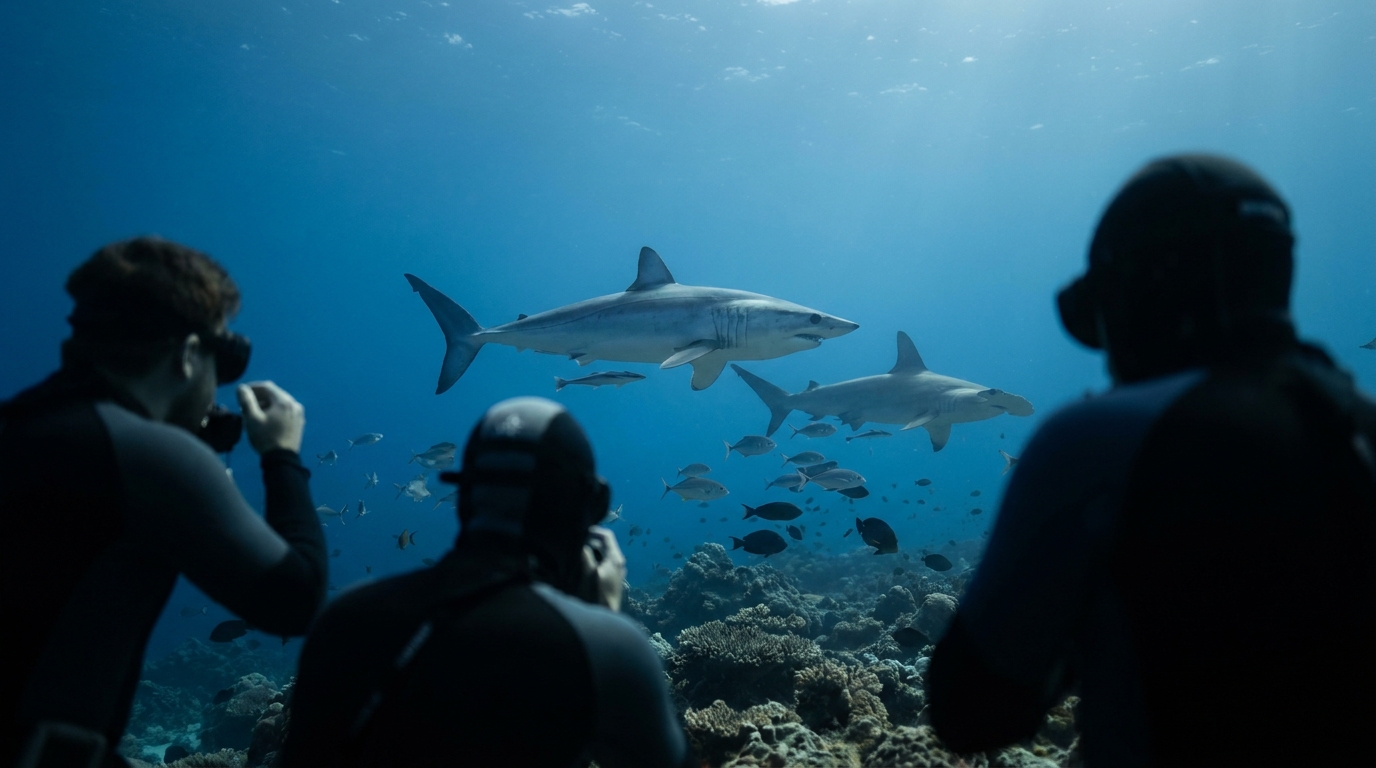
Fuvahmulah Atoll sits outside the standard tourist trail, 500 km south of Male, and it’s the only place in the world where you can dive with tiger sharks, hammerheads, thresher sharks, and whale sharks on the same dive. A full-day liveaboard day trip from Fuvahmulah town costs $110-$140 for two dives. The atoll has no lagoon, so currents are strong — PADI Advanced Open Water or equivalent is required.
We’d categorize this as a bucket-list dive rather than a casual add-on. Plan a two-night stay in Fuvahmulah guesthouses ($60-$90/night via Booking.com) to get two full days of diving.
Find your Maldives hotel on the map
Live prices from Booking & Airbnb — tap a pin to compare stays around Male and Maafushi and beyond.
4. Stay in an Overwater Bungalow
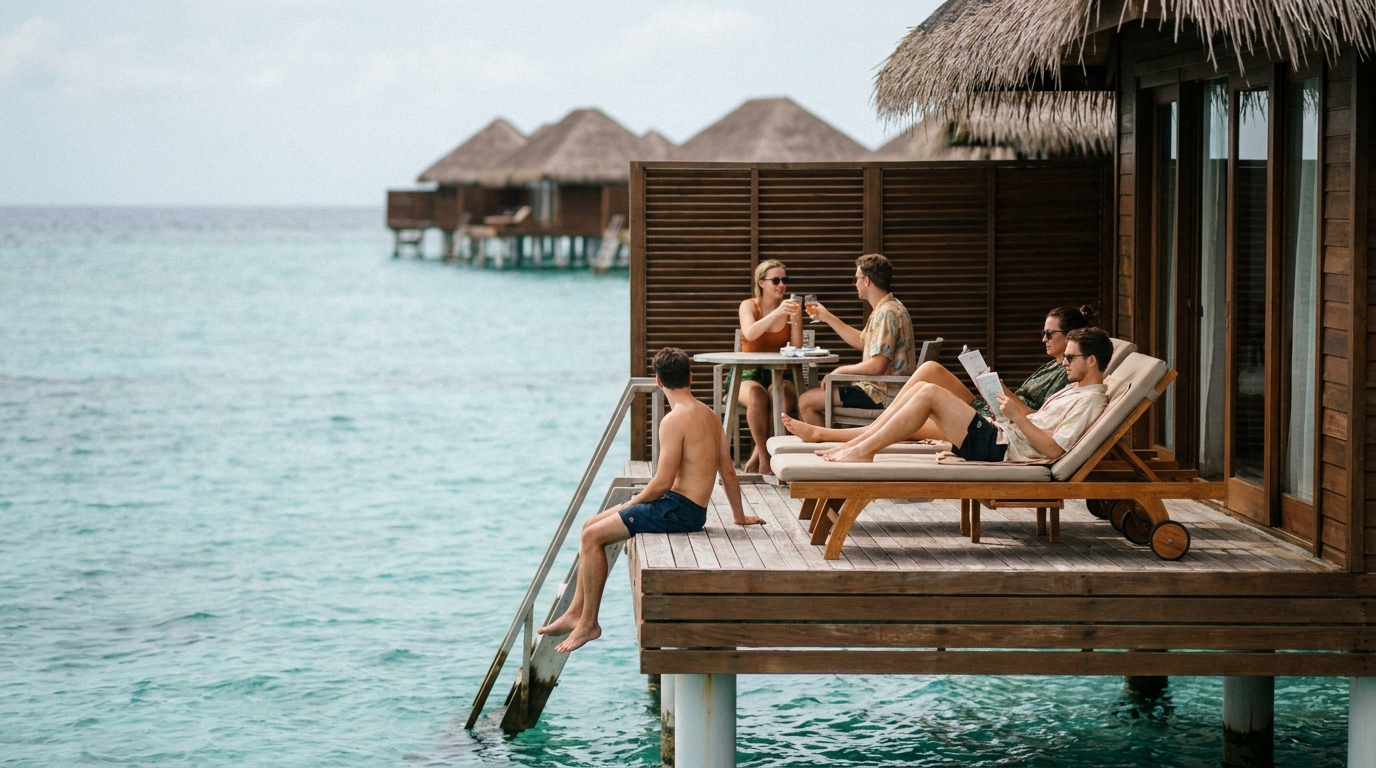
The Maldives invented the overwater bungalow concept, and the archipelago still does it better than anywhere else. In 2026, entry-level overwater villas start at $350/night at properties like Cinnamon Dhonveli or Bandos Maldives. Mid-range options ($600-$900/night) include Sun Siyam Iru Fushi and Kuramathi. At the luxury end, Gili Lankanfushi and Soneva Jani run $1,200-$3,500/night with private pools and water slides.
Book 60-90 days out for high season (November to April) to access early bird rates. If you book through Booking.com, look for properties with free cancellation up to 14 days before arrival — Maldives weather can shift flights unexpectedly.
5. Take a Sunset Dolphin Cruise
Spinner dolphins are resident in Maldivian waters year-round, and a 90-minute sunset cruise gives you a near-guaranteed sighting. The dolphins follow dhoni boats (traditional Maldivian wooden vessels) and bow-ride at sunset as they move from feeding grounds to sleeping areas. Cruises depart from Male, Maafushi, and all major resort islands; prices range from $25-$55 per person.
Resort-operated cruises tend to include soft drinks; guesthouse-island boats are more basic but half the price. We’ve found the cruises departing from Maafushi (30 minutes by speedboat from Male, $15 one way) to be the best value. Book the evening slot — 5:30-7:00 PM — for the strongest light and highest dolphin activity.
6. Try a Maldivian Surfing Lesson
The Maldives has a legitimate surf culture centered on North and South Male Atolls. Cokes (Thulusdhoo), Jailbreaks (Lhaviyani), and Chickens (North Male) are three breaks with international reputations. Surf season runs April to October, when southwest swells push consistent 1-3 meter waves. Beginner lessons cost $60-$80 for a two-hour session including board and instructor. More experienced surfers can charter a surf boat ($300-$500/day for a private group of up to six) to access outer-atoll breaks.
Klook lists several surf school packages from Thulusdhoo starting at $65 per person. Thulusdhoo guesthouses ($70-$120/night) are 35 minutes by speedboat from Male ($15-$20 per seat on scheduled ferry).
7. Explore a Local Island Market
Male’s Central Market and the newer Hulhumale market let you browse Maldivian daily life alongside dried tuna (skipjack, the national fish), tropical fruits, and handwoven lacquerware. Entry is free, and it’s one of the most honest window into Maldivian culture you’ll get. The best time to visit is 7:00-9:00 AM when the fish market is operating at full pace. Dried baby shark (gulha) and tuna belly are worth trying from the street stalls outside.
Combine the market with a walk along the Male waterfront and the historic Hukuru Miskiy mosque (17th century; free entry but dress modestly — shoulders and knees covered). This half-day can be done between a morning transfer and an afternoon resort check-in.
8. Go Manta Ray Snorkeling at Hanifaru Bay
Hanifaru Bay in Baa Atoll is a UNESCO Biosphere Reserve and one of the world’s best manta ray aggregation sites. Between June and November (peak: August-September), up to 200 mantas feed in the bay simultaneously. Snorkeling is permitted; scuba diving is not, to protect the rays. Day trips from Male run $150-$200 including speedboat, park entrance fee ($25), and guide. Alternatively, staying on Dharavandhoo island (Baa Atoll guesthouses from $95/night via Booking.com) cuts day-trip costs significantly.
The experience is seasonal but reliably spectacular during peak months. We’ve spoken to travelers who counted 80+ mantas in a single 45-minute snorkel.
9. Night Snorkel with Bioluminescent Plankton
Vaadhoo Island in Raa Atoll is the most famous spot, but bioluminescent plankton (dinoflagellates) appear on dark-water beaches across the Maldives between May and October. The phenomenon is triggered by wave movement stirring phytoplankton that emit blue light. No equipment or guide is strictly necessary — walk into calm, dark water on a moonless night and the plankton glow around your feet. Vaadhoo guesthouses from $85/night; transfers from Male cost $120-$150 by speedboat.
10. Take a Seaplane Flight
A seaplane flight is the standard transfer to outer-atoll resorts, but it’s also one of the most spectacular 30-45 minute flights in the world. Manta Air and Trans Maldivian Airways operate the two main seaplane fleets. A scenic seaplane flight (not a transfer) costs $180-$250 per person for a 30-minute loop over the atolls. If your resort requires a seaplane transfer, you’ve already paid for the experience — ask your resort to book a sunset departure slot for the best light. Seaplanes only operate during daylight hours.
11. Try Stand-Up Paddleboarding
Stand-up paddleboarding (SUP) is the calmest way to explore the flat lagoons around resort and guesthouse islands. Rentals run $15-$30/hour at most resort water sports centers. Guided SUP tours around uninhabited sandbanks cost $40-$60 per person for a 90-minute session. Early morning (6:00-8:00 AM) sees the flattest water and lowest wind, and you’re likely to paddle over reef sharks and rays in the shallows. GetYourGuide lists SUP tours from multiple atolls.
12. Take a Cooking Class in Maldivian Cuisine
Maldivian food is underrated — built around skipjack tuna, coconut, and lime with Sri Lankan spice influences. A three-hour cooking class at a guesthouse on Maafushi or Thulusdhoo costs $45-$65 per person and covers mas riha (tuna curry), bis keemiya (fried pastry), and fihunu mas (grilled fish). You’ll eat what you cook for lunch. The classes run better on smaller guesthouse islands than at resorts, where “cooking experiences” tend to be more theatrical.
13. Visit an Uninhabited Sandbank
The Maldives has hundreds of uninhabited sandbanks (locally called “finolhu”) that appear at low tide. Day trips to private sandbanks cost $50-$100 per person from most resorts and guesthouses, typically including a picnic lunch and snorkel stop. Alternatively, if you’re chartering a dhoni ($150-$250/day for a private group), ask the captain to include a sandbank stop — it’s almost always on the standard route. The sandbanks shift seasonally, so confirm with your operator which are currently accessible.
14. Learn to Scuba Dive
The Maldives is one of the world’s top 10 dive destinations, with over 30 recognized dive sites in North Male Atoll alone. A PADI Open Water certification course takes four days and costs $400-$550 at dive schools on Maafushi, Dhigufinolhu, and most resort islands. If you’re already certified, a two-dive fun dive costs $80-$120 including equipment. Notable dive sites include: the Maldives Victory wreck (North Male), Fish Head (Ari Atoll), and the Five Rocks pinnacles (South Male).
15. Kayak Between Coral Islands
Kayaking is the most flexible way to self-guide between nearby islands in calm lagoon conditions. Double kayaks rent for $10-$20/hour, and most guesthouses on inhabited islands have them available. We recommend the Maafushi to Bikini Beach route (30-minute paddle) or the Rasdhoo Atoll circle (full-day kayak, about 12 km). Stay inside the lagoon — ocean-side paddling can turn dangerous quickly with Maldivian currents. Check Airalo for eSIM data before you go so you have maps and tide tables offline.
16. Visit the Maldives Islamic Center in Male
The Islamic Center (Masjid-al-Sultan Muhammad Thakurufaanu Al Auzam) opened in 1984 and holds up to 5,000 worshippers — it’s the largest mosque in the Maldives and the most architecturally significant building in Male. Non-Muslims may enter the main hall outside prayer times with appropriate dress (long trousers and sleeves, women must cover hair). Entry is free. The golden dome is the dominant feature of the Male skyline. Allow 30 minutes and combine with the nearby National Museum ($2 entry), which holds sultanate-era artifacts.
17. Fishing at Sunrise with Local Fishermen
Traditional Maldivian fishing uses a single bamboo pole and barbless hook — it’s called bashi and it’s been the national method for centuries. Sunrise fishing trips (4:30-7:00 AM) cost $30-$50 per person and include a guide, poles, and breakfast on return. You’re fishing for yellowfin tuna and dorado. If you catch fish, many guesthouses will cook it for your dinner at no extra charge. This is one of the few activities where you interact directly with working Maldivians rather than resort staff.
18. Parasailing Over the Lagoon
Parasailing is available at most resort water sports centers and at dedicated operators on Maafushi. A 10-minute flight at 100 meters altitude costs $60-$85 per person. The view of the atoll from above — turquoise lagoon, sandbanks, and coral patches visible through the water — is genuinely different from what you see at sea level. Minimum weight is usually 40 kg; maximum 120 kg. Operate between 9:00 AM and 4:00 PM only.
19. Explore Hulhumale — The Man-Made Island
Hulhumale is a reclaimed island adjacent to Male’s airport, built to relieve overpopulation pressure in the capital. Phase 2 of the island is still under construction (completion estimated 2027), but Phase 1 has a walkable beachfront, budget guesthouses from $55/night, and easy ferry access to Male (15 minutes, $1). It’s the most practical base for early-morning flights and a good first night on arrival. The beach on Hulhumale’s east coast is genuinely clean and swimmable.
20. Watch a Traditional Bodu Beru Performance
Bodu beru is Maldivian traditional music, thought to have African origins from the trade route era. A group of drummers start slow and build to a frenetic pace over 20-30 minutes, with a lead singer and dancers joining in. Resort cultural evenings typically include a bodu beru set; on inhabited islands, community performances happen at festivals (particularly during Eid). Check with your guesthouse whether any public performances are scheduled during your stay. Entry is free at community events.
21. Hire a Private Dhoni for a Day
Chartering a traditional Maldivian dhoni ($150-$250/day for groups up to 10) gives you maximum flexibility. A standard itinerary covers a reef snorkel, a sandbank picnic stop, a dolphin watch at sunset, and a fishing session. Fuel and captain are included; lunch is usually add-on ($15-$20/person). Book through your guesthouse operator or directly at the Male harbor — walk-up charter rates are typically 15-20% cheaper than resort-arranged bookings.
22. Snorkel with Nurse Sharks at Veligandu
Nurse sharks rest in the sandy shallows around Veligandu Island (North Ari Atoll) during the day and are approachable at close range — they’re non-aggressive and accustomed to snorkelers. This site is open to day-trippers as well as resort guests. A day pass to Veligandu Island Resort costs $150 per person including lunch and non-motorized water sports. Entry to the nurse shark area is included. Best morning encounters are 9:00-11:00 AM before the wind picks up.
23. Island-Hop on Local Ferries
The Maldives public ferry network (operated by MTCC) connects inhabited islands across all atolls at $1-$3 per leg. The network is slow — ferries run once or twice daily and some routes take 4-8 hours — but it’s the most authentic way to see the country. A three-island loop through South Male Atoll (Male-Maafushi-Gulhi-Guraidhoo) takes two days, costs under $30 in ferry fares, and gives you a realistic picture of how Maldivians actually live. Accommodation on each island runs $60-$100/night via Booking.com.
24. Jet Ski Around a Lagoon
Jet skiing is one of the highest-demand activities at resort water sports centers. A 30-minute solo ride costs $60-$90 per person at most resorts; guided 60-minute tours around the lagoon run $100-$130. Minimum age is typically 16 for solo riding, 12 as a passenger. Morning sessions (8:00-10:00 AM) have the calmest water. Jet ski tours depart from Maafushi guesthouses as well, at about 20-30% lower prices than resort operators.
25. Get a Deep-Tissue Massage in an Overwater Spa
The Maldives has elevated the overwater spa into its own category of travel experience. Top spas — Four Seasons Landaa Giraavaru, Joali Muravandhoo, and Six Senses Laamu — are ranked in the global top 20 (Conde Nast Traveler, 2025). A 60-minute deep-tissue massage costs $120-$200 at luxury resorts, $60-$80 at mid-range properties. All include the standard Maldivian flourishes: warm coconut oil, views of the lagoon through the glass floor, and a freshwater shower over open water. Book on arrival day — spa slots fill fast, especially for sunset sessions.
Frequently Asked Questions
What are the best things to do in Maldives on a budget?
Budget travelers do best on local guesthouse islands — Maafushi, Thulusdhoo, and Guraidhoo. You’ll pay $60-$100/night for accommodation, access free public beaches, rent snorkel gear for $10-$15/day, and join group dolphin cruises for $25-$35. Skip the resort day passes and private charters; the local ferry network covers most inter-island travel for under $3.
When is the best time to visit Maldives for activities?
November through April (northeast monsoon, dry season) delivers the best visibility for diving and snorkeling — 20-40 meters is typical. Whale shark encounters at South Ari Atoll peak January-April. Manta rays at Hanifaru Bay peak June-September (southwest monsoon). Surfing peaks April-October. There’s no bad time to visit, but January-March is the most reliably calm.
Do I need a visa for the Maldives?
No. Citizens of all countries receive a free 30-day on-arrival visa, extendable to 90 days for $12/day beyond 30 days. You need a confirmed hotel booking (even a guesthouse) and proof of onward travel. The only entry complication is a public alcohol ban on local (non-resort) islands.
How do I get around between Maldives islands?
Speedboats and domestic flights cover resort transfers. For budget island-hopping, the MTCC public ferry network connects all 200+ inhabited islands for $1-$3 per leg. Seaplanes connect Male airport to outer-atoll resorts (operating daylight hours only). Male to Maafushi runs a public ferry at $2/seat, 45 minutes, multiple times daily.
Is the Maldives good for non-swimmers?
Yes. Many activities don’t require swimming — glass-bottom boat tours ($30-$45), sunset dolphin cruises, seaplane flights, sandbank picnics, cooking classes, and bodu beru performances are all accessible regardless of swimming ability. Life jackets are standard on all water excursions, and resort lagoons have lifeguards on duty.
How much spending money do I need per day in Maldives?
Budget guesthouse islands: $100-$150/day covering accommodation, meals, and one activity. Mid-range resort islands: $300-$500/day all-in. Luxury overwater resorts: $600-$1,500+/day. The biggest cost variable is accommodation — activities are relatively affordable compared to accommodation.
Is snorkeling better than scuba diving in Maldives?
For most travelers, snorkeling delivers 80% of the visual impact for 10% of the cost and without certification requirements. The Maldives’ marine life concentrates at 1-15 meters in many areas, well within snorkel range. Scuba diving adds access to deeper wrecks, strong-current channels (Fuvahmulah sharks), and night dives, which are genuinely different experiences. We’d say: snorkel first, decide if you want to go deeper.
Plan Your Maldives Trip Now
The Maldives packs more variety into 300 square kilometers of land than most destinations manage across thousands — the 25 activities above cover everything from a $3 ferry ride to a $3,000/night overwater villa, and they’re all worth doing on their own terms. Start by locking your accommodation (Booking.com has the widest selection at both resort and guesthouse price points), then layer activities on top based on your atoll location.
Pick up an Airalo eSIM before you fly — a 1GB Maldives data plan runs $4.50 and keeps you online for maps and ferry schedules without roaming charges. Browse Maldives activities on GetYourGuide to compare group tour prices against resort rates, and book whale shark or manta tours at least 72 hours out for best availability.
For deeper planning, read our Maldives travel guide and best time to visit Maldives guides before you book.