
Disclosure: Some links in this guide are affiliate links. If you book or buy through them, we may earn a small commission at no extra cost to you — it helps keep our guides free.
25 Best Things to Do in Cape Town 2026
Cape Town consistently ranks among the world’s top travel destinations — and for good reason. We’ve spent weeks exploring this city to bring you the definitive list of the best things to do in Cape Town in 2026, complete with real prices, practical tips, and honest recommendations.
Key Takeaways
– Cape Town welcomed over 10 million tourists in 2024, making it Africa’s most visited city (Tourism Research Africa, 2025)
– Table Mountain receives approximately 800,000 cable car visitors per year (Cape Town Tourism, 2025)
– The Cape Peninsula is home to 8,500+ plant species — more than the entire United Kingdom (South African National Biodiversity Institute, 2024)
– A full day exploring Cape Town costs between $40-$120 USD depending on your activity choices (2026 pricing)
– Crime in tourist zones has decreased 18% since 2022 following increased law enforcement patrols (City of Cape Town Safety Report, 2025)
1. Ride the Table Mountain Aerial Cableway
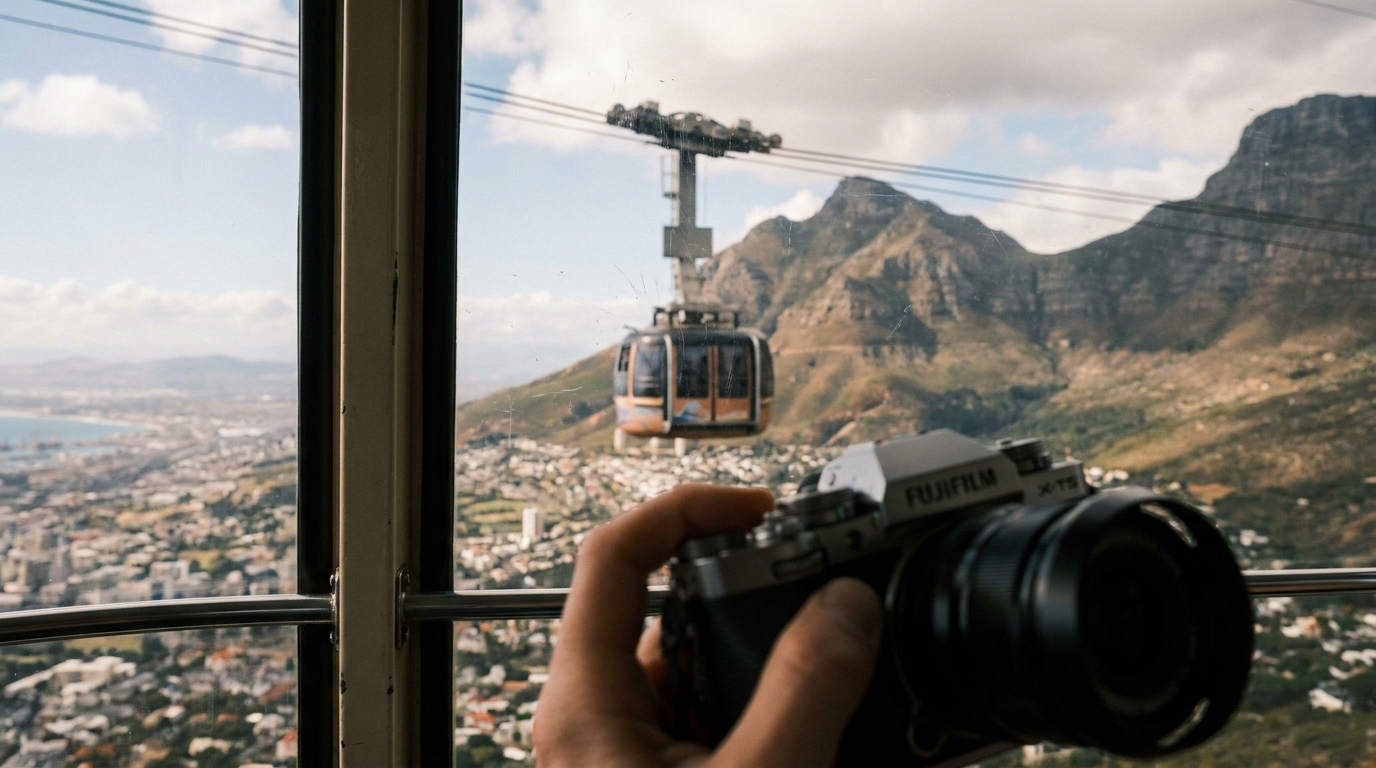
Table Mountain is non-negotiable on your Cape Town itinerary — it’s the single experience that defines the city’s skyline and delivers 360-degree views no other vantage point can match. Book early; the cableway closes on windy days with little notice, and queues on clear summer days can stretch over two hours.
The rotating cable car takes roughly five minutes to reach the 1,086-metre summit. At the top, flat walking trails wind across the plateau past dassies (rock hyraxes) and fynbos wildflowers. Return tickets in 2026 cost R420 (~$23 USD) for adults and R210 (~$11 USD) for children. We recommend arriving at opening time (8:00 AM) or booking a guided summit walk through GetYourGuide to skip the standard queue.
Practical tip: Check the official Table Mountain Aerial Cableway website or their X (Twitter) feed before heading out — they announce closures by 7:00 AM.
2. Explore the Cape of Good Hope
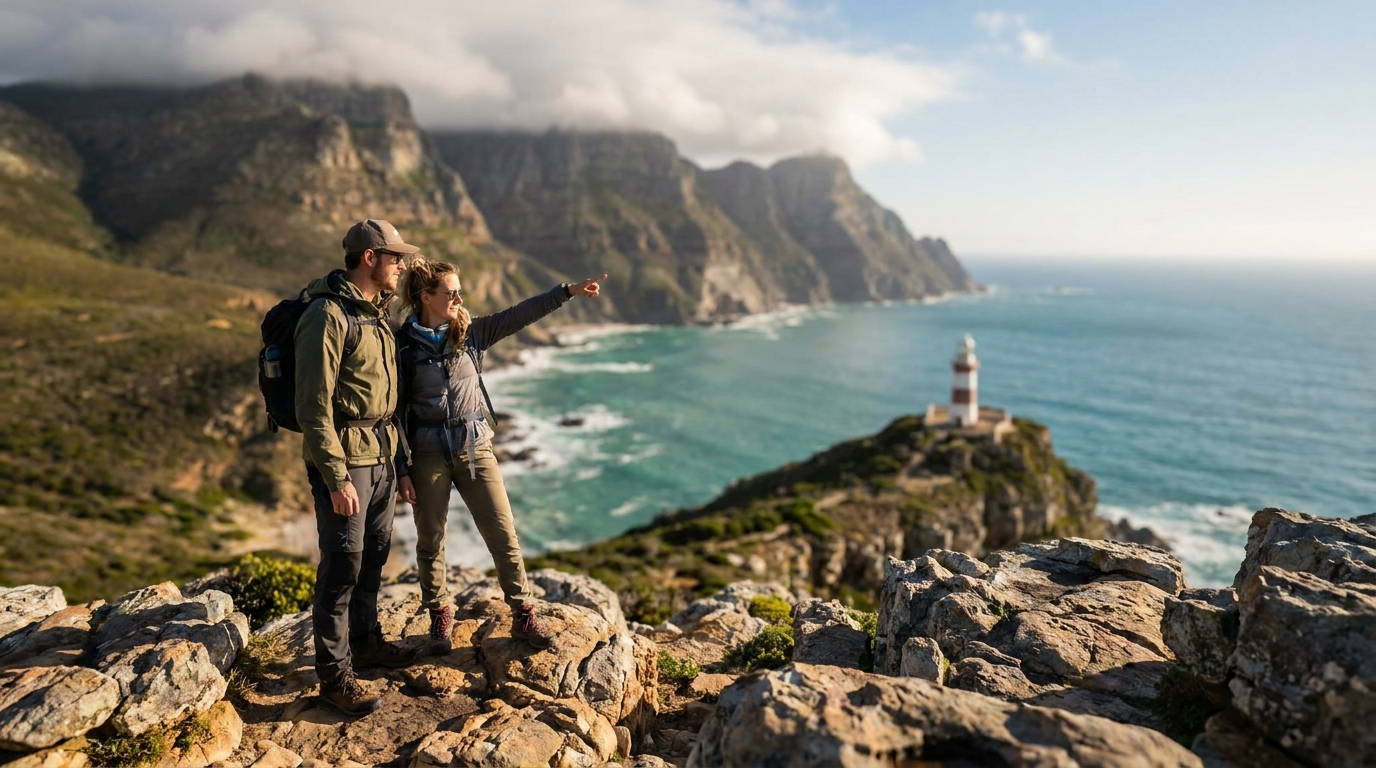
The Cape of Good Hope is where the Atlantic swells hit dramatic sea cliffs and ostriches wander freely across coastal roads — a raw, windswept corner of the continent that justifies the 70 km drive from the city centre. It sits within Table Mountain National Park, so your entry fee covers the whole park for the day.
Entry to Table Mountain National Park costs R353 (~$19 USD) per adult in 2026. Inside the Cape of Good Hope section, the iconic lighthouse walk takes about 45 minutes return. Most visitors combine this with a stop at Cape Point, 2 km north, where the Flying Dutchman funicular (R85/~$5 return) saves the steep climb. Book a guided full-day Cape Peninsula tour through GetYourGuide — prices start around $55 USD including park entry.
3. Visit Boulders Beach and the African Penguin Colony
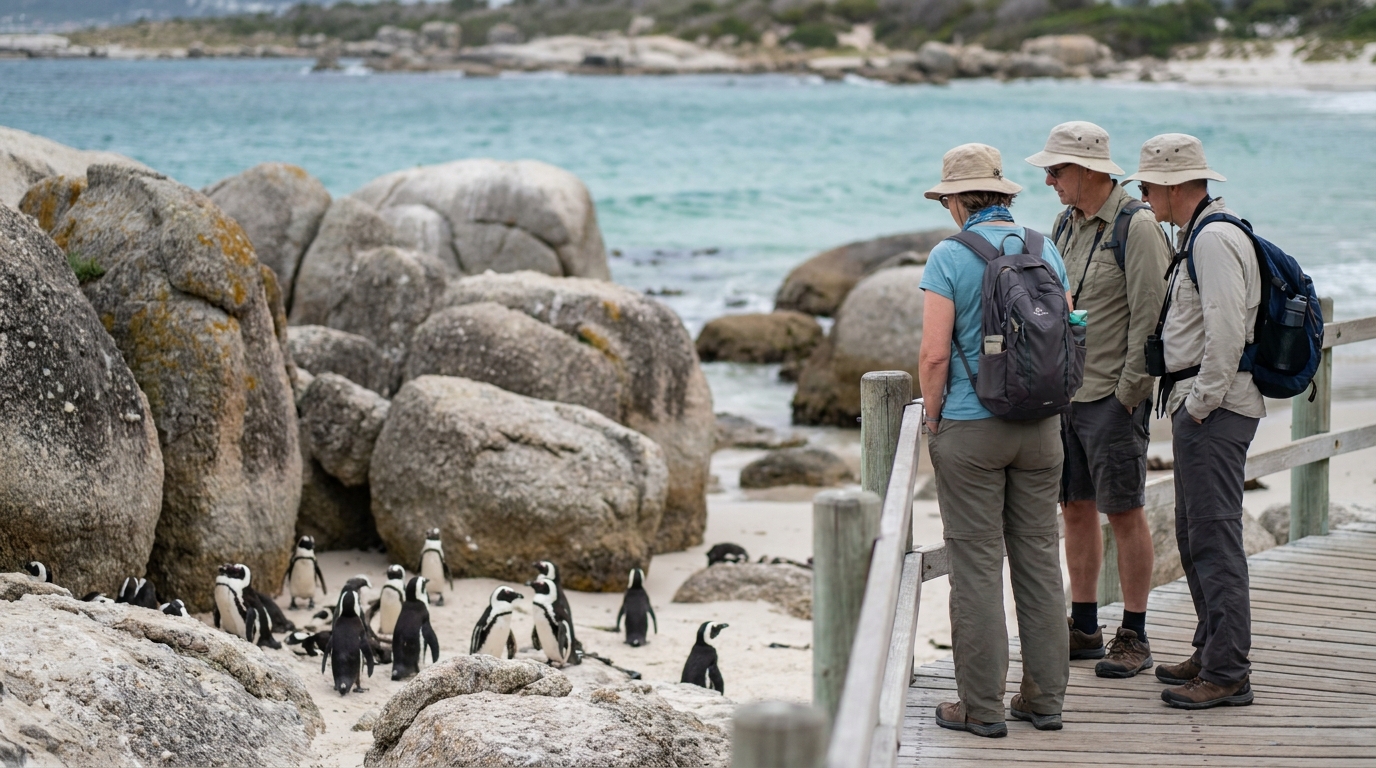
Boulders Beach near Simon’s Town is where you’ll find one of the world’s only land-accessible African penguin colonies, with roughly 3,000 birds nesting among the granite boulders just metres from the boardwalk. These are endangered animals — the global population dropped 70% since 2001 (BirdLife International, 2025) — so seeing them here carries real weight.
Entry through SANParks costs R222 (~$12 USD) per adult in 2026. The penguins are most active in the morning before 10:00 AM and again after 4:00 PM. They nest from May through August, so a June visit puts you right in peak nesting season with chicks visible. From Cape Town, the train to Simon’s Town via Metrorail costs around R20 (~$1.10) each way, though we’d recommend renting a car through Discover Cars to make the whole Cape Peninsula loop in one day — rates start at $35/day for a compact.
Find your Cape Town hotel on the map
Live prices from Booking & Airbnb — tap a pin to compare stays around the V&A Waterfront and beyond.
4. Walk Through the Bo-Kaap Neighborhood
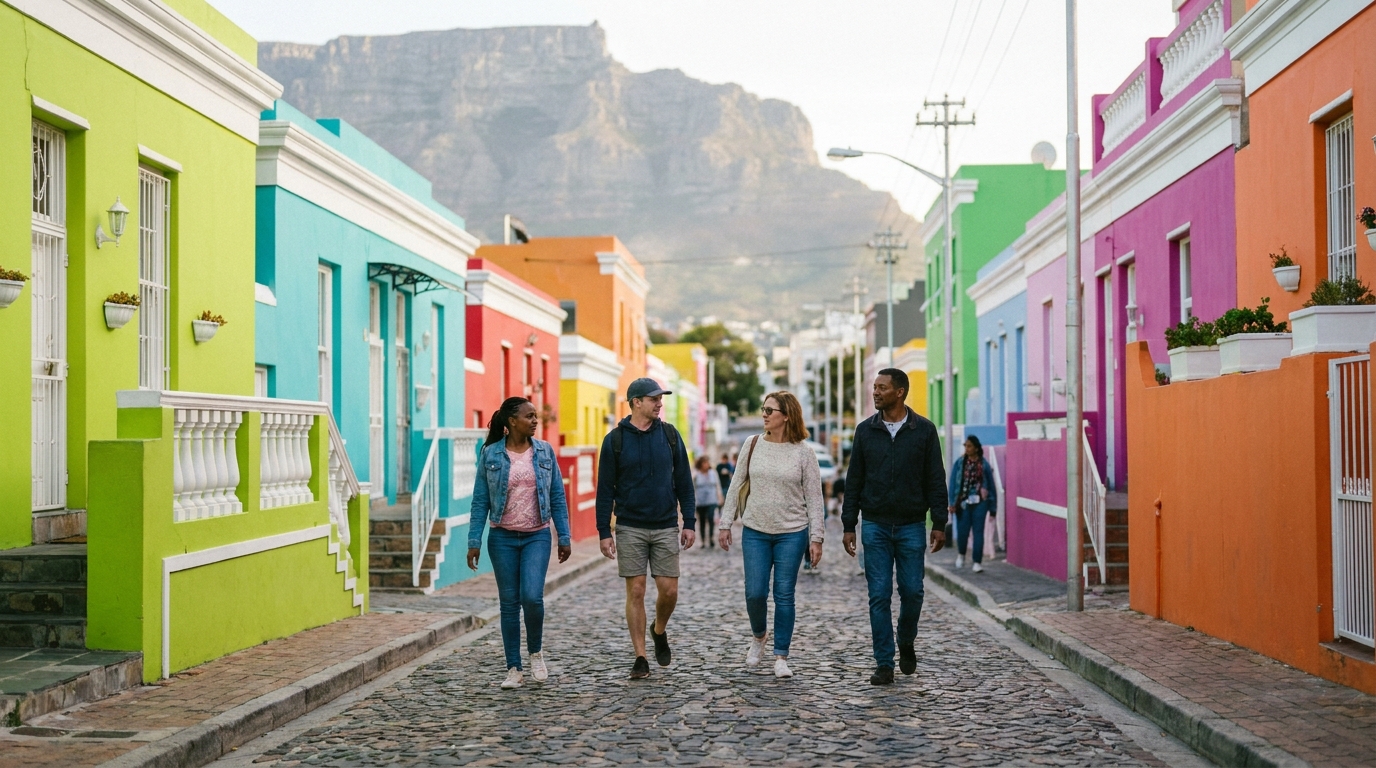
Bo-Kaap is Cape Town’s most photographed neighbourhood — a hillside grid of brightly painted houses reflecting the Cape Malay culture that took root here in the 17th and 18th centuries when enslaved people from Malaysia, Indonesia, and East Africa were settled in this area. The Nurul Islam Mosque, built in 1844, still anchors the community at its base.
Walking through is free. We’d suggest doing it in the late afternoon when the light hits the facades at an angle and the neighbourhood is quietest. Several cooking schools offer Cape Malay cooking classes — expect to pay R650-R950 (~$35-$52 USD) per person for a three-hour session that includes lunch. The Bo-Kaap Museum charges R50 (~$2.75) admission and covers the history of Islam in the Cape in concise detail.
5. Spend an Afternoon at the V&A Waterfront
The Victoria & Alfred Waterfront is Cape Town’s commercial heart — a working harbour surrounded by restaurants, craft markets, galleries, and departure points for Robben Island. It’s also where you’ll find the Two Oceans Aquarium and the Nobel Square statues of South Africa’s four Nobel Peace Prize laureates.
Entry to the waterfront precinct is free. The Two Oceans Aquarium charges R260 (~$14 USD) for adults. Robben Island ferries depart from the Nelson Mandela Gateway and cost R780 (~$43 USD) — book at least two weeks ahead on the official Robben Island website as tours sell out fast. For accommodation within walking distance, Booking.com lists Waterfront properties starting at $85/night for a clean 3-star room.
6. Take a Robben Island Tour
Robben Island is where Nelson Mandela spent 18 of his 27 years of imprisonment, and visiting it remains one of the most emotionally significant travel experiences in all of Africa. Former political prisoners — many now in their 70s and 80s — still guide tours of the island, sharing first-hand accounts of life under apartheid.
The R780 (~$43 USD) ferry-and-tour ticket from the V&A Waterfront includes the 30-minute boat crossing, a guided bus tour of the island, and a walk through Mandela’s cell in the Maximum Security Prison. The entire experience takes around 3.5 hours. Tickets sell out weeks in advance, especially during South African and European school holidays — book directly on the Robben Island Museum website rather than through resellers to avoid inflated prices.
7. Drive Chapman’s Peak
Chapman’s Peak Drive is a 9 km cliff-hugging road between Noordhoek and Hout Bay, carved into the rock face 600 metres above the Atlantic — one of the world’s great scenic drives. The toll fee is R59 (~$3.25 USD) per vehicle, payable at either entrance, and it’s worth every cent.
The drive takes about 20 minutes without stops, though you’ll want to pull over at multiple viewpoints. Sunset here is particularly good between April and August when the sun drops directly over the ocean. Combine Chapman’s Peak with a drive south to Cape Point and north to the Cape Winelands for a full-day loop. We recommend hiring a car through Discover Cars — a compact costs from $35/day, giving you the flexibility no bus tour can match.
8. Tour the Cape Winelands: Stellenbosch and Franschhoek
The Cape Winelands sit 45 minutes from Cape Town and produce some of the Southern Hemisphere’s finest Chenin Blanc, Pinotage, and Cabernet Sauvignon. Stellenbosch is the larger, livelier wine town with 200+ estates; Franschhoek is smaller, more upscale, and famous for its Huguenot heritage and restaurant scene.
Wine estate tasting fees range from R120-R350 (~$6.50-$19 USD) per person and typically include four to six pours. The Franschhoek Wine Tram (R260-R360/~$14-$20 USD per hop-on pass) is the most practical way to get between estates without driving. Alternatively, book a guided Winelands day tour through GetYourGuide — prices start at $65 USD including transport from Cape Town and tastings at two estates.
9. Hike Lion’s Head at Sunrise
Lion’s Head is a 669-metre peak that sits between Table Mountain and Signal Hill, and the circular trail to its summit combines a rocky path with chain ladders and steel rungs through the final 200 metres of scrambling. The full loop takes 2-3 hours at a relaxed pace.
The hike is free and the trail is well-marked. Dawn hikes are the most popular — starting at 5:30-6:00 AM during summer, you reach the top as the sun rises over the city bowl. The full moon night hike has become a Cape Town institution; hundreds of people climb on the evening of the full moon each month. There’s no permit required, but bring a headlamp, water, and decent footwear. The trailhead is at Signal Hill Road off De Waal Drive — parking is free and available from around 5:00 AM.
10. Explore Kalk Bay and the Cape Flats Fishing Villages
Kalk Bay is a working fishing village 30 km south of the city centre that somehow avoided the overdevelopment that swallowed similar villages along the coast. The harbour fills at dawn when boats return with catches of snoek, yellowtail, and harders — there’s a daily fish auction at around 7:00 AM that visitors can watch from the quayside.
The main street runs a quarter-kilometre of antique dealers, independent bookshops, art galleries, and Cape Malay restaurants. The Olympia Cafe is the local institution for breakfast — budget R180-R220 (~$10-$12) for a full meal. Kalk Bay is accessible by Metrorail from Cape Town station in about 45 minutes for R20 (~$1.10) — this is one of the few sections of the Cape Metro rail line where the train journey itself is part of the experience.
11. Visit the South African Museum and Iziko Museum Complex
The South African Museum on the Company’s Garden in the City Bowl holds one of the continent’s most comprehensive natural history collections, including the Whale Well — a two-storey hall housing complete skeletons of blue and fin whales suspended from the ceiling. The adjacent Iziko South African National Gallery focuses on South African, African, and European fine art.
Entry to the South African Museum costs R60 (~$3.30 USD) per adult. The National Gallery is R50 (~$2.75 USD). Both are closed on Christmas Day and Good Friday. The Company’s Garden itself is free and one of the oldest formal gardens in Africa, originally planted in 1652 to provision Dutch East India Company ships. It’s a good morning start before hitting the waterfront — the two museums plus the garden take a comfortable half-day.
12. Surf or Watch the Surf at Muizenberg
Muizenberg Beach is where South African surfing began in the early 1900s and it remains the best learner surf beach in the greater Cape Town area — long gentle waves, warm water temperatures of 18-22C, and a row of colourful Victorian bathing boxes that have become one of Cape Town’s most photographed backdrops.
Surf lessons start at R500 (~$27 USD) including board and wetsuit rental for a two-hour beginner session. Several surf schools operate on the beach — Surf Emporium and Gary’s Surf School both have solid reputations and English-speaking instructors. Even if you don’t surf, the beach and its painted changing huts make for a good half-morning, particularly combined with a drive south along the False Bay coast to Simon’s Town and Boulders.
13. Day Trip to the Cederberg Wilderness Area
The Cederberg, 280 km north of Cape Town, is a mountain wilderness of dramatic sandstone formations, ancient San rock art, and rare Clanwilliam cedar trees that grow nowhere else on earth. It’s off the standard tourist trail, which is precisely why we include it.
The drive takes about three hours each way on the N7. Entry to the Cederberg Wilderness Area costs R250 (~$13.70 USD) per person per day via CapeNature. The Stadsaal Caves rock art site has paintings estimated to be 6,000 years old. Accommodation options include Algeria Campsite (R260/night) and several private game farms. This is a long day trip — we’d recommend staying at least one night to make the distance worthwhile.
14. Take a Food Tour of the City Bowl
Cape Town’s restaurant scene has expanded dramatically since 2022, with a cluster of serious kitchens in the CBD, De Waterkant, and Gardens that would compete in any major European city. The food culture reflects its geography — Malay spicing, Cape Malay bredies, braai culture, and fresh Atlantic seafood all intersect on the plate.
Guided food tours run through operators like GetYourGuide and typically cost $45-$65 USD for a 3-4 hour walking tour covering 6-8 tastings across different neighbourhood restaurants. If you prefer self-guiding, start at the Old Biscuit Mill Saturday market in Woodstock (8:00 AM – 2:00 PM) where 50+ food stalls converge, then work north to the City Bowl. Budget R300-R500 (~$16-$27 USD) for a thorough self-guided food morning.
15. Go Shark Cage Diving at Gansbaai
Great White Shark cage diving operates out of Gansbaai, about 180 km east of Cape Town — roughly a two-hour drive along the coast. Gansbaai sits at Shark Alley, a channel between Dyer Island and Geyser Rock where an estimated 60,000 Cape fur seals provide year-round feeding grounds for one of the densest Great White populations on earth.
Cage diving trips run daily from 7:00 AM and cost R2,800-R3,500 (~$153-$192 USD) per person, including breakfast, wetsuit, and approximately 45 minutes in the cage. Operators include White Shark Projects and Marine Dynamics — both have good safety records and experienced marine biologists on board. June through September is peak viewing season.
16. Explore the Constantia Wine Valley
Constantia sits just 20 minutes south of the city centre and is Cape Town’s oldest wine-producing valley — Groot Constantia has been making wine since 1685. It’s more convenient than Stellenbosch for a half-day outing and the setting, in a protected valley below the Constantiaberg, is quieter and more intimate than the Winelands crowds.
The six Constantia estates include Buitenverwachting, Klein Constantia, and Steenberg. Tastings run R120-R200 (~$6.50-$11 USD) per person across most estates. The Beau Constantia restaurant on the hillside above the valley serves the best view-and-food combination in the whole Cape Town wine scene — lunch for two costs R900-R1,200 (~$49-$66 USD) including a bottle. No dedicated transport needed if you’re renting a car through Discover Cars.
17. Attend a Rugby Match at DHL Newlands or Cape Town Stadium
South African rugby is a cultural experience as much as a sporting one, and Cape Town’s teams — the Stormers in Super Rugby and the Western Province in the Currie Cup — play home matches between February and October. The crowd energy at a Stormers match is unlike anything you’ll find in European club sport.
Cape Town Stadium (capacity 64,000) hosts large fixtures and concert events. Stormers match tickets cost R180-R450 (~$10-$25 USD) depending on seat category and fixture importance. Book through Ticketmaster South Africa or the Stormers official website. The stadium is a 15-minute walk from the V&A Waterfront — no car needed. Check the Stormers fixture list before your trip to see if a home match coincides with your dates.
18. Kayak or Paddleboard in the Waterfront Basin
Sea kayaking from the V&A Waterfront basin is one of Cape Town’s underrated morning activities — you paddle out under the cranes into the working harbour with Table Mountain rising directly behind the city, a perspective you simply can’t get from land. Conditions in the sheltered basin are calm even on breezy days.
Kayak and SUP rental starts at R180 (~$10 USD) per hour. Guided kayaking tours of the harbour run around R450 (~$25 USD) for two hours. Several operators set up along the Breakwater Boulevard near the Cape Grace Hotel. Early morning, before 9:00 AM, is the best time — light is good for photos, the harbour traffic is interesting, and temperatures are cooler. This works well as a pre-breakfast activity before a busy day on the peninsula.
Related guide: 25 Best Things to Do in Venice 2026: Complete Activity Guide
Related guide: 25 Best Things to Do in Rome 2026: Complete Activity Guide
Frequently Asked Questions
How many days do you need in Cape Town?
We’d budget at least five days to cover the highlights without rushing. Three days gets you Table Mountain, the V&A Waterfront, and Robben Island. Add two more days for the Cape Peninsula loop, Boulders Beach, and an evening in the Winelands. A week lets you add day trips to Gansbaai, the Cederberg, or the Overberg coast.
What’s the best time of year to visit Cape Town?
Cape Town’s summer runs November through March with long days, warm temperatures (24-28C), and reliable sunshine. April and May offer excellent conditions with smaller crowds and lower prices. Winter (June-August) brings rain and cold fronts but is peak season for whale watching along the coast and the best Great White shark sightings at Gansbaai.
Is Cape Town safe for tourists?
Cape Town is safe in its main tourist areas — the V&A Waterfront, City Bowl, Atlantic Seaboard, and Southern Suburbs are well-policed and see millions of visitors annually. We’d avoid walking alone after dark in the CBD and always use Uber or Bolt rather than street taxis. Crime in tourist zones decreased 18% between 2022 and 2025 (City of Cape Town Safety Report, 2025). Standard city awareness applies.
Do I need a visa to visit South Africa?
US, UK, Australian, EU, and Canadian passport holders can enter South Africa visa-free for up to 90 days. Your passport must be valid for at least 30 days beyond your departure date and have at least two blank pages. South Africa does not have an e-visa system — entry is stamped at the border. Check the South African Department of Home Affairs for updates closer to your travel date.
What currency does Cape Town use and can I use cards everywhere?
South Africa’s currency is the rand (ZAR). In 2026, the exchange rate is approximately R18.3 per USD. Card payment is widely accepted in restaurants, shops, and attractions — Visa and Mastercard work everywhere. We’d carry R500-R800 in cash for markets, street food, and smaller purchases. ATMs are widely available at the V&A Waterfront, Woolworths stores, and major shopping centres.
How do I get around Cape Town?
A rental car is the most practical option for the Cape Peninsula, Winelands, and anything beyond the City Bowl. Discover Cars lists options from $35/day for a compact. Within the city, Uber and Bolt are reliable and cost R30-R80 (~$1.65-$4.40 USD) for most trips. The MyCiTi Bus BRT network covers the Atlantic Seaboard, Waterfront, and CBD efficiently for R8-R25 per trip. Avoid minibus taxis unless you’re confident navigating the informal system.
What’s the cheapest way to see Table Mountain?
The cable car costs R420 return (~$23 USD) but hiking is free. The Platteklip Gorge trail takes 1.5-2 hours each way and is well-maintained and signposted. You descend by cable car if your legs give out — the one-way descent-only ticket costs R210 (~$11.50 USD). Alternatively, hike up and hike down for a full free experience. Start early to avoid afternoon cloud forming over the summit.
Start Planning Your Cape Town Trip
Cape Town rewards visitors who get beyond the cable car and the Waterfront — though both are worth your time. The city’s real character lives in the winding Bo-Kaap streets at dusk, in the fish auction at Kalk Bay harbour at dawn, and in the silence at the top of Chapman’s Peak when the afternoon fog rolls in over the Atlantic.
For your accommodation, Check live hotel prices has the widest range of options from backpacker hostels near Long Street from $18/night to five-star Waterfront hotels from $220/night. For activities, GetYourGuide and Viator both offer flexible cancellation on most Cape Town tours, which matters given the city’s notorious wind and weather changes. Rent a car through Discover Cars to unlock the peninsula and winelands on your own schedule.
We update this guide seasonally — bookmark it and check back before your trip for the latest prices and conditions.