Best Time to Visit Jordan in 2026: Month-by-Month Guide
Disclosure: Some links in this guide are affiliate links. If you book or buy through them, we may earn a small commission at no extra cost to you — it helps keep our guides free.
- Peak season is March to May and September to November: expect highs of roughly 70 to 85 F in most of the country.
- Summer (June to August) runs 90 F and up in Amman, Petra, and Wadi Rum, and past 100 F in Aqaba and the Dead Sea, but hotel rates are lowest.
- Winter nights are cold: Amman and Petra can drop near freezing, and sudden flash floods can close wadis and trails.
- The Dead Sea and Aqaba work year-round, so use them to fill gaps in a summer or winter itinerary.
- Ramadan changes opening hours and dining, not access to the main sights, and it often brings softer crowds and prices.
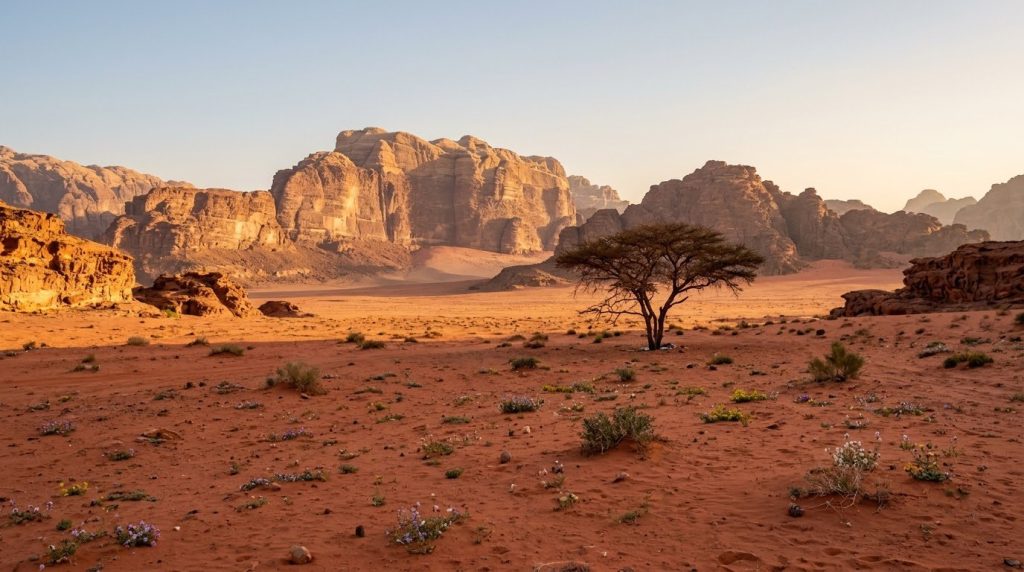
The best time to visit Jordan is spring (March to May) or fall (September to November). Daytime highs in Amman and Petra sit in the comfortable 70s F, the desert is pleasant for walking and jeep rides, and every major site is open and easy to enjoy.
That said, Jordan works year-round if you plan around the heat or the cold. Summer is hot but cheaper, winter is cool with occasional flash floods, and the Dead Sea and Aqaba stay usable in almost any month. This guide covers the whole country, with a month-by-month table, a region-by-region table, Ramadan, and ways to save money. If you already know when you’re going, our guide to things to do in Jordan covers what to book.
I’ve seen Jordan in both April and August, and the two trips felt like different countries. In April I hiked around Petra in a light jacket and chatted with other walkers on the trail. In August, plan to be done by 10 a.m., sitting in the shade with a liter of water, and expect to find a cheaper room than in spring. Neither was a mistake, but I’d only choose August again with a very early start.
What Is the Best Time to Visit Jordan Overall?
Spring and fall are the best seasons for most travelers, with comfortable daytime highs and the clearest conditions for hiking and desert trips. Jordan’s own tourism and climate sources point to March to May and September to November as the ideal windows (national tourism board, 2026). Everything else is a trade-off between heat, cold, and cost.
If I had to pick one month, I’d say April. Wildflowers are still out in the northern hills, days are warm without being harsh, and the desert nights are mild enough for a Bedouin camp stay. October is a close second, with warm days and fewer spring-break crowds.
The tradeoff is price. Spring and fall are when hotels fill and tour operators charge their highest rates, so book early if your dates are fixed. We’ll cover the savings angle in the pricing section below.
What Is Jordan’s Weather Like Month by Month?
Jordan has a Mediterranean-type climate in the north and a desert climate in the south and east. Amman’s average daily highs run from roughly 54 F in January to about 90 F in July and August (national weather service, 2026). Aqaba and the Dead Sea sit lower and run noticeably hotter.
The table below gives approximate highs for Amman and a quick verdict for each month. Elevation matters: Amman and Petra sit high and feel cooler than the Jordan Valley, Wadi Rum is hotter by day and colder at night, and Aqaba is the warmest spot in winter.
| Month | Approx. high in Amman | What to expect | Verdict |
|---|---|---|---|
| January | 54 F | Cold, rain likely, snow possible in the hills | Cheap, quiet, pack layers |
| February | 57 F | Cool and wet, green countryside | Good value, fewer crowds |
| March | 64 F | Warming up, wildflowers, some showers | Very good |
| April | 74 F | Warm, dry, long days | Best |
| May | 82 F | Warm to hot, clear skies | Very good |
| June | 87 F | Hot and dry, strong sun | Fair, start early |
| July | 90 F | Hottest period, intense midday sun | Hard outdoors, cheapest |
| August | 90 F | Very hot, tourist numbers low | Hard outdoors, cheapest |
| September | 86 F | Still hot early, cooling late | Good |
| October | 79 F | Warm days, mild evenings | Best |
| November | 67 F | Cooler, first rains | Very good |
| December | 58 F | Cold, wet, holiday bump | Fair |
Source: national weather service, 2026 (approximate monthly averages)
Quick tip: Treat these as averages, not promises. Jordan’s weather can swing 15 to 20 degrees between day and night, especially in the desert and at higher elevations.
Why Are Spring and Fall the Best Seasons in Jordan?
Spring and fall give you daytime highs near 70 to 80 F in Amman and Petra, and that’s the range where long walking days feel good rather than punishing. Most visitor arrivals cluster in these months, which is why services run at full capacity and tours operate on their widest schedules (national tourism board, 2026).
Spring (March to May) is the greener of the two. The northern hills around Jerash and Ajloun turn green after winter rain, and wildflowers appear along roadsides. Dana Biosphere Reserve is at its best for hiking, and the popular Dana-to-Petra trek is most comfortable in this window.
Fall (September to November) is warmer and drier. The Dead Sea is balmy, Wadi Rum stays comfortable by day, and the light is excellent for photos. By late November the first rains arrive, so pack a light rain layer.
Both seasons share one drawback: crowds at the biggest sites. For Petra specifically, go at opening time, and see our separate guide to the best time to visit Petra for the detailed breakdown. Here we’ll keep the focus on the whole country.
How Hot Does Jordan Get in Summer, and Is It Still Worth Visiting?
Summer in Jordan is hot and dry. Highs reach about 90 F in Amman and Petra, 95 to 100 F in Wadi Rum, and past 100 F in Aqaba and around the Dead Sea (national weather service, 2026). It’s doable if you start before sunrise, but midday sightseeing is genuinely hard.
Here’s the upside. Summer is typically the most budget-friendly time to visit. Hotels, especially in Amman and Petra, discount rooms heavily, and you’ll rarely queue for photos at major sites. If your dates are fixed to school holidays, summer can still deliver a good trip.
A few rules make summer work:
- Start early: be at Petra, Jerash, or the Citadel at opening time and finish outdoor walking by late morning.
- Rest at midday: plan a long lunch, a hotel pool, or a Dead Sea float.
- Drink more than you think: carry at least two liters per person for outdoor days.
- Skip Wadi Rum jeep tours at noon: book sunrise or late afternoon slots.
- Cover up: a hat, long sleeves in breathable fabric, and strong sunscreen beat shorts and a tank top.
Evenings in the desert cool down fast, so a summer night at a Bedouin camp is more pleasant than the daytime numbers suggest.
What Is Winter in Jordan Like, and What About Flash Floods?
Winter (December to February) is cool and wet, with Amman highs in the mid-50s F and overnight lows near freezing in the hills (national weather service, 2026). Snow falls in Amman and the highlands in some years. Winter is quiet and cheap, but you need layers and flexibility.
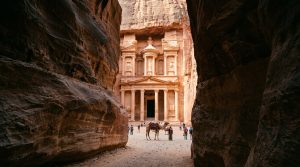
The real hazard is flash flooding. Heavy rain in the mountains can send water rushing through dry wadis and narrow canyons with little warning, even when it isn’t raining where you stand. Petra’s Siq has been closed in the past when water levels rose, and desert roads can become impassable.
To stay safe in the rainy months:
- Check the forecast daily and ask your hotel or guide before entering any canyon or wadi.
- Never enter a narrow gorge if rain is forecast upstream, or if guides advise against it.
- Build in a spare day in case a site closes or a road floods.
- Pack a waterproof layer and warm base layers for evenings, as many budget hotels have limited heating.
On the plus side, winter light is soft, the hills are green, and you may have sites nearly to yourself. Aqaba is much warmer than the highlands, so it’s a handy winter escape.
What Is the Best Time to Visit Each Part of Jordan?
Jordan is small, but its regions behave differently. Aqaba and the Dead Sea sit at or below sea level and run warm all year, while Amman, Petra, and Dana sit high and get cold winters (national tourism board, 2026). That makes the best month depend on where you’re spending most of your time.
| Region | Best months | Summer (Jun-Aug) | Winter (Dec-Feb) | Notes |
|---|---|---|---|---|
| Amman | Mar-May, Sep-Nov | Hot, dry, pleasant evenings | Cold, rainy, snow possible | Base for Jerash and Dead Sea day trips |
| Jerash | Mar-May, Sep-Nov | Very little shade, go early | Wet and muddy in rain | About 1 hour from Amman |
| Petra | Mar-May, Sep-Nov | Hot, go at opening | Cold, flash-flood risk in the Siq | Covered in detail in our Petra guide |
| Wadi Rum | Mar-May, Sep-Nov | Very hot by day, mild nights | Cold nights, clear days | Bring warm layers for camps |
| Dana | Mar-May, Sep-Nov | Hot, dry trails | Cold, trails can be closed | Best for hiking in spring and fall |
| Dead Sea | Spring, fall | Extremely hot, float briefly | Mild and pleasant | Good almost year-round |
| Aqaba | Oct-Apr (beach), year-round | Hot but swimmable | Warm days, cooler water | Red Sea reefs, snorkeling, diving |
Source: national tourism board and national weather service, 2026
Here’s how that plays out in practice. For the Dead Sea, a winter or spring float is far more comfortable than August, when the ground and water can feel scorching. For Aqaba, the Red Sea is warm enough to dive or snorkel in most months, and winter days there are mild when Amman is freezing.
For Petra, the short version is simple. Go in spring or fall, arrive at opening, and avoid the Siq after heavy rain.
How Does Ramadan Affect a Trip to Jordan?
Ramadan shifts daily rhythms rather than closing the country. Because it follows the lunar calendar, it moves about 11 days earlier each year, and in 2027 it is expected to begin in early February (approximate, check current dates). Hours shorten, daytime dining is limited, and evenings come alive after sunset.
Here is what to expect:
- Major sites stay open, but some close earlier and hours can change, so confirm before you go.
- Restaurants may be closed during the day, especially outside hotels and tourist areas. Hotel restaurants usually still serve guests.
- Be discreet: avoid eating, drinking, or smoking openly in public during daylight.
- Evenings are special: iftar meals and street activity after sunset are a highlight for many visitors.
- Fewer tourists: this period often means quieter sites and softer prices.
Eid al-Fitr, the celebration at the end of Ramadan, brings a few days of closures and busy domestic travel, so book transport and hotels early for those dates. Eid al-Adha is another peak local holiday, expected in mid-May 2027 (approximate), when popular spots such as Aqaba and the Dead Sea fill with Jordanian families.
When Are Prices Lowest, and How Can You Save Money?
Hotel rates in Jordan swing with the seasons. Peak months (spring and fall) are the most expensive, while summer and winter bring discounts, often noticeably so outside holiday weeks (operator pricing, 2026). If you’re flexible, shoulder months give you the best balance of weather and value.
For savings, look at these timing tricks:
- Shoulder months: early March, late May, and late October often combine good weather with lower rates than the April peak.
- Summer deals: the cheapest time, if you can handle the heat with early starts.
- Midweek stays: hotels near the Dead Sea and in Aqaba usually cost less from Sunday to Thursday outside holidays, though this varies.
- Dead Sea on a budget: book a resort day pass instead of an overnight stay. Day access runs roughly $30 to $40 (approximate, check current rates), and it’s often not included in tours.
The Jordan Pass is the other big saver. It costs around 70 JD with one day at Petra, 75 JD with two days, and 80 JD with three days, which is roughly $99 to $113 (approximate, check current rates). It includes entry to 40-plus sites and waives the visa fee (40 JOD, about $56) if you stay at least three nights. The pass is not itself a visa, so confirm the rules before you buy.
Entry to Wadi Rum is roughly $10, though older listings put it there and prices change. Add it to your budget when you plan tours.
Find your Jordan hotel on the map
Live prices from Booking, Airbnb and more — move the map or change dates to compare stays across Jordan.
Frequently Asked Questions
What is the cheapest month to visit Jordan?
July and August are usually the cheapest, because the heat keeps visitor numbers low and hotels cut rates. January and February also offer low prices, though winter weather can disrupt travel. Prices change, so compare rates before booking.
Is Jordan safe to visit during the summer heat?
Yes, if you plan for it. Start sightseeing at opening time, carry plenty of water, and rest at midday. Heat exhaustion is the main risk at open-air sites like Petra and Jerash, so cover up and take breaks in the shade.
Can you swim in the Dead Sea all year?
Yes. The Dead Sea is warm enough for floating in every month, and winter days are mild. Summer is extremely hot, so go in the morning or late afternoon. Avoid getting the water in your eyes, and skip floating if you have open cuts.
Is the Red Sea in Aqaba good for snorkeling in winter?
Yes. Aqaba’s coral reefs can be snorkeled or dived year-round, though the water is cooler in winter and a thin wetsuit helps. Days are warm and sunny, which makes Aqaba a good winter escape from the cold highlands.
How many days do I need in Jordan?
Plan 7 to 9 days to cover the classic loop of Amman, Jerash, the Dead Sea, Dana, Petra, Wadi Rum, and Aqaba without rushing. Short on time? Four days can cover Amman, Petra, and Wadi Rum.
Picking your season comes down to three choices: comfort, cost, and crowds. For most travelers, April or October is the sweet spot, while summer and winter reward flexible planners with lower prices and quieter sites. Once your dates are set, check out our guide to things to do in Jordan to plan your route.