Best Time to Visit Morocco in 2026: Month-by-Month Guide
Disclosure: Some links in this guide are affiliate links. If you book or buy through them, we may earn a small commission at no extra cost to you — it helps keep our guides free.
- Spring and fall are the sweet spot: March to May and September to November give mild weather across the cities, coast, and mountains.
- Skip the Sahara in summer: inland and desert highs regularly pass 104 F (40 C) from June to September, so plan desert nights for October to April.
- Winter is mild on the coast, cold in the mountains: the Atlas gets snow from December to February, and Oukaimeden is the main ski resort.
- Ramadan changes the rhythm, not the access: in 2027 it falls around February 8 to March 9, with daytime closures but quieter sites and cheaper rooms.
- Shoulder months save money: late February, early March, and November often cost less than peak spring and October.
The best time to visit Morocco is spring (March to May) and fall (September to November). Days are warm rather than scorching, the cities are comfortable to walk, and the mountains and desert are both reachable. Those are also the busiest months, so book rooms and desert camps early.
Morocco is not one climate. The Atlantic coast stays mild, the Atlas Mountains get real snow, and the Sahara swings from pleasant days to freezing nights. This guide breaks the country down by month, region, and activity, and flags where you can save money. Once you’ve picked your dates, our guide to the best things to do in Morocco will help you fill them.
We’ve visited Morocco in both April and late November. April felt perfect for walking the Fes medina all day, with comfortable sun and long evenings. November gave us the better Sahara trip: warm afternoons on the dunes, then a sharp drop after sunset that had us borrowing every blanket at camp.
When is the best time to visit Morocco overall?
Spring and fall are the best overall, according to most seasonal guides. Both seasons sit in the comfortable range for city sightseeing, coastal towns, and day hikes, and neither suffers the extreme inland heat of July and August. Expect the highest demand in April, May, and October.
Which one you pick depends on what you want. Spring brings green hills, wildflowers in the Atlas foothills, and long daylight. Fall brings warm evenings, a calmer pace after the summer heat, and some of the best light for photography.
If you can only travel in a shoulder window, aim for late March to early May or late September to early November. You’ll get most of the good weather with fewer people than at the absolute peak.
What is the weather like in Morocco month by month?
Morocco’s weather runs from mild and wet in winter to hot and dry in summer, with big differences between the coast and the interior. The table below gives a simple month-by-month read for the main tourist circuit. Temperatures are rough ranges, and conditions vary by year and altitude.
| Month | Cities (Fes, Marrakech) | Coast (Essaouira, Agadir) | Best for | Crowds and prices |
|---|---|---|---|---|
| January | Cool days, cold nights | Mild, some rain | Sahara, city sightseeing | Low to moderate |
| February | Cool, brightening | Mild, breezy | Sahara, skiing, quiet medinas | Low |
| March | Warm days, fresh nights | Mild and pleasant | Cities, Atlas foothills | Moderate, rising |
| April | Warm, comfortable | Mild to warm | Everything | High |
| May | Warm to hot | Warm | Cities, coast, hiking | High to moderate |
| June | Hot | Warm, windy | Beaches, kitesurfing | Moderate |
| July | Very hot | Warm, windy | Coast only | Low inland, busy coast |
| August | Very hot | Warm, windy | Coast, high Atlas hiking | Busy coast, low inland |
| September | Hot, easing | Warm | Coast, early fall trips | Moderate |
| October | Warm, comfortable | Warm | Everything, Sahara opens up | High |
| November | Cool to mild | Mild | Sahara, cities | Low to moderate |
| December | Cool, cold nights | Mild, some rain | Sahara, Christmas trips | Moderate, high holidays |
Source: national weather service seasonal averages and tour operator seasons, 2026
Notice how July and August flip the usual pattern. Interior cities empty out and prices soften, while the Atlantic coast fills with Moroccan families on holiday. That’s useful if you’re flexible about where you go.
Which season works best for which region?
Each region has its own sweet spot, so match your itinerary to the calendar. A trip that ties together Fes, Chefchaouen, the desert, and the coast might need compromises. The table below shows the strongest windows for each major area, plus the months to approach with caution.
| Region | Best months | Months to avoid or plan around | Notes |
|---|---|---|---|
| Fes and the imperial cities | Mar to May, Sep to Nov | Jul and Aug (heat) | Long medina walks need cooler weather |
| Chefchaouen and the north | Mar to Jun, Sep to Nov | Dec to Feb (cold, wet) | Hill town, can be damp and chilly in winter |
| Sahara (Merzouga, Zagora) | Oct to Apr | Jun to Sep (extreme heat) | Winter nights get cold, bring layers |
| High Atlas and Toubkal | May to Oct for trekking | Dec to Mar without winter gear | Snow cover varies by year |
| Atlas skiing (Oukaimeden) | Dec to Feb | Spring to fall | Snow is not guaranteed |
| Atlantic coast (Essaouira) | Apr to Oct | Windy spells any month | Wind is the coast’s signature |
| Agadir and the south coast | Year-round | Few | Reliable sun, popular winter escape |
| Ouarzazate and Ait Benhaddou | Mar to May, Oct to Nov | Jul and Aug (heat) | Long day trip, start early |
Source: national tourism board and weather service seasonal guidance, 2026
Marrakech sits in the middle of this picture, with hot summers and mild winters. We keep this guide country-wide on purpose, so use it to pick your overall season, then plan your city days around the heat.
When is the best time to visit the Sahara?
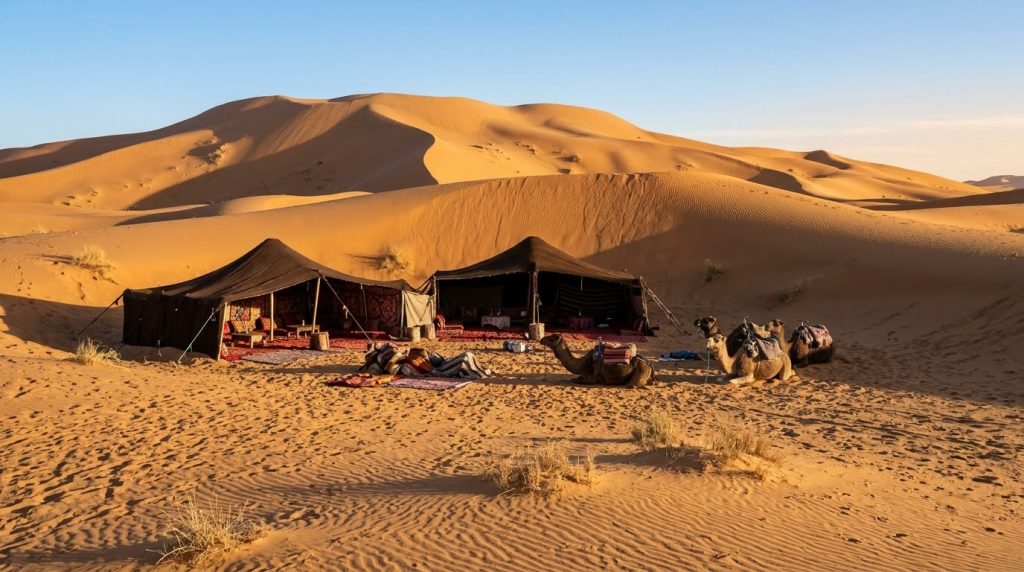
The best time for the Sahara is October to April. Daytime temperatures in the dunes are comfortable, camp nights are cool to cold, and the sky is usually clear. From June to September, desert heat is extreme and most travelers should skip it.
The Erg Chebbi dunes near Merzouga are the classic stop. A one-night camp with dinner and a camel ride typically runs about $64 to $89 per person (approximate, check current rates), and prices change by season and camp standard.
Here’s the part first-timers miss: winter nights in the desert are cold. In December and January it can feel close to freezing after dark, so pack a warm layer, a hat, and a scarf. November and March are our favorite compromise, warm enough to relax in the afternoon and cool enough to sleep well.
Allow time for the journey too. The drive from the imperial cities to Merzouga is long, so most travelers split it with a night in the Draa or Dades areas.
How does Ramadan affect a trip to Morocco?
Ramadan shifts opening hours and dining, but you can still travel comfortably. The holy month moves about 10 to 11 days earlier each year on the Gregorian calendar. In 2027 it’s expected to start around February 8 and end around March 9, followed by Eid al-Fitr, depending on moon sighting.
During the day, many local restaurants close or serve little, and some shops open late. Tourist restaurants and hotels keep serving visitors, though. After sunset, the cities come alive with shared meals, sweets, and busy streets.
Here’s how it plays out in practice:
- Opening hours: shops and some sites run shorter or later schedules, so check before you go.
- Food: bring snacks for daytime, and be discreet about eating and drinking in public.
- Atmosphere: evenings are lively, which many travelers find memorable.
- Prices and crowds: rooms are often cheaper, and big sites tend to be quieter.
- Eid: travel and accommodation can get tight around Eid, so book ahead.
If your dates overlap, it doesn’t have to be a dealbreaker. Just plan big sightseeing in the morning and rest in the afternoon.
When is beach season on the Moroccan coast?
Beach season runs roughly from June to September on the Atlantic coast, though the water stays on the cool side. Atlantic swimming temperatures are well below Mediterranean levels, so many visitors treat the coast as a place for walking, surf, and wind sports rather than long swims.
Essaouira is breezy all year, which makes it a favorite for kitesurfing and windsurfing, and a great cooler escape when the interior is baking. The UNESCO-listed medina, ramparts, and fish grills near the harbor are enjoyable in spring and fall too.
Agadir is the sunniest option and works well in winter. If you want a warmer swim, the Mediterranean side near the north is generally gentler in summer. Pack a light jacket for evenings anywhere on the coast, even in July.
Can you visit Morocco in winter?
Yes, and winter is quietly one of the better seasons for specific trips. From December to February the Atlas gets snow, Oukaimeden runs as the main ski resort when conditions allow, and the Sahara is at its most comfortable by day.
On the coast and in the cities, days are cool and mild with occasional rain. You’ll need warm clothes for the evenings, since many riads and guesthouses have limited heating. Ask about heaters or extra blankets when you book.
Winter is also a smart budget window outside the Christmas and New Year peak. Fewer travelers means more room to negotiate at guesthouses. Hiking Toubkal, which rises to 4,167 m, is a serious winter undertaking that calls for proper gear and a guide, so most casual visitors should stick to lower trails.
When is Morocco cheapest, and how can you save money?
Morocco is usually cheapest in the low-demand months: late January, February outside school holidays, November, and the hot summer months inland. Peak spring and October bring higher room rates and fuller tours. Exact prices vary by operator and property, so treat any figure as a rough guide.
A few habits help in any season:
- Travel in the shoulder months. Late February to early March and November often combine decent weather with lower prices.
- Book desert camps directly or in advance. Compare what’s included, such as dinner, breakfast, and camel ride.
- Carry cash. Small shops, especially in places like Chefchaouen, often take only cash.
- Eat where locals eat. Meals commonly run from about $2 to $12, and fresh orange juice can cost under a dollar (approximate).
- Pair two regions on a short trip. Guides suggest about seven days for two regions and ten for the major circuit, which cuts transfer time and cost.
Day trips are another place to trim costs. A shared day tour to Chefchaouen from Fes can run roughly $20 to $27 per person, but it’s a long day with about four hours of driving each way. Staying overnight is often a better use of money and time.
Find your Morocco hotel on the map
Live prices from Booking, Airbnb and more — move the map or change dates to compare stays across Morocco.
Frequently Asked Questions
What is the best month to visit Morocco?
April and October are the most balanced choices, with comfortable temperatures across most regions. Both are popular, though, so reserve early. If you want fewer crowds, try late March, early May, or November.
Is Morocco too hot in summer?
Inland Morocco can be very hot from June to September, with highs often above 104 F (40 C) in the desert and interior cities. The Atlantic coast and higher Atlas altitudes are cooler. If summer is your only window, base yourself on the coast.
Is Ramadan a bad time to visit Morocco?
Not necessarily. Some local restaurants and shops adjust their hours, but tourist services keep running and evenings are lively. Rooms can be cheaper and sites quieter. Plan your key sightseeing for mornings and carry snacks.
When can you ski in Morocco?
The ski season in the Atlas is typically December to February, with Oukaimeden as the main resort. Snow depends on the year, so check conditions close to your dates and keep your plans flexible.
How many days do you need in Morocco?
About seven days works for two regions, such as the north and Fes or the Atlantic coast and the south. Ten days lets you link major areas, including the desert, without rushing between them.
Morocco rewards flexible planning. Pick spring or fall for the broadest trip, October to April for the Sahara, and the coast for summer, then build in a shoulder month to save money. When your dates are set, use our guide to things to do in Morocco to shape the route, and always confirm current weather and prices before you book.