Things to Do in Morocco in 2026: 7 Top Picks Beyond Marrakech
Disclosure: Some links in this guide are affiliate links. If you book or buy through them, we may earn a small commission at no extra cost to you — it helps keep our guides free.
- Pair two regions per week: guides suggest combining Marrakech and Essaouira, or Fes, Chefchaouen and the north, in 7 days, and linking the major regions only with about 10 days.
- The Sahara is worth a full overnight: a one-night camp with dinner and a camel ride is listed from roughly $64 to $89 per person.
- Chefchaouen is a long day from Fes: about 4 hours each way, so stay a night if you can and carry cash.
- Spring and autumn are the mildest seasons: avoid the Sahara from June to September, when the heat is extreme.
- Food is cheap: meals run about $2 to $12 and fresh orange juice about $0.50 to $3.
At a glance
| Attraction | Entry | Hours | Time needed |
|---|---|---|---|
| Fes medina guided walk | About $21 | 3 to 6 hours | |
| Chefchaouen shared day trip from Fes | About $20 to $27 | 12 to 13 hours | |
| Sahara camp, 1 night, dinner and camel | About $64 to $89 | Overnight | |
| Ait Benhaddou day trip from Marrakech | About EUR 23 to EUR 37 | 11 to 12 hours | |
| Essaouira day tour from Marrakech | About EUR 15 to EUR 19 | Full day | |
| Hassan II Mosque guided visit | About $13 to $15 | 1 hour |
The best things to do in Morocco are exploring the Fes medina, wandering blue Chefchaouen, spending a night in a Sahara camp at Merzouga, visiting the kasbah of Ait Benhaddou in the Atlas, and relaxing in coastal Essaouira. Casablanca’s Hassan II Mosque and the sights of Rabat round out a strong first trip.
Morocco rewards a slower plan. The country is bigger than it looks on a map, and the long drives between regions are where most budgets and schedules go wrong. This guide groups the best experiences by region, gives rough 2026 prices, and shows you how to pair them so you see more without burning days on the road.
Travelers who try to see Fes, Chefchaouen and the desert in five days often spend more time in a car than on foot. We cut the plan down the next time and stayed two nights in Fes alone. The medina made far more sense once we stopped treating it as a checkbox, and our lunch bills were small enough that we never felt we were overpaying.
What are the best things to do in Morocco?
The best things to do in Morocco span imperial cities, mountain towns, desert dunes and Atlantic coast. Guides generally recommend building a trip around two regions per week rather than racing the whole country, since the drives are long and the sights reward time. Prices for most experiences stay well under what comparable activities cost in Europe.
Here is the shortlist we cover below:
- Fes el-Bali medina: a sprawling medieval maze with artisan workshops and traditional tanneries.
- Chefchaouen: the blue-painted mountain town, small, walkable and good for photography.
- Merzouga and Erg Chebbi: a camel trek into the Sahara and a night in a desert camp.
- Ait Benhaddou and the Atlas: a UNESCO kasbah, film studios and a high mountain pass.
- Essaouira: a calm Atlantic medina with ramparts, a working harbor and seafood.
- Casablanca: the Hassan II Mosque, the country’s showpiece landmark.
- Rabat: the relaxed capital, good for history on foot.
Marrakech deserves its own plan, so we only touch on it near the end. You can read about the best season for each of these places in our guide to the best time to visit Morocco.
How many days do you need in Morocco?
Plan on 7 days for two regions or about 10 days to link the major ones, according to the pacing most Morocco guidebooks suggest. A week lets you do either Marrakech plus Essaouira, or Fes plus Chefchaouen plus the north, without constant packing. Ten days opens up the Sahara and the Atlas as well.
Distances explain why. Chefchaouen sits about 4 hours by road from Fes each way, and the Fes to Merzouga run is a long driving day, so we treat it as a full travel day rather than a quick hop. The table below shows how we would split the time.
| Trip length | Suggested regions | Pace |
|---|---|---|
| 5 to 7 days | Marrakech and Essaouira, or Fes and Chefchaouen | Relaxed, one base per region |
| 7 to 10 days | Fes, Sahara camp, Atlas and Ait Benhaddou | Moderate, several long drives |
| 10 days or more | North, desert, Atlas, coast | Full loop, overnight stops needed |
Source: regional travel guidebook pacing advice, 2026. Drive times are approximate.
In our experience, the biggest money saver is fewer hotel changes. Every move costs a half day, and a half day is a real cost on a short trip.
What are the top things to do in Morocco, region by region?
Morocco’s top experiences cluster in five regions: Fes in the north, Chefchaouen in the Rif mountains, the Sahara near Merzouga, the Atlas around Ouarzazate, and the Atlantic coast. Each one suits a different traveler, and most are best visited in spring or autumn. Here is how to approach each, with the practical numbers.
1. Fes el-Bali medina
Fes el-Bali is a large medieval medina packed with artisan workshops, metalworkers, leather makers and the famous tanneries. Guides suggest giving it more than a rushed overnight, because the lanes are confusing and the best moments come when you slow down. Spring and autumn are the comfortable seasons.
A guided medina walk of 3 to 6 hours runs around $21 per person, which is good value for a first visit. A guide saves you from getting lost and can explain what each workshop makes. Agree on the price and the length before you start, and say no politely to side shops if you are not buying. Budget at least two nights.
2. Chefchaouen, the blue city
Chefchaouen is a small mountain town painted in shades of blue, and it is walkable in a few hours. Beyond the photos, there are small shops, cafes and nearby hiking if you stay longer. Spring and autumn are the best seasons for walking.
From Fes, a shared day trip costs about $20 to $27 per person but takes 12 to 13 hours, with around 4 hours of driving each way. That is exhausting for a town you can cover in an afternoon. If your schedule allows, take transport on your own and sleep one night, so you can enjoy it early in the morning before day-trippers arrive. Many shops accept only cash, so withdraw dirhams beforehand.
3. Sahara overnight at Merzouga and Erg Chebbi
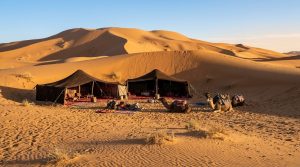
The Sahara experience at Merzouga is built around a camel trek into the Erg Chebbi dunes, dinner at a camp and a sunrise over the sand. It is best as an overnight, because a quick visit misses the evening and dawn light that make it special. The cooler months, November to March, are the best time.
A one-night camp stay with dinner and a camel ride is listed from approximately $64 to $89 per person, but treat that as approximate because prices vary by operator, camp style and season. Nights in camp can be cold in winter, so pack layers. The summer months from June to September bring extreme heat, and we would avoid the desert then.
4. Ait Benhaddou, Ouarzazate and the Atlas
Ait Benhaddou is a UNESCO-listed kasbah in the Atlas foothills, near Ouarzazate, which also has the Atlas Film Studios. The route crosses the Tizi n’Tichka pass, a spectacular high road. Spring and autumn offer the clearest, most pleasant conditions.
From Marrakech, a guided day trip takes 11 to 12 hours and costs roughly EUR 23 to EUR 37 per person. It is long but cheap compared with private transport. If you are already heading toward the Sahara, use the stop on the way and skip the day trip. In winter, the Atlas can be snowy, and Oukaimeden is the main ski resort from December to February.
5. Essaouira
Essaouira is an Atlantic coast town with a UNESCO-listed medina, old ramparts, a busy fishing harbor and a calmer pace than the big imperial cities. Fresh seafood is the main draw at lunch. It works year-round, though spring and autumn feel best.
Day tours from Marrakech run about EUR 15 to EUR 19 in recent search snapshots, which makes it an easy side trip. We would still recommend one night, because the quiet evenings on the ramparts are the real reward. It is a good counterweight to the intensity of the inland cities.
6. Casablanca and the Hassan II Mosque
Casablanca is mostly a business city, but the Hassan II Mosque is a genuine reason to stop. Its minaret is one of the tallest in the world, and the building stands right on the Atlantic shoreline. Most visitors give it a half day, either at the start or end of a trip because the main airport is nearby.
Entry to the interior is by guided tour for non-Muslim visitors, and tickets are typically in the range of about $13 to $15, but confirm the current price and tour times on arrival. You can view the exterior and the waterfront esplanade for free. Dress modestly, and check opening hours because they change around prayer times.
7. Rabat, the relaxed capital
Rabat feels calmer than Casablanca or Fes and is easy on foot. The main sights include the Kasbah of the Udayas, the Hassan Tower and the Mausoleum of Mohammed V. The city suits travelers who want history without the hassle of the medina crowds.
Plan a half to full day, ideally between Fes and Casablanca. Most of the outdoor sights are free to look at from outside, and cafes in the kasbah are good for a mint tea break. Spring and autumn are the most comfortable seasons.
How much do things to do in Morocco cost?
Most Moroccan experiences cost far less than their European equivalents. Meals run about $2 to $12 and fresh orange juice about $0.50 to $3, while guided tours and desert camps are the main expenses. The table below pulls together the typical ranges so you can build a budget for your own route.
| Experience | Approximate price | Time needed | Best season |
|---|---|---|---|
| Guided Fes medina walk | About $21 | 3 to 6 hours | Spring, autumn |
| Chefchaouen shared day trip from Fes | About $20 to $27 | 12 to 13 hours | Spring, autumn |
| Sahara camp, 1 night, dinner and camel | About $64 to $89 | Overnight | November to March |
| Ait Benhaddou day trip from Marrakech | About EUR 23 to EUR 37 | 11 to 12 hours | Spring, autumn |
| Essaouira day tour from Marrakech | About EUR 15 to EUR 19 | Full day | Year-round |
| Hassan II Mosque guided visit | About $13 to $15 | 1 hour | Year-round |
Source: operator pricing and traveler cost reports, 2026. All prices approximate and subject to change.
Treat every number as a planning estimate. Exchange rates move, peak weeks cost more, and a private driver changes the math. We have found that building a 15 to 20 percent buffer into the budget avoids unpleasant surprises.
What about Marrakech?
Marrakech is the usual entry point for Morocco, and it is worth a few days on its own for the central square, the souks, the palaces and the gardens. Because it has plenty of activities, we keep it out of this guide and treat it as a base for day trips such as Essaouira and Ait Benhaddou.
If you plan to include it, book museum and garden tickets ahead, since popular ones can sell out. Use it as the start or end of a loop, then spend the rest of your time elsewhere.
How can you save money on things to do in Morocco?
You can save the most on Morocco activities by cutting transfers, traveling in shoulder seasons and eating where locals eat. Because guided day trips often cost about $20 to $37 but eat 11 to 13 hours, staying overnight in the destination usually gives you better value per hour.
Some tips that worked for us:
- Stay longer in fewer places. Fewer transfers means fewer paid drives.
- Travel in spring or autumn. The weather is mild, and you avoid the extreme summer heat.
- Carry small cash. Small shops, especially in Chefchaouen, often take only dirhams.
- Eat simply. Street food and local cafes keep meals near the low end of the $2 to $12 range.
- Agree on guide prices first. Settle the fee and the duration before the walk starts.
Find your Morocco hotel on the map
Live prices from Booking, Airbnb and more — move the map or change dates to compare stays across Morocco.
Frequently Asked Questions
What is the number one thing to do in Morocco?
Most first-time visitors say it is a toss-up between the Fes medina and a night in the Sahara at Merzouga. Fes gives you the culture and craftsmanship, while the desert gives you scale and silence. If you can only choose one, pick based on whether you prefer cities or open landscapes.
How many days do you need to see Morocco?
About 7 days is enough for two regions, such as Marrakech with Essaouira or Fes with Chefchaouen. Around 10 days lets you link the major regions, including the desert and the Atlas. Rushing all of it in less time means most of your trip is spent in a vehicle.
Is the Sahara worth it, and how much does it cost?
Yes, but only as an overnight, so you can enjoy the sunset and sunrise. A one-night camp with dinner and a camel ride is listed from about $64 to $89 per person. Go between November and March, because summer heat from June to September is extreme.
Can you visit Chefchaouen as a day trip from Fes?
You can, but it is a long day. Shared trips cost about $20 to $27 per person and take 12 to 13 hours, with roughly 4 hours of driving each way. Staying one night is more relaxing. Bring cash, because many shops do not take cards.
When is the best time for these activities?
Spring and autumn are the mildest seasons for most places, while November to March suits the desert. Winter brings snow to the Atlas. Check our best time to visit Morocco guide to match your dates with the region you plan to visit.
Morocco is at its best when you give each region room to breathe. Pick two, travel in spring or autumn, and budget for a night in the desert and an extra day in Fes. Prices change, so confirm the latest rates before you book.