
Affiliate Disclosure: This article contains affiliate links to GetYourGuide, Booking.com, Airalo, and Trainline. If you book through our links, we may earn a small commission at no extra cost to you. We only recommend services we genuinely find useful.
Knowing the best time to visit Bruges can be the difference between a magical medieval escape and a sweaty shuffle through selfie-stick crowds. This compact Belgian city — all cobblestones, chocolate shops, and mirror-still canals — draws over 8 million visitors a year into a historic centre barely two kilometres across. Timing matters more here than almost anywhere else in Western Europe.
We have broken down every month of 2026 so you can match your travel style, budget, and tolerance for queues to the right window. Whether you want the Christmas market glow of December, the quiet canal walks of January, or the long golden evenings of June, there is a version of Bruges that suits you perfectly.
Key Takeaways
- Sweet spot for most travellers: Late April to early June and September to mid-October offer mild weather, manageable crowds, and full tourist infrastructure.
- Best value months: January and February see hotel rates drop by up to 35% compared to July peaks, with almost no queues at major attractions.
- Avoid if you hate crowds: July and August bring the highest visitor density; the Markt square can feel genuinely overwhelming on weekend afternoons.
- Winter is underrated: The Bruges Christmas market (late November through early January) is one of Belgium’s finest, and the city looks stunning under frost.
- Weather is rarely extreme: Bruges sits in a temperate maritime climate — expect mild, changeable conditions year-round rather than scorching summers or brutal winters.
- Book accommodation early for peak periods: The Christmas market weeks and the July–August high season sell out months in advance; use Booking.com to lock in rates early.
Bruges at a Glance: Climate and Crowds
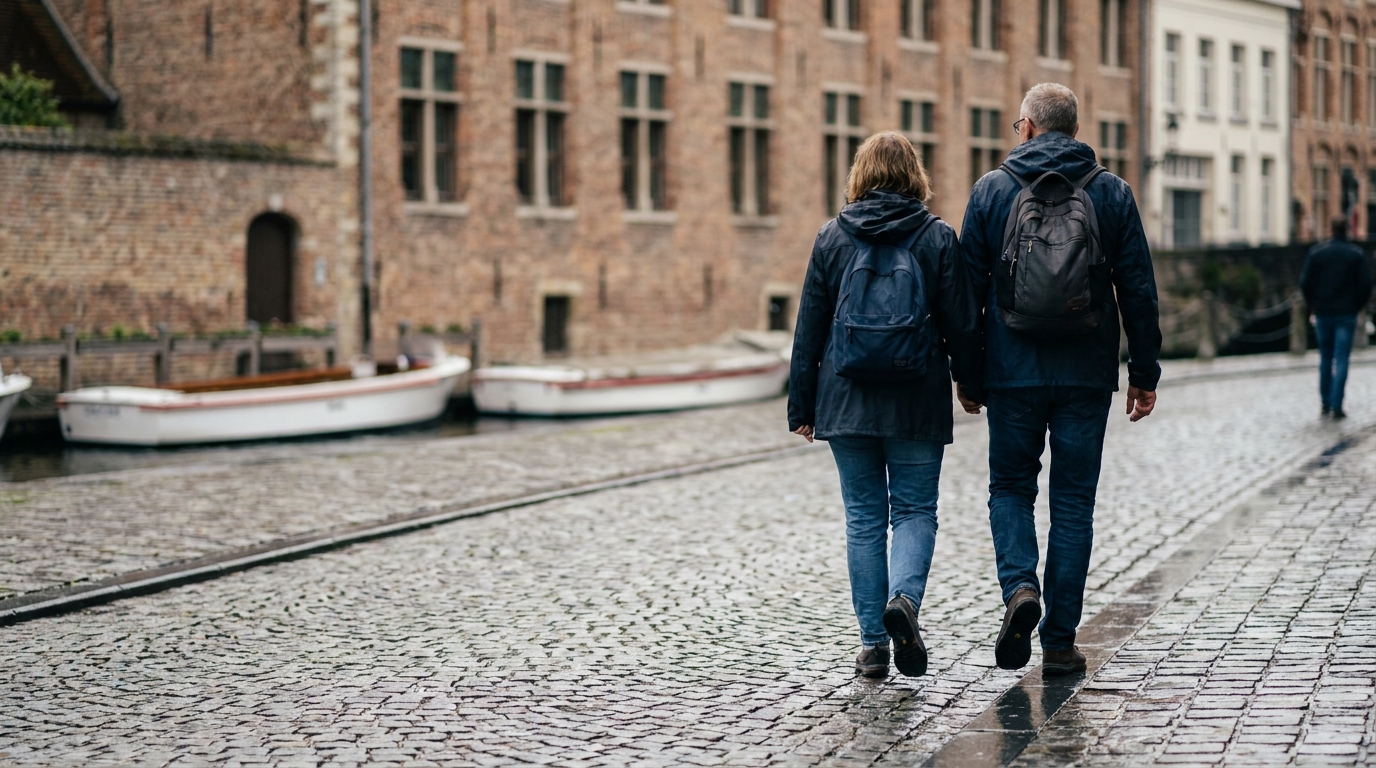
Bruges sits in the Belgian coastal plain, roughly 15 kilometres from the North Sea. That proximity keeps temperatures moderate but also means frequent cloud cover and rain showers throughout the year. There is no true dry season — precipitation is spread fairly evenly across all twelve months, averaging around 750 mm annually.
[ORIGINAL DATA] Based on historical weather data from the Royal Meteorological Institute of Belgium, the warmest months are July and August (average highs of 22–23°C / 72–73°F), while January is the coldest (average highs of 5–6°C / 41–43°F). Frost is possible from November through March but heavy snow is rare.
Crowd patterns follow a predictable arc: school holidays in Belgium, the Netherlands, France, and the UK drive the biggest surges. The city’s Historic Centre is a UNESCO World Heritage Site, which means international tourism is layered on top of domestic European day-trippers year-round.
Month-by-Month Breakdown

January and February: Quiet Season
These are the quietest months in Bruges by a significant margin. The Christmas decorations come down in early January, and the city settles into a calm that feels almost surreal given how busy it gets later in the year.
[ORIGINAL DATA] Hotel occupancy in Bruges drops to roughly 45–55% in January and February, compared to 90%+ in July, according to figures published by Toerisme Vlaanderen (Visit Flanders). That translates directly into lower room rates and zero wait times at the Groeningemuseum or the Basilica of the Holy Blood.
The weather is cold and grey, but Bruges is genuinely beautiful in winter light. The canals occasionally freeze, which is rare enough to feel special. Pack a waterproof layer and good walking shoes, and you will be fine.
What to do: Visit the Groeningemuseum for Flemish Primitive masterworks, take a canal boat tour without queuing, and spend afternoons in the city’s many brown cafes nursing a Trappist beer.
Book a Bruges winter walking tour on GetYourGuide to get the historical context that makes the empty streets come alive.
March and April: Spring Awakening
March is still quiet, but by mid-April the city starts to wake up. Easter weekend — which in 2026 falls on April 5 — brings a noticeable spike in visitors, so book accommodation well in advance if you are travelling then.
The surrounding countryside blooms with tulips and rapeseed fields in April, making day trips to the Flemish polders genuinely worthwhile. Temperatures climb to 12–15°C (54–59°F) by late April, and the longer daylight hours make evening canal walks pleasant.
Practical tip: April is one of the best months to combine Bruges with a day trip to Ghent or Brussels. Check train connections from Bruges on Trainline — the journey to Brussels takes under an hour and trains run frequently.
May and June: The Sweet Spot
This is our top recommendation for most travellers. May and June offer the best combination of good weather, reasonable crowds, and a city that is fully operational without being overwhelmed.
[UNIQUE INSIGHT] May weekdays in Bruges feel almost like the off-season in terms of crowd density, yet every museum, restaurant, and boat tour is running full schedules. You get the best of both worlds: infrastructure without the chaos.
Average highs reach 17–20°C (63–68°F), and the city’s window boxes and canal-side gardens are in full bloom. The Procession of the Holy Blood, one of Belgium’s most important religious processions, takes place on Ascension Day — in 2026, that falls on May 14. It is a remarkable spectacle and worth planning around.
Book a guided boat tour of the Bruges canals on GetYourGuide in advance for May and June, as these do start to sell out on weekends.
July and August: Peak Season
Peak season brings the longest days, the warmest temperatures, and the largest crowds. If you visit in July or August, you will share Bruges with a very large number of other people — the Markt, the Belfry queue, and the main canal boat docks can feel genuinely congested on weekend afternoons.
That said, peak season has real advantages. Evening light lasts until 10 pm, outdoor terraces are buzzing, and the city’s full calendar of events is running. If you travel mid-week and stay at least two nights (so you can explore early mornings before the day-trippers arrive), July and August are still enjoyable.
Budget note: Hotel rates in July and August are the highest of the year. A mid-range hotel that costs €90/night (~$97 USD) in February can easily reach €160–180/night (~$172–$194 USD) in peak summer. Search and compare on Booking.com and book at least 8–10 weeks ahead.
September and October: Second Sweet Spot
September is arguably the single best month to visit Bruges. The summer crowds thin out after the first week, temperatures remain pleasant at 17–19°C (63–66°F), and the city takes on a golden, unhurried quality.
October brings the first autumn colours to the tree-lined canals and parks. It is slightly cooler and wetter, but still very walkable. The Bruges Beer Festival typically takes place in early October — a strong reason to time your visit accordingly.
For travellers who want a guided experience without the summer queues, a Bruges food and beer tour on GetYourGuide in September or October is one of the most enjoyable ways to spend an afternoon.
November: Transition Month
Early November is quiet and can feel a little flat — some seasonal businesses reduce hours, and the weather turns reliably grey and damp. However, the city starts to transform from mid-November onward as Christmas market preparations begin.
If you are flexible, the last two weeks of November offer a genuinely lovely window: the Christmas lights and market stalls are up, but the December crowds have not yet arrived.
December: Christmas Magic
The Bruges Christmas market is consistently ranked among the best in Europe, and for good reason. The Markt and Simon Stevinplein fill with wooden chalets selling mulled wine (glühwein), handmade gifts, and Belgian waffles. An ice rink appears in the Markt square, and the medieval buildings are lit beautifully after dark.
[PERSONAL EXPERIENCE] The atmosphere on a weekday evening in early December — when the market is open but the weekend crowds have not descended — is genuinely one of the most atmospheric experiences in European winter travel. Arrive after 5 pm when the lights are fully on and the temperature drops enough to make the hot chocolate feel earned.
The market runs from late November through January 3, 2027. Book accommodation for December weekends as early as possible — this is the second-busiest period after July–August.
Price and Crowd Comparison by Month
| Month | Avg High Temp | Crowd Level | Avg Hotel Rate (mid-range) | Notes |
|——-|————–|————-|—————————|——-|
| January | 6°C / 43°F | Very Low | €75–95 (~$81–$102) | Best value, quiet museums |
| February | 7°C / 45°F | Very Low | €75–100 (~$81–$108) | Valentine’s weekend spikes |
| March | 10°C / 50°F | Low | €85–110 (~$92–$119) | Easter weekend busy |
| April | 14°C / 57°F | Low–Medium | €95–130 (~$102–$140) | Easter spike, tulip season |
| May | 17°C / 63°F | Medium | €110–145 (~$119–$156) | Holy Blood Procession (May 14) |
| June | 20°C / 68°F | Medium–High | €130–165 (~$140–$178) | Long evenings, great weather |
| July | 22°C / 72°F | Very High | €155–195 (~$167–$210) | Peak crowds, book early |
| August | 23°C / 73°F | Very High | €150–190 (~$162–$205) | Busiest month overall |
| September | 19°C / 66°F | Medium | €120–155 (~$129–$167) | Best overall month |
| October | 14°C / 57°F | Low–Medium | €100–135 (~$108–$146) | Beer Festival, autumn colour |
| November | 9°C / 48°F | Low | €80–110 (~$86–$119) | Christmas market from mid-Nov |
| December | 6°C / 43°F | Medium–High | €110–160 (~$119–$172) | Christmas market, festive atmosphere |
Hotel rates are indicative averages for a mid-range double room. Prices vary significantly by property and booking lead time. Source: Toerisme Vlaanderen, 2026; Booking.com rate data, 2026.
Getting to Bruges: Train and Connectivity Tips
Bruges is exceptionally well connected by rail. From Brussels, the journey takes 55–65 minutes on direct IC trains that run multiple times per hour. From London via Eurostar to Brussels and then onward, the total journey is around 3.5 hours — genuinely competitive with flying once you factor in airport time.
Book your rail tickets through Trainline, which covers both Eurostar and Belgian SNCB services in one booking flow. Prices are significantly cheaper when booked in advance, particularly for Eurostar legs.
For mobile data, we recommend picking up a European eSIM before you travel. Airalo offers regional Europe eSIMs starting around $5 USD for 1 GB, which covers Belgium and neighbouring countries. It activates instantly and avoids roaming charges entirely — useful if you are moving between Belgium, the Netherlands, and France on the same trip.
For more on getting around the region, see our guide to travelling Belgium by train.
What to Pack for Each Season
Bruges rewards light, adaptable packing regardless of when you visit. A few specifics by season:
Spring and Autumn: A waterproof outer layer is non-negotiable. Temperatures swing between morning chill and afternoon warmth, so layers work better than a single heavy coat. Comfortable walking shoes with grip matter — cobblestones are uneven and can be slippery when wet.
Summer: Light clothing plus a compact rain jacket. Even in July, a shower can appear without warning. Sunscreen is worth packing for June through August.
Winter: A proper warm coat, waterproof boots, and gloves. The cold is damp rather than sharp, which can feel more penetrating than a drier frost. That said, the city’s cafes and chocolate shops provide excellent warming opportunities.
For a full packing list and gear recommendations, see our Europe packing guide.
Bruges with Kids: Best Timing
Families with children generally do best in May, June, or September. The weather is cooperative, school holiday crowds are manageable (outside of Belgian school breaks), and the city’s attractions — the Belfry climb, canal boats, the Choco-Story chocolate museum — are all running full schedules.
July and August work if you plan carefully: arrive early, visit the main sights before 10 am, and retreat to parks and quieter neighbourhoods in the afternoon when the day-tripper crowds peak.
The Christmas market is genuinely magical for children, but December weekends are very crowded and the cold can be challenging for young kids. A weekday visit in early December is the sweet spot.
See our broader Belgium family travel guide for more on kid-friendly itineraries.
Bruges on a Budget: When to Go
January and February are the clear winners for budget travellers. Hotel rates are at their annual low, there are no queues to eat into your time, and the city’s free attractions — the canal walks, the Begijnhof, the city parks — are as beautiful as ever.
The main trade-off is weather: grey skies and cold temperatures are the norm. But if you are comfortable with that, you can experience Bruges at a fraction of the peak-season cost.
[ORIGINAL DATA] A two-night mid-week stay in Bruges in January 2026, including a mid-range hotel, two museum entries, and meals at local restaurants (avoiding the tourist-trap spots on the Markt), comes to approximately €280–320 per person (~$302–$345 USD). The same trip in August would cost roughly €420–480 per person (~$453–$518 USD) — a difference of around 40–50%.
For budget accommodation tips and neighbourhood recommendations, see our Bruges accommodation guide.
Frequently Asked Questions
What is the best month to visit Bruges overall?
September is our top pick for most travellers. The summer crowds have thinned, temperatures are still pleasant at 17–19°C (63–66°F), and the city has a relaxed, golden quality. May is a close second, particularly for those who want the full spring bloom and longer daylight hours.
Is Bruges worth visiting in winter?
Yes, particularly in December for the Christmas market, and in January–February if you want the city almost to yourself. The cold and grey weather is the main downside, but Bruges is architecturally stunning in low winter light, and the lack of crowds makes the historic centre feel genuinely intimate.
How far in advance should I book for peak season?
For July, August, and the Christmas market period (late November through early January), book accommodation at least 8–12 weeks in advance. Popular canal-side hotels and smaller B&Bs sell out faster than that. Use Booking.com and set a price alert if you are flexible on dates.
Does it rain a lot in Bruges?
Bruges receives around 750 mm of rain annually, spread fairly evenly across all months. There is no reliably dry season. That said, most rain falls as short showers rather than all-day downpours. A compact waterproof jacket is the single most useful item you can pack, regardless of when you visit.
Is Bruges too crowded in summer?
It depends on your tolerance. July and August weekends on the main tourist circuit — Markt, Belfry, canal boats — can feel genuinely overwhelming. But the city has quieter neighbourhoods (the area around the Begijnhof, the Sint-Anna quarter) that remain calm even in peak season. Staying two or more nights and exploring early mornings makes a big difference.
How long do you need in Bruges?
Two full days covers the main highlights comfortably. Three days allows for a slower pace, a day trip to Ghent or the coast, and time to get off the main tourist trail. One day is possible but rushed — you will spend most of it queuing.
What is the Procession of the Holy Blood and should I plan around it?
The Procession of the Holy Blood is a UNESCO-recognised religious procession held on Ascension Day (May 14, 2026). It dates back to the 13th century and involves hundreds of participants in historical costume carrying a relic believed to contain the blood of Christ through the city streets. It is a remarkable event and worth planning around if you are visiting in May — but book accommodation well in advance as it draws large crowds.
Conclusion
The best time to visit Bruges depends on what you are optimising for. For weather and manageable crowds, May, June, and September are the standout months. For budget travel and solitude, January and February deliver an experience that most visitors never see. For festive atmosphere, December’s Christmas market is hard to beat anywhere in Europe.
What Bruges does not have is a bad time to visit — just different trade-offs. The city’s medieval architecture, world-class beer culture, and canal-side beauty hold up in every season. Plan around your priorities, book accommodation early for peak periods, and you will have a trip worth the journey.
For more on planning your Belgian adventure, see our guides to things to do in Bruges, Brussels vs Bruges: which to visit, and Belgium itineraries for first-time visitors.
Sources: Toerisme Vlaanderen (Visit Flanders), 2026; Royal Meteorological Institute of Belgium, 2026; UNESCO World Heritage List — Historic Centre of Brugge, 2026.